Our readers keep the lights on and my smoothie glass nicely filled. As an Amazon Associate, I earn from qualifying purchases.
A dead CPAP machine is not an inconvenience; it is a medical emergency waiting to happen. Whether you are facing a power outage, planning a camping trip, or simply want a reliable backup for home use, the wrong battery can mean waking up gasping for air. The market is flooded with generic power banks, but CPAP machines demand specific voltage, wattage, and runtime characteristics that typical portable batteries simply cannot deliver.
I’m Mohammad Maruf — the founder and writer behind WellFizz. I have spent years analyzing battery chemistry, inverter efficiency, and medical device compatibility to find the few power stations that truly keep a CPAP running through the night without tripping alarms or cutting out at hour three.
Here is the reality: most portable batteries on the market today are designed for phones and laptops, not for the steady 12V or 24V draw of a CPAP humidifier. Finding a battery for cpap machine that balances silent operation, regulated DC output, and enough capacity for a full eight-hour sleep session is harder than it looks, but this guide cuts through the noise.
How To Choose The Best Battery For CPAP Machine
Choosing a battery for a CPAP machine requires a shift in thinking. You are not shopping for a general-purpose power bank; you are selecting a medical-grade power source that must deliver consistent voltage for hours on end. Focus on these three areas before anything else.
Regulated 12V DC Output Is Non-Negotiable
Most CPAP machines, especially those from ResMed and Philips, run most efficiently on 12V DC power. Using an AC inverter to convert from battery power to 120V AC and back to the machine’s internal power supply wastes up to 20% of your battery capacity. A battery with true regulated DC output — meaning the voltage stays steady at 12V regardless of the battery’s remaining charge — ensures your CPAP gets clean, stable power without triggering low-voltage alarms mid-sleep.
Watt-Hour Capacity Matched To Your Therapy Settings
A CPAP machine without a humidifier typically draws between 30W and 60W per hour. With a humidifier and heated tubing, that number can jump to 80W or even 100W per hour. You need a battery with enough watt-hours (Wh) to cover your full sleep session plus a safety margin. A 200Wh unit may last two full nights without humidification, while a 100Wh pack might struggle to make it through a single night with the heated tube active.
Battery Chemistry And Safety For Overnight Use
Lithium iron phosphate (LiFePO4) batteries are the safest chemistry for overnight medical use. They are inherently more stable than standard lithium-ion, can handle 3,000 or more charge cycles, and are much less likely to overheat or catch fire. For a device that will run unattended while you sleep, LiFePO4 chemistry provides the peace of mind that standard lithium-ion or lead-acid alternatives simply cannot match.
Quick Comparison
On smaller screens, swipe sideways to see the full table.
| Model | Category | Best For | Key Spec | Amazon |
|---|---|---|---|---|
| BLUETTI Elite 30 V2 | Premium | Overnight CPAP with UPS backup | 288Wh, 10ms UPS, LiFePO4 | Amazon |
| VTOMAN Jump 600X | Premium | CPAP + car jump start combo | 299Wh, regulated 12V DC, LiFePO4 | Amazon |
| Apowking 300W | Mid-Range | Extended trips with 220Wh capacity | 220Wh, 300W AC, 7 ports | Amazon |
| DARAN 89.6Wh | Mid-Range | Ultra-light plane-friendly backup | 89.6Wh, LiFePO4, 1.5h recharge | Amazon |
| ZeroKor G120 | Mid-Range | Budget camping and light CPAP use | 97.6Wh, 120W AC, lightweight | Amazon |
| Talentcell 12/9/5V | Budget | Old 12V CPAP models (50/ M series) | 114.9Wh, 12V DC, 1.1 lbs | Amazon |
| WEIZE U1 AGM | Budget | Not recommended for CPAP | 350CCA, 21.45 lbs, lead-acid | Amazon |
In‑Depth Reviews
1. BLUETTI Elite 30 V2
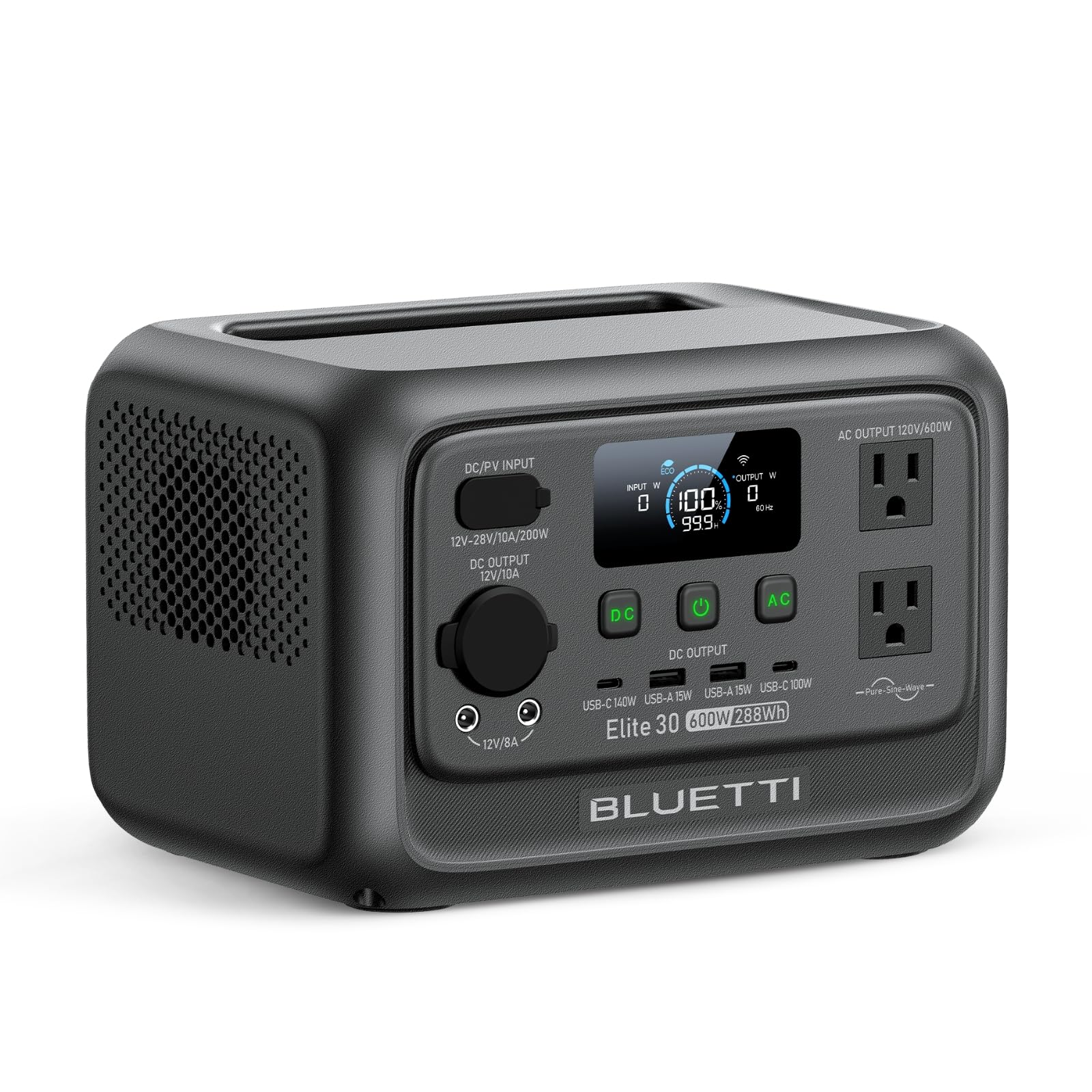
The BLUETTI Elite 30 V2 ticks every box for a CPAP-specific backup power solution. Its 288Wh LiFePO4 battery can power a ResMed AirSense 10 without humidification for roughly two full nights. The 10ms UPS switchover is the fastest in this class, meaning your CPAP never resets or reboots when the grid flickers — it simply keeps running as if nothing happened. At 9.4 pounds, it is light enough to carry from bedroom to car without strain.
The 600W continuous output with Power Lifting up to 1500W is overkill for CPAP use, but it gives you the flexibility to run additional gear like a fan or a small cooler during a camping trip. The upgraded UltraCell technology cuts standby power consumption to just 4.5W on DC, which matters when you are conserving every watt-hour away from an outlet. The dual USB-C ports (140W and 100W) also let you fast-charge a laptop or tablet simultaneously.
Wall charging from 0 to 80 percent in only 45 minutes is a standout feature, especially during storm season when you need to top off between potential outages. The app connectivity lets you monitor battery status and adjust settings without walking to the unit — a small convenience that adds up when the power station is tucked under a bedside table.
Why it’s great
- 10ms UPS ensures CPAP never reboots during power blips
- LiFePO4 chemistry for safe overnight unattended operation
- Very fast 45-minute recharge to 80 percent
Good to know
- 9.4 pounds is manageable but heavier than smaller backup-only units
- Capacity may not cover a full night with heated humidifier at high pressure
2. VTOMAN Jump 600X

The VTOMAN Jump 600X is a dual-purpose powerhouse that delivers regulated 12V DC output — exactly what CPAP machines need to run efficiently without the 20 percent loss from an AC inverter. Actual user reports confirm this unit runs a CPAP machine for 10 hours while simultaneously charging phones and a light, making it a strong candidate for both home backup and RV travel. The 299Wh LiFePO4 battery is expandable to 939Wh with an optional extra battery.
The built-in car jump start function is genuinely useful for road trippers, though jumper cables are sold separately. The three regulated 12V/10A DC ports are a rare and valuable feature for CPAP users because they allow direct DC-to-DC connection without any voltage sag. The 600W constant-power feature means the unit will keep outputting even when a device momentarily exceeds 600W, providing an emergency buffer that most power stations lack.
Recharge time to 80 percent in about 2.7 hours is decent but slower than the BLUETTI. The 14.6-pound weight makes it less of a grab-and-go option and more of a dedicated bedside backup unit. Still, the combination of regulated DC ports, expandable capacity, and jump start capability makes this one of the most versatile CPAP batteries on the market.
Why it’s great
- Regulated 12V DC ports are ideal for direct CPAP connection
- Expandable capacity from 299Wh to 939Wh
- Car jump start function adds emergency roadside utility
Good to know
- 14.6 pounds is heavy for frequent backpacking
- Recharge time is slower than premium competitors
3. Apowking 300W
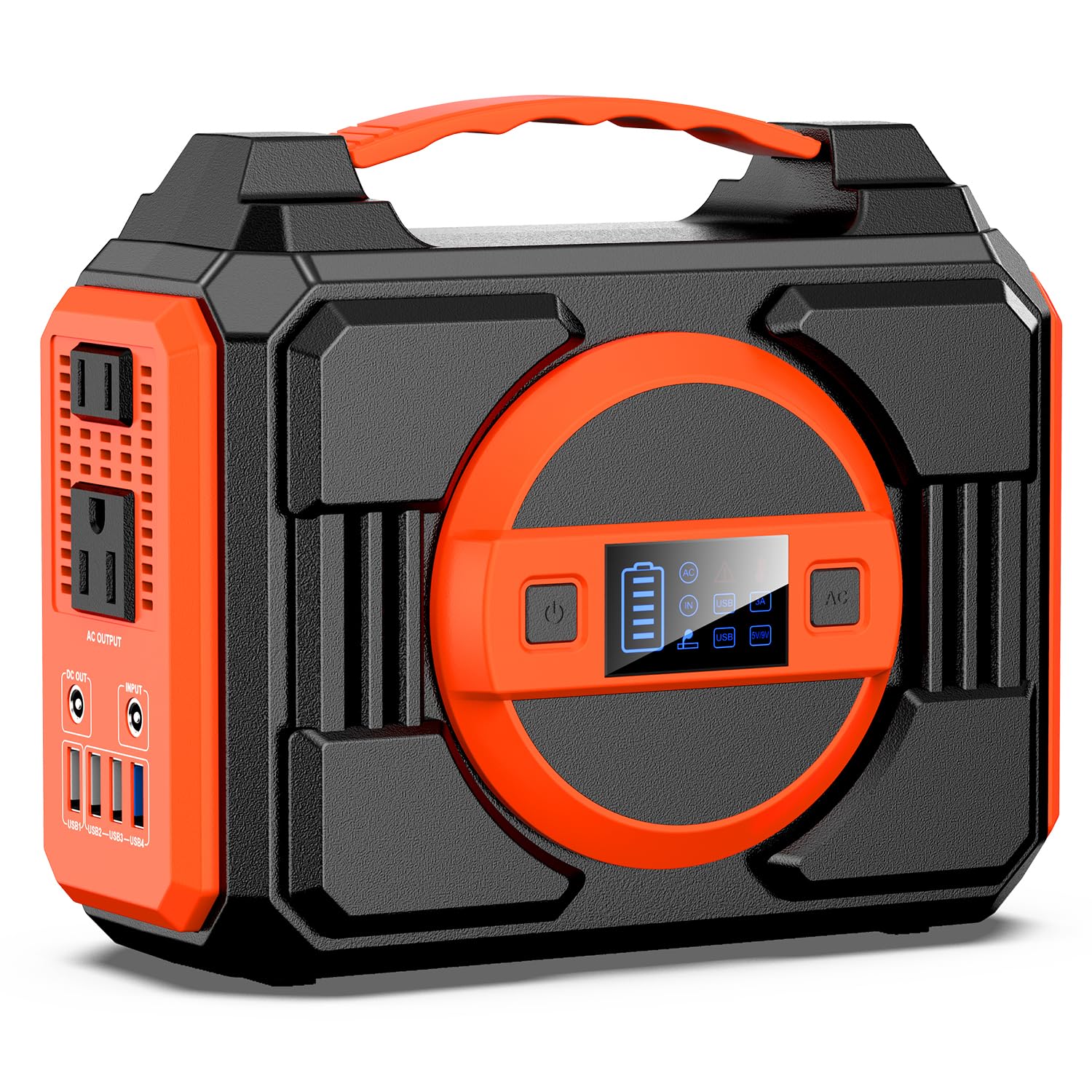
The Apowking 300W power station offers 220Wh of capacity at a price point that sits comfortably in the mid-range. This capacity is enough to run a standard CPAP without humidification for roughly one full night, or about half a night with the humidifier on. The pure sine wave AC inverter ensures your machine receives clean power, which is especially important for newer CPAP models with sensitive internal electronics.
At just 5 pounds, this unit is significantly lighter than the BLUETTI and VTOMAN options, making it a solid choice for car camping or as a secondary backup unit. The seven output ports — including two 110V AC outlets — give you plenty of flexibility to charge other devices. The back-mounted LED light is brighter than most, adding practical value during power outages at night.
The main drawback is the charging time. Users report that AC wall charging can take over 4 hours, and solar charging is even slower. The lack of USB-C PD also means you cannot fast-charge modern laptops directly. For pure CPAP backup duty, the capacity is sufficient for a single night, but you will want to recharge during the day for consecutive nights of use.
Why it’s great
- Only 5 pounds — easy to pack for car camping
- Pure sine wave AC output protects sensitive CPAP electronics
- Back LED light is useful for dark campsites or blackouts
Good to know
- Charging takes over 4 hours from a wall outlet
- 220Wh capacity may not cover a full night with humidifier and heated tubing
4. DARAN 89.6Wh LiFePO4
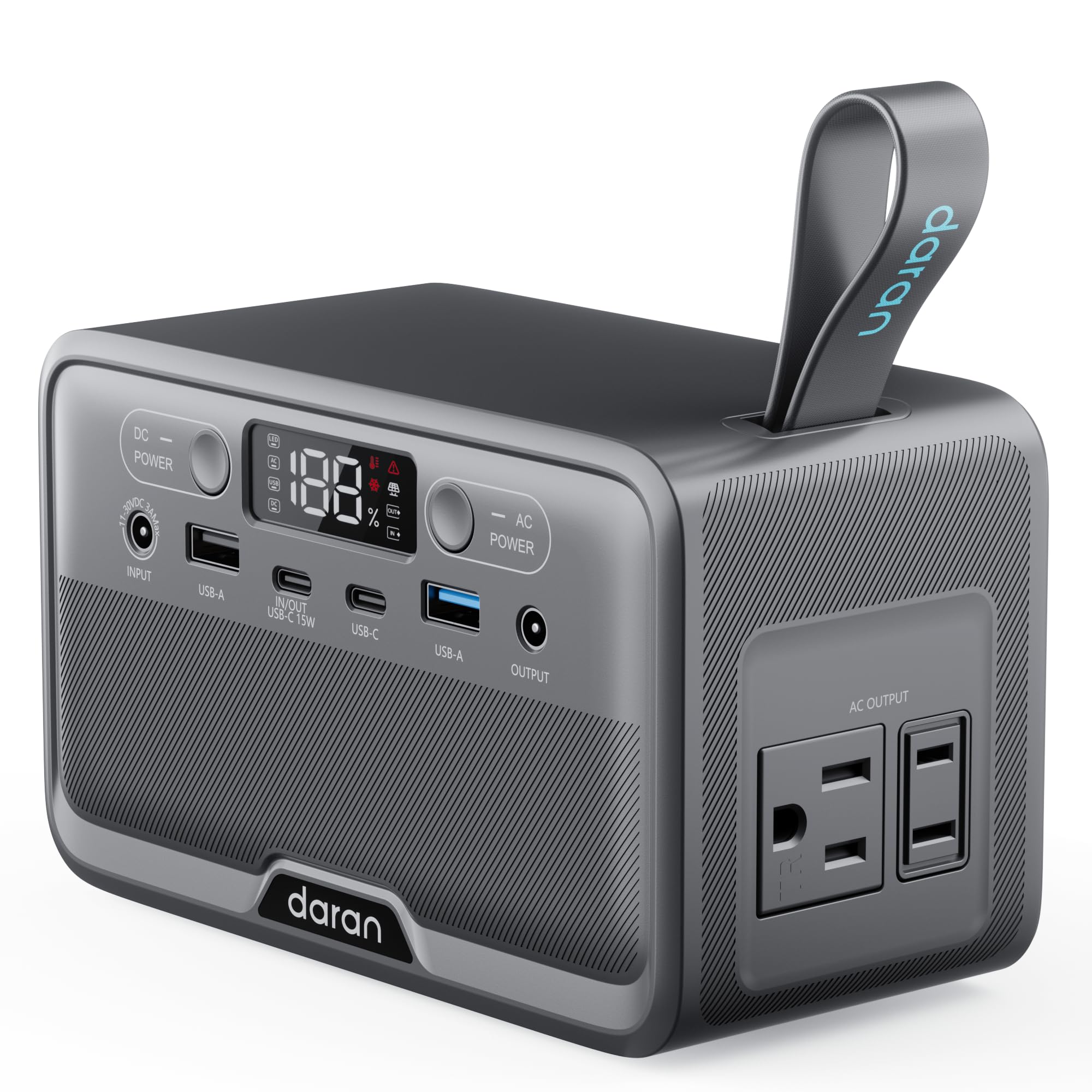
The DARAN 89.6Wh power station is remarkably compact — about the size of a smartphone stack — and weighs only 2.5 pounds. This is the unit you take on a plane or stash in a backpack for emergency use. The LiFePO4 chemistry provides over 3,500 life cycles, far exceeding standard lithium-ion packs, and the fanless design means zero noise while your CPAP runs overnight.
With 89.6Wh of capacity, this unit is best suited for short naps, travel CPAP machines that draw lower power, or as an emergency bridge to get you through a partial night. It supports 100W peak output and includes two AC outlets, two USB-C ports, and two USB-A ports. The charging speed is impressive — 0 to 80 percent in just 1.5 hours via the AC wall adapter.
The trade-off is that 89.6Wh is simply not enough for a full night of standard CPAP therapy with humidification. Users who tested it with aquarium pumps and routers report long runtime, but a CPAP without humidifier at 8 cmH2O will drain this unit in about 3 to 4 hours. If your goal is portability above all else and you are willing to turn off the humidifier, this is a viable option.
Why it’s great
- Tiny and lightweight at 2.5 pounds — fits in a carry-on
- Fanless operation means dead silent overnight use
- Very fast recharge to 80 percent in 1.5 hours
Good to know
- 89.6Wh is not enough for a full 8-hour night with humidifier
- 100W AC output limits the devices you can run simultaneously
5. ZeroKor G120
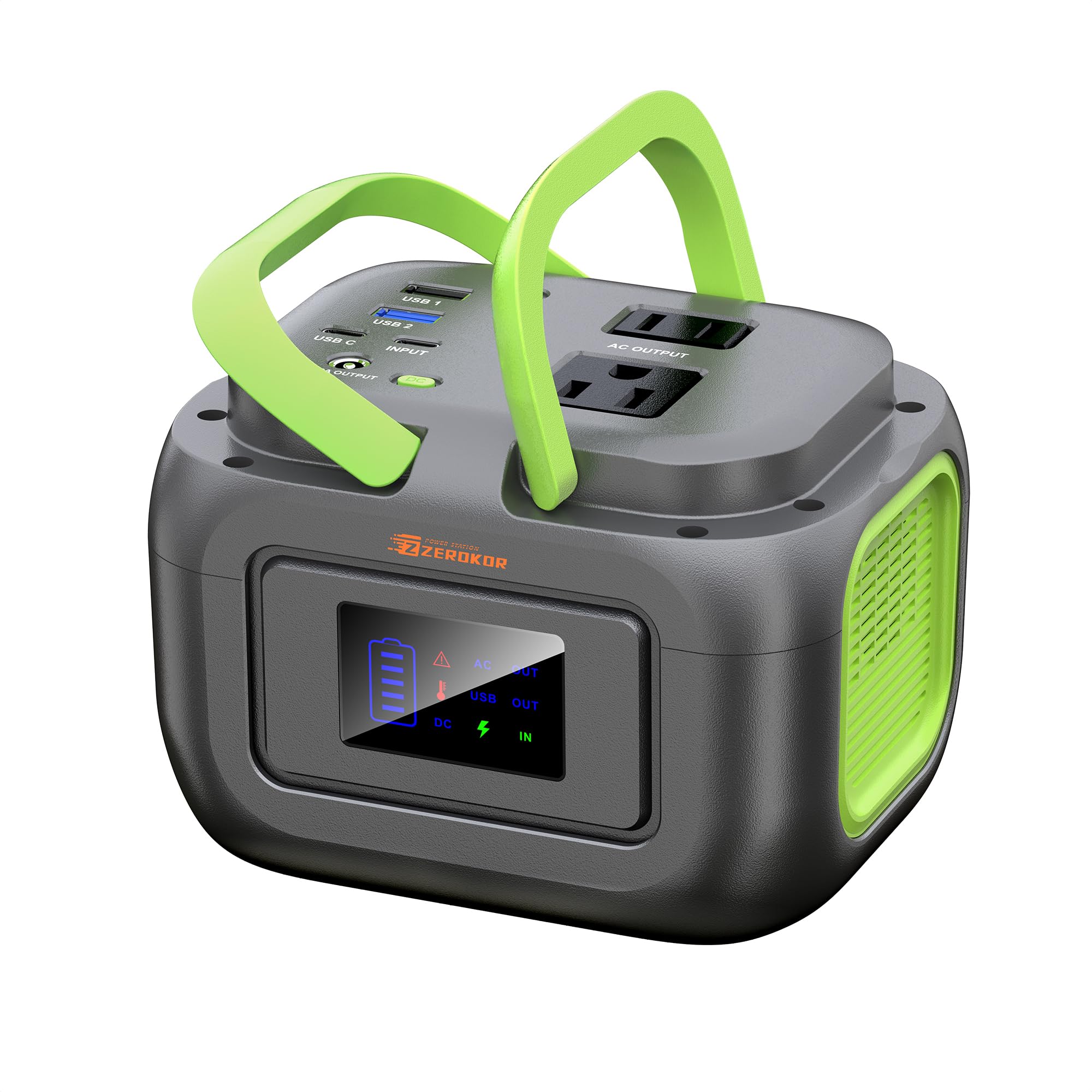
The ZeroKor G120 offers 97.6Wh of capacity and a 120W AC inverter at a budget-friendly price. At 2.2 pounds, it is even lighter than the DARAN and includes a built-in handle for easy carrying. The multiple charging methods — solar, wall, and car — give you flexibility, though the solar charging is notably slow, as several customers noted.
For CPAP use, the G120 is strictly a short-range backup. With a 12V DC port and standard USB outputs, you can power a travel CPAP or a ResMed machine without humidification for about 3 to 4 hours. The real-time power display helps you track remaining capacity, and the BMS protection suite covers short circuits, over-voltage, and overheating.
The major complaint from users is that the unit charges at only 5V/2.3W via the USB-C port, even when connected to a 100W charger, leading to 4 to 5 hour recharge times. For emergency CPAP backup where you can plug it in during the day, this is workable, but it is not a unit you can rely on for consecutive off-grid nights without solar optimization.
Why it’s great
- Very lightweight at 2.2 pounds with a convenient handle
- Multiple recharging methods including solar and car
- BMS protection for safe overnight use
Good to know
- Slow charging — takes 4 to 5 hours from a wall outlet
- 97.6Wh is only enough for a few hours of CPAP therapy
6. Talentcell 12/9/5V
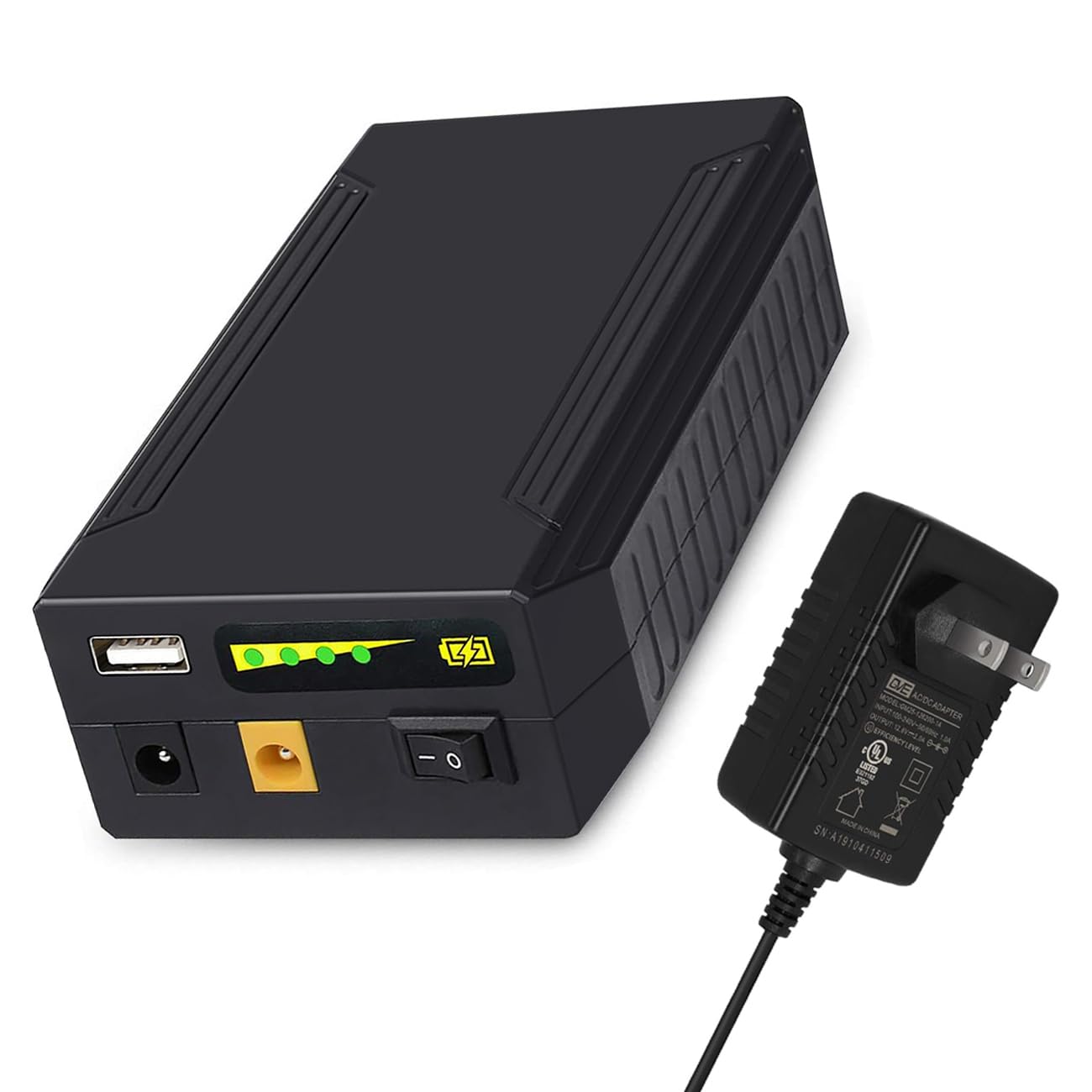
The Talentcell 12/9/5V power bank is a niche but effective solution for owners of older 12V CPAP machines, specifically the ResMed 50 series and M series. A verified customer review confirms that the 1.1-pound pack powered a ResMed M series for 10.5 hours at 16.5 CFM, with 2 bars of charge remaining. That is exceptional runtime for a unit this small and cheap.
With 114.9Wh of capacity and multi-voltage DC output (12V, 9V, and 5V), this battery is designed for devices that take DC power natively. The 12V DC5521 port is compatible with many older CPAP machines, but you must check your machine’s voltage requirements before purchasing. The manufacturer explicitly states it cannot be used for newer 60 series or D series ResMed machines without a 24V converter (sold separately).
The build quality is adequate, and the digital display shows remaining charge clearly. However, there are no AC outlets and no USB-C PD, so this is strictly a DC-only solution. The user reports of overheating and melting during charging, though resolved by customer service, indicate that quality control is not as rigorous as with larger brands. For a specific legacy setup, this works well; for modern machines, look elsewhere.
Why it’s great
- Proven 10.5-hour runtime on ResMed M series CPAP
- Extremely lightweight at just 1.1 pounds
- Multi-voltage DC output for various 12V devices
Good to know
- Not compatible with newer 60 series or D series ResMed machines without a 24V converter
- No AC outlets or USB-C PD for modern device charging
7. WEIZE U1 AGM
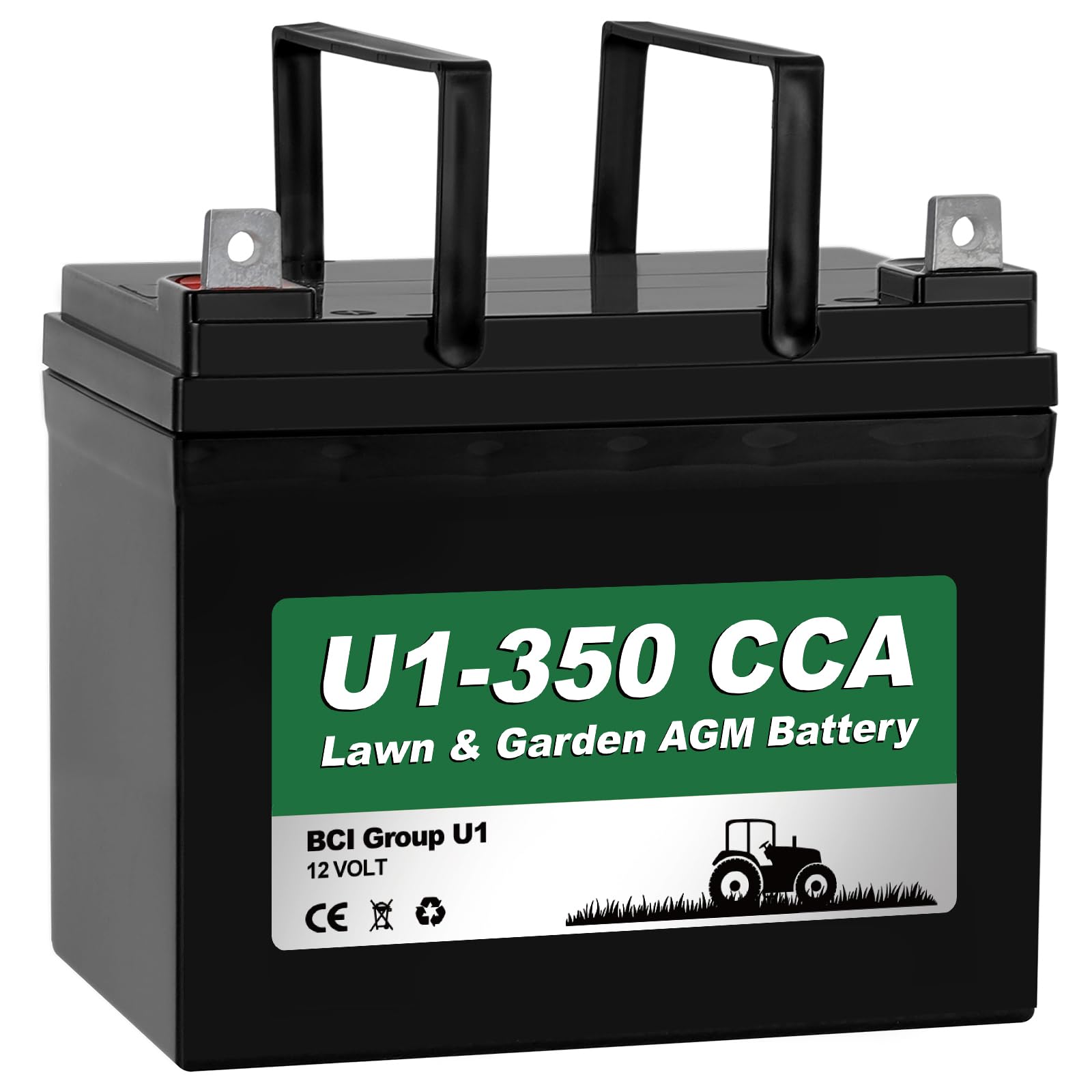
The WEIZE U1 AGM lawn and garden battery is included here as a cautionary example of what not to buy for CPAP use. This is a starting battery, not a deep-cycle battery, meaning it is designed to deliver a high burst of current to start a lawn mower engine, not to provide steady power over many hours. Using a starting battery for CPAP therapy will drain it quickly and permanently damage the battery’s internal plates.
At 21.45 pounds, this lead-acid AGM unit is over ten times heavier than a lithium battery of comparable usable capacity. It provides 12V power and has a 350 CCA rating, but the reserve capacity is only around 30 to 40 minutes of typical CPAP draw before voltage drops below a safe level. The terminals are also designed for mower connections, not DC5521 plugs or medical device adapters.
The only scenario where this could power a CPAP is if you buy a separate pure sine wave inverter and deep-cycle battery charger — at which point the system weight exceeds 30 pounds and the cost approaches that of a proper LiFePO4 power station. Skip this option entirely and invest in a purpose-built power station with regulated DC output.
Why it’s great
- Excellent for John Deere and Cub Cadet lawn tractors
- AGM construction is spill-proof and vibration-resistant
Good to know
- Starting battery, not deep-cycle — dies quickly under sustained CPAP load
- Extremely heavy at 21.45 pounds with no portable form factor
- No DC5521 ports or medical device adapters included
FAQ
Can I use any power bank to run my CPAP machine?
How long will a 200Wh battery run my CPAP?
Is LiFePO4 battery chemistry safer for overnight CPAP use?
Can I fly with a CPAP battery?
Final Thoughts: The Verdict
For most users, the battery for cpap machine winner is the BLUETTI Elite 30 V2 because its 288Wh capacity, 10ms UPS switchover, and LiFePO4 safety make it the most reliable option for uninterrupted overnight therapy. If you need the versatility of a car jump starter and expandable storage, grab the VTOMAN Jump 600X. And for a lightweight, plane-friendly emergency backup at a lower capacity, the DARAN 89.6Wh is hard to beat.

Mo Maruf
I created WellFizz to bridge the gap between vague wellness advice and actionable solutions. My mission is simple: to decode the research and give you practical tools you can actually use.
Beyond the data, I am a passionate traveler. I believe that stepping away from the screen to explore new environments is essential for mental clarity and physical vitality.