Our readers keep the lights on and my smoothie glass nicely filled. As an Amazon Associate, I earn from qualifying purchases.
When your oxygen concentrator stops mid-sentence, it is not a minor inconvenience—it is a medical emergency. A standard power strip offers no protection, and most generic uninterruptible power supplies deliver dirty waveform power that can damage sensitive medical compressors or simply refuse to run them at all. The solution is a dedicated battery backup designed to deliver clean, continuous, pure sine wave power with the runtime and safety margins oxygen-dependent users require.
I’m Mohammad Maruf — the founder and writer behind WellFizz. I have spent years analyzing power system specifications, comparing battery chemistries, and verifying runtime claims across dozens of backup units to separate the genuinely life-sustaining options from the marketing noise.
Whether you need a compact unit for a portable concentrator or a high-capacity station for a home device, this guide walks you through the specifications that matter so you can confidently choose the best battery backup for oxygen concentrator to match your needs and breathing settings.
How To Choose The Best Battery Backup For Oxygen Concentrator
Selecting a backup power source for your concentrator is a decision about safety and reliability, not just convenience. Three specifications dominate the choice: waveform purity, total energy capacity, and battery chemistry cycle life.
Pure Sine Wave Output Is Non-Negotiable
Oxygen concentrators contain sensitive motors and compressors that rely on a consistent, smooth voltage waveform. Modified sine wave or simulated sine wave inverters generate choppy, pulsed power that can cause a concentrator to overheat, run erratically, make unusual noises, or simply refuse to start. Always confirm the backup unit produces a pure sine wave output.
Match Watt-Hours (Wh) to Your Runtime Needs
Battery capacity is measured in watt-hours. Check your concentrator’s power draw on the label—most home units pull between 300 and 700 watts at peak. Divide the battery’s total watt-hours by your concentrator’s draw to estimate runtime. For example, a 300Wh unit will run a 350W machine for less than an hour, whereas an 1800Wh unit could sustain it for five hours or more. Always add a safety margin for night use or extended outages.
Prioritize LiFePO4 Over NMC Lithium-Ion
Lithium iron phosphate (LiFePO4) batteries are the gold standard for medical backup. They offer between 3,000 and 5,000 charge cycles compared to 500-1,000 for NMC (nickel manganese cobalt) lithium-ion chemistries. LiFePO4 is inherently safer—it resists thermal runaway and performs more consistently through partial charge cycles, which is the typical daily-use pattern for a concentrator backup.
Quick Comparison
On smaller screens, swipe sideways to see the full table.
| Model | Category | Best For | Key Spec | Amazon |
|---|---|---|---|---|
| Anker SOLIX C1000 + BP1000 | Power Station | Multi-night home outage | 2112Wh / 2400W Peak | Amazon |
| GRECELL Acc2400 | Power Station | Extended home backup | 1843.2Wh / 2400W | Amazon |
| EASYLONGER ES960 PRO | CPAP/Small Device | Portable concentrator camping | 297.6Wh LiFePO4 | Amazon |
| CyberPower CP1500PFCLCD | UPS System | Desktop concentrator UPS | 1500VA / 1000W Sinewave | Amazon |
| BLUETTI X30 | Portable Power | Ultra-light travel backup | 297Wh / 3.9 lbs | Amazon |
| EASYLONGER ES720 PRO | Portable Power | Multi-device backup | 276.48Wh / 3.3 lbs | Amazon |
| GOLDENMATE 1000VA | UPS System | Budget-friendly LiFePO4 UPS | 153.6Wh / 600W | Amazon |
| Inogen Extended Battery | Proprietary Battery | Inogen G4/Rove 4 upgrade | 5h at setting 1 | Amazon |
| Inogen External Charger | Charger Accessory | Charging spare Inogen battery | 4.5-hour charge time | Amazon |
In‑Depth Reviews
1. Anker SOLIX C1000 + BP1000 Expansion Battery

The Anker SOLIX C1000 system, paired with its BP1000 expansion battery, delivers a combined 2112Wh of capacity and a 2400W SurgePad peak output. This is the most robust single-solution backup in the list, capable of running a 400W home concentrator for over five hours continuously. The pure sine wave inverter ensures clean power delivery that keeps sensitive concentrator motors humming without erratic cycling or overheating.
HyperFlash AC recharging reaches full capacity in under two hours, which means a brief window of grid power can refill the battery for another full night of use. The 11-port output suite—including two 100W USB-C ports—also makes this unit a useful general-purpose power station for CPAP devices, lighting, and electronics during an extended outage. LiFePO4 chemistry provides 3,000 cycles and a rated 10-year lifespan.
At 27.6 pounds for the entire assembled system, it is not a lightweight travel companion for a day trip, but it is perfectly sized for home placement next to a stationary concentrator. The three-point safety clasp between the main unit and expansion battery adds a reassuring layer of protection against accidental disconnection.
Why it’s great
- Massive 2112Wh capacity handles long overnight runs.
- HyperFlash recharges in under 2 hours.
- Pure sine wave output protects concentrator compressors.
Good to know
- Heavy system at 27.6 lbs combined.
- Expansion battery is required to reach full capacity, adding to the footprint.
2. GRECELL 2400W Portable Power Station (Acc2400)
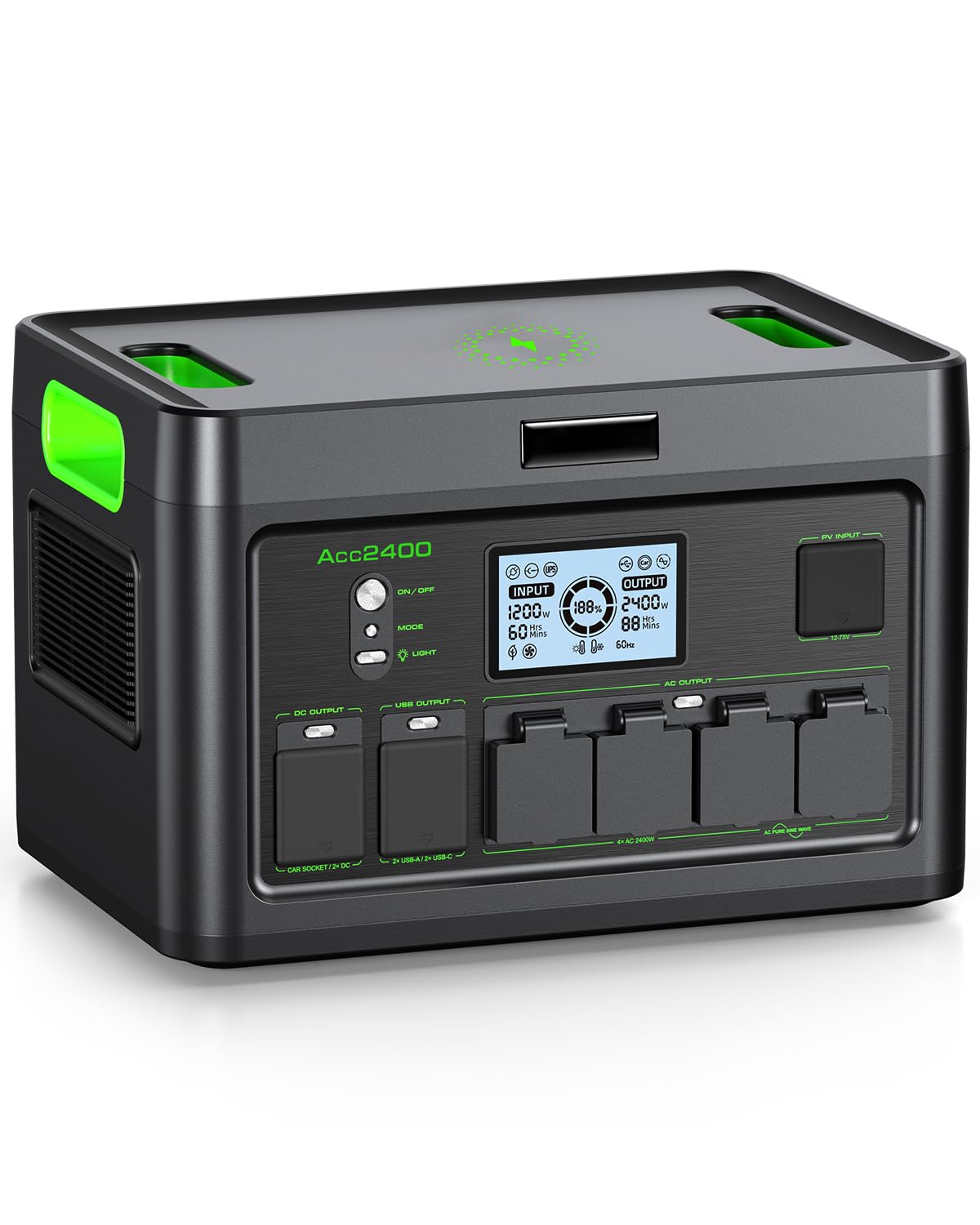
This GRECELL unit offers 1843.2Wh of LiFePO4 battery capacity paired with a 2400W pure sine wave inverter that can surge to 4800W for startup loads. For oxygen concentrator use, that startup surge capacity is critical—many home concentrators draw significantly more power for the first few seconds as the compressor spins up, and this station handles that transient load without tripping or shutting down.
The charging speed is genuinely useful: full recharge from a standard wall outlet in 1.6 to 2 hours, or dual AC plus solar charging that can top off the battery in under 1.8 hours. The advanced MPPT solar controller means you can keep the station topped off indefinitely with solar panels, which is a major advantage during multi-day grid outages. The UPS mode switches to battery within 10 milliseconds, fast enough to keep a concentrator running through a power glitch without a hiccup.
At just under 60 pounds, this station is best positioned near a stationary concentrator at home or in an RV. The smart LCD provides clear real-time readouts of input, output, and remaining charge percentage. Automotive-grade LiFePO4 cells are rated for over 3,500 charge cycles, making this a long-term investment in medical security.
Why it’s great
- 4800W surge handles concentrator motor startup loads.
- Sub-10ms UPS switchover for uninterrupted operation.
- Fast dual charging with solar input up to 800W.
Good to know
- Heavy unit at nearly 60 lbs.
- Oversized for users who only need backup for a compact portable concentrator.
3. EASYLONGER ES960 PRO CPAP Battery Backup
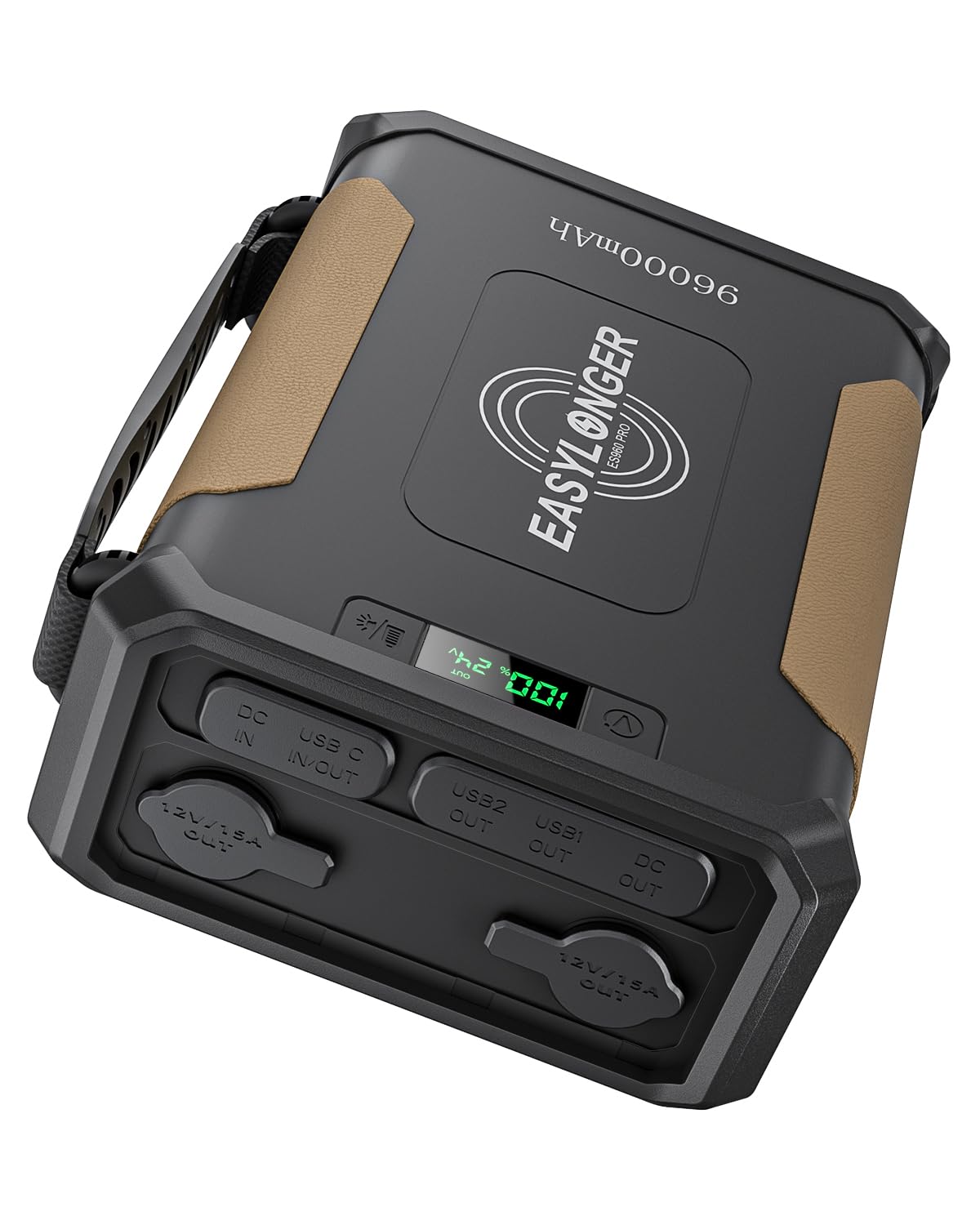
The ES960 PRO delivers 297.6Wh of LiFePO4 battery capacity in a package that supports 12V, 19V, and 24V DC output via four dedicated cables. For portable oxygen concentrators that accept DC input, this direct connection is significantly more efficient than running through an inverter, extending effective runtime by eliminating AC-to-DC conversion losses. Users report running a ResMed AirSense 10 for two full nights without humidification.
The built-in memory function remembers your last voltage setting, so you do not have to reconfigure the output every time you need a backup swap. This is a small but meaningful convenience during a stressful power outage. The 100W USB-C port also allows simultaneous charging of a phone or tablet, which is valuable when the grid is down and communication matters.
At 6.6 pounds, it is portable enough for car camping or moving between rooms. However, the capacity exceeds 160Wh, so it is not TSA-approved for carry-on air travel. The LiFePO4 chemistry offers 3,000 cycles, and recharging via the included wall adapter takes about five hours. This unit is best suited for backup of a single low-to-moderate draw concentrator for one to two nights.
Why it’s great
- Efficient DC direct output for 12V/19V/24V concentrators.
- Memory function retains voltage setting between uses.
- LiFePO4 battery offers 3,000 cycle lifespan.
Good to know
- Not TSA-approved for carry-on air travel.
- Runtime drops significantly if humidifier or heated tube is used.
4. CyberPower CP1500PFCLCD UPS

The CyberPower CP1500PFCLCD is a line-interactive pure sine wave UPS with 1500VA/1000W capacity, making it the traditional form-factor choice for users who want a simple UPS to plug a home concentrator directly into. The pure sine wave output is the key specification here—many cheaper UPS units use simulated sine wave that can damage or refuse to run concentrator compressors. This unit delivers clean, steady power that matches what a concentrator expects from a wall outlet.
The color LCD panel tilts up to 22 degrees and provides real-time data on battery capacity, load wattage, and estimated runtime. Automatic Voltage Regulation (AVR) corrects minor sags and surges without invoking battery power, extending battery lifespan. Users report getting roughly one hour of runtime at half load, which translates to 15-30 minutes for a typical 600-800W concentrator depending on the specific model and draw.
The unit weighs 24.9 pounds and sits in a mini-tower footprint, which is compact enough for a bedside or desk placement. The three-year warranty includes the battery, and the connected equipment guarantee provides peace of mind for medical gear. This is a pure UPS—it is not a portable power station and does not offer solar charging or USB-C fast output. It is the right choice for someone who wants a seamless, always-on UPS for a stationary concentrator and has relatively short power outages that the internal battery can cover.
Why it’s great
- True pure sine wave output, safe for all concentrator types.
- AVR extends battery life by handling small fluctuations.
- Compact tower design fits under a desk or beside a bed.
Good to know
- Runtime limited to approximately 15-30 minutes for a 600W+ concentrator.
- No DC output or solar charging capability.
5. BLUETTI CPAP Battery Backup X30

At just 3.9 pounds, the BLUETTI X30 is the lightest high-quality backup in this review, making it an excellent choice for users who move their concentrator between rooms, take it to a caregiver’s house, or use it on a patio. The 297Wh capacity is packaged in a small 3 x 5 x 8-inch chassis with a built-in handle. The DC output ports—12V/5A, 15V/4A, and 24V/4A—cover the voltage requirements of most portable concentrators directly without needing an inverter.
The included cable set is color-coded with prominent labels for each CPAP and concentrator model, which eliminates fumbling during an urgent setup. Users report getting five to seven nights of use from a single charge when running a device like the Philips System One with humidifier off. The unit also includes a USB-A port for phone charging and an accessory bag for carrying cables and the small AC adapter.
One limitation is that the X30 can only power one device at a time through its DC ports. The actual weight is slightly over 4 pounds, which is still impressively light for the capacity but worth noting for users expecting a true 3-pound unit. The LiFePO4 chemistry claims 2,000 recharge cycles. This is an ideal backup for compact portable concentrator users who prioritize weight and simplicity above all else.
Why it’s great
- Very lightweight at 3.9 lbs, easy to carry.
- Color-coded cables for fast, error-free connection.
- Direct DC output maximizes runtime for compatible devices.
Good to know
- Only powers one device at a time via DC output.
- Actual weight slightly over 4 pounds, not a backpacking unit.
6. EASYLONGER CPAP Battery Backup ES720 PRO
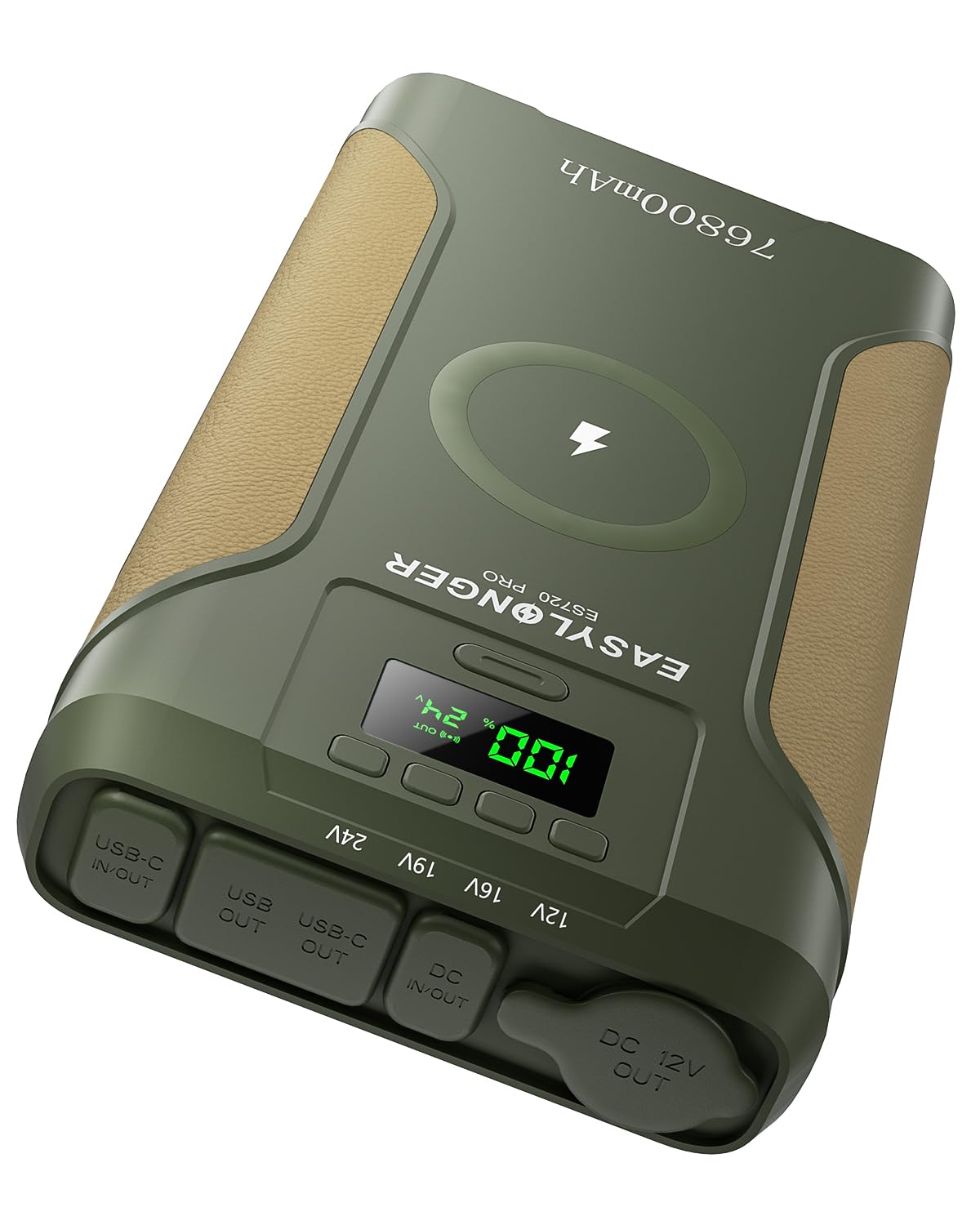
The ES720 PRO provides 276.48Wh of capacity with adjustable DC output (12V, 16V, 19V, 24V), a 120W cigarette lighter port, four USB ports, and a wireless charging pad. This flexibility makes it one of the most versatile backups for users who need to power a concentrator plus keep phones, tablets, and other electronics running during an outage. The digital display shows real-time battery level, voltage, and charging status, and the voltage mode buttons are intuitive to operate.
Four charging methods—72W AC adapter, 60W USB-C PD, car cigarette lighter, and solar panel up to 100W via built-in MPPT controller—mean you can top off the battery in almost any situation. Users have reported running a ResMed AirCurve 10 VPAP for over three nights with reserves remaining, making this a strong choice for multi-day backup of lower-draw devices. At 5.62 pounds, it is nine ounces heavier than the BLUETTI X30 but offers more connection options.
The main drawback reported by some users is that the voltage must be reset to 24V each time unless using an inline adapter, which adds an extra step during setup. A few early reviews also noted button actuation requiring firm pressure to avoid accidental presses. However, for the price and feature set, the ES720 PRO strikes an excellent balance between capacity, weight, and charging versatility.
Why it’s great
- Adjustable DC output covers 12V to 24V concentrators.
- Four charging methods including USB-C PD and solar.
- Wireless charging pad and multiple USB ports for other devices.
Good to know
- Voltage may need manual reset each use without inline adapter.
- Button presses require more pressure than expected.
7. GOLDENMATE 1000VA/600W Lithium UPS

The GOLDENMATE 1000VA/600W UPS is the entry-level LiFePO4 option that offers genuine pure sine wave output at a budget-friendly price point. The 153.6Wh battery pack is significantly smaller than the other power stations on this list, but it is enough to provide short-duration backup for a low-wattage portable concentrator or to give you time to reach an alternate power source during a brief outage. The unit weighs just over 10 pounds, which is manageable for moving between rooms.
The eight NEMA 5-15P outlets include both battery-backed and surge-protected positions. The LCD panel provides real-time information on battery and power status. The built-in Battery Management System (BMS) works with an active cooling fan that kicks in under heavy battery draw—a critical feature for medical devices that run continuously. The LiFePO4 pack is rated for over 5,000 charge cycles, with a total cost of ownership that the manufacturer claims is 40% lower than lead-acid equivalents over the 10-year lifespan.
This unit is best for users on a strict budget who need a pure sine wave UPS with a long battery lifecycle and are comfortable with a limited runtime—typically 10 to 20 minutes for a 300-400W concentrator. The 20ms switchover time is sufficient for most concentrators, but sensitive electronics with tight voltage tolerances may experience a brief power flicker. The lack of a data connection port for automated shutdown is a minor drawback for general IT use but less relevant for concentrator backup.
Why it’s great
- True pure sine wave output at a budget-friendly price.
- LiFePO4 battery with 5,000+ cycle lifespan.
- Lightweight and compact for a 1000VA UPS.
Good to know
- Limited 153.6Wh runtime for larger concentrators.
- No data port for automated system shutdown.
8. Inogen Extended (8-Cell) Battery

The Inogen Extended 8-Cell Battery is a proprietary replacement battery designed exclusively for the Inogen One G4 and Inogen Rove 4 portable concentrators. At 1.1 pounds and roughly the size of a paperback book, this battery slots directly into the device, providing up to 5 hours of runtime on pulse-dose setting 1. For users of these specific Inogen models, this extended battery is the easiest drop-in upgrade to double your mobility compared to the standard battery.
Because it charges directly inside the concentrator, there is no separate power station or external UPS to manage. You simply swap a spent battery for a charged spare and continue your day. The battery is patient-interchangeable and user-removable without tools. For users who rely on pulse-dose therapy and want the longest possible time away from a wall outlet, carrying a second extended battery virtually eliminates range anxiety.
The main trade-off is that this is a single-device, single-purpose solution. If you ever switch to a different concentrator brand, this battery becomes obsolete. The 1.1-pound weight is noticeable when clipped onto a carry bag, and the device’s continuous flow setting will reduce runtime more than pulse mode. Also, the replacement battery can feel expensive relative to its physical size, though this is typical for proprietary medical device accessories.
Why it’s great
- Direct drop-in replacement, no extra equipment needed.
- 5-hour runtime on pulse setting 1 offers real freedom.
- Very light at 1.1 pounds for a high-capacity cell.
Good to know
- Only compatible with Inogen One G4 and Rove 4.
- Runtime drops significantly on continuous flow or higher pulse settings.
9. Inogen External Battery Charger

The Inogen External Battery Charger is a compact AC-powered dock that charges Inogen One G5 and Inogen Rove 6 batteries outside of the concentrator itself. At just 0.12 pounds and a footprint of 3.13 x 2.75 inches, this charger is tiny enough to slide into any bag or drawer. It is designed for users who own multiple Inogen batteries and want to keep a spare fully charged while the concentrator is in use with the primary battery.
Using this charger eliminates the need to plug the concentrator into a wall outlet just to charge a spare battery, which is a meaningful workflow improvement for oxygen-dependent users who are frequently on the go. The charge time of 4.5 hours is reasonable for a top-up overnight. Because this charger works independently from the concentrator, it effectively turns any standard wall outlet into a battery charging station.
The limitation is clear—this is not a battery backup solution itself, but an accessory that enables a multi-battery external backup strategy. It is most useful when paired with a power station that can keep the charger running during an outage, effectively creating a charge-while-you-sleep loop. The price is relatively high for what is essentially a small plastic charging dock, but for users invested in the Inogen ecosystem, it is the only way to charge off-unit batteries.
Why it’s great
- Ultra-light and small enough for any bag.
- Charges spare battery while concentrator runs on the main battery.
- Simple plug-and-forget operation.
Good to know
- Only works with Inogen One G5 and Rove 6 batteries.
- Does not provide backup power—only charges a spare battery.
FAQ
What happens if I use a modified sine wave UPS with my oxygen concentrator?
How many watt-hours do I need for an 8-hour overnight backup?
Can I charge a power station while it runs my concentrator?
Is it safe to use a regular portable power station as a concentrator UPS?
Final Thoughts: The Verdict
For most users, the best battery backup for oxygen concentrator winner is the Anker SOLIX C1000 + BP1000 because it combines massive 2112Wh capacity with true pure sine wave output and sub-2-hour recharging in a safe LiFePO4 package that can sustain a home concentrator for a full night. If you want lighter, everyday transportability, grab the BLUETTI X30 for its 3.9-pound weight and direct DC output. And for heavy-duty multi-day scenarios where you also want solar recharge capability, nothing beats the GRECELL Acc2400 with its 2400W continuous output, 4800W surge capacity, and MPPT solar controller.

Mo Maruf
I created WellFizz to bridge the gap between vague wellness advice and actionable solutions. My mission is simple: to decode the research and give you practical tools you can actually use.
Beyond the data, I am a passionate traveler. I believe that stepping away from the screen to explore new environments is essential for mental clarity and physical vitality.