Our readers keep the lights on and my smoothie glass nicely filled. As an Amazon Associate, I earn from qualifying purchases.
Investing in a solar battery system is a long-term commitment to energy independence, but the market is flooded with conflicting chemistry types, capacity ratings, and cycle life claims. The wrong choice leaves you with either a box that dies after two winters or a system that costs twice as much as your panels. You need a battery that stores every electron your array produces and delivers it reliably for a decade or more.
I’m Mohammad Maruf — the founder and writer behind WellFizz. Over the last decade, I’ve analyzed thousands of solar energy product specifications, comparing discharge curves, BMS designs, cycle life testing data, and real-world customer reports to separate marketing fluff from genuine performance.
Buying the wrong energy storage is an expensive mistake you make only once. This guide breaks down the critical specs, real-world trade-offs, and top-rated models to help you find the absolute best batteries for solar panels that match your power needs, budget, and space constraints.
How To Choose The Best Batteries For Solar Panels
Selecting a solar battery involves more than picking the cheapest listing. You need to align voltage, capacity, chemistry, and physical footprint with your specific inverter, charge controller, and daily energy consumption. Ignoring any of these four pillars leads to poor performance or compatibility failures.
Chemistry: LiFePO4 vs. Sealed Lead-Acid (AGM)
LiFePO4 (lithium iron phosphate) batteries dominate the modern solar market for good reason. They offer 3,000 to 15,000 deep discharge cycles, usable capacity down to 80-100% depth of discharge (DoD), and weigh roughly one-third of an equivalent AGM battery. Sealed lead-acid (AGM) batteries are cheaper upfront but typically last only 200-500 cycles at 50% DoD, meaning you pay more per usable kilowatt-hour over the battery’s lifetime. For any system you plan to use daily, LiFePO4 is the only rational choice.
System Voltage: Keeping Your Inverter Happy
Your battery bank voltage must match your inverter’s input voltage. 12V systems work well for small RVs and camping loads under 1,500W. 24V systems reduce current draw for mid-scale off-grid cabins. 48V systems are the standard for whole-home backup and large solar arrays because they dramatically cut wire size and resistive losses. Battery datasheets usually list a nominal voltage; a “48V” battery is actually 51.2V at full charge, which is critical for setting your charge controller’s absorption and float parameters correctly.
Capacity: Amp-Hours (Ah) vs. Kilowatt-Hours (kWh)
Amp-hours tell you how long the battery can deliver a given current, but kilowatt-hours tell you the real usable energy. Multiply nominal voltage by amp-hours to get watt-hours, then divide by 1,000. For example, a 12V 100Ah battery holds 1.28 kWh. A 48V 100Ah battery holds 5.12 kWh. Always size your storage to cover at least one full day of your average consumption plus a 20% reserve for cloudy days. Over-sizing by 2x is common when adding a buffer for morning coffee, refrigeration, and evening lighting.
Quick Comparison
On smaller screens, swipe sideways to see the full table.
| Model | Category | Best For | Key Spec | Amazon |
|---|---|---|---|---|
| WEIZE 12V 100Ah | AGM Deep Cycle | Entry-level backup, trolling motors | 63 lbs, 1150A max discharge | Amazon |
| HumsiENK 12V 100Ah | LiFePO4 | Mid-range RV solar upgrade | 19.73 lbs, IP67, 15,000+ cycles | Amazon |
| Dumfume 12V 314Ah | LiFePO4 | High-capacity, no-frills bank | 57.28 lbs, 200A BMS | Amazon |
| ECO-WORTHY 12V 280Ah | LiFePO4 Metal Case | Rugged RV/van builds | 68.5 lbs, metal enclosure, Bluetooth | Amazon |
| MEYULMOL 12V 300Ah (2-Pack) | LiFePO4 | Large capacity dual-bank RV/cabin | 200A smart BMS, 3840Wh each | Amazon |
| Anker SOLIX C2000 Gen 2 | Portable Power Station | Portable home backup, camping | 2,048Wh, 2,400W AC output | Amazon |
| AOUSK 48V 100Ah | Rack-Mount LiFePO4 | Whole-home off-grid solar | 5.12 kWh, 100A BMS, rack-mount | Amazon |
| Battle Born 100Ah 12V | Premium LiFePO4 | Drop-in marine/RV reliability | 31 lbs, 10-year warranty | Amazon |
| Dumfume 24V 314Ah | High-Voltage LiFePO4 | Large off-grid home backup | 8 kWh, 200A BMS, IP65 | Amazon |
In‑Depth Reviews
1. Anker SOLIX C2000 Gen 2
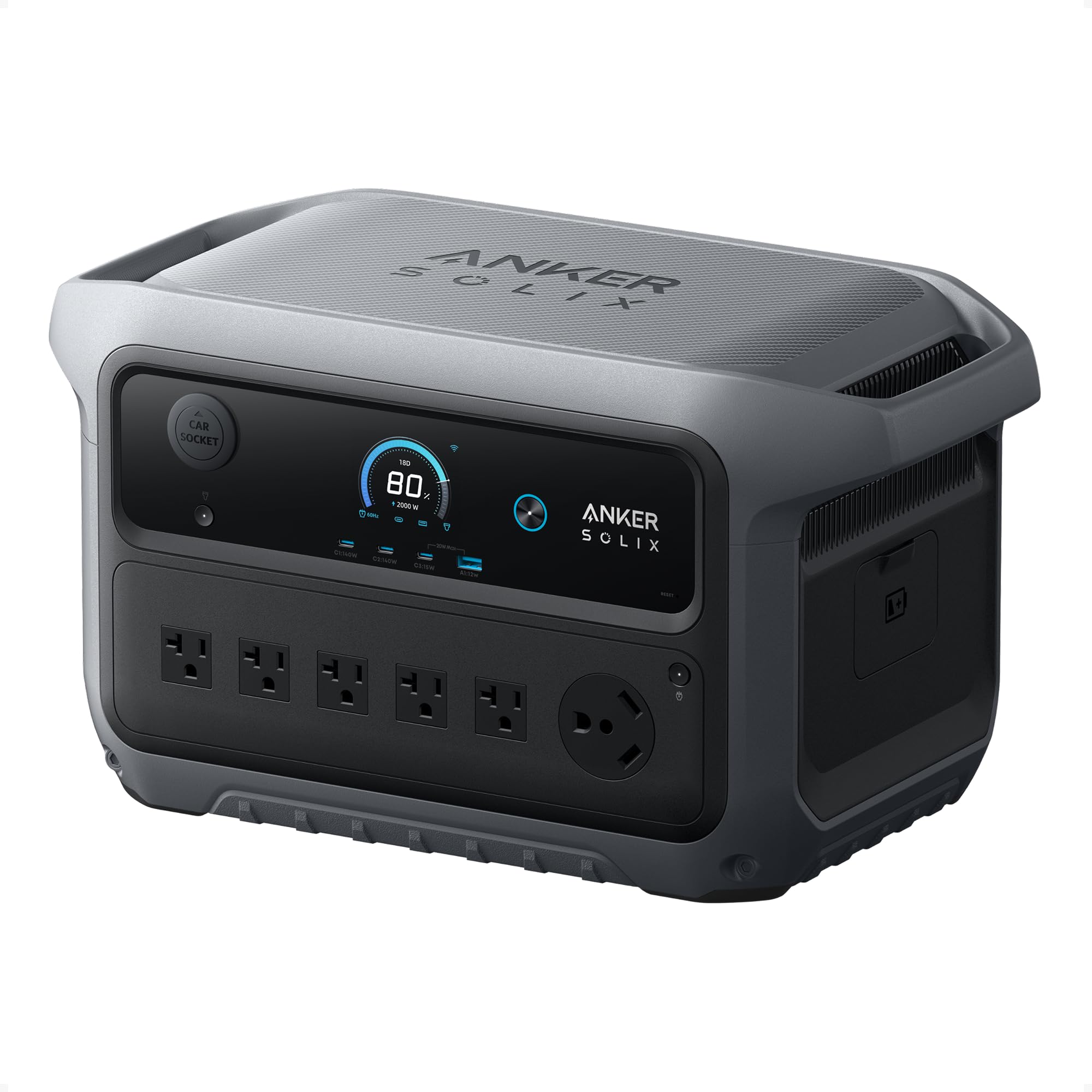
The Anker SOLIX C2000 Gen 2 is a 2,048Wh portable power station with a 2,400W pure sine wave inverter that peaks at 4,000W — enough to start a window A/C unit or run a full-size refrigerator for 32 hours. Its LiFePO4 internal pack recharges from AC in 58 minutes flat, a charging speed that traditional battery banks simply cannot match.
Standby consumption is remarkably low at just 9W, and the system supports expansion up to 4kWh with an optional add-on battery. The unit also handles 800W alternator charging, reducing the top-up time to about 3 hours from a vehicle, which is eight times faster than standard 12V sockets.
Weighing 41.7 lb, it is lighter than any comparable 2kWh lithium bank plus separate inverter setup. The trade-off is that this is a sealed system — you cannot replace individual cells or upgrade the BMS. For portable backup, camping, or light home emergency use, it eliminates the complexity of wiring a separate battery, charge controller, and inverter.
Why it’s great
- Ultra-fast 58-minute full recharge from AC
- Extremely low 9W standby power draw
- Expandable to 4kWh with add-on battery
- Lightweight and portable at 41.7 lbs
Good to know
- Sealed design; no user-replaceable cells or BMS
- Higher upfront cost per kWh than bare batteries
2. AOUSK 48V 100Ah V2 LiFePO4
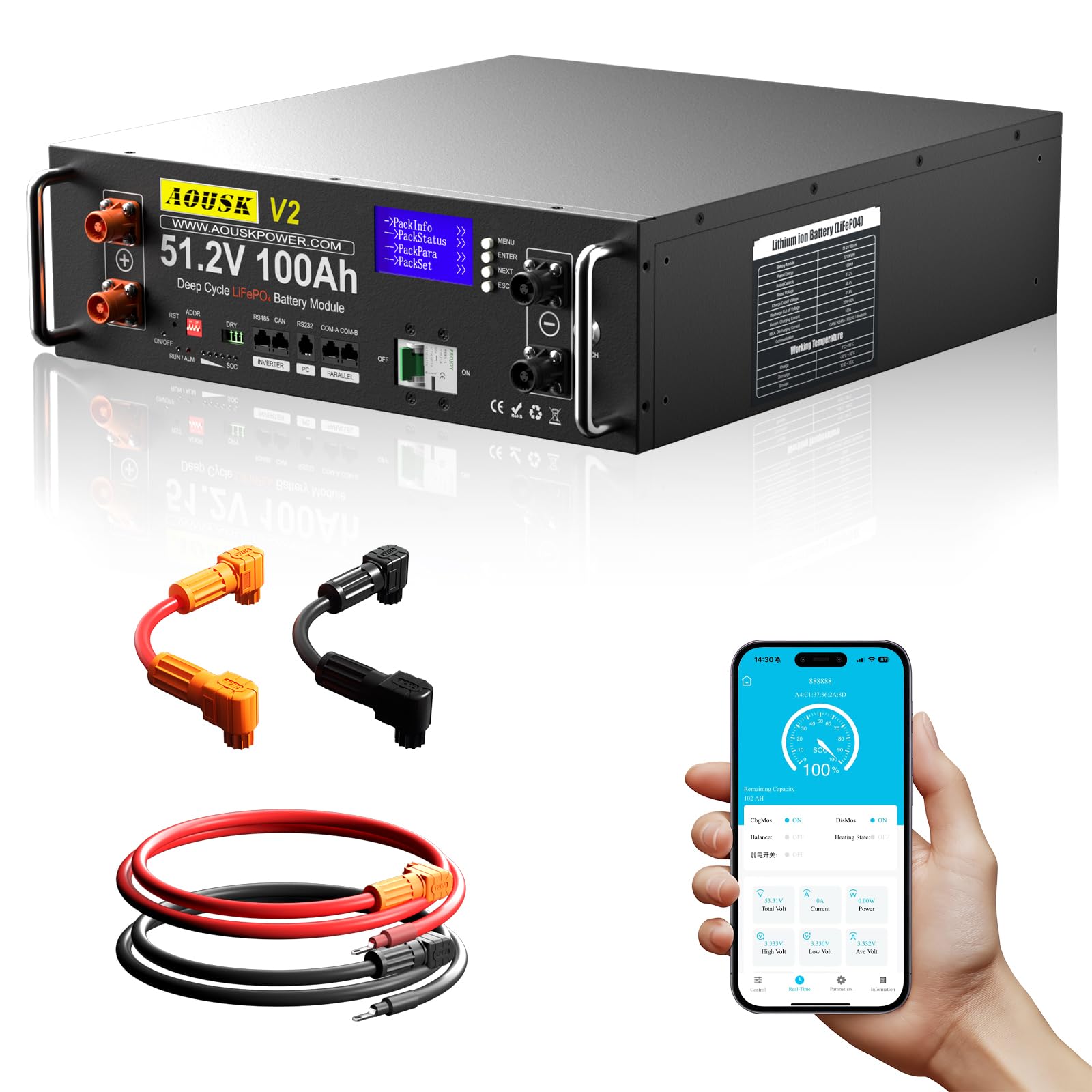
The AOUSK 48V 100Ah V2 delivers 5.12 kWh of usable energy in a standard 3U rack-mount form factor, making it the cleanest option for a dedicated solar equipment cabinet. The built-in 100A BMS supports CAN and RS485 communication protocols, allowing direct integration with popular all-in-one inverters like those from Growatt, MPP Solar, and Deye.
Each unit weighs 94.8 lb — manageable with two people — and supports parallel expansion up to 15 units for a theoretical 76.8 kWh bank. The full-metal enclosure adds fire resistance and structural rigidity, while the integrated 125A air switch provides a physical disconnect point for maintenance.
The Bluetooth mobile app gives real-time cell voltage, temperature, and state-of-charge data. Automotive-grade Grade A prismatic cells are rated for 6,000+ deep cycles at 80% DoD. For anyone building a permanent off-grid home, this battery eliminates the inefficiency of stacking multiple 12V units in series and simplifies wiring to a single high-voltage string.
Why it’s great
- 5.12 kWh per rack-mount unit; clean cabinet install
- CAN/RS485 communication for smart inverter pairing
- Full-metal enclosure with 125A air switch
- Hiqh-quality Grade A cells with 6,000+ cycles
Good to know
- Requires compatible 48V inverter; not universal
- Heavy unit at 94.8 lbs; not portable
3. Dumfume 24V 314Ah LiFePO4
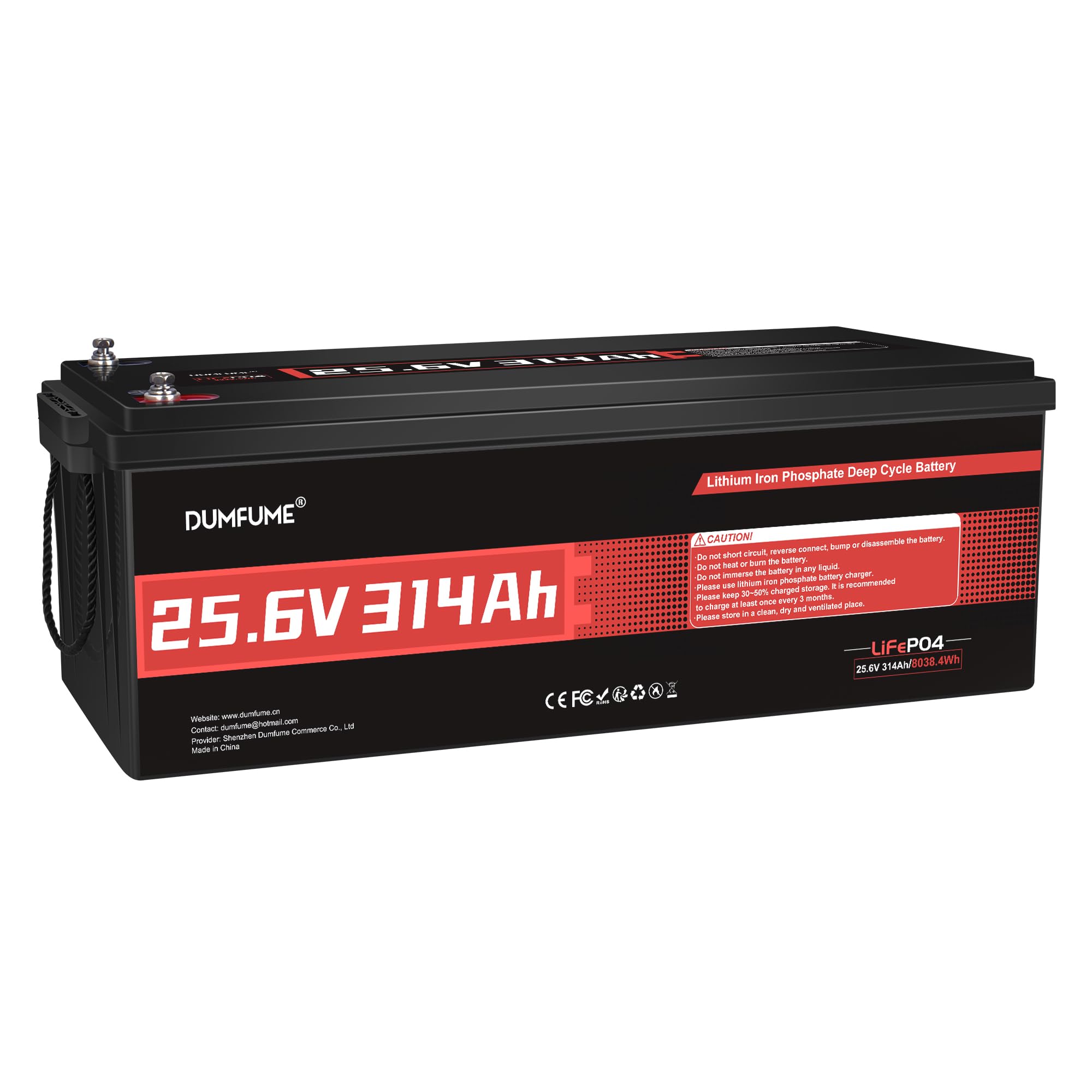
The Dumfume 24V 314Ah delivers a massive 8,038 Wh (8 kWh) from a single enclosure measuring 25.2 x 9.6 x 8.9 inches. It is designed as a true drop-in replacement for 24V lead-acid banks, using a 200A BMS with low-temperature charging cutoff at 32°F and discharge capability down to -4°F.
The IP65 water resistance rating allows indoor or outdoor installation under eaves, and the flame-retardant ABS casing adds safety for tight compartments. The battery supports 2S4P series/parallel configurations, allowing expansion up to 64 kWh across eight units.
Grade A automotive cells are rated for over 4,000 cycles at 80% DoD, translating to a practical lifespan exceeding ten years under normal solar cycling. At 112.44 lb, installation requires two people, but the high energy density per pound beats most 24V competitors. For a large off-grid cabin or whole-home backup, this single battery replaces a string of smaller units and simplifies wiring significantly.
Why it’s great
- 8 kWh of energy in a single battery unit
- IP65 weather resistance for flexible placement
- Drop-in replacement for 24V lead-acid systems
- High capacity reduces number of parallel connections
Good to know
- Heavy at 112.44 lbs; requires two people to lift
- Not compatible with 12V or 48V systems directly
4. Battle Born 100Ah 12V LiFePO4
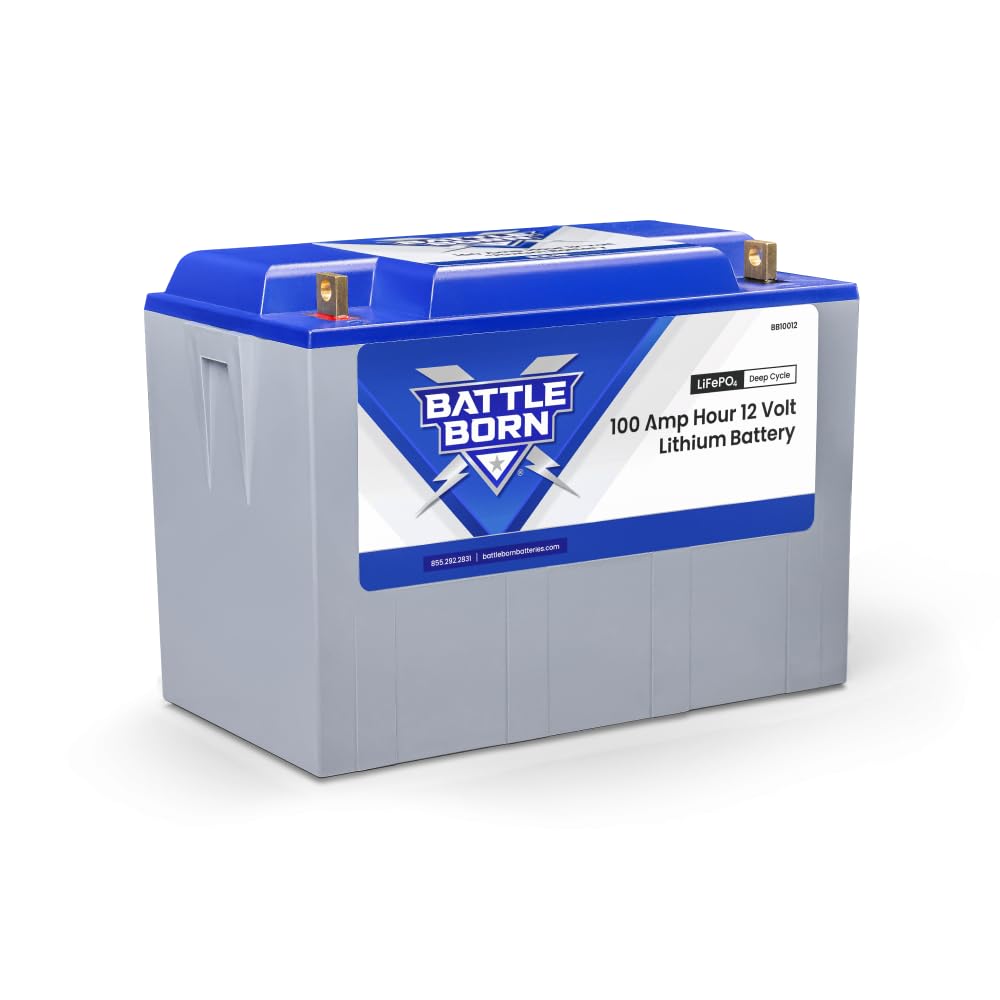
The Battle Born 100Ah is the gold standard for drop-in replacement confidence, backed by a 10-year warranty that covers defects and performance degradation. Each 31-pound battery uses a robust internal BMS with low-temperature protection, high/low voltage cutoffs, and short circuit protection — all housed in a Group 27/31 compatible case.
Rated for 3,000 to 5,000 deep discharge cycles, it delivers 100% usable capacity from day one, unlike AGM batteries that lose capacity at high discharge rates. The battery can be wired in series for 24V or 48V banks, or in parallel up to the inverter’s limit, with no requirement to match production date.
Real-world reports show this battery powering RV fridges, lights, and electronics for 28 hours continuously — more than triple what a comparable AGM delivers. The premium pricing reflects the US-based customer support and the industry-leading warranty. For users who value hassle-free ownership and maximum reliability over rock-bottom pricing, this is the safest long-term investment.
Why it’s great
- Industry-leading 10-year comprehensive warranty
- 100% usable capacity; no derating needed
- Very lightweight at 31 lbs for 100Ah
- Excellent US-based customer support
Good to know
- Premium price reflects the warranty and support
- Requires lithium-compatible charge controller
5. ECO-WORTHY 12V 280Ah Metal Case
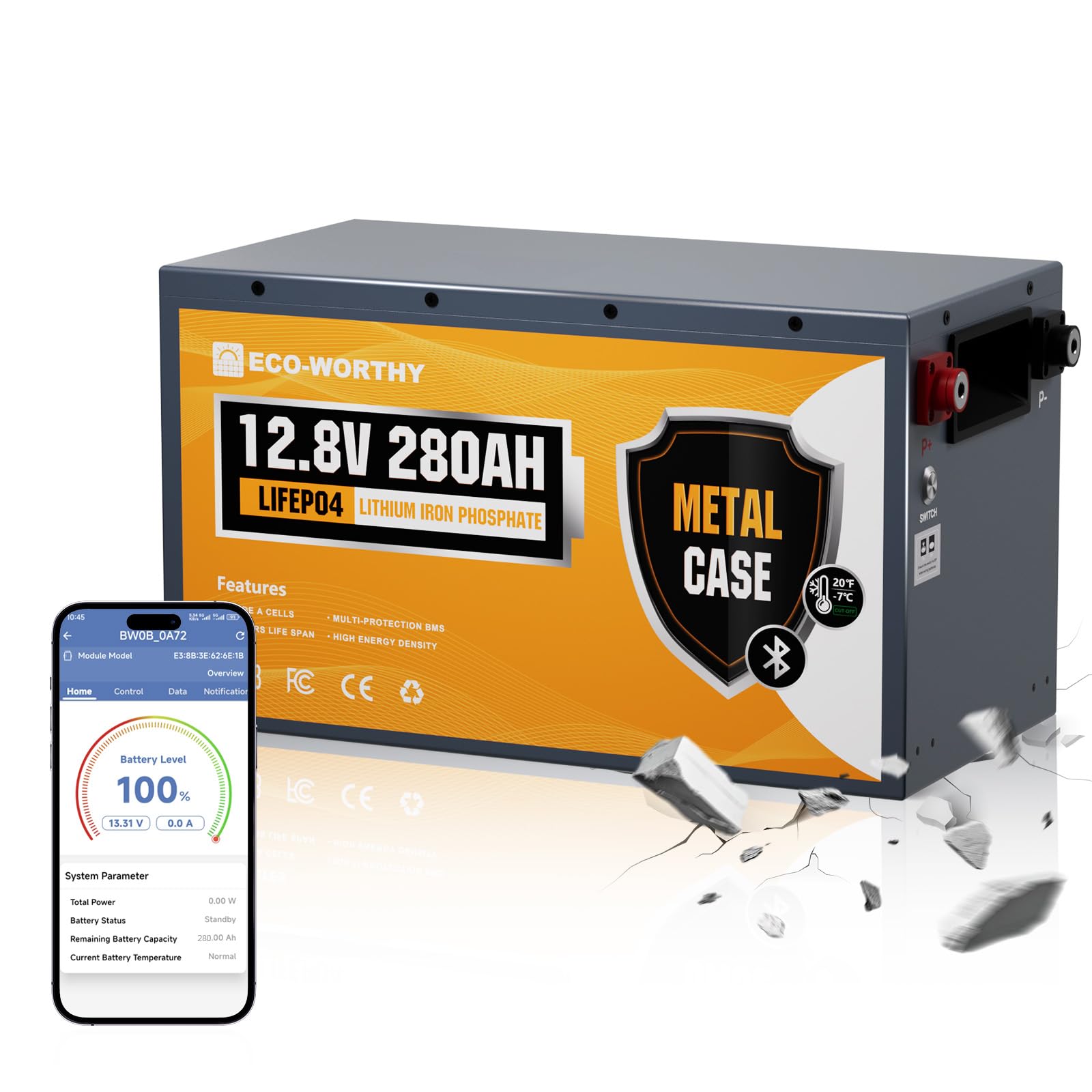
The ECO-WORTHY 280Ah stands out for its heavy-duty metal enclosure that doubles as a radiation shield and fire barrier. Four integrated mounting feet allow direct bolting to the RV or van floor without a separate battery box, saving both space and weight. The 200A BMS handles surge loads well, and the built-in low-voltage power switch provides a quick disconnect for maintenance.
Bluetooth monitoring via the JBD-based BMS gives full cell-level data through the Overkill Solar app, a favorite among DIY solar enthusiasts. Grade A LiFePO4 cells are held under compression inside the metal cage, which helps maintain cell consistency over thousands of cycles.
At 68.5 lb for 280Ah (3,584 Wh), this battery packs nearly three times the capacity of a standard 100Ah unit for only moderate weight gain. Users report exceeding the rated capacity by a small margin and running 2,000W inverters with microwave, instant pot, and induction cooktop simultaneously. For a fully self-contained build where vibration and road shock are constant concerns, the metal case is a decisive advantage.
Why it’s great
- Rugged metal enclosure with mounting feet
- Excellent high-capacity-to-weight ratio (3.5 kWh at 68.5 lb)
- Bluetooth BMS compatible with Overkill Solar app
- 200A continuous BMS handles heavy inverter loads
Good to know
- 3-year warranty is shorter than some competitors
- Requires lithium-aware converter/charger
6. MEYULMOL 12V 300Ah (2-Pack)
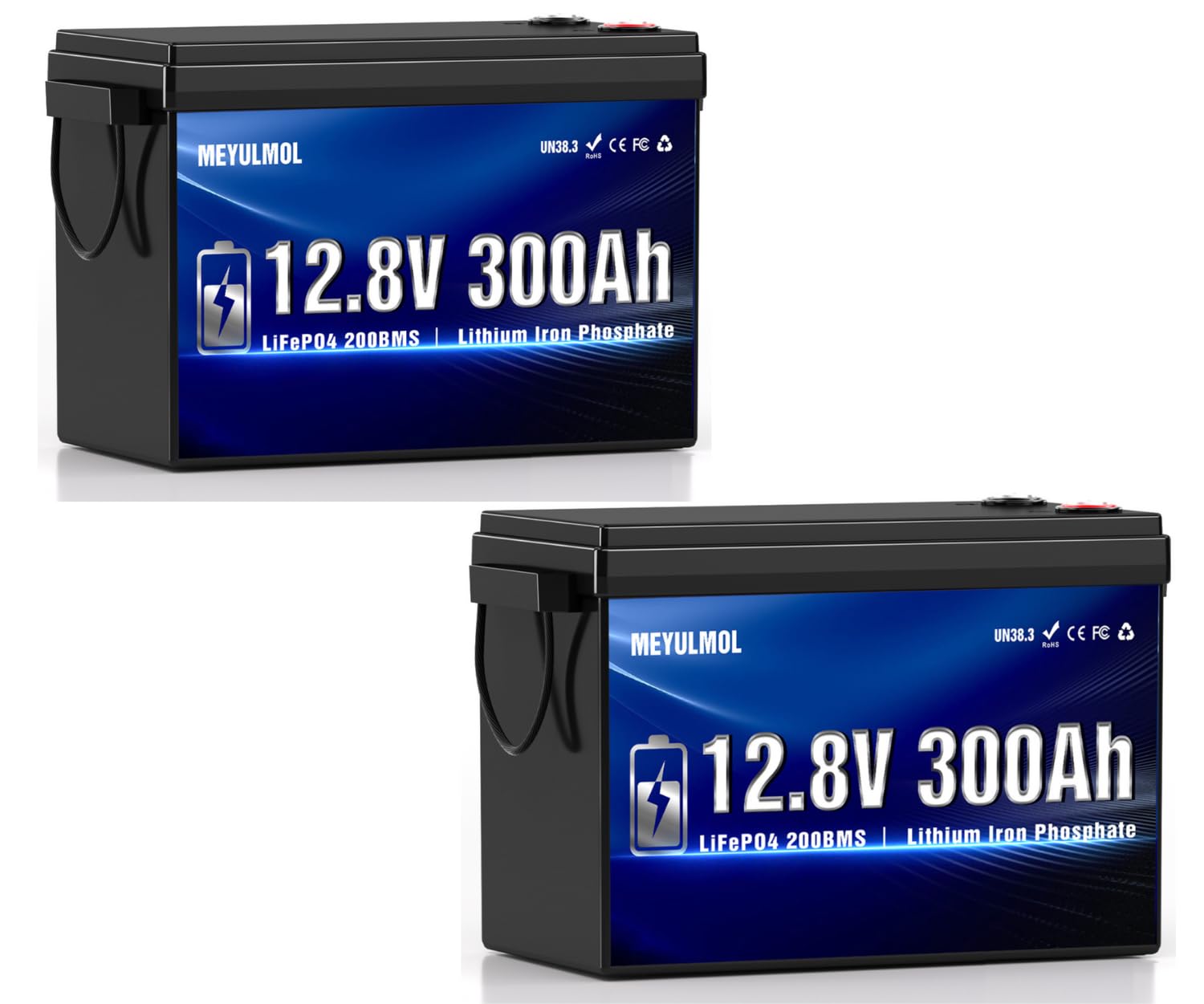
The MEYULMOL 12V 300Ah (2-Pack) provides a total of 600Ah (7,680 Wh) in one purchase, simplifying the matching and wiring process. Each battery features an upgraded 200A smart BMS with seven layers of protection, including precision low-temperature cutoff at 32°F to prevent lithium plating during freezing nights.
Automotive-grade A-class cells are rated for 4,000+ cycles at 80% DoD, with the BMS managing cell balancing automatically. The compact enclosure weighs just over half of what four lead-acid batteries would, freeing up significant payload capacity in an RV or boat.
Users report that two MEYULMOL batteries in parallel run a large 33-foot motorhome’s entire load — including a 120V apartment fridge, 55-inch TV, and an inverter — comfortably after just a couple of hours of generator charging. The self-discharge rate stays below 3% per month, making this bank suitable for seasonal use. For anyone needing a massive 12V bank from a single order with matched cells, this two-pack eliminates the hunt for second-hand matching units.
Why it’s great
- Matched pair ensures balanced parallel operation
- 7.68 kWh total capacity from a single order
- 200A smart BMS with comprehensive protection
- Ultra-low self-discharge rate below 3%
Good to know
- Large physical footprint requires adequate space
- No Bluetooth monitoring on older batches
7. Dumfume 12V 314Ah LiFePO4
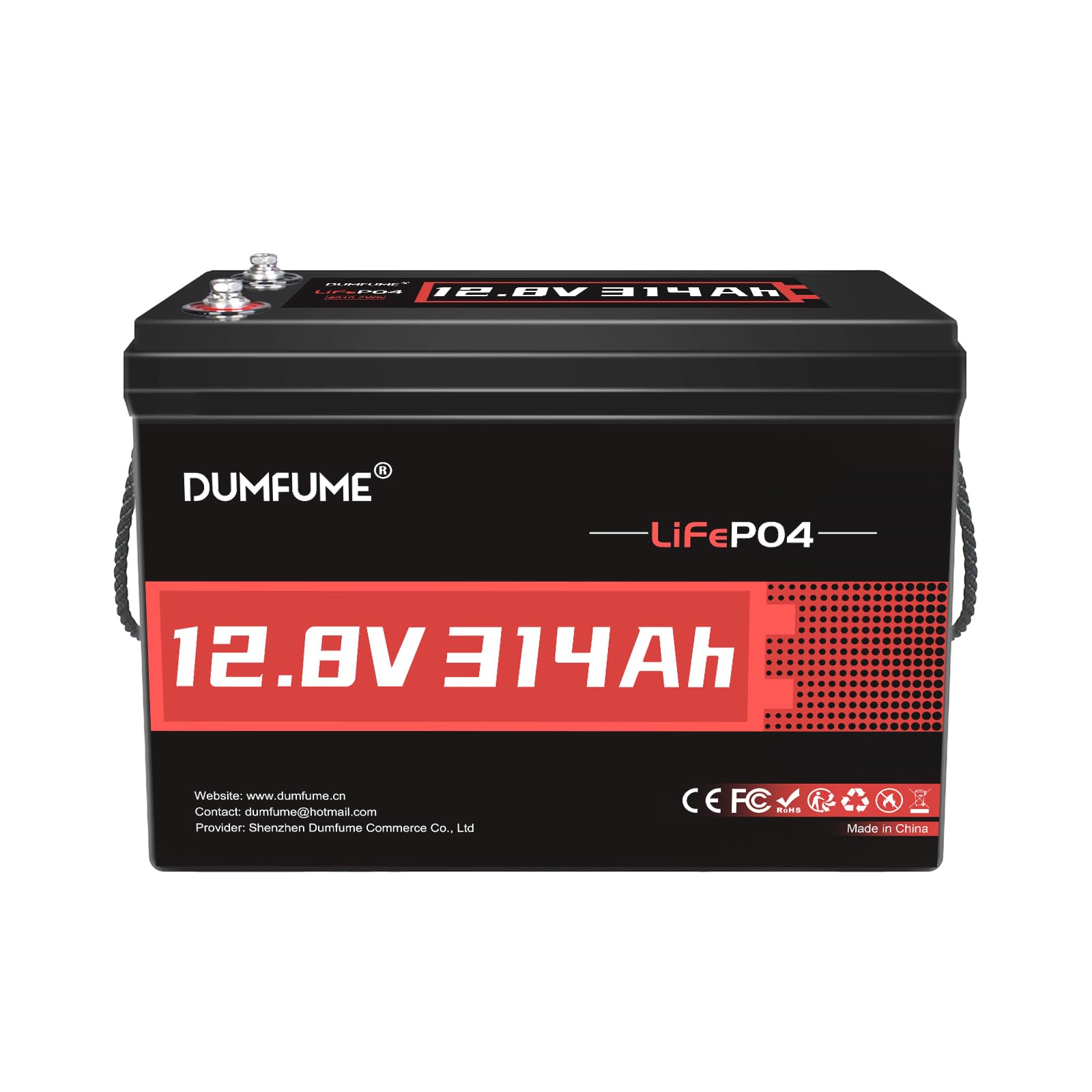
The Dumfume 12V 314Ah provides a massive 4,019 Wh in a single 57.28-pound package, giving it nearly three times the capacity of a standard 100Ah battery without tripling the weight. The 200A BMS supports continuous loads up to 2,560W at 12.8V, enough for most 2,000W inverters and common RV appliances like microwaves and induction cooktops.
This is a no-frills battery — there is no Bluetooth monitoring, no metal case, and no communication protocols. The ABS casing is flame-retardant, and the low-temperature cutoff feature prevents charging below 32°F, though some users noted the cutoff can be sensitive in borderline freezing conditions. Grade A prismatic cells are rated for 4,000 cycles at 100% DoD and 15,000 cycles at 60% DoD.
For the price per kilowatt-hour, this is among the most cost-effective lithium storage available. The trade-off is the lack of smart features — you will need to monitor state of charge via a separate shunt or battery monitor. For budget-conscious builders who prioritize raw capacity over connectivity, this battery delivers unbeatable storage density.
Why it’s great
- Excellent 4 kWh capacity for the weight (57.28 lb)
- Lowest price per kWh in the lithium category
- 4,000 cycles at 100% depth of discharge
- Simple, reliable design with no app complexity
Good to know
- No Bluetooth or app for state-of-charge monitoring
- Cold temperature cutoff can be overly sensitive near 32°F
8. HumsiENK 12V 100Ah LiFePO4

The IP67 waterproof rating means it can handle rain, splashes, and even brief submersion, making it ideal for marine applications and exposed trailer compartments.
The built-in 100A BMS provides comprehensive protection including low-temperature recovery, over-discharge, over-charge, high-temperature, short circuit, and over-current. The battery supports 3 charging methods (solar, generator, and grid) and can recharge fully in about 2 hours with a suitable lithium charger — six times faster than a lead-acid equivalent.
Real-world users report replacing 6x6V golf cart batteries with three HumsiENK 12V units in a 36V configuration, achieving significant weight reduction and extended runtime. The battery can be connected in series up to 48V or parallel up to 20.48 kWh capacity. For anyone upgrading from heavy lead-acid who wants the lightest possible swap, this unit is hard to beat.
Why it’s great
- Extremely light at just 19.73 lbs
- IP67 waterproof for marine and outdoor use
- Fast 2-hour full recharge capability
- Versatile series/parallel expansion options
Good to know
- Only 100A BMS limits high-load inverter use
- Nylon handle may wear over heavy use
9. WEIZE 12V 100Ah Deep Cycle AGM

The WEIZE 12V 100Ah is a sealed lead-acid AGM battery built for deep-cycle applications in RVs, solar setups, cabins, and marine environments. Its maintenance-free design eliminates the need to top off distilled water, and the spill-proof construction allows safe installation in any orientation except upside-down.
With a 1150A max discharge current, this battery can handle high surge loads like inverter startup and trolling motor bursts. The self-discharge rate is a low 3% per month, allowing it to sit in storage for extended periods without significant capacity loss. Users have successfully paired two units in parallel for 200Ah banks powering 700W inverters in off-grid RVs for multiple years.
At 63 pounds, this AGM battery is heavy compared to lithium, but the upfront cost is significantly lower. For budget-conscious users or those running occasional backup rather than daily cycling, the WEIZE offers dependable performance without the complexity of a BMS or lithium charger requirements. For daily cycling, however, lead-acid’s 200-500 cycle lifespan means it will need replacement far sooner than any lithium option in this guide.
Why it’s great
- Very affordable entry point for solar storage
- High 1150A surge capacity for inverters
- Zero maintenance and spill-proof design
- Low 3% monthly self-discharge rate
Good to know
- Heavy at 63 lbs; only 50% usable capacity recommended
- Limited to ~500 cycles; not for daily off-grid use
FAQ
Can I mix lithium and lead-acid batteries in the same bank?
How many kilowatt-hours do I need for a typical off-grid cabin?
Does cold weather permanently damage LiFePO4 batteries?
Final Thoughts: The Verdict
For most users, the batteries for solar panels winner is the Anker SOLIX C2000 Gen 2 because it combines a reliable LiFePO4 core with a high-output inverter, ultra-fast recharging, and true portability in a single box. If you want maximum storage density per dollar for a permanent off-grid bank, grab the Dumfume 12V 314Ah and pair it with a quality inverter and shunt monitor. And for whole-home solar backup with clean rack-mount integration, nothing beats the AOUSK 48V 100Ah V2 which delivers 5.12 kWh with full inverter communication support.

Mo Maruf
I created WellFizz to bridge the gap between vague wellness advice and actionable solutions. My mission is simple: to decode the research and give you practical tools you can actually use.
Beyond the data, I am a passionate traveler. I believe that stepping away from the screen to explore new environments is essential for mental clarity and physical vitality.