Our readers keep the lights on and my smoothie glass nicely filled. As an Amazon Associate, I earn from qualifying purchases.
Choosing a bass loudspeaker means committing to a multi-year investment in your sound system, whether you need chest-thumping low end for your home theater, floor-shaking reinforcement for a live band, or a portable party rig that turns any backyard into a dance floor. The market is flooded with wattage ratings that sound impressive but often mislead, and the real deciding factors—driver size, cabinet construction, frequency response, and amplifier topology—get buried under marketing hype.
I’m Mohammad Maruf — the founder and writer behind WellFizz. I spend my days analyzing frequency response curves, comparing Class-D amplifier efficiency ratings, and vetting cabinet resonance data so you don’t have to guess whether that 15-inch woofer delivers tight, musical bass or just muddy drone.
This guide cuts through the spec-sheet noise to deliver nine meticulously vetted options that actually perform. Whether you are a mobile DJ, a weekend musician, or a home audio enthusiast, you will find the best bass loudspeaker for your exact scenario here.
How To Choose The Best Bass Loudspeaker
The most common mistake buyers make is equating peak wattage with outright loudness and low-end authority. A 4000-watt speaker with a flimsy enclosure and a poorly matched driver will sound hollow and distorted long before you reach its theoretical output limit. Focus on the interplay of driver size, enclosure rigidity, amplifier class, and frequency response range — these four pillars define every loudspeaker’s bass behavior.
Driver Size and Cabinet Construction
For bass loudspeakers, diameter directly correlates with the volume of air a driver can displace. An 18-inch woofer moves significantly more air than a 12-inch unit, translating to deeper, more tactile low-end. However, a large driver in a thin MDF or plastic cabinet will resonate and color the sound. Look for cabinets constructed from birch plywood (preferred for touring) or high-density MDF with internal bracing. These materials minimize panel vibration, keeping the bass tight and avoiding that “boxy” tonality.
Amplifier Power and Headroom
Active (powered) speakers simplify setup by integrating the amplifier, but not all built-in amps are equal. Class-D amplifier modules offer high efficiency and light weight, but clean headroom matters more than raw peak numbers. An amplifier rated at 700 watts RMS is far more reliable than one claiming 2400 peak watts with a small heat sink. RMS (continuous) power tells you how much the speaker can handle during long sessions — look for this figure, not the peak marketing number.
Frequency Response and Port Design
The lower the frequency response spec, the deeper the bass extension. A subwoofer rated down to 35 Hz will produce audible sub-bass for kick drums and synthesizers. Ported (bass reflex) designs boost low-end output but can introduce chuffing noise at high volumes if the port is poorly engineered. For tight, controlled bass in a smaller room, a sealed enclosure is preferable. For maximum output in a live sound setting, a well-tuned ported cab is the standard choice.
Quick Comparison
On smaller screens, swipe sideways to see the full table.
| Model | Category | Best For | Key Spec | Amazon |
|---|---|---|---|---|
| Klipsch SPL-120 | Home Theater Subwoofer | Deep house-shaking bass | 12″ Cerametallic driver, 600W | Amazon |
| Sound Town METIS-PRO18AS | PA Subwoofer | Large venue low-end reinforcement | 18″ driver, 700W RMS | Amazon |
| Bose L1 Pro8 | Portable Line Array | Compact full-range with vocal clarity | 7×13″ Race Track driver, 180° H | Amazon |
| ION Block Rocker | Portable Party Speaker | Outdoor karaoke & gatherings | 8″ woofer, 120W, 35hr battery | Amazon |
| Edifier T5s | Desktop Subwoofer | Near-field music accuracy | 8″ long-throw, 70W RMS, 35Hz | Amazon |
| Mackie Thump215 | Active PA Loudspeaker | Loud, clear live sound | 15″ driver, 1400W, 129dB SPL | Amazon |
| ALTO TS415 | Active PA Loudspeaker | Wireless stereo linking & DSP | 15″ LF driver, 2500W peak | Amazon |
| HeadRush FRFR112 MKII | Guitar/Bass FRFR Speaker | Modeler amp cab simulation | 12″ woofer + 1″ HF driver | Amazon |
| PRORECK Club 4000 | Complete PA System | All-in-one venue coverage | 18″ sub, 4x line array tops | Amazon |
In‑Depth Reviews
1. Klipsch SPL-120
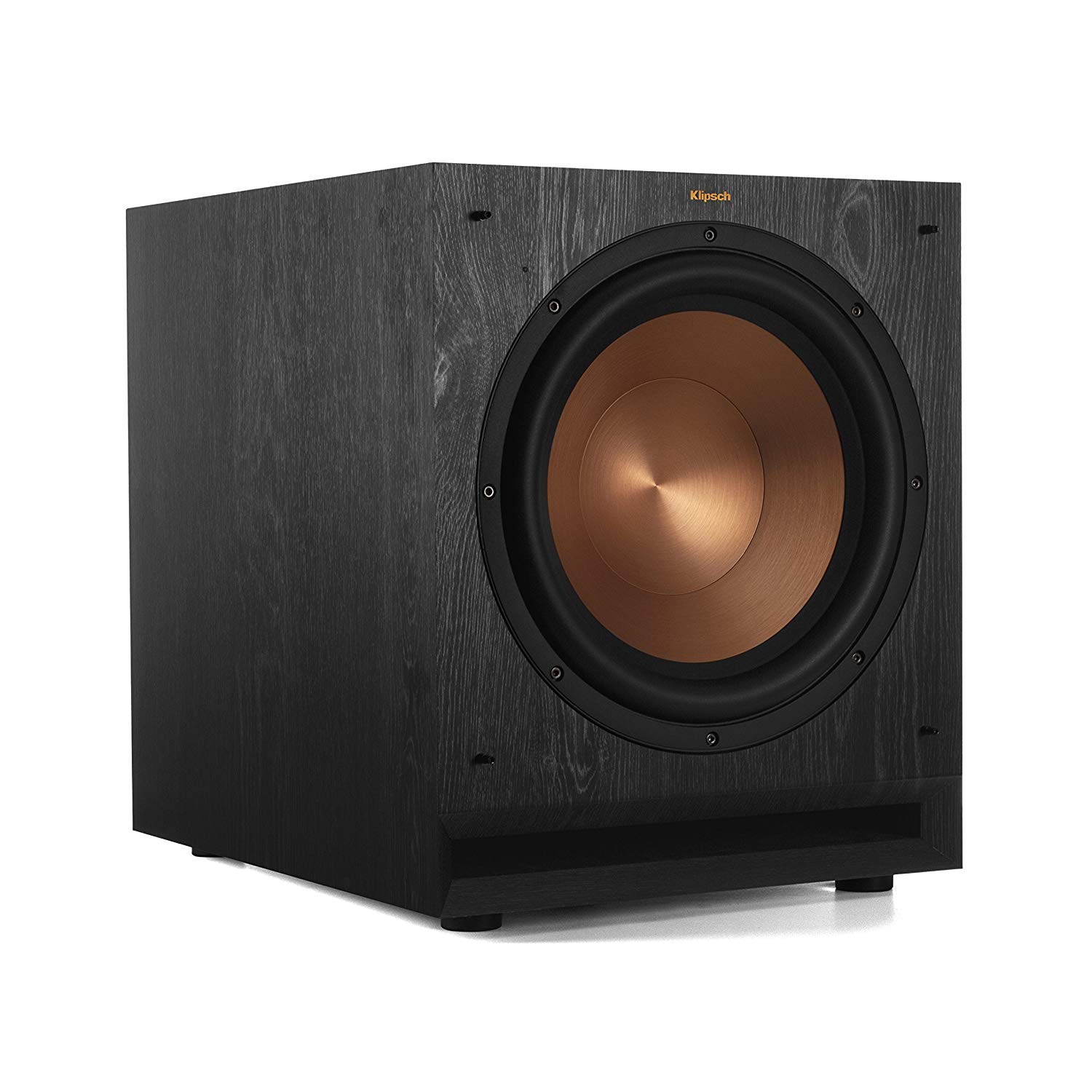
The Klipsch SPL-120 is the standard against which other home-theater subwoofers should be measured. Its 12-inch Cerametallic woofer, combined with a 600-watt amplifier, delivers a tight, low-distortion bass response that extends well below the rated 24 Hz, handling everything from the deepest cinematic explosions to the lowest piano notes with authority. The MDF cabinet is braced to eliminate resonance, and the scratch-resistant ebony finish blends into any room.
This is a subwoofer that integrates seamlessly even with high-end towers like Bowers & Wilkins CM9s, adding depth without overpowering the mids or highs. The adjustable low-pass crossover, phase control, and gain knob give you precise tuning ability — a critical feature for avoiding those flabby, one-note bass artifacts that plague lesser designs. The optional WA-2 wireless kit adds placement flexibility without running an RCA cable across the room.
For a dedicated home theater or critical music listening, the SPL-120 outperforms competitors that cost three times as much. Its 118 dB maximum acoustic output is genuinely room-shaking, yet the sound remains controlled and musical. The only catch is the weight — at over 40 pounds, this is a stationary piece designed to stay in one place once dialed in.
Why it’s great
- Exceptional 18 Hz low-end extension for its size and price
- Cerametallic cone minimizes distortion at high output levels
Good to know
- Heavy and not designed for portable use or gigging
- Does not include Bluetooth streaming built-in
2. Sound Town METIS-PRO18AS

When you need to pressurize a room or a medium-sized venue with genuine sub-bass, the Sound Town METIS-PRO18AS brings the muscle. Its 18-inch custom driver with a 3-inch dual-layer voice coil and 75-ounce magnet is built to move serious air, and the onboard 700-watt RMS Class-D amplifier provides clean headroom for hours of high-output operation. The birch plywood enclosure with impact-resistant textured finish resists the flex and resonance that plague particle-board cabinets.
Connectivity is comprehensive for a pro PA sub: two XLR-1/4-inch combo inputs, stereo RCA inputs, and a 100 Hz high-pass XLR output for daisy-chaining satellite speakers. The built-in polarity switch and 40-160 Hz low-pass filter allow fine-tuning to match your tops. Users consistently report that this sub fills a 22-by-40-foot theater space without breaking a sweat, delivering tight bass that complements rather than overwhelms the mix.
The trade-off is sheer weight and size — this is an 85-pound cabinet that requires two people to move comfortably. The bass roll-off begins around 40 Hz, so it won’t reproduce the deepest synthesizer sub-tones like a premium touring sub would, but for live sound reinforcement, DJ work, and medium-sized venues, the METIS-PRO18AS offers performance that rivals units costing twice as much. Two recessed ergonomic handles help, but plan for a dolly.
Why it’s great
- Industrial-grade birch plywood cabinet resists mechanical distortion
- 700-watt RMS power delivers sustained output without thermal shutdown
Good to know
- Extremely heavy (85 lbs) — requires two people to transport
- Low-end extension drops off noticeably below 40 Hz
3. Bose L1 Pro8

The Bose L1 Pro8 redefines what a portable PA system can achieve in terms of bass-per-footprint. Its innovative 7-by-13-inch high-excursion Race Track driver delivers low-end output comparable to a conventional 12-inch woofer but in a dramatically smaller enclosure, making this system genuinely one-trip portable for solo performers and mobile DJs. The C-shaped articulated line array with eight 2-inch neodymium drivers provides consistent 180-degree horizontal coverage, ensuring the audience hears the same tonal balance everywhere in the room.
For singer-songwriters and acoustic acts, the L1 Pro8 excels because the built-in three-channel mixer and DSP maintain supreme vocal clarity even as the subwoofer section handles kick drum and bass guitar. The integrated Bluetooth streaming and wireless app control let you dial in EQ and monitor levels from the audience or stage. The system’s lightweight design — around 40 pounds total — makes it feasible to carry from a car to a coffee shop in a single trip.
That said, this is not a system designed for large venues or heavy rock bands. The Race Track driver, while impressive for its class, cannot match the sheer displacement of a dedicated 15- or 18-inch subwoofer in a large barn or outdoor setting. The vertical column extension locks into the base with a system that some users find less secure than Bose’s previous generation. Still, for intimate venues up to 100-150 people, the L1 Pro8’s fidelity is unmatched at this form factor.
Why it’s great
- Race Track driver delivers deep bass from a compact, packable enclosure
- 180-degree coverage pattern ensures even sound across wide rooms
Good to know
- Not powerful enough for large venues or outdoor amplification
- Column lock feels less robust compared to earlier Bose designs
4. ION Block Rocker

For outdoor gatherings, baseball dugouts, and tailgate parties, the ION Block Rocker is the portable bass solution that checks every box. Its four-speaker array — an 8-inch woofer, a 2-inch tweeter, and two 4-inch drivers — delivers wide-range sound to the front, left, and right of the unit, creating an immersive field that single-driver boomboxes cannot match. The 120-watt amplifier is more than sufficient for a backyard full of people, and the Boom Button instantly boosts the bass EQ, volume, and light effects for that drop-the-beat moment.
Portability is the cornerstone here: built-in handles and wheels make this a grab-and-go unit, and the IPX5 water resistance means an unexpected drizzle or poolside splash won’t kill the party. The 35-hour battery life is remarkable for a speaker this powerful, and the included karaoke microphone with a 7.5-foot cable transforms any gathering into an impromptu sing-along. The ION Sound Control App gives you radio presets, EQ customization, and firmware updates right from your phone.
Some audio purists note that the sound quality, while loud and clear, does not match dedicated home audio subwoofers — the bass boost can be a bit one-note at maximum setting, and there is a noticeable lack of Bluetooth security that could allow nearby devices to connect accidentally. Additionally, the 35-hour battery life claim applies at low volumes; running at full blast with the Boom Button active will drain it in about 4-6 hours. For its intended use as a durable, versatile party speaker, though, these are minor trade-offs.
Why it’s great
- Integrated wheels and retractable handle make transport effortless
- Built-in microphone and FM radio add utility beyond Bluetooth streaming
Good to know
- Battery life drops significantly at high volume with bass boost engaged
- No Bluetooth pairing lock — nearby devices can potentially connect
5. Edifier T5s
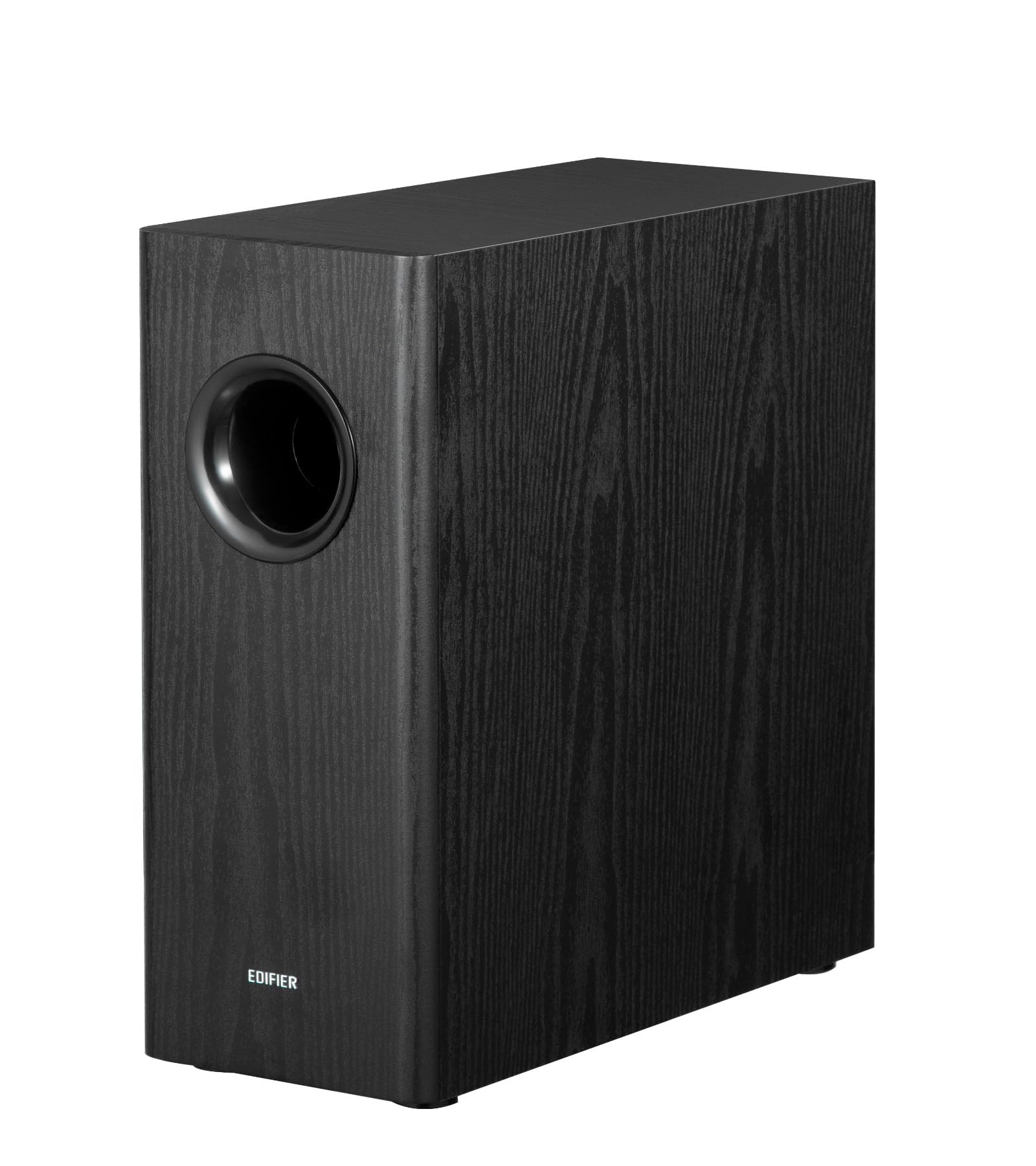
The Edifier T5s proves that accurate, musical bass does not require a massive cabinet. This 8-inch long-throw active subwoofer is designed to augment desktop or bookshelf speakers, extending their frequency response down to 35 Hz with exceptional control. The 70-watt RMS Class-D amplifier and 18mm MDF cabinet with front-firing driver and right-firing acoustic port minimize resonance, producing tight bass that never sounds boomy or one-note — ideal for critical near-field listening.
Setup flexibility sets the T5s apart. You can connect it to speakers or amplifiers that have a dedicated sub out via the RCA input, or insert it in series between the audio source and your main speakers using the Signal In and Signal Out RCA jacks. This second configuration allows you to add deep bass to systems that lack a subwoofer output. The adjustable low-pass filter (30-160 Hz) and 0/180-degree phase selector ensure seamless integration with any setup.
This subwoofer is designed to augment small speakers, not to be a floor-shaking movie theater component. In a medium-sized living room, it will feel underpowered for cinematic explosions. But on a desk paired with quality bookshelf speakers like Edifier’s own 1700BTs, it delivers a palpably immersive experience with accurate, articulate bass that rivals much larger subwoofers in precision. The automatic standby mode after 15 minutes of inactivity saves energy and simplifies daily use.
Why it’s great
- Compact vertical design fits easily on a desk or under a monitor stand
- Series connectivity enables adding sub-bass to any audio system
Good to know
- Limited output for large rooms or home theater applications
- Only works with line-level RCA inputs — no XLR or speaker-level connections
6. Mackie Thump215

The Mackie Thump215 is a straight-up live sound loudspeaker designed for one job: getting loud and staying clear. Its 15-inch heavy-duty driver and 1400-watt ultra-efficient Class-D amplifier produce a maximum SPL of 129 dB, making it easily audible over a live band or large crowd. The frequency response stretches from 40 Hz to 23 kHz, covering both kick drum punch and vocal clarity without needing a dedicated subwoofer for smaller gigs.
Built-in features that matter on a gig include a Feedback Eliminator that tames ringing microphones before they ruin a set, and a Music Ducking mode that automatically lowers the music volume when you speak into a mic — perfect for MCs and fitness instructors. The lightweight design (35 pounds) is a genuine asset for loading in and out, and the stainless steel grille protects the driver from the inevitable bumps of live performance. Bluetooth streaming adds convenience for set breaks or DJ playback.
The trade-off for the Thump215’s output is sound quality at low to moderate volume levels. The DSP-based limiter and gain staging can produce a bit of noise floor hiss when the speaker is not pushed hard, requiring careful gain structure to keep things clean. For karaoke bars, small venues, and DJ setups where volume is the priority, this is a minor complaint — the Thump215 delivers the loud, clear output you need without the premium price tag of high-end touring boxes.
Why it’s great
- 129 dB maximum SPL easily fills small to medium venues
- Music Ducking mode simplifies MC and fitness applications
Good to know
- Noise floor hiss can be noticeable at low listening volumes
- Sound quality at low gain settings requires careful gain staging
7. ALTO TS415
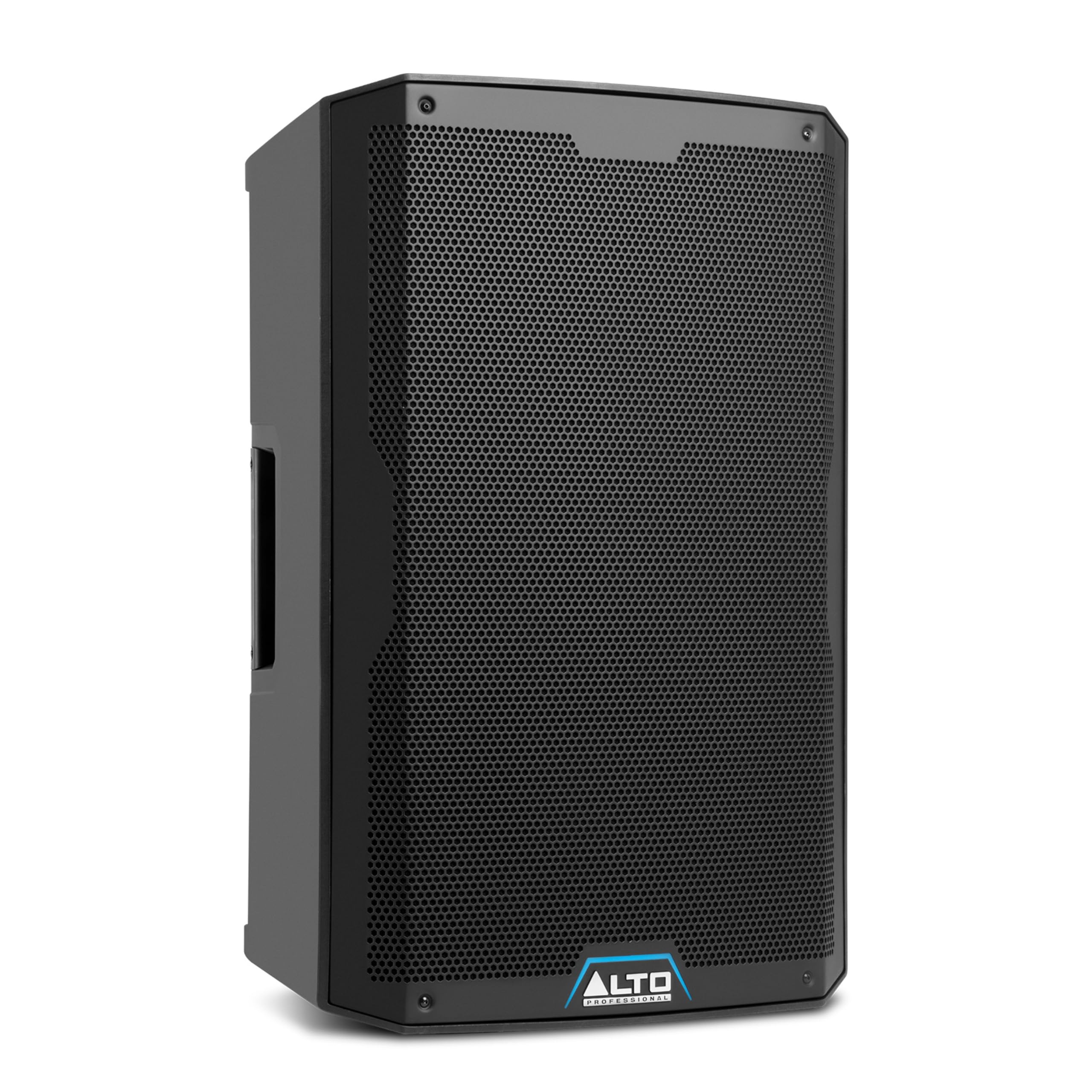
The ALTO TS415 is the most technologically complete active PA speaker in this list, integrating wireless stereo linking, full DSP control via a mobile app, and a 3-channel mixer into a single 15-inch cabinet. The 2500-watt peak amplifier (with respectable RMS headroom) drives a 15-inch low-frequency driver and a 1.4-inch high-frequency compression driver, producing punchy, clear sound that works for DJ sets, live bands, or spoken-word events. The True Stereo Wireless linking lets you pair two TS415 speakers without a single cable — critical for quick setups at weddings or parties.
The ALTO app transforms the user experience, allowing you to switch between four Speaker Use modes (Custom EQ, DJ, Monitor, Speech), select subwoofer size for integration, and eliminate feedback — all from your smartphone while you walk the room. The integrated 3-channel mixer with dual XLR-1/4-inch combo inputs and independent level controls means you can plug a microphone, a keyboard, and a backing track directly without an external mixer. USB port charging for mobile devices is a thoughtful touch.
The peak wattage claim of 2500 watts is a marketing figure — real-world output is comparable to other 15-inch active PA speakers in this class, not a true 2500-watt RMS behemoth. The speaker weighs enough that portability is a two-hand job, though the top handle and side grips help. For mobile DJs and entertainers who need versatile, app-controlled sound with wireless convenience, the TS415 is a genuine step up from traditional passive speaker-plus-mixer setups.
Why it’s great
- True Stereo Wireless linking eliminates cable runs between speakers
- Full DSP app control for real-time EQ, feedback elimination, and room tuning
Good to know
- Peak power rating does not reflect real-world continuous output
- Heavy enough to require two hands for comfortable transport
8. HeadRush FRFR112 MKII

The HeadRush FRFR112 MKII is purpose-built for the growing community of guitarists and bassists using amp modelers and multi-FX processors like Fractal, Helix, and Kemper. Its full-range, flat-response design means it reproduces exactly what the modeler outputs — no coloring, no extra distortion, no resonant peaks. The 2500-watt Class-D amplifier drives a specially-voiced 12-inch woofer and a 1-inch HF compression driver, delivering superb clarity for every cabinet emulation and effect chain you throw at it.
Versatility defines the FRFR112 MKII. It can be used as a wedge monitor on stage, mounted upright on a pole for FOH use, or placed horizontally as a guitar cab. The built-in HPF EQ switch cuts through muddy stage mixes, and the Ground-Lift switch eliminates hum and buzz caused by ground loops in complex rigs. Two XLR-1/4-inch TRS combo inputs with independent volume controls allow you to run two modelers simultaneously, and the XLR direct output chains to additional speakers or sends to the house PA.
Note that this is a guitar and bass tool, not a general-purpose PA speaker. The frequency response is tuned for accuracy across the instrument range, not for sub-bass reproduction needed for DJ playback. Some users report that the titanium compression tweeter can sound bright or shrill on high-gain distortion patches, especially compared to polyimide tweeters found in higher-end FRFR cabs. At 34.7 pounds, it is manageable for one person, but regular gigging may benefit from a cart or dolly.
Why it’s great
- True flat-response output reproduces modeler sounds without coloration
- Wedge, upright, or pole-mount options for flexible stage placement
Good to know
- Titanium tweeter can sound bright on high-gain distortion patches
- Not designed for general-purpose PA or deep sub-bass reproduction
9. PRORECK Club 4000

The PRORECK Club 4000 is the only complete system in this guide: an active 18-inch subwoofer paired with four 6-inch line array satellite speakers, two tripod stands, and all necessary cables. This all-in-one approach solves the biggest headache of assembling a PA — component compatibility — by providing a matched set that works together out of the box. The 4000-watt peak power rating (1000 watts RMS) is enough to cover venues up to 500 people, making it ideal for weddings, churches, schools, and community events.
Connectivity is comprehensive: Bluetooth, USB drive and SD card playback, stereo RCA inputs, 3.5mm AUX, XLR combo jacks for microphones, and two-channel mic inputs. The included remote control lets you manage playback and volume from up to 20 feet away, a real convenience during live events. The line array design provides wider horizontal dispersion than a single point-source speaker, ensuring more uniform coverage across the audience. The MDF subwoofer cabinet is built to reduce mechanical resonance.
The trade-offs come at the extremes. The line array satellites lack their own EQ and can sound harsh in the upper mids, with four horn tweeters producing a somewhat sibilant top end. The subwoofer, while audible and punchy, tends toward muddiness and lacks the deep, articulate sub-bass that dedicated high-end subs provide. Setup is not quick — plan about 75 minutes for first-time assembly, and the 85-pound subwoofer requires two people to lift. For the price of a single premium powered speaker, you get a complete venue-filling system that is more than adequate for its target audience.
Why it’s great
- Complete system with sub, tops, stands, and cables ready to deploy
- Bluetooth, USB, SD card, and remote offer extensive playback options
Good to know
- Line array tops can sound harsh in the upper midrange with multiple horns
- Subwoofer lacks deep sub-bass articulation and is very heavy to move
FAQ
What is the difference between an active and a passive bass loudspeaker?
How many speakers do I need for a live band or DJ event?
Which enclosure type gives the best bass response: ported or sealed?
What does “FRFR” mean in a guitar loudspeaker?
Final Thoughts: The Verdict
For most users, the best bass loudspeaker winner is the Klipsch SPL-120 because it delivers genuinely deep, controlled, house-shaking bass in a beautifully built cabinet without the audiophile price tag. If you need a portable powerhouse for outdoor parties and karaoke, grab the ION Block Rocker. And for critical desktop listening where accuracy matters over sheer volume, nothing beats the Edifier T5s.

Mo Maruf
I created WellFizz to bridge the gap between vague wellness advice and actionable solutions. My mission is simple: to decode the research and give you practical tools you can actually use.
Beyond the data, I am a passionate traveler. I believe that stepping away from the screen to explore new environments is essential for mental clarity and physical vitality.