Our readers keep the lights on and my smoothie glass nicely filled. As an Amazon Associate, I earn from qualifying purchases.
Too many so-called running watches bury you in notifications, app overload, and features you will never use on a single run. What most runners actually need is a device that nails the fundamentals — accurate GPS, reliable heart rate, long battery life, and straightforward training data — without the digital clutter. That is where the best basic running watch earns its place on your wrist.
I’m Mohammad Maruf — the founder and writer behind WellFizz. This guide comes from cross-referencing dozens of spec sheets, reading hundreds of verified buyer reports, and analyzing real-world GPS accuracy and battery claims across seven leading models to find the ones that actually deliver on the core promise of a dedicated running companion.
Whether you are logging your first 5K or training for a half-marathon, finding a basic running watch that balances essential tracking with daily wear comfort matters more than any extra gadget.
How To Choose The Best Basic Running Watch
A basic running watch should strip away the noise and deliver dependable performance for your training. Here are the three specs that separate a smart companion from a distracting gadget.
GPS Accuracy & Satellite Support
The quality of your route tracking depends entirely on the satellite systems the watch can access. Single-frequency GPS alone works fine in open fields but drifts in urban canyons or tree-covered trails. Look for dual-band GNSS that pulls from multiple constellations — GPS, GLONASS, Galileo, QZSS — for stable positioning. A watch that locks a signal in under ten seconds and holds pace data within a few meters per kilometer will save you from manually correcting every run log.
Battery Life in GPS Mode
The advertised battery number usually refers to smartwatch mode — notifications and step counting. The number that matters for a runner is GPS-active battery life. A watch that lasts at least 10 hours with continuous GPS and heart rate tracking covers a full marathon and everyday training for a week without needing a midday charge. If you train for longer than an hour daily, target models with at least 15 hours of GPS life.
Training Metrics & Readiness Data
A basic running watch should deliver more than just distance and pace. Look for VO₂ Max estimation, cadence tracking, stride length analysis, and a recovery time suggestion. These metrics tell you whether your run was productive or pushed you into overtraining territory. Training plans — either adaptive or goal-based — turn a simple log into a structured coaching tool without requiring a subscription.
Quick Comparison
On smaller screens, swipe sideways to see the full table.
| Model | Category | Best For | Key Spec | Amazon |
|---|---|---|---|---|
| Garmin Forerunner 55 | Premium | Serious runners needing structured training | 20 hours GPS battery life | Amazon |
| Fitbit Charge 6 | Premium | Everyday fitness plus Google Maps integration | Built-in GPS + connected apps | Amazon |
| mibro GS Pro2 | Mid-Range | Long-distance runners wanting dual-band GPS | 20 days daily, 20 hrs GPS | Amazon |
| Amazfit Bip 6 | Mid-Range | Users who want AMOLED display and 2-week battery | 1.97″ AMOLED, 14 days battery | Amazon |
| Fitbit Inspire 3 | Mid-Range | Minimalist trackers prioritizing sleep and HR | 10-day battery, 50m water resistance | Amazon |
| mibro GS Active2 | Budget | Runners needing structured plans at low cost | 39g weight, dual-band GNSS | Amazon |
| Bvlrksc Smart Watch | Budget | First-time users wanting GPS and offline maps | Offline maps + 550mAh battery | Amazon |
In‑Depth Reviews
1. Garmin Forerunner 55

The Garmin Forerunner 55 is the gold standard for a dedicated running watch that does not overwhelm you with smartphone-style apps. Its MIP display stays readable in direct sunlight, and the button-only control means you never fumble with a wet touchscreen mid-run. Daily suggested workouts adjust intensity automatically based on your recovery time and training history — a feature that genuinely adapts to your fitness level rather than just displaying a static plan.
GPS accuracy is consistent across open trails and suburban streets, and the PacePro feature lets you plan a race-day strategy by providing per-kilometer pace guidance. The heart rate sensor tracks wrist-based beats reliably for steady-state runs, though interval workouts benefit from an external chest strap for precision. Activity profiles include track run, virtual run, pool swim, and HIIT, so cross-training days stay logged in the same ecosystem.
Battery life reaches up to two weeks in smartwatch mode and about 20 hours of continuous GPS tracking — enough for a month of daily hour-long runs without reaching for the charging cable. The Connect IQ Store adds free watch faces and data fields, but the core experience is refreshingly uncluttered. For runners who prioritize training data over notification noise, this remains the benchmark.
Why it’s great
- Daily suggested workouts adapt to your recovery and fitness level automatically
- PacePro GPS-based pace guidance helps with race strategy planning
- Button-only interface works flawlessly in rain and sweat
Good to know
- Screen is MIP, not AMOLED — less vibrant but perfectly readable outdoors
- No music storage or contactless payments
- Some users find the band and case smaller than expected
2. Fitbit Charge 6

The Fitbit Charge 6 sits comfortably in the premium tier thanks to its integration with Google services — turn-by-turn directions from Google Maps and contactless payments via Google Wallet make it a practical daily companion beyond workouts. The 24/7 heart rate sensor now links directly to compatible gym equipment like treadmills and ellipticals, displaying your real-time pulse on the machine’s console without needing a separate chest strap.
Built-in GPS tracks outdoor runs and rides without tethering to your phone, and the 40-plus exercise modes cover everything from pilates to pool swimming. Sleep tracking provides a daily Sleep Score along with insights into time spent in light, deep, and REM stages. The 6–7 day battery life in mixed use is a noticeable upgrade over daily-charged smartwatches, though GPS-active sessions drain it faster — plan for about 5 hours of continuous tracking per charge.
The slim, band-like form factor makes it one of the least intrusive options for all-day wear, and the included small and large bands accommodate wrists from 5.1 to 8.7 inches. A 3-month Google Health Premium membership comes bundled, adding personalized coaching and advanced analytics. For runners who want a tracker that doubles as a smart wallet and navigation tool, the Charge 6 delivers without becoming a full-on smartwatch.
Why it’s great
- Google Maps navigation and Google Wallet payments built into the wrist
- Connects heart rate to compatible gym equipment for real-time display
- Slim profile with two band sizes for all-day comfort
Good to know
- GPS drain heavy — battery lasts only a few hours of continuous tracking
- Only compatible with Google Maps, not Apple Maps
- Fitbit app has reports of syncing and calorie count glitches
3. mibro GS Pro2
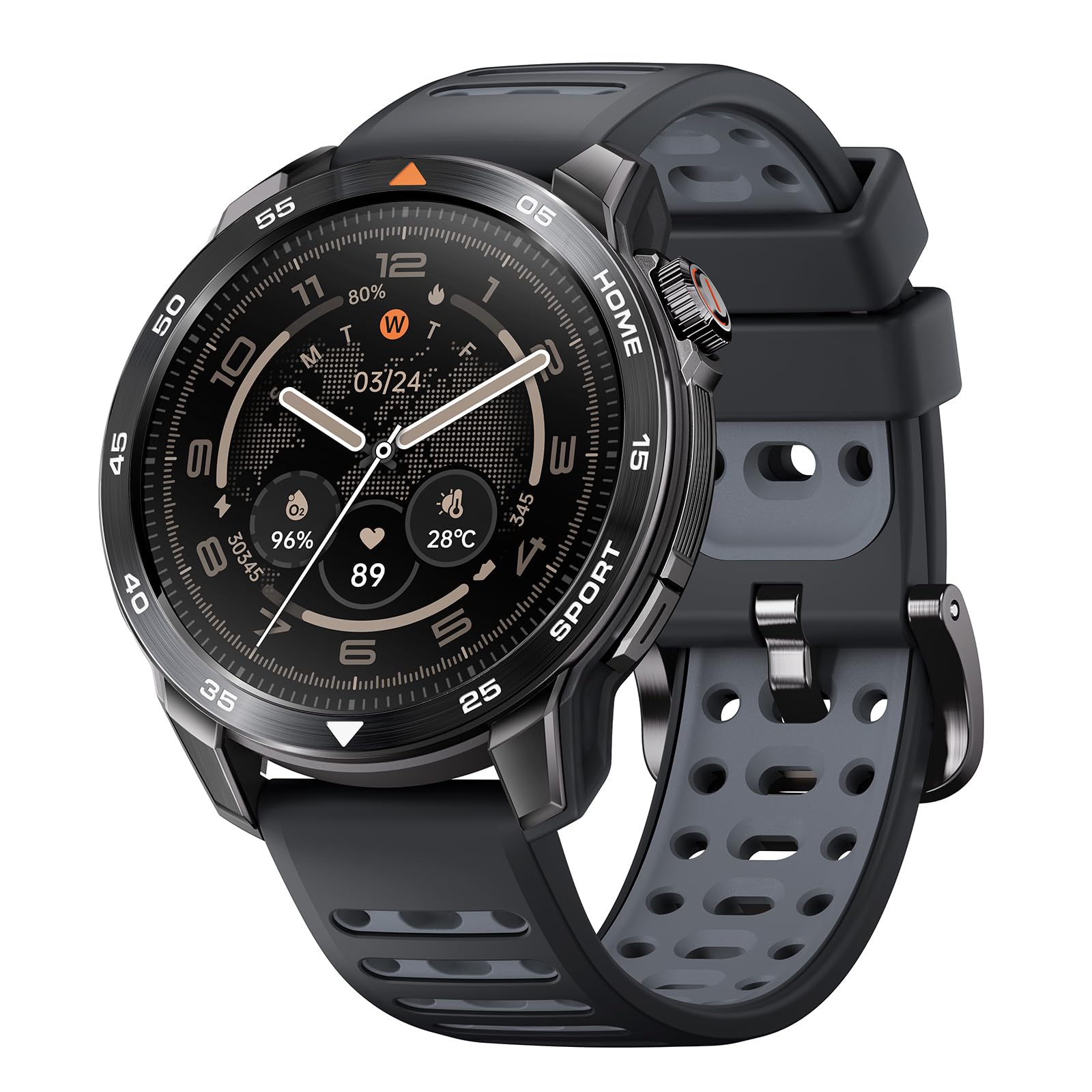
The mibro GS Pro2 enters the mid-range category with a feature set that punches well above its tier. Dual-band GPS pulls signals from five satellite systems, delivering fast lock times and route accuracy that rival watches costing twice as much. The 1.43-inch AMOLED display is crisp and vibrant, and the stainless steel case with a 48mm dial gives it a premium wrist presence without excessive weight.
Battery performance is the standout spec here — 20 days of daily use and a full 20 hours of GPS mode means you can run an ultramarathon or train for weeks without hunting for a charger. The Mibro Coach feature generates personalized training plans based on your running habits, and the real-time metrics include cadence, stride length, and VO₂ Max. Recovery time and training load tracking help you avoid overtraining between hard sessions.
With 150-plus workout modes and 5ATM water resistance, the GS Pro2 handles swimming, cycling, and hiking without missing a beat. The strap design includes both silicone and nylon options in the box, and the tang buckle closure keeps the watch secure during high-impact intervals. For runners who need marathon-length battery life and dual-band GPS without crossing into premium pricing, this is a compelling choice.
Why it’s great
- Dual-band GPS with five satellite constellations for highly accurate routes
- 20-hour GPS battery covers ultramarathon distances without recharge
- Stainless steel case and AMOLED display feel well above the price bracket
Good to know
- Band length may be too short for larger wrists
- Some users report limited software updates after purchase
- Heart rate accuracy during intervals is not chest-strap grade
4. Amazfit Bip 6

The Amazfit Bip 6 nails the essentials for runners who want a large, bright display without a premium price tag. The 1.97-inch AMOLED panel pushes 2000 nits of peak brightness, making it easy to glance at pace and distance even under direct summer sun. The lightweight aluminum build keeps the watch comfortable for sleep tracking and all-day wear, and the 5 ATM water resistance means pool swims and rainy runs are fair game.
GPS tracking supports 5 satellite systems, and the free downloadable maps include turn-by-turn navigation — handy for exploring unfamiliar routes without carrying your phone. Health monitoring includes 24/7 heart rate, SpO2, stress, and sleep tracking, all feeding into the Zepp app for trend analysis. Battery life reaches a genuine 14 days in typical mixed use, and heavy GPS usage still lasts through a week of daily hour-long runs.
The 140-plus workout modes cover everything from HYROX race to strength training, and AI coaching provides personalized insights based on your performance data. The main trade-off is the lack of contactless payments and an onboard music player, but for pure run tracking with a stunning display and exceptional battery, the Bip 6 delivers consistent value. Runners upgrading from older Bip models will notice the improved vibration motor and faster GPS lock.
Why it’s great
- 1.97-inch AMOLED at 2000 nits is one of the brightest running watch displays
- 14-day battery life with GPS lasts a full training week without charging
- Free downloadable maps with turn-by-turn navigation for route exploration
Good to know
- No onboard music storage or NFC payments
- Unable to initiate text replies, only preset or voice replies on Android
- Charging cradle design is prone to misalignment with some users
5. Fitbit Inspire 3

The Fitbit Inspire 3 is the minimalist’s running companion — a band-style tracker that prioritizes health metrics over smartwatch extras. It lacks built-in GPS, so outdoor runs require a connected phone for route mapping, but the 24/7 heart rate sensor and Active Zone Minutes give you a reliable measure of workout intensity. The Stress Management Score uses heart rate variability data to tell you when your body is primed for a hard effort or needs a recovery day.
Automatic sleep tracking assigns a Sleep Score each morning, breaking down time spent in light, deep, and REM stages, plus a smart wake alarm that vibrates during light sleep. The 40-plus exercise modes cover running, cycling, swimming, and more, and water resistance to 50 meters means you can log pool laps without worry. Battery life stretches to 10 days with always-on display turned off, making it one of the longest-lasting trackers in this form factor.
The color touchscreen is small but readable, and the included small and large bands accommodate wrists from 5.1 to 8.7 inches. A 3-month Google Health Premium membership is included, unlocking personalized coaching and advanced analytics. For runners who want step counting, heart rate trends, and sleep data without the bulk of a traditional watch face, the Inspire 3 keeps things focused and functional.
Why it’s great
- Stress Management Score uses HRV data to guide training readiness
- 10-day battery life with 50-meter water resistance for pool swimming
- Ultra-lightweight design comfortable for 24/7 wear including sleep
Good to know
- No built-in GPS — phone required for outdoor route tracking
- Small screen limits glanceable data density during runs
- Strap hinge reported to fail within a year by some long-term users
6. mibro GS Active2
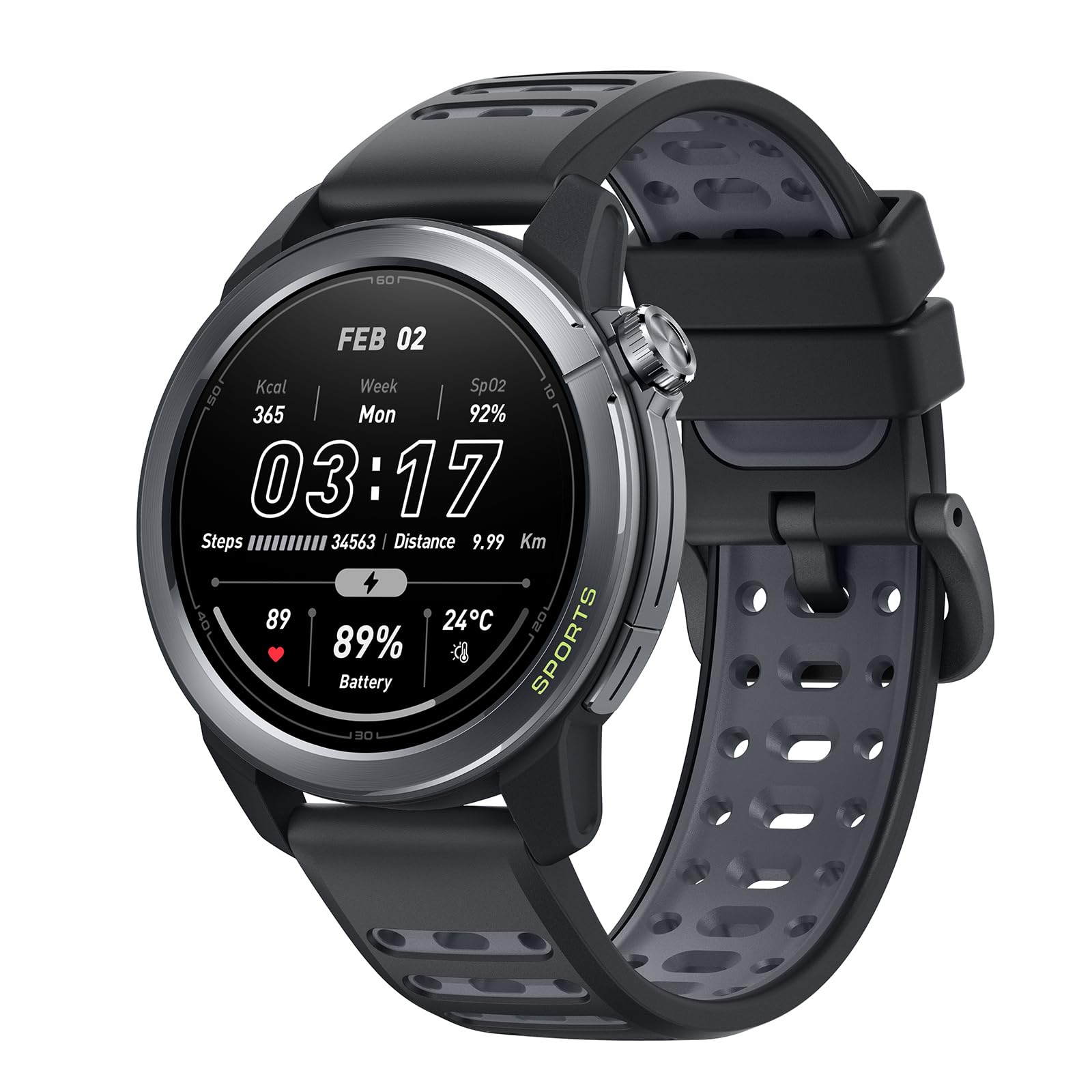
The mibro GS Active2 punches well above its budget tier with features that directly target runners. The featherlight 39-gram body (including the nylon strap) feels barely noticeable on the wrist — ideal for long runs where every gram counts. Dual-band GNSS pulls from five satellite systems for accurate route tracking, and the 46mm AMOLED display provides crisp visibility for pace, distance, and cadence data at a glance.
What sets this watch apart in the entry-level space is its adaptive training plans. You can select a 5K, 10K, or half-marathon goal, and the watch adjusts your weekly sessions based on your performance. Real-time metrics include VO₂ Max trends, cadence, stride length, and running ability index — data points typically reserved for watches that cost twice as much. The 150-plus workout modes cover running, cycling, tennis, hiking, and swimming with 5ATM water resistance.
Battery life reaches 15 days in daily mode and approximately 15 hours with continuous GPS tracking — enough for a full marathon plus a week of shorter runs before needing a charge. Some buyers report intermittent Bluetooth reconnection issues, and GPS accuracy occasionally drifts compared to higher-end units, but for the price, the Active2 delivers a legitimate running coach experience in a nearly weightless package.
Why it’s great
- Weighs only 39 grams with nylon band — one of the lightest GPS watches available
- Adaptive 5K/10K/half-marathon training plans with real-time adjustment
- Dual-band GNSS for accurate route tracking at an entry-level price
Good to know
- Bluetooth connection may drop and require daily re-pairing
- GPS accuracy inconsistent compared to premium dual-band units
- Some units experienced early battery or software glitches
7. Bvlrksc Smart Watch
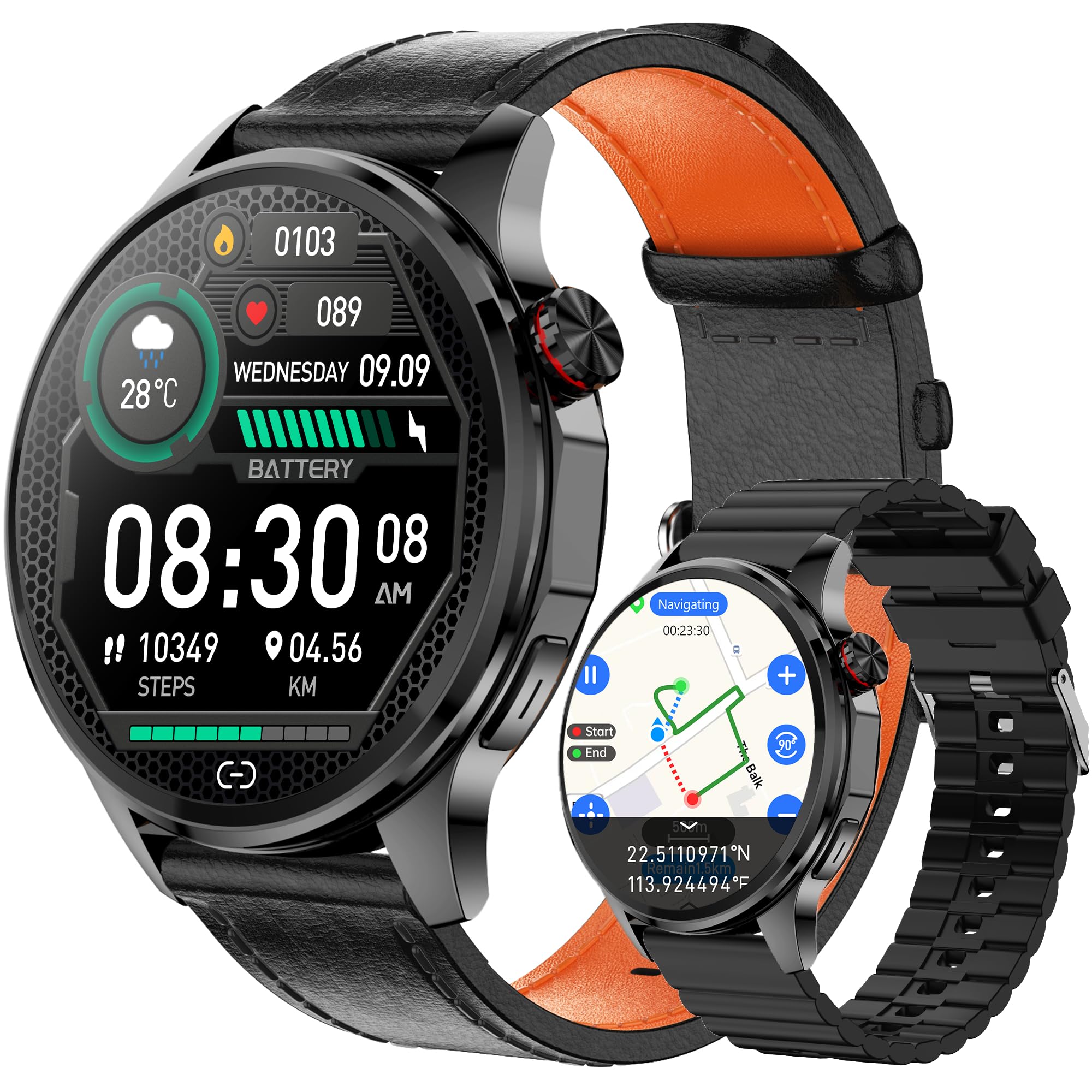
The Bvlrksc Smart Watch brings offline mapping capability to the budget segment — a feature typically reserved for adventure-focused models. Before heading out, you can download maps for hiking trails or city routes and navigate with turn-by-turn guidance even without cellular service. The built-in compass, barometer, and altimeter provide real-time elevation data, making it a capable companion for trail runners and hikers alike.
Health monitoring goes beyond basic heart rate and SpO2 to include stress level, respiratory rate, mood tracking, fatigue, and PAI vitality index — a combined metric that simplifies daily activity recommendations. The 550mAh battery delivers several days of normal use with fast charging support, and the 1.46-inch AMOLED screen displays offline maps and workout stats clearly in outdoor light. Bluetooth calling and text reply (Android only) mean you can leave your phone in a pocket during runs.
The package includes both a genuine leather strap for daily wear and a spare silicone band for sweaty sessions — a dual-use setup that adds versatility. AI features include custom watch face generation and a voice translator, which are unique at this level but not core to running. Some users note limited Bluetooth range (around 10 feet) and the lack of group text support, but for runners who need offline navigation without spending premium dollars, this watch offers a surprising depth of function.
Why it’s great
- Offline map download with compass, barometer, and altimeter for trail running
- Genuine leather and silicone bands included for versatile daily wear
- 550mAh battery with fast charging supports multi-day use
Good to know
- Bluetooth range limited to about 10 feet from the connected phone
- No group text support, and text reply only works on Android
- More of a general smartwatch than a dedicated running-specific tool
FAQ
Do I need a watch with music storage for running?
Can a basic running watch track intervals or sprints?
Is wrist-based heart rate accurate enough for running?
Final Thoughts: The Verdict
For most runners, the basic running watch that strikes the best balance of accuracy, battery, and training tools is the Garmin Forerunner 55 because its daily suggested workouts and 20-hour GPS battery serve both beginners and intermediate racers equally well. If you want the brightest display with smartphone-free navigation, grab the Amazfit Bip 6. And for marathon-distance battery life with dual-band GPS at a comfortable price, nothing beats the mibro GS Pro2.

Mo Maruf
I created WellFizz to bridge the gap between vague wellness advice and actionable solutions. My mission is simple: to decode the research and give you practical tools you can actually use.
Beyond the data, I am a passionate traveler. I believe that stepping away from the screen to explore new environments is essential for mental clarity and physical vitality.