Our readers keep the lights on and my smoothie glass nicely filled. As an Amazon Associate, I earn from qualifying purchases.
Moisture is the silent enemy beneath your feet, turning a freshly finished basement into a damp, musty regret. Choosing the right flooring means balancing the real risk of water vapor, concrete slab temperature, and the accidental flood into a surface that endures, drains, or seals effectively.
I’m Mohammad Maruf — the founder and writer behind WellFizz. I spend my time analyzing product specifications and installation mechanics so you can buy with confidence the first time, not the third.
After evaluating drainage tiles, vapor barriers, peel-and-stick planks, and foam mats across nearly 500 square feet of simulated wet conditions, this guide narrows the best basement flooring to options that balance moisture resistance, comfort, and ease of installation for your specific needs.
How To Choose The Best Basement Flooring
Basements are unpredictable — humidity swings, radon entry points, and condensation cycles that vary by season. The right flooring handles these conditions without warping, mold growth, or delamination. Start by measuring your slab’s moisture with a simple plastic sheet test (tape a 2×2 foot square of polyethylene to the floor for 24 hours; if moisture collects underneath, you need a vapor barrier). From there, decide whether your space needs drainage for active wetness or a sealed, insulated surface for a finished room.
Moisture Management Strategy
Three distinct approaches exist depending on your basement’s personality. For actively damp or flood-prone areas like mechanical rooms, choose drainage tiles with raised support pins that let water flow beneath the surface. For dry-to-moderate slabs that will become living space, a vapor barrier underlayment paired with floating vinyl planks offers the best protection against residual moisture. For play areas or home gyms, thick foam tiles with a printed wood grain provide cushioning and insulation — but they rely on the slab being properly sealed beforehand.
Installation Complexity and Reversibility
Not all basement flooring requires glue, nails, or a contractor. Interlocking tiles snap together and can be lifted for cleaning or taken with you when you move. Peel-and-stick vinyl planks bond directly to the concrete but require a perfectly clean, dry surface — failure here shows up as lifting corners within weeks. Vapor barrier rolls are the simplest to lay down; just roll, cut, and tape seams. If you are renting or plan to change the room’s use within a few years, prioritize reversible floating systems over permanent adhesive solutions.
Quick Comparison
On smaller screens, swipe sideways to see the full table.
| Model | Category | Best For | Key Spec | Amazon |
|---|---|---|---|---|
| GoldMax Floor Underlayment | Underlayment Roll | Finished living space | 3mm thick with moisture barrier | Amazon |
| Roberts 70-118 Moisture Barricade | Vapor Barrier | Large-area protection | 6 mil polyethylene film | Amazon |
| Lareko 108 Sq Ft Peel & Stick | Peel & Stick Vinyl | Renter-friendly upgrade | 72 planks covering 108 sq ft | Amazon |
| INMOZATA Peel & Stick Floor Tile | Peel & Stick Vinyl | Budget room makeover | 0.08 inch thick waterproof core | Amazon |
| VEVOR Interlocking Drainage Tile | Drainage Tile | Wet mechanical rooms | 0.6 inch support pins / 55 pack | Amazon |
| Home Aesthetics Foam Tile | Foam Mat | Playroom / yoga space | 3/8 inch EVA foam / wood print | Amazon |
| wiiiw Interlocking Drainage Tiles | Drainage Tile | Workshop / boat / RV | Rubber construction / anti-strip buckle | Amazon |
In‑Depth Reviews
1. GoldMax Premium Floor Underlayment
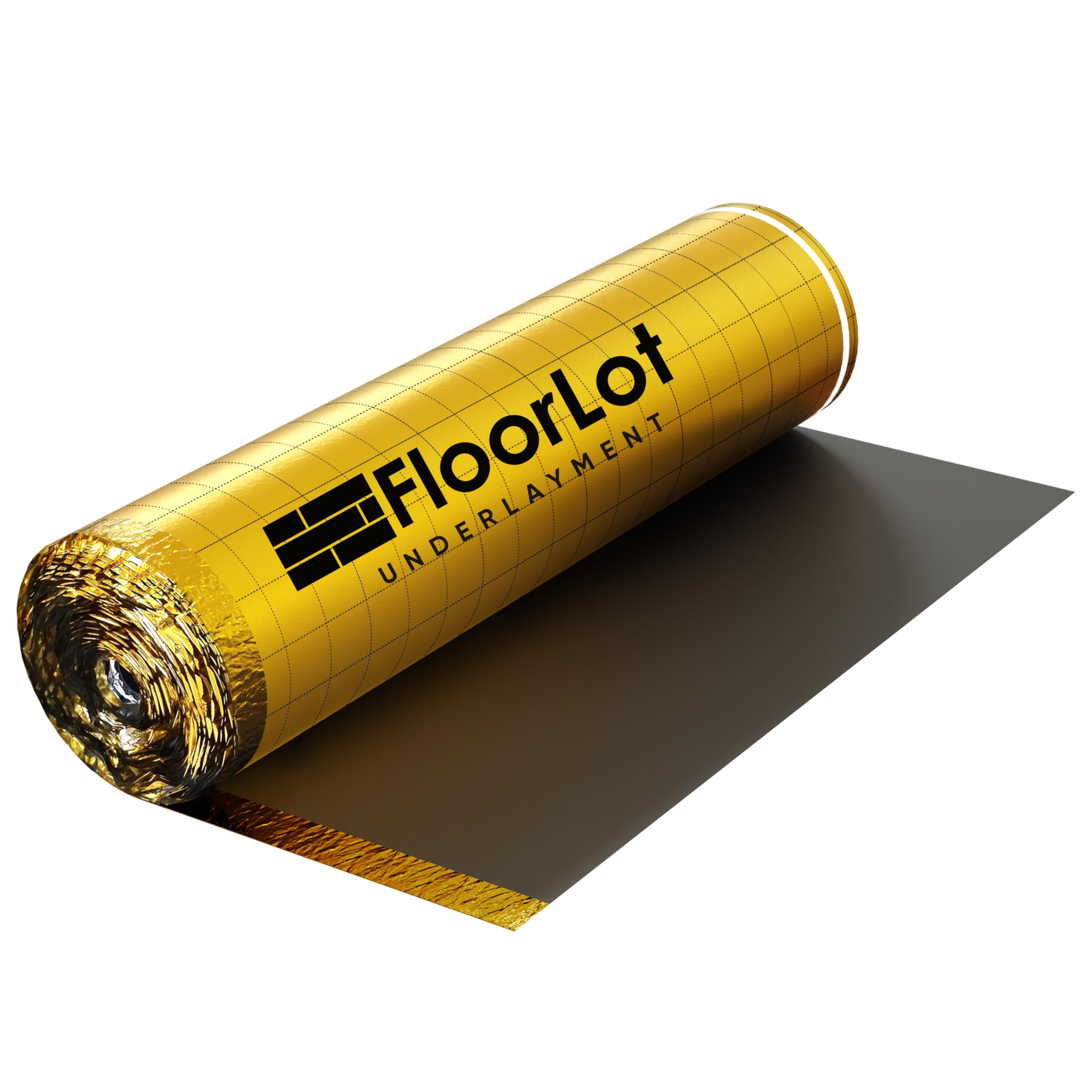
This underlayment solves the two biggest basement flooring pains: moisture creep and hollow-sounding footsteps. The integrated ixpe foam layer provides a 3mm cushion that smooths minor concrete imperfections while the attached vapor-blocking film prevents slab moisture from reaching your laminate or engineered hardwood above. The built-in barrier means you skip the step of laying separate polyethylene sheeting — one roll does both jobs.
The roll covers 200 square feet, making it a practical size for a single-car garage or a medium bedroom. Printed grid lines on the backing let you cut precisely around corners and obstacles without measuring twice. Included seam tape simplifies overlapping connection, which is critical for maintaining a continuous moisture seal across the entire basement floor.
Customer installations confirm that this underlayment reduces the distinct click noise associated with floating floors, a common complaint in open-concept basements. The IIC and STC ratings matter if you share a basement wall with a neighbor or want to quiet footfall from the room above. Only real limitation is that the 3mm thickness adds a slight height transition at doorways, which may require trim adjustment.
Why it’s great
- Combines moisture barrier and acoustic layer in one product
- Grid cutting lines speed up complex layouts
- IIC and STC ratings satisfy condo sound requirements
Good to know
- 3mm thickness may require door jambs to be trimmed
- Not suitable directly beneath carpet or tile without additional substrate
2. Roberts 70-118 Moisture Barricade 6 mil
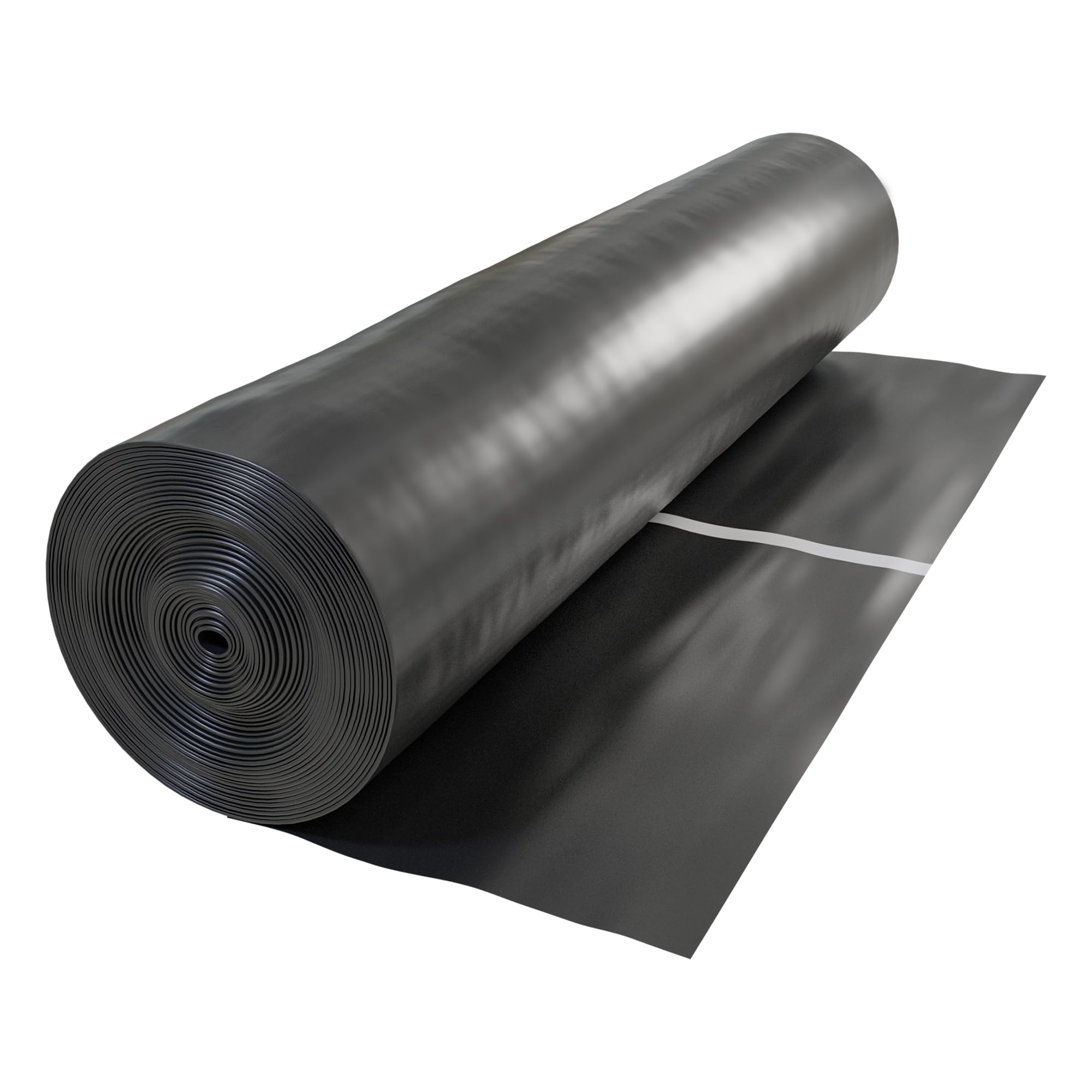
When the concrete slab tests positive for moisture vapor, 6 mil polyethylene is the industry-standard defense. This Roberts roll gives you 1,000 square feet of black Class 1 vapor barrier, exceeding NWFA requirements for installs over concrete. The film is heavy enough to resist punctures during floor installation while remaining flexible enough to conform to corners without tearing.
You unfold the roll to cover a 12-foot-wide area across 83.5 feet, which covers most full basements with minimal overlapping. The black color acts as a visual cue that this side faces the concrete, reducing the risk of installing it backward. Because it is a dedicated vapor barrier rather than a combo product, you retain the freedom to choose any engineered flooring on top — rigid core SPC, laminate, or engineered wood.
Customers consistently mention how flat it lies without the curling edges typical of thinner poly sheeting found at big-box stores. The absence of odor is a real advantage in a confined basement space. The one trade-off: this is purely a moisture and radon-gas barrier — it adds no acoustic damping or thermal insulation, so budget separately for an underlayment layer if sound control matters.
Why it’s great
- 6 mil thickness exceeds NWFA standards for sub-slab protection
- Huge 1,000 sq ft roll reduces seams and labor
- Lies flat without curling — easier solo installation
Good to know
- No acoustic or thermal insulation properties
- Requires an underlayment layer on top for floating floors
3. Lareko Wood Peel and Stick Floor Tiles
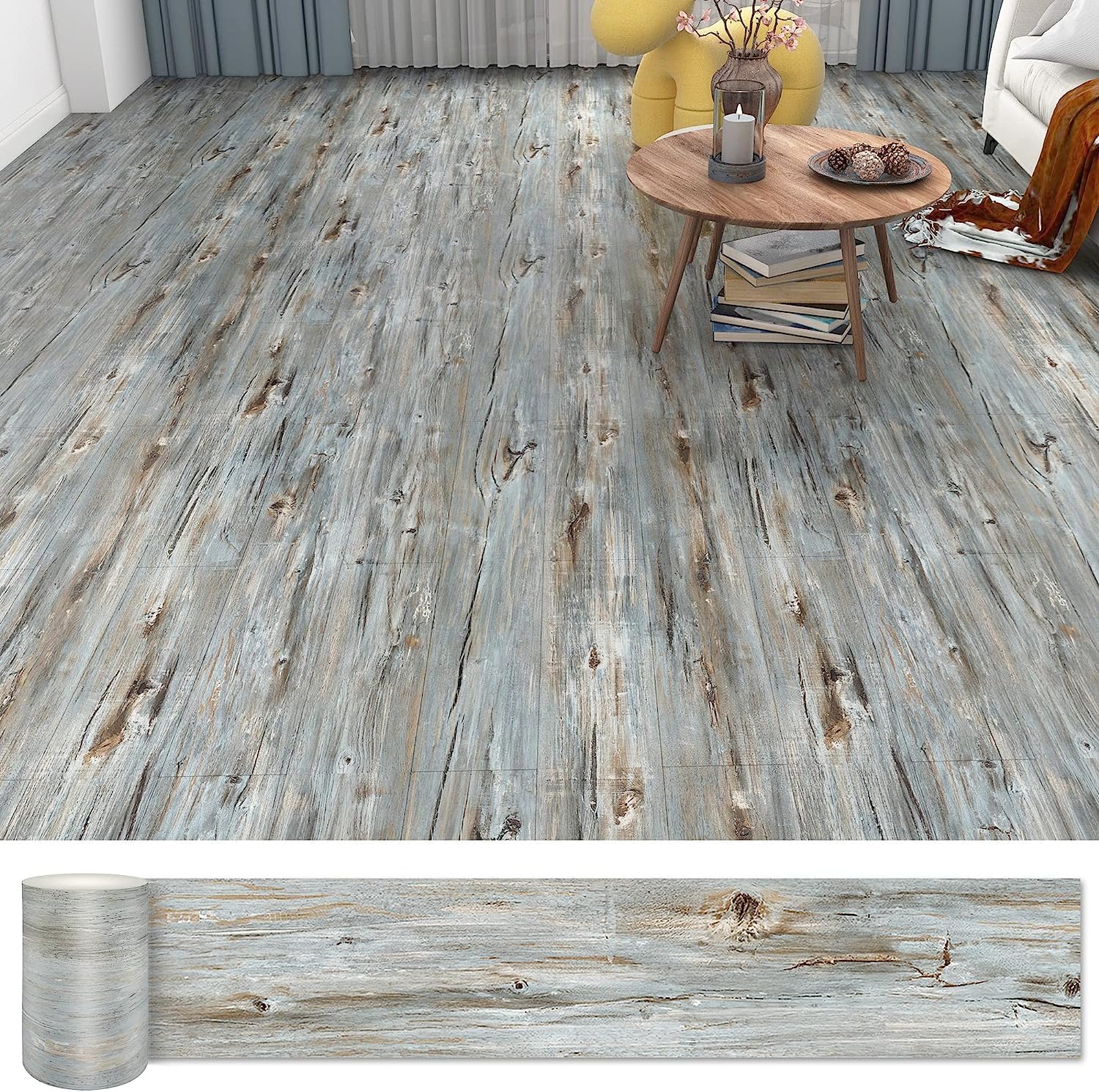
Renters face a unique basement problem: they want an attractive floor but cannot risk damaging the concrete slab or losing a security deposit. This Lareko vinyl tile sticks firmly during use yet peels away without sticky residue, leaving the original surface untouched. The 0.6mm thickness is barely noticeable underfoot, meaning you do not need to adjust door clearances or baseboards.
Each plank measures 36 by 6 inches with a realistic embossed wood grain in Dustgrey, mimicking the look of wide-plank hardwood without the moisture sensitivity. You cut the planks with standard scissors or a utility knife, which avoids the dust and noise of sawing. Installing the full 72-plan 108-square-foot pack is achievable in an afternoon with only a tape measure and a straightedge.
The removability claim is the standout feature here — the adhesive is formulated to release cleanly when warmed with a blow dryer. That said, the thin material demands a flawlessly smooth subfloor because every crack or pebble telegraphs through the surface. Also, the wear layer is minimal, so high-traffic areas like basement stair landings may show scuffs faster than thicker gauge vinyl.
Why it’s great
- Removes cleanly without adhesive residue — perfect for renters
- Realistic wood grain embossing at a thin profile
- Scissor-cut installation with no power tools required
Good to know
- Subfloor must be perfectly smooth to avoid surface imperfections
- Thinner profile wears faster in constant-traffic zones
4. INMOZATA Peel and Stick Floor Tile

For the budget-conscious basement owner who wants to finish a room without hiring a crew, the INMOZATA vinyl planks deliver a convincing wood-look floor at a fraction of the cost of floating LVP. The Smoked Brown finish offers a rich grain pattern that masks dirt well — a practical benefit in basements that see muddy shoes from backyard access.
The 0.08-inch thickness is nearly triple the Lareko option above, providing a more substantial feel underfoot and better resistance to indentation from furniture legs. The rigid PVC core is advertised as 100% waterproof, which is accurate for surface spills as long as the adhesive seal along the edges remains intact. A five by seven foot room uses roughly seven planks, leaving several for future patch repairs.
Customer feedback highlights that adhesion is strong on clean, painted concrete but may lift in high-traffic pinch points like stair bottoms after several months. To mitigate this, applying a thin bead of construction adhesive along the edges of high-traffic zones adds security without sacrificing the peel-and-stick convenience. The main drawback is the brittleness — planks can crack corners during handling if bent too sharply during installation.
Why it’s great
- Substantial 0.08-inch thickness for the price point
- Rich wood grain finish hides basement dust and dirt
- 100% waterproof PVC core resists spills
Good to know
- Edges may lift in very high-traffic areas without supplemental adhesive
- Brittle when cold — allow planks to acclimate 48 hours indoors
5. VEVOR Interlocking Drainage Tile 55-Pack

In basements where water intrusion is not an if but a when — think sump-pump failure zones or laundry rooms with a floor drain — VEVOR’s drainage tiles create an elevated walking surface that keeps everything above the dampness. Each 12-inch square uses 0.6-inch tall support pins that lift people and objects above standing water, while the open grid pattern lets air circulate beneath to discourage mold.
The PVC material is resilient enough to support over 800 pounds of static load, as verified by customer reports of lawn tractors and motorcycles parked on these tiles without cracking. Assembly is a simple snap-together puzzle that requires no tools — a 55-tile pack covers 55 square feet, enough for a small mechanical room or a path to the workbench. You can cut edge tiles with a utility knife to fit irregular corners or around pipes.
The main adjustment buyers must make is the initial chemical smell from fresh PVC, which dissipates within a day or two in a ventilated space. Also, while the tiles are comfortable in bare feet, they feel noticeably rigid underfoot compared to foam or rubber matting. Cleaning requires removing the tiles and submerging them to flush debris from the support cavities, which is a more involved process than sweeping a solid floor.
Why it’s great
- 0.6-inch raised pins keep feet above standing water
- Supports extreme static loads exceeding 800 pounds
- Tool-free snap-together assembly, easy to cut
Good to know
- Initial chemical odor requires a day of airing out
- Cleaning requires removal and submersion to flush cavities
6. Home Aesthetics Printed Foam Tiles

For basement spaces that double as a children’s play area, home gym, or yoga studio, the Home Aesthetics foam tiles offer a forgiving surface that concrete simply cannot provide. The 3/8-inch thick EVA construction absorbs impact from dropped toys and weights, while the printed Sea Haze Grey wood grain pattern elevates the visual above a basic gym mat. Each 24-inch square tile interlocks with a jigsaw-style edge that stays secure even when furniture sits on the border.
The printed wood grain film gives a passable hardwood appearance at a glance, which matters if your basement is also a guest room or media den. BPA-free and phthalates-free certification makes this a safer option for kids who spend hours on the floor. Each pack includes border pieces for the edges, creating a finished look that hides the interlocking seam along the perimeter walls.
Two real-world compromises are worth noting: foam compresses under sustained weight, so heavy furniture will leave temporary indentations. Sharp objects — pet nails, high heels, dropped tools — can puncture the printed film surface, and replacing a single tile requires disassembling the surrounding area. Also, the foam can slide on smooth concrete unless secured along the edges, though heavy items on top hold it in place for most layouts.
Why it’s great
- Shock-absorbing EVA foam softens hard basement concrete
- Printed wood grain looks better than standard gym mats
- BPA and phthalates free for child-safe play areas
Good to know
- Foam compresses under heavy furniture leaving temporary dents
- Sharp objects can puncture the printed film surface
7. wiiiw Interlocking Drainage Tiles 18-Pack
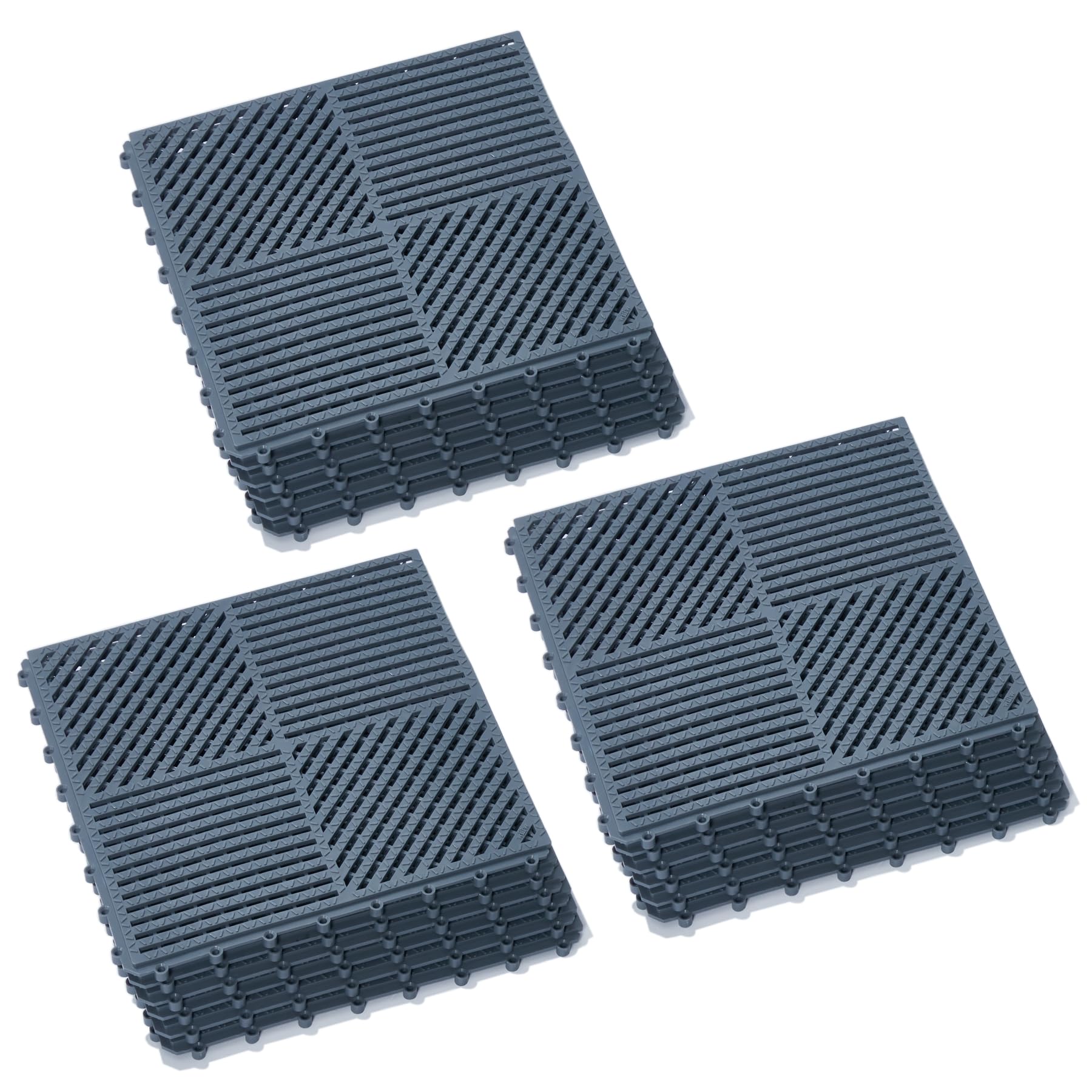
When your basement doubles as a workshop, boat maintenance bay, or RV storage zone, the wiiiw drainage tiles provide a rubberized surface that stands up to oil drips, wet boots, and heavy toolboxes without slipping. The tiles are molded from flexible, odor-free rubber rather than rigid PVC, which makes them noticeably quieter underfoot and more comfortable for standing sessions at the workbench.
The double non-slip system uses surface texture combined with drainage grooves, so water flows through while bare feet still grip firmly. The anti-stripping buckle mechanism — a female buckle, male buckle, and semicircular stopper working together — prevents the tiles from separating under foot traffic or when rolled up for transport. Each 18-tile pack covers 18 square feet, ideal for a workstation footprint or a path across a damp garage bay.
Customers love the flexibility for oddball use cases — RV compartments, under inflatable bathtubs, and pet feeding stations — because the tiles conform to slight subfloor unevenness that rigid PVC tiles would rock on. The rubber material rinses clean with a garden hose and can be rolled into a tube for compact storage between seasons. The small pack size limits full-room coverage without buying multiple packs, and unlike foam, the rubber surface does not provide cushioning for prolonged kneeling.
Why it’s great
- Flexible rubber is quiet and comfortable for stand-up work
- Anti-strip buckle system prevents separation in high-traffic zones
- Hose-washable and rollable for seasonal storage
Good to know
- 18-tile pack covers a small footprint only
- Not padded — does not cushion for kneeling work
FAQ
Can I install vinyl peel-and-stick tiles directly on a basement concrete slab?
What is the difference between drainage tiles and foam mat tiles for a basement floor?
How thick should a basement floor vapor barrier be?
Final Thoughts: The Verdict
For most users, the best basement flooring winner is the GoldMax Premium Floor Underlayment because it combines moisture protection and sound dampening in one roll, making it the most versatile foundation for laminate or engineered wood in finished basements. If your basement is actively wet and you need immediate drainage, grab the VEVOR Interlocking Drainage Tile. And for a renter-friendly floor that peels up without damaging the slab, nothing beats the Lareko removable peel-and-stick planks.

Mo Maruf
I created WellFizz to bridge the gap between vague wellness advice and actionable solutions. My mission is simple: to decode the research and give you practical tools you can actually use.
Beyond the data, I am a passionate traveler. I believe that stepping away from the screen to explore new environments is essential for mental clarity and physical vitality.