Our readers keep the lights on and my smoothie glass nicely filled. As an Amazon Associate, I earn from qualifying purchases.
A bare concrete basement floor radiates cold, invites moisture, and turns any project into a battle against dust and discomfort. Covering it with the right flooring transforms a forgotten storage zone into a usable living space, a home gym, or a cozy family room.
I’m Mohammad Maruf — the founder and writer behind WellFizz. I’ve spent hundreds of hours analyzing product specifications, reading real-world installation reports, and cross-referencing customer feedback to identify which basement flooring solutions actually hold up against moisture, temperature swings, and daily foot traffic.
This guide breaks down the key factors for choosing durable, waterproof, and comfortable basement flooring over concrete, from peel-and-stick vinyl to interlocking foam tiles and essential underlayments.
How To Choose The Best Basement Flooring Over Concrete
Concrete basement floors are notoriously cold, damp, and unyielding. The ideal covering must provide a moisture barrier, thermal insulation, and enough cushioning to make the space comfortable. Here are the three most critical factors to evaluate before buying.
Moisture Protection and Waterproofing
Below-grade concrete seeps moisture vapor even when it looks dry. Any flooring you install must include a built-in moisture barrier — either as a film layer within the product or as a separate underlayment. Peel-and-stick vinyl planks with waterproof cores and foam underlayments with integrated vapor barriers are the safest bets. Avoid materials like solid hardwood or standard carpet that trap moisture and promote mold.
Thickness and Core Density
Thicker planks (1.5 mm to 3 mm for vinyl, or 8 mm for rigid core) hide minor concrete imperfections better and feel more substantial underfoot. For foam tiles, 3/8-inch thickness provides adequate cushion for playrooms and home gyms without excessive bounce. Pay attention to the core material — rigid composite cores resist dents from furniture legs, while softer vinyl can conform to uneven subfloors.
Installation Method and Adhesion
Self-adhesive peel-and-stick planks are the most popular DIY option for basements. Look for products with strong adhesive that bonds firmly to clean, dry concrete. Some peel-and-stick tiles may require additional glue in high-traffic areas. Interlocking foam tiles require no adhesive and are fully removable — ideal for renters or temporary setups. Underlayment rolls are stapled or taped before installing a floating floor on top.
Quick Comparison
On smaller screens, swipe sideways to see the full table.
| Model | Category | Best For | Key Spec | Amazon |
|---|---|---|---|---|
| GoldMax Premium Underlayment | Underlayment | Moisture barrier + sound dampening | 3 mm thick, 200 sq ft roll | Amazon |
| Home Aesthetics Foam Tiles | Foam Tile | Playroom, yoga, trade shows | 3/8 inch thick, 100 sq ft | Amazon |
| INMOZATA Rigid Core Vinyl | Peel and Stick | High-traffic areas, permanent install | 0.08 inch rigid core, 54 sq ft | Amazon |
| VEVOR Interlocking Tiles | Drainage Tile | Wet areas, laundry, pool surrounds | 0.6 inch support pins, 55 tiles | Amazon |
| Lareko Peel and Stick Vinyl | Peel and Stick | Large areas, renters, removable install | 0.6 mm thin, 108 sq ft coverage | Amazon |
| Mysflosy Peel and Stick Vinyl | Peel and Stick | DIY bathrooms, kitchens, small rooms | 1.5 mm thick, 54 sq ft | Amazon |
| INMOZATA Aged Wood Vinyl | Peel and Stick | Budget-friendly room refresh | 0.06 inch thin, 54 sq ft | Amazon |
In‑Depth Reviews
1. GoldMax Premium Floor Underlayment
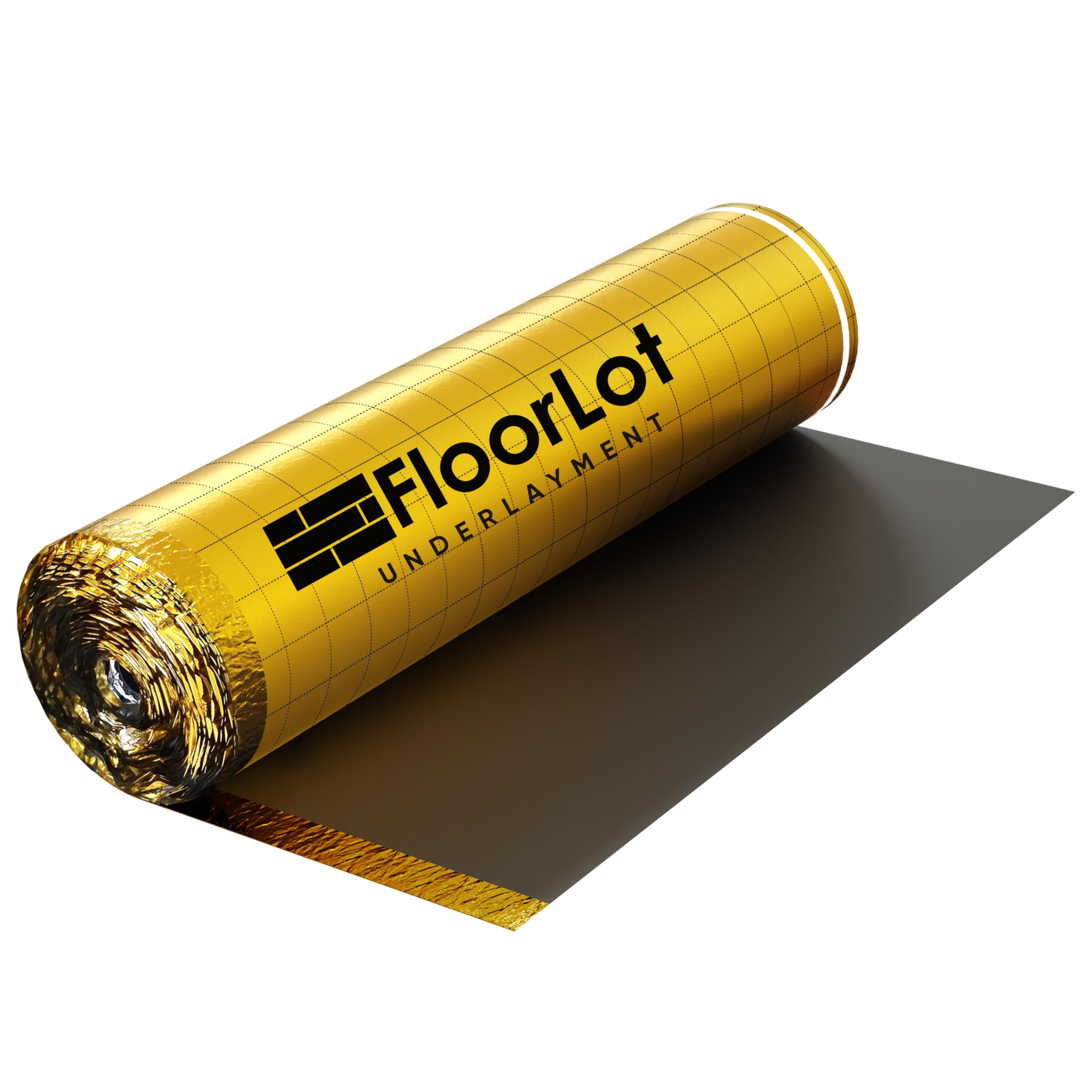
This 3 mm thick underlayment is the single most important layer between your concrete subfloor and any floating floor you choose. It integrates a built-in moisture blocking film that eliminates the need for a separate vapor barrier, which is critical in basements where concrete constantly releases moisture vapor. The IXPE foam core provides both thermal insulation and sound dampening, with IIC and STC ratings that satisfy HOA and condo association requirements.
The 200 sq ft roll covers a generous area, and the printed grid lines on the surface make cutting precise shapes fast and accurate. Included seam tape ensures an airtight seal between strips, preventing moisture from migrating through gaps. Users consistently report that it smooths minor concrete imperfections and reduces the hollow sound typical of floating laminate floors.
If you plan to install laminate, engineered wood, or luxury vinyl over concrete, this underlayment delivers the professional-grade moisture protection and acoustic performance that transforms a cold concrete slab into a comfortable, quiet living space. It is the foundational choice for any serious basement renovation.
Why it’s great
- Integrated moisture barrier eliminates extra vapor film
- Reduces footfall noise and hollow floor sound
- Easy to roll out and cut with grid lines
Good to know
- Requires a floating floor on top — not a standalone finish
- Not suitable alone for high-traffic wear without flooring
2. Home Aesthetics 3/8 Inch Foam Tiles

These interlocking EVA foam tiles provide instant cushion and insulation over cold concrete, making them ideal for basements turned into playrooms, yoga studios, or home gyms. The 3/8-inch thickness absorbs impact and relieves foot fatigue during standing or exercise. The Sea Haze Grey wood grain print adds a surprisingly elegant aesthetic that lifts the room beyond typical garage mat appearance.
Each tile measures 24 x 24 inches, and the jigsaw-puzzle connection allows for tool-free assembly. Border pieces are included to create a clean finished edge. The foam is BPA-free and phthalate-free, which matters for children’s play areas. Users report that the tiles stay in place well on concrete, though high-traffic zones may require tape or weighted edges to prevent creeping.
One trade-off is durability under sharp loads — pet nails, high heels, or heavy furniture legs can cause permanent indentations because the foam compresses. This is a soft-surface solution optimized for comfort, not for heavy rolling loads or abrasive wear. For a warm, forgiving floor that can be removed and reinstalled elsewhere, this is a strong mid-range option.
Why it’s great
- Shock-absorbing foam comfortable for standing and exercise
- No adhesive or tools needed for installation
- Wood grain print looks more refined than standard mats
Good to know
- Prone to dents from heavy furniture or sharp objects
- Not a moisture barrier — concrete must be dry underneath
3. INMOZATA Rigid Core Peel and Stick Vinyl
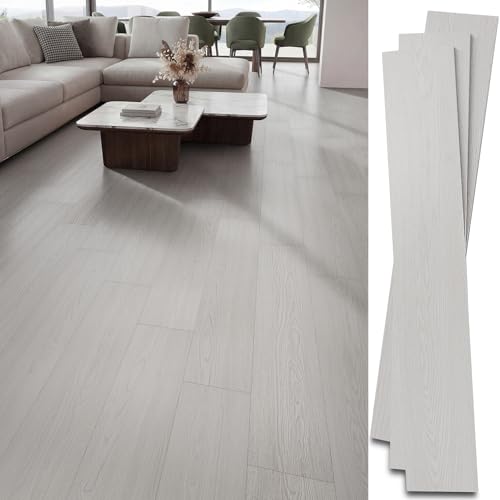
This peel-and-stick plank uses a rigid composite core that resists dents and deformation far better than standard thin vinyl. At 0.08 inches thick, it provides a more substantial feel underfoot and better conceals minor concrete imperfections. The Ash Gray wood-look finish features realistic grain texture, and the PVC surface is 100% waterproof, fire-resistant, and pet-friendly.
The strong adhesive backing bonds directly to clean, dry concrete without needing glue, though some users recommend adding a thin layer of construction adhesive in high-traffic zones for extra hold. Each box covers 54 square feet, and the planks cut easily with a utility knife or scissors. The rigid core helps the planks lie flat and resist curling at the edges over time.
For permanent installations where you want the look of hardwood without moisture worries, this product bridges the gap between budget peel-and-stick and expensive luxury vinyl plank. The combination of a hard core and a wear layer makes it suitable for living rooms, hallways, and finished basements where foot traffic is moderate to high.
Why it’s great
- Rigid core resists dents and edge curling
- Waterproof and fire-resistant surface
- Strong adhesive with optional glue upgrade in traffic zones
Good to know
- Color online may appear lighter than delivered
- Best installed on perfectly smooth, clean concrete
4. VEVOR Interlocking Drainage Tiles

When your concrete basement floor is prone to standing water, humidity, or wet foot traffic, these soft PVC interlocking tiles offer a purpose-built solution. Each 12×12 tile features 0.6-inch support pins that elevate the surface, allowing water to drain freely underneath and air to circulate. This design prevents mold, mildew, and the slippery film that develops on wet concrete.
The PVC material is soft enough to be comfortable on bare feet yet durable enough to withstand an 800 lb lawn tractor with chains. The interlocking connection is secure and doesn’t come loose under heavy loads. Users report that cutting tiles to fit around pipes or corners is straightforward with a utility knife. A strong chemical smell upon opening dissipates within one to two days.
These are not a finished living room floor — they look and feel like heavy-duty rubber mats. But for laundry rooms, pool surrounds, workshop areas, and boiler rooms where moisture is a constant reality, they outperform any other flooring type. They are also fully removable and reusable, making them a smart choice for rental basements.
Why it’s great
- Elevated design drains water and prevents mold
- Extremely durable under heavy equipment loads
- Simple snap-together assembly with no adhesive
Good to know
- Strong chemical odor during first 24-48 hours
- Edges may look unfinished in open layouts
5. Lareko Peel and Stick Vinyl Flooring
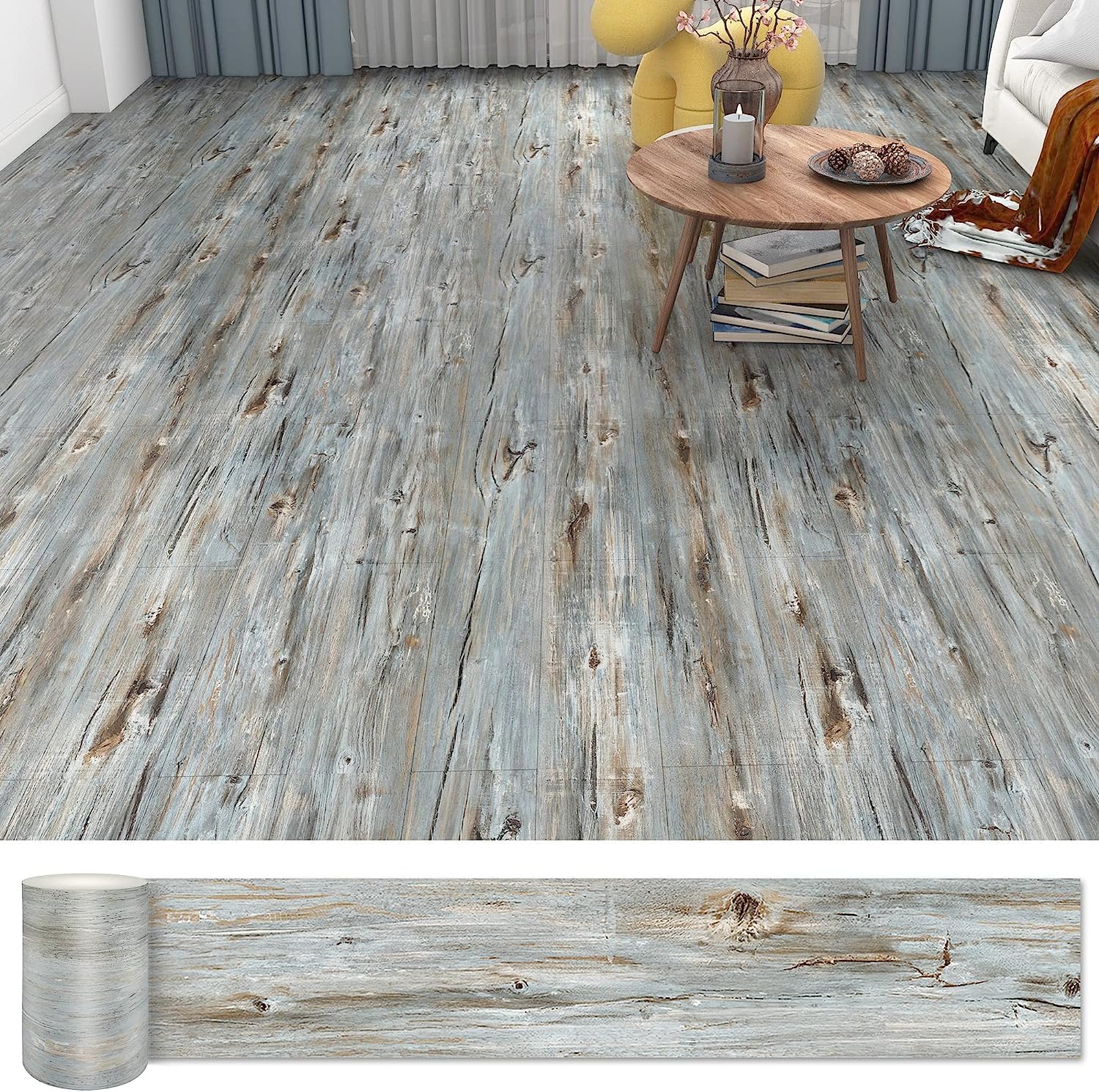
This 108 sq ft pack provides the largest coverage in this lineup, making it ideal for covering a full basement or large open room in one purchase. At 0.6 mm thick, the planks are very thin — which is actually an advantage for sliding under door clearances and trimming around toilets. The Dustgrey finish has realistic wood grain embossing that convincingly mimics hardwood.
The adhesive is designed to be removable without leaving sticky residue, which appeals to renters or anyone who may want to change the floor later. However, the thin material is prone to tearing if dragged across sharp furniture edges or if not pressed down firmly during installation. Users report best results when using a blow dryer to warm the tiles for a more pliable fit around corners.
This product is best suited for low-traffic areas like guest rooms, finished basements used occasionally, or spaces where the floor will be covered by area rugs. The trade-off for easy removability and large coverage is reduced puncture resistance compared to thicker vinyl. For a cost-effective transformation that doesn’t require a long-term commitment, it is a practical entry-level choice.
Why it’s great
- Highest coverage per box for large spaces
- Removable adhesive leaves no residue
- Thin profile fits under tight door clearances
Good to know
- Thin material can tear from sharp objects
- Not ideal for high-traffic or heavy furniture areas
6. Mysflosy Peel and Stick Vinyl Planks

At 1.5 mm thick, these planks offer a solid middle ground between ultra-thin removable vinyl and premium rigid core options. The deep embossed wood grain texture provides realistic tactile feedback that mimics real hardwood — a detail often missing in budget peel-and-stick products. The Light Grey color works well in basements where natural light is limited, brightening the space without feeling clinical.
The adhesive is reported by multiple users to be strong enough that no extra glue is needed for standard residential use. Arrows printed on the backing help maintain consistent plank alignment during installation. One user successfully covered their entire 17×18 foot basement floor in four hours using a J-roller for firm adhesion. The product is scratch-resistant and easy to clean with routine sweeping.
Some reviews note that the boxes could be better packaged to prevent corner damage during shipping. Once installed, the planks perform well in bathrooms, kitchens, and basements. For a DIY homeowner wanting a durable upgrade without the complexity of floating floors, this represents a well-balanced entry point into peel-and-stick vinyl.
Why it’s great
- Deep embossed wood grain feels realistic underfoot
- Strong pre-applied adhesive holds without extra glue
- Good scratch resistance for everyday use
Good to know
- Packaging can allow corner damage during shipping
- Best for small to medium rooms under 200 sq ft
7. INMOZATA Aged Wood Peel and Stick Vinyl
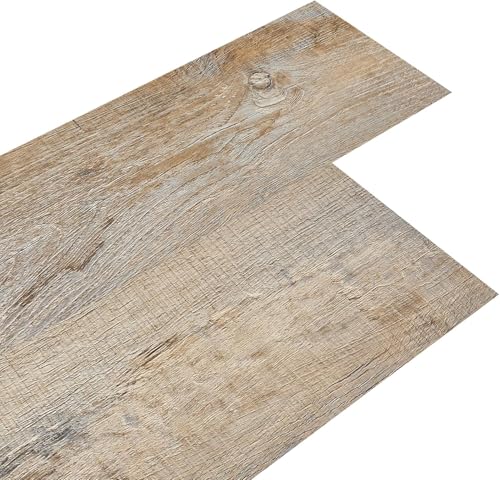
This residential-grade peel-and-stick vinyl offers an affordable way to give a concrete basement a warmer, more finished appearance. The Aged Wood color has a natural, weathered look that hides dust and minor scuffs well. At 0.06 inches thick, the planks are lightweight and easy to cut with simple household scissors, making the installation process accessible even for first-time DIYers.
User feedback is consistent: the tiles look beautiful immediately after installation and transform the room’s atmosphere. However, multiple reports indicate that in high-traffic zones — particularly at the bottom of stairs or near entry doors — the tiles can begin lifting after several months. Some users proactively add a layer of construction glue to ensure long-term adhesion. The material is also prone to ripping during handling if not carefully positioned.
For a temporary room refresh or a low-traffic area like a guest bedroom or home office, this product delivers impressive visual results at a very accessible cost. The aesthetic upgrade over bare concrete is dramatic. But if your basement sees daily foot traffic, heavy furniture movement, or moisture issues, investing in a thicker vinyl or rigid core product will provide more reliable long-term performance.
Why it’s great
- Beautiful aged wood appearance lifts basement aesthetics
- Easy to cut and install with no special tools
- Strong initial adhesion on clean concrete
Good to know
- Thin material may lift in high-traffic areas over time
- Shipping can cause broken corners on multiple pieces
FAQ
Can I install peel-and-stick vinyl directly on concrete?
How do I stop peel-and-stick tiles from lifting in high-traffic basement zones?
Is underlayment necessary for basement concrete floors?
What is the best flooring for a basement that occasionally floods?
Final Thoughts: The Verdict
For most users, the basement flooring over concrete winner is the GoldMax Premium Underlayment because it provides the critical moisture barrier and sound dampening that makes any floating floor perform properly over concrete. If you want instant cushioned comfort without tools, grab the Home Aesthetics Foam Tiles. And for a wet basement or laundry room where water pooling is a concern, nothing beats the VEVOR Interlocking Drainage Tiles.

Mo Maruf
I created WellFizz to bridge the gap between vague wellness advice and actionable solutions. My mission is simple: to decode the research and give you practical tools you can actually use.
Beyond the data, I am a passionate traveler. I believe that stepping away from the screen to explore new environments is essential for mental clarity and physical vitality.