Our readers keep the lights on and my smoothie glass nicely filled. As an Amazon Associate, I earn from qualifying purchases.
Selecting a sealer for a basement floor means choosing between a film-forming coating that sits on the surface and a penetrating formula that becomes part of the concrete itself. The wrong choice can trap moisture, peel, or leave you recoating every season. The right one stops dusting, reduces vapor transmission, and protects against stains and spalling without altering the natural texture of the slab.
I’m Mohammad Maruf — the founder and writer behind WellFizz. I’ve spent years analyzing concrete sealer formulations, VOC data, and customer durability reports to separate marketing claims from real performance in residential basements.
This guide distills those findings into actionable recommendations. Whether you are sealing a new slab or treating an old dusty floor, the best basement floor sealer depends on moisture levels, foot traffic, and whether you want a clear film or invisible protection.
How To Choose The Best Basement Floor Sealer
The first decision is whether the sealer forms a surface film or penetrates into the concrete pores. Film-forming acrylics can look great but may peel or bubble if moisture vapor pushes through the slab. Penetrating sealers react chemically inside the substrate, blocking liquid water while allowing vapor to escape. For basements with any history of dampness, a penetrating option is almost always the safer long-term bet.
Moisture Vapor and Hydrostatic Pressure
Basement slabs sit on or near soil that may contain moisture. A high moisture vapor emission rate can cause surface-applied coatings to delaminate. Penetrating sealers that densify the concrete and reduce water absorption by up to 95 percent handle this environment far better. If your basement has never had standing water but feels cool and humid, a penetrating waterproofer is the right choice.
Finish Preference and Traction
Some basement sealers leave a glossy or satin film that makes the floor look polished. Others deliver a completely invisible, matte finish that preserves the natural concrete appearance. Glossy surfaces can become slippery when wet, especially if you store items or walk in bare feet. For workshops, storage rooms, or utility areas, a penetrating sealer that leaves a slip-resistant, natural texture is often preferred.
Durability and Reapplication Cycle
Film-forming sealers may need recoating every one to three years depending on foot traffic. Premium penetrating sealers can last five to ten years before reapplication. Some densifying sealers claim a one-time permanent bond that lasts the life of the slab, provided the surface is not mechanically abraded. The longer the service life, the better the value for a basement floor that is sealed once and largely left alone.
Quick Comparison
On smaller screens, swipe sideways to see the full table.
| Model | Category | Best For | Key Spec | Amazon |
|---|---|---|---|---|
| Ghostshield Lithi-Tek 9500 | Penetrating | Permanent densifying waterproofing | Ultra-concentrate makes 5 gal | Amazon |
| Armor SX5000 WB | Penetrating | Invisible water repellent | Reduces water absorption by 95% | Amazon |
| Ghostshield 4500 | Densifier | Dust-proofing soft concrete | Increases abrasion resistance 50% | Amazon |
| Armor AR350 | Film-forming | Wet look color enhancement | Low gloss solvent-based acrylic | Amazon |
| Polar Dust Proof Sealer | Penetrating | Dust reduction on interior floors | Low viscosity acrylic formulation | Amazon |
| MasonryDefender | Film-forming | Satin finish on stamped concrete | Water-based acrylic, satin sheen | Amazon |
| AQUA-X 11 | Penetrating | Natural finish waterproofing | Silicone-based, 400+ sq ft/gal | Amazon |
In‑Depth Reviews
1. Ghostshield Lithi-Tek 9500 Ultra Concentrate
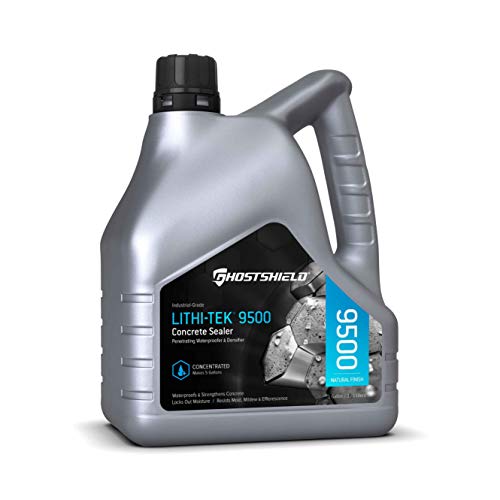
The Lithi-Tek 9500 is an industrial-grade penetrating sealer and densifier that chemically bonds inside the concrete. One gallon of ultra-concentrate mixes with four gallons of water to make five gallons of ready-to-use sealer, treating up to 1,000 square feet per coat.
Users report excellent water beading and resistance to moisture vapor transmission. The formula densifies the concrete surface, increasing abrasion resistance and reducing dusting. Application requires a clean, dry surface and fast wet-on-wet technique because the sealer begins waterproofing within one minute. For basements with efflorescence issues, the penetrating action prevents salts from migrating to the surface.
The invisible finish leaves the concrete looking natural and slip-resistant. Some users note that dense concrete may resist absorption, requiring slightly more dilution or a second coat. The product is not recommended for surfaces exposed to deicing salts, so keep it for interior slabs and protected exterior areas. For permanent one-time protection on a basement floor, this is the definitive choice.
Why it’s great
- One gallon concentrate makes five gallons of sealer
- Permanent bond densifies and waterproofs simultaneously
- No odor and zero VOCs
Good to know
- Fast reaction time demands quick application
- Not for surfaces exposed to deicing salts
2. Armor SX5000 WB Water-Based Silane-Siloxane Sealer

The Armor SX5000 WB uses silane-siloxane chemistry to create a water-repellent barrier below the concrete surface, reducing water absorption by up to 95 percent. It is completely invisible — no glossy film, no color change, no slippery surface. For basement floors where you want protection without altering the natural look, this formula delivers unmatched subtlety.
Application is straightforward with a pump sprayer. The water-based formula has no odor and zero VOCs, making it safe for interior use without respirators. Coverage runs about 175 to 225 square feet per gallon, and the sealer can last seven to ten years before reapplication is needed. Customers in humid climates report that it eliminates the need for frequent power washing by preventing organic growth.
The main limitation is that the SX5000 WB does not densify the concrete. If your basement floor is soft or dusty, you may need a separate densifier before applying this sealer. Some users found that water pools after rain rather than evaporating, but this is a sign the repellent barrier is working. For a breathable, invisible, long-lasting basement floor sealer, this is a top-tier pick.
Why it’s great
- Zero odor and zero VOCs for safe indoor use
- Lasts seven to ten years between applications
- No change to concrete color or texture
Good to know
- Does not densify soft or dusty concrete
- Coverage is lower than some competitors
3. Ghostshield Lithi-Tek 4500 Densifier and Hardener
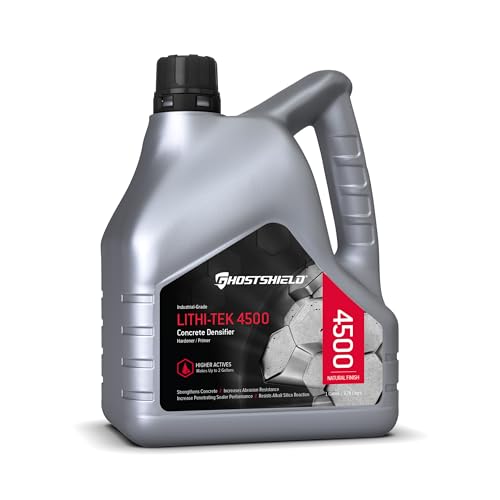
Ghostshield 4500 is a dedicated lithium silicate densifier that binds loose concrete particles, increasing abrasion resistance by up to 50 percent. It is the ideal solution for basement floors that chalk, dust, or shed aggregate every time you walk across them. The formula penetrates deep into the slab and reacts with free lime to form a hard, crystalline structure throughout the pore system.
This is a one-time permanent application — no need to reapply every few years. The treated surface remains natural, tack-free, and slip-resistant. Many customers use it as a primer before applying a separate water repellent for maximum protection. The water-based formula has no odor and zero VOCs, making it easy to work with in enclosed basement spaces.
The Ghostshield 4500 does not provide significant water repellency on its own. If your basement experiences moisture intrusion, you will need to follow up with a penetrating sealer like the SX5000 WB or Lithi-Tek 9500. Some users report that the densifier can cause a temporary veiny appearance as it dries, but this clears once fully cured. For dusty concrete floors that need hardening first, this product is indispensable.
Why it’s great
- Permanently hardens soft, dusty concrete
- Zero VOCs and no odor for interior use
- Increases abrasion resistance by 50 percent
Good to know
- Not a standalone water repellent
- May cause temporary veining during drying
4. Armor AR350 Low Gloss Wet Look Concrete Sealer

The Armor AR350 is a solvent-based acrylic sealer that darkens and enriches concrete color, delivering a low-gloss wet look that mimics the appearance of damp concrete. This is the best option if your basement floor is stamped, stained, or otherwise decorative and you want to enhance its visual depth. The professional-grade resins produce a durable, non-yellowing film that resists UV damage and abrasion.
Coverage is about 175 to 225 square feet per gallon, and the sealer is self-priming — simply roll or spray it onto a clean, dry surface. It provides excellent protection against water absorption, road salts, and surface wear. Users report dramatic improvements in appearance after a single coat, with a second coat deepening the effect further.
The solvent-based formula has a strong chemical odor that requires a respirator and good ventilation. On basement floors, this may mean leaving windows open or setting up fans for several hours. The film-forming nature means it can peel if moisture vapor pushes through the slab, so it is best suited for basements that are already dry. For a showroom-quality finish on a decorative concrete floor, this sealer excels.
Why it’s great
- Dramatic color enhancement with low gloss sheen
- Self-priming and easy to apply
- Long-lasting protection against stains and wear
Good to know
- Strong VOCs require a respirator
- Film can peel if moisture vapor is present
5. Polar Dust Proof Concrete Sealer Clear

The Polar Dust Proof Sealer uses a 100 percent acrylic formulation with low viscosity to penetrate deep into concrete pores, binding loose particles and creating a dust-free surface. It is particularly effective on factory, warehouse, and garage floors where dust tracking is a constant nuisance. The satin finish adds a subtle sheen without looking glossy or artificial.
Coverage is quoted at up to 25 square meters per 5-liter container with two coats recommended. The sealer dries within one to two hours per coat, allowing for same-day completion of most basement projects. Customers report that it eliminates musty odors associated with dusty concrete and reduces the need for frequent sweeping. The low odor formula is tolerable for indoor use.
This sealer is not designed for waterproofing. It binds and seals but does not create a barrier against hydrostatic pressure or standing water. Some users note that the satin finish can appear slightly uneven if applied too thickly. For a simple, effective dust-proofing solution on interior basement floors, this is a reliable mid-range choice.
Why it’s great
- Low viscosity penetrates deeply into pores
- Fast drying allows same-day completion
- Reduces dust and musty odors effectively
Good to know
- Limited waterproofing capability
- Satin sheen may show application unevenness
6. MasonryDefender Stamped Concrete Sealer
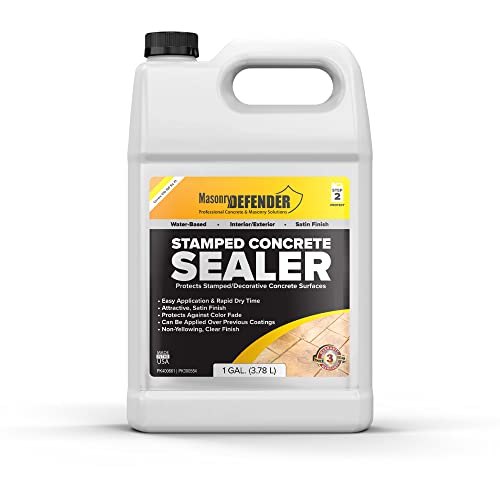
MasonryDefender is a water-based acrylic sealer formulated specifically for stamped concrete and pavers. It delivers a clear satin finish that enhances the look of decorative surfaces while providing water resistance and color protection. For basement floors that incorporate stamped or stained patterns, this sealer preserves the visual appeal without the strong odor of solvent-based alternatives.
Application is simple with a paint roller or sprayer, and the sealer dries quickly enough for foot traffic within a few hours. Customers report that two coats produce a noticeable improvement in appearance and durability. The water-based formula allows for easy cleanup with soap and water, and the satin sheen is attractive without being slippery.
This sealer is a film former, so it may not be ideal for basements with moisture vapor issues. Some users note that the product is thinner than expected, requiring careful application to avoid puddling. Light rain shortly after application can cause temporary white haze until full cure is achieved. For decorative basement floors that stay dry, this is an affordable and effective satin finish option.
Why it’s great
- Enhances stamped concrete with satin sheen
- Quick drying and easy water cleanup
- Good color protection against fading
Good to know
- Film former may peel with moisture vapor
- Thinner consistency can lead to runoff
7. AQUA-X 11 Clear Penetrating Concrete Sealer

The AQUA-X 11 is a silicone-based penetrating sealer that provides water repellency without altering the natural appearance of the concrete. It is designed for indoor and outdoor use on concrete, stone, pavers, and unglazed tiles. The low-VOC formula has no harsh odor, making it suitable for basement applications without requiring a respirator.
Coverage is generous — 100 to 400 square feet per gallon on concrete, and up to 800 square feet per gallon on stone. The sealer dries quickly, allowing foot traffic within one hour and vehicle traffic within two hours. Customers report excellent water beading and effective protection against staining, freeze-thaw damage, and salt damage. The manufacturer claims two to four years of protection before resealing.
The sealer is thin and penetrates quickly, so it works best on porous surfaces. Extremely dense concrete may require more than one coat. Some users struggled with the tight lid, but the product performance earned high marks once applied. For a budget-friendly penetrating sealer that keeps basements dry without changing the floor’s look, the AQUA-X 11 is a solid entry-level choice.
Why it’s great
- Low VOCs and no harsh odor for indoor use
- Excellent coverage on porous concrete and stone
- Fast dry time allows quick return to use
Good to know
- Not suitable for dense or sealed surfaces
- May require multiple coats on very porous slabs
FAQ
Can I apply a basement floor sealer over old paint or coating?
How long does a penetrating basement sealer typically last before recoating?
Will a basement floor sealer make the surface slippery when wet?
Final Thoughts: The Verdict
For most users, the best basement floor sealer winner is the Ghostshield Lithi-Tek 9500 because it densifies and waterproofs in a single permanent application, with ultra-concentrate value that treats up to 1,000 square feet. If you want an invisible water repellent with zero odor, grab the Armor SX5000 WB. And for soft, dusty concrete that needs hardening before sealing, nothing beats the Ghostshield 4500 Densifier.

Mo Maruf
I created WellFizz to bridge the gap between vague wellness advice and actionable solutions. My mission is simple: to decode the research and give you practical tools you can actually use.
Beyond the data, I am a passionate traveler. I believe that stepping away from the screen to explore new environments is essential for mental clarity and physical vitality.