Our readers keep the lights on and my smoothie glass nicely filled. As an Amazon Associate, I earn from qualifying purchases.
The wrong base under your above ground pool silently destroys the liner — one sharp rock, one root pushing through, one season of ground shift, and your swimming sanctuary is leaking. This guide cuts through the marketing noise to deliver the exact material specs, density grades, and installation logic that determine whether your pool base lasts one season or a decade.
I’m Mohammad Maruf — the founder and writer behind WellFizz. My research process for every buying guide involves cross-referencing customer durability reports against manufacturer material specifications, technical datasheets, and real-world stress-testing feedback specific to geotextile underlayment and pool liner protection.
After analyzing dozens of models across material weight, puncture resistance, seam construction, and surface compatibility, the best base for above ground pool is determined by three decisive factors: gram-per-square-meter density, true seamless one-piece cutting, and the presence of heat-pressed rather than stitch-bound fiber bonding.
How To Choose The Best Base For Above Ground Pool
An above ground pool base is not a one-size-fits-all underlayment. The material weight, the way the fibers are bonded, the shape of the cut, and the surface you install it on all determine whether your liner stays smooth for years or develops stress points that fail within months.
Material Density and GSM Rating
The single most important spec is grams per square meter. Entry-level bases fall around 200G/M² — these stop small debris but compress thin under heavy water pressure. Premium bases at 300G/M² and above use thicker fibers that resist root punch-through and stone pressure. The highest density pads, reaching 350G/M², effectively double the puncture resistance of standard options while adding noticeable cushion underfoot during swims.
Seam Construction
Stitched seams create weak points where moisture seeps in and fibers separate over time, especially under the constant load of 20,000+ gallons of water. Heat-pressed seams melt the fibers together into a continuous sheet that cannot fray or split. True seamless one-piece pads eliminate seam risk entirely — they are cut from a single sheet of geotextile with no joints anywhere, which also prevents debris from lodging in seam gaps and scratching the liner.
Size and Shape Precision
Precut round pads sized exactly to your pool’s footprint eliminate the need for trimming and prevent uncovered edges where liners contact bare ground. For oval pools, look for pads that match the specific length-to-width ratio rather than forcing a round pad into an oval frame. The best pads include an inch or two of overhang to account for slight ground irregularities after water fills and the pool settles.
Surface Compatibility and Installation
A quality geotextile pad works on grass, sand, concrete, gravel, or wood deck surfaces without requiring additional sand or foam layers. The pad must be breathable enough to allow moisture vapor to escape from beneath the pool, preventing mold and ground rot, while dense enough to block weed shoots and insect tunneling. Heat-pressed pads maintain structural stability on sloped or uneven terrain without shifting during the pool fill process.
Quick Comparison
On smaller screens, swipe sideways to see the full table.
| Model | Category | Best For | Key Spec | Amazon |
|---|---|---|---|---|
| Abimars 18FT Round Pad | Premium | Maximum puncture protection and 2x density cushion | 350G/M² seamless industrial-grade geotextile | Amazon |
| TIXANF 15FT Pad | Premium | Ultra-thick 350G/M² protection with weed blocking | 350G/M² needle-punched geotextile | Amazon |
| UIRWAY 18FT Round Pad | Mid-Range | Heat-pressed 300G/M² puncture defense and passive water warming | 300G/M² heat-pressed double-layer geotextile | Amazon |
| Yankee Pool Liner Pad 24 Ft | Mid-Range | Large round pools up to 24 feet and hard-wall setups | 24 Ft round tear-resistant geotextile | Amazon |
| Modern Innovations 24′ Round Pad | Value | Budget-friendly installation for soft and hard wall pools | 24 Ft pre-cut heavy-duty weather-resistant mat | Amazon |
| Gladon 100-Feet Roll Wall Foam | Specialty | Wall insulation and liner protection for pool sidewalls | 1/8 inch x 48 inch x 100 feet foam roll | Amazon |
| Swimline 15×25 Oval Liner | Premium Liner | Complete oval liner replacement with 15-year warranty | Standard gauge vinyl with double-welded seams | Amazon |
In‑Depth Reviews
1. Abimars 18 FT Round Pool Liner Pad
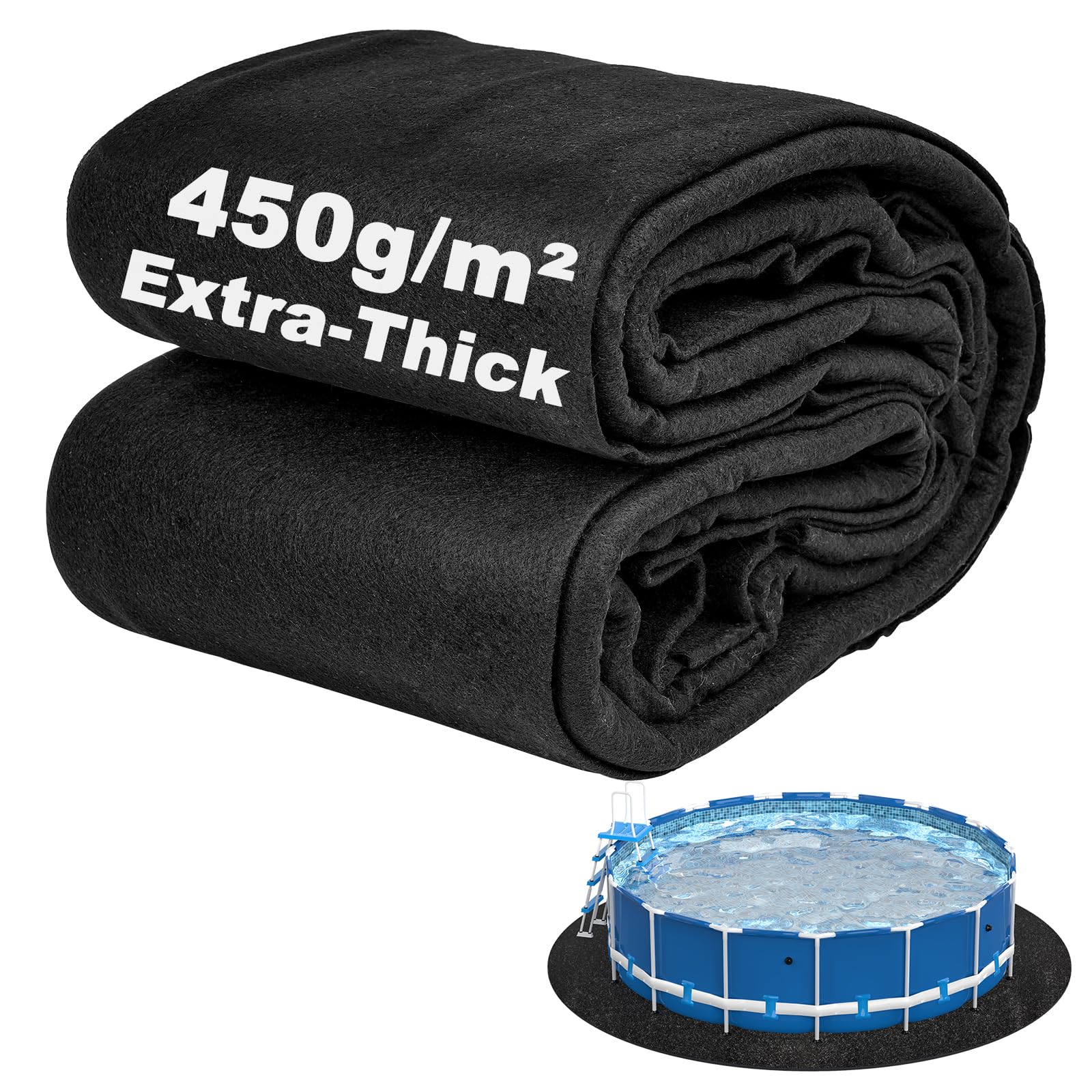
This pad uses a proprietary blend of polyester, acrylic, and cotton fibers compressed to 350G/M² — the highest density found in any consumer-grade round pool pad on the market. The composite structure makes the material impossible to tear by hand and resistant to puncture from sharp stone edges that would cut through standard 200G/M² bases within weeks.
The true seamless one-piece design means there are no stitched joints anywhere on the mat. This eliminates the risk of seam separation under 20,000 pounds of water pressure and prevents debris from collecting in stitch lines and scratching the liner. The pad is cut from a single large sheet, giving it a perfect 18-foot round shape with full edge-to-edge coverage that protects the entire liner bottom.
Weighing 23 pounds with a 216-inch diameter, this pad offers noticeable cushion underfoot during swims. The high-density material also acts as a thermal barrier, reducing heat loss through the pool floor when paired with a solar cover. The moisture-blocking properties protect metal pool frames from ground-level rust and corrosion.
Why it’s great
- Double the density of standard pads for superior puncture resistance
- Truly seamless construction eliminates seam failure risk
- Thermal insulation reduces pool water heat loss through the bottom
Good to know
- Heavier weight makes repositioning during installation a two-person job
- Premium density commands a higher budget investment
2. TIXANF 15FT Pool Liner Pad
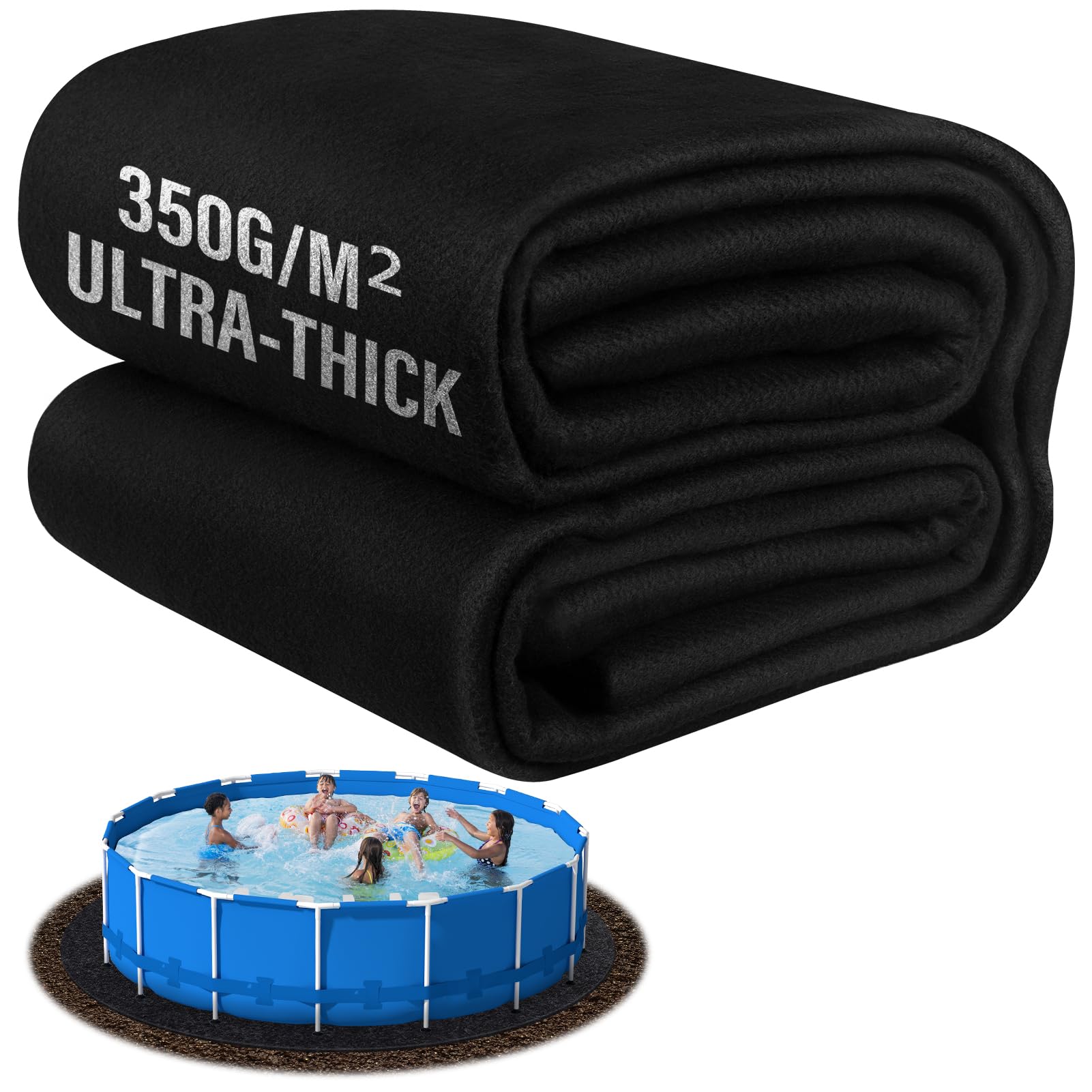
This pad uses high-frequency needle punching technology to fuse a polyester, acrylic, and cotton fiber blend at 350G/M² density. The needle-punch process creates deep mechanical bonds between fibers without adhesives, forming a fabric that resists delamination even under constant moisture exposure — a critical advantage for pads that sit between damp ground and pool liner year-round.
The seamless double-density construction blocks light entirely, which prevents weed photosynthesis and root growth from pushing through the pad. Customers report that even after months of pool setup, the ground beneath stays smooth and vegetation-free. The breathable design allows moisture vapor to pass through so ground moisture doesn’t get trapped and cause mold or rot beneath the liner.
Weighing 11.68 pounds for the 15-foot model, the pad is lighter than many comparably dense options, making solo installation easier. It works on grass, concrete, wood decks, and patio surfaces without requiring additional sand layers. Multiple users note buying the 18-foot version for a 16-foot pool to get extra edge protection around rocks and landscaping.
Why it’s great
- Needle-punched fiber bonding resists delamination better than glued or stitched pads
- Full light blocking prevents weed growth and root penetration
- Light enough at 11.68 pounds for single-person setup
Good to know
- Some users wish the material had thicker cushioning underfoot
- Precut size only fits round pools; oval pools require manual trimming
3. UIRWAY 18FT Round Pool Liner Pad
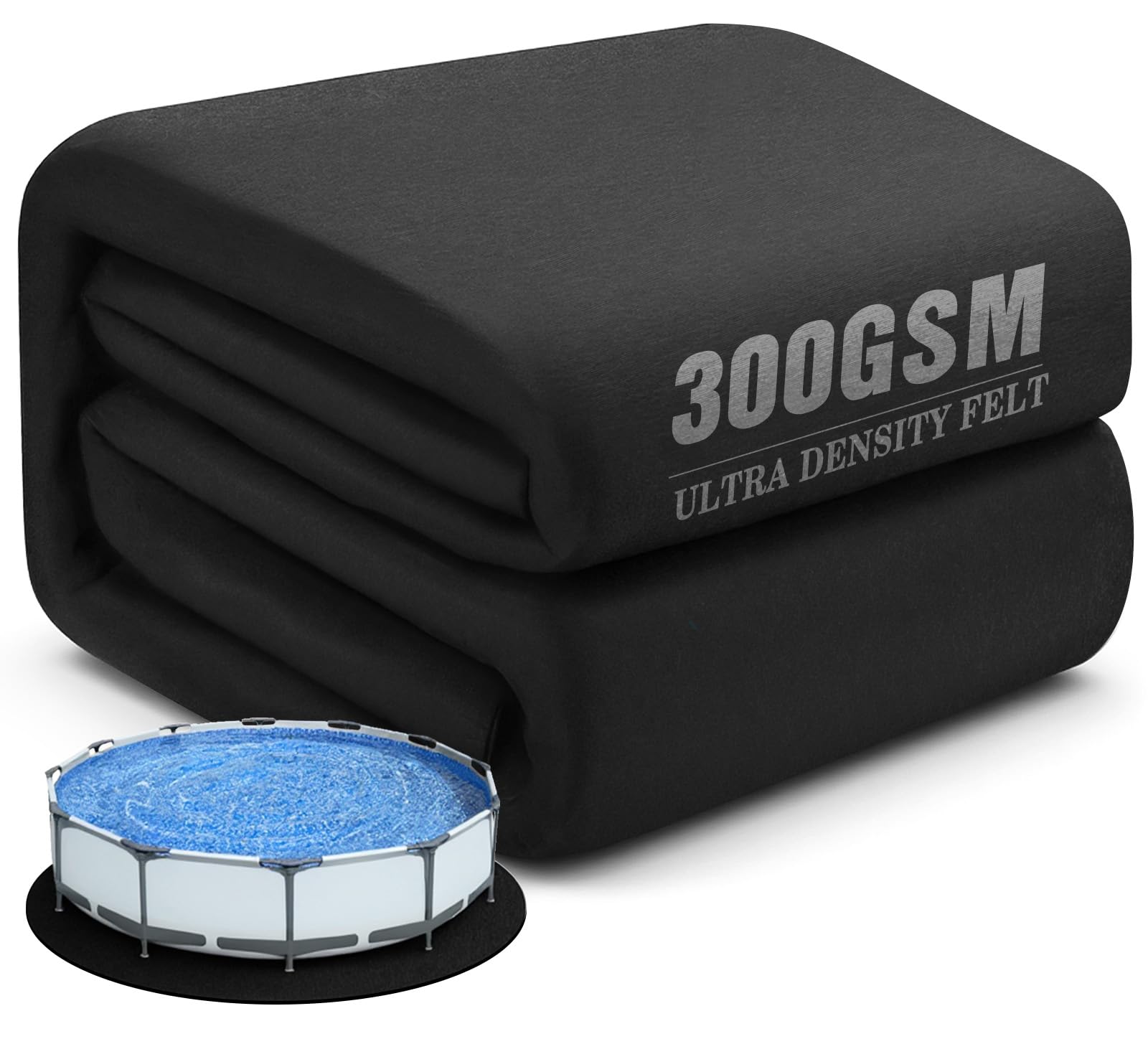
This pad uses a 300G/M² double-layer geotextile fabric bonded through advanced heat-pressed technology. Heat pressing creates a tighter fiber structure than needle-punched or stitch-bonded alternatives, resulting in higher puncture resistance per gram of material. The concentrated fiber matrix blocks sharp rocks, aggressive roots, and sticks while maintaining enough flexibility to conform to slight ground irregularities.
The black geotextile material provides a genuine passive water-warming effect by absorbing sunlight and reducing heat loss into the ground. On sunny days, black underlayment can raise pool water temperature by several degrees compared to light-colored or reflective bases. This thermal advantage is especially valuable for pools in partially shaded backyards or regions with cooler summers.
Installation requires no tools — the one-piece design unrolls flat and lays in place without center seams or wrinkles. The pad is compatible with Intex, Bestway, and Summer Waves frames, and the 18-foot size includes a small overhang that can be trimmed if needed. Customers consistently describe the material as noticeably thicker than standard pool-supply store pads.
Why it’s great
- Heat-pressed fiber structure offers superior puncture resistance for its weight class
- Black material passively warms pool water by absorbing ground-level sunlight
- Tool-free roll-out installation with no center seam to manage
Good to know
- At 300G/M², it is less dense than 350G/M² premium options
- Some customers expected thicker cushion than the 300G/M² provides
4. Yankee Pool Liner Pad 24 Ft Round
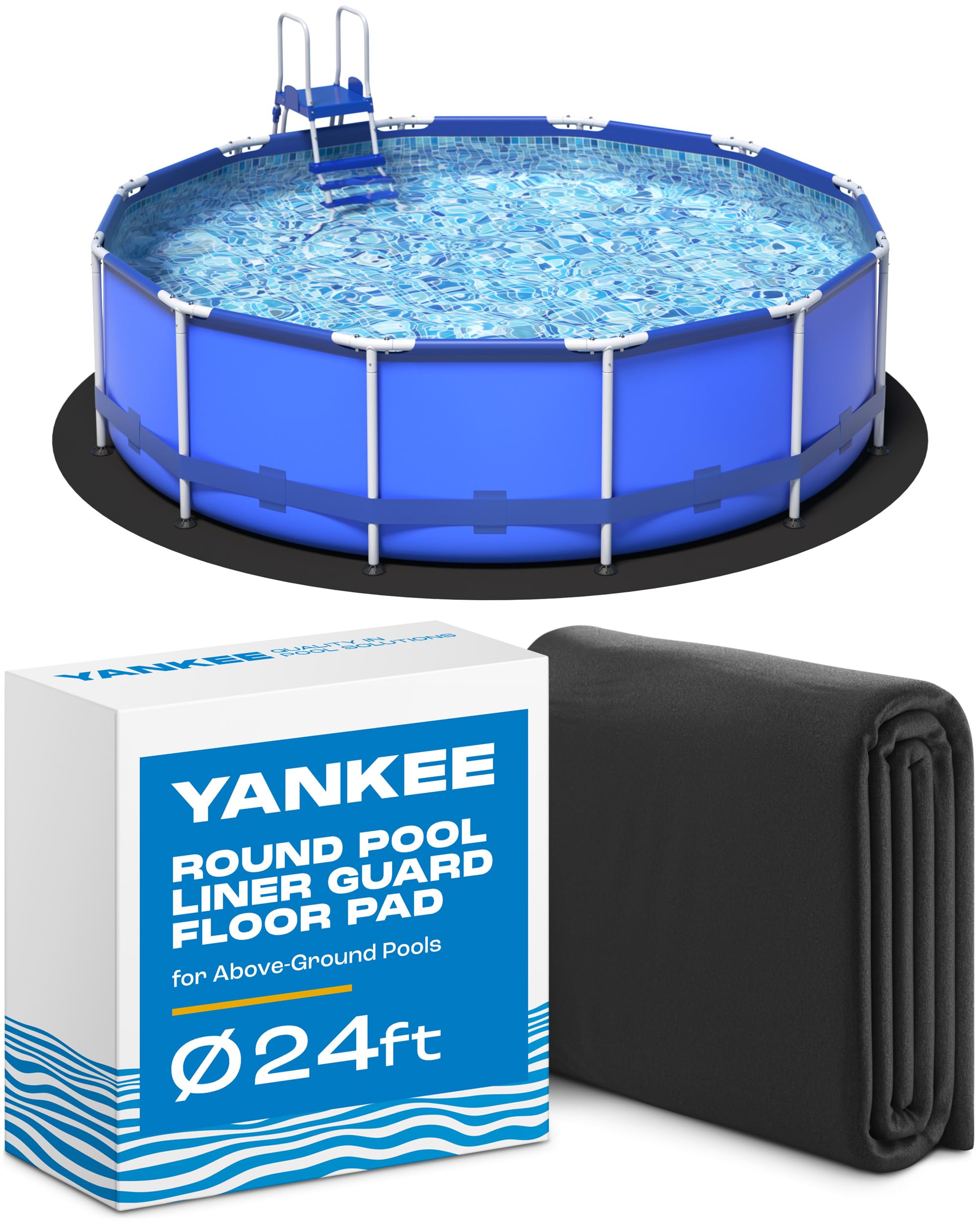
This pad is built for larger round pools up to 24 feet in diameter, a size range where standard 18-foot pads leave liner edges exposed. The pro-grade geotextile fabric is engineered for high tensile strength — customers report it handling large rocks underneath without tearing and maintaining structural integrity during hard-wall pool installation.
The pad’s tear-resistant properties come from a dense synthetic fiber weave that resists mechanical damage from roots, sharp stones, and insect tunneling. It works across multiple surface types including grass, sand, stone, cement, and wood decks. The pad also provides slight insulation that keeps pool water at a more stable temperature and acts as a barrier against rain accumulation and soil erosion beneath the pool.
Installation is straightforward for soft-wall pools — simply spread the pad on leveled ground and place the pool on top. For hard-wall pools, install the cove, spread the pad, and cover with the liner. Some customers describe the material as the thinnest fabric they have ever felt, while others report it as thick and durable, suggesting batch variability that potential buyers should be aware of.
Why it’s great
- Full coverage for large 24-foot round pools prevents liner edge exposure
- High tensile strength fabric handles buried rocks without tearing
- Customer service team responsive to replacement issues
Good to know
- Mixed customer reports on material thickness suggest possible batch inconsistency
- Some users found the actual pad thinner than the listing photographs suggest
5. Modern Innovations 24′ Round Pool Liner Pad
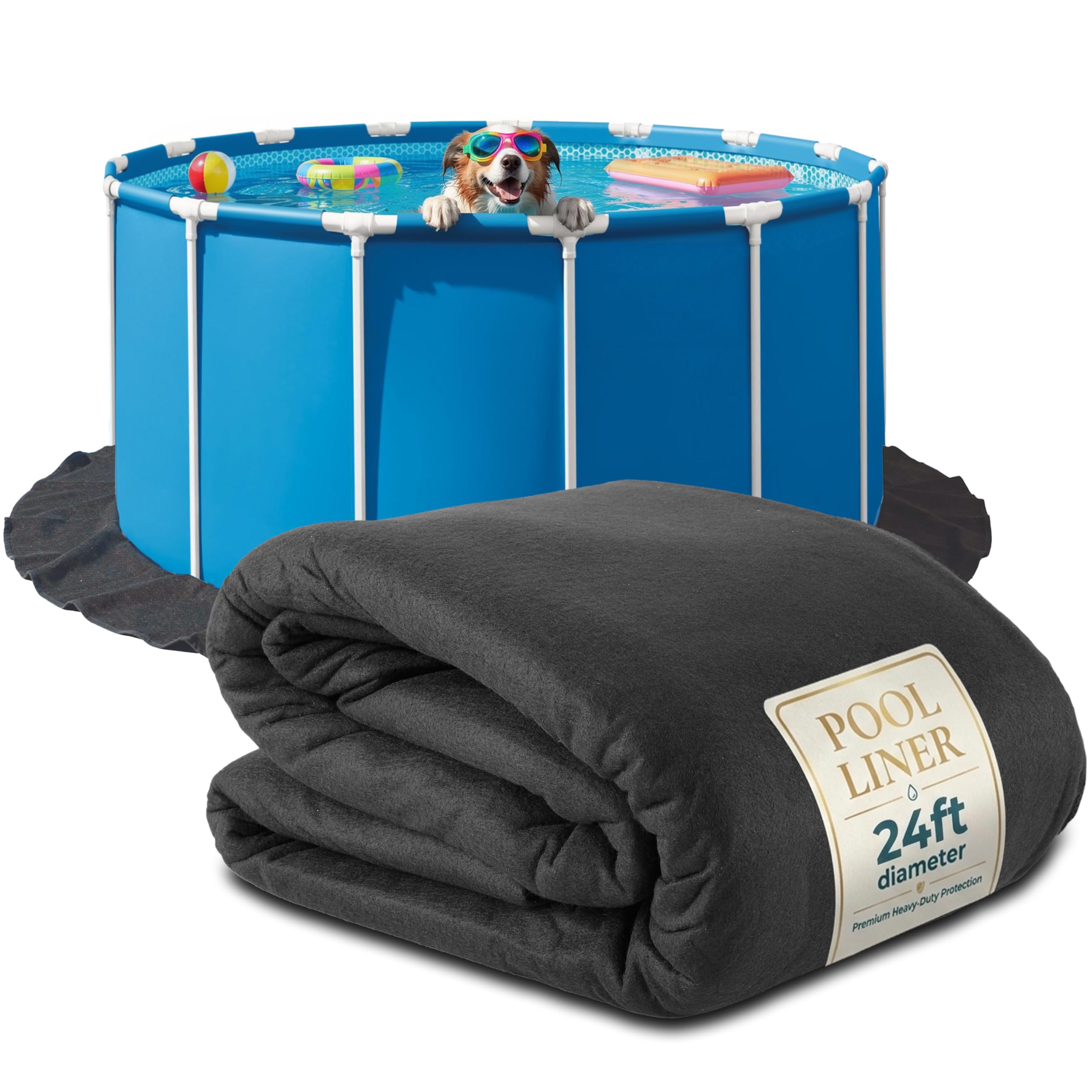
This pad offers a practical entry point for above ground pool protection without the investment of high-density 350G/M² options. The weather-resistant material withstands full-season outdoor exposure — one customer reports leaving a previous generation pad outside for two years with no degradation, then stacking this new pad on top for increased coverage after upgrading to a larger pool.
The pre-cut 24-foot round design eliminates the need for scissors or trimming for standard round pools up to that diameter. It works on grass, sand, concrete, and wood decks, and the thick felt construction provides cushioning that reduces foot fatigue during swim sessions. The pad also acts as a barrier between the metal pool frame and ground moisture, protecting against frame rust.
Installation is straightforward: unroll the pad, position it on leveled ground, and set up the pool. The material has a dark black finish that absorbs some sunlight for modest water warming. Some customers note the pad is not as thick as premium options, but they emphasize that it served its purpose for preventing punctures and extending liner life throughout the season.
Why it’s great
- Pre-cut design saves installation time for standard 24-foot round pools
- Weather-resistant construction survives two-plus seasons of outdoor exposure
- Compatible with both soft-wall and hard-wall above ground pool frames
Good to know
- Thinner than premium 350G/M² pads — less puncture resistance for rocky or root-heavy ground
- Not ideal for exceptionally sharp debris or extreme ground conditions
6. Gladon 100-Feet Roll Above Ground Pool Wall Foam

This product fills a different role than floor pads — it protects the vertical pool wall surface from puncturing the liner. The 1/8-inch thick, 48-inch tall foam roll wraps around the interior pool wall, creating a smooth barrier between the metal or resin wall panels and the vinyl liner. Without this foam, rough wall seams, rivets, and panel joints can wear through liners over time, causing sidewall leaks that are difficult to patch.
Installation requires foam adhesive spray — the foam is unrolled along the wall, trimmed at the top edge, and held in place until the adhesive sets. Customers report that adhesive spray works better than duct tape for long-term adhesion, though some used tape successfully. The foam softens the wall surface noticeably, preventing the metal panel texture from transferring through to the liner.
For pools with metal walls, this foam can also provide thermal insulation that reduces heat loss through the pool sidewall. One customer documented that adding this foam extended their swimming season from two months before installation to six months after, and reduced heater runtime to maintain 88°F water. The 100-foot roll is sufficient for pools up to approximately 15 feet by 30 feet.
Why it’s great
- Prevents metal wall seam ridges and rivet heads from puncturing the liner
- Provides measurable thermal insulation that reduces water heating costs
- 100-foot length covers large rectangular and oval pool wall areas
Good to know
- Foam adhesive spray is required and is not included with the roll
- Thin 1/8-inch profile does not mask major wall imperfections or dents
7. Swimline 15-Feet x 25-Feet Oval Swirl Bottom Overlap Liner

This is the liner itself — the vinyl membrane that actually holds the water — paired with a 15-year warranty that signals durability above typical mid-tier liners. The standard gauge vinyl is strong enough for both 48-inch and 52-inch sidewall pools, with double-welded seams that resist separation at the critical stress points where panels join. The swirl bottom design adds visual depth while the textured pebble finish provides subtle slip resistance underfoot.
Replacing a worn liner requires careful base preparation: the Swimline liner must be laid over a properly graded, smooth base layer of sand or cove material, with the protective geotextile pad sandwiched beneath. Customers report that installation is straightforward for DIY pool owners, with the liner fitting true to size and the overlap design making tension adjustment manageable without professional tools.
The 15-year warranty reflects confidence in the vinyl formulation’s UV resistance and cold-weather flexibility. Many users report replacing 11-year-old liners with this model and expecting similar longevity. At 51 pounds, the liner is heavy — handling requires at least two people to avoid stretching or wrinkling during placement.
Why it’s great
- 15-year warranty indicates above-average vinyl durability and seam strength
- Double-welded seams resist splitting worse than single-welded or glued seams
- Compatible with both 48-inch and 52-inch sidewall pool frames
Good to know
- This is the pool liner itself, not a base pad — requires separate underlayment purchase
- Shipping weight of 51 pounds demands at least two installers for safe handling
FAQ
Do I need a base pad if I already have sand leveled under my above ground pool?
How thick should the base pad be for a pool on rocky ground?
Can I use the same base pad for an oval pool and a round pool?
Final Thoughts: The Verdict
For most users, the base for above ground pool winner is the Abimars 18FT Round Pool Liner Pad because its 350G/M² seamless geotextile construction offers the highest puncture resistance and thermal insulation available at this tier without requiring additional layers. If you want proven weed-blocking performance with easy solo installation, grab the TIXANF 15FT Pool Liner Pad. And for a mid-range option that passively warms your water while protecting against roots, nothing beats the UIRWAY 18FT Round Pool Liner Pad.

Mo Maruf
I created WellFizz to bridge the gap between vague wellness advice and actionable solutions. My mission is simple: to decode the research and give you practical tools you can actually use.
Beyond the data, I am a passionate traveler. I believe that stepping away from the screen to explore new environments is essential for mental clarity and physical vitality.