Our readers keep the lights on and my smoothie glass nicely filled. As an Amazon Associate, I earn from qualifying purchases.
Elderly incontinence skin breakdown is not a rash you can ignore. When urine or stool sits against fragile, paper-thin skin for hours, the moisture strips the outer layer and enzymes digest living tissue — leaving raw, painful skin that opens to infection. Most moisturizing creams and baby lotions cannot stop this because they lack the specific architecture to block moisture while letting the skin breathe. A proper barrier cream is thick enough to stay put, loaded with zinc oxide or petrolatum to repel water, and formulated to cling to both intact and compromised skin without stinging on application.
I’m Mohammad Maruf — the founder and writer behind WellFizz. I spent hundreds of hours analyzing the chemical composition, clinician feedback, and long-term wear testing across the leading incontinence barrier creams to determine which formulas actually prevent stage-1 moisture damage before it progresses.
This guide compares the five top-rated products by real-world performance, ingredient density, and ease of daily application to find the true best barrier cream for elderly incontinence for caregivers and families.
How To Choose The Best Barrier Cream For Elderly Incontinence
Choosing a barrier cream for elderly incontinence goes far beyond grabbing the thickest option on the shelf. The formula must be occlusive enough to block moisture, gentle enough for eroded skin, and practical for daily application. Caregivers often waste money on products that either wash off with the first brief change or are too sticky to spread evenly across large areas. Here is what matters most.
Active Barrier Ingredient Concentration
The active ingredient — zinc oxide, petrolatum, or dimethicone — is the core of any barrier cream. Zinc oxide at 20% or higher provides the longest-lasting physical shield against moisture and enzymes. Petrolatum-based ointments like Aquaphor create a water-repellent seal that still allows oxygen exchange, which is critical for healing already-broken skin. Look for creams where the active barrier compound is listed within the first three ingredients.
Viscosity and Spreadability
A cream that is too thin runs off the skin within an hour, leaving the perineal area unprotected. A paste that is too thick becomes impossible to spread without causing friction pain on damaged tissue. The best products for incontinence use strike a balance: they feel thick in the tube but soften slightly with body heat so they glide without dragging. This is especially important for bedridden individuals where changes happen in the lying position.
Skin Sensitivity and Fragrance
Elderly skin loses its lipid barrier rapidly and becomes reactive. Fragrance, alcohol, and parabens can cause immediate stinging and worsen dermatitis. Choose fragrance-free formulas with minimal preservatives. Some premium formulas add ceramides or hyaluronic acid to support natural barrier repair under the protective layer, which helps reduce the frequency of reapplication.
Quick Comparison
On smaller screens, swipe sideways to see the full table.
| Model | Category | Best For | Key Spec | Amazon |
|---|---|---|---|---|
| Aquaphor Healing Ointment | Ointment | Compromised skin healing | 41% Petrolatum | Amazon |
| Critic-Aid Clear Ointment | Ointment | Daily protection routine | Petrolatum-based | Amazon |
| Coloplast Critic-Aid Paste | Paste | Severe rash & erosion | Zinc Oxide paste | Amazon |
| CeraVe Moisturizing Cream | Cream | General skin repair support | 3 Ceramides + HA | Amazon |
| Thera Calazinc Body Shield | Barrier Cream | Weeping & irritated skin | 20% Zinc Oxide | Amazon |
In‑Depth Reviews
1. Aquaphor Healing Ointment
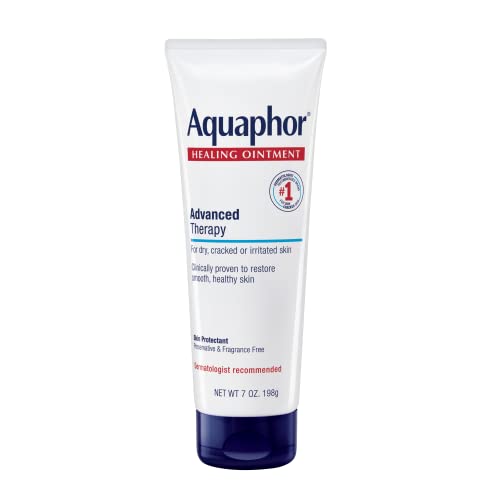
Aquaphor is not a conventional barrier cream — it is a water-free petrolatum ointment designed to sit on the skin’s surface and create a semi-occlusive film that still permits oxygen flow. This is crucial when caring for skin that already has broken areas or post-cryotherapy sites, as the ointment prevents moisture from seeping into cracks while supporting new tissue formation. The 7 oz tube format gives excellent coverage for low-body areas without taking up too much storage space.
Its texture is thick and tacky at room temperature, but it softens quickly with body heat, spreading thinly across large zones like the sacrum and inner thighs. It does not contain zinc oxide, so it is less suited for high-output incontinence where heavy liquid pooling would wash a petrolatum barrier away too quickly. The dermatologist-formulated chamomile derivative provides mild anti-inflammatory support without fragrance.
Users consistently report that one application lasts through multiple brief changes if the skin is patted dry before reapplying — making it cost-effective for overnight protection. Some caregivers note that the greasy texture requires careful wiping to avoid residue on clothing or bed linens, but this is offset by how little product is needed per application.
Why it’s great
- Oxygen-permeable film supports healing of broken skin
- Highly concentrated petrolatum with minimal ingredients
- Unscented and gentle on surgical incisions and cryotherapy sites
Good to know
- Not a true moisture barrier against heavy liquid incontinence
- Tacky residue can transfer to clothing without careful application
- Does not contain zinc oxide for enzymatic protection
2. Critic-Aid Clear Moisture Barrier Ointment

Critic-Aid Clear is the workhorse of the incontinence care aisle. This petrolatum-based ointment is formulated specifically for perineal and ostomy skin protection, and its clear consistency makes application — and removal — significantly easier than with opaque zinc pastes. Caregivers appreciate that it does not stain clothing or linen, which reduces the amount of laundry generated during daily care routines.
The formula is designed to be thick enough to stay in place but does not require heavy rubbing to spread. Reviewers from NICU settings and adult care facilities both confirm that it soothes irritation within one to two applications, and the tube format allows precise dispensing without contaminating the remaining product. It works well under briefs and incontinence pads because it does not break down when exposed to moisture for extended periods.
The mild formula is free from common irritants, making it suitable for sensitive perineal skin that reacts to zinc-based creams. However, for severe cases with open wounds or fungal involvement, a dedicated antifungal or high-zinc paste may be necessary as a secondary layer. Most users find that a single tube lasts several weeks with daily application, making it one of the more cost-efficient options in the mid-range segment.
Why it’s great
- Clear formula does not stain clothing or bedding
- Easy to apply and remove without excessive wiping
- NICU-recommended, safe for sensitive and eroded skin
Good to know
- Less occlusive than high-zinc pastes for heavy enzyme exposure
- May require reapplication after each brief change
- Tube size is compact for institutional use
3. Coloplast Critic-Aid Skin Paste

Coloplast Critic-Aid Skin Paste is not an ointment — it is a thick, zinc oxide-based paste engineered to adhere to both intact and eroded skin. This distinction matters because paste formulations remain in place longer than ointments when the patient is lying down or moving, creating a physical mask against moisture and enzymes. The zinc oxide concentration is high enough that even a very thin layer provides hours of protection.
The paste is compatible with chlorhexidine gluconate (CHG) skin cleansers, which are common in hospital and long-term care settings for infection control. Caregivers report that it heals established rashes within one to two applications, often doing so more effectively than consumer diaper creams. The key application tip, as noted by reviewers, is to pat the area completely dry before applying — moisture trapped under the paste can worsen maceration.
The texture is dense and requires more effort to spread than a cream, but users find that a small amount goes much further than competing products. It works best as a nighttime barrier or for patients with liquid stool where enzymatic damage is the primary concern. Some find the paste too stiff for daytime use when frequent changes require fast reapplication, but for severe cases, the trade-off in protection is well worth it.
Why it’s great
- Extremely thick paste adheres to broken skin without stinging
- Eliminates rash in 1-2 applications, per clinical reviews
- CHG-compatible for healthcare facility protocols
Good to know
- Requires patting skin fully dry before application
- Harder to spread than ointments, may cause friction if applied incorrectly
- Not ideal for standard daytime maintenance use
4. CeraVe Moisturizing Cream

CeraVe Moisturizing Cream is not a standalone barrier cream for incontinence — it is an intensive moisturizer that restores the skin’s natural barrier between incontinence episodes. The formula contains three essential ceramides and hyaluronic acid, which replenish the lipids that incontinence strips away. For elderly individuals with extremely dry, flaking skin, applying CeraVe after cleansing and before a petrolatum or zinc barrier dramatically improves long-term skin integrity.
The 19 oz tub is the largest format in this comparison, offering exceptional value for full-body moisturizing use. It has a rich, velvety texture that absorbs fully within seconds without leaving a greasy film, making it ideal for daytime moisturizing on intact skin areas. It holds the National Eczema Association Seal of Acceptance, which is a strong indicator of safety for compromised skin that reacts to typical lotions.
However, CeraVe is a cream, not a barrier — it lacks the occlusive power of petrolatum or zinc oxide. Moisture from incontinence will wash it off quickly if used as the sole protective layer. The best use case is as a pre-barrier moisturizer: apply to clean skin, let it absorb, then layer a true barrier paste or ointment on top. This dual-layer approach maximizes healing without sacrificing protection.
Why it’s great
- Contains 3 essential ceramides for barrier repair
- Absorbs quickly without greasy residue
- Massive 19 oz tub for full-body moisturizing
Good to know
- Not an occlusive barrier for moisture protection
- Will wash off with incontinence if used alone
- Best used as a base layer under a true barrier cream
5. Thera Calazinc Body Shield Barrier Cream
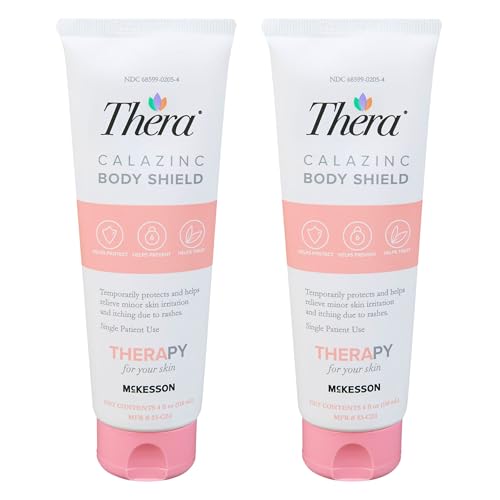
Thera Calazinc Body Shield is a McKesson-branded professional-grade barrier cream that combines 20% zinc oxide with 3% calamine and a proprietary vitamin blend including hyaluronic acid. This is the only product in this comparison that directly targets weeping control — calamine helps dry out exudate from broken skin while the zinc oxide forms a long-lasting shield. It is ideal for elderly patients with incontinence-associated dermatitis where the skin is actively weeping or macerated.
Reviewers confirm that it works faster than standard over-the-counter creams, with relief reported within one to two minutes for itching and burning, and visible improvement in rash within 24 hours. The 4 oz tube size with a snap-lid is practical for bedside use and prevents accidental spills. The mild, clean scent is a notable departure from the fragrance-free products in this list, though it is not overpowering and dissipates quickly.
The cream is dense and requires thorough spreading — it can stay slippery on the skin for several minutes after application, which demands caution when the user is mobile to prevent falls. It is also noticeably harder to wash off from skin folds, which is actually a sign of effective adherence. For elderly patients who are bedridden or have limited mobility, this is a non-issue, and the long-lasting protection makes it a strong premium choice.
Why it’s great
- 20% zinc oxide with calamine for weeping control
- Fast-acting relief for itching and burning
- Professional-grade formula used in rehab centers
Good to know
- Contains mild scent, not fragrance-free
- Difficult to wash off from skin folds
- May remain slippery for several minutes after application
FAQ
Can I use baby diaper cream instead of a barrier cream for elderly incontinence?
How often should I reapply barrier cream during a care routine?
What is the best way to remove barrier cream without irritating the skin?
Final Thoughts: The Verdict
For most users, the best barrier cream for elderly incontinence winner is the Critic-Aid Clear Moisture Barrier Ointment because it delivers reliable daily protection with easy application and no staining — the combination caregivers value most. If you need heavy-duty protection for severe rashes or broken skin, grab the Coloplast Critic-Aid Skin Paste. And for a comprehensive approach that repairs the skin barrier between incontinence episodes, nothing beats the CeraVe Moisturizing Cream used as a base layer before a true barrier.

Mo Maruf
I created WellFizz to bridge the gap between vague wellness advice and actionable solutions. My mission is simple: to decode the research and give you practical tools you can actually use.
Beyond the data, I am a passionate traveler. I believe that stepping away from the screen to explore new environments is essential for mental clarity and physical vitality.