Our readers keep the lights on and my smoothie glass nicely filled. As an Amazon Associate, I earn from qualifying purchases.
That daily cup of green powder can either feel like a vibrant reset or a gritty chore you force down. The difference often comes down to one decision: whole grass powder versus cold-pressed juice powder. Each delivers a distinct nutrient profile, and your body will tell you which one agrees with it.
I’m Mohammad Maruf — the founder and writer behind WellFizz. I have spent hundreds of hours analyzing production methods, customer feedback patterns, and lab-spec claims in the green superfood aisle to find what actually separates a good barley grass powder from a great one.
Whether you prioritize raw enzyme activity or high fiber intake, this guide breaks down five top contenders so you can find the absolute best barley grass powder for your morning routine without wasting time on labels that overpromise.
How To Choose The Best Barley Grass Powder
Barley grass powder can be roughly split into two form factors: whole leaf powder and juice powder. Whole leaf powder retains the insoluble fiber from the plant, which can support digestion for some but cause bloating for others. Juice powder removes that fiber via cold-pressing and spray-drying, producing a finer, more concentrated nutrient profile that dissolves much more easily in water. This one physical difference determines your experience more than any other factor.
Whole Powder vs. Juice Powder
Whole barley grass powder is made by drying and grinding the entire leaf. It retains all the fiber, which provides bulk and can aid regularity. However, the same fiber can cause gas and bloating in sensitive individuals. Juice powder is produced by pressing the juice from the fresh grass and then drying the liquid at low temperatures. This removes roughly 80 to 90 percent of the fiber, leaving a product that is up to 20 times more concentrated in vitamins, chlorophyll, and enzymes. If you react poorly to fiber-heavy greens, juice powder is the smarter pick.
Organic Certification and Source Transparency
Barley grass is a ground-level crop that can easily absorb pesticides and heavy metals from the soil, so USDA Organic certification is not optional — it is a baseline safety requirement. Beyond the organic stamp, pay attention to where the barley is grown. US-sourced barley grass typically undergoes stricter testing than imported alternatives. Some brands explicitly state “US Grown” or “Grown in the USA” on the label, which adds a layer of traceability that budget imports from unlisted regions often lack.
Processing Temperature and Bioactivity
The nutrient potency of barley grass depends heavily on how the powder is dried. Low-temperature drying (below 115°F) preserves heat-sensitive enzymes like superoxide dismutase (SOD) and vitamins such as C and E. High-heat drying can degrade these same compounds, leaving you with a dull green powder that lacks the bioactive punch. Brands that promote “cold-pressed” or “ambient temperature drying” are making a specific claim worth taking seriously, especially if you are seeking live enzyme activity for digestion or cellular energy.
Quick Comparison
On smaller screens, swipe sideways to see the full table.
| Model | Category | Best For | Key Spec | Amazon |
|---|---|---|---|---|
| Numami Organic Barley Grass Juice Powder | Juice Powder | Digestive comfort & maximum nutrient density | Only 4% fiber content | Amazon |
| PURE SYNERGY Organic Barley Grass Juice Powder | Juice Powder | Premium cold-pressed purity in glass | Cold-pressed within hours of harvest | Amazon |
| Z Natural Foods Organic Barley Grass Powder | Whole Powder | High fiber & whole food value | 20 amino acids per serving | Amazon |
| Sonoran Nutra Organic Barley Grass Powder | Whole Powder | Budget-friendly whole powder staple | 200 grams per container | Amazon |
| Sonoran Nutra Organic Wheatgrass Powder | Whole Powder | Wheatgrass alternative for variety | USDA Organic & US grown | Amazon |
In‑Depth Reviews
1. Numami Organic Barley Grass Juice Powder

Numami stands out because it directly addresses the most common complaint about barley grass: bloating. By reducing fiber content to just 4 percent, this juice powder delivers the nutrient concentration without the gastrointestinal discomfort that turns many people away from greens. The cold-press and ambient-temperature spray-drying method keeps the enzymes bioactive, meaning you get actual live nutrition rather than thermally degraded green dust.
The packaging is biodegradable, which aligns with the product’s clean philosophy. Users report noticeable appetite suppression and calming effects, particularly when mixed into smoothies or shakes. The taste is strong enough that most reviewers mask it with fruit or milk, but the texture dissolves fully with minimal clumping — a huge quality-of-life improvement over gritty whole powders.
This is the right choice if your stomach is sensitive to fiber-heavy supplements but you still want the full vitamin, mineral, and antioxidant profile of barley grass. It is not the cheapest option per gram, but the higher absorption and zero-bloat guarantee make the cost feel justified for daily use.
Why it’s great
- Ultra-low fiber prevents bloating and gas
- Cold-pressed and ambient dried for bioactive enzymes
- Biodegradable packaging and US-sourced barley
Good to know
- Strong earthy taste may require masking
- Container size is smaller than many whole powder bags
2. PURE SYNERGY Organic Barley Grass Juice Powder

PURE SYNERGY operates at a higher tier of quality control. The barley is cold-pressed within hours of harvest, which locks in chlorophyll and enzymes at their peak. The result is a vibrant, dark green powder that mixes well into smoothies or water. The brand is a Certified B Corp based in Moab, Utah, with a commitment to pure ingredients that shows up in the clean taste and absence of fillers.
The packaging itself is a glass jar with a steel cap — a premium upgrade that avoids the messy, static-prone bags that plague most competitors. Users love the convenience of the jar for scooping and storage, and the flavor is described as fresh and pleasant compared to the harsher grassy notes of some whole powders. Several long-term reviewers note consistent energy and detox support without jitters.
There are two practical trade-offs. One reviewer noted the jar holds around 40 servings instead of the advertised 60, which matters if you are strict about cost per serving. The other is the price point sits higher than every other option on this list. If your budget allows, however, the quality difference in both product and packaging is real.
Why it’s great
- Cold-pressed within hours for maximum bioactivity
- Glass jar packaging avoids messy bags
- Fresh, pleasant taste that picky drinkers enjoy
Good to know
- Actual serving count may be lower than label claim
- Higher price per serving than whole powder alternatives
3. Z Natural Foods Organic Barley Grass Powder
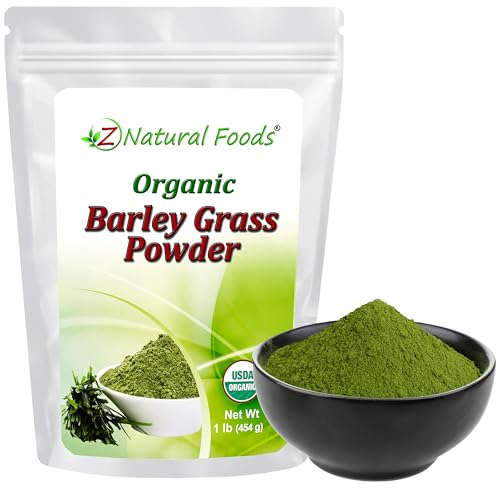
Z Natural Foods takes a whole-food approach — this is a whole grass powder, not a juice concentrate. That means it retains the full fiber profile of the barley leaf, along with 20 amino acids, 12 vitamins, and 13 minerals. The brand emphasizes its unique trio of antioxidant compounds: SOD, P4D1 enzyme, and GAGs. These are naturally occurring compounds that help your body manage oxidative stress without relying on synthetic additives.
Users who incorporate this into smoothies consistently praise the taste, calling it mild and easy to mask. Several reviewers note significant reductions in inflammation and improved energy within just a few days of use. The price per pound is very competitive, making this a strong choice if you go through greens quickly and want the most nutritional surface area from each dollar.
The main consideration is that this is a whole powder, so if you are prone to bloating from greens, you may experience some digestive adjustment. The fine texture blends reasonably well, but it does not dissolve completely clear like a juice powder would. For someone who wants the full plant — fiber and all — this delivers excellent quality at a fair mid-range price.
Why it’s great
- Retains full fiber for digestive regularity
- Rich amino acid and enzyme diversity
- Competitive price for a 1-pound bag
Good to know
- Whole fiber may cause bloating in sensitive users
- Not water-soluble like juice powders
4. Sonoran Nutra Organic Barley Grass Powder

Sonoran Nutra offers the most straightforward entry point into barley grass without sacrificing USDA Organic certification. The 200-gram container is a practical starter size, and the powder includes a solid lineup of vitamins B1, B5, B6, C, E, and K2. It is sourced from the USA, non-irradiated, and contains no preservatives or fillers. For the price, this is hard to beat as a daily foundation green.
Customer experiences are mixed but generally positive. Several users report notable energy boosts and mental clarity, with one calling it “surprisingly life changing” for ADHD symptoms. Others mention the taste is predictably grassy and unpleasant — best masked in a smoothie or chased with a flavored drink. One reviewer who requires a strict gluten-free diet flagged that the product may contain trace gluten despite the label, which is worth noting for anyone with celiac sensitivity.
This powder is a classic whole-leaf product. It clumps in water and has a strong, vegetal flavor. You trade convenience for affordability and a clean ingredient list. If you are new to barley grass or just need a reliable budget-friendly option to mix into smoothies, Sonoran Nutra is a solid foundation.
Why it’s great
- USDA Organic and US grown at a low cost
- No preservatives, fillers, or irradiation
- Includes K2 — a less common vitamin in greens
Good to know
- Strong, bitter taste that needs masking
- May contain trace gluten despite gluten-free claim
5. Sonoran Nutra Organic Wheatgrass Powder

This product is technically wheatgrass, not barley grass, but it earns a spot here because the two compete directly for the same user. Wheatgrass shares nearly identical nutritional architecture — high chlorophyll, amino acids, and antioxidant content — with a slightly different mineral profile and a generally milder flavor. Many users cycle between barley and wheatgrass for variety, and Sonoran Nutra processes both with the same USDA Organic standards and US sourcing.
User feedback is excellent across the board. One reviewer used it to replace morning coffee, cutting from three to four cups down to one. Another reported immediate relief from vertigo-like headaches and mood instability after a single serving. The powder mixes well in water and has a notably good taste compared to other greens powders. Several long-term users confirm it provides sustained energy without the afternoon crash.
The key trade-off is that wheatgrass is slightly lower in fiber than barley grass but higher in certain enzymes. If you are comparing the two directly, choose barley for general alkalinity and digestion support, and choose wheatgrass if you specifically want the chlorophyll content and energy lift this user base consistently reports. At this price, it is a low-risk alternative to explore.
Why it’s great
- Pleasant taste that reviewers prefer over barley
- Strong energy boost without jitters or crash
- USDA Organic and US grown, same quality as barley line
Good to know
- Wheatgrass, not barley — may not suit strict barley buyers
- Whole fiber, not soluble like juice powders
FAQ
What is the difference between barley grass powder and barley grass juice powder?
Can barley grass powder help with energy without caffeine?
Is it safe to take barley grass powder every day?
How can I make barley grass powder taste better?
Why do some barley grass powders cause bloating while others do not?
Final Thoughts: The Verdict
For most users, the best barley grass powder winner is the Numami Organic Barley Grass Juice Powder because it solves the bloating problem that stops people from sticking with greens while delivering the highest nutrient concentration through its cold-press process. If you want a premium brand experience with glass jar packaging and consistent freshness, grab the PURE SYNERGY Organic Barley Grass Juice Powder. And for a budget-friendly, high-fiber whole powder that provides the full plant spectrum, nothing beats the Sonoran Nutra Organic Barley Grass Powder.

Mo Maruf
I created WellFizz to bridge the gap between vague wellness advice and actionable solutions. My mission is simple: to decode the research and give you practical tools you can actually use.
Beyond the data, I am a passionate traveler. I believe that stepping away from the screen to explore new environments is essential for mental clarity and physical vitality.