Our readers keep the lights on and my smoothie glass nicely filled. As an Amazon Associate, I earn from qualifying purchases.
The line between a mediocre morning cup and a café-quality cortado at home comes down to one thing: repeatable precision. A true barista coffee machine delivers consistent water temperature, stable pressure, and grind control that turns whole beans into a balanced, crema-topped shot every time — without requiring a second mortgage or a chemistry degree to operate.
I’m Mohammad Maruf — the founder and writer behind WellFizz. I’ve spent years analyzing espresso machine engineering, comparing PID controllers, burr grinder geometries, boiler materials, and flow rates to separate real performance upgrades from marketing fluff in this crowded category.
Whether you’re upgrading from a pod system or stepping into home espresso for the first time, this guide walks through the specs that actually matter so you can confidently choose the best barista coffee machine for your kitchen workflow and budget.
How To Choose The Best Barista Coffee Machine
A barista-grade espresso machine is judged by four pillars: temperature stability, grind quality, pressure consistency, and steam power. Skip any one and your shots will taste sour, bitter, or watery regardless of bean origin.
Temperature Control — PID vs. Thermostat
PID (Proportional-Integral-Derivative) controllers maintain water temperature within fractions of a degree, which is critical for pulling repeatable shots. Machines without PID rely on a simple thermostat that allows broader temperature swings, forcing you to “temperature surf” between shots. For any serious home barista, PID is not optional.
Grinder Quality — Conical vs. Flat Burrs
An integrated grinder saves counter space, but burr geometry and step size determine how quickly you can dial in a new bag of beans. Conical burrs are common in entry-level machines and produce good results for medium roasts, while flat burrs (especially in premium models like the Breville Oracle Jet with Baratza components) deliver more uniform particle size for better extraction clarity with light roasts.
Boiler System — Single, Dual, or Heat Exchanger
A single boiler forces you to wait between brewing and steaming. Dual boilers (found on the Gevi and higher-end models) let you pull a shot and steam milk simultaneously — a major workflow advantage. Heat exchangers are rare in home machines but offer a middle ground; dual boilers are the gold standard for consecutive milk drinks.
Portafilter Size — 54mm vs. 58mm
58mm portafilters are the commercial standard. They hold a larger dose (18-22g) and give you access to better aftermarket accessories like precision baskets, bottomless portafilters, and distribution tools. Machines with 54mm portafilters, like the Breville Barista Express, are still capable but limit your upgrade path.
Quick Comparison
On smaller screens, swipe sideways to see the full table.
| Model | Category | Best For | Key Spec | Amazon |
|---|---|---|---|---|
| Gevi Dual Boiler | Mid-Range | Simultaneous brew & steam | Dual boiler, NTC+PID | Amazon |
| Gaggia Classic Pro | Mid-Range | Modding & enthusiast tinkering | 9 bar, 58mm commercial | Amazon |
| Breville Barista Express | Mid-Range | Beginner all-in-one | PID, integrated grinder | Amazon |
| PHILIPS Barista Brew | Mid-Range | Guided tamping & dual bean hopper | 280g dual hopper | Amazon |
| De’Longhi La Specialista Arte Evo | Mid-Range | Cold brew in 5 minutes | Active temp control | Amazon |
| KitchenAid Semi Auto | Mid-Range | Precise smart dosing | 2.5L tank, 58mm | Amazon |
| Ninja Luxe Café Pro | Premium | 4-in-1 versatility | Barista Assist tech | Amazon |
| Rancilio Silvia | Premium | Durability & commercial parts | Brass boiler, 58mm | Amazon |
| Jura E4 | Premium | One-touch super-automatic | Pulse Extraction | Amazon |
| Jura E6 Platinum | Premium | Color display & full customization | 3D brewing tech | Amazon |
| Breville Oracle Jet | Premium | Auto dose & smart milk | Baratza burrs, IQ | Amazon |
In‑Depth Reviews
1. Breville Oracle Jet
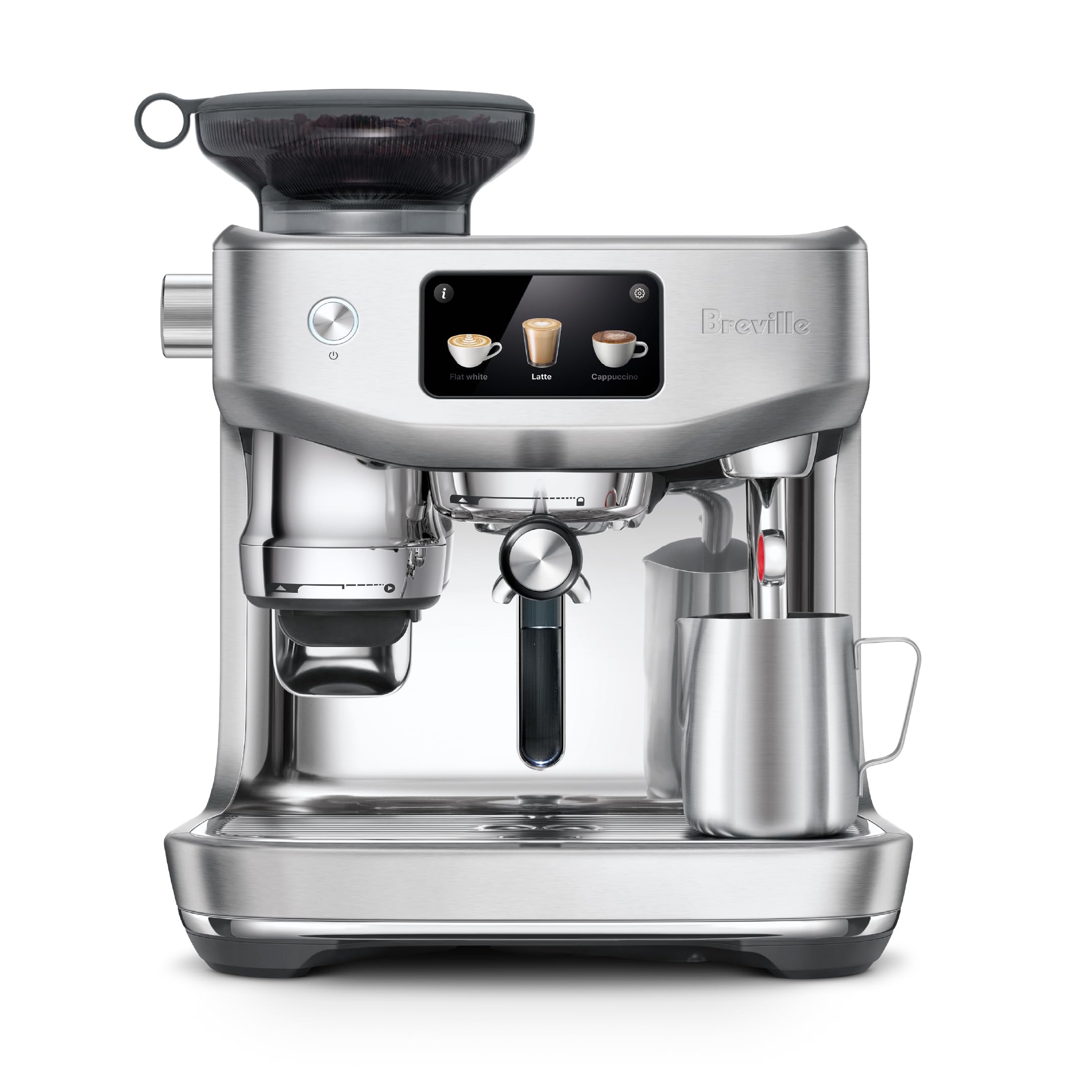
The Oracle Jet represents the ceiling of home barista automation without sacrificing shot quality. It uses Baratza European Precision Burrs with 45 grind settings, automatically doses, distributes, and tamps a full 22g dose into a 58mm stainless steel portafilter — eliminating the two biggest sources of beginner inconsistency.
The ThermoJet heating system reaches brew temperature in seconds and is 32% more energy-efficient than standard thermoblocks. The touchscreen interface lets you swipe between espresso, cold brew, cold espresso, and hot water, while Barista Guidance detects over- or under-extraction and suggests grind adjustments in real time.
Auto MilQ optimizes texture for dairy, soy, almond, and oat milk with eight foam levels. The auto-purge steam wand stays clean, and the integrated knock box keeps the workflow tidy. A firmware auto-update issue was reported by one reviewer, so disabling Wi-Fi after initial setup is a practical precaution.
Why it’s great
- Auto dose, tamp, and grind eliminate guesswork.
- Baratza flat burrs deliver excellent particle uniformity.
- MilQ system self-adjusts for non-dairy alternatives.
Good to know
- Pucks can stick in the portafilter after extraction.
- Requires minimum 8oz cup height for clearance.
- Firmware updates may cause temporary brew issues.
2. Ninja Luxe Café Pro

The Ninja Luxe Café Pro is the only machine on this list that functions as an espresso maker, drip coffee brewer, cold brew system, and hot water dispenser — all in one footprint. The Barista Assist Technology monitors each brew and adjusts the grind-size recommendation for the next shot, so you rarely waste coffee dialing in.
The integrated conical burr grinder has 25 settings, and the built-in scale provides weight-based dosing rather than timed grinding, which is far more accurate across different bean densities. The assisted lever tamper eliminates mess and ensures consistent puck pressure every time.
The Dual Froth System Pro combines steam and whisking action for hands-free microfoam with five presets, including cold foam. It handles dairy and plant-based milk well, though it cannot froth and brew simultaneously. The 6-minute clean cycle and 90-minute descale program simplify maintenance significantly.
Why it’s great
- Four beverage types from a single machine.
- Weight-based dosing removes grind-time guesswork.
- Hands-free frother with cold foam option.
Good to know
- Cannot steam and brew at the same time.
- Quad shot can taste weak if grind is too coarse.
- Requires dedicated counter space at 27 lbs.
3. Rancilio Silvia

The Rancilio Silvia is a legend in the home espresso community for one reason: it uses a full-sized commercial group head and a solid brass boiler inside a steel frame. There is no PID, no pressure gauge, and no automation — you control every variable manually, and the machine rewards skill development with genuinely excellent shots.
The 58mm chrome-plated brass portafilter and commercial three-way solenoid valve are the same parts found in Rancilio’s café machines. The articulating steam wand gives you full range of motion, but creating microfoam requires technique and a good single-hole tip upgrade. Temperature surfing is necessary for consistent results without a PID retrofit.
Owners report 10+ years of daily service with basic maintenance. The plastic tamper should be replaced immediately, and a quality external grinder is non-negotiable.
Why it’s great
- Commercial-grade brass boiler and group head.
- All-metal chassis built for decades of use.
- Aftermarket mod community (PID, OPV) is strong.
Good to know
- No PID — requires temperature surfing for consistency.
- Single boiler means brew then steam wait time.
- Steep learning curve; not for casual users.
4. Jura E4
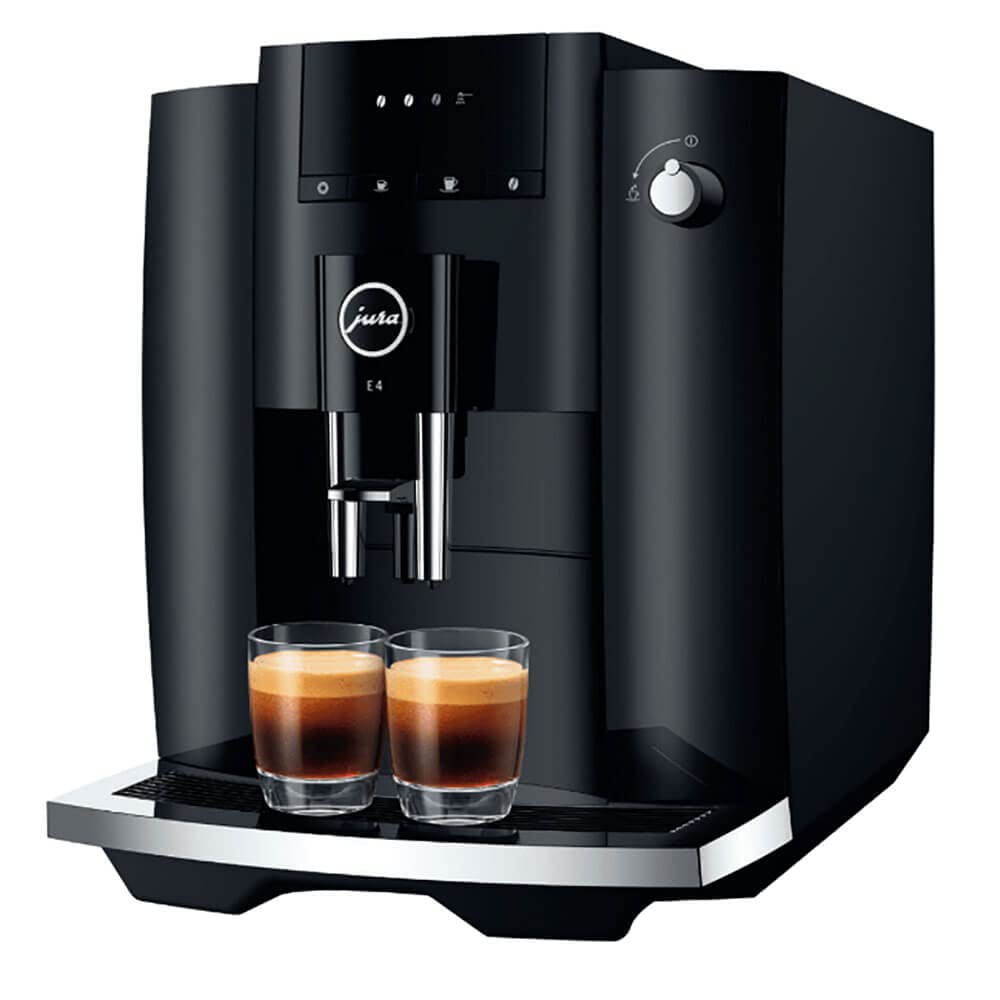
The Jura E4 is a super-automatic designed for drinkers who prioritize convenience but refuse to compromise on espresso quality. Its Pulse Extraction Process pre-infuses the puck with short bursts of high-pressure water before full extraction, which Jura claims unlocks more aroma from the grounds than a standard continuous flow.
The Professional Aroma Grinder is a conical burr unit designed for long-term consistency, grinding fresh beans for each of the five one-touch specialties: Ristretto, Espresso, Coffee, Café Barista, and Lungo Barista. The 64-ounce water tank and 10-ounce bean hopper support multiple servings without frequent refills.
There is no milk system on the E4, so this is best suited for straight espresso and black coffee drinkers. The hot water spout works for Americanos but reviewers note the water temperature is not adjustable and runs cooler than ideal for tea. Cleaning is handled by an integrated program that uses Jura tablets.
Why it’s great
- Pulse Extraction produces balanced, aromatic shots.
- No capsules — fresh grinding with minimal waste.
- Simple one-button operation for daily use.
Good to know
- No steam wand or milk frother built in.
- Only accepts proprietary Jura filters to avoid descaling alerts.
- Interface icons are not intuitive for all users.
5. Jura E6 Platinum
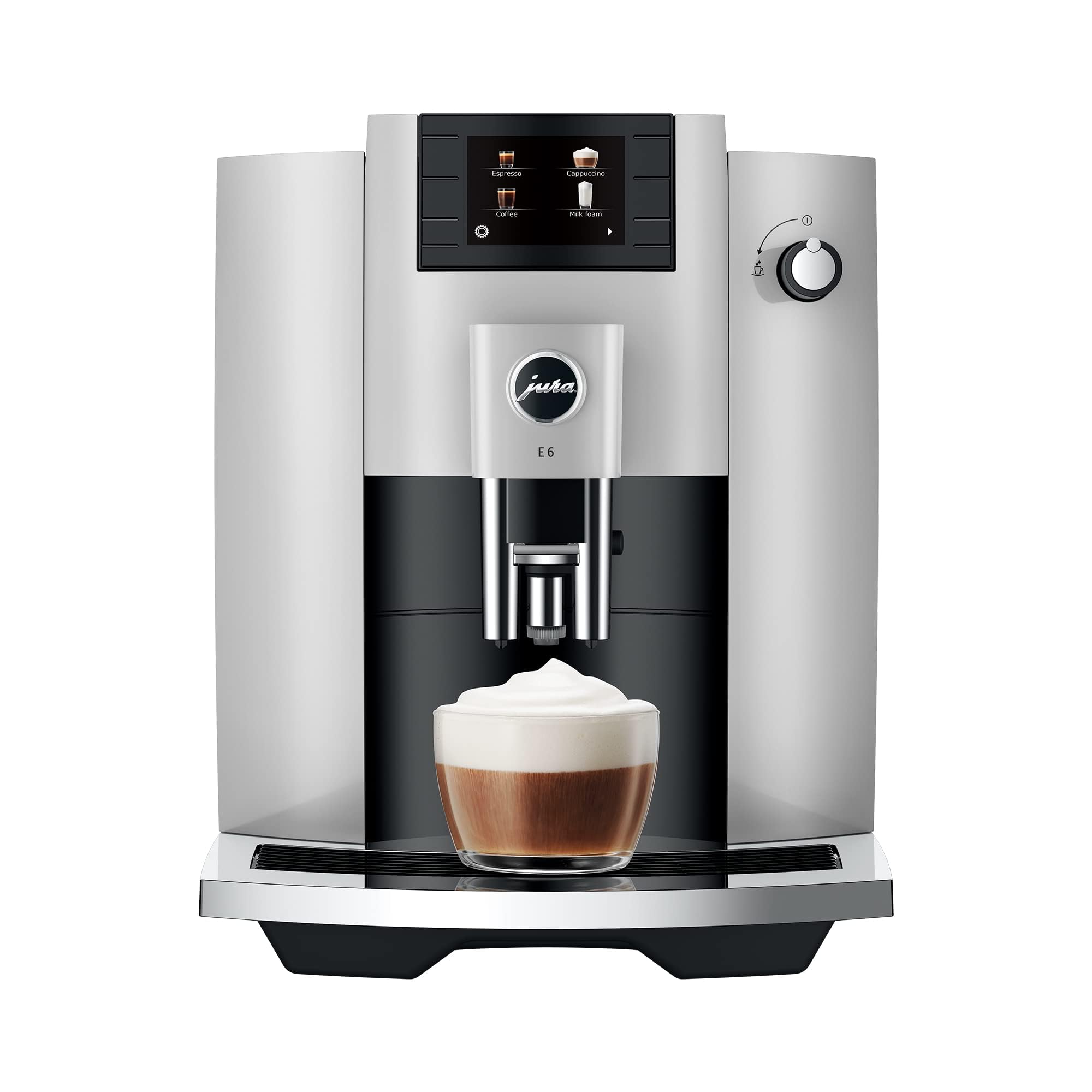
The Jura E6 Platinum builds on the E4’s foundation with a built-in milk frother and a color display for navigating drinks and settings. The eighth-generation brew unit uses 3D brewing technology that moves the grounds during extraction to maximize flavor yield, and the entire process from grinding to frothing takes under 60 seconds.
The machine offers programmable coffee strength, water volume, brew temperature, and milk foam level. The integrated maintenance programs handle cleaning and descaling with minimal user input. The bypass chute allows pre-ground or decaf coffee for a single cup without emptying the bean hopper.
Reviewers consistently praise the cappuccino quality as better than most coffee shop chains. The slim push-button panel on this model is less distinct than the square buttons on higher-end Jura variants, which can be a minor inconvenience during early-morning operation. Regular use of Jura cleaning products is required to keep the milk system clog-free.
Why it’s great
- Full milk-based drinks at the touch of a button.
- 3D brewing technology improves extraction.
- Programmable profiles for individual preferences.
Good to know
- Push-button labels can be hard to distinguish.
- Requires proprietary Jura cleaning cartridges.
- Not cheap to repair if out of warranty.
6. Gevi Dual Boiler

The Gevi Dual Boiler brings a feature set typically associated with machines costing twice as much: independent boilers for brewing and steaming, NTC and PID temperature control, and a 58mm commercial portafilter. The brew boiler maintains extraction temperature within a tight window, while the steam boiler allows uninterrupted milk texturing.
The integrated pressure control system regulates water flow to prevent channeling, and the 31 grind settings on the built-in conical burr grinder cover everything from fine espresso to coarser drip. The steam wand produces a strong, dry steam that can texture milk in under 20 seconds with practice.
Reviewers note a learning curve of about 15 shots before dialing in consistently, but once dialed, the shot quality rivals machines in the -plus range. The 2.8-liter water tank is generous for multiple drinks, and the detachable drip tray simplifies cleanup. The build quality is mostly plastic with stainless accents, so it feels less substantial than a Breville or Gaggia.
Why it’s great
- Dual boiler allows simultaneous brew and steam.
- NTC & PID deliver stable temperature control.
- Includes four filter baskets and a milk pitcher.
Good to know
- Build materials are lighter than premium competitors.
- Dialing in takes time — expect a learning curve.
- Steam wand power is good but not commercial-level.
7. Gaggia Classic Pro

The Gaggia Classic Pro is the most modded home espresso machine on the market. It comes stock with a 9-bar extraction pressure, a 58mm commercial portafilter, a three-way solenoid valve for dry pucks, and a commercial-style steam wand — all inside a solid steel housing made in Italy. Out of the box, it produces solid espresso with a thick crema.
The single boiler heats up quickly but requires waiting between brewing and steaming. The steam wand is more powerful than previous Classic models and can produce latte-art-quality microfoam after practice. The machine’s simplicity means fewer things to break, and replacement parts are widely available.
Most serious owners eventually install an OPV spring to lower pressure to 9 bar (if not already set), and many add an aftermarket PID for temperature stability. The 20-pound weight, steel chassis, and standard 58mm filter basket make it a platform you can grow with for years. It is not for those who want push-button convenience.
Why it’s great
- True 9-bar extraction with commercial group head.
- Highly serviceable with widespread parts availability.
- Steel housing feels significantly more durable than plastic-clad alternatives.
Good to know
- Single boiler creates a brew-steam workflow gap.
- Requires mods (PID, OPV) to reach full potential.
- Not beginner-friendly without supplemental gear.
8. Breville Barista Express
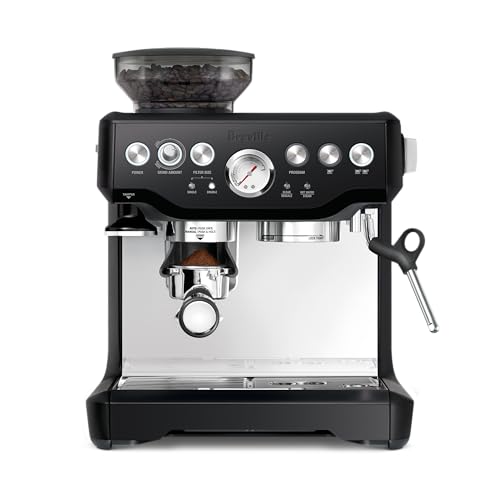
The Breville Barista Express is the most recommended entry-level espresso machine for a reason: it integrates a conical burr grinder, PID temperature control, a 15-bar Italian pump, and a steam wand into a single compact appliance. The grind-size dial lets you adjust from fine espresso to coarse filter, and the Razor dose-trimming tool helps level the puck before tamping.
The 54mm portafilter is smaller than the commercial 58mm standard, but the machine compensates with dual-wall filter baskets that compensate for grind or tamping inconsistencies. The pressure gauge on the front panel provides real-time feedback on extraction quality, making it an excellent learning tool for understanding how grind size and dose affect shot flow.
Long-term owners report 4-5 years of daily use with routine maintenance: backflushing, descaling, and occasional O-ring or solenoid replacements. The steam wand produces acceptable microfoam but lacks the power and articulation of pricier machines. The integrated grinder is convenient but creates some static mess, and the hopper can hold about half a pound of beans.
Why it’s great
- All-in-one design saves counter space and cost.
- PID control ensures consistent brew temperature.
- Pressure gauge provides visual extraction feedback.
Good to know
- 54mm portafilter limits aftermarket accessory compatibility.
- Grinder can be messy with static coffee grounds.
- Steam wand is adequate but not commercial-grade.
9. De’Longhi La Specialista Arte Evo

The De’Longhi La Specialista Arte Evo stands out with its proprietary Cold Extraction Technology, which delivers a cold brew concentrate in under 5 minutes by using precisely controlled pressure and flow rates at lower temperatures. For iced coffee enthusiasts, this feature alone differentiates it from every other machine on this list.
Beyond cold brew, the machine features an 8-setting conical burr grinder, a commercial-style steam wand with manual microfoam control, and Active Temperature Control with three infusion temperature settings — light, medium, and dark roast optimizations. The 15-bar Italian pump uses a low-pressure pre-infusion phase before ramping to 9 bar for extraction.
The barista kit includes a dosing funnel, tamping mat, and a calibrated tamper that make the workflow clean and repeatable. The active temperature control is a genuine advantage for dialing in different roast levels, but some users report that dark roast beans can cause grinder jams unless the burrs are set to a coarser range while grinding. The steam wand has limited articulation compared to traditional designs.
Why it’s great
- Fast cold brew in under 5 minutes.
- Three temperature profiles match roast levels.
- Barista kit reduces mess and improves puck prep.
Good to know
- Dark roast beans may require grind adjustment to avoid jams.
- Steam wand movement range is somewhat limited.
- Auto shutoff timer may interrupt longer workflows.
10. PHILIPS Barista Brew
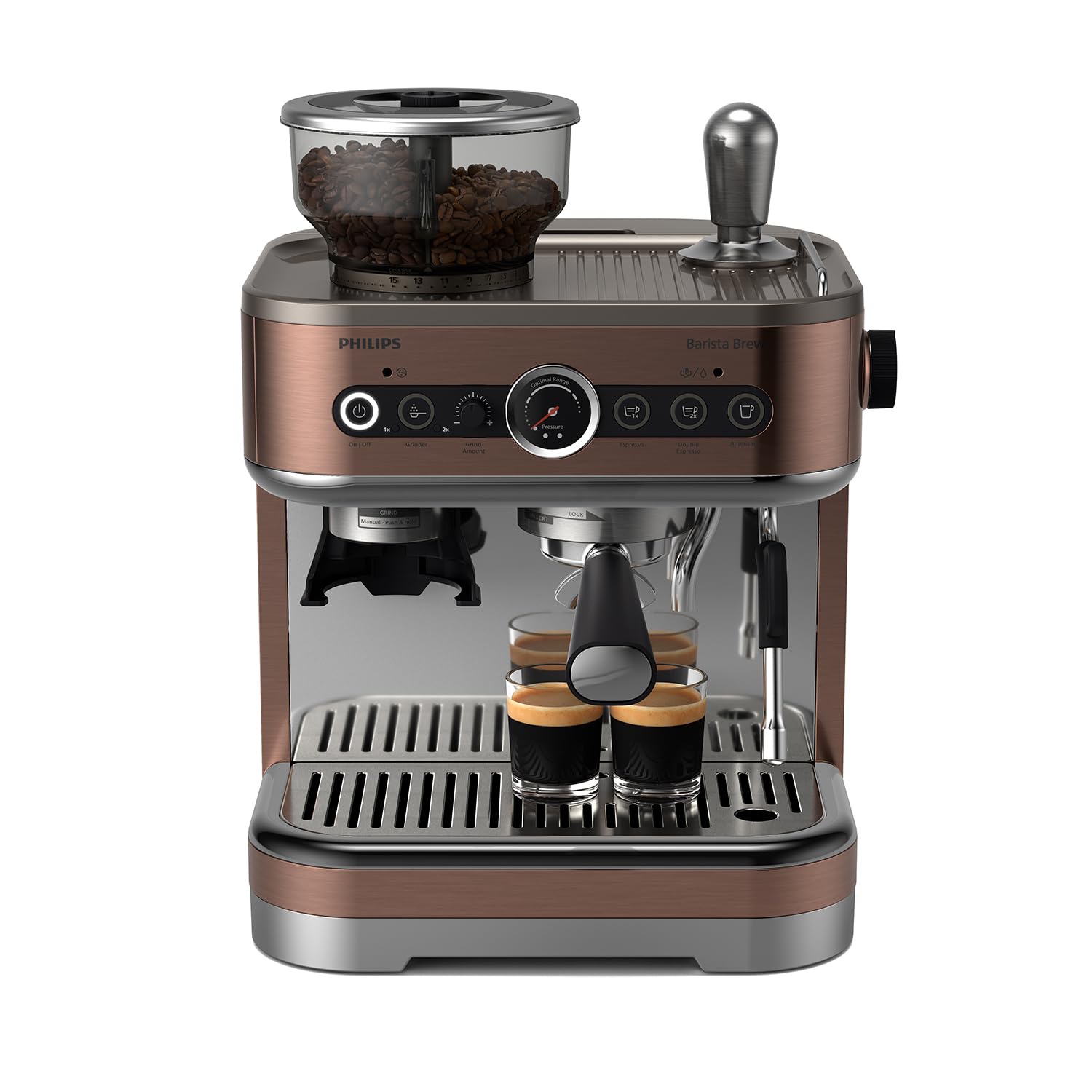
The PHILIPS Barista Brew is designed for the user who wants barista control but appreciates integrated guidance. The machine features a dual 280g bean container, allowing you to store two different bean varieties and switch between them without emptying the hopper. The calibrated tamper and countertop-safe tamping system remove one of the biggest variables for beginners.
The 58mm portafilter accepts both single and dual-wall baskets, and the intuitive control panel includes dedicated buttons for single espresso, double espresso, Americano, and hot water. The powerful steam wand and included 450ml stainless steel milk jug make frothing accessible, and the metal housing with anti-fingerprint coating keeps the machine looking clean.
Reviewers praise the easy learning curve and consistent extraction. Some note that the included funnel is too shallow for a full 20g dose without spilling, and there have been isolated reports of grind amount drift after a couple of months. Regular cleaning of the dual-wall baskets is necessary to prevent clogging. It is a strong mid-range option for users who prioritize guidance over raw flexibility.
Why it’s great
- Dual bean hopper for quick variety switching.
- Calibrated tamp system eliminates a major variable.
- Simplified interface is very beginner-friendly.
Good to know
- 20g dosing can overflow the included funnel.
- Grind consistency may drift over extended use.
- Dual-wall baskets require regular backflushing.
11. KitchenAid Semi Automatic

The KitchenAid Semi Automatic Espresso Machine combines the brand’s signature metal-clad aesthetic with practical barista features. The Smart Dosing technology automatically dispenses the correct volume of ground coffee for a single or double shot, removing the need to weigh before tamping. The 58mm flat-base portafilter allows stable tamping on any flat surface, unlike traditional curved portafilters.
The multi-angle steam wand adjusts freely for precise pitcher positioning, and the fast-heating technology reaches brew temperature quickly without a prolonged warm-up. The 2.5-liter water tank is among the largest in this category, reducing refill frequency during back-to-back drink preparation. The pressure gauge on the front provides extraction feedback.
Some owners report grinder jamming after a few months of regular use, particularly with oily beans. Regular cleaning of the burrs and using dry, medium-roast beans tends to improve reliability. The tamper included in the box is slightly lightweight for the 58mm basket — upgrading to a heavier tamper improves consistency. When it works, it delivers smooth, silky shots with solid crema.
Why it’s great
- Smart Dosing simplifies shot preparation significantly.
- 58mm flat-base portafilter allows stable tamping.
- Metal-clad build is visually and structurally premium.
Good to know
- Oily beans can cause grinder jamming over time.
- Included tamper feels slightly light for the basket size.
- Occasional grinder jams reported after 1-2 months of daily use.
FAQ
What grind size should I use for a barista espresso machine?
Do I need a separate grinder if the machine has one built-in?
How often should I descale a barista espresso machine?
Is a 15-bar pump better than a 9-bar pump?
Final Thoughts: The Verdict
For most users, the best barista coffee machine winner is the Breville Oracle Jet because it delivers café-quality espresso with automated dose, tamp, and milk texturing that removes nearly all workflow friction. If you want the most versatile system that also makes drip coffee and cold brew without compromise, grab the Ninja Luxe Café Pro. And for the enthusiast who values durability, repairability, and a rewarding skill progression, nothing beats the Rancilio Silvia as a long-term platform to grow with.

Mo Maruf
I created WellFizz to bridge the gap between vague wellness advice and actionable solutions. My mission is simple: to decode the research and give you practical tools you can actually use.
Beyond the data, I am a passionate traveler. I believe that stepping away from the screen to explore new environments is essential for mental clarity and physical vitality.