Our readers keep the lights on and my smoothie glass nicely filled. As an Amazon Associate, I earn from qualifying purchases.
The paradox of barefoot shoes for high arches is that you are told to look for arch support, but the real solution lies in letting your foot’s natural musculature reawaken. With a high arch, your foot is already locked in a rigid, elevated position—adding more support under the midfoot can actually prevent the arch from flexing and absorbing shock the way it was designed to. The right zero-drop, wide-toe-box shoe, paired with a thin, flexible sole, allows your arch to load and release naturally during every step, which over time strengthens the intrinsic foot muscles that conventional footwear has let atrophy.
I’m Mohammad Maruf — the founder and writer behind WellFizz. I’ve spent years analyzing footwear biomechanics, poring over peer-reviewed gait studies, and stress-testing sole compounds and last shapes to separate genuine therapeutic design from marketing fluff.
This guide cuts through the noise, examining seven models that balance ground feel with the specific structural needs of a high-arched foot. Whether you are looking for a daily walker, a trail companion, or a gym shoe that doesn’t fight your natural stride, the barefoot shoes for high arches you choose must prioritize a flexible platform over artificial elevation—and I show you exactly how each candidate delivers on that promise.
How To Choose The Best Barefoot Shoes For High Arches
The biggest mistake high-arch buyers make is seeking out shoes with thick arch cookies or rigid medial posts. That approach treats the symptom—the elevated arch—as something to prop up, rather than a tight bowstring that needs to be allowed to flex. For a high-arched foot, the priority is a shoe that provides a stable, flat platform (zero drop) with enough toe splay room to let the arch elongate under load. Here is what really matters.
Sole Stack Height and Flexibility
A high arch already shortens the foot’s natural lever; a thick, stiff sole only amplifies that leverage loss. Look for a stack height under 15 mm for daily wear—under 10 mm for maximum proprioception. But raw height is less important than pliability. The sole must twist easily in your hands and allow the shoe to bend at the ball of the foot, not the midfoot. If the shoe fights your foot’s natural rolling motion, the arch cannot drop and spring back properly.
Toe Box Volume and Shape
High-arched feet often come with a narrower heel and a more pronounced forefoot splay. A toe box that is simply “wide” may still crush a high-arch foot if it tapers at the big toe. Look for a truly anatomical last—one that mirrors the natural foot shape with a straight big-toe line. The shoe should allow your toes to spread the moment you step, not just when you wiggle them manually. If the toe box is too shallow, your toes will press against the top of the shoe, limiting arch mobility.
Heel Security Without Over-Correction
Because high-arched feet tend to supinate (roll outward), a loose heel can cause the foot to slide laterally, forcing the arch to collapse in an unstable way. A good barefoot shoe for high arches uses a snug heel counter—often with a structured external heel cup—that locks the rearfoot in place without restricting vertical movement. Avoid shoes with overly padded heel collars that push the foot forward, jamming toes into the front of the shoe.
Quick Comparison
On smaller screens, swipe sideways to see the full table.
| Model | Category | Best For | Key Spec | Amazon |
|---|---|---|---|---|
| ALTRA Lone Peak 9 | Trail Runner | Hiking & all-day standing | Zero drop, stack height 25mm | Amazon |
| Vivobarefoot Primus Lite III | Training/Running | Gym & everyday walking | 3mm sole, zero drop, 200g | Amazon |
| FLUX FOOTWEAR Adapt Runner | Minimalist Runner | All-day walking & tennis | Interchangeable insoles, zero drop | Amazon |
| Xero Shoes HFS II | Running/Fitness | Running & HIIT | Zero drop, 5.5mm sole | Amazon |
| Xero Shoes Prio Neo | Cross-Training | Gym & walking transition | Removable insole, zero drop | Amazon |
| Hike Footwear Theora Pro | Walking/Hiking | Wide toe box walking | Zero drop, knit upper | Amazon |
| Hike Footwear HF Stride | Daily Casual | Entry-level barefoot transition | Ultra-light, slip-on, zero drop | Amazon |
In‑Depth Reviews
1. ALTRA Lone Peak 9
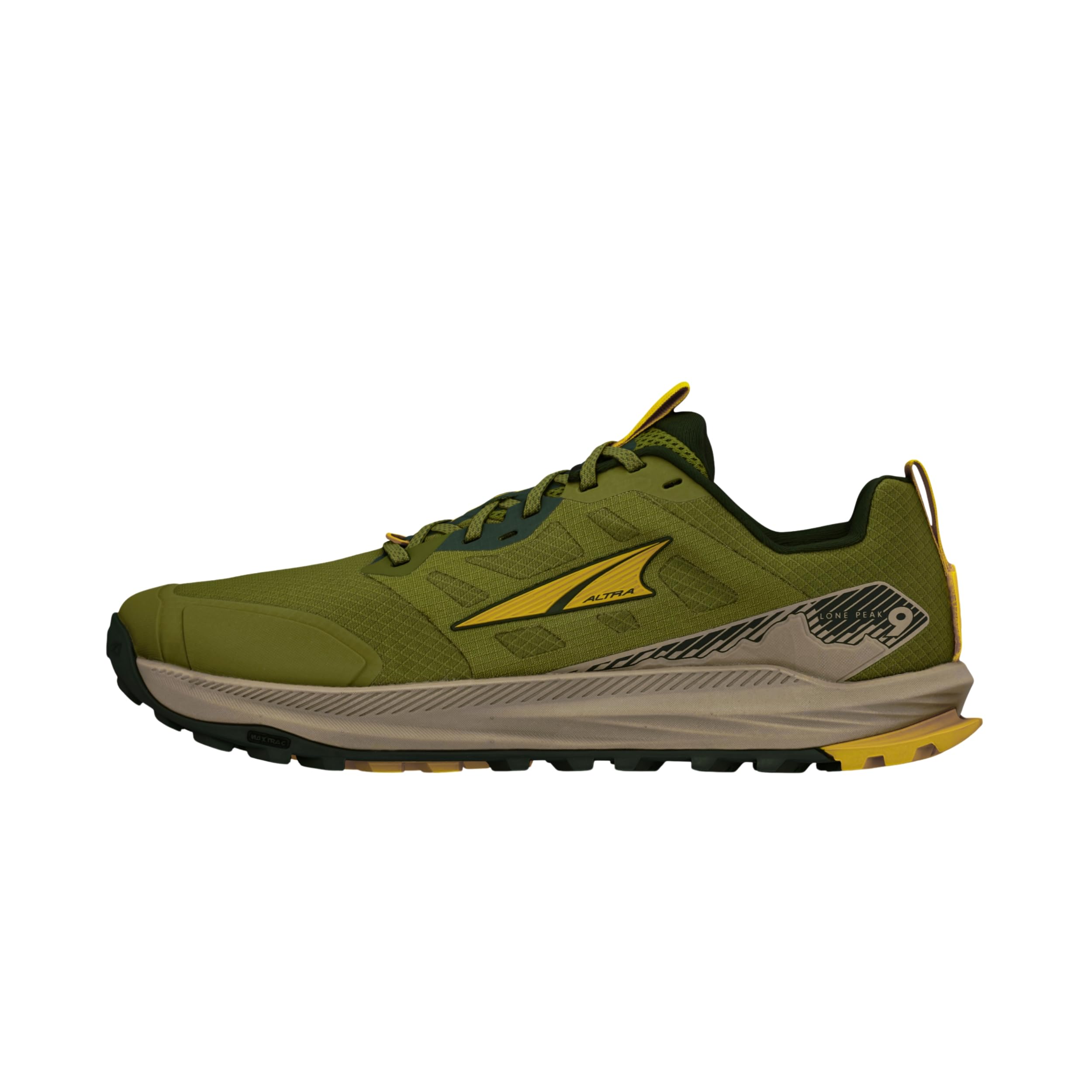
The Lone Peak 9 stands alone in this list for its unique combination of zero-drop geometry with a moderate 25mm stack height that provides just enough cushion to protect a high-arched foot on rocky terrain without robbing ground feel. The wide toe box—significantly broader than Xero or Vivo models—allows the forefoot to splay fully, which is critical for high-arch runners whose foot naturally wants to open up on impact. Reviewers consistently note that the shoe fits orthotic arch supports well, confirming that the internal volume is generous without being sloppy.
The MaxTrac outsole delivers serious grip on loose dirt and wet rock—a genuine advantage for trail hikers who need stable footing while their high arches adjust to a more natural stride. The breathable mesh upper dries quickly after stream crossings, and multiple testers report zero blistering even after 60+ miles of back-to-back hiking. The heel counter is structured enough to prevent supination drift, yet the shoe remains lightweight at just over a pound.
One potential trade-off: the 25mm stack is thicker than purist barefoot models, meaning you lose some micro-texture feel. But for high-arch users transitioning from traditional trail runners, this is often a feature, not a flaw—it reduces the shock of the transition while still forcing the foot to work through a zero-drop platform. Sizing runs slightly long; most reviewers recommend going half a size down.
Why it’s great
- Zero drop with enough cushion for all-day trail wear
- Wide toe box accommodates high-arch forefoot splay
- MaxTrac outsole grips muddy and rocky terrain
- Quick-drying, breathable upper
Good to know
- 25mm stack reduces tactile ground feedback
- Runs slightly large—size down half a size
2. Vivobarefoot Primus Lite III

This is the benchmark for barefoot minimalism—a shoe that weighs practically nothing (under 200g per shoe) and lets you feel the contour of every surface. For high-arched feet, the 3mm sole forces the arch to load dynamically, which is precisely the stimulus needed to rebuild intrinsic foot strength. Long-term users report that after 750 running miles, the shoe resolved chronic shin splints and knee pain—directly linked to the foot’s newfound ability to pronate properly through the gait cycle.
The upper is a thin, vegan mesh that feels like a sock with a rubber base; it breathes exceptionally well and dries fast. The wide toe box is slightly less voluminous in height than the ALTRA, but it still allows full toe splay without pressure points. The removable insole is 3mm of thin foam, and many high-arch users choose to remove it for maximum ground connection. The heel is snug enough to prevent lateral slip, but the collar is unpadded—something to note if you have bony ankles.
The biggest durability concern across multiple reviews is that the upper can wear through at the big toe over time—a common issue with ultra-thin barefoot shoes. A few users also felt the + price point is high for what is essentially a thin rubber sole with a mesh top. That said, for high-arch wearers who want the purest barefoot experience for running, training, or daily wear, few shoes match the Primus Lite III’s balance of ground feel and breathability.
Why it’s great
- Ultra-thin 3mm sole for maximum proprioception
- Extremely lightweight—feels like a second skin
- Resolved lower back and knee pain for long-term users
- Vegan mesh upper breathes and dries quickly
Good to know
- Big toe area may wear through after heavy use
- Premium pricing for minimalist construction
3. FLUX FOOTWEAR Adapt Runner
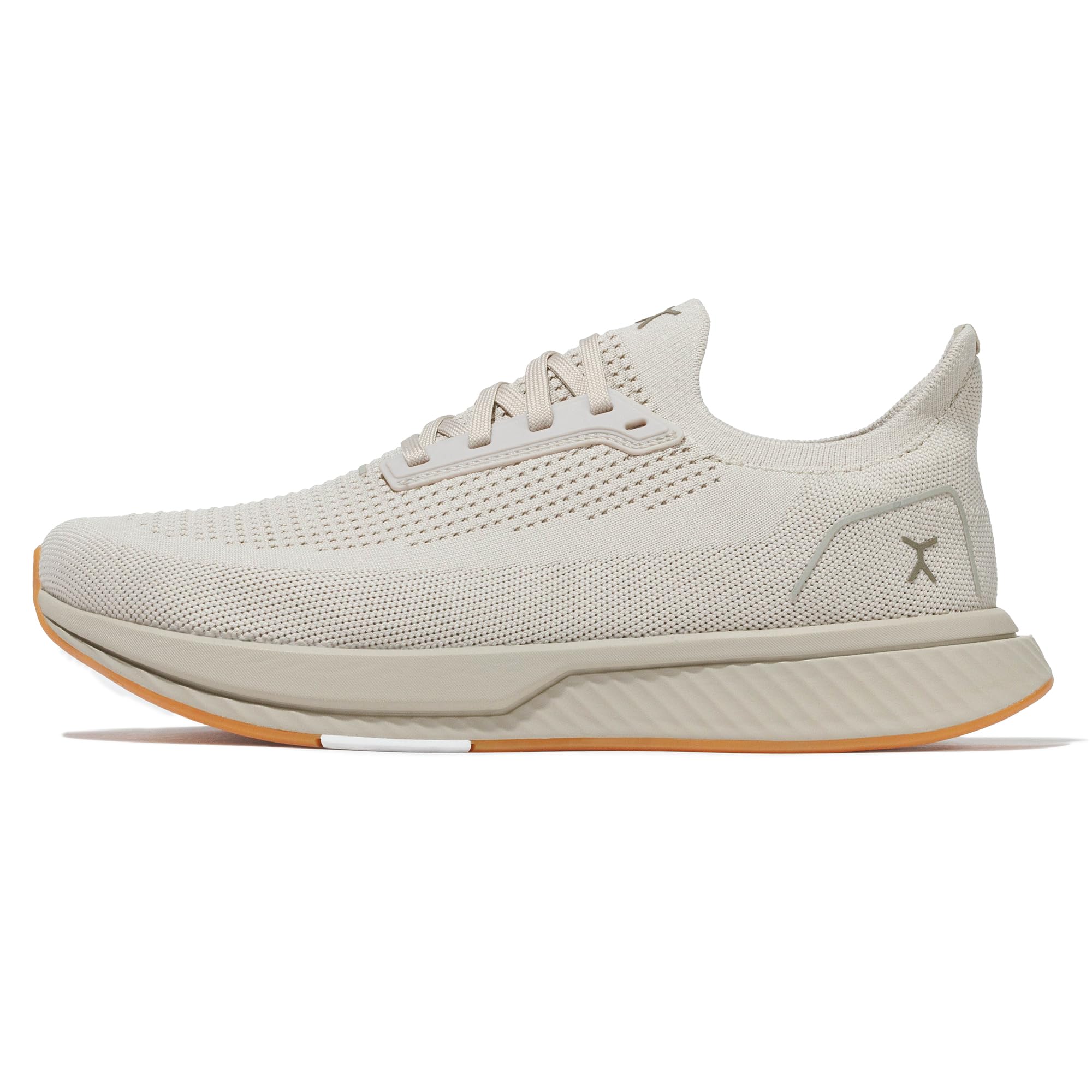
FLUX positions the Adapt Runner as a workhorse minimalist shoe, and high-arch users who log heavy mileage—especially those who stand on concrete for 10–15 hours a day—have found it to be a game-changer. The key differentiator is the interchangeable insole system: a thin barefoot insole and a slightly thicker one for transitional periods. For high-arched feet, this means you can start with the thicker insole while your arch muscles adapt, then switch to the barefoot layer once your foot strength improves—a smart approach that few competitors offer.
The wide toe box is genuinely anatomical, with a straight big-toe line that reviewers with neuropathy praise for eliminating pinch points. The upper is a durable knit that broke in well after a brief stiffness period, and the zero-drop sole provides a stable platform for standing all day. Multiple testers reported that the shoe reduced knee and back pain after years of conventional footwear, which directly correlates with the high-arch foot’s tendency to dump load into the lateral knee.
One recurring note is that the heel–ankle collar can feel tight—a few users had to return the shoe because they could not loosen the laces enough to relieve pressure at the ankle. This is a fit issue to watch for if you have a particularly high instep or thick ankles. Otherwise, the Adapt Runner’s durability is excellent; users report 4+ years of daily walking without sole delamination, though one reviewer did note early sole separation at the heel.
Why it’s great
- Interchangeable insoles allow gradual barefoot transition
- Excellent build quality—reported to last years
- Wide, anatomical toe box for neuropathic feet
- Reduces knee and back pain for long-standing users
Good to know
- Ankle collar may feel too tight for some feet
- Heel sole separation reported in isolated cases
4. Xero Shoes HFS II

The HFS II is Xero’s updated running-specific model, and it has drawn praise from high-arch users for its combination of a flexible, thin sole (5.5mm FeelTrue outsole) with a slightly beefier midsole layer than the Prio. This extra thickness (relative to more extreme minimalist shoes) makes it a strong option for high-arch runners who want ground feel but need a bit more protection on asphalt during 12+ mile runs. The toe box is narrower than the Prio, which could be a deal-breaker for those with especially wide forefeet—one reviewer explicitly called it “narrower than the Prio” and noted it works better for narrow to medium feet.
The shoe is lightweight, flexible, and performs well for lifting, HIIT, and treadmill running. The zero-drop platform is uncompromising, and the removable 2mm insole lets you increase ground connection even further. High-arch users transitioning from traditional running shoes will appreciate that the HFS II forces a forefoot or midfoot strike naturally, reducing heel-strike shock that can radiate up through a rigid arch. Sizing is critical: reviewers consistently report that you need to go half a size down from your normal Xero size.
The biggest complaint is that the sole is described by some as too hard and the upper uncomfortable for all-day wear—it is definitely a performance shoe first, not a lounge-around sneaker. The laces, which are stiff and finicky, also drew criticism. But for a dedicated barefoot runner with high arches, the HFS II offers a responsive, no-nonsense platform that rewards a proper gait.
Why it’s great
- Thin, flexible 5.5mm sole with good road feedback
- Lightweight and responsive for running and HIIT
- Removable insole for customizable ground feel
- Forces proper midfoot/forefoot strike pattern
Good to know
- Narrower toe box—not ideal for wide feet
- Hard sole and stiff laces can irritate on long days
5. Xero Shoes Prio Neo
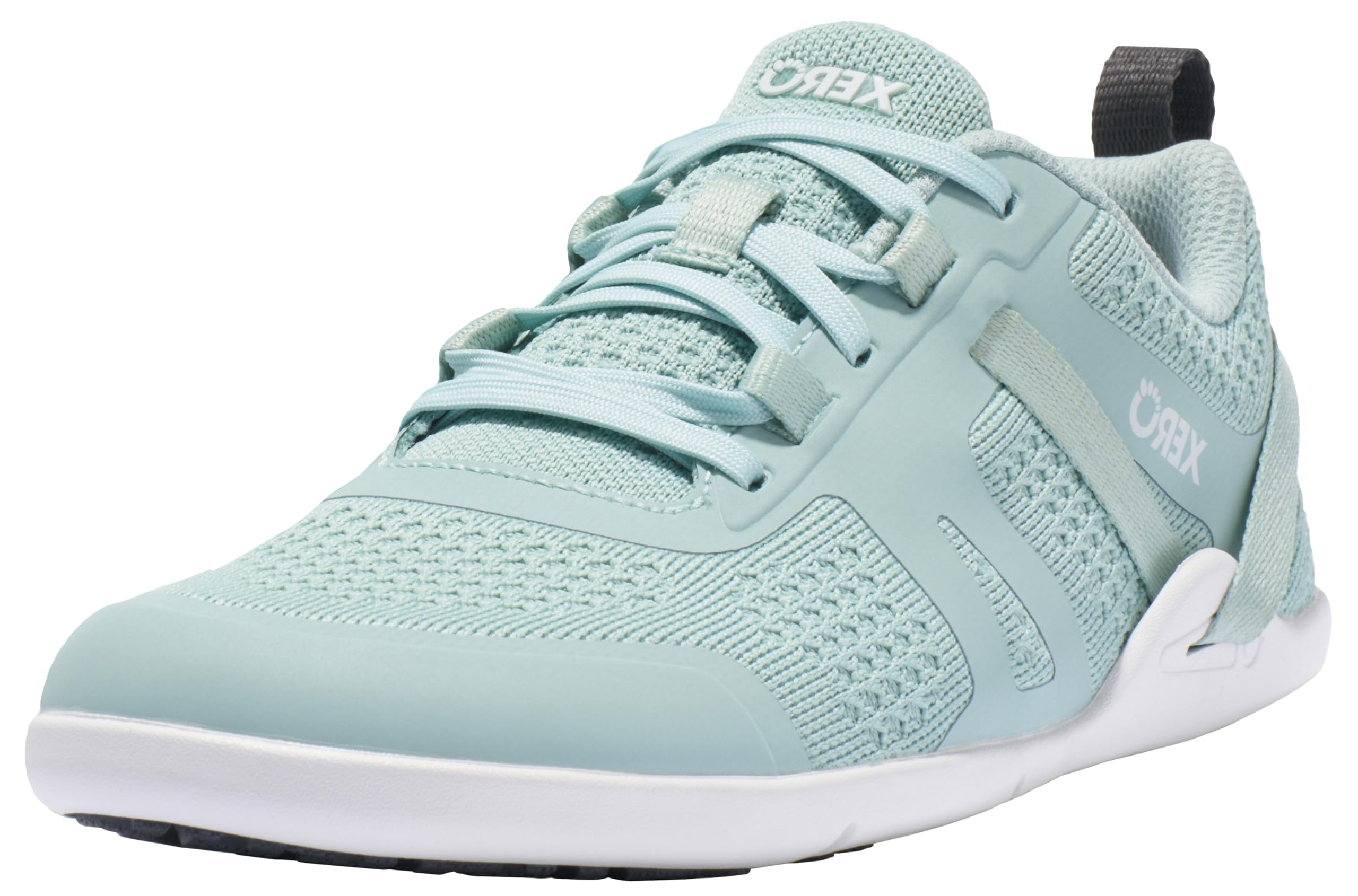
The Prio Neo is the most popular entry-level barefoot shoe on the market, and for high-arch users, it hits a sweet spot. The wide toe box (significantly wider than the HFS II) accommodates the natural splay that high-arched feet need, while the removable 2mm insole allows you to start with some cushion before dropping down to full ground feel. Transition reviewers from Brooks Glycerine GTS (a 10mm drop stability shoe) reported that the Prio Neo was comfortable out of the box, though calf and knee soreness during the adaptation period was common—this is expected as the foot learns to pronate and the arch flexes for the first time in years.
The upper is a stretchy knit that works well for high-volume feet—reviewers with Morton’s toe and hammer toes found zero pain inside the shoe. The shoe feels like a slipper with a rubber sole; it is extremely flexible and allows full foot articulation. Performance-wise, it is solid for walking, light gym work, and everyday wear, though it lacks the outsole aggression for serious trail running. One notable issue: the plastic eyelet reinforcement on the upper can dig into the top of the foot when walking, particularly if you have a high instep—a common complaint among high-arch users.
Despite that fit caveat, the Prio Neo delivers the core barefoot experience at a price that is significantly lower than Vivobarefoot or FLUX. For high-arch users who are unsure about making the full jump to minimal footwear, the Prio Neo gives you all the essential features—zero drop, wide toe box, removable insole—without the premium cost. Just be prepared for the lacing eyelet digging issue and plan to wear socks that sit above the tongue.
Why it’s great
- Generous toe box for maximum forefoot splay
- Removable insole for gradual transition
- Flexible, slipper-like comfort out of the box
- Budget-friendly entry into barefoot footwear
Good to know
- Plastic lacing eyelets can dig into the top of the foot
- Not suitable for aggressive trail terrain
6. Hike Footwear Theora Pro
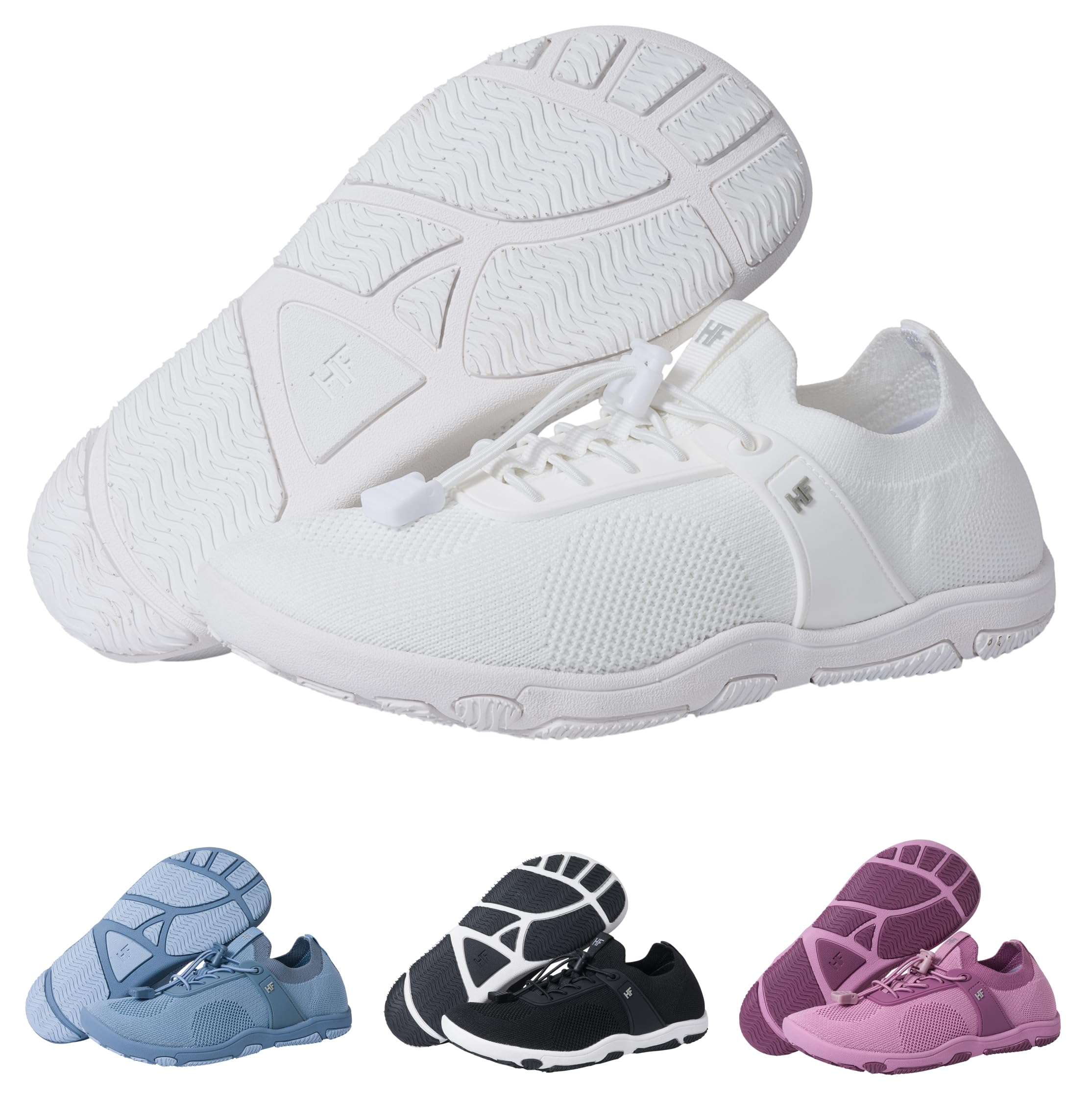
The Theora Pro is Hike Footwear’s answer to the demand for a barefoot shoe that does not compromise on comfort for arthritic or sensitive feet. The stretchy knit upper is forgiving over swollen joints and bony prominences—a real plus for high-arch users who often have prominent navicular bones that rub against stiffer uppers. The wide toe box drew praise right out of the box: “no more pinching on my big toes” was a recurring theme, and testers noted that the shoe holds the foot securely without any flopping or slipping inside.
The zero-drop sole provides a stable base, and the lightweight construction makes it easy to wear all day. However, multiple reviewers specifically noted that arch support is lacking—which is intentional in barefoot design, but high-arch users who are not ready to ditch support entirely may find the footbed too flat for extended standing periods. One reviewer mentioned that the shoe is “not supportive for extended periods of standing with minimal walking,” suggesting that the Theora Pro works best as a walking shoe rather than a stationary work shoe.
The overall build quality is solid for the price tier, though the outsole is less aggressive than the ALTRA or FLUX offerings. For high-arch users looking for a comfortable, zero-drop shoe that feels like a sock on the foot, the Theora Pro is a strong contender—just go up one full size if you plan to wear thicker socks, as the knit upper stretches but the length runs slightly short.
Why it’s great
- Stretchy knit upper accommodates arthritic feet
- Wide toe box eliminates big toe pinching
- Lightweight and slip-resistant
- Holds foot securely without internal slipping
Good to know
- No arch support—transition period may be needed
- Not ideal for prolonged standing in one spot
7. Hike Footwear HF Stride
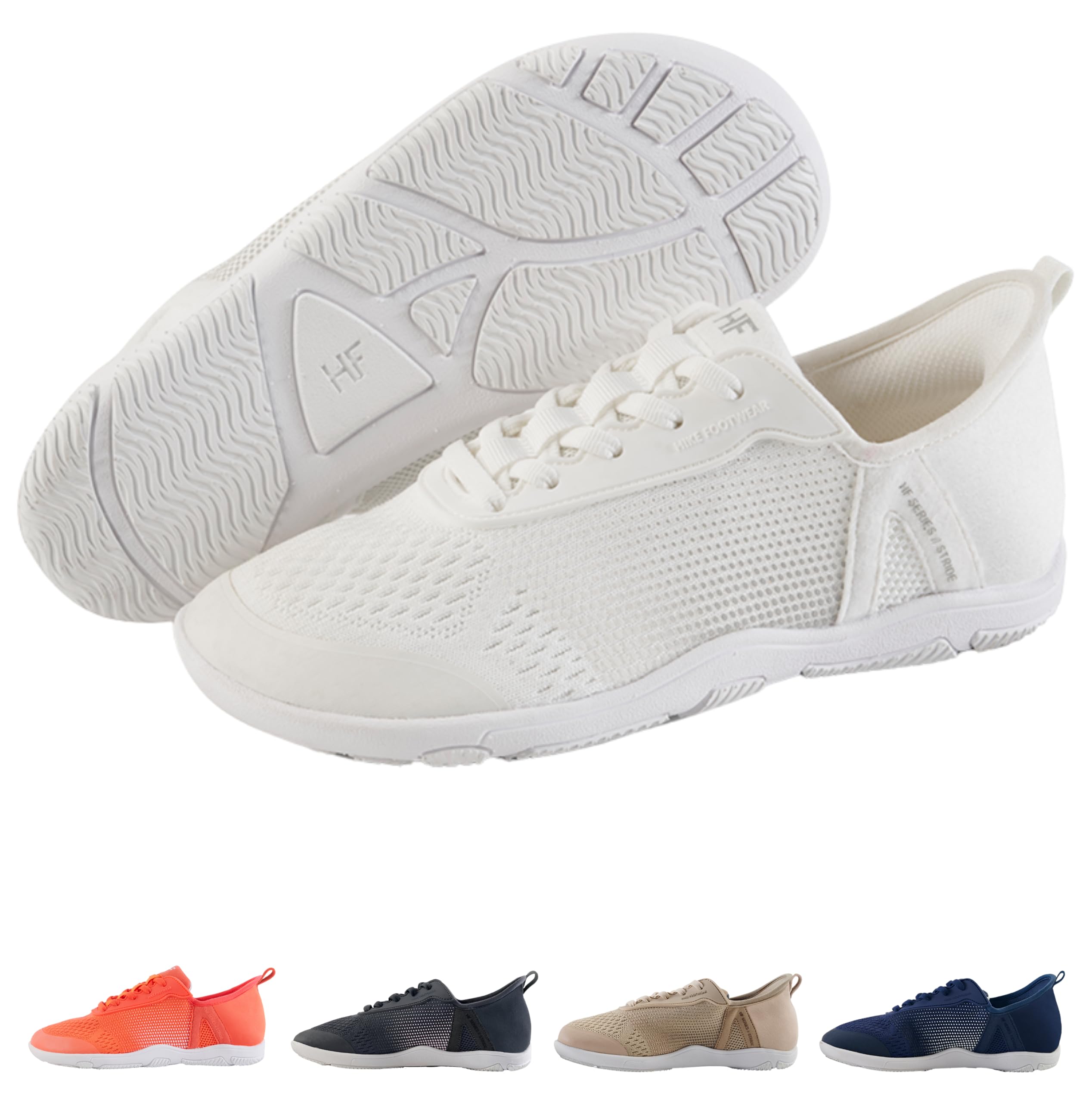
The HF Stride is an ultra-light, slip-on barefoot shoe designed for seniors and first-time barefoot wearers. The wide toe box and thin, flexible sole provide excellent ground feedback, and users reported immediate improvements in balance—a key benefit for high-arch feet that often struggle with stability due to the rigid foot structure. One reviewer, a senior, specifically called out the benefit for balance: “I like their philosophy about your feet being able to feel the ground to support balance.”
The shoe is simple: no laces to tie (it comes with laces in some batches, but the design is slip-on), a breathable upper, and a zero-drop sole. It runs slightly large, so sizing down half a size or wearing socks helps dial in the fit. High-arch users will appreciate that zero arch support is present—the foot must work naturally, which over time strengthens the arch. The HF Stride is best suited for indoor use, tile floors, and short outdoor walks; the outsole is thin enough that sharp rocks will be felt distinctly.
The main drawback is a quality-control issue reported by one reviewer: the tongue was crooked and would not stay centered, and the laces (when present) had to be tied uncomfortably tight to keep the shoe on. For the bulk of users, though, the shoe delivered exactly what it promised: a comfortable, grounding slipper that allows the high arch to move freely. At its price point, it is a low-risk way to test whether barefoot living works for your high-arched feet.
Why it’s great
- Ultra-light and slip-on design for easy daily wear
- Immediately improves balance for seniors and beginners
- Wide toe box with zero arch interference
- Budget-friendly introduction to barefoot footwear
Good to know
- Quality control on tongue and lacing can be inconsistent
- Thin sole provides minimal protection on rough terrain
FAQ
Will barefoot shoes make my high arches worse?
Can I wear orthotic insoles in barefoot shoes?
Why do my calves hurt when I switch to barefoot shoes?
Final Thoughts: The Verdict
For most users, the barefoot shoes for high arches winner is the ALTRA Lone Peak 9 because it delivers the zero-drop geometry and wide toe box that high-arched feet need, with enough cushion to make the transition comfortable and the outsole grip to handle real terrain. If you want the purest ground feel for running and training, grab the Vivobarefoot Primus Lite III. And for a budget-friendly entry point that still respects your arch’s need to move, nothing beats the Xero Shoes Prio Neo.

Mo Maruf
I created WellFizz to bridge the gap between vague wellness advice and actionable solutions. My mission is simple: to decode the research and give you practical tools you can actually use.
Beyond the data, I am a passionate traveler. I believe that stepping away from the screen to explore new environments is essential for mental clarity and physical vitality.