Our readers keep the lights on and my smoothie glass nicely filled. As an Amazon Associate, I earn from qualifying purchases.
Flat feet change how your weight transfers from heel to toe, and most conventional shoes fight that natural motion with stiff arch supports that actually weaken your foot muscles over time. The barefoot approach flips the script: a thin, flat sole lets your foot spread, grip, and move the way it was designed to, gradually rebuilding the intrinsic strength that flat feet often lack.
I’m Mohammad Maruf — the founder and writer behind WellFizz. I’ve spent years analyzing footwear biomechanics and consumer feedback to separate marketing claims from real structural benefits, especially for conditions like overpronation and fallen arches.
After combing through hundreds of verified customer accounts and spec sheets, I’ve narrowed the field to the models that consistently deliver on stability without sacrificing ground feel. This is your complete guide to finding the best barefoot shoes for flat feet that actually support your transition to a stronger, more natural stride.
How To Choose The Best Barefoot Shoes For Flat Feet
Flat feet need space and flexibility, not a rigid arch cookie. The wrong shoe can lock your foot into a collapsed position; the right one lets your arches rebuild naturally. Here are the three specs that matter most.
Stack Height and Ground Feel
Stack height — the distance between your foot and the ground — typically ranges from 4 mm to 15 mm in this category. Flat-footed beginners often do better with a slightly thicker sole (10–15 mm) to ease the transition, while experienced barefoot walkers drop to 4–8 mm for maximum proprioception. The altra Lone Peak 9 sits at 25 mm, which is high for a barefoot shoe but still zero-drop, making it a good bridge shoe for those coming from traditional trainers.
Toe Box Volume and Foot Shape
A flat foot spreads wider on impact than a high-arched foot. Look for a toe box that mirrors the natural splay of your foot — ALTRA’s FootShape and Vivobarefoot’s wide anatomical last are good examples. If your little toe is compressed, your arch can’t engage properly. The Xero Prio suede offers a moderate toe box, while the Vivobarefoot Primus Lite gives more vertical room for thicker forefeet.
Zero-Drop and Flexibility
Zero-drop means the heel and forefoot sit at the same height, which encourages a midfoot strike and reduces the heel-striking that aggravates flat-footed knee and hip pain. Combined with a flexible sole you can roll into a tube, your foot muscles must actually work — and that work rebuilds the medial arch over time. Avoid any shoe with a rigid shank or stiff heel counter; both block natural pronation control.
Quick Comparison
On smaller screens, swipe sideways to see the full table.
| Model | Category | Best For | Key Spec | Amazon |
|---|---|---|---|---|
| ALTRA Lone Peak 9 (Women’s) | Premium | Trail hiking & everyday walking | Zero-drop, 25mm stack height | Amazon |
| ALTRA Lone Peak 9 (Men’s) | Premium | Trail running & standing all day | Zero-drop, MaxTrac grip | Amazon |
| Vivobarefoot Primus Lite 3.5 | Premium | Training & daily wear | 4mm sole, vegan mesh | Amazon |
| Xero Prio Neo (Women’s) | Mid-Range | Walking & cross-training | 5.5mm FeelTrue sole | Amazon |
| Merrell Vapor Glove 6 Leather | Mid-Range | Casual office & light trails | Leather upper, 6mm stack | Amazon |
| Xero Prio Suede (Men’s) | Mid-Range | Everyday wear & deadlifts | 5.5mm sole, suede upper | Amazon |
| Hike Footwear HF Stride | Budget | Indoor/office flat feet starter | Ultra-light, thin sole | Amazon |
In‑Depth Reviews
1. ALTRA Women’s Lone Peak 9
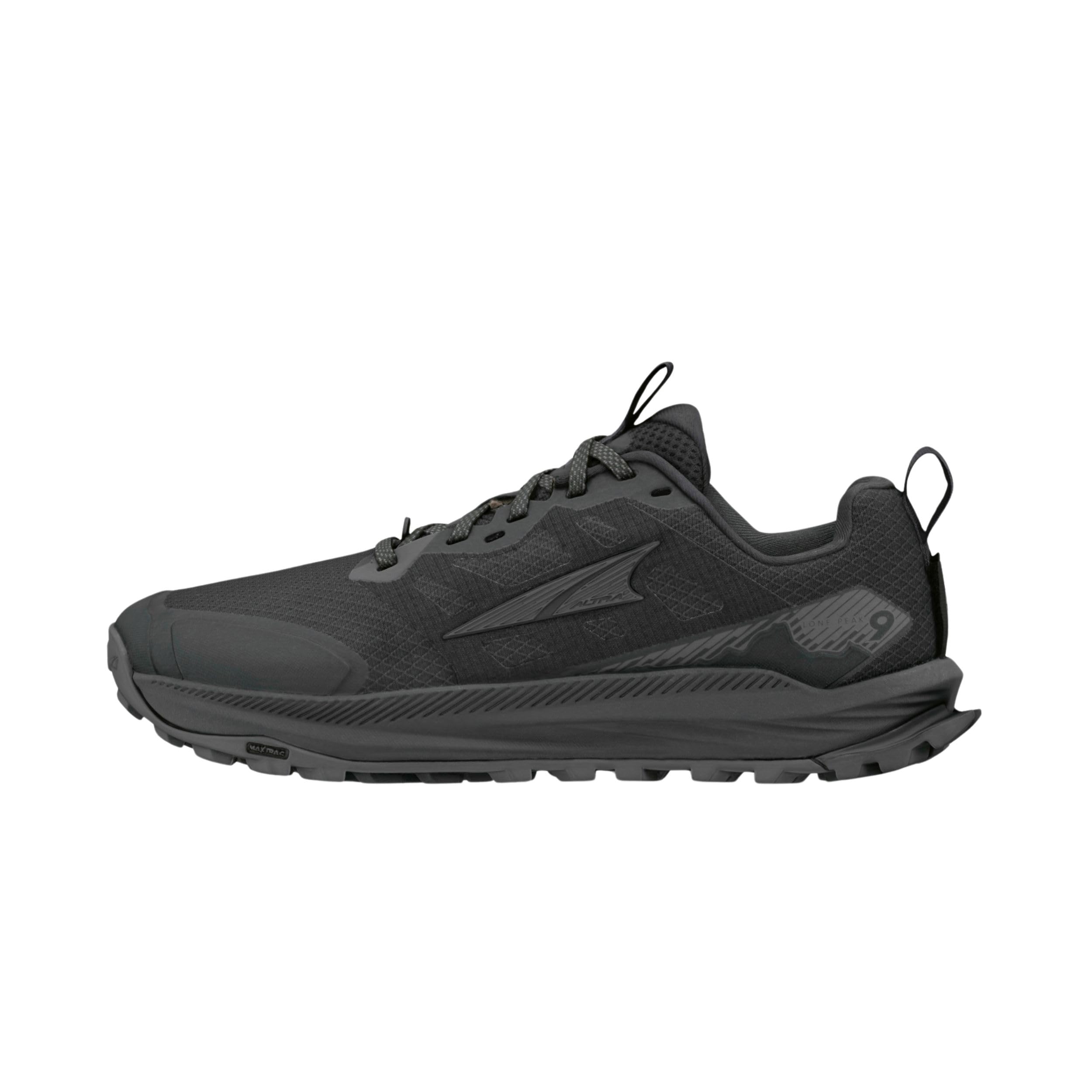
The Lone Peak 9 is the rare shoe that bridges traditional cushioning with barefoot geometry. Its 25 mm stack height is thicker than a true minimalist shoe, but the zero-drop platform and wide FootShape toe box give flat feet the room to splay and the stability to avoid overpronation on uneven terrain. Multiple reviewers note that the arch support feels natural rather than intrusive, and the MaxTrac outsole bites into dirt and gravel without adding weight.
This is the most forgiving entry point for flat-footed runners coming from motion-control trainers. The 25 mm stack absorbs some impact while still letting you feel contours in the trail, and the removable insole means you can drop to a thinner layer once your foot strength improves. Several long-term users report that the Lone Peak became their go-to for both daily walking and gym work, citing significant reduction in lower-back strain.
The trade-off is breathability: the mesh upper dries fast but lets in water and debris on wet trails, and some reviewers with narrow heels found the heel cup too roomy for a locked-in feel. Sizing up half a length is common advice to avoid toe-banging on descents.
Why it’s great
- Wide FootShape toe box allows natural splay for flat arches
- 25 mm zero-drop stack eases transition from traditional shoes
- MaxTrac rubber provides confident grip on loose trail surfaces
- Removable insole lets you customize ground feel
Good to know
- Not waterproof; mesh absorbs water quickly on wet trails
- Heel cup runs slightly loose for narrow-footed users
- Stack height is too thick for purist barefoot fans
2. ALTRA Men’s Lone Peak 9
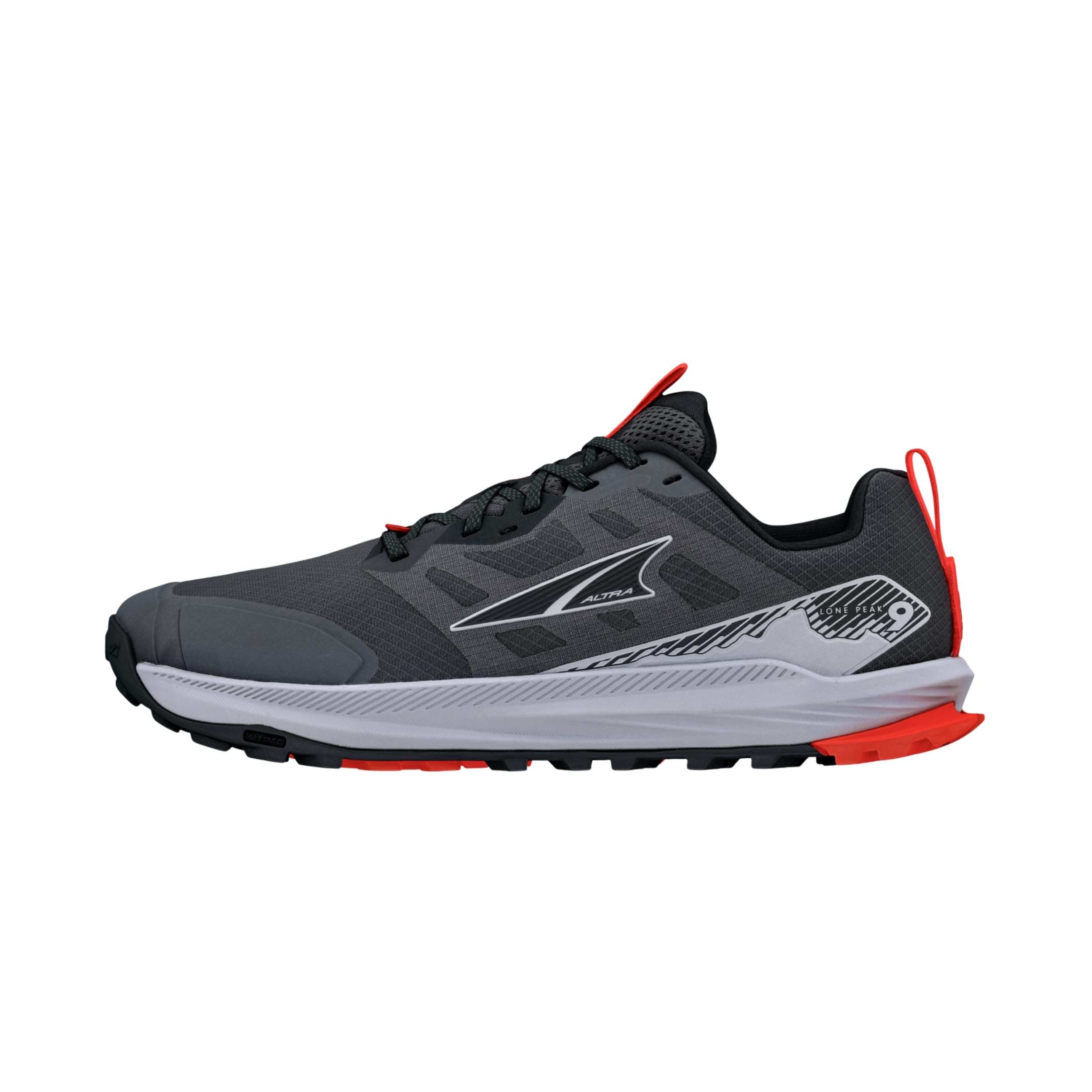
The men’s Lone Peak 9 mirrors the women’s version in its zero-drop geometry and FootShape last, but the fit is tuned for a D-width foot with a slightly higher instep. Reviewers repeatedly call it the best all-around hiking shoe for flat feet, noting that the wide toe box accommodates custom orthotic inserts without crowding the toes. The 25 mm stack height absorbs shock on rocky descents while the MaxTrac tread holds firm on wet rock and loose scree.
For the flat-footed runner who stands all day or tackles multi-mile trail runs, the Lone Peak 9 offers a middle ground that most barefoot purists dismiss but that transitional users desperately need. One customer who wore architectural supports inside these shoes reported that the combination finally stopped their chronic knee pain. The shoe runs about half a size large, so ordering down is recommended for a snug heel fit.
The biggest complaint centers on durability: the side mesh can tear after several hundred kilometers of aggressive trail use, and the heel collar collects debris. Still, for the price-to-performance ratio on zero-drop trail shoes, the Lone Peak 9 remains the standard for flat-footed hikers.
Why it’s great
- Wide FootShape toe box allows natural splay for flat arches
- 25 mm zero-drop stack eases transition from traditional shoes
- MaxTrac outsole grips reliably on mud, snow, and rock
- Spacious enough to fit custom orthotics comfortably
Good to know
- Upper mesh prone to tearing after extended rough-terrain use
- Runs half a size large; sizing down improves heel lock
- Heel collar can trap debris on loose trails
3. Vivobarefoot Primus Lite 3.5

The Primus Lite 3.5 is the thinnest shoe in this review with a 4 mm sole, giving you maximum ground feel for rebuilding arch strength. Vivobarefoot’s anatomical last is noticeably wider than the Xero Prio, offering vertical toe room that flat-footed users with thick forefeet appreciate. Reviewers describe the fit as true to Brannock length but note that the shoe accommodates low-volume feet best — if you have a high instep, the laces may feel short.
This is the shoe for the flat-footed person who has already spent a few months in a thicker zero-drop shoe and wants to progress to a more minimal platform. The breathable mesh upper keeps feet cool during HIIT and running, and the lack of any internal structure forces your arch muscles to engage constantly. One review highlighted an unstable ankle and bad knees, yet after a transition period, the Primus Lite became the most comfortable shoe they’d owned in years.
The downsides are real: the white mesh stains easily and is difficult to clean without damaging the fabric, and the sole is too thin for sharp gravel or long pavement miles. Sizing is finicky — several users size down a full size from their standard shoe size for a proper fit.
Why it’s great
- 4 mm sole provides unparalleled ground feel for arch activation
- Anatomical last gives generous vertical toe room for flat feet
- Breathable vegan mesh reduces odor and heat buildup
- Lightweight and flexible for gym, running, and daily wear
Good to know
- White mesh fabric stains easily and is hard to clean
- Too thin for sharp gravel or long road runs
- Sizing inconsistent; many need a full size down
4. Xero Shoes Women’s Prio Neo
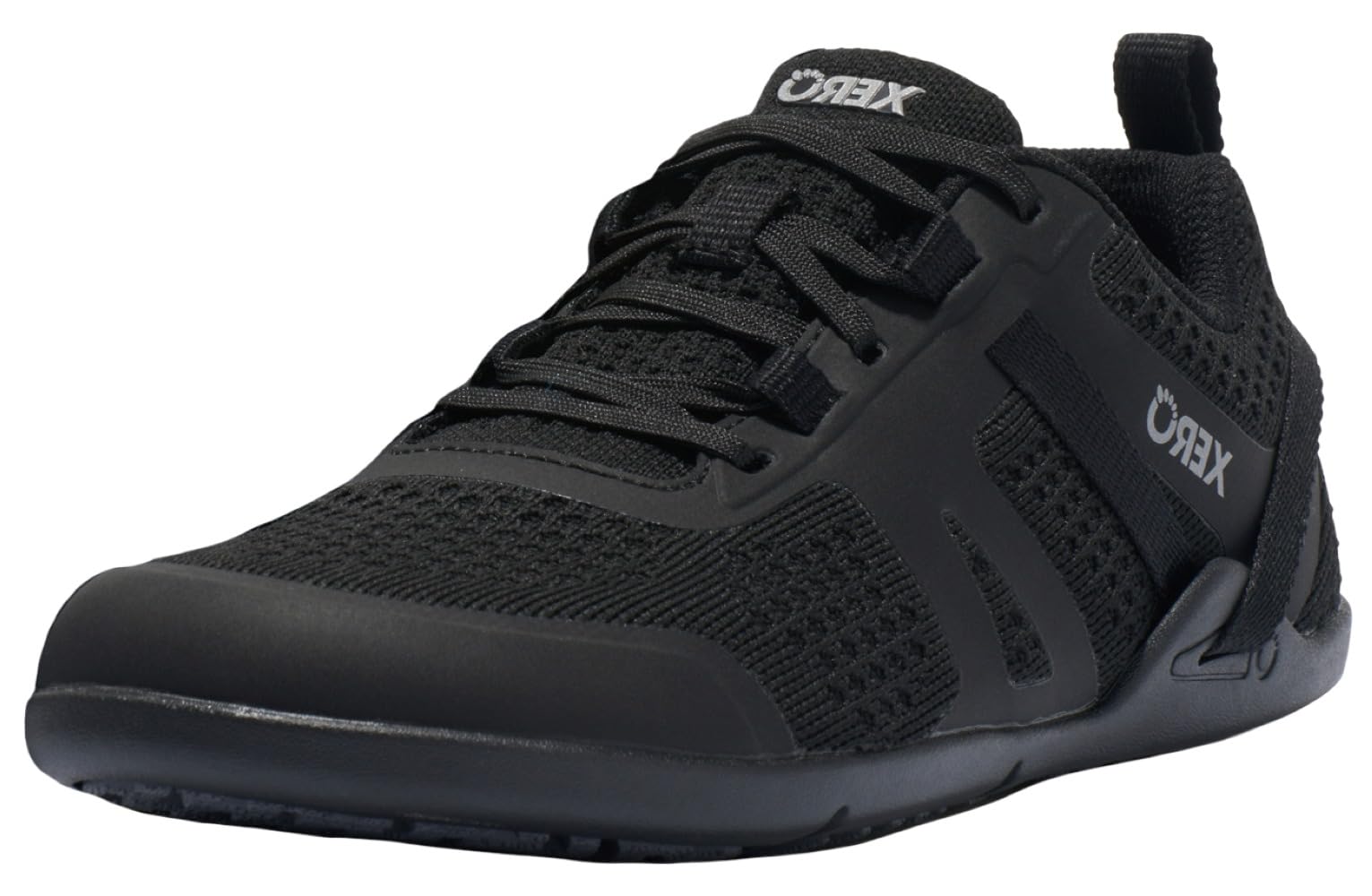
The Prio Neo is Xero’s updated women’s training shoe with a 5.5 mm FeelTrue sole and a stretchy knit upper that accommodates bunions and hammer toes without pressure points. Customers transitioning from the Brooks Glycerine GTS — a heavily structured stability shoe — report a painful but necessary recalibration of gait during the first two weeks, followed by noticeable reductions in calf and knee pain. The removable 3 mm insole gives you an option to start with a bit of cushioning before going full barefoot.
The wide toe box is the standout feature here: even women with Morton’s toe and wide forefeet found enough room to splay naturally without the side-wall rubbing common in narrow minimal shoes. One reviewer with persistent lower back pain switched to the Prio Neo and saw improvement within a month. The heel has a subtle contour that grips better than the flat Prio suede, making it more secure for lateral movements.
The main catch is the plastic eyelet structure — a few users report that the hard lacing reinforcement digs into the top of the foot during walking, which can be a dealbreaker for high-volume feet. Also, the knit upper lacks durability if you frequently brush against sharp brush or rocks.
Why it’s great
- Removable 3 mm insole lets you customize cushion level during transition
- Wide toe box accommodates bunions, hammer toes, and Morton’s toe
- Stretchy knit upper reduces pressure points on wide forefeet
- Lightweight profile works for both walking and cross-training
Good to know
- Plastic eyelet area can dig into high-volume feet while walking
- Knit upper less durable against sharp trail debris
- Adjustment period from stability shoes can cause calf/ knee pain
5. Merrell Men’s Vapor Glove 6 Leather
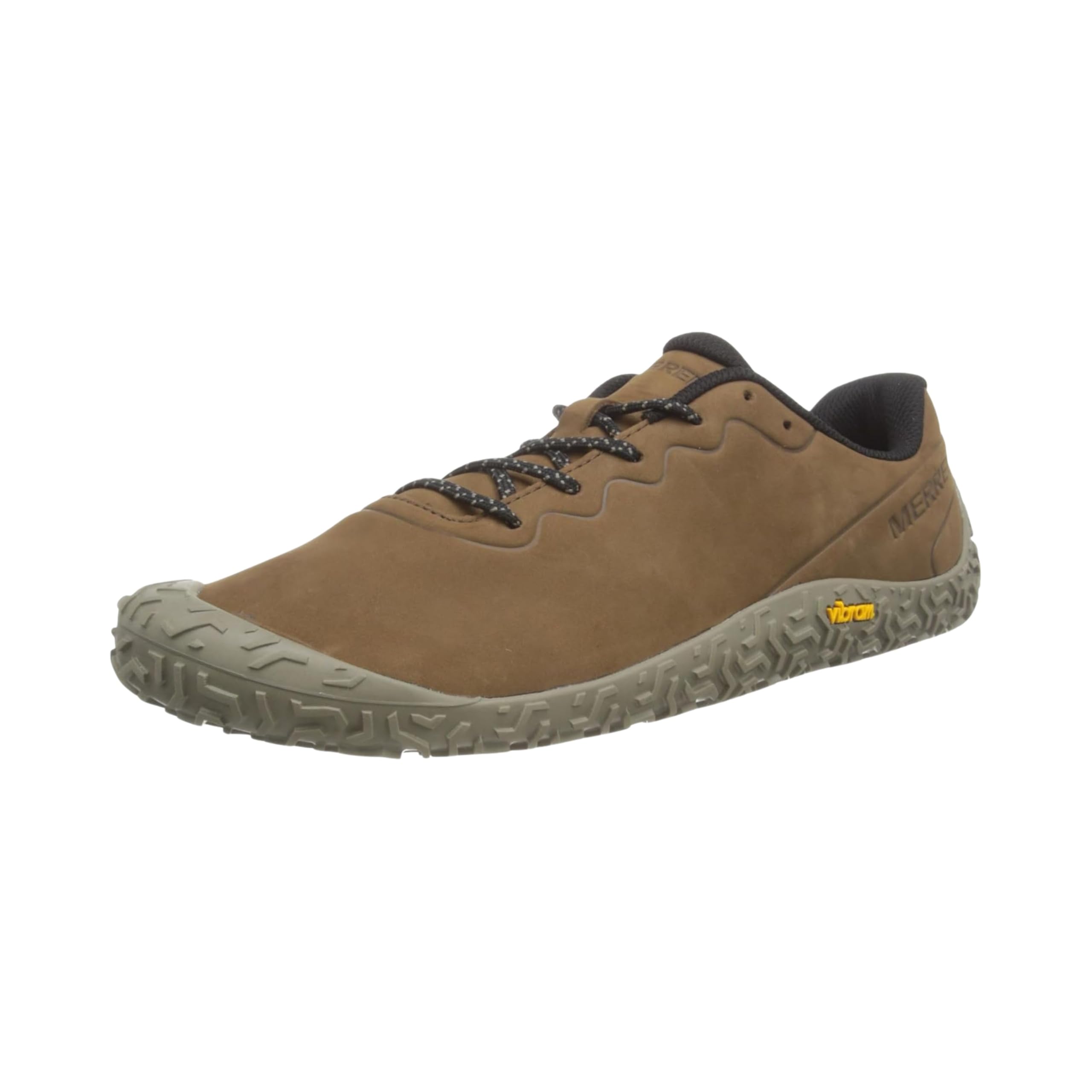
The Vapor Glove 6 Leather swaps the usual mesh for a full-grain leather upper, making this the most office-appropriate barefoot shoe in the lineup. The 6 mm stack height is thin enough for ground feel but the leather adds a layer of structure that prevents the shoe from collapsing around flat arches. Reviewers praise its durability: the leather sole holds up better than mesh versions, and the tighter weave keeps out light rain and dust better than any textile competitor.
For flat-footed professionals who need to look polished while rebuilding arch strength, this is the best option. Several customers note that the fit leans toward narrow to medium width, so if your flat feet spread wide, the toe box may feel restrictive after a few hours. The Vapor Glove also works well for deadlifting and light trail use, though the smooth leather slips on wet grass and polished floors.
The biggest limitation is sizing: users with E or wider feet report that the Vapor Glove runs narrow, and there’s no wide-width option. Going up half a size is the usual workaround, but the heel then slips. For narrow-to-medium flat feet, though, this is a versatile, handsome choice.
Why it’s great
- Full-grain leather upper looks professional for office environments
- 6 mm stack provides good ground feel with added structure
- Leather construction is more durable than typical mesh barefoot shoes
- Works well for deadlifting due to flat, stable sole
Good to know
- Toe box runs narrow; not ideal for wide-flat feet
- Leather sole has poor traction on wet or polished surfaces
- No wide-width option available; sizing up causes heel slip
6. Xero Shoes Men’s Prio Suede
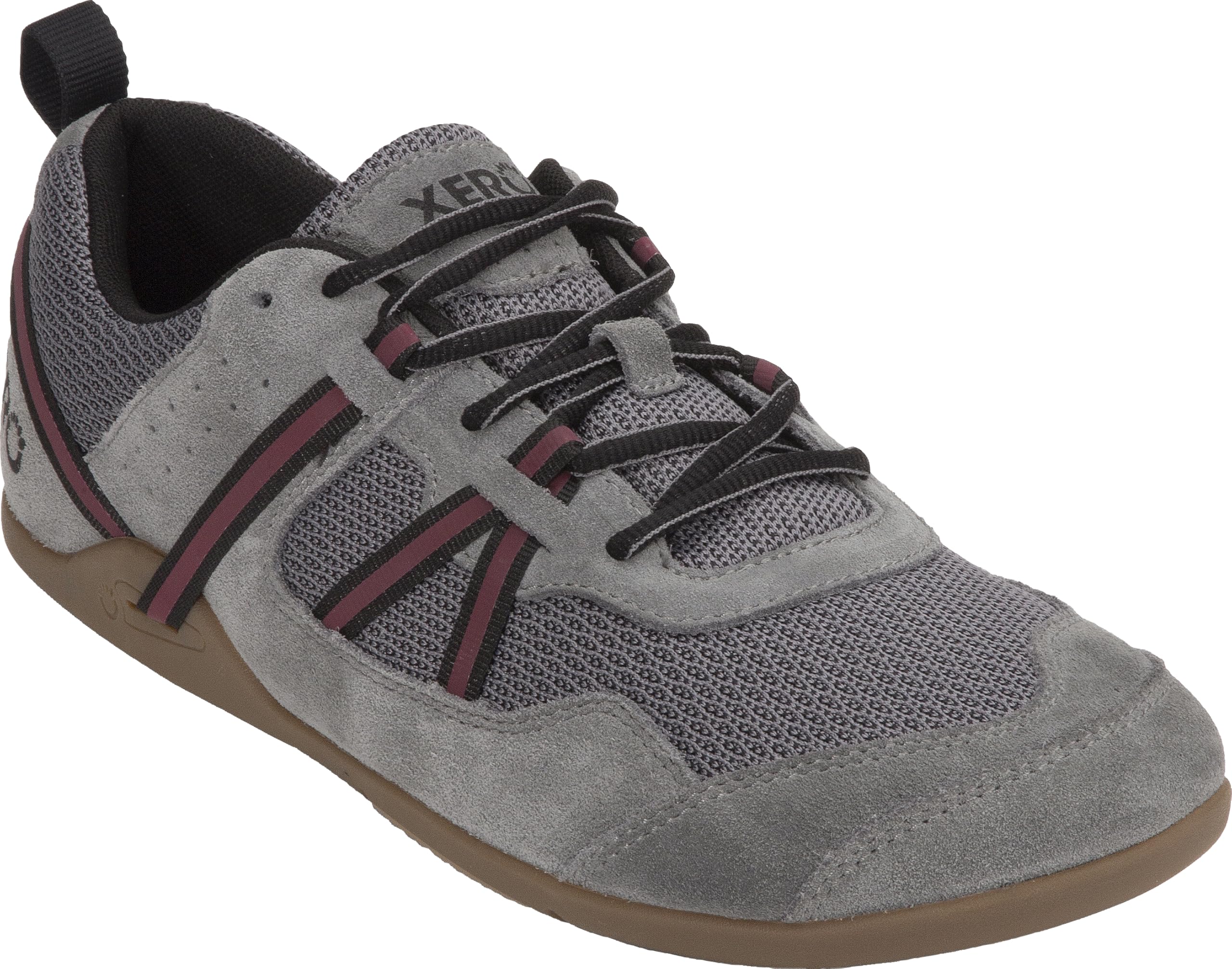
The men’s Prio Suede is the longest-running Xero model for a reason: the 5.5 mm FeelTrue sole combines flexibility with enough abrasion resistance for warehouse concrete and city pavement. A reviewer who works 8-hour shifts on hard flooring reported that the Prio Suede eliminated the limp and hip pain they’d suffered for years in padded work boots. The suede upper breathes better than leather but lacks the same water resistance, and the organic cotton laces are a nice touch for the eco-conscious buyer.
For flat feet, this shoe shines during the middle phase of a barefoot transition. The toe box is wide but — as several reviewers note — less volumious than Vivobarefoot, so if your toes are thick, you may feel the upper pressing down. The lack of arch support is deliberate, and one customer specifically noted that the Prio Suede helped strengthen their flat arches after seven months of consistent wear, reducing their limp and improving running form.
Weakest link is the huarache-style strap stitched at the metatarsal: a few long-term users report that it splits after 6-12 months of heavy daily use. Also, the suede stains easily and shows wear quickly on the toe cap. But for the price in the mid-range category, the durability-to-performance ratio is hard to beat.
Why it’s great
- 5.5 mm sole with good ground feel plus sufficient abrasion resistance for concrete
- Suede upper is more breathable than leather while remaining durable
- Multiple reviewers report reduced back and knee pain after transition
- Organic cotton laces and recycled materials appeal to eco-conscious buyers
Good to know
- Huarache strap at metatarsal can split after 6–12 months of daily use
- Toe box less vertical than Vivobarefoot; may compress thick toes
- Suede stains easily and wears visibly on the toe cap
7. Hike Footwear HF Stride
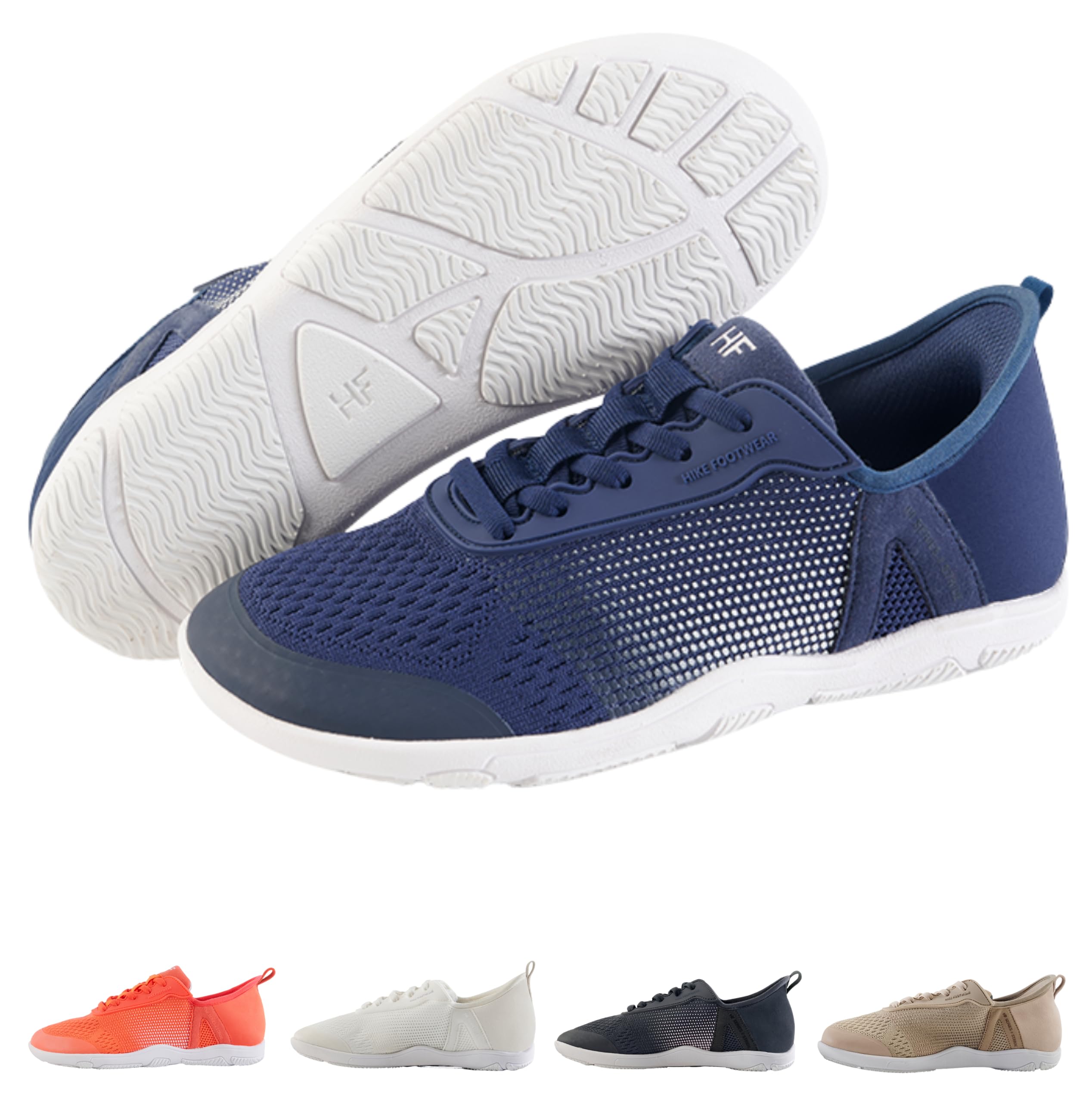
The HF Stride is the budget option that punches above its price tier for flat-footed beginners. Reviewers consistently mention dramatic improvements in balance within the first week, and several noted reduced back, hip, and knee pain — the same benefits you’d expect from a premium barefoot shoe. The ultra-light build and thin sole give excellent ground feel, and the wide toe box is generous enough for most foot shapes without looking clownish.
This is not a shoe for trail running or heavy gym work. The outsole is smooth and lacks aggressive tread, making it best suited for indoor tile floors, paved paths, and casual office wear. A few reviewers caution that the shoe runs slightly large — ordering a size down from your normal size or wearing thicker socks resolves the issue. The lack of arch support is consistent with the barefoot philosophy, and several users report that the shoe helped rebuild their arches after weeks of consistent wear.
The main trade-off is long-term durability: the upper material shows creasing and wear after two months, and the outsole will not withstand rocky terrain. For the price, however, the HF Stride is the most accessible entry point for someone with flat feet who wants to test the barefoot lifestyle without a major investment.
Why it’s great
- Ultra-light design provides immediate balance improvement for flat feet
- Generous wide toe box accommodates moderate splay without pinching
- Budget-friendly price for testing the barefoot transition
- Thin sole gives strong ground feel for indoor and paved surfaces
Good to know
- Smooth outsole lacks traction for trails or wet pavement
- Upper material shows creasing and wear within two months
- Runs slightly large; sizing down recommended for snug fit
FAQ
Will barefoot shoes make my flat feet worse?
What stack height is best for flat-footed beginners?
How do I transition from stability shoes to barefoot shoes?
Final Thoughts: The Verdict
For most users, the barefoot shoes for flat feet winner is the ALTRA Lone Peak 9 (Women’s) or the ALTRA Lone Peak 9 (Men’s) because of their zero-drop platform, wide FootShape toe box, and forgiving 25 mm stack that bridges the gap between traditional and barefoot footwear. If you want maximum ground feel and are ready for a thinner sole, grab the Vivobarefoot Primus Lite 3.5 for its 4 mm sole and generous toe room. And for a budget-friendly entry point, the Hike Footwear HF Stride delivers surprising balance improvements for indoor wear.

Mo Maruf
I created WellFizz to bridge the gap between vague wellness advice and actionable solutions. My mission is simple: to decode the research and give you practical tools you can actually use.
Beyond the data, I am a passionate traveler. I believe that stepping away from the screen to explore new environments is essential for mental clarity and physical vitality.