Our readers keep the lights on and my smoothie glass nicely filled. As an Amazon Associate, I earn from qualifying purchases.
A deadlift-specific bar changes the physics of your pull. Its longer, thinner shaft stores elastic energy during the initial pull, then releases it like a slingshot through the lockout — a phenomenon called “whip” that no standard multipurpose barbell can replicate. Choosing the wrong diameter or tensile strength means leaving pounds on the platform or, worse, bending a bar that wasn’t built for the load.
I’m Mohammad Maruf — the founder and writer behind WellFizz. I’ve spent over a decade analyzing barbell metallurgy, tensile ratings, and knurl geometry to separate gym-floor marketing from actual performance specs that matter for competitive deadlifting and heavy home-gym training.
Whether you need an open hex bar to protect your lower back or a competition-length 27mm shaft that flexes under heavy loads, finding the right bar for deadlifts depends on matching shaft diameter, tensile strength, and knurl aggression to your specific pulling style and body mechanics.
How To Choose The Best Bar For Deadlifts
Deadlift bars differ from standard Olympic bars in three critical dimensions: shaft diameter, overall length, and knurl aggression. A thinner shaft (27mm vs 29mm) increases whip but requires more grip strength. A longer shaft (92 inches vs 86 inches) moves the sleeves further from center, amplifying the spring-like flex that helps break the bar off the floor. Choosing the wrong combination means fighting the bar instead of letting it work for you.
Shaft Diameter and Whip
Thinner shafts (27mm) flex more under heavy loads, storing energy during the initial pull and releasing it at lockout. This “whip” helps lifters blast through sticking points near the knees, but it demands a stronger grip because the bar oscillates more. Thicker shafts (29mm) feel stiffer and more stable, making them better for raw grip lifters who want minimal bar movement.
Tensile Strength and Load Capacity
Tensile strength, measured in PSI, tells you how much stress the steel can endure before permanently deforming. Bars rated at 150,000 PSI handle most home-gym loads up to 600-700 pounds, while 190,000+ PSI bars survive repeated 800+ pound pulls without banana-ing. Never confuse “weight capacity” with tensile strength — a 1,500-pound capacity claim means nothing if the steel creeps under sustained heavy singles.
Knurl Aggression and Placement
Deadlift bars should have aggressive knurling that bites into the hands without tearing calluses. A 1.5mm to 2mm knurl depth provides the friction needed for hook grip or mixed grip without excessive pain. Center knurling is optional for sumo pullers who want the bar to stay pinned against their shins, but conventional pullers often prefer a knurl-free center section to avoid chafing.
Quick Comparison
On smaller screens, swipe sideways to see the full table.
| Model | Category | Best For | Key Spec | Amazon |
|---|---|---|---|---|
| Synergee Rhino Power Bar | Straight Power Bar | Aggressive knurl for max grip | 190K PSI, 29mm, 1500 lb | Amazon |
| LOEFT Professional Deadlift Bar | Deadlift-Specific | Competition whip on a budget | 190K PSI, 27mm, 92in | Amazon |
| Bells of Steel Barenaked Power Bar | IPF Power Bar | IPF-spec stiff bar for meets | 210K PSI, 29mm, 44 lb | Amazon |
| Valor Fitness Deadlift Bar | Deadlift-Specific | Entry-level deadlift whip | 165K PSI, 27mm, 90.5in | Amazon |
| JELENS 7FT Olympic Barbell | All-Purpose Bar | Versatile gyms that do everything | 150K PSI, 28mm, 1000 lb | Amazon |
| Titan Fitness Yukon Power Bar | Curved Power Bar | Shoulder-friendly squat & deadlift | 180K PSI, 32mm, 96in | Amazon |
| Bells of Steel Trap Bar | Hex / Trap Bar | Back-friendly deadlifts and carries | 700 lb, rotating sleeves, 47 lb | Amazon |
| PONE FIRST Trap Bar | Hex / Trap Bar | Budget hex bar for home gyms | 800 lb, 30 lb, 51in | Amazon |
| CAP Barbell Olympic Set | Starter Set | Complete beginner weight setup | 500 lb, 54K PSI, 30mm | Amazon |
In‑Depth Reviews
1. Synergee 45lb Rhino Power Bar
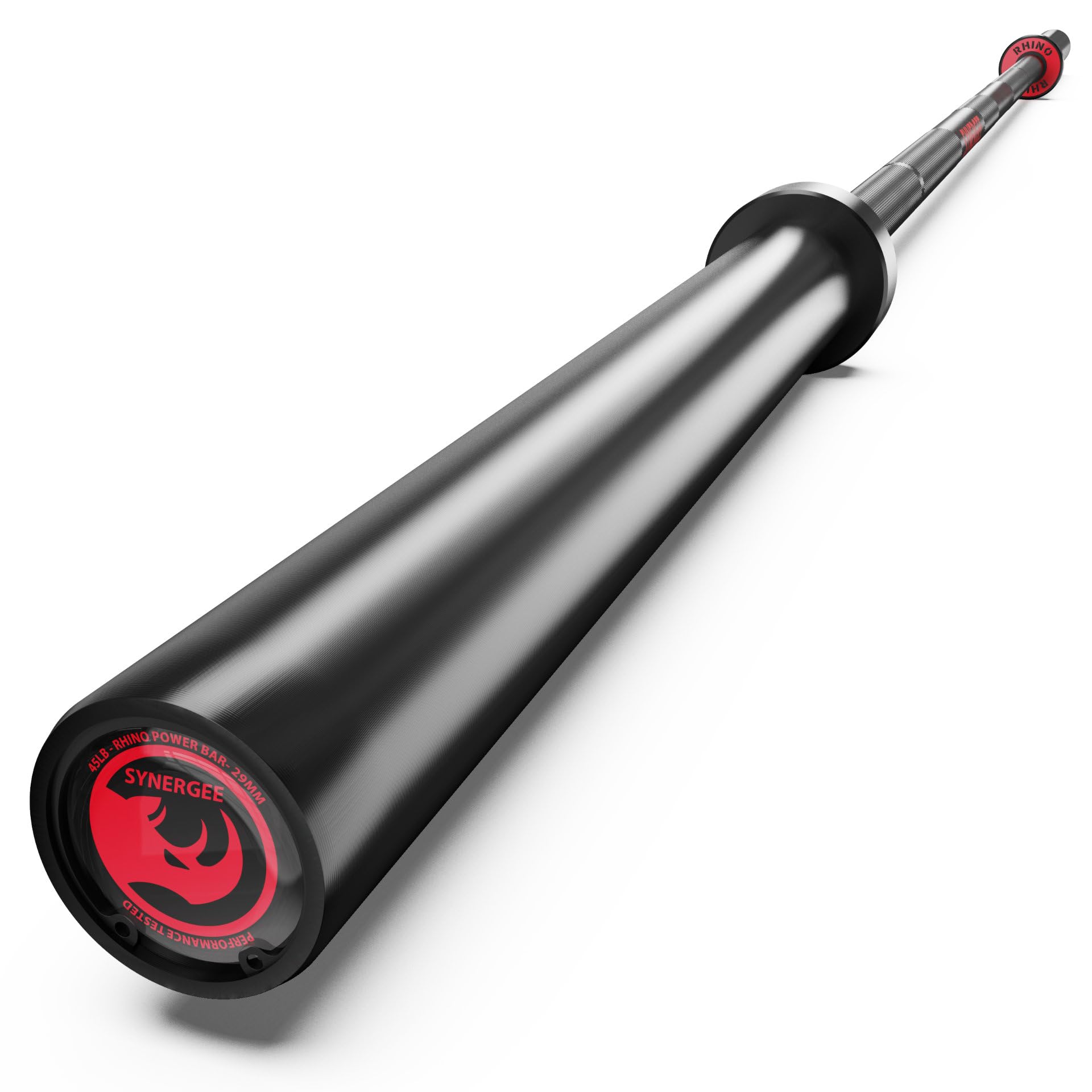
The Synergee Rhino is a power bar built with a stiff 29mm shaft and 190,000 PSI tensile strength, meaning it has almost no whip — exactly what you want for raw strength pulls where bar oscillation would rob power. Its 16.4 inches of loadable sleeve space accommodates even the thickest plate stacks without crowding the collars.
What sets this bar apart is the “volcano” knurling — an aggressive texture that locks into your hands without the cheese-grater feel of some competition bars. The Cerakote shaft resists rust significantly better than bare steel or black oxide finishes, though the black phosphate sleeves show wear over time. At 45 pounds and 86.16 inches total length, it fits any standard rack.
Users consistently report that the Rhino outperforms bars double its price point from Rogue and Hammer Strength. The bushings provide smooth-enough spin for deadlifts without the complexity of needle bearings. If you want one bar that crushes deadlifts, squats, and bench without compromise, this is the mid-range champion.
Why it’s great
- 190K PSI tensile rating handles 1,500 lb loads without flex
- Aggressive Cerakote knurl grips wet hands without tearing
- 16.4-inch sleeves fit bumper plate stacks easily
Good to know
- Very stiff shaft — not ideal for lifters who want whip
- Black phosphate sleeves may rust if stored in humid garage
2. LOEFT Professional Deadlift Bar (P92B)
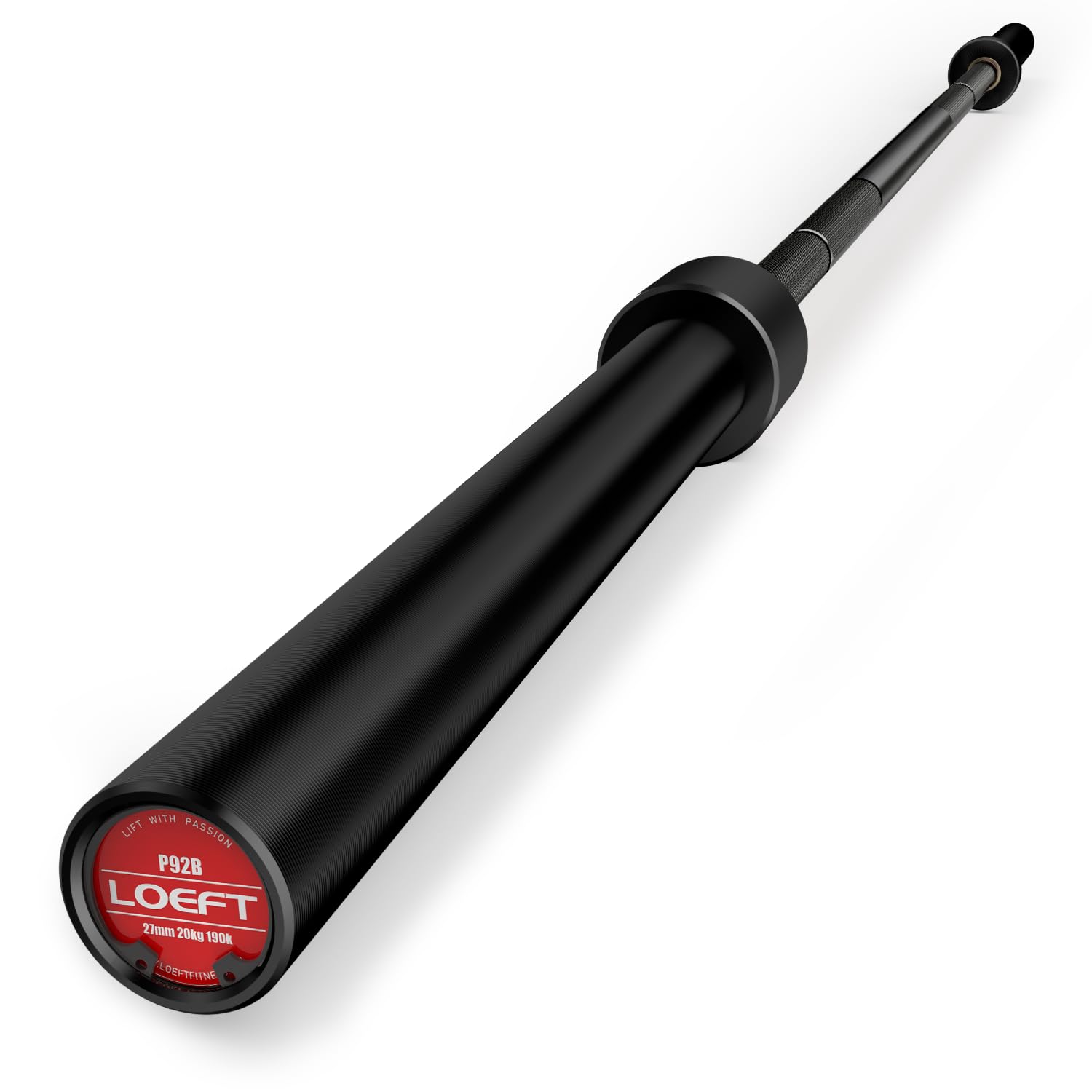
This is a purpose-built deadlift bar with a 27mm shaft and 92-inch overall length — the longer shaft amplifies whip, storing elastic energy during the pull and releasing it at lockout. The 190,000 PSI tensile strength ensures the bar snaps back to straight after every rep rather than taking a permanent bend.
The 1.5mm aggressive knurl bites deep without shredding calluses, and the 15.76-inch sleeves accept bumper plates cleanly. Reviewers note that whip becomes noticeable above 315 pounds and really sings at 500 pounds. The black oxide finish looks great but requires occasional oiling to prevent surface rust in damp environments.
LOEFT explicitly states this bar is for deadlift use only — no racking overhead or dropping from shoulder height. The bushings spin smoothly, and the 1200-pound recommended bumper plate max gives ample headroom for advanced pullers. For lifters who want competition-style whip without spending +, this is the value standout.
Why it’s great
- Thinner 27mm shaft provides noticeable whip over 400 lbs
- Aggressive 1.5mm knurl improves hook grip security
- 92-inch length moves sleeves further out for more flex
Good to know
- Not for overhead or racked lifts — deadlift only
- Black oxide finish requires maintenance in humid gyms
3. Bells of Steel Barenaked Power Bar 2.0

The Bells of Steel Barenaked Power Bar 2.0 is an IPF-spec power bar with a 210,000 PSI tensile rating — the highest tensile strength on this list — and a stiff 29mm shaft that eliminates whip for max-effort squats and deadlifts. Its bare steel finish develops a natural patina over time, and the “cheese-grater” knurl provides the most aggressive grip of any bar reviewed here.
At 44 pounds and 84 inches total, this bar is slightly lighter than a standard Olympic bar but meets IPF competition dimensions. The 1,500-pound capacity gives massive headroom for raw lifters. Multiple long-term users report that the bare steel knurl requires monthly oiling and wire brushing to prevent rust, but the grip security during heavy deadlifts is unmatched.
The lack of center knurling keeps it comfortable for conventional pulling but still sticky enough for sumo. Bells of Steel backs this bar with strong customer support, and users consistently say it outperforms the Rogue Ohio Power Bar at a significantly lower entry point. For competitive powerlifters who want a stiff, aggressive bar, this is the top-tier choice.
Why it’s great
- 210K PSI tensile strength — highest in this roundup
- Aggressive bare steel knurl locks grip under heavy loads
- IPF-compliant dimensions for competition training
Good to know
- Bare steel requires regular oiling to prevent surface rust
- No whip — felt stiff during dynamic pulls
4. Valor Fitness Olympic Deadlift Bar

Valor Fitness designed this deadlift bar with a 27mm shaft and 90.5-inch overall length to generate meaningful whip at a price point that undercuts purpose-built bars from larger brands. The 165,000 PSI tensile strength and 1,200-pound capacity provide reliable performance for most home-gym lifters pulling up to the mid-500s.
The knurling is moderately aggressive — grippy enough for hook grip but not sharp enough to tear the hands during volume work. Users report that whip becomes noticeable around 400 to 450 pounds, and the etched sleeves keep plates locked in place without sliding. The powder-coated finish is more durable than zinc but can chip at the collar edges over time.
Some long-term users note that the thin zinc coating on the collars may peel after 18+ months of heavy use, and the bar can develop a slight bend if consistently loaded past 600 pounds. However, for intermediate lifters building toward their first 500-pound pull, this bar delivers competition-like performance at a fraction of the cost of elite-tier deadlift bars.
Why it’s great
- 27mm shaft and 90.5-inch length create usable whip
- Moderate knurl balances grip and hand comfort
- 1,200 lb capacity suits most home-gym pullers
Good to know
- Thin zinc coating may rust or peel in humid garages
- Not recommended for competitive use above 600 lbs
5. JELENS 7FT Olympic Barbell
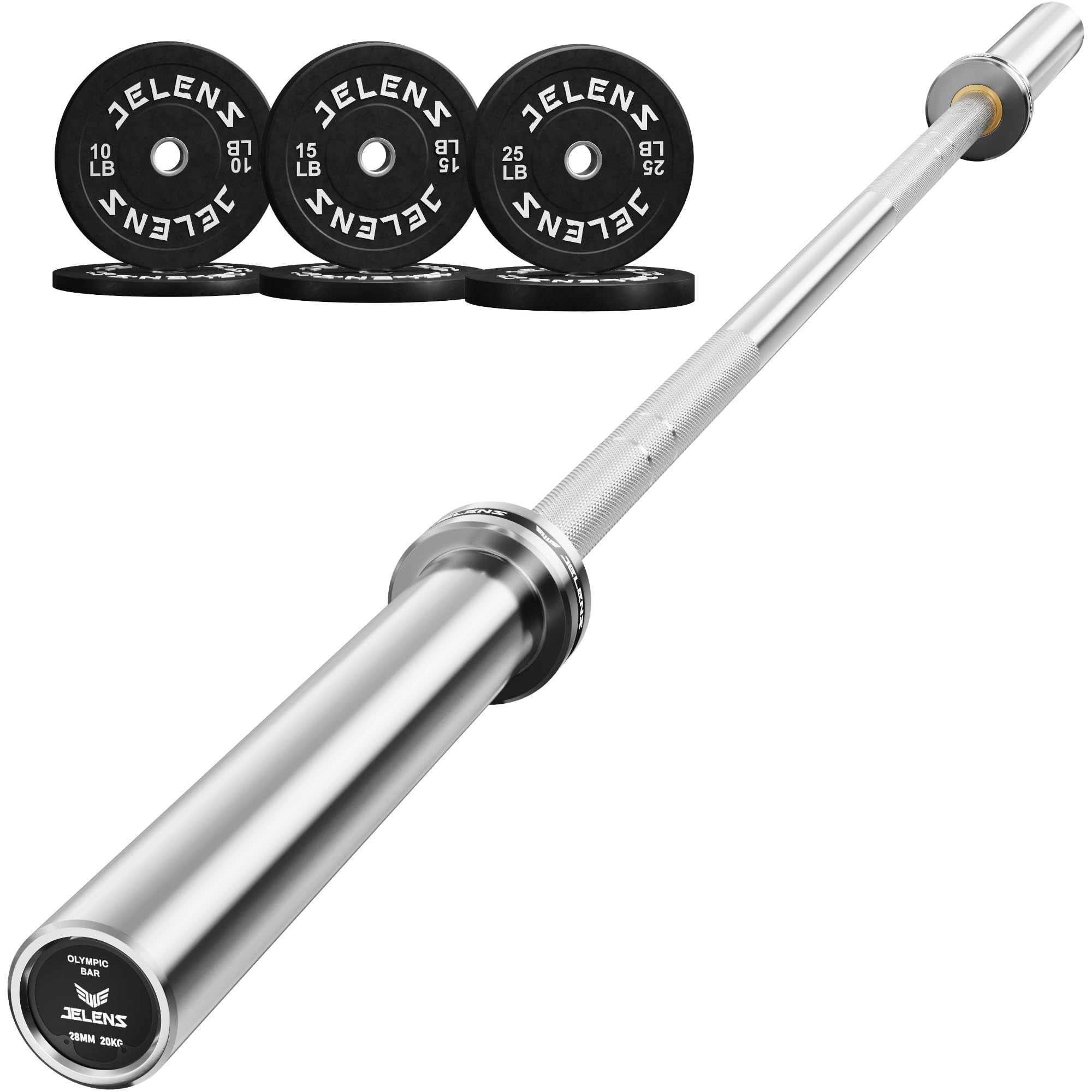
The JELENS 7FT bar splits the difference between a stiff power bar and a whippy deadlift bar with a 28mm shaft diameter and 86.6-inch length. The 150,000 PSI tensile strength and 1,000-pound capacity make it suitable for general strength training, though it lacks the extra whip that deadlift specialists want above 500 pounds.
What stands out is the hybrid sleeve system using needle bearings and brass bushings for ultra-smooth rotation during cleans and snatches — a feature most deadlift bars skip because spin is less critical for pulling. The 1.2mm diamond knurling feels moderate: grippy enough for deadlifts without the aggression that makes overhead presses uncomfortable. Dual knurl marks guide hand placement for both powerlifting and Olympic lifting.
Reviewers praise the hard chrome coating for its corrosion resistance and the overall machining quality. At 47 pounds, it’s slightly heavier than a standard 45-pound bar. This bar excels for lifters who want one bar for everything — deadlifts, squats, presses, and Olympic lifts — rather than a deadlift-specific specialist.
Why it’s great
- Hybrid bearing-bushing sleeves spin smoothly for Olympic lifts
- Hard chrome resists rust better than black oxide or bare steel
- Moderate knurl works for both deadlift and overhead pressing
Good to know
- Limited whip — not ideal for heavy deadlift specificity
- 1,000 lb capacity may limit advanced competitive pullers
6. Titan Fitness Yukon Power Bar
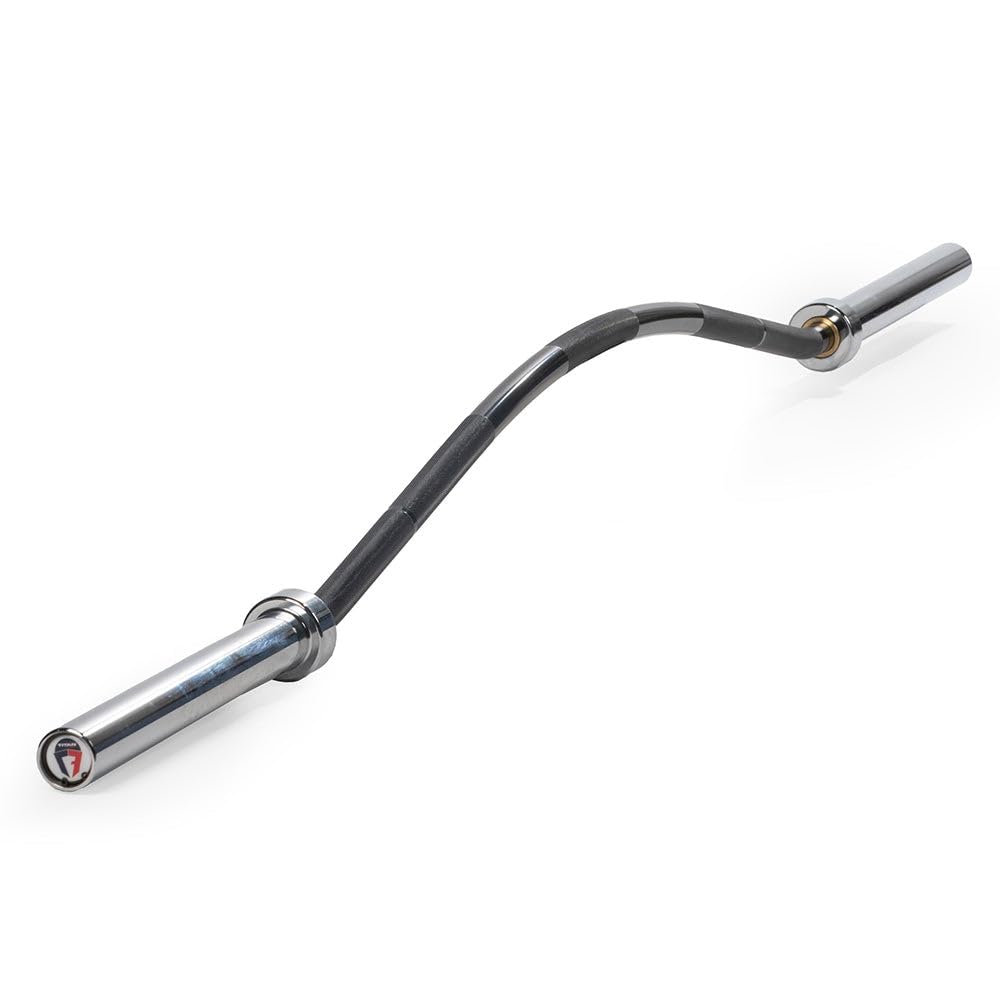
The Titan Fitness Yukon Power Bar stands out for its 6-inch pre-bent curvature, designed to reduce shoulder and back strain during squats and bench presses. While not a traditional deadlift bar, its 32mm thicker shaft and 180,000 PSI tensile rating give it a very stiff feel that some pullers prefer for raw strength deadlifts where minimal whip is desired.
At 96 inches long and 50 pounds, this bar is longer and heavier than a standard Olympic bar — it may not fit compact racks or tight home gym spaces. The medium center knurling provides solid grip for sumo pulling and squatting, but the passive knurling overall is less aggressive than purpose-built deadlift bars. The black oxide coating looks premium but scratches off relatively easily with heavy use.
Users on the heavier side (220+ pounds) report that the curvature improves squat comfort significantly, and the 1,500-pound capacity gives confidence for heavy rack pulls. However, competitive deadlifters looking for maximum whip or aggressive knurl should look at dedicated 27mm options instead.
Why it’s great
- 6-inch curvature reduces shoulder strain during squats
- 180K PSI tensile strength handles heavy rack pulls
- 17.5-inch sleeves fit thick plate stacks
Good to know
- 96-inch length may not fit standard squat racks
- Black oxide coating scratches off with moderate use
7. Bells of Steel Trap Bar (Open Hex)

Bells of Steel’s open-frame trap bar redefines what a deadlift bar can do. Unlike straight bars, the hexagonal shape places the lifter inside the weight load, shifting the center of gravity and reducing shear force on the lower back — ideal for lifters with lumbar issues or those recovering from injury. The open design unlocks split squats, lunges, and farmers walks that a closed hex bar cannot perform.
The rotating sleeves are a rare feature for a trap bar — they reduce wrist torque during heavy pulls just like a professional powerlifting barbell. The built-in deadlift jack eliminates the need for a separate bar jack, saving time between sets. At 47 pounds with a 700-pound capacity, it handles most home-gym loads, though advanced pullers exceeding 600 pounds may push its limits.
Users report the dual-height handles (high and low) accommodate different body sizes and lift variations. The open step-in design keeps the body aligned, and the bar stores flat against the wall. For anyone who wants to deadlift heavy without low-back pain, this trap bar is a game-changer.
Why it’s great
- Open hex design reduces lumbar shear and enables variations
- Rotating sleeves minimize wrist torque under heavy loads
- Built-in jack speeds up plate changes between sets
Good to know
- 700 lb max capacity limits advanced competitive lifters
- Tips slightly when loading a single 45 lb plate
8. PONE FIRST Trap Bar (2-inch Olympic)

The PONE FIRST trap bar offers an affordable entry into hex bar deadlifting with a 30-pound frame and 800-pound weight capacity. The chrome finish and knurled grips provide adequate traction, and the 51-inch width accommodates most foot stances. Assembly takes under ten minutes with basic tools.
The key limitation is sleeve length — at just 8 inches per side, some thick Olympic bumper plates may not fit, especially if you need to load more than three 45s per side. Users report that Rogue bumper plates and some thick cast-iron plates bind on the sleeves. The high handles are better suited for shrugs and trap bar carries than full-ROM deadlifts for taller lifters above 5’10”.
While the 800-pound capacity seems generous, the short sleeves effectively limit maximum load. This bar works best for lighter training sessions, rehab deadlifts, or as a secondary bar for accessory work. For serious heavy deadlifting, the Bells of Steel trap bar offers superior sleeve space and rotating collars at a higher investment.
Why it’s great
- Very affordable hex bar for home gym beginners
- Easy assembly with clear instructions
- Good customer support with full refunds for fit issues
Good to know
- 8-inch sleeves may not fit thick bumper plates
- High handles limit full-ROM deadlifts for tall lifters
9. CAP Barbell Olympic Weight Set
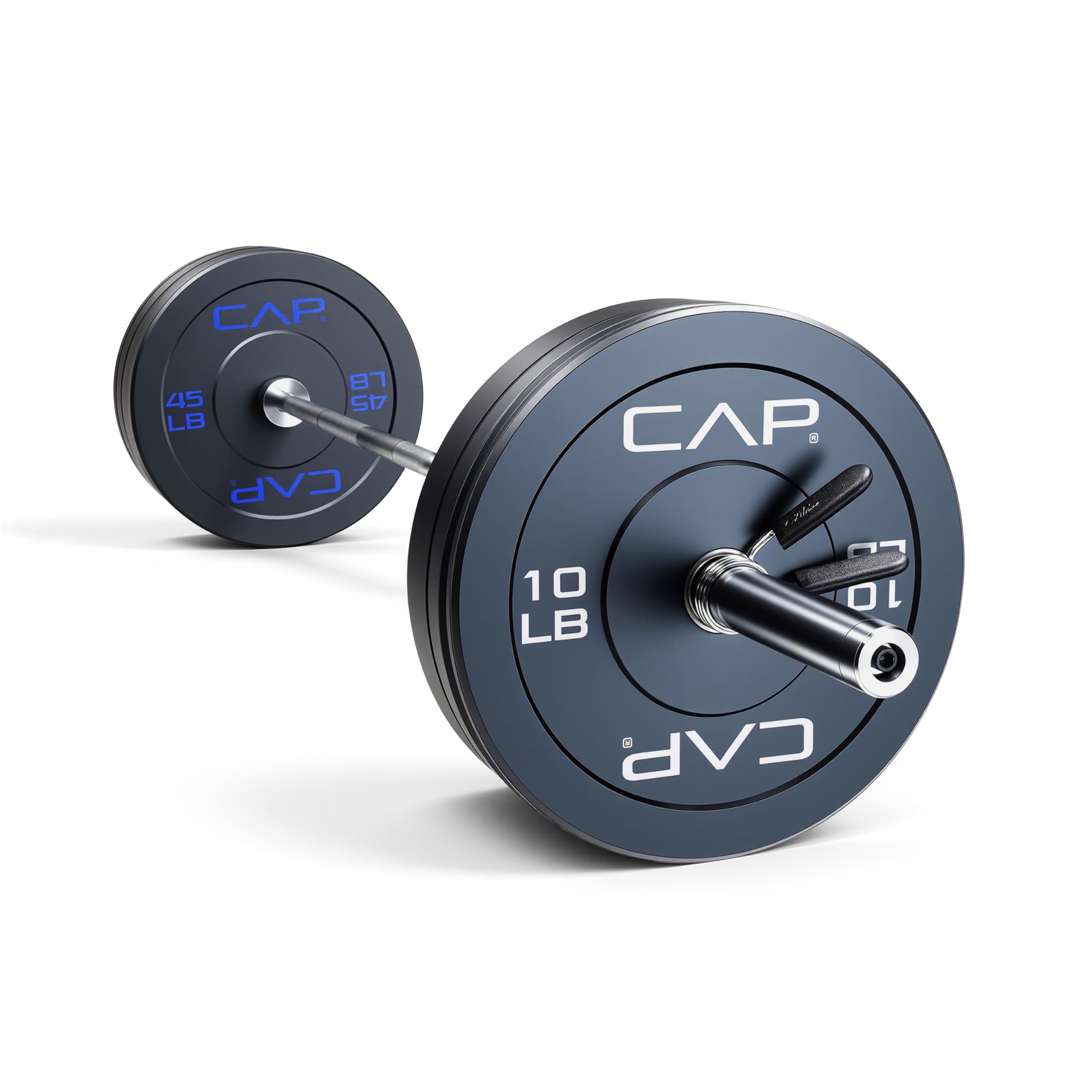
The CAP Barbell Olympic Weight Set bundles a 7-foot bar with bumper plates (10, 25, and 45-pound pairs) and spring clips for a complete starter package. The bar features a 30mm grip diameter (thicker than standard power bars) with a chrome finish and 54,000 PSI tensile strength — adequate for general strength training but far below the tensile ratings required for serious deadlifting.
The 500-pound capacity limits heavy progressive overload, and the 54K PSI steel may develop a permanent bend under max-effort pulls above 400 pounds. Users note that the plates are uniform diameter, which provides consistent lifting mechanics, though the 10-pound plates may require slight modification to fit the sleeves smoothly. The rotating sleeves reduce forearm strain during dynamic lifts, but the bar lacks the aggressive knurling needed for secure grip in sweaty conditions.
This set is best for beginners who need a complete setup to start strength training at home without buying pieces individually. For anyone specifically focused on deadlifting with a purpose-built bar, the budget here would be better allocated toward a standalone deadlift bar and separate plates.
Why it’s great
- Complete set with bar, plates, and clips for quick setup
- Uniform diameter bumper plates protect floors
- Rotating sleeves reduce wrist strain during cleans
Good to know
- 54K PSI bar may bend under heavy deadlift loads
- 30mm grip diameter feels thick for smaller hands
FAQ
Can I use a deadlift bar for squats and bench press?
What does whip feel like during a deadlift?
Is a hex/trap bar better for deadlifts than a straight bar?
How do I prevent a deadlift bar from rusting?
What’s the difference between a power bar and a deadlift bar?
Final Thoughts: The Verdict
For most users, the bar for deadlifts winner is the Synergee Rhino Power Bar because it combines aggressive Cerakote knurl, 190K PSI tensile strength, and a stiff 29mm shaft that handles deadlifts, squats, and bench without compromise. If you want maximum deadlift-specific whip, grab the LOEFT Professional Deadlift Bar for its 27mm shaft and 92-inch length at a competitive price. And for back-friendly deadlifting that doubles as a farmer’s walk and lunge tool, nothing beats the Bells of Steel Trap Bar with its rotating sleeves and built-in jack.

Mo Maruf
I created WellFizz to bridge the gap between vague wellness advice and actionable solutions. My mission is simple: to decode the research and give you practical tools you can actually use.
Beyond the data, I am a passionate traveler. I believe that stepping away from the screen to explore new environments is essential for mental clarity and physical vitality.