Our readers keep the lights on and my smoothie glass nicely filled. As an Amazon Associate, I earn from qualifying purchases.
Aging skin loses elasticity and becomes paper-thin, making even a simple bandage removal feel like a hazard. The wrong adhesive can tear fragile tissue, cause irritation, or leave behind painful residue. Protecting a wound while preserving the surrounding skin requires a very specific type of dressing.
I’m Mohammad Maruf — the founder and writer behind WellFizz. I’ve spent countless hours researching wound care materials, silicone adhesive technologies, and the specific needs of geriatric skin to build this guide around real-world performance data.
This guide breaks down the five best options available today, focusing on gentle adhesion, ease of removal, and proper moisture management. These are the real bandages for elderly skin that balance protection with peace of mind.
How To Choose The Best Bandages For Elderly Skin
One wrong bandage can rip fragile tissue or trap moisture, turning a minor cut into a bigger problem. The selection criteria for geriatric wound care go far beyond the basic grocery-store box. Here is what matters most.
Silicone Adhesive — The Only Safe Choice
Traditional bandage adhesives use acrylic glue that bonds aggressively to the outer layer of skin. For elderly users, that bond often exceeds the skin’s tensile strength, causing tearing upon removal. Silicone adhesives form a gentle, low-tack bond that adheres firmly to dry skin but releases without trauma. Every product on this list uses silicone as the contact layer.
Pad Type — Absorbency Without Sticking
A wound pad that dries out and fuses to the wound bed is disastrous for fragile healing tissue. Look for non-stick silicone-coated pads or foam dressings that wick fluid away. Foam dressings are ideal for moderate-to-heavy exudate, while a simple silicone fabric bandage works for light bleeding or post-procedure protection.
Size and Border Seal
A 4×4 inch foam dressing covers larger areas like bedsores or surgical incisions. A standard 1.63×4 inch fabric bandage fits finger cuts or small scrapes. The border must have sufficient adhesive real estate to stay sealed through movement and moisture, yet lift cleanly when needed. Both dimensions are represented in this guide.
Quick Comparison
On smaller screens, swipe sideways to see the full table.
| Model | Category | Best For | Key Spec | Amazon |
|---|---|---|---|---|
| Dimora Silicone Foam Dressing | Premium Foam | High-drainage wounds, post-op | Absorbs 15x its weight in fluid | Amazon |
| CareUs Silicone Adhesive Bandages | Mid-Range Fabric | Daily cuts, fragile skin | 1.63″x4″ XL fabric, holds 24h | Amazon |
| Niceful Super Absorbent Wound Dressing | Mid-Range Foam | Leg ulcers, heavy exudate | 20x absorption capacity SAP core | Amazon |
| Hysimedy Silicone Bandages | Premium Fabric | Multi-lift inspection, geriatric | 40-count, 4-sided sealed silicone pad | Amazon |
| 20Pcs Silicone Foam Dressing 4×4 | Budget Foam | Waterproof protection, pressure sores | 2.4×2.4 inch absorbent pad | Amazon |
In‑Depth Reviews
1. Dimora Silicone Foam Dressing Wound Bandage

The Dimora foam dressing uses a five-layer construction that can absorb up to 15 times its own weight in wound fluid. The silicone adhesive border is A+ rated for hypoallergenic performance — it sticks securely to dry skin yet detaches without pulling fragile tissue. The absorbent pad size of 2.5×2.5 inches is ideal for covering moderate-to-high exudate wounds.
Real users report painless changes even on sensitive post-surgical incisions, with the foam protecting underlying tissue from compression and friction. The waterproof semi-permeable PU outer layer keeps external contaminants out while allowing vapor exchange, so the wound stays moist but not macerated. This versatility makes it the top pick for anyone managing chronic wounds or post-operative recovery.
The foam’s silver infusion (present in this version) adds an extra layer of antimicrobial protection, which is a meaningful advantage for elderly patients with slower healing rates. A single dressing can remain in place for multiple days, reducing the trauma and cost of daily changes.
Why it’s great
- Extremely high absorbency for draining wounds
- Painless removal with no skin tearing reported
- Waterproof, breathable, and silver-infused for infection control
Good to know
- Delivery timelines can sometimes slip
- Higher investment per dressing compared to standard adhesive bandages
2. CareUs Silicone Adhesive Bandages Large Size

CareUs designed this bandage specifically for sensitive and elderly skin, using a heavy-duty silicone adhesive that holds up to 24 hours yet removes cleanly. The extra-large 1.63×4 inch flexible fabric conforms to joint movement without bunching or rolling edges, making it suitable for knees, elbows, and fingers.
Each bandage is sterile and individually wrapped, which is essential for post-procedure wound care where contamination is a concern. The breathable, latex-free construction means no allergic reactions on already fragile skin. Customers describe it as a “must-have before dermatology procedures” because it spares the skin from the harsh removal that standard bandages cause.
The 32-count pack includes four sleeves of eight bandages each, offering a solid daily-use stock for minor cuts, scrapes, or surgical site coverage. The fabric is waterproof, so it withstands hand washing and light moisture exposure without losing adhesion.
Why it’s great
- Stays on for a full day without edge lifting
- Pain-free removal even on very thin skin
- Sterile, individually wrapped for hygiene
Good to know
- Not designed for heavy-drainage wounds
- Fabric may feel slightly stiff before warming to body temperature
3. Niceful Silicone Super Absorbent Wound Dressing
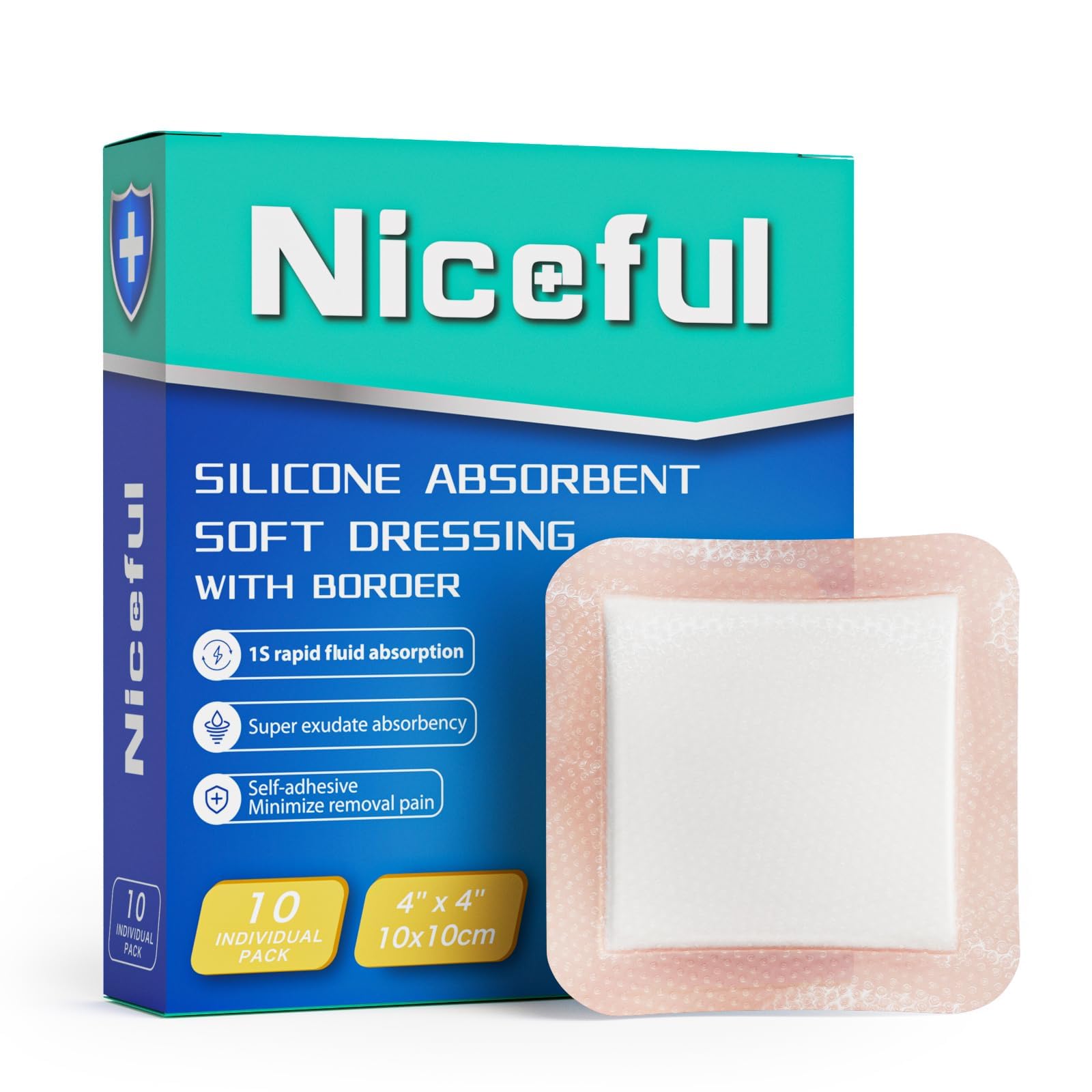
The Niceful dressing boasts a 20x absorption capacity thanks to its super absorbent polymer (SAP) core. This material locks fluid away from the wound bed, preventing the surrounding skin from becoming saturated and macerated — a critical feature for managing diabetic foot ulcers, leg ulcers, or pressure sores that produce heavy exudate.
The self-adhesive silicone border eliminates the need for secondary tape or wrap. Users report that the dressing stays in place through showers and daily movement, and that removal is comfortable even on the joint areas. The soft contact layer does not adhere to the wound itself, so aggressive tissue regrowth is left undisturbed during changes.
Each pack contains 10 dressings, making it a more budget-conscious choice for chronic wound management. The 4×4 inch size with a 2.4×2.4 inch absorbent pad is well-suited for covering wounds on the legs, sacrum, or arms while leaving a wide adhesive margin for secure sealing.
Why it’s great
- Exceptional fluid lock prevents skin maceration
- Self-adhesive border — no tape required
- Painless removal that does not tear fragile skin
Good to know
- Not designed for low-exudate wounds where a standard bandage suffices
- Box has fewer units per pack compared to fabric bandages
4. Hysimedy Silicone Bandages for Sensitive Fragile Skin

Hysimedy offers 40 hospital-grade bandages in a single order, each sized at 1.63×4 inches. The silicone adhesive surrounds a 1.1×2.05 inch non-stick central pad that is sealed on all four sides. This design allows the wearer to lift and re-seat the bandage repeatedly to inspect the wound without losing adhesion or causing skin trauma.
The flexible non-woven fabric combined with a PU film outer layer allows oxygen and vapor to pass through while keeping water out. One 76-year-old reviewer noted that the bandage peels away without leaving purple marks or raw patches — a direct testimony to its compatibility with thin, fragile skin. The pad absorbs blood and light exudate effectively without drying out.
The manufacturer holds FDA, ISO13485, and CE certifications, reflecting a genuine commitment to medical-grade quality. For caregivers who need to change dressings frequently across multiple wounds, the 40-count volume provides a reliable supply without constant reordering.
Why it’s great
- Large volume per pack suitable for daily use
- Re-positionable without skin damage
- Certified medical-grade manufacturing
Good to know
- Individually wrapped in plastic, not the most eco-friendly
- Best for light to moderate exudate, not heavy drainage
5. 20Pcs Silicone Foam Dressing 4×4 Gentle Border

This 20-pack box of 4×4 inch silicone foam dressings is a cost-conscious entry point for wound care. Each dressing has a 2.4×2.4 inch absorbent pad surrounded by a gentle silicone border. The foam is highly absorbent and suitable for diabetic heel wounds, bed sores, and other pressure injuries where fluid management and cushioning matter.
Users highlight that the dressing remains sealed even after a shower, with the waterproof outer film preventing leakage. A wound care nurse reviewer specifically approved this product for heavy-drainage wounds, noting that it re-sticks easily if repositioned mid-change. The silicone contact layer does not irritate sensitive skin and peels away without pain.
The box of 20 offers the best per-unit pricing among the foam options here, making it a sensible choice for households that go through multiple dressings per week. The absorbent pad is slightly smaller than the Dimora and Niceful options, which is worth checking against your wound dimensions before buying.
Why it’s great
- Strong value for the number of dressings per box
- Waterproof seal holds through showering
- Painless removal with no skin irritation
Good to know
- Border can leak if applied with wrinkles
- Absorbent pad is smaller than some competitors
FAQ
Can I use regular bandages on elderly fragile skin?
How often should I change a foam dressing on a draining wound?
What size bandage do I need for a bedsore on the sacrum?
Final Thoughts: The Verdict
For most users, the bandages for elderly skin winner is the Dimora Silicone Foam Dressing because it handles moderate-to-heavy drainage, protects fragile tissue with its cushioned foam, and removes without pain. If you need a daily-use fabric bandage for minor cuts, grab the CareUs Silicone Adhesive Bandages. And for a budget-friendly foam option that still delivers reliable waterproof performance, the 20Pcs Silicone Foam Dressing is a solid choice.

Mo Maruf
I created WellFizz to bridge the gap between vague wellness advice and actionable solutions. My mission is simple: to decode the research and give you practical tools you can actually use.
Beyond the data, I am a passionate traveler. I believe that stepping away from the screen to explore new environments is essential for mental clarity and physical vitality.