Our readers keep the lights on and my smoothie glass nicely filled. As an Amazon Associate, I earn from qualifying purchases.
Bed sores on the buttocks and sacrum are among the most painful and slowest-healing wounds, often requiring a dressing that stays in place during movement, wicks away moisture, and cushions the area without sticking to fragile skin. The wrong bandage can tear newly formed tissue, prolong recovery, and add unnecessary discomfort for both caregivers and patients. Choosing a dressing specifically engineered for pressure ulcers is not just about covering the wound—it is about creating an environment that actively prevents further breakdown.
I’m Mohammad Maruf — the founder and writer behind WellFizz. I research medical-grade wound care products by analyzing clinical specifications like absorption ratios, exudate management layers, and adhesive biocompatibility to find what truly works for bed sore management.
After comparing absorbency rates, adhesive strength, and breathability across multiple sacral dressings, I have identified the top performers that offer real protection and comfort. Use this guide to find the bandages for bed sores on buttocks that suit your stage of healing and care environment.
How To Choose The Best Bandages For Bed Sores On Buttocks
Selecting the right dressing for a sacral pressure ulcer requires understanding how the product interacts with exudate, fragile skin, and movement. A one-size-fits-all approach often leads to frustration and stalled healing. Focus on these three characteristics.
Absorbent Core and Exudate Management
Bed sores on the buttocks can produce moderate to heavy exudate, especially during stages 2 and 3. A dressing with a multi-layer absorbent core—ideally one that locks fluid into a gel within the foam—prevents the wound from becoming macerated. Look for dressings that absorb at least 15 times their weight in fluid, as this reduces the frequency of changes and protects the healthy skin surrounding the wound.
Adhesive Border and Skin Compatibility
The sacral area is curved, moves constantly, and is subject to pressure from sitting and lying down. A dressing with a wide, gentle silicone adhesive border ensures it stays in place without shifting or curling at the edges. Hypoallergenic silicone is critical because it adheres securely to dry skin but will not stick to the moist wound bed, allowing for pain-free removal that does not strip new tissue.
Breathability and Waterproof Barrier
A semi-permeable polyurethane (PU) top film strikes the necessary balance: it keeps urine, sweat, and external contaminants from reaching the dressing while allowing oxygen and water vapor to pass through. This breathability reduces the risk of infection and skin breakdown caused by trapped moisture. A waterproof yet breathable dressing is non-negotiable for bed sores in the buttocks area, where incontinence and friction are common challenges.
Quick Comparison
On smaller screens, swipe sideways to see the full table.
| Model | Category | Best For | Key Spec | Amazon |
|---|---|---|---|---|
| Dimora Ag Silver Sacrum Foam | Silver-Infused | Stage 3-4 with infection risk | 15x fluid absorption capacity | Amazon |
| ZMZPA Sacral Foam Dressing | Premium Foam | High-exudate wounds and prevention | 15x fluid absorption, 4-layer core | Amazon |
| lvonge Sacrum Silicone Foam | Mid-Range Foam | Stage 2-3, sensitive skin care | 6-layer structure, 25-30x absorption | Amazon |
| NANTONG YOJO Silicone Foam 20 Pk | Value Pack | Frequent changes, diabetic wounds | 2.4 x 2.4 inch absorbent pad | Amazon |
| Dr. Med Hydrocolloid Dressing | Hydrocolloid | Stage 1-2, low exudate wounds | CMC gel-forming inner layer | Amazon |
In‑Depth Reviews
1. Dimora Ag Silver Sacrum Foam Wound Dressing

This dressing from Dimora stands apart because of its silver-infused foam core, which releases ions in the presence of wound fluid to reduce bacterial colonization—a crucial feature for bed sores at higher stages where infection risk is elevated. The 7×7 inch size offers generous coverage for the sacrum, with a foam pad dimension of 5.5×4.9 inches that handles heavy exudate without leaking. User reports highlight dramatic healing acceleration for incisions and chronic sores, with many noting it requires fewer changes than standard foam or gauze.
The medical-grade silicone adhesive borders are the widest in this comparison, ensuring the pad stays seated against the curved buttocks during turning and repositioning. Multiple caregivers report that removal is completely painless and does not leave residue or tear the peri-wound skin—a direct result of the A+ hypoallergenic silicone contact layer. The semi-permeable PU film provides a waterproof seal that withstands occasional incontinence without absorbing moisture.
Some users mention that delivery can be delayed, so ordering ahead of need is wise for ongoing care. The silver content adds to the unit cost, making it a premium option for those managing stage 3 or 4 ulcers where antimicrobial activity is medically indicated. For its combination of infection control, cushioning, and gentle adhesion, this is the top performer for serious bed sore care.
Why it’s great
- Silver ions actively reduce bacterial load within the dressing
- Entire sticky surface prevents pad migration on the sacrum
- Painless removal without skin stripping or residue
Good to know
- Higher cost per dressing compared to non-silver foam options
- Delivery times can be longer than expected
2. ZMZPA Sacral Foam Dressing 7×7
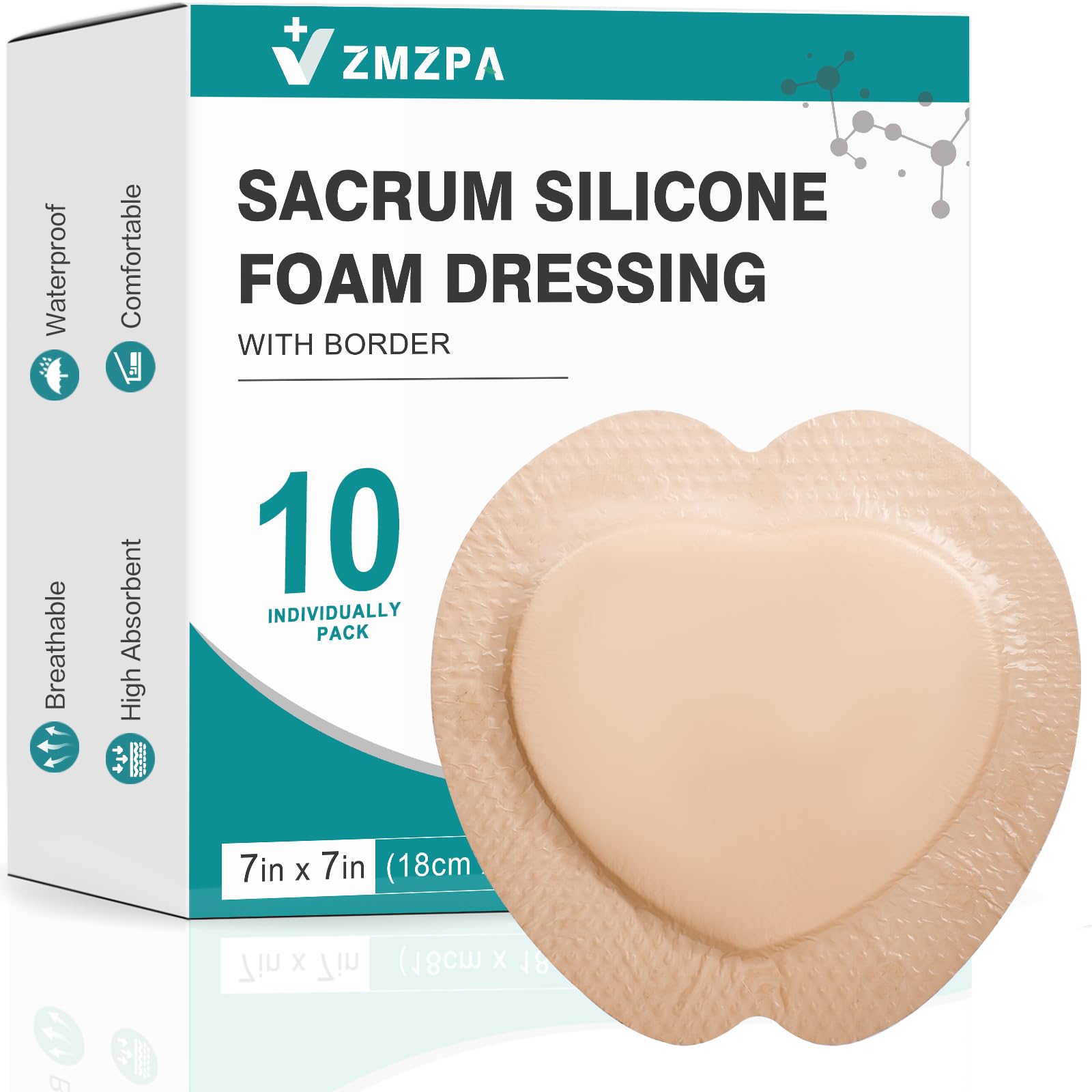
The ZMZPA sacral dressing uses a dedicated four-layer foam construction designed to manage the high-exudate environment common in pressure ulcers. A thick absorbent core locks fluid away from the wound bed using an SAF fluid-lock layer, significantly reducing the risk of maceration around the sore. The foam itself provides noticeable cushioning that users with tailbone pressure and weight loss report as comfortable and redistributive, helping prevent further skin breakdown during bed rest.
Medical-grade hypoallergenic silicone allows secure adhesion to dry skin without grabbing the wound itself, and the 7×7 inch format with a 5.3×4.3 inch absorbent pad fits the sacral and intergluteal region well. One reviewer with a broken sacrum noted that these dressings prevent tears from sliding against bedding. Another user with a severe burn saw complete healing within two weeks, demonstrating the dressing’s ability to maintain an optimal moist environment for tissue regeneration.
Self-application is difficult due to the location—most users recommend a caregiver for placement. The adhesive is strong enough to stay put for extended wear, but a few users note that the padding is effective enough to justify the price per unit. This is an excellent choice for home care or hospice settings where pressure ulcer prevention is the priority, not just treatment.
Why it’s great
- Four-layer SAF core provides superior fluid lock to prevent maceration
- Thick foam cushioning distributes pressure away from the sore
- Adheres securely to dry skin for extended wear periods
Good to know
- Requires a second person for proper application on the sacrum
- Strong adhesive may be challenging to reposition if misaligned
3. lvonge Sacrum Silicone Foam Dressing 7×7
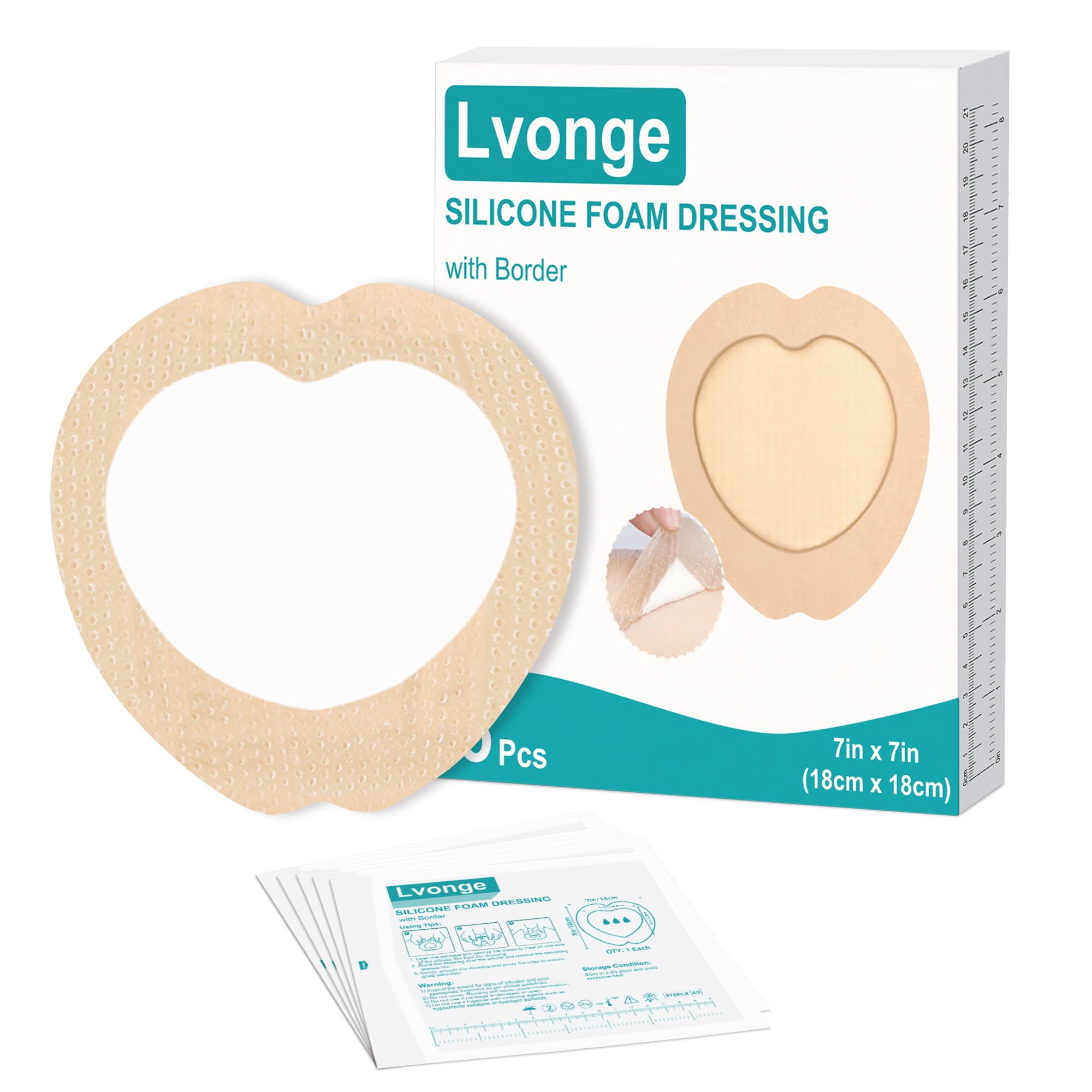
The lvonge dressing features a sophisticated six-layer structure that includes an extra 4mm absorbent layer on top of the standard foam core, giving it the highest absorption claim in this comparison at 25 to 30 times its weight in exudate. This makes it particularly well-suited for stage 2 and 3 bed sores that produce moderate to heavy drainage. The hypoallergenic silicone contact layer is A++ grade and ensures that removal will not traumatize the healing tissue, which is critical for fragile, elderly skin.
Waterproof and breathable PU film protects the dressing from external moisture while allowing oxygen exchange to support healing. Nurse reviewers confirm that these stay put during patient turning and do not curl at the edges like thinner border dressings. The 7×7 inch size covers the entire sacral area with room to spare, and each dressing is individually packaged for hygiene and easy storage in a care cart or bedside drawer.
One recurring note from users is that the adhesive border is thin, which can make handling and application tricky for unsteady hands—the dressing is very sticky, so precise placement matters. The pack size of 5 is smaller than some competitors, so frequent wound changes may require reordering sooner. Despite this, the outstanding absorbency-to-price ratio makes this a strong mid-range option for anyone needing high fluid management without stepping up to silver-infused pricing.
Why it’s great
- Highest absorption rate at 25-30x its weight in exudate
- Extra 4mm layer heavily reduces dressing change frequency
- Hypoallergenic silicone is gentle enough for fragile skin
Good to know
- Thin adhesive border can curl if not applied carefully
- Only 5 dressings per pack, which may be insufficient for daily changes
4. NANTONG YOJO Silicone Foam Dressing 20 Pack

For caregivers who need to change dressings frequently without breaking the budget, the NANTONG YOJO 20-pack delivers solid silicone foam performance at a low per-dressing cost. Each 4×4 inch dressing has a 2.4×2.4 inch absorbent pad, making it a better fit for smaller sores or as a protective pad for stage 1 bedsores and high-risk pressure areas. The adhesive is described by users as gentle yet secure, staying in place through daily activities and removal without irritation.
The construction is latex-free and uses medical-grade silicone as the wound contact layer, preventing secondary damage when removing the dressing. Diabetic patients using these for heel wounds report steady healing progress, and the waterproof backing provides confidence against moisture from bathing or incontinence. Each piece is individually wrapped, which maintains sterility and makes the pack easy to carry between home and clinical settings.
The primary limitation is size—the 4×4 inch format may not provide sufficient coverage for larger sacral ulcers or those extending into the intergluteal cleft. Some users note that the adhesive border, while gentle, does not adhere as aggressively as premium foam dressings, potentially shifting during heavy movement. For low-exudate wounds and preventative cushioning on a budget, this pack offers excellent value and reliable basic protection.
Why it’s great
- High count of 20 dressings reduces per-change cost
- Gentle silicone adhesive for pain-free removal on fragile skin
- Individually wrapped for sterile application anywhere
Good to know
- Smaller 4×4 size may not cover larger sacral ulcers
- Adhesive is less aggressive than premium sacral-specific dressings
5. Dr. Med Hydrocolloid Wound Dressing 6×6
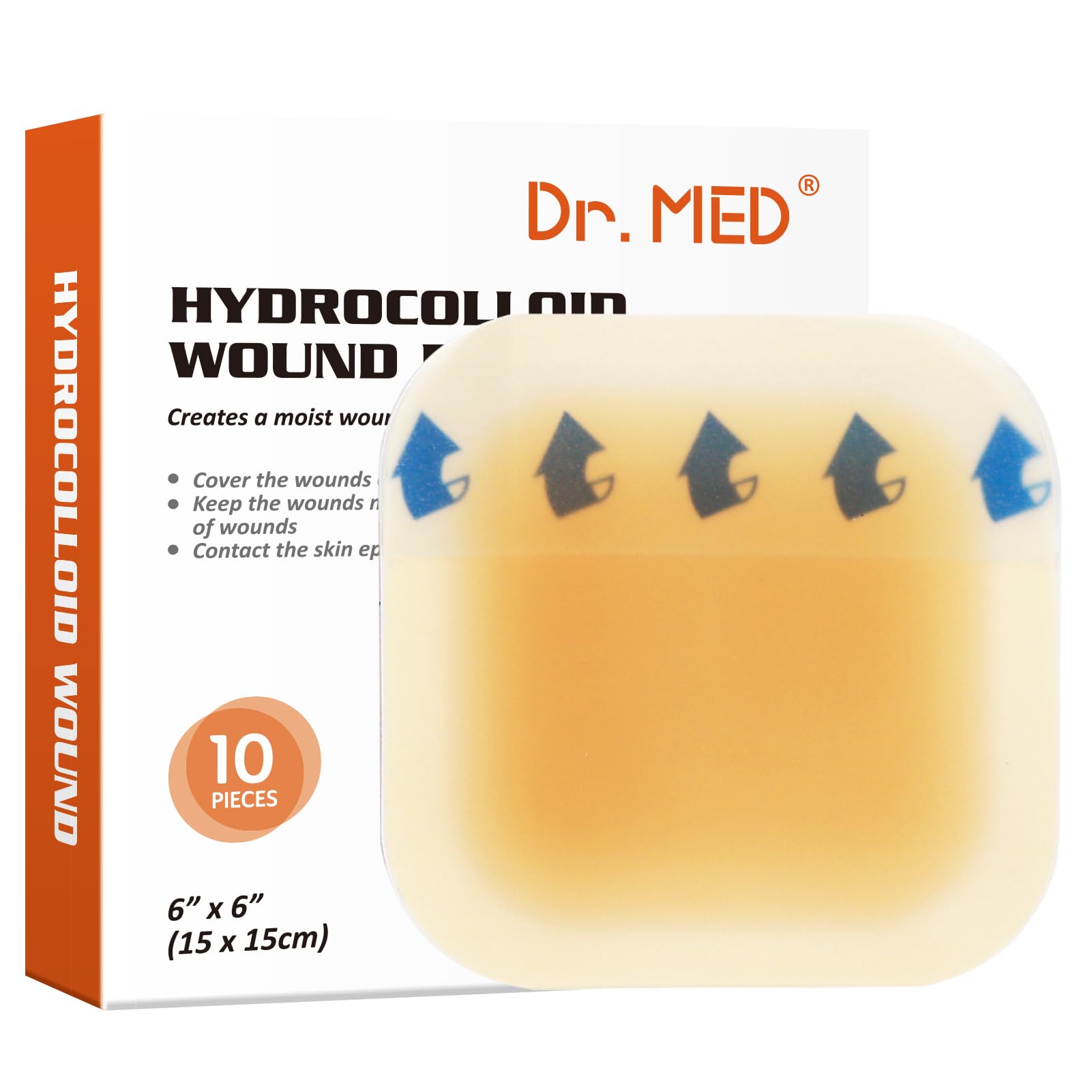
Unlike foam dressings, Dr. Med’s hydrocolloid dressing works by reacting with wound exudate to form a gel-like covering that maintains a moist healing environment. It is composed of medical hot melt glue and sodium carboxymethyl cellulose (CMC), which creates a soft, rubbery gel pad over the wound as it absorbs fluid. This is best suited for stage 1 and 2 bed sores with light exudate, as well as abrasions and superficial wounds that require protection without aggressive fluid management.
The 6×6 inch size provides ample surface area, and the waterproof PU film backing seals out contaminants while the dressing is intact. Users with road rash and minor burns praise the dressing for its pain relief and protective cushioning, noting that it remains pliable and comfortable on curved surfaces like the elbow, wrist, and sacrum. The gel formation during wear makes removal easy, and the dressing stays stuck well on non-flexing areas.
The limitation for bed sore care is that hydrocolloid dressings are not designed for moderate to heavy exudate—they can leak or break down if oversaturated. For sores with heavy drainage, foam or silver foam dressings are more appropriate. Some users report that the edges can peel prematurely on high-movement joints, so adding medical tape or an Ace wrap may be necessary for the sacral area. It is a solid choice for early-stage pressure ulcer prevention and superficial wound healing.
Why it’s great
- Gel-forming action maintains ideal moist wound environment
- Excellent pain relief and cushioning for superficial wounds
- Waterproof backing provides reliable contamination protection
Good to know
- Not suitable for moderate to heavy wound exudate
- Edges may peel off on flexing areas around the sacrum
FAQ
Can I use hydrocolloid bandages for stage 3 bed sores?
How often should I change a sacral foam dressing?
Will a silicone bandage stick to the open wound?
Final Thoughts: The Verdict
For most users, the bandages for bed sores on buttocks winner is the Dimora Ag Silver Sacrum Foam because it combines antimicrobial silver protection with gentle silicone adhesion and thick cushioning for high-stage ulcers. If you want maximum absorbency for heavy exudate at a lower cost, grab the lvonge Sacrum Silicone Foam. And for early-stage prevention or superficial wound care, nothing beats the low-cost coverage of the Dr. Med Hydrocolloid Dressing.

Mo Maruf
I created WellFizz to bridge the gap between vague wellness advice and actionable solutions. My mission is simple: to decode the research and give you practical tools you can actually use.
Beyond the data, I am a passionate traveler. I believe that stepping away from the screen to explore new environments is essential for mental clarity and physical vitality.