Our readers keep the lights on and my smoothie glass nicely filled. As an Amazon Associate, I earn from qualifying purchases.
Touching a hot pan, brushing against a tailpipe, or splashing grease from a skillet — the immediate sting of a burn is a signal that your skin barrier is compromised. Choosing the wrong dressing for that fragile tissue can mean the difference between a clean heal and a painful, stuck-on gauze removal that reopens the wound.
I’m Mohammad Maruf — the founder and writer behind WellFizz. I’ve spent years analyzing wound-care material science, specifically the adhesion profiles, moisture-retention ratios, and antimicrobial barriers that define effective burn dressings.
Whether you are stocking a home first-aid kit or treating a kitchen-splash injury, finding the right cover matters. This guide breaks down the silicone, hydrocolloid, petrolatum, and hydrogel options so you can choose the best bandage for burns with confidence.
How To Choose The Best Bandage For Burns
Burn wounds differ from abrasions or lacerations because the skin has lost its protective barrier and is often weeping fluid. The wrong dressing can desiccate the wound or fuse to new tissue. Three physical principles guide every effective burn bandage: moisture retention, non-adherence, and infection control.
Material Matters: Hydrocolloid, Hydrogel, or Petrolatum
Hydrocolloid pads absorb exudate and form a gel that cushions the wound without sticking. Hydrogel sheets deliver active cooling and rehydrate the tissue, making them ideal for the first 24 hours after a burn. Petrolatum-impregnated gauze (Xeroform-style) creates a physical barrier that prevents the mesh from adhering to the wound bed while keeping the area moist. Each serves a different window in the healing timeline.
Adhesion Profile and Wound Contact Layer
A burn bandage must stay in place without bonding to the burn itself. Look for dressings explicitly labeled “non-adherent” or “non-stick” in the wound-contact layer. Silicone-coated meshes and petrolatum gauze accomplish this through a low-friction coating. Hydrocolloid pads achieve it by swelling into a self-contained gel that lifts away cleanly during removal.
Size and Sterility
Burns can vary from a fingertip contact to a palm-sized splash. Sterile, individually wrapped dressings are essential — non-sterile fabric introduces bacteria into an area where the immune barrier is already broken. A 4×4 inch pad covers the average hand or forearm burn without requiring multiple overlapping pieces.
Quick Comparison
On smaller screens, swipe sideways to see the full table.
| Model | Category | Best For | Key Spec | Amazon |
|---|---|---|---|---|
| BurnFix® 4-Pack | Hydrogel | Immediate cooling relief | Hydrogel + Tea Tree Oil & Aloe Vera | Amazon |
| Carbou Xeroform 4×4 | Petrolatum Gauze | Large burn coverage | 25 individually wrapped 4×4 pads | Amazon |
| Nexcare Hydrocolloid | Hydrocolloid | Small burns & blisters | Water-resistant; sticks to damp skin | Amazon |
| First Aid Only Water Jel | Gel Dressing | Kitchen & workshop burns | Foil-packed sterile 4×4 pad | Amazon |
| EVERLIT Xeroform | Petrolatum Gauze | Post-surgical & delicate wounds | 2×2 fine mesh petrolatum pad | Amazon |
In‑Depth Reviews
1. BurnFix® 4-Pack Hydrogel Dressing

BurnFix delivers a gel-soaked 4×4 pad that provides immediate cooling on contact — exactly what a fresh burn needs in the first minutes. The hydrogel matrix is infused with Tea Tree Oil and Aloe Vera, two botanicals known for soothing irritated tissue and supporting a moist healing environment. Unlike dry gauze that can fuse to a weeping wound, this dressing lifts away cleanly during changes.
The four individually wrapped pads make it easy to stash one in a kitchen drawer, one in a camping pack, and one in a vehicle first-aid kit. Reviewers consistently report that the cooling effect reduces the initial burning sensation within seconds, and the non-adherent design prevents the painful tearing that dry dressings cause. It is rated for first and second-degree burns, including sunburns and minor chemical splashes.
One common note is that the packaging instructions are poorly translated, and some users wish the pad were slightly larger for bigger burn areas. But for the average palm-sized kitchen or workshop burn, the BurnFix pad delivers fast, predictable relief that promotes clean healing without sticking.
Why it’s great
- Hydrogel formulation cools and soothes instantly
- Infused with Tea Tree Oil and Aloe Vera for natural comfort
- Non-adherent design avoids trauma during dressing changes
Good to know
- Pad size may feel small for larger burn areas
- Packaging instructions have translation issues
2. Carbou Medical Xeroform Petrolatum Dressing 4×4
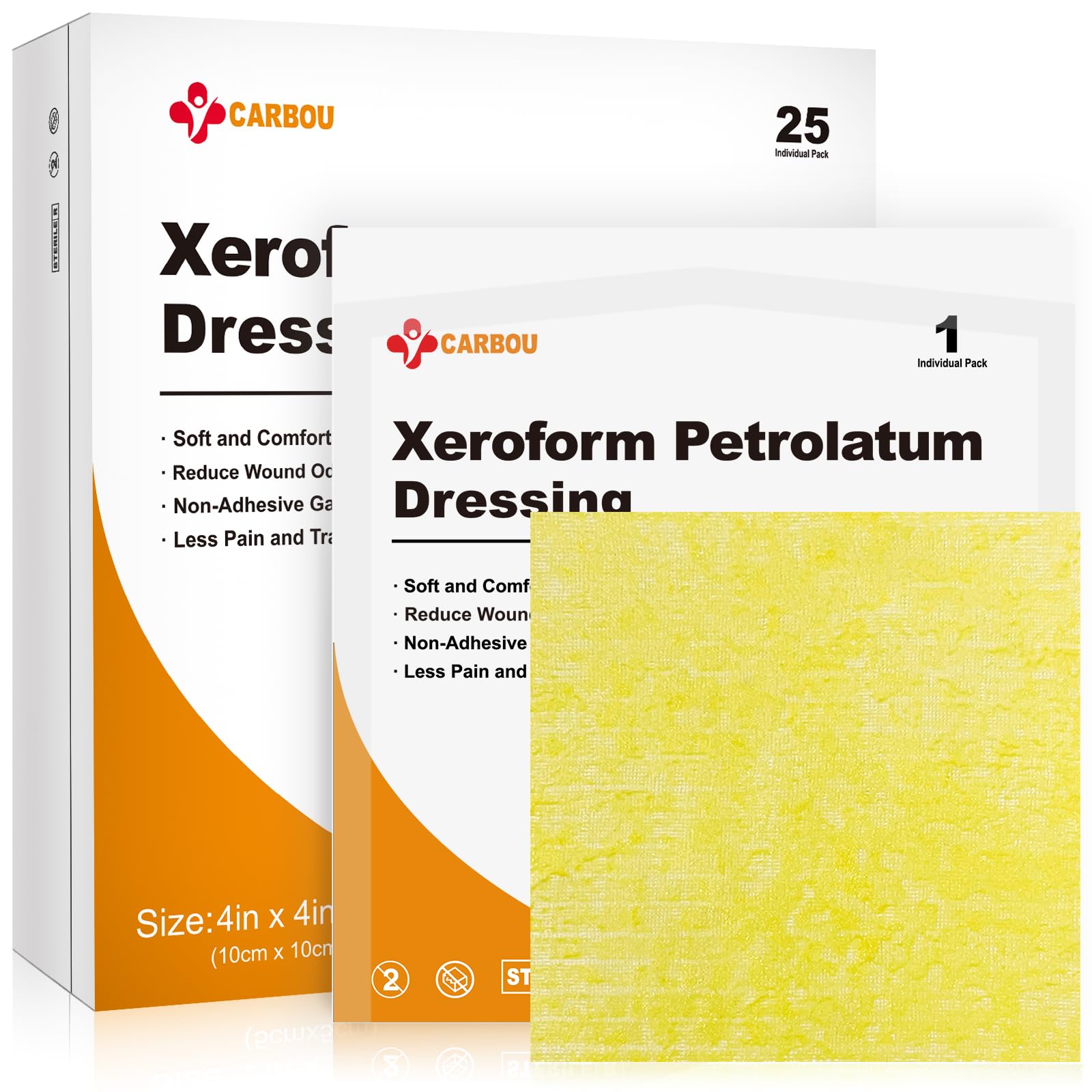
Carbou’s Xeroform dressing uses a fine mesh gauze impregnated with petrolatum and 3% Bismuth Tribromophenate — the same formula hospitals rely on for burns, skin grafts, and surgical incisions. The petrolatum base prevents the gauze from sticking to the wound bed, while the Bismuth compound helps control odor and maintain a cleaner healing environment. At 4×4 inches, these pads cover larger areas like forearm burns or donor sites without needing multiple overlapping pieces.
Individual sterile packaging ensures each pad remains uncontaminated until needed, which is critical when treating an open burn where infection risk is highest. Reviewers with thin or fragile skin — common in older adults — note that these pads prevent the tearing that occurs with standard adhesive bandages. Many users also cut the pads to custom shapes for curved areas like the ankle or elbow without the edges fraying.
The trade-off is that some users find the dressing dries out after about 24 hours, requiring a secondary cover or more frequent changes compared to hydrogel alternatives. For a bulk supply that matches hospital-grade materials, however, the Carbou pack offers strong value for ongoing wound care.
Why it’s great
- Hospital-grade petrolatum gauze with antimicrobial Bismuth
- 25 individually sterile pads for bulk supply
- Can be cut to size without fraying
Good to know
- May dry out after 24 hours and need replacement
- Requires overtaping with secondary gauze or wrap
3. Nexcare Advanced Healing Hydrocolloid Pads

Nexcare’s hydrocolloid pads work differently from hydrogel or petrolatum dressings — they absorb wound fluid and swell into a cushioned gel pad that stays in place for days. The adhesive is water-resistant and sticks reliably even to damp skin, making it a strong choice for burns on fingers or knuckles where movement and moisture are constant. The stretchy backing moves with the body without peeling at the edges.
These pads are designed for minor burns, blisters, and scrapes rather than full-thickness burns. Users with thin, fragile skin — particularly older adults or those on thyroid medication — report that the hydrocolloid material does not trigger allergic reactions and stays intact through hand-washing and showering. The unique contour shape helps the seal hold better around curved surfaces than standard rectangular bandages.
The main limitation is that a hydrocolloid pad cannot cool a burn in the way a hydrogel can — it is best applied after the initial heat has subsided. It is also limited to six pads per pack, so heavy users may burn through supply quickly. For long-wear protection on small burns, though, the Nexcare delivers strong adhesive performance without skin irritation.
Why it’s great
- Stretchy, water-resistant adhesive stays on for days
- Hypoallergenic and latex-free for sensitive skin
- Gel pad cushions and absorbs wound fluid
Good to know
- Does not provide active cooling for fresh burns
- Only six pads per pack — limited quantity
4. First Aid Only Water Jel Burn Dressing 4×4

Water Jel from First Aid Only is a gel-soaked dressing packed in a durable foil pouch with a five-year shelf life, making it a favorite for emergency kits, workshop drawers, and vehicle first-aid bags. The medical-grade non-woven material holds a sterile gel that cools the burn on contact and helps prevent the wound from blistering. Reviewers describe immediate pain reduction after touching a hot stove or camp stove — in some cases reporting no visible blistering the next morning.
Each pack contains three individually wrapped 4×4 pads, enough for multiple incidents or one larger burn with overlapping coverage. The gel is formulated to stay moist for several hours under a secondary wrap, and the foil pouch protects the dressing from heat damage during storage. Paramedics and emergency responders have used Water Jel for decades, which speaks to its reliability in real-world burn scenarios before medical care arrives.
The minor downside is that the gel can migrate if the pad is compressed, and some users note that the pad is best for first-degree surface burns rather than deep second-degree tissue damage. For quick-response kitchen and workshop burns, the Water Jel remains a proven performer with an established clinical track record.
Why it’s great
- Foil-packed with 5-year shelf life for long-term storage
- Gel formulation provides immediate cooling and pain relief
- Established clinical track record with EMS use
Good to know
- Only 3 pads per pack — limited quantity
- Best for first-degree burns; may need stronger coverage for deeper burns
5. EVERLIT Xeroform Petrolatum Dressing 2×2

EVERLIT’s Xeroform dressing targets the most delicate wound environments — burns, donor sites, and post-surgical incisions where gentle removal is the top priority. The 2×2 inch fine mesh gauze is coated with petrolatum to prevent adherence, and users consistently report that dressing changes cause virtually no trauma to the healing tissue. Orthopedic surgeons have recommended this exact dressing type for post-operative foot and hand wounds.
At 25 sterile units per pack, this is a solid option for ongoing care after the initial emergency cooling phase. The smaller 2×2 size fits curved areas like fingers and toes better than a 4×4 pad, and the petrolatum layer keeps the wound moist while shielding it from external contaminants. Reviewers caring for bedridden family members note that the dressing speeds healing of pressure sores and reduces the infection risk associated with dry gauze.
The key compromise is size — 2×2 inches is too small for a palm or forearm burn. Users covering larger areas will need multiple pads or a larger Xeroform format. For targeted use on small, sensitive wounds where pain-free removal is non-negotiable, the EVERLIT pack delivers consistent performance at a reasonable per-unit cost.
Why it’s great
- Petrolatum coating prevents sticking to wound bed
- 25 sterile individually wrapped pads for long-term supply
- Ideal for curved areas like fingers and toes
Good to know
- 2×2 size is too small for larger burns
- Requires secondary wrap or tape to stay in place
FAQ
Can I use a regular adhesive bandage on a burn?
How often should I change a burn dressing?
Should I put ice directly on a burn before applying a dressing?
Is Xeroform the same as petroleum jelly gauze?
Final Thoughts: The Verdict
For most users, the bandage for burns winner is the BurnFix 4-Pack Hydrogel because it combines instant cooling, non-adherent protection, and natural soothing ingredients in a format designed for the critical first hours after a burn. If you need large-area coverage for a forearm or leg burn, grab the Carbou Xeroform 4×4. And for long-wear protection on small burns that need to stay covered through daily activity, nothing beats the Nexcare Hydrocolloid Pad.

Mo Maruf
I created WellFizz to bridge the gap between vague wellness advice and actionable solutions. My mission is simple: to decode the research and give you practical tools you can actually use.
Beyond the data, I am a passionate traveler. I believe that stepping away from the screen to explore new environments is essential for mental clarity and physical vitality.