Our readers keep the lights on and my smoothie glass nicely filled. As an Amazon Associate, I earn from qualifying purchases.
Strand-woven bamboo flooring has a reputation for being harder than red oak, but the real challenge is separating genuine engineered planks from foam mats that merely borrow the bamboo aesthetic. The market is flooded with products that look the part in photos but fail to deliver the density, moisture resistance, or Janka hardness buyers expect from real bamboo.
I’m Mohammad Maruf — the founder and writer behind WellFizz. I’ve spent years analyzing structural flooring specs, from Janka hardness ratings to HDF core density, and I track how each construction method holds up under real-world humidity and foot traffic.
To cut through the confusion, I’ve isolated the products that offer the best balance of durability, ease of installation, and visual warmth — here is your complete guide to the best bamboo flooring options available now for every room and budget.
How To Choose The Best Bamboo Flooring
Real bamboo flooring is a dense, renewable alternative to traditional hardwood, but the category is split between genuine bamboo planks and foam mat products that print a bamboo grain pattern onto EVA foam. Knowing which construction type you are buying is the first step to avoiding disappointment.
Strand-Woven vs. Printed Foam Tiles
Strand-woven bamboo is created by compressing shredded bamboo fibers with adhesive under extreme pressure, resulting in a Janka hardness rating of around 3,000 to 5,000 pounds — significantly harder than red oak (1,290). Printed foam tiles, on the other hand, are simply interlocking EVA foam mats with a wood-grain film layer. They provide cushioning and portability, but they lack the structural integrity of genuine bamboo.
Moisture Resistance and Core Material
For basements, bathrooms, or laundry rooms, engineered bamboo with a waterproof HDF or plywood core is essential. Solid bamboo planks can warp or cup when exposed to standing water. Even foam alternatives must be evaluated for water resistance: some EVA tiles trap moisture underneath, while the best designs incorporate drainage channels or a raised PPC base.
Thickness and Installation Method
Genuine bamboo planks typically range from 5/8-inch to 3/4-inch thick and require a floating, glue-down, or nail-down installation. Foam interlocking tiles, which range from 3/8-inch to 5/8-inch, click together in minutes without adhesive. If you want the authentic feel of solid bamboo underfoot, prioritize click-lock engineered planks. If you need a temporary or renter-friendly solution, printed foam mats offer an attractive low-commitment alternative.
Quick Comparison
On smaller screens, swipe sideways to see the full table.
| Model | Category | Best For | Key Spec | Amazon |
|---|---|---|---|---|
| ProsourceFit Dark Oak | Foam Puzzle Mat | Home gyms & playrooms | 0.5″ thick EVA foam | Amazon |
| THYOI Golden Teak | Acacia Deck Tile | Patios & pool surrounds | 0.75″ thick acacia wood | Amazon |
| Majestick Goods Acacia | Acacia Deck Tile | Balconies & walkways | 0.9″ thick acacia wood | Amazon |
| We Sell Mats Forest Floor | Foam Interlocking | Basements & garage workshops | 5/8″ thick foam tiles | Amazon |
| Sorbus Wood Grain Carbon | Foam Interlocking | Laundry rooms & temporary rentals | 3/8″ thick foam tiles | Amazon |
In‑Depth Reviews
1. ProsourceFit Wood Grain Puzzle Mat (Dark Oak)

ProsourceFit’s Dark Oak puzzle mat delivers the best balance of protective cushioning, visual warmth, and coverage size among the bamboo-styled foam options. Each tile measures 24 by 24 inches at a half-inch thickness, so you cover 24 square feet with only six tiles — far fewer interlocking joints than 12-inch alternatives. The high-density EVA foam provides enough support for light bodyweight exercises, standing desks, and toddler play without bottoming out under furniture.
The wood-grain print is photo-realistic rather than a generic repeating pattern, which gives the floor a more genuine hardwood appearance when viewed from standing height. ProsourceFit also includes twelve end borders to create a clean finished edge, and the company backs the product with a limited lifetime warranty against manufacturer defects — a rare promise in the foam mat segment.
Keep in mind that EVA foam, regardless of density, remains vulnerable to punctures from sharp furniture legs or heavy dumbbell drops. A few customer reports note surface tearing under the corner of a heavy shelf. Avoid mopping with excess water; a damp cloth or vacuum is sufficient for cleaning. For most residential spaces short of heavy workshop abuse, however, this is the most convincing bamboo-flooring aesthetic available in a portable, renter-friendly format.
Why it’s great
- Large 24″ tiles reduce seams and speed installation
- Phthalate-free EVA foam safe for children and pets
- Limited lifetime warranty from a reputable fitness brand
Good to know
- Foam surface can tear under sharp, heavy objects
- Not designed for wet-mop cleaning
2. THYOI Premium Deck Tiles (Golden Teak, Crossed Pattern)

THYOI’s crossed-pattern deck tiles bring genuine acacia hardwood into the equation, offering a true wood grain experience that printed foam cannot replicate. Each tile is crafted from 100% natural acacia with a deep-oil finish and sanded smooth to prevent splinters. The 0.75-inch thickness provides a substantial feel underfoot, while the slatted design with a PPC base allows water to drain freely — making this a strong candidate for patios, pool surrounds, and outdoor kitchens.
The snap-together mechanism requires no tools and no adhesive, so you can lay a 10-square-foot area in under 20 minutes. Customer reviews consistently highlight the warm wood tone, the comfortable barefoot feel, and the non-slip surface even when wet. The golden teak crossed pattern adds visual interest that distinguishes it from standard linear deck tiles, and the set covers exactly 10 square feet — enough for a small balcony or a narrow walkway.
Outdoor exposure over multiple seasons will test the acacia wood and the plastic connector pegs. Some users report fading or bleaching in direct sunlight after a year, though the structural integrity remains sound. The tiles are not designed to be walked on with spike heels or dragged with heavy metal furniture. For a semi-permanent outdoor floor that looks and feels like real wood, THYOI delivers the best finish in this list.
Why it’s great
- Real acacia hardwood with splinter-free sanded surface
- Raised PPC base provides excellent drainage and airflow
- Snap-together assembly installs in minutes without tools
Good to know
- Wood may bleach or fade under prolonged direct sun exposure
- Plastic connector pegs could become brittle in freezing climates
3. Majestick Goods Interlocking Long Slat Deck Tiles (Acacia)

Majestick Goods offers a simpler, more affordable entry point into real-wood deck tiles without sacrificing the natural warmth of acacia. At 0.9 inches thick, these tiles are the thickest in this review, providing a satisfyingly solid platform that conceals minor subfloor imperfections. The peg-and-hook interlocking system is slightly less intuitive than THYOI’s snap-together method, but it still requires no tools and can be rearranged as needed.
The raised PPC base lifts the wood slats off the ground, allowing water to drain and air to circulate underneath — a critical feature for balconies and concrete patios where moisture pooling would otherwise cause mildew. Customers who installed these on concrete balconies report that the tiles stay dry and comfortable to walk on even during rainy spells, and the wood grain finish receives consistent praise for its authentic appearance.
Durability concerns emerge in full-sun environments. After twelve to eighteen months of continuous UV exposure, some planks have been reported to split, rot, or bleach to a lighter color. The plastic base components appear to hold up well, but the wood itself is less resilient than higher-end composite alternatives. Trimming tiles to fit irregular edges can also leave visible gaps. For sheltered balconies and covered patios, however, this is a cost-effective real-wood solution that outperforms its price point.
Why it’s great
- Thick 0.9″ acacia slats feel substantial and stable
- Raised base drains water and prevents mildew buildup
- Tool-free peg-and-hook assembly for quick layout changes
Good to know
- Wood planks may split or rot after prolonged UV and rain exposure
- Cutting tiles to fit leaves visible gaps at room edges
4. We Sell Mats Forest Floor Printed Foam Tiles (Light Bamboo)

Forest Floor tiles are the thickest foam option in this lineup at a full 5/8 of an inch, delivering noticeable anti-fatigue cushioning that reduces strain on feet, knees, and lower back during long standing sessions. The Light Bamboo print features a warm, neutral wood-grain pattern that blends well with both modern and rustic décor. Each 24-inch square covers more ground per tile than standard 12-inch mats, and the included detachable border pieces simplify edge trimming.
The closed-cell EVA foam construction is effectively waterproof — customers have reported pulling up wet tiles after basement flooding, rinsing them off, and reinstalling them without any structural damage or mold development. The interlocking edges hold together securely but create visible seams that are more noticeable than premium puzzle mats. For basements, garages, playrooms, and home gyms where comfort and moisture resistance matter more than seamless aesthetics, these tiles perform exceptionally well.
Foam durability is the primary limitation. Dropping a rubber mallet from four feet left a permanent wedge cut in one customer’s tile, and heavy dumbbells can create dents that may or may not pop back. The tiles are also incompatible with other manufacturers’ interlocking systems, so you must commit to the Forest Floor ecosystem for future expansion. As a cushioned, waterproof, and budget-friendly alternative to genuine bamboo planks, these tiles are a practical choice for high-comfort zones.
Why it’s great
- Thickest foam option (5/8″) with excellent anti-fatigue cushioning
- Fully waterproof closed-cell EVA resists mold and flooding
- Large 24″ tiles minimize installation time and visible seams
Good to know
- Foam surface is vulnerable to cuts from sharp impacts
- Tiles only interlock with same-brand products
5. Sorbus Wood Grain Floor Mats (Carbon)
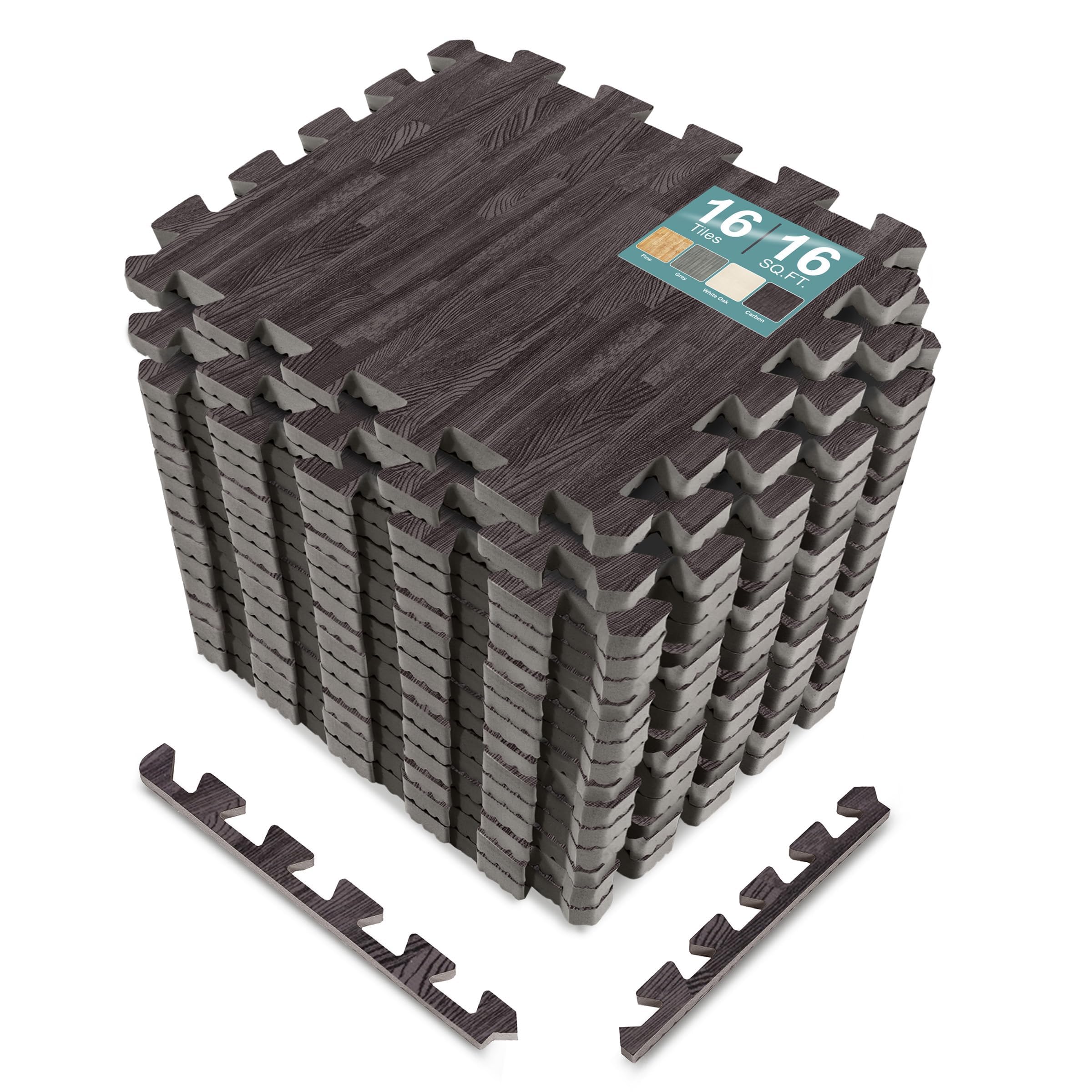
Sorbus positions this 16-tile set as an entry-level, ultra-lightweight solution for renters and temporary flooring needs. Each tile measures just 12 inches square and 3/8 of an inch thick, making the entire package weigh only 1.5 pounds. The carbon color is a dark, neutral tone that mimics weathered wood grain and hides dirt well — a practical advantage for laundry rooms, mudrooms, and high-traffic hallways.
The jigsaw-style interlocking connection is the simplest of any product reviewed here, and the PE foam construction is both waterproof and non-absorbent. Customers consistently praise how easy the tiles are to cut with a utility knife for irregular room shapes, and the anti-fatigue benefit, though less pronounced than thicker foam options, is still sufficient to reduce discomfort during meal prep or ironing.
The most significant drawback is the 3/8-inch thickness. Compared to the half-inch and 5/8-inch competitors, these tiles offer noticeably less cushioning and may shift or buckle under heavy furniture. Some users have also reported scuffs and wear marks on tiles straight out of the box. For a temporary floor covering that looks better than bare concrete and costs least, Sorbus is a viable starting point, but it will not match the durability or comfort of thicker alternatives.
Why it’s great
- Extremely lightweight and easy to transport or store
- Waterproof PE foam resists spills and staining
- Simple jigsaw interlocking system with easy trimming
Good to know
- Thin 3/8″ construction provides minimal cushioning
- Some tiles arrive with scuffs or wear marks
FAQ
Can I install bamboo flooring in a basement or bathroom?
How does strand-woven bamboo compare to traditional hardwood in price?
What does the Janka hardness rating mean for bamboo flooring?
Final Thoughts: The Verdict
For most users, the best bamboo flooring winner is the ProsourceFit Dark Oak because it combines the most convincing wood-grain aesthetic with high-density EVA cushioning, a phthalate-free safety profile, and the largest tile format for fast coverage. If you want genuine acacia wood for an outdoor patio, grab the THYOI Golden Teak deck tiles. And for a budget-conscious basement or garage project with maximum anti-fatigue relief, nothing beats the Forest Floor foam tiles.

Mo Maruf
I created WellFizz to bridge the gap between vague wellness advice and actionable solutions. My mission is simple: to decode the research and give you practical tools you can actually use.
Beyond the data, I am a passionate traveler. I believe that stepping away from the screen to explore new environments is essential for mental clarity and physical vitality.