Our readers keep the lights on and my smoothie glass nicely filled. As an Amazon Associate, I earn from qualifying purchases.
A Baltimore Oriole feeder isn’t just a bird feeder — it’s a precision invitation system. These agile songbirds prefer a specific menu of grape jelly, sliced oranges, and in some cases, nectar. The wrong feeder design will either send them to a neighbor’s yard or attract pests like bees and ants. Getting the right platform geometry, food delivery method, and material durability matters from day one.
I’m Mohammad Maruf — the founder and writer behind WellFizz. My research focuses on matching hardware specs to real-world feeding behavior, analyzing everything from perch stability and glass-to-metal ratios to capacity in fluid ounces and weather-sealing gaskets.
After reviewing five of the most popular designs on the market, I can tell you the best baltimore oriole feeder hinges on three things: how it delivers jelly, how it holds fruit, and whether the orioles actually feel secure enough to land.
How To Choose The Best Baltimore Oriole Feeder
Choosing a Baltimore Oriole feeder means thinking like a bird — they are wary of unstable perches, prefer bright orange as a color signal, and get spooked by sticky or messy landing zones. The feeder you pick must solve for all three.
Perch Stability and Landing Zone
Orioles are not cling-and-feed birds like woodpeckers; they perch while eating. Short or wobbly perches make them hesitate. Look for perches at least 2.5 to 3 inches long, with a thick enough diameter (roughly 3/16 inch or more) for their claws to grip. Avoid models where the perch is merely a thin metal rod that rotates under weight.
Food Delivery Method: Jelly vs. Nectar vs. Fruit
Most Baltimore Oriole feeders support two or three food types. Grape jelly is the strongest attractant — the jelly cup should be at least 2 inches wide and deep enough to hold a day’s serving without overflowing. Orange spikes should curve upward to prevent fruit from slipping off; straight prongs are a common failure point. Nectar feeders must have a leakproof gasket and bee guards to keep the liquid clean.
Material Resistance to the Elements
Powder-coated metal and thick glass bowls resist UV damage and temperature swings better than thin plastic. HDPE (high-density polyethylene) is a durable alternative if you prefer lighter weight. Avoid feeders with painted surfaces that can chip, as exposed metal rusts quickly under bird droppings and rain.
Ease of Cleaning Refill Cycle
Oriole feeders require cleaning every two to three days during peak season to prevent jelly mold and bacterial growth in nectar. A dishwasher-safe jelly cup or a feeder that fully disassembles into glass, plastic, and metal parts saves you significant effort. Narrow-necked models are harder to scrub and trap residue.
Quick Comparison
On smaller screens, swipe sideways to see the full table.
| Model | Category | Best For | Key Spec | Amazon |
|---|---|---|---|---|
| Perky-Pet 9113-1SR Top Fill Glass Oriole Feeder | Nectar + Jelly + Fruit | Multi-food versatility | 22 oz nectar capacity | Amazon |
| Monarch Abode Hanging Bird Feeder | Glass + Metal | Decorative heavy-duty use | 4 oz glass bowl | Amazon |
| Kettle Moraine Recycled Single Oriole Fruit Feeder | Recycled Plastic | Eco-friendly durability | Aluminum perches | Amazon |
| FORUP Oriole Bird Feeder Two Pack | Glass + Metal | Best value two-pack setup | 17.5″ height | Amazon |
| CAUFF Oriole Bird Feeder 6 Inch | HDPE Plastic | Budget-friendly large jelly capacity | 5 oz jelly container | Amazon |
In‑Depth Reviews
1. Perky-Pet 9113-1SR Top Fill Glass Oriole Feeder
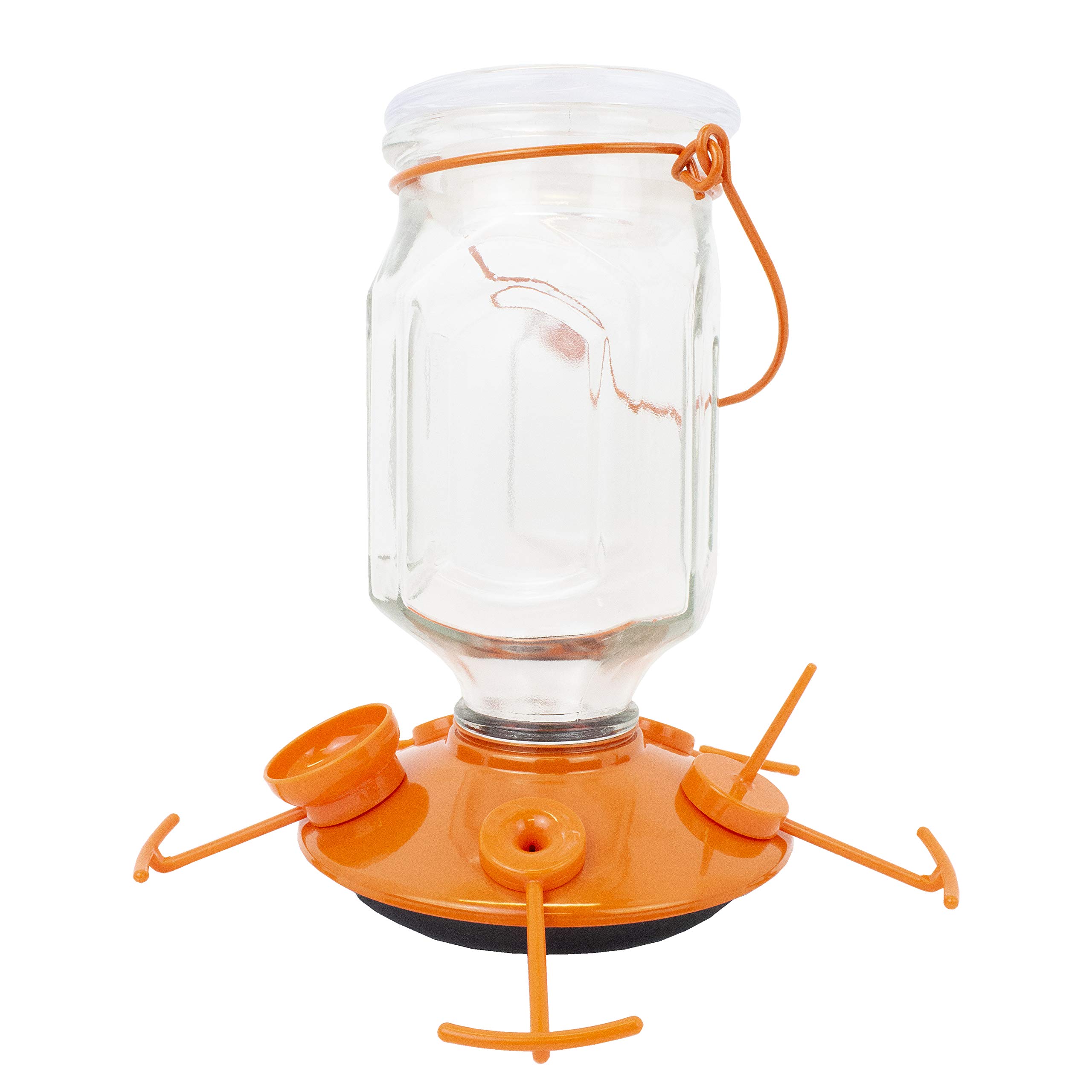
This is the most versatile Baltimore Oriole feeder in the roundup, supporting nectar, jelly, and fruit in a single unit. The top-fill glass reservoir holds 22 fluid ounces of nectar, and the gasket creates a solid seal around the base to prevent the leaking that plagues cheaper plastic feeders. The optional jelly cup clips in below the base, and the orange spike attachment sits centered for fruit presentation.
The five feeding ports each have long perches (roughly 3 inches) that give orioles enough room to balance while feeding. One reviewer noted that the perches can shift under weight, causing orioles to hesitate, but a simple zip-tie fix stabilizes them permanently. The glass body comes apart entirely for cleaning — no hard-to-reach crevices where mold can hide.
Early-season users report orioles arriving within a day of hanging it, attracted by the bright orange base and visible nectar level. A few buyers mentioned they added an ant guard separately, as the feeder has no integrated moat. For anyone wanting to offer all three oriole food types in one spot, this is the most complete design.
Why it’s great
- Triple food support — nectar, jelly, and fruit in one feeder
- Leakproof gasket keeps the base dry and clean
- Top-fill glass body is easy to remove and wash
Good to know
- Perches can wobble slightly; may need zip-tie reinforcement
- No built-in ant moat; plan to add one
- Nectar port shape may confuse orioles initially
2. Monarch Abode Hanging Bird Feeder

The Monarch Abode feeder prioritizes build quality above all else. Its thick clear glass bowl sits securely inside a heavy-duty powder-coated orange metal frame with two upward-curving fruit prongs. The prong geometry here is superior to straight-wire competitors — the slight hook helps oranges stay on even as birds peck at them throughout the day. The 4-ounce glass bowl is deep enough for grape jelly but also works well for mealworms or suet.
Multiple reviewers confirmed that orioles, catbirds, and even finches began feeding within 24 hours of hanging. The bright orange powder-coating serves as a visual attractant, and the rust-resistant finish holds up well in rain and humidity. At 0.65 kilograms, it feels substantial but not too heavy for a standard hanging hook.
One detail worth noting: the hanging hook is on the shorter side, so ensure your shepherd’s hook or hanger has a secure catch to prevent wind from knocking it loose. The bowl is removable for hand-washing, and the metal frame can be wiped down with a damp cloth. If you want a feeder that doubles as garden art without sacrificing function, this is the one.
Why it’s great
- Curved fruit prongs keep oranges securely in place
- Rust-resistant powder-coated metal frame lasts seasons
- Thick glass bowl is easy to remove and clean
Good to know
- Hanging hook is short; needs a secure attachment point
- Bowl capacity is 4 ounces — smaller than some competitors
- Open tray design can collect debris if not checked regularly
3. Kettle Moraine Recycled Single Oriole Orange Fruit Feeder

Kettle Moraine takes a refreshingly straightforward approach: bright recycled plastic body, aluminum perches, and a large open-ended hanging hook. The design is minimal — a single compartment with a spike for half an orange — but it nails the fundamentals. The aluminum perches are cool to the touch and wide enough for orioles to grip comfortably, and the recycled plastic won’t rust, warp, or fade under direct sun.
Made in Wisconsin, this feeder arrives fully assembled and ready to hang. Reviewers consistently praise its sturdiness, noting that it survived multiple seasons without any structural degradation. The orange spike is more aggressive than some — one reviewer pointed out it can puncture skin if handled carelessly — but it holds fruit firmly without the wobble seen on wire-based competitors.
The trade-off is that this feeder only handles fruit. If you want to offer jelly or nectar, you will need a separate feeder. But for a dedicated orange feeder, the build quality and eco-friendly materials make it an excellent long-term investment. It also empties less often because orioles can only eat the fruit at their own pace, reducing waste.
Why it’s great
- Recycled plastic is UV-resistant and won’t rust
- Aluminum perches are cool, stable, and wide
- Made in the USA with straightforward assembly
Good to know
- Fruit-only design — no jelly or nectar option
- Orange spike is sharp; handle with care
- May not attract orioles in regions with heavy fly populations
4. FORUP Oriole Bird Feeder Two Pack
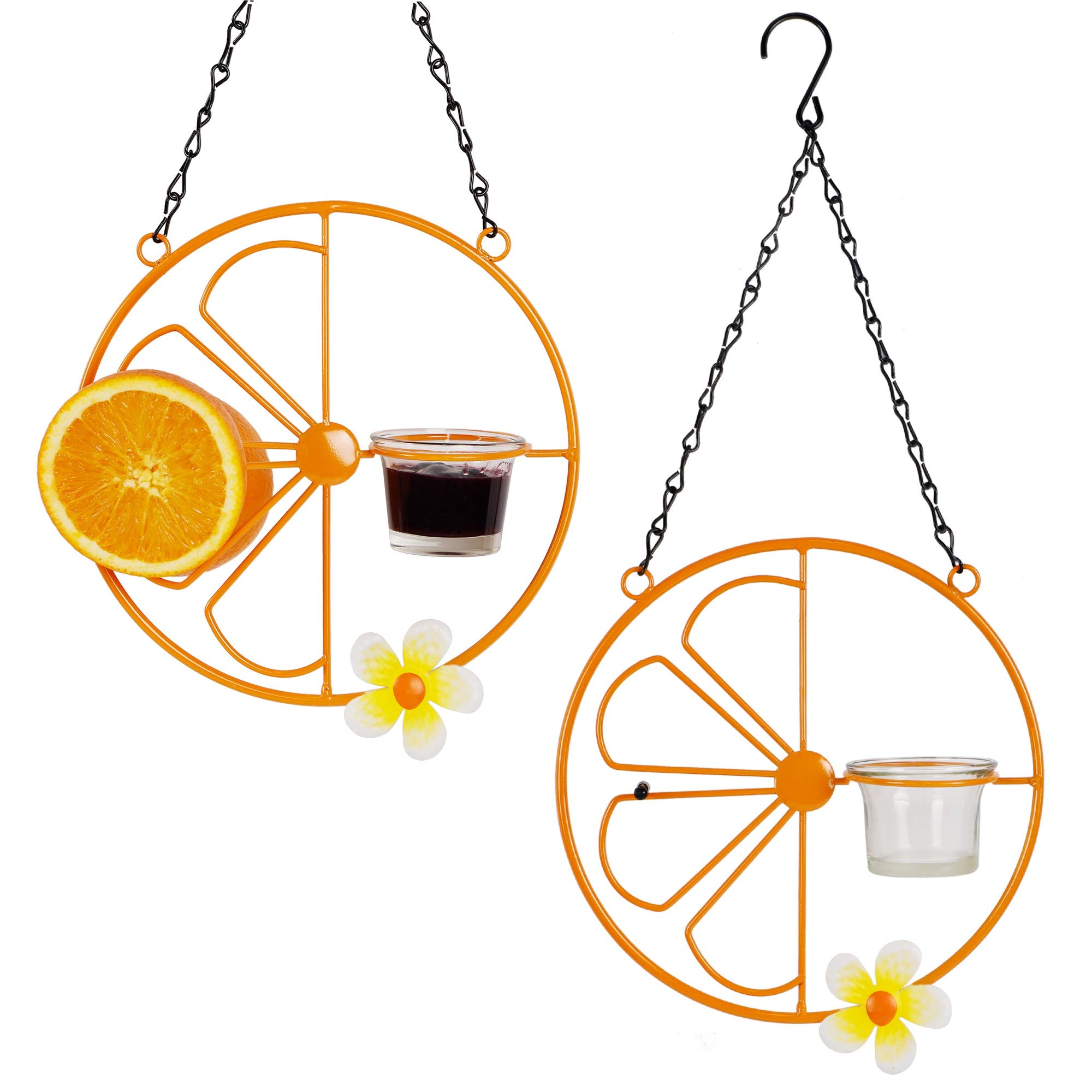
The FORUP two-pack is built around a classic formula: a clear glass jelly cup suspended inside a powder-coated metal frame with a yellow flower accent and two straight metal prongs for orange halves. At 17.5 inches tall, each unit has a long profile that stands out in the garden. The glass cup is removable for hand-washing, and the vivid orange-and-yellow color scheme acts as a strong visual attractor for orioles.
Buyers report that orioles often visited the feeder within a day of hanging, and the two-pack lets you place one near a window and another deeper in the yard. The glass quality is solid, and the metal frame is coated to resist rust. However, the straight fruit prongs are the same design flaw seen across budget feeders — oranges can slip off easily, especially after the birds have eaten half the fruit and the remaining piece is lighter.
The feeder also lacks any rain shield or ant moat, so you may need to clean the jelly cup more frequently during wet weather. Storing the feeder indoors during winter is strongly recommended, as the powder-coating can tarnish if left exposed to ice and snow. For the price, getting two functional feeders is hard to beat, but expect to swap the prongs or upgrade to curved spikes if orange retention matters to you.
Why it’s great
- Two feeders for the price of one — great for covering more yard
- Bright orange and yellow design attracts orioles quickly
- Glass jelly cup is removable for easy hand-cleaning
Good to know
- Straight fruit prongs cause oranges to fall off easily
- Powder-coating can tarnish if left out in winter
- No built-in rain protection or ant moat
5. CAUFF Oriole Bird Feeder 6 Inch

The CAUFF 6-inch feeder strips away everything except the essentials: a robust HDPE plastic base, a 5-ounce jelly container that is dishwasher safe, and a bright orange color that orioles find irresistible. The 5-ounce capacity is a standout — it holds roughly three times the jelly of smaller glass cups, meaning fewer refills on hot days when orioles feed heavily. The HDPE material is weather-resistant and won’t rust, crack, or fade like painted metal.
Users confirm that orioles found the feeder quickly and returned consistently throughout the season. The wide, shallow jelly bowl is easy for birds to access, and the feeder’s 12-inch height keeps it visible without being obtrusive. The hanging hook is metal and feels secure, though the feeder is light enough (0.25 kilograms) that strong wind can sway it.
The main limitation is that this feeder is jelly-only — no fruit spikes or nectar ports. If you want to offer oranges, you will need a separate device. Also, while the HDPE is durable, the plastic bowl can develop scratches over time from repeated cleaning. For a budget-oriented buyer who only wants to serve grape jelly, this is the most practical, low-maintenance choice available.
Why it’s great
- 5-ounce jelly container — largest jelly-only capacity in this roundup
- Dishwasher-safe plastic simplifies daily cleaning
- HDPE construction is rust-proof and UV-resistant
Good to know
- Jelly-only design — no fruit or nectar options
- Lightweight build may swing in windy conditions
- Plastic bowl can develop surface scratches over time
FAQ
Should I use nectar or jelly to attract Baltimore Orioles?
How often should I clean an oriole feeder during peak season?
Why are straight fruit prongs a problem on oriole feeders?
Final Thoughts: The Verdict
For most users, the best baltimore oriole feeder winner is the Perky-Pet 9113-1SR because it delivers nectar, jelly, and fruit in a single leakproof glass body with easy top-fill access. If you want a heavy-duty decorative feeder with superior orange retention, grab the Monarch Abode. And for a budget-friendly jelly-only option that holds a full day’s supply, nothing beats the CAUFF 6-inch feeder.

Mo Maruf
I created WellFizz to bridge the gap between vague wellness advice and actionable solutions. My mission is simple: to decode the research and give you practical tools you can actually use.
Beyond the data, I am a passionate traveler. I believe that stepping away from the screen to explore new environments is essential for mental clarity and physical vitality.