Our readers keep the lights on and my smoothie glass nicely filled. As an Amazon Associate, I earn from qualifying purchases.
Finding a stable ballet barre for home workouts is the single biggest challenge for dancers who train outside a studio. A barre that wobbles under a single hand, slides across the floor during a plié, or requires permanent wall modification can derail a practice session before it begins. The wrong barre forces you to focus on balancing the equipment rather than your form, undermining the very purpose of a barre workout.
I’m Mohammad Maruf — the founder and writer behind WellFizz. I’ve spent years analyzing home fitness hardware, decoding customer feedback for subtle build-quality signals, and comparing engineering specs that separate a tool for serious practice from one that gathers dust in a corner. This guide focuses on weight capacity, base geometry, barre diameter, and material integrity for portable and wall-mounted units alike.
After weighing dozens of models against real-world use cases, I’ve assembled the results into this detailed guide to help you find the ballet barre for home that matches your space, skill level, and safety expectations without guesswork.
How To Choose The Best Ballet Barre For Home
<
Choosing a barre for home use means balancing three competing demands: stability under load, floor footprint, and ease of setup. Ignore any one of these, and the barre becomes an obstacle rather than an aid. The following breakdown covers the core variables that separate usable equipment from frustrating purchases.
Freestanding vs. Wall-Mounted Design
Freestanding barres offer flexibility — you can move them between rooms, take them to outdoor spaces, or store them against a wall. The price for that mobility is a larger base footprint and a built-in stability ceiling. Wall-mounted barres eliminate wobble by transferring load directly into studs, but they require permanent installation and a clear section of wall. For renters or multi-use spaces, freestanding is the practical choice. For dedicated practice spaces, wall-mounted delivers the closest experience to a professional studio.
Weight Capacity and Base Geometry
A barre’s stability depends less on its total advertised weight capacity and more on how the base distributes load. Look for a base that extends at least 20 inches front-to-back, creating a stable triangle with the vertical posts. Narrow bases or those with short foot spans tilt forward when you lean into a stretch. Weight capacities between 250 and 350 pounds generally indicate robust steel construction; anything below 150 pounds suggests the unit is intended for light balance support only, not full-weight leans or pull-ups.
Barre Material and Diameter
The barre itself must be smooth enough for comfortable gripping but textured enough to prevent slipping when hands perspire. Wood barres — typically unfinished or lightly sealed beech or maple — offer the best grip-to-slide ratio for most dancers. Steel barres with powder coating are durable but can feel cold or slick. Aluminum is lightweight and corrosion-resistant but may flex under heavy use. A diameter of 1.5 inches is the standard for adult hands; larger diameters strain smaller grips, and smaller diameters feel insecure for full-weight support.
Quick Comparison
On smaller screens, swipe sideways to see the full table.
| Model | Category | Best For | Key Spec | Amazon |
|---|---|---|---|---|
| VITA Barre Prodigy | Freestanding | Serious Home Practice | Aluminum, 4 ft, 10-Year Warranty | Amazon |
| VITA Barre WB15 | Wall-Mounted | Permanent Studio Setup | Wood Barre, 4 ft, USA Made | Amazon |
| FC FUNCHEER Barre | Freestanding | Quick Setup Stability | Heavy Gauge Steel, 350 Lbs Capacity | Amazon |
| SELEWARE Ballet Barre | Freestanding | Alloy Steel Durability | Alloy Steel, 350 Lbs, 10-Year Warranty | Amazon |
| UMEKEN Ballet Barre | Freestanding | High Capacity Portability | Steel/Wood, 380 Lbs, Carry Bag | Amazon |
| Costzon Portable Barre | Freestanding | Budget-Friendly Starter | Iron/ABS, 120 Lbs Capacity | Amazon |
| Dolibest Space Saver | Wall-Mounted | Compact Space Solution | Solid Beech Wood, Adjustable Brackets | Amazon |
In‑Depth Reviews
1. VITA Barre Prodigy Portable Freestanding Double Ballet Barre

The VITA Prodigy earns the top spot for its combination of professional-grade construction and genuine portability. Its powder-coated aluminum frame is light enough to carry between rooms yet structurally sound for full-body barre work. The double-bar design allows both lower barre for balance drills and upper barre for stretching, with tool-free height adjustments that lock firmly in place. The satin silver finish resists scratches and corrosion, making it suitable for home studios, gyms, or even hotel rooms during travel.
At 4 feet in length, the Prodigy accommodates a single dancer comfortably and can support two users when positioned on opposite sides. The sure-grip rubber feet prevent sliding on hardwood or tile floors, though heavier users may find the base benefits from additional weight plates for maximum stability during one-sided leans. The modular design allows future upgrades — you can purchase longer barre sections or swap to wood bars — which extends this unit’s lifespan beyond typical portable models.
VITA manufactures the Prodigy in the USA and backs it with a 10-year limited warranty, a confidence indicator you rarely see at this price point. Assembly takes under ten minutes with no tools required, and the included carry bag keeps everything organized during transport. For dancers who want a freestanding barre that feels professional without demanding permanent wall installation, this is the clear winner.
Why it’s great
- Tool-free assembly and height adjustment
- 10-year warranty signals exceptional build confidence
- Modular design allows wood barre upgrade later
Good to know
- Base may need added weight for one-sided heavy leans
- Aluminum barre feels cooler than wood
2. VITA Barre Wall-Mounted Single Ballet Barre WB15

The WB15 is what you buy when you’ve decided that a permanent wall-mounted solution is the right path. This 4-foot single barre features an unfinished natural wood surface sanded smooth to 1.5 inches in diameter — the professional standard for dancers of all hand sizes. VITA hand-crafts these in South Carolina using domestically sourced lumber, and the result is a barre that feels warm, grippy, and precisely calibrated for extended practice sessions without the palm fatigue that steel or aluminum can cause.
The wall brackets are heavy-gauge steel with a powder-coated black finish that resists chipping. Each bracket uses four mounting holes for secure attachment to wood studs, and the kit includes all necessary hardware. A critical detail: VITA recommends using a backer board when stud spacing exceeds 24 inches, which is common in modern construction. At 47.5 inches actual barre length (shorter than the nominal 4 feet), you must verify bracket placement before drilling. The static load rating is 100 pounds per linear foot when installed correctly — more than adequate for even aggressive barre work.
Installation requires a power drill, level, and the ability to locate studs accurately. Several customers hired a handyman for this step, which is worth budgeting for if you lack the tools or confidence. Once mounted, the WB15 disappears into the background — no wobble, no floor footprint, no adjustment needed. It simply supports your practice exactly where you place it. For anyone with a dedicated workout wall, this is the gold standard.
Why it’s great
- Natural unfinished wood provides superior hand grip
- Built in the USA with domestic materials
- Professional-grade steel brackets with four mounting points
Good to know
- Requires permanent wall installation and stud alignment
- Barre length slightly shorter than advertised 4 ft
3. FC FUNCHEER Adjustable Ballet Barre
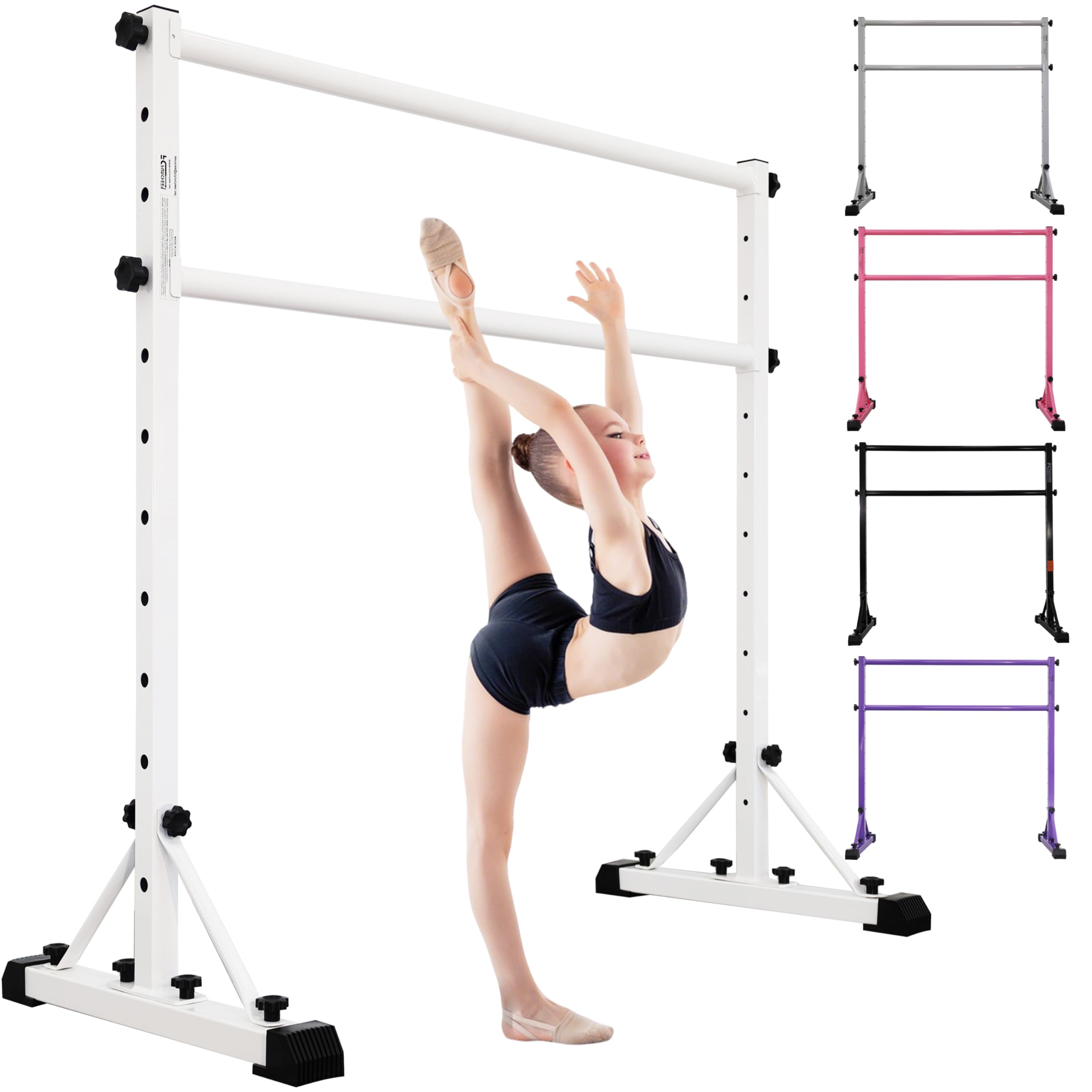
The FC FUNCHEER barre prioritizes one thing above all else: raw stability. Its heavy-gauge carbon steel frame forms a wide triangular base that simply does not move during use. Rated to support 350 pounds, this unit handles full-weight leans, single-leg balances, and even pull-up style exercises without flex or wobble. The white powder-coated finish is applied thickly enough to resist chips and scratches, and the barre itself connects via screw-in handles that eliminate loose joints over time.
Setup takes about five minutes with no tools required — the frame sections thread together by hand, and the height adjusts across 11 positions ranging from 8 inches to a full 48 inches. The 4-foot width is standard for home use, and the 25-inch base depth provides the forward stability that cheaper portable models lack. The double crossbar design gives you both a lower bar (ideal for children or floor stretches) and an upper bar for standard ballet work. Anti-slip rubber caps on all four feet protect flooring and keep the unit planted on hard surfaces.
One trade-off is weight: at roughly 31 pounds, this is heavier than most portable barres, which makes it stable but less convenient to move regularly. The glossy white finish also shows scuffs more readily than matte or silver options. However, for dancers who want a freestanding barre that mimics the solidity of a wall-mounted unit, the FC FUNCHEER delivers that experience without drilling a single hole.
Why it’s great
- 350 lb capacity handles full-body weight without wobble
- Wide 25-inch base prevents forward tipping
- Tool-free assembly in under five minutes
Good to know
- Heavier than average portable barres at 31 lbs
- White finish shows scuffs more easily
4. SELEWARE Height Adjustable Ballet Barre

SELEWARE takes a different approach to stability: instead of maximizing mass, they use alloy steel tubing with a matte black finish and a clever star-shaped hand knob that tightens more securely than the plastic thumb screws common on budget models. The result is a 4-foot freestanding barre that supports 350 pounds without the bulk of heavier competitors. The height adjusts from 11 to 47 inches, accommodating everyone from young children to tall adults with a simple twist.
Assembly takes roughly ten minutes. The anti-slip mats on each foot are effective on both carpet and hard flooring, and the overall footprint is compact enough for small apartments or shared rooms. The steel crossbar feels solid under hand pressure, and the matte coating provides enough texture to prevent grip slippage during sweaty sessions. A 10-year limited warranty backs the frame — SELEWARE clearly trusts their welding and tube thickness.
The main points of feedback center on the bottom adjustment screws, which can loosen during use and cause a slight jingling sound. A drop of thread-locker or periodic re-tightening resolves this. Some users wished for a wood barre option, but the steel surface is comfortable enough for most practice. For the price, the SELEWARE offers an excellent balance of strength, adjustability, and footprint size — ideal for intermediate dancers who need more capacity than entry-level models provide.
Why it’s great
- Alloy steel construction with 350 lb capacity
- Compact footprint fits small spaces
- Tool-free height adjustment from 11 to 47 inches
Good to know
- Bottom screws may loosen during use without thread-locker
- Steel barre lacks the grip feel of wood
5. UMEKEN Wood/Aluminum/Steel Ballet Barre

UMEKEN’s 4-foot freestanding barre stands out for its unusually high weight capacity of 380 pounds, achieved through a steel frame paired with a smooth wood barre. The wood surface offers the tactile advantage that many adult dancers prefer — it warms to the touch and provides natural grip without the slickness of powder-coated metal. The triangular base design, with bottom feet extending outward from the vertical posts, creates a stable platform that handles full-weight leans without tilting.
Assembly requires no tools: the frame sections twist together, and the knob-based height adjustment covers the full range from floor level up to 46 inches. The included carry bag is a practical addition for dancers who want to take the barre to outdoor spaces, studios, or friends’ homes. At roughly 14 pounds, the UMEKEN is genuinely portable — light enough to carry with one hand — while still feeling solid during use. The wood barre measures 1.5 inches in diameter, matching the professional standard.
The trade-off for portability is some lateral flexibility. The plastic connectors that join the wooden barre to the steel legs can crack if overtightened, so a gentle hand with the adjustment knobs is advised. The base also shifts slightly when you drag the unit across the floor, requiring a quick re-level before each session. For dancers who prioritize hand feel and weight capacity in a transportable package, the UMEKEN delivers where it matters most.
Why it’s great
- Wood barre provides superior grip and comfort
- 380 lb capacity is highest in this comparison
- Lightweight and portable with included carry bag
Good to know
- Plastic connectors can crack if overtightened
- Base shifts when unit is dragged across floor
6. Costzon Portable Ballet Barre

Costzon’s entry-level portable barre is built primarily for younger dancers and lighter adult use. The frame uses iron tubing with ABS plastic connectors and features a rotatable base that folds flat for storage under a bed or against a wall. At 13.5 pounds, this is one of the lightest models reviewed, and the height adjusts from 7 inches (suitable for toddlers in first position) up to 46 inches. The 4-foot width provides enough room for basic barre exercises without dominating a room.
Assembly is straightforward with hand-tightened knobs, and the anti-skid foot pads do a reasonable job of preventing movement on hardwood or laminate floors. The iron frame feels sturdy for its weight class, and several customers noted that it supports full adult weight during stretching without visible flex. The double-bar design — two adjustable height rails — allows simultaneous use for stretching and balance work, though the lower rail sits close to the base and may interfere with foot placement during grand pliés.
The key limitation is the stated 120-pound weight capacity, which is significantly lower than the other freestanding models in this guide. This cap reflects the ABS plastic joints, which are the weak point in the structure. For a child practicing ballet twice a week or an adult using it purely for light stretching, the Costzon works well. For weighted barre work or vigorous practice, the plastic connectors may show fatigue over time. It’s a capable starter barre, not a lifelong tool.
Why it’s great
- Rotatable base folds flat for easy storage
- Very lightweight at 13.5 lbs
- Low minimum height suits young children
Good to know
- 120 lb capacity limits heavy or adult use
- ABS plastic joints are the structural weak point
7. Dolibest Space Saver Wall Mounted Ballet Barre
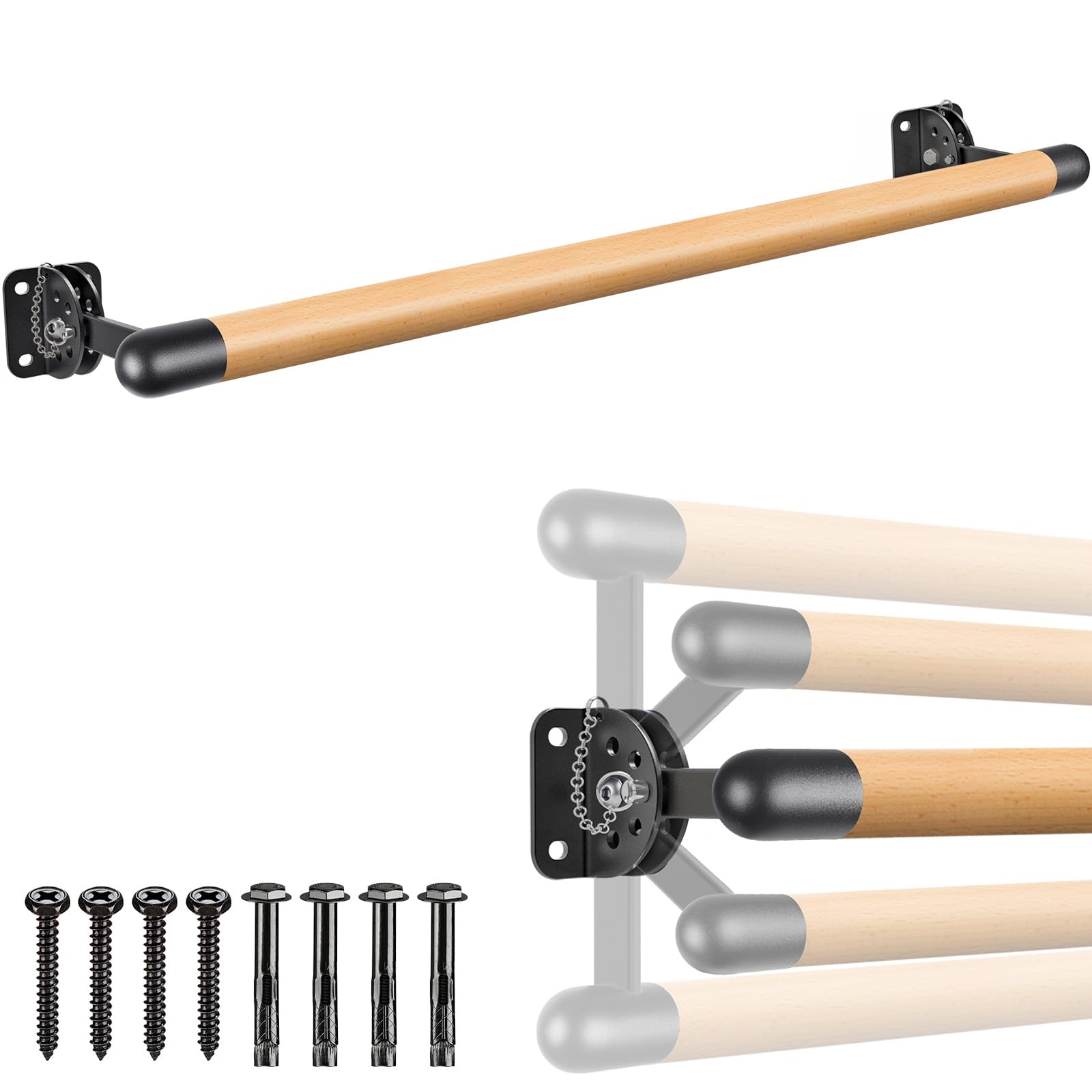
The Dolibest Space Saver is the budget-friendly entry into wall-mounted barres, designed for tight spaces where even a folding portable unit feels too bulky. The barre itself is solid beech wood — a noticeable step up from the plastic-coated particle board found on ultra-cheap options — and the metal brackets adjust to three preset heights via a loading pin mechanism. This allows a single barre to serve both a child practicing after school and an adult doing morning stretches without re-drilling new holes.
Installation requires locating wall studs, drilling pilot holes, and securing each bracket with four mounting screws. The brackets themselves are well-made with smooth transitions from metal to wood, and the beech wood surface is sanded to a comfortable grip texture. The 1-meter barre length (roughly 3.3 feet) is shorter than the 4-foot standard, which makes it best suited for one person at a time. The compact size also makes it easier to find a suitable wall space in crowded rooms or narrow hallways.
The critical installation challenge: bracket spacing is 16 inches on center, which matches standard stud spacing in most homes, but the brackets themselves are 24 inches apart, meaning the outer brackets may fall between studs. Customers resolved this by mounting a plywood backer board first, then attaching the brackets to the board. This adds cost and complexity but results in a rock-solid installation. For anyone committed to a permanent wall-mount but working with a limited budget or small space, the Dolibest offers solid wood quality at an accessible price.
Why it’s great
- Solid beech wood barre with smooth sanded finish
- Three preset heights accommodate multiple users
- Compact 3.3 ft length fits small spaces
Good to know
- Bracket spacing may not align with wall studs
- Shorter length limits use to one person
FAQ
Should I buy a wall-mounted or freestanding ballet barre for home?
What weight capacity do I need for adult barre workouts?
Is a wood barre better than a steel or aluminum barre?
Final Thoughts: The Verdict
For most users, the best ballet barre for home winner is the VITA Barre Prodigy because it combines professional-grade aluminum construction, genuine portability, and a 10-year warranty that no other freestanding model matches. If you want the rock-solid feel of a studio barre without drilling into walls, grab the FC FUNCHEER Barre. And for a permanent home installation with the best hand feel, nothing beats the VITA Barre WB15.

Mo Maruf
I created WellFizz to bridge the gap between vague wellness advice and actionable solutions. My mission is simple: to decode the research and give you practical tools you can actually use.
Beyond the data, I am a passionate traveler. I believe that stepping away from the screen to explore new environments is essential for mental clarity and physical vitality.