Our readers keep the lights on and my smoothie glass nicely filled. As an Amazon Associate, I earn from qualifying purchases.
Teaching a toddler to balance on two wheels is less about pedals and more about their first experience with independent motion. A balance bike strips away the complexity, letting children focus purely on steering, gliding, and stopping with their feet. The real challenge for parents isn’t finding a bike—it’s picking the one that fits their child’s inseam, weight, and terrain without wasting money on a frame that will feel heavy or awkward after a week.
I’m Mohammad Maruf — the founder and writer behind WellFizz. I’ve spent years analyzing child-development gear, comparing frame materials, wheel types, and adjustability ranges to separate well-engineered first rides from marketing fluff.
The goal of this guide is straightforward: review the top contenders currently on the market and help you confidently select the right balance bike for your child’s age, size, and riding environment.
How To Choose The Best Balance Bike
Not every balance bike suits every child. The three factors that separate a great learning tool from a frustrating one are the seat-height range, the tire type, and the frame weight. Ignore these and you risk buying a bike your child will either outgrow in months or struggle to lift.
Seat Height Range & Inseam Fit
A child should be able to sit on the seat and place both feet flat on the ground with a slight bend in the knees. Measure your child’s inseam and compare it to the bike’s minimum seat height. Models with a low starting seat height around 11 to 12 inches work for toddlers as young as 18 months, while a higher maximum seat height (around 18 inches) extends usability to age four or five.
Tire Type: Air, Foam, or Puncture-Proof
Air-filled tires offer the smoothest ride over grass and gravel because they absorb bumps, but they require occasional inflation and can puncture. Foam EVA tires are maintenance-free and lightweight but offer less traction on loose surfaces. Puncture-proof solid rubber tires provide durability and multi-terrain use without the risk of flats, though they add a small amount of weight.
Frame Material & Weight
A heavy frame exhausts a toddler and makes lifting, turning, and stopping harder. Steel frames are durable and affordable but typically weigh 8 to 10 pounds. Aluminum and magnesium frames cut weight to under 6 pounds, which gives young riders better control and reduces the burden on a parent carrying the bike home from the park.
Quick Comparison
On smaller screens, swipe sideways to see the full table.
| Model | Category | Best For | Key Spec | Amazon |
|---|---|---|---|---|
| Strider 12 Pro | Premium | Lightest frame & longest adjustable range | Frame weighs 5.3 lbs / Alloy Aluminum | Amazon |
| BERG Biky | Premium | Stylish magnesium frame & EVA foam tires | Frame Material: Magnesium / Weight: 8 lbs | Amazon |
| Retrospec Beaumont | Mid-Range | Air-filled tires for all-terrain cushioning | Tire Type: Air-filled / Weight: 9.3 lbs | Amazon |
| Retrospec Cub | Mid-Range | Puncture-proof tires & low seat starting at 11″ | Seat Height Range: 11″–14.5″ | Amazon |
| Radio Flyer Steady Start | Mid-Range | 3-wheel stability for younger toddlers | Wheel Config: 1 Front / 2 Rear | Amazon |
| Gotrax KS12 | Budget-Friendly | Built-in LED light & fun bell for engagement | Tire Type: EVA Foam / 8.6 lbs | Amazon |
| KRIDDO Toddler Bike | Budget-Friendly | Carbon steel frame & multi-terrain tires | Frame Material: Carbon Steel / Seat: 14.17″–18.5″ | Amazon |
In‑Depth Reviews
1. Strider 12 Pro Balance Bike
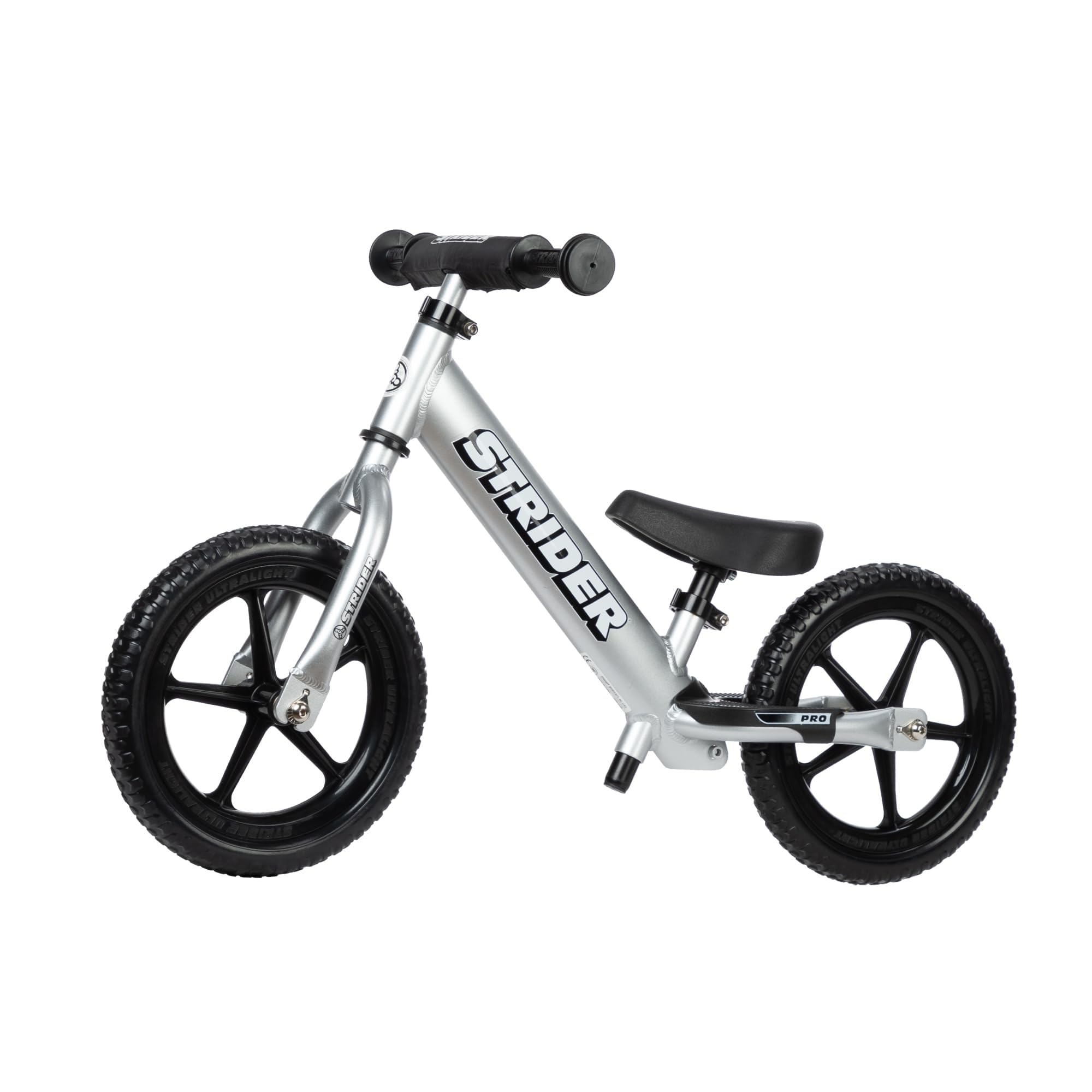
The Strider 12 Pro is the benchmark for lightweight design in the balance bike category. Its alloy aluminum frame drops the weight to just 5.3 pounds, which is nearly half the weight of many steel competitors. This directly translates into easier handling for a toddler—they can lift the bike over bumps, pivot quickly, and build confidence without fighting a heavy chassis.
The adjustability range is equally impressive. It ships with both a standard seatpost and an XL seatpost, effectively covering kids from an 11-inch inseam up to a 60-pound weight limit. The flat-free foam tires never require inflation, and the padded seat and safety pad add comfort and protection during inevitable spills. Assembly is straightforward, and the tool-free seat clamp lets you raise or lower the saddle in seconds.
Customer feedback over multiple years of use confirms the frame holds up well, with only surface scratches after heavy outdoor riding. The one nuance to note is that the headset can develop a slight play over time, which is not a safety concern but differs from the feel of a traditional bicycle headset.
Why it’s great
- Extremely lightweight alloy frame improves toddler control
- Two seatposts included extend usable life to age five
- Foam tires eliminate flats and require zero maintenance
Good to know
- No handbrake option for advanced riders
- Premium price reflects extended usability and materials
2. BERG Biky Balance Bike
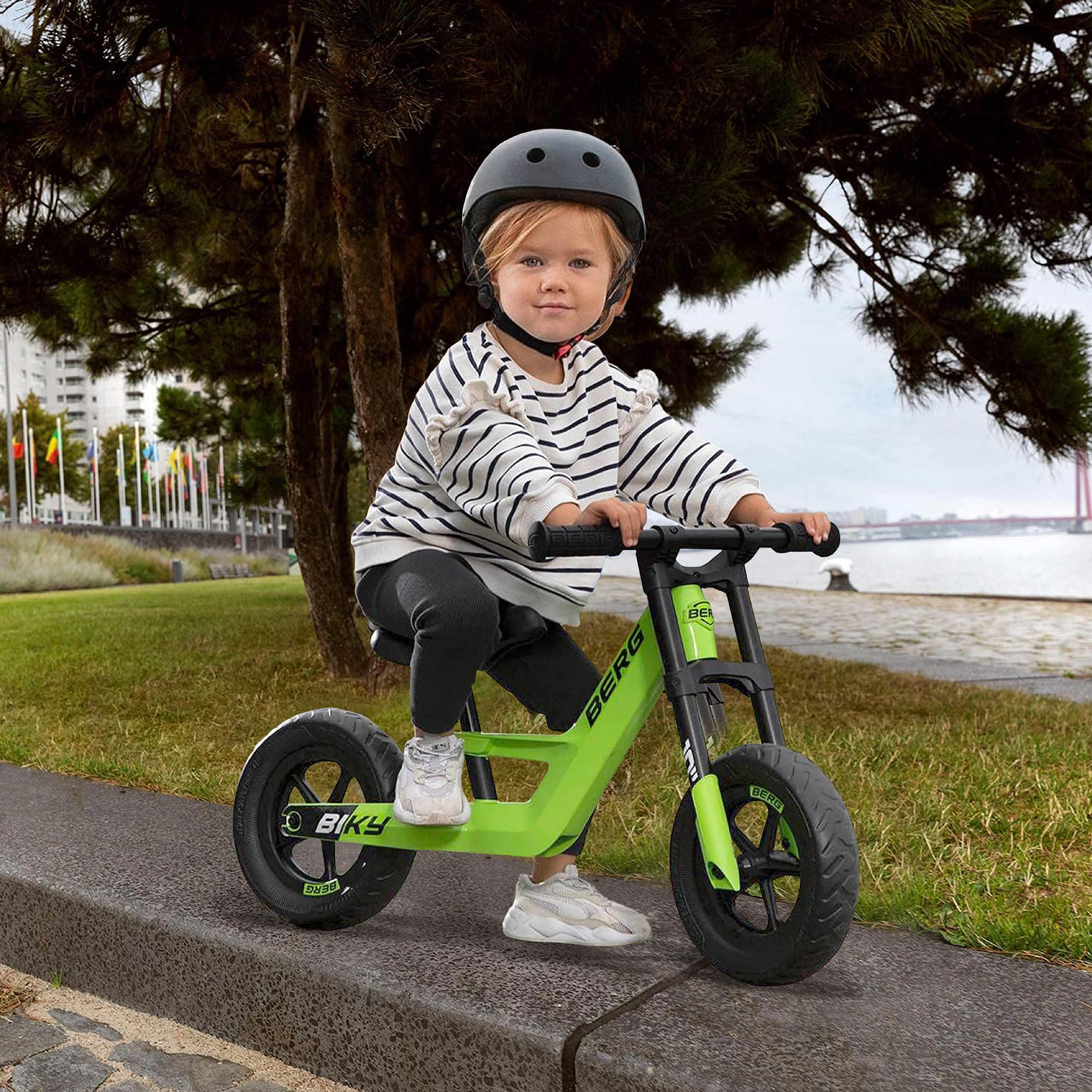
The BERG Biky stands out with its magnesium frame, a material choice that delivers a strong, corrosion-resistant structure while keeping the bike at a manageable 8 pounds. The result is a frame that absorbs vibrations better than steel, giving a smoother feel when riding over paved paths and hard-packed dirt. The EVA foam tires are non-leak and maintenance-free, ideal for families who want a grab-and-go bike without checking air pressure.
BERG designed the Biky with child comfort in mind. Mini grips with safety pads protect small hands, and non-slip footrests on the rear frame give kids a place to rest their feet once they gain gliding confidence. The bike comes pre-assembled out of the box, which removes one of the biggest friction points for busy parents. The adjustable seat grows with the child, though the adjustment mechanism is not quite as tool-free as the Strider system.
Owners consistently praise the build quality and the turning-head design. The bike does run slightly heavier than the Strider Pro, so very petite toddlers may find it a touch harder to maneuver, but the overall durability and premium finish justify its position in the higher tier.
Why it’s great
- Magnesium frame offers excellent durability and vibration dampening
- Comes fully assembled — no setup required
- Non-slip footrests and padded grips enhance comfort
Good to know
- 8-pound weight is noticeable compared to sub-6-pound models
- Seat adjustment requires tools, not a quick-release clamp
3. Retrospec Baby Beaumont Balance Bike

The Retrospec Beaumont makes a strong case for air-filled tires in the balance bike segment. The pneumatic rubber wheels provide noticeably more cushion over grass, gravel, and uneven sidewalks than foam alternatives, which translates into a more comfortable ride for the child and less vibration transferred through the frame. The low step-through alloy steel frame lets toddlers mount and dismount independently, reinforcing the confidence-building mission of this category.
At 9.3 pounds, the Beaumont is not the lightest option, but the trade-off is a construction that feels solid and secure. The seat adjusts from a 13-inch starting height with a tool-free quick-release clamp, making it simple to adapt as the child grows. The retro aesthetic, complete with a charming front basket on some color variants, adds a personality that kids and parents alike enjoy.
The air tires require occasional inflation with a standard pump, which is a minor maintenance step that some foam-tire users are not accustomed to.
Why it’s great
- Air-filled tires deliver superior shock absorption on uneven terrain
- Tool-free seat adjustment for quick height changes
- Low stand-over frame design encourages independent mounting
Good to know
- Heavier than aluminum-framed counterparts
- Air tires require periodic inflation and can puncture on debris
4. Retrospec Cub Balance Bike

The Retrospec Cub is engineered specifically for the younger end of the balance bike spectrum. Its seat adjusts down to 11 inches, making it one of the few models that genuinely fits a toddler with a short inseam, typically starting around 18 months. The low center of gravity and rounded edges prioritize safety during the wobbly early learning phase when tip-overs are most common.
Puncture-proof tires eliminate flat worries while remaining capable on pavement, grass, and dirt. Unlike foam tires that can feel slippery on loose gravel, the Cub’s solid rubber compound offers predictable traction. The quick-release handlebar adjustment and simple seat post clamp allow the bike to adapt as the child grows, and the alloy steel frame strikes a reasonable balance between weight and sturdiness.
The main limitation is the 14.5-inch maximum seat height, which caps the usable period at around age three, meaning taller or older children will need a larger bike sooner than models with a higher adjustment ceiling.
Why it’s great
- Lowest seat height in this comparison at 11 inches
- Puncture-proof tires offer worry-free multi-terrain use
- Quick-release adjustments on both seat and handlebars
Good to know
- Maximum seat height of 14.5 inches limits use beyond age three
- No handbrake or footrest for more advanced riders
5. Radio Flyer Steady Start Balance Bike

The Radio Flyer Steady Start takes a different approach by using a three-wheel configuration: one wide front wheel and two rear wheels. This design eliminates the need for a kickstand and provides inherent lateral stability, which is particularly helpful for children around age one who are still working on gross motor coordination. The bike stands on its own, allowing a toddler to mount, scoot, and dismount without the bike tipping sideways.
The quiet-ride tires are specifically designed to roll smoothly over hardwood floors, carpet, and concrete, making this one of the better indoor-friendly options for families with young toddlers. The padded seat adjusts without tools, and the comfort handgrips keep small hands secure. The alloy steel frame is lightweight enough at 7 pounds for most one-year-olds to handle.
The trade-off for the stability is that this bike does not teach the same two-wheel balancing motion that a standard balance bike does. Children who master the Steady Start will still need to transition to a two-wheeled balance bike or pedal bike later. For parents whose priority is getting a very young child moving and enjoying a ride safely, this is a well-constructed starting point.
Why it’s great
- Three-wheel design provides excellent stability for beginners
- Quiet-roll tires work well on indoor and outdoor surfaces
- Tool-free seat adjustment and lightweight 7-pound frame
Good to know
- Does not teach true two-wheel balance for later pedal bike transition
- Best suited for one- to two-year-olds due to smaller size
6. Gotrax KS12 Balance Bike
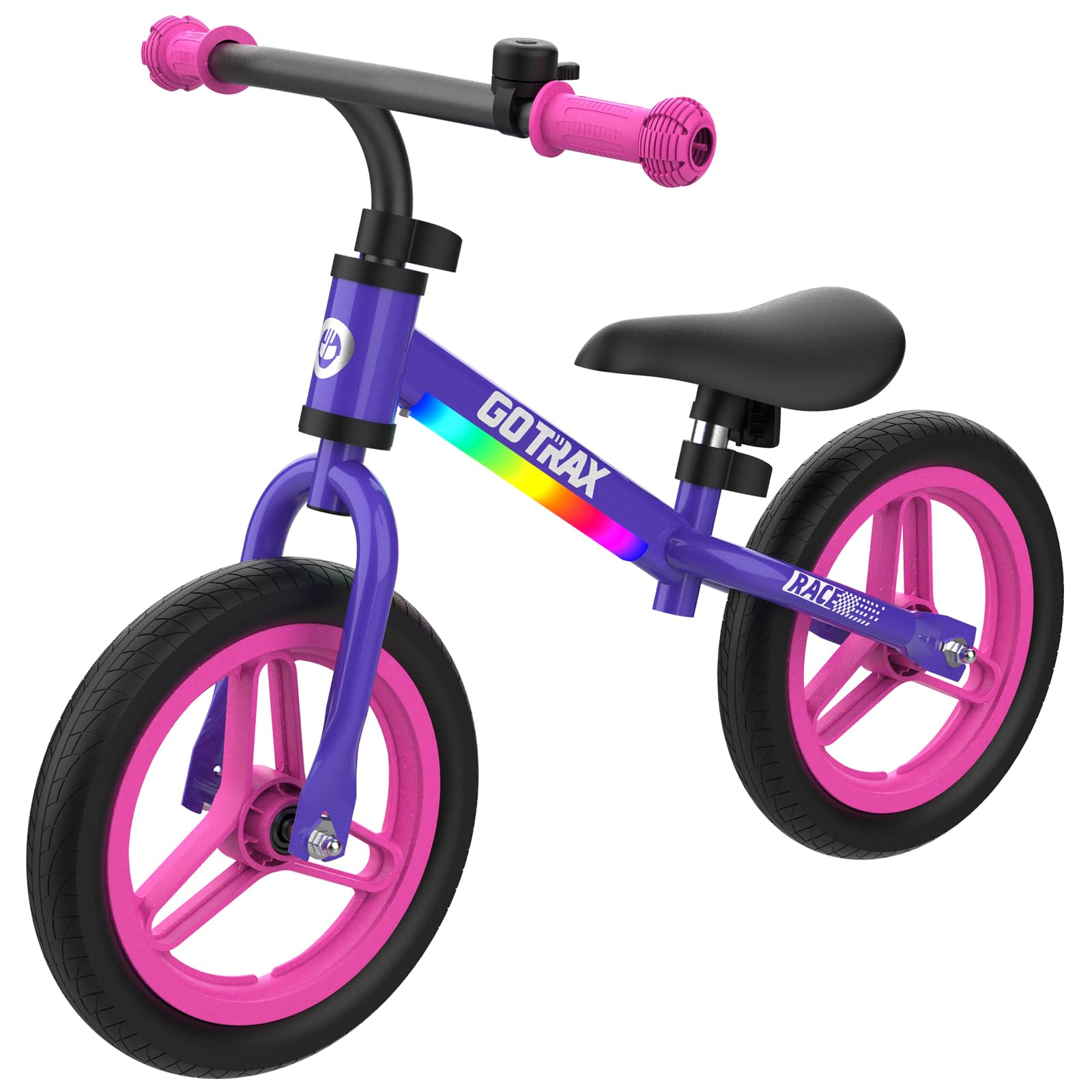
The Gotrax KS12 brings a fun, feature-rich approach to the budget-friendly tier without cutting corners on core specs. The integrated LED light activates during riding and captures a toddler’s attention, making evening rides more engaging. The included bell adds another sensory element that helps develop cause-and-effect understanding, and both additions are genuinely durable, not cheap plastic attachments.
The 12-inch EVA foam wheels keep the bike at a manageable 8.6 pounds and never require inflation. The adjustable seat range from 16.5 to 18.3 inches and handlebar range from 22.8 to 26 inches accommodate a two- to five-year-old comfortably. A thicker seat cushion and silicone handlebars improve grip and comfort, which is not always standard at this price point. Assembly takes about five minutes with the included tools and clear instructions.
Feedback from parents highlights the bike’s ability to build confidence quickly, with many reporting their child learned to glide within days. The primary compromise is the iron frame, which is heavier than the premium aluminum and magnesium options. For families who prioritize low cost and high engagement features, this is a clear win.
Why it’s great
- LED light and bell provide high engagement for young riders
- Thick padded seat cushion enhances ride comfort
- Quick assembly and flat-free foam tires reduce maintenance
Good to know
- Iron frame is heavier than aluminum and magnesium alternatives
- LED requires battery replacement over time
7. KRIDDO Toddler Balance Bike
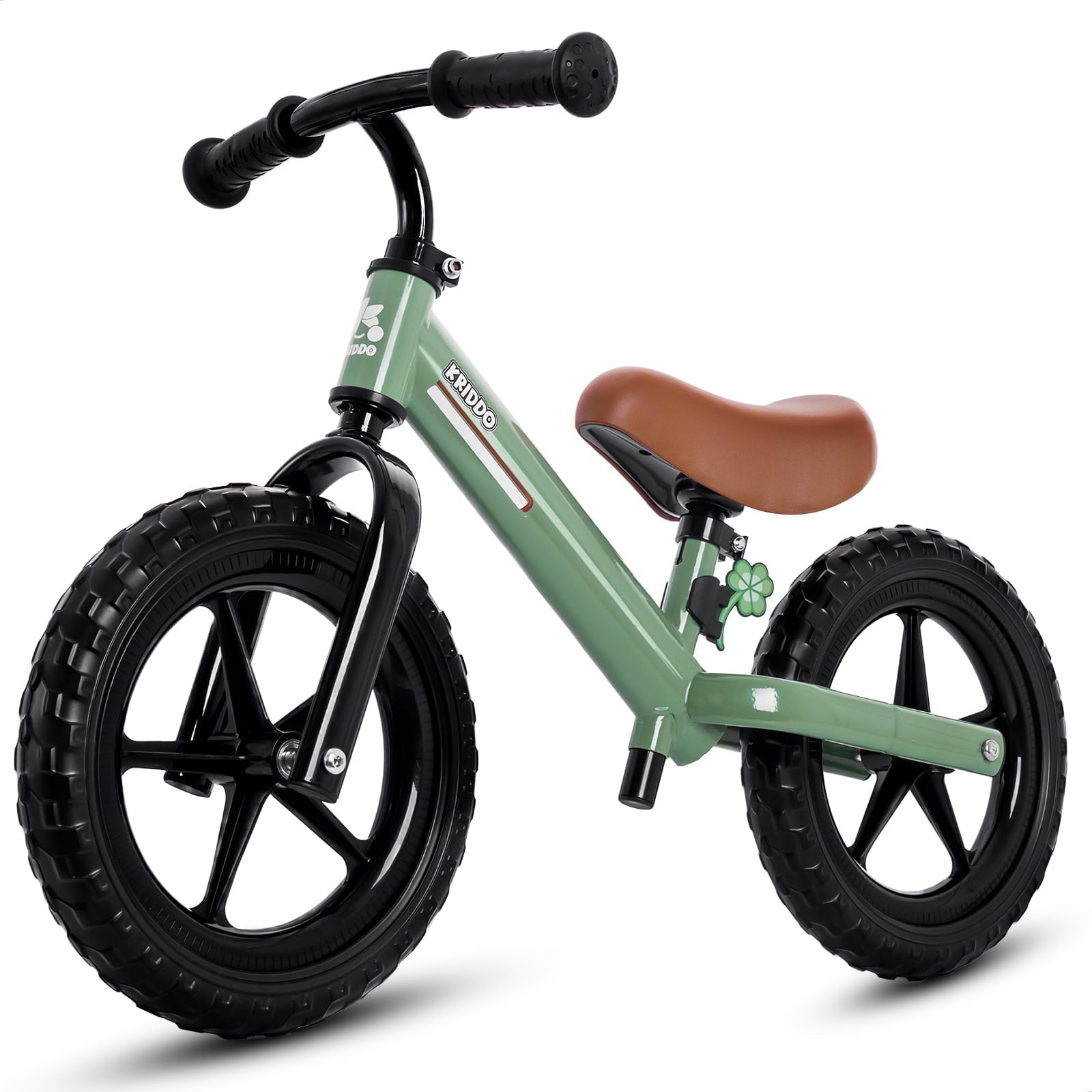
The KRIDDO balance bike excels at delivering a sturdy, long-lasting frame at an entry-level price. The carbon steel frame provides a solid feel that reassures parents about durability, and the 12-inch puncture-proof tires perform reliably across tracks, grass, pavement, and wood floors. The dual-bearing wheels reduce rolling resistance significantly compared to basic bushing-based wheels, meaning the child expends less effort per glide.
A standout detail is the pair of decorative plates—a flower and a clover—that attach under the seat, letting toddlers personalize their bike. While this may seem small, it gives the child a sense of ownership that encourages more frequent riding. The seat adjusts from 14.17 to 18.5 inches and the handlebars from 20.08 to 21.65 inches, covering a two- to five-year-old age range effectively.
Parents consistently praise the ease of assembly and the gender-neutral green color that works well for passing the bike down to younger siblings. The frame is slightly heavier than premium models, which can be noticeable for very small toddlers when they need to lift or turn the bike. It remains one of the best mechanical foundations at this price level.
Why it’s great
- Dual-bearing wheels provide smooth, low-resistance gliding
- Puncture-proof tires handle multiple terrain types confidently
- Fun customizable plates encourage toddler engagement
Good to know
- Carbon steel frame is heavier than alloy alternatives
- No footrests or handbrake for advanced skill progression
FAQ
What is the minimum age for using a balance bike?
Should I choose a balance bike with air tires or foam tires for my toddler?
How do I know the correct seat height for my child on a balance bike?
Final Thoughts: The Verdict
For most users, the balance bike winner is the Strider 12 Pro because its ultra-light aluminum frame, two-seatpost adjustability, and foam tires make it the longest-lasting and easiest bike for a toddler to control. If you want a stylish magnesium frame with a pre-assembled design and non-slip footrests, grab the BERG Biky. And for families with a very young toddler who needs the stability of a three-wheel configuration, nothing beats the Radio Flyer Steady Start.

Mo Maruf
I created WellFizz to bridge the gap between vague wellness advice and actionable solutions. My mission is simple: to decode the research and give you practical tools you can actually use.
Beyond the data, I am a passionate traveler. I believe that stepping away from the screen to explore new environments is essential for mental clarity and physical vitality.