Our readers keep the lights on and my smoothie glass nicely filled. As an Amazon Associate, I earn from qualifying purchases.
The first bike a toddler rides isn’t a bicycle at all — it’s a balance bike, that pedal-less two-wheeler designed to teach the single hardest part of riding: staying upright. While a tricycle or training wheels teach pedaling, they actually delay the development of balance by providing a crutch. A balance bike forces a child to lean, steer, and correct their center of gravity using only their feet and core. The result is a much faster, more natural transition to a pedal bike, often around age three or four with zero tears.
I’m Mohammad Maruf — the founder and writer behind WellFizz. I’ve spent over a decade analyzing the structural mechanics of children’s ride-on gear, from frame materials and wheel durometers to steering geometry and seat-post clamping loads, to understand what separates a confidence-building ride from a frustrating wobble machine.
Whether your toddler is still wobbly at 18 months or ready to glide at age three, knowing which frame material, wheel type, and seat-height range to trust is essential to finding the perfect balance bike for toddlers.
How To Choose The Best Balance Bike For Toddlers
Not all balance bikes are built the same. The cheapest models use heavy steel frames and rigid plastic wheels that skid on smooth floors, while premium options use magnesium frames and maintenance-free EVA tires that grip without noise. The three specs that define a good balance bike are seat-height adjustability, frame weight, and wheel material.
Seat Height Range is the Real Age Indicator
The listed age range (e.g., “2-4 years”) is a rough guideline. What actually determines fit is the minimum and maximum seat height, measured in inches. A child’s inseam — the length from crotch to floor — needs to be about one inch shorter than the minimum seat height so they can flat-foot the ground. For a 12-month-old with a 10-inch inseam, a bike with a minimum seat height of 14 inches is unusable. Always check the seat-height range before the age label.
Frame Material: Weight vs. Durability
Steel frames (alloy steel, carbon steel) are the most durable and inexpensive, but they add weight — often 8 to 10 pounds — which makes steering and carrying harder for very small toddlers. Aluminum frames cut weight to around 5-7 pounds and resist rust, but can transmit more vibration. Magnesium frames are the lightest (under 5 pounds in some cases) and absorb road buzz, but they’re only found on premium models. For a toddler just finding their footing, lighter is almost always better.
Wheel Type Determines Where the Bike Can Roll
There are three wheel types on balance bikes. Enclosed plastic wheels are noisier and skid more on hard floors but protect little feet from spokes. EVA foam (puncture-proof) tires are quiet, grip well on pavement and grass, and never go flat. Pneumatic (air-filled) tires offer the best traction on dirt and gravel but require occasional inflation. For indoor/outdoor versatility, EVA foam is the sweet spot. The wheel diameter — 9 inches, 10 inches, or 12 inches — also affects rollover ability: larger wheels clear bumps more easily.
Steering Limit and Footrests
A 135- to 150-degree steering limiter prevents the handlebars from turning fully sideways, which eliminates the “jackknife” crash that sends toddlers flying over the front. Many premium bikes also include integrated footrests on the frame — once the child learns to glide, resting their feet on the frame instead of dragging them builds coasting confidence and prepares them for pedals.
Quick Comparison
On smaller screens, swipe sideways to see the full table.
| Model | Category | Best For | Key Spec | Amazon |
|---|---|---|---|---|
| Retrospec Cub | Premium All-Rounder | Versatile indoor/outdoor use | Seat 11-14.5 in, 10 lbs, EVA tires | Amazon |
| Yvolution Y Velo Junior | Dual-Wheel Stability | Beginners needing extra balance | 9 in wheels, dual rear mode, 8 lbs | Amazon |
| banana bike LT | Ultra-Light Aluminum | Smallest toddlers (2-4 yrs) | 6.4 lbs, 11 in wheels, quick-release seat | Amazon |
| BERG Biky | Magnesium Premium | Long-term durability (2-5 yrs) | Magnesium frame, 8 lbs, EVA tires | Amazon |
| Gotrax KS12 | Feature-Packed Mid-Range | Fun extras (LED light, bell) | 12 in EVA wheels, 8.6 lbs, LED light | Amazon |
| Bobike Toddler | Enclosed Wheel Safety | Indoor use / pinched-toe prevention | 135° steering limit, enclosed wheels | Amazon |
| Liberry Baby | Four-Wheel Stability | First ride-on for 1-year-olds | 4 wheels, 9.7-11 in seat, 6.4 lbs | Amazon |
In‑Depth Reviews
1. Retrospec Cub Toddler Balance Bike

The Retrospec Cub earns the top spot because it solves the two biggest problems parents face with balance bikes: seat-height range and tire maintenance. The saddle adjusts from 11 inches up to 14.5 inches, which fits toddlers with inseams as short as 10 inches (roughly 18 months) all the way up to a 4-year-old with a 13.5-inch inseam. That’s nearly three years of usable growth from one bike. The airless EVA tires roll smoothly across pavement, grass, and hard-packed dirt without ever going flat — no pump, no patches, no frustration.
The frame is made from lightweight alloy steel that keeps the total weight at about 10 pounds — not the lightest on this list, but still light enough for a 2-year-old to lift and steer independently. The low step-through frame lets a toddler mount and dismount without catching a leg on the top tube, which accelerates confidence faster than any spec sheet can capture. Retrospec also uses rounded edges, non-slip grips, and a low center of gravity to minimize tip-over risk during tight turns.
Assembly involves attaching the handlebars and seat post with the included hex tool, a process that takes about 15 minutes. One-year-out reviews note that the bike survives drops, driveway drags, and the occasional stair tumble without bent axles or cracked grips. For the majority of families who want a single bike that covers the toddler years without flats or fuss, this is the one.
Why it’s great
- Wide 11-14.5 inch seat range fits the longest age window
- Puncture-proof EVA tires work on grass, pavement, and dirt
- Low standover height makes mounting easy for small legs
Good to know
- Heavier than aluminum or magnesium alternatives at 10 lbs
- No handlebar height adjustment — only the seat adjusts
2. Yvolution Y Velo Junior 9″ Balance Bike

The Y Velo Junior is the only bike on this list that uses a three-wheel configuration — two closely spaced rear wheels that behave like a single wide wheel — to give absolute beginners a rock-solid base. When the child is ready to tackle two-wheel balancing, the dual-wheel unit can be swapped to a single rear wheel, turning it into a standard balance bike. This 2-in-1 approach means a hesitant 18-month-old can start gliding with zero wobble anxiety, then progress naturally without buying a second bike.
With 9-inch EVA wheels and a seat-height range of 11 to 14.17 inches, the Y Velo is designed for the younger end of the toddler spectrum — ages 18 months to 3 years. The alloy steel frame feels substantial without being punishingly heavy, and the footrest platform gives the child a place to park their feet once they start coasting. The handlebars are also adjustable, which is rare at this price point, so the bike can adapt as the child’s torso length increases.
Assembly is tool-free for the dual-wheel swap, though the initial setup requires a few minutes with a wrench. Some users note that the 9-inch wheels roll slower on thick grass compared to 12-inch models, but the trade-off is a lower ride height that keeps the child’s feet closer to the ground for confidence. Parents report that their 2-year-olds went from barely walking to full glides within two weeks of using the dual-wheel mode.
Why it’s great
- Two-in-one dual/single rear wheel adapts to skill level
- Adjustable handlebars and seat for custom fit
- Footrest encourages gliding posture early
Good to know
- 9-inch wheels feel slower on uneven grass or gravel
- Maximum weight limit of 44 lbs limits extended use
3. Banana Bike LT Balance Bike

At just 6.4 pounds, the Banana Bike LT is the lightest non-magnesium balance bike we reviewed, and its aluminum frame makes it a top choice for petite toddlers or children at the lower end of the age range. The banana-shaped step-through frame curves downward so the child doesn’t have to swing a leg over a top tube — they simply step over the lowest point and sit. This design lowers the standover height significantly, which is critical for kids with short inseams who are still building gross motor coordination.
The seat adjusts from 12.2 to 15.7 inches via a quick-release clamp, so you can dial in the exact height without tools. The 11-inch EVA wheels are smaller than the 12-inch standard, which keeps the platform low but means the bike doesn’t roll over bumps quite as easily as larger-wheeled competitors. The handlebars are also adjustable, and the child-proof locking hex clamp on the steering tube prevents the bars from rotating sideways during a crash.
Assembly is straightforward: attach the handlebars, slide the seat post into the frame, tighten the clamp, and snap the wheels on. The brake-style caliper on the rear wheel is a rare inclusion at this price — most balance bikes at have no brakes at all. Reviews consistently praise the low weight for making the bike feel like an extension of the child rather than a burden they drag around.
Why it’s great
- Remarkably light 6.4 lb aluminum frame is easy for toddlers to maneuver
- Quick-release seat clamp allows tool-free height changes
- Child-proof steering lock prevents jackknife falls
Good to know
- 11-inch wheels struggle slightly on thick grass or deep gravel
- No footrest platform for coasting practice
4. BERG Biky Mini Balance Bike
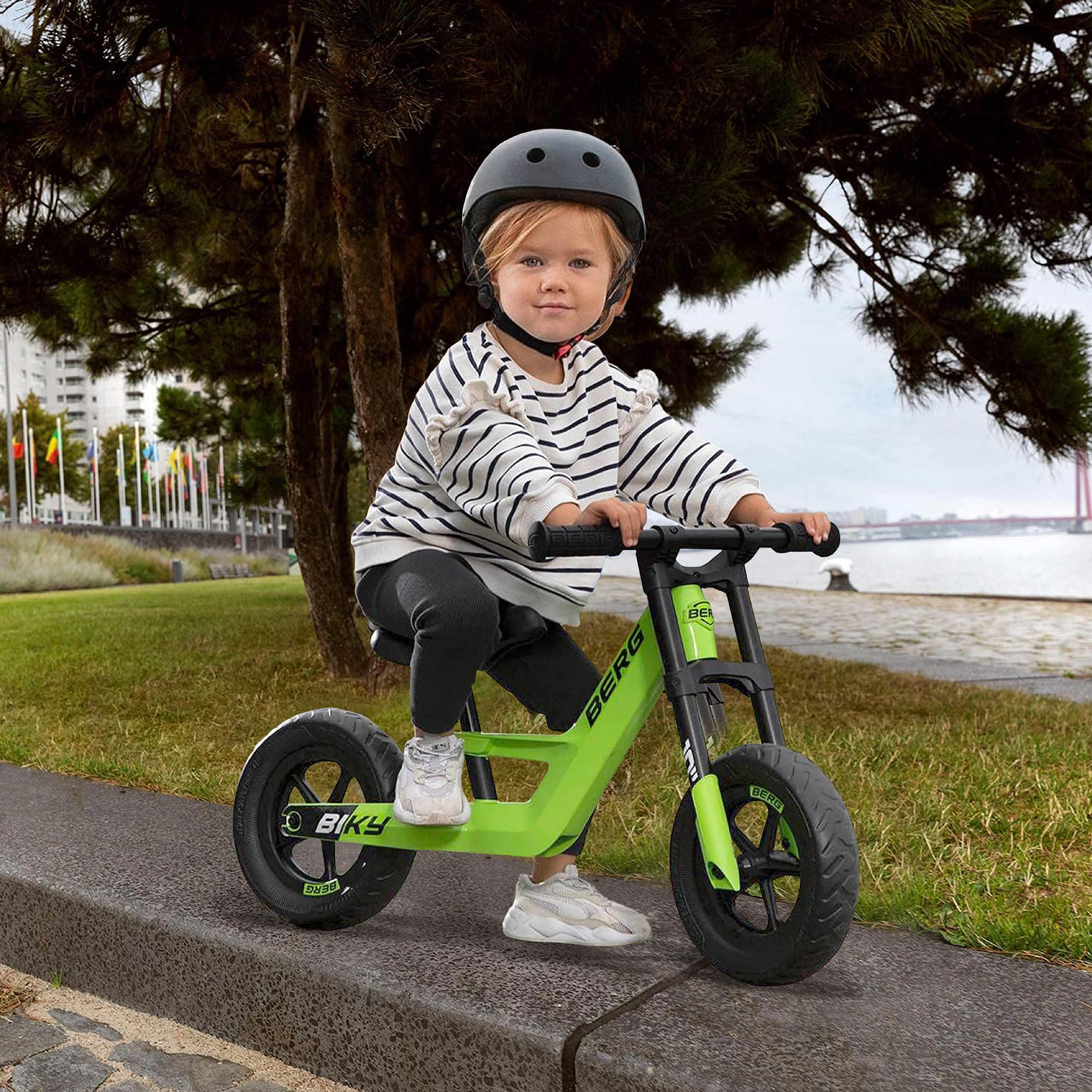
The BERG Biky is the only bike on this list with a magnesium frame, which gives it a unique combination of light weight (approximately 8 pounds) and exceptional vibration damping. Magnesium absorbs road chatter far better than steel or aluminum, so the child feels less vibration through the handlebars and seat when riding on rough pavement or packed dirt. That makes this bike especially comfortable for longer sessions — kids tend to ride it longer because they don’t get rattled.
BERG equipped the Biky with 12-inch EVA foam tires, which offer the best rollover capability of any bike here. Larger wheels clear sticks, stones, and sidewalk cracks without stopping the child, reducing the frustration of constant stalling. The seat adjusts to accommodate ages 2 through 5, and non-slip footrests on the rear axle give the child a place to rest their feet once they’re comfortable gliding. The frame’s integrated design has no sharp edges, and the handlebar grips have built-in safety pads to protect the child’s hands if they slide forward during a sudden stop.
Assembly is minimal — the Biky arrives mostly pre-assembled, with only the handlebar and seat post needing attachment. The paint finish is thick and resists scratches from driveway abuse. The main compromise is price: the magnesium frame commands a premium that puts it above all other models here, though parents who value long-term durability and a smoother ride tend to find it worth the investment.
Why it’s great
- Magnesium frame absorbs road buzz better than steel or aluminum
- 12-inch wheels roll over bumps and cracks with ease
- Non-slip footrests prepare child for coasting
Good to know
- Premium price point is the highest among our picks
- Slightly heavier than aluminum models at about 8 lbs
5. Gotrax KS12 Balance Bike
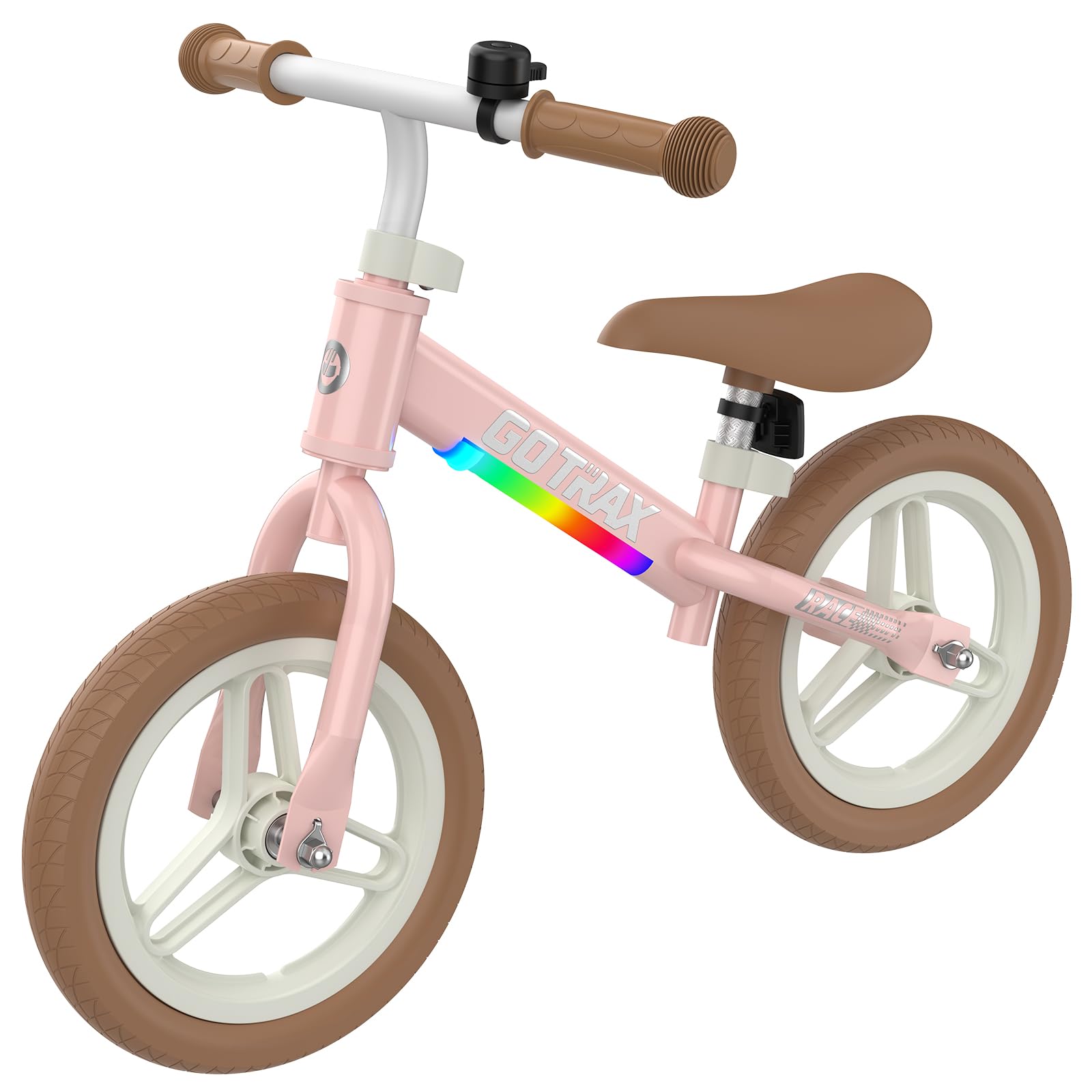
The Gotrax KS12 packs more attention-grabbing features than any other bike in this lineup. The most obvious is the built-in LED light mounted on the handlebar stem, which illuminates the path ahead in low-light conditions and makes the bike more visible to cars during evening rides. There’s also a working bell, a thicker padded seat cushion, and silicone handlebar grips — small touches that collectively make the bike feel more substantial than its price suggests.
Under the flashy stuff, the KS12 is a solid performer. The 12-inch EVA wheels provide big-roll capability on grass and pavement, and the adjustable seat (16.5 to 18.3 inches) and handlebars (22.8 to 26 inches) allow the bike to fit a wide range of toddler sizes. The frame is iron (steel), so it weighs about 8.6 pounds — in the middle of the pack. The maximum weight capacity of 110 pounds is overkill for a toddler bike but does mean the bike will survive aggressive riding without frame flex.
Assembly takes about five minutes with the included tools. One real-world caveat: the paperwork inside the box states a recommended minimum age of 3 years, not 2 as advertised, and some parents reported the minimum seat height was too tall for a 25-month-old. Measure your child’s inseam before buying. If your toddler has a 14-inch or longer inseam, the KS12 is a great fun-packed option; if they’re on the short side, look at the Retrospec or Banana Bike instead.
Why it’s great
- LED light and bell add engagement and visibility
- 12-inch EVA tires roll well over various surfaces
- Thicker seat cushion and silicone grips enhance comfort
Good to know
- Minimum seat height may be too tall for toddlers under 3 years
- Paperwork lists age 3+ despite online listing saying 2-5
6. Bobike Toddler Balance Bike

The Bobike stands out for its child-safety-first design. The wheels are fully enclosed — there are no open spokes to catch a laces, pant leg, or bare toe — and the surface is made of a non-slip material that grips hardwood floors without leaving scuff marks. The 135-degree steering limiter prevents the front wheel from turning more than two-thirds of a full spin, which eliminates the sideways jackknife that can send a toddler over the handlebars. For indoor use on tile, laminate, or hardwood, this is the safest design in the group.
The frame is made of carbon steel, giving the bike a sturdy, vintage look, but the trade-off is weight: at roughly 8-9 pounds, it’s heavier than aluminum or magnesium alternatives. The seat adjusts via a simple clamp, and the handlebars have rubber grips that don’t slip when little hands get sweaty. The 40-pound maximum weight recommendation is lower than most competitors, so this bike works best for the 1-to-3-year-old range rather than 4 or 5-year-olds.
Assembly is simple — a few minutes with a hex wrench — and the bike ships with an ASTM F963-11 and EN71 safety certification sticker. Some reviews note that the listing can be misleading regarding manufacturer support: the bike is built by a Chinese third-party, not directly by Bobike (the brand seems to be a retailer label). If you stick with the Amazon listing, returns are baseline guaranteed, but don’t expect factory-direct support.
Why it’s great
- Fully enclosed wheels protect feet and floors indoors
- 135-degree steering limiter prevents dangerous sharp turns
- Vintage steel frame looks charming and feels solid
Good to know
- Heavier than aluminum and magnesium alternatives
- Maximum weight of 40 lbs limits use for older toddlers
7. Liberry Baby Balance Bike
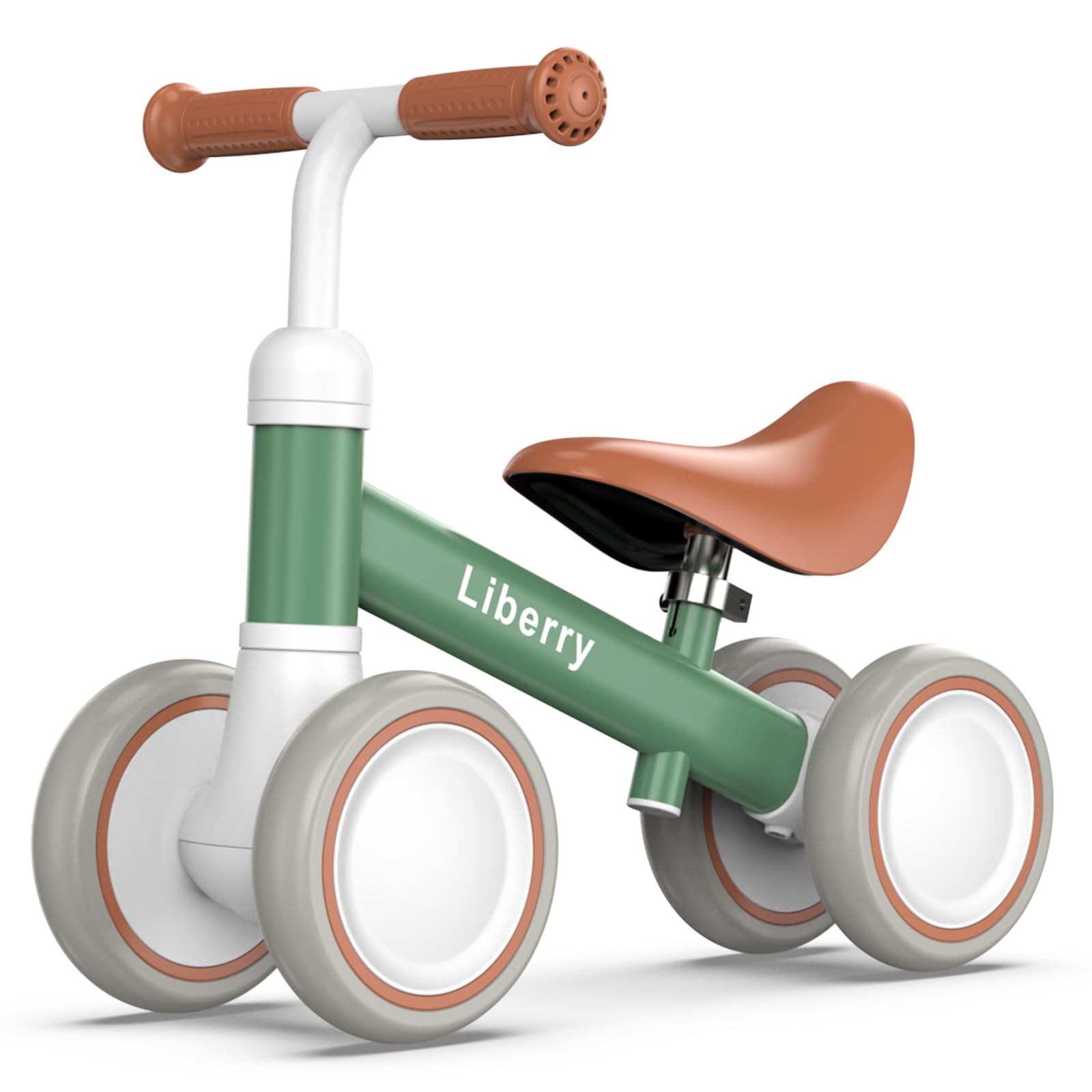
Unlike the two-wheeled bikes above, the Liberry uses a four-wheel configuration — think of it as a ride-on toy with a steering column rather than a true balance bike. This makes it a completely different product category aimed at the youngest riders: babies from 12 to 24 months who are just learning to walk. The four-wheel base eliminates tipping entirely, so the child can sit, stand, and walk the bike forward without any fear of falling sideways. The PU seat adjusts from 9.7 to 11 inches, which is the lowest minimum seat height of any bike here, fitting children with inseams as short as 8 inches.
The closed wheels are fully enclosed to prevent pinched toes, and the frame is made of strengthened steel. The handlebars are wrapped in rubber rather than foam, which avoids the tearing hazard that some foam grips present when chewed or pulled by teething toddlers. The included letter stickers let you personalize the bike with the child’s name, a small detail that creates a sense of ownership and pride.
Assembly takes about five minutes — attach the handlebar stem to the frame with the provided hex key, snap on the wheels, apply the stickers. The bike loves smooth surfaces: hardwood, tile, linoleum, and short-pile carpet. It struggles on gravel, thick grass, or uneven sidewalks, so outdoor use should be limited to paved paths. As a first “I’m moving on my own” toy that transitions a baby from crawling to walking with a purpose, the Liberry excels.
Why it’s great
- Four-wheel base is completely stable for new walkers
- Lowest seat height (9.7 in) fits babies with short inseams
- Enclosed wheels and rubber handles are safe for teething toddlers
Good to know
- Not a true two-wheel balance bike — cannot teach leaning balance
- Performs poorly on uneven surfaces like gravel or grass
FAQ
What inseam length does my toddler need for a balance bike?
Are EVA foam tires better than pneumatic tires for toddlers?
Should I buy a balance bike with a hand brake?
Final Thoughts: The Verdict
For most families, the winning balance bike for toddlers is the Retrospec Cub because it balances the widest seat-height range, puncture-proof EVA tires, and a durable steel frame at a mid-range price that covers the toddler years without needing a replacement. If your child is particularly small or young and you want the lightest possible bike, grab the Banana Bike LT — its 6.4-pound aluminum frame and quick-release seat clamp make it the easiest for a petite 2-year-old to control. And for beginners who need extra stability before switching to two wheels, nothing beats the Yvolution Y Velo Junior with its confidence-building dual-rear-wheel mode.

Mo Maruf
I created WellFizz to bridge the gap between vague wellness advice and actionable solutions. My mission is simple: to decode the research and give you practical tools you can actually use.
Beyond the data, I am a passionate traveler. I believe that stepping away from the screen to explore new environments is essential for mental clarity and physical vitality.