Our readers keep the lights on and my smoothie glass nicely filled. As an Amazon Associate, I earn from qualifying purchases.
Teaching an 18-month-old to balance on two wheels demands a machine that fits their tiny legs and fearless spirit — not an oversized toy that wobbles with every scoot. The wrong geometry leaves toddlers frustrated, while a properly sized low-frame bike lets them plant both feet flat and build glide speed at their own pace.
I’m Mohammad Maruf — the founder and writer behind WellFizz. I’ve spent years researching the specific hardware specs that make or break a toddler’s first riding experience, from seat height minimums and wheel composition to frame material gauges and steering limits.
After combing through test reports and thousands of parent reviews, I’ve narrowed the market to the seven models that genuinely fit the smallest riders. This guide to the best balance bike for an 18 month old focuses solely on real-world fit, durability, and safety engineering.
How To Choose The Best Balance Bike For An 18 Month Old
An 18-month-old is still mastering walking stride and leg control, so the bike must accommodate their short inseam without forcing them to tiptoe. Three factors separate a usable first bike from a frustrating one.
Seat Height Minimum Is Non-Negotiable
The most critical spec for this age group is the lowest seat height setting. An 18-month-old with a 10-inch inseam needs a seat that drops to at least 9.5 inches so both feet rest flat on the ground. A bike with a 12-inch minimum forces the child to ride on their toes, which undermines balance learning and increases tip-over risk.
Wheel Material Dictates Where the Bike Can Roll
Airless foam or rubber wheels (EVA, TPU, or puncture-proof) are ideal for indoor and paved surfaces because they never go flat and leave no marks on hardwood floors. Hard plastic wheels roll smoothly on tile but slip on grass or loose gravel. Pneumatic tires provide the best traction outdoors but add weight and require maintenance — rarely necessary for a toddler bike used primarily on sidewalks and driveways.
Steering Limiter and Frame Geometry
A 135-degree steering limit prevents the handlebars from swiveling fully sideways, which is a common cause of sudden face-first falls when a new rider turns too sharply. A low frame step-through height also matters — toddlers should be able to mount and dismount without lifting a leg over a high top tube. Look for “easy mount” or “low center of gravity” mentions in the specs.
Quick Comparison
On smaller screens, swipe sideways to see the full table.
| Model | Category | Best For | Key Spec | Amazon |
|---|---|---|---|---|
| Kinderfeets Tiny Tot Plus | Premium | Natural wood durability | Seat 10-13 in | Amazon |
| Retrospec Cub | Premium | Off-road versatility | Seat 11-14.5 in | Amazon |
| Hape My First | Premium | Ultra-light weight | 3.2 lbs frame | Amazon |
| Yvolution Y Velo Junior | Mid-Range | Convertible 3-to-2 wheel | Seat 11-14.2 in | Amazon |
| Radio Flyer Steady Start | Mid-Range | Stable 3-wheel platform | Wide front + dual rear | Amazon |
| Bobike Toddler | Budget | Budget-friendly pink option | 135° steering limit | Amazon |
| Liberry Baby | Budget | Entry-level 4-wheel stability | Seat 9.7-11 in | Amazon |
In‑Depth Reviews
1. Kinderfeets Tiny Tot Plus Balance Bike

The Kinderfeets Tiny Tot Plus is a premium wooden balance bike built from sustainable birchwood with a water-based lacquer finish. Its adjustable seat spans 10 to 13 inches, making it one of the lowest minimum heights available for an 18-month-old — critical for keeping both feet planted flat during the first glides. The 9-inch airless tires are puncture-proof and roll silently across hardwood floors and concrete alike, while the extra-wide base provides inherent stability that reduces wobble.
This bike converts from a 3-wheel tricycle configuration to a 2-wheel balance bike as your child’s confidence grows, effectively giving you two stages of learning in one frame. The padded handlebar grips and low step-through design let tiny riders mount independently without struggling over a high top tube. At just 4.4 pounds, it is light enough for a toddler to lift and steer without assistance.
The wood construction naturally dampens vibration and feels warmer to the touch than steel or aluminum, but it also means the frame can show scratches from hard drops. Assembly takes under 10 minutes, and the brand plants a tree for every purchase through Trees for the Future. For parents wanting an heirloom-quality first bike that lasts through age 4, this is the strongest contender.
Why it’s great
- Lowest seat height (10 in) perfectly fits short 18-month-old inseams
- 2-in-1 design transitions from trike to balance bike as child grows
- Sustainable birchwood frame with non-toxic finishes
Good to know
- Wood frame can scratch and scuff more visibly than metal
- Premium price tier compared to steel alternatives
2. Retrospec Cub Toddler Balance Bike

The Retrospec Cub is engineered with puncture-proof airless tires that glide over pavement, grass, and packed dirt without any risk of flats — a meaningful advantage if your 18-month-old will ride off the driveway. The alloy steel frame is both lightweight enough for a toddler to control and sturdy enough to survive repeated drops. The low step-through frame makes mounting effortless, so even a 1-year-old can climb on alone.
Seat height adjusts from 11 to 14.5 inches, which suits toddlers with inseams on the taller side but may be borderline for a petite 18-month-old. Rounded edges and non-slip grips reduce pinch hazards, and the absence of a brake keeps the design simple — toddlers stop by putting their feet down, which is the safest method at this age. The quick-release handlebar adjustment lets parents fine-tune the fit without tools.
Customer reviews consistently note that the bike survives over a year of hard use without significant wear. The “eggshell” colorway gives it a retro aesthetic that stands out from the usual primary reds and blues. If your child will ride on mixed terrain or you want a bike that transitions seamlessly from grass to sidewalk, the Cub delivers the best tire durability in its class.
Why it’s great
- Puncture-proof tires handle pavement, grass, and dirt without flats
- Quick-release seat and handlebar adjustments are tool-free
- Low center of gravity increases stability for new riders
Good to know
- Minimum seat height (11 in) may be too tall for very short toddlers
- No steering limiter, so sharp turns can still tip the bike
3. Hape My First Balance Bike

The Hape My First Balance Bike uses a lightweight aluminum alloy frame that weighs just 3.2 pounds — the lightest option in this roundup. For a 1-year-old still building core strength, every ounce reduction makes steering and lifting easier. The TPU foam wheels are soft enough to protect hardwood floors from scratches and silent enough for indoor riding without disturbing anyone. The Vespa-inspired green color and two-tone design give it a playful, European scooter aesthetic.
The seat adjusts horizontally to customize the reach to the handlebars, accommodating children from 12 months to 3 years. The wheels, while floor-friendly, are plastic-based and lose traction on grass or loose gravel, limiting this bike to indoor and paved surfaces only. Assembly requires no tools — the frame snaps together with a simple locking mechanism.
Reviews from parents confirm that children as young as 16 months quickly master gliding on this bike, and the adjustable components extend its useful life well past the second birthday. The lack of rubber or pneumatic tires means the ride is slightly stiffer on bumpy sidewalks, but for a first indoor/patio bike, the weight savings and clean-rolling wheels make this an excellent lightweight specialist.
Why it’s great
- Ultra-light 3.2-lb frame is ideal for toddlers with low upper-body strength
- TPU foam wheels won’t mark hardwood or tile floors
- Tool-free assembly with a simple snap-together design
Good to know
- Plastic wheels lack traction on grass, gravel, or wet pavement
- No steering limiter can trigger sharp-turn tip-overs
4. Yvolution Y Velo Junior 9″ Balance Bike

The Yvolution Y Velo Junior features a unique dual-rear-wheel system that provides a wide, stable base for absolute beginners, then converts to a single rear wheel once the child has mastered balance. This staged progression lets an 18-month-old start with a tricycle-like stability and transition to a true balance bike without buying a second frame. The seat adjusts from 11 to 14.2 inches, and the handlebars also move vertically to dial in the perfect riding position.
The 9-inch wheels have higher ground clearance than many competitors, making this bike more capable on uneven sidewalks and grass strips. At 7.7 pounds, it is heavier than some all-steel alternatives, but the convertible mechanism and larger wheel size justify the added mass. The alloy steel frame feels solid during aggressive scooting, and the absence of a brake keeps the design clean for foot-stopping kids.
Parents who reviewed this bike consistently praise the transition from dual rear wheels to single, noting that their 2-year-olds adjusted within a week. The vibrant pink color and refreshed graphic panels make it visually appealing to young children. If you want a single bike that grows from wobbly beginner to confident glider without buying separate models, the Y Velo Junior’s convertible chassis is the smartest investment.
Why it’s great
- Dual rear wheel mode provides extra stability for first-time riders
- Adjustable seat and handlebars accommodate growth from 18 months to 3 years
- Higher ground clearance handles uneven surfaces better than low-riding bikes
Good to know
- Heavier (7.7 lbs) than lighter aluminum or wood alternatives
- Switching between 3-wheel and 2-wheel modes requires a small tool
5. Radio Flyer Steady Start Balance Bike

Radio Flyer’s Steady Start uses a wide front wheel and dual rear wheels to create a self-standing three-point stance that never needs a kickstand. For an 18-month-old who hasn’t yet mastered stopping without tipping, this geometry virtually eliminates sideways falls. The treaded wheels are designed for quiet rolling on hardwood, carpet, cement, and paved paths — the wide contact patch distributes weight evenly and reduces noise compared to narrow tires.
The padded seat adjusts without tools via a simple lever mechanism, letting parents raise it in seconds as the child grows. The red steel frame matches Radio Flyer’s classic wagon aesthetic and feels reassuringly sturdy for the 7-pound build. Chainless and brakeless, the Steady Start keeps the learning curve simple: kids push with their feet and slow down by dragging their toes.
Given that the 3-wheel configuration cannot convert to 2 wheels, this bike is best treated as a training tool for the first 6-12 months of balance learning, after which most children outgrow the stability crutch. Customer reviews highlight that the bike’s low center of gravity makes it nearly impossible for toddlers to tip, giving nervous parents genuine peace of mind. If your priority is preventing falls above all else during the initial scooting phase, this is the safest choice.
Why it’s great
- Three-wheel stance prevents tipping — stands on its own without a kickstand
- Tool-free seat adjustment requires no screwdrivers or wrenches
- Treaded wheels roll quietly on every indoor and paved surface
Good to know
- No conversion to 2-wheel mode — child will outgrow the stability feature
- Slightly heavier than some 2-wheel-only options at 7 pounds
6. Bobike Toddler Balance Bike

The Bobike Toddler Balance Bike stands out for its 135-degree steering limiter, which prevents the handlebars from turning fully sideways — a feature that directly reduces the risk of sudden face-first falls during sharp turns. The enclosed, non-slip wheels are fully covered to protect small feet from getting pinched or caught in the wheel spokes. The carbon steel frame supports up to 40 pounds and can handle toddlers from 1 to 4 years old with the adjustable seat.
The pink color scheme and proximity to a classic bicycle silhouette make this visually appealing to children who want to feel like they’re riding a “real bike.” Assembly takes a few minutes with basic tools, and the bike carries ASTM F963-11 and EN71 certifications for toy safety. The all-steel construction gives it a solid feel, though it is heavier than aluminum or wood alternatives.
Some customer reviews note that the seller listed as Bobike on Amazon may actually ship from a different manufacturer, which can complicate warranty claims if parts are missing. The handlebars on certain units were reported to have alignment issues. For the price point, the steering limiter and enclosed wheel design offer safety features typically found on more expensive models, making this a smart entry-level pick if you confirm the seller supports returns.
Why it’s great
- 135° steering limiter prevents sharp-turn tip-overs
- Enclosed non-slip wheels protect feet from pinching or spoke injuries
- ASTM and EN71 certified for international toy safety standards
Good to know
- Seller identity on Amazon can be inconsistent, affecting warranty support
- Steel frame is heavier than aluminum or wood competitors
7. Liberry Baby Balance Bike
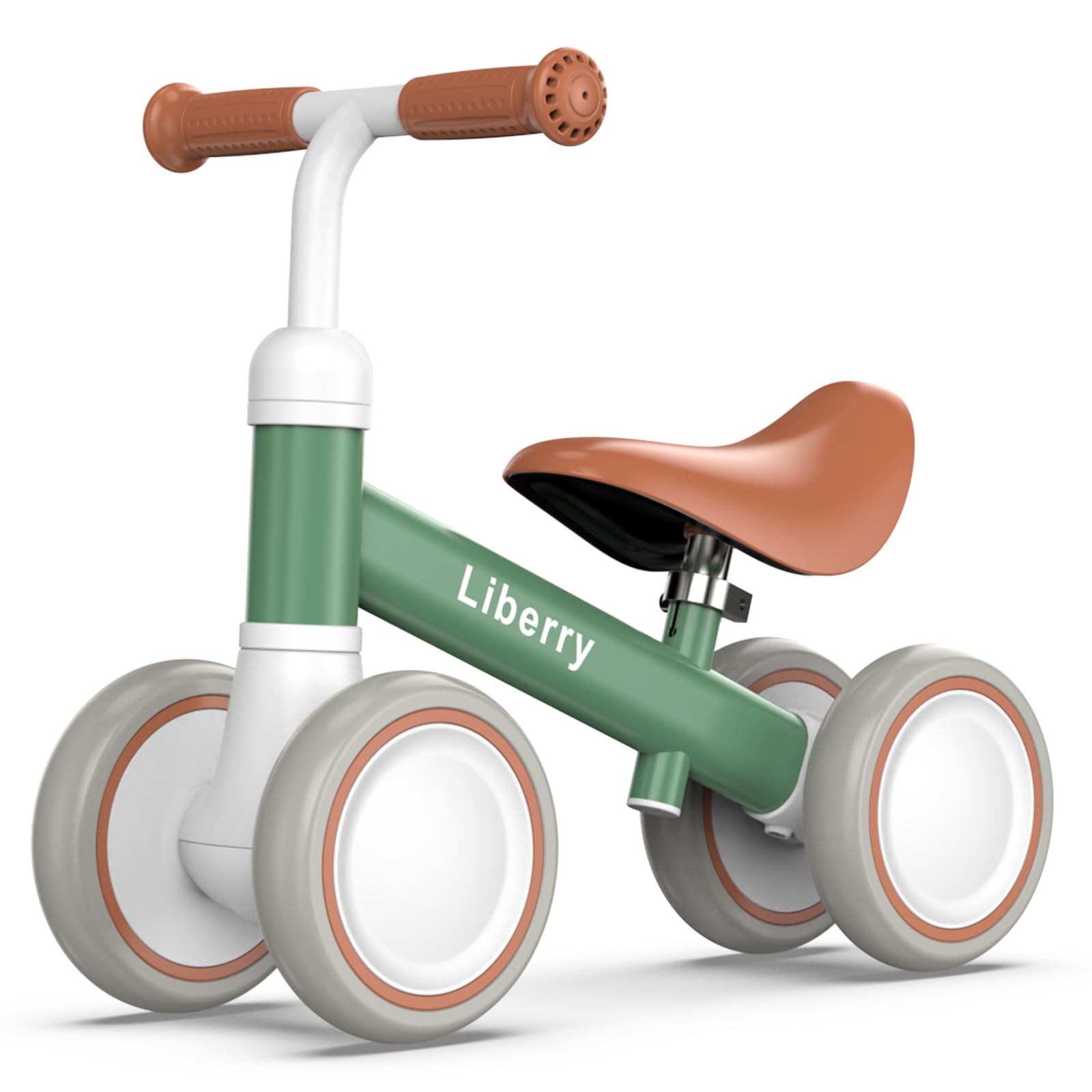
The Liberry Baby Balance Bike uses a four-wheel layout — two front, two rear — to create the most stable platform in this guide. The seat adjusts from 9.7 to 11 inches, which is the lowest minimum height of any model reviewed here, making it ideal for petite 18-month-olds with short inseams who cannot comfortably reach the ground on taller bikes. The EVA foam tires are smooth, nearly silent, and leave no scuff marks on wood floors.
The integrated steel body supports up to 55 pounds, doubling the weight capacity of many competitors and ensuring the bike survives years of use. The handlebar grips are rubber rather than foam, which eliminates the risk of toddlers tearing off bite-sized foam pieces. The included letter sticker kit lets parents personalize the bike with the child’s name — a small touch that builds early ownership excitement.
Because the four-wheel configuration cannot convert to two wheels, this bike serves exclusively as a first balancing tool before transitioning to a real balance bike later. The manufacturer warns against using it on uneven gravel paths, as the small wheels can get caught on loose stones. For the budget tier, the combination of the lowest seat height, high weight capacity, and floor-friendly tires makes this the most accessible entry point for the smallest toddlers.
Why it’s great
- Lowest seat height (9.7 in) in this guide — fits very short 18-month-olds
- 55-lb weight capacity far exceeds age-range expectations
- EVA foam tires are silent and safe for hardwood floors
Good to know
- Four-wheel layout is a training tool, not a true balance bike — no conversion possible
- Small wheels struggle on gravel, grass, and uneven ground
FAQ
Can an 18-month-old really ride a balance bike?
What seat height does an 18-month-old need?
Are 3-wheel balance bikes better for toddlers than 2-wheel?
Final Thoughts: The Verdict
For most users, the balance bike for an 18 month old winner is the Kinderfeets Tiny Tot Plus because its 10-inch minimum seat height, sustainable birchwood frame, and 2-in-1 convertible design solve the two biggest problems — small leg fit and long-term utility — in one package. If your child will primarily ride on mixed terrain, grab the Retrospec Cub for its puncture-proof tires and off-road confidence. And for the lightest possible option that a barely-walking toddler can steer, nothing beats the Hape My First Balance Bike at just 3.2 pounds.

Mo Maruf
I created WellFizz to bridge the gap between vague wellness advice and actionable solutions. My mission is simple: to decode the research and give you practical tools you can actually use.
Beyond the data, I am a passionate traveler. I believe that stepping away from the screen to explore new environments is essential for mental clarity and physical vitality.