Our readers keep the lights on and my smoothie glass nicely filled. As an Amazon Associate, I earn from qualifying purchases.
A good pizza stone transfers heat into your dough, but a baking steel practically hammers it. The difference is simple physics — steel conducts heat roughly 20 times faster than ceramic, which directly translates to a faster, crispier, and more evenly browned crust from a standard home oven. If you have spent years dealing with soggy centers or pale bottoms, the upgrade to a steel plate is the single most impactful change you can make to your workflow.
I’m Mohammad Maruf — the founder and writer behind WellFizz. My research focuses on the material science behind hard-anodized cooking surfaces, thermal conductivity ratings, and the real-world heat retention limits of carbon steel versus cordierite stone, allowing me to identify which models genuinely outperform in a home environment.
After analyzing seven of the most popular models on the market, I have identified the key differences in thickness, surface area, and overall build quality that determine whether a steel will produce a blistered Neapolitan-style pie or just a slightly better frozen pizza. This guide breaks down everything you need to find the baking steel for pizza that transforms your home oven into a legitimate pizzeria tool.
How To Choose The Best Baking Steel For Pizza
Buying a baking steel means committing to a heavy piece of metal that will live on your oven rack or a nearby shelf. The wrong choice leads to a poor fit, inadequate heat retention, or constant rust battles. These four factors separate an effective tool from a frustrating slab.
Thickness and Thermal Mass
The standard thickness is 1/4 inch, which balances weight with heat storage. This size preheats in about 45 minutes and holds enough energy to bake multiple pizzas in sequence without significant temperature drop. A 3/8-inch steel stores more thermal mass, which helps when baking at very high temperatures or making several pies back-to-back, but it can weigh over 30 pounds, making it difficult to handle and store.
Dimensions and Oven Fit
Measure your oven rack width before buying. A 14×16-inch steel fits most standard home ovens, leaving enough room for airflow and safe maneuvering. A 16-inch square steel works for larger ovens but may block airflow if placed too close to the back wall. The steel should never touch the heating elements or oven walls. Always leave at least one inch of clearance on all sides.
Pre-Seasoning and Maintenance
Pre-seasoned steel arrives with a protective oil layer baked onto the surface, which prevents rust and provides a naturally non-stick cooking area. A raw steel plate requires immediate seasoning in your oven, adding extra prep time before your first bake. Both types require drying after every wash and a light oil rub if rust spots appear. Black oxide or sandblasted finishes resist rust better than polished steel.
Edge Design and Handling Features
A steel plate weighing 15 to 30 pounds needs safe handling. Models with a finger hole or thumb cutout on one side allow you to grip the steel securely with one hand while sliding the pizza onto it. Polished or laser-cut edges reduce the risk of cuts when sliding the steel in and out of a hot oven. Models with sharp, unfinished edges can damage oven racks and are harder to clean.
Quick Comparison
On smaller screens, swipe sideways to see the full table.
| Model | Category | Best For | Key Spec | Amazon |
|---|---|---|---|---|
| The Original Baking Steel | Premium | Authentic Neapolitan crust | 1/4″ x 14″ x 16″ | Amazon |
| Primica Pizza Steel | Mid-Range | Daily home baking | 1/4″ x 16″ x 13.4″ | Amazon |
| Chef Pomodoro Steel | Mid-Range | Very large pizzas | 1/4″ x 16.1″ x 13.4″ | Amazon |
| Loftern Pizza Steel | Budget-Friendly | Versatile baking | 1/4″ x 16″ x 14″ | Amazon |
| IMPRESA Pizza Steel | Budget-Friendly | Small kitchens | 1/4″ x 14″ x 14″ | Amazon |
| VEVOR Pizza Steel (3/8″) | Premium | Heavy-duty high heat | 3/8″ x 20″ x 14″ | Amazon |
| VEVOR Pizza Steel (1/4″) | Entry-Level | Best value for size | 1/4″ x 16″ x 14.5″ | Amazon |
In‑Depth Reviews
1. The Original Baking Steel (14″x16″x1/4″)

Invented in 2012, this is the steel that defined the category. The 1/4-inch thickness strikes a nearly perfect balance between thermal mass and manageable weight — at 15 pounds, it is heavy enough to store serious heat but not so heavy that you dread moving it. The pre-seasoning applied by hand in Massachusetts means you can unbox, preheat, and bake a pizza in under an hour without any extra steps. The 14×16-inch dimension fits most standard ovens without crowding the rack.
This model handles temperatures up to 1000 degrees Fahrenheit, which is well above the 550-degree limit of virtually all home ovens. The steel itself never warps or cracks. The generous surface area accommodates a 14-inch pizza with room to spare, and the laser-cut edges are smooth enough to slide safely over oven grates. After the initial season, cleaning requires only a dry scrape and an occasional light oil wipe.
Multiple owners report baking dozens of pizzas per week for years with no degradation. One reviewer mentioned still using the same steel purchased in 2013. The heat retention is so consistent that it also works exceptionally well for sourdough bread, searing steaks, and making smash burgers. For the home cook who wants a single do-everything baking surface that will outlast their oven, this is the standard.
Why it’s great
- Pre-seasoned and ready from day one
- Rated for up to 1000°F without damage
- Proven lifespan exceeding a decade
Good to know
- Premium pricing reflects brand legacy
- Requires thorough drying to prevent rust
2. Primica Pizza Steel XL (16″x13.4″x1/4″)

The Primica XL uses a solid slab of carbon steel that delivers the same 20x conductivity advantage over ceramic stone. The 16×13.4-inch surface is fractionally smaller than the Baking Steel, but still large enough for a 14-inch pizza. The steel weighs around 14.5 pounds, which is comfortable enough for most users to handle with two hands. The edge design is smooth, and the steel comes pre-seasoned with a dark patina that continues to improve with use.
Owners consistently report excellent crust browning after a 45-minute preheat at 550 degrees Fahrenheit. The steel holds temperature well enough to bake three pizzas in quick succession without noticeable cooling. One user documented baking over 70 pizzas in three months with no change in performance. The surface drains grease effectively, which produces a cleaner bake on pepperoni-heavy pies.
The one known limitation is that stovetop preheating at very high temperatures can warp the steel slightly. The manufacturer recommends oven-only preheating. When used correctly, the Primica delivers a crust that matches wood-fired oven quality. For bakers who want near-premium performance without paying the premium brand premium, this is a strong alternative.
Why it’s great
- Excellent heat conductivity and even browning
- Pre-seasoned and low-maintenance surface
- Large surface fits most home ovens
Good to know
- Avoid stovetop preheat to prevent warping
- Heavy enough to require careful handling
3. Chef Pomodoro Pizza Steel (16″x13.25″x1/4″)

Chef Pomodoro offers a 16-inch square design that provides one of the largest usable cooking surfaces in the mid-range tier. At roughly 14.6 pounds, it sits at the standard weight for a 1/4-inch steel, and the pre-seasoned finish arrives ready for immediate baking. The steel is rated to withstand up to 932 degrees Fahrenheit, which leaves significant headroom above any residential oven limit.
The finger hole on one side allows for one-handed grip when sliding the steel in and out of the oven. The rectangular dimensions measure 16.14 inches long by 13.39 inches wide, giving enough room for a 14-inch pizza with proper space for turning. Owners report that the seasoning holds up well after multiple washes, and the steel does not absorb flavors from previous bakes, making it suitable for both savory pizzas and sweet pastries.
The most common feedback from buyers is that this steel produces a New York-style crust in 4 to 6 minutes at 550 degrees Fahrenheit. One reviewer noted that their first pizza on this steel outperformed pizzas made in an Ooni outdoor oven. The steel also works well for baking bread and reheating leftover pizza. For the baker who prioritizes surface area and high-temperature safety margin, this is a compelling choice.
Why it’s great
- Very large baking surface for family-sized pies
- Rated for temperatures up to 932°F
- Pre-seasoned with durable, long-lasting finish
Good to know
- Heavy enough to require two hands to position
- Finger hole is on one side only
4. Loftern Pizza Steel (14″x16″x1/4″)
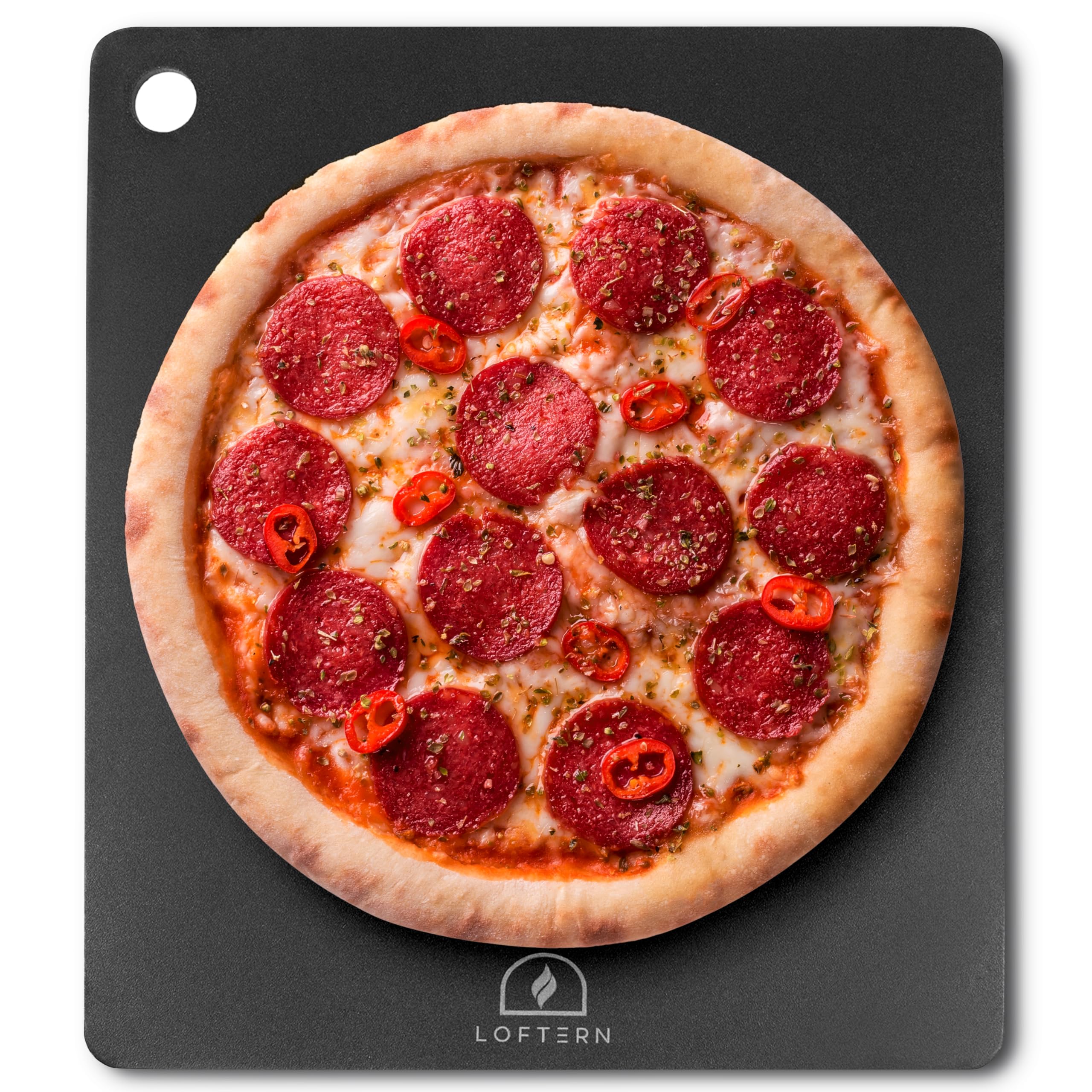
The Loftern steel enters the market as a solid entry-level option with a focus on versatility. The 14×16-inch dimensions match the standard size that fits comfortably in the center of most oven racks. The steel weighs 13.6 pounds, making it slightly lighter than some competitors, which helps with handling without sacrificing meaningful thermal mass. The manufacturer specifically notes warp resistance as a design feature, which suggests the steel undergoes a stress-relief process during manufacturing.
The pre-seasoned surface arrives ready to use and is described as a “Smokestone” color. The steel is compatible with ovens, grills, and dedicated pizza ovens. Owners report successful bakes for pizza, sourdough bread, cookies, and roasting vegetables. The 1/4-inch thickness requires a 45-minute preheat at 550 degrees Fahrenheit, and the steel holds its temperature well enough to bake a single pizza without any recovery time.
Customer feedback indicates that the steel performs well for both homemade dough and frozen pizzas. One reviewer noted that the steel significantly improved the crust quality of their standard frozen pizza. The main caveat is that the steel is heavy — multiple reviews mention the weight as a consideration for storage. For a first-time steel buyer who wants a reliable multipurpose tool without overcommitting to a premium brand, this is a smart starting point.
Why it’s great
- Warp-resistant construction for long-term flatness
- Versatile across pizza, bread, and roasting
- Pre-seasoned and low-maintenance finish
Good to know
- Heavier handling may be challenging for some
- Limited warranty information available
5. IMPRESA Pizza Steel Plate (14″x14″x1/4″)

The IMPRESA steel is a 14-inch square plate that prioritizes compact storage and easy handling. At 13.27 pounds, it is one of the lighter 1/4-inch steels, making it a good choice for home bakers with limited upper-body strength or small kitchens. The pre-seasoned non-stick surface requires only a damp cloth for cleaning. The 1-inch finger hole on one edge provides a secure grip for moving the steel when hot.
The square shape works well for smaller pizzas, flatbreads, and artisan loaves but may feel cramped for 14-inch round pizzas. The steel heats quickly and delivers the same 20x conductivity advantage as larger models. Owners report excellent results with frozen pizzas after a 20-minute preheat, and homemade dough at 550 degrees Fahrenheit produces a crisp, well-browned crust. The steel also works for baking cookies and searing steaks.
The primary limitation is that the 14-inch square dimension provides less total area than rectangular models. Baking two small pizzas simultaneously is not practical. Some users also note that the steel loses heat faster than thicker models when baking multiple pizzas back-to-back. For the solo baker or couple who wants restaurant-quality crust without dedicating a full oven rack to a massive steel, the IMPRESA offers a balanced compromise.
Why it’s great
- Compact size fits smaller ovens and storage spaces
- Lightweight for easier handling and cleaning
- Pre-seasoned non-stick surface requires little effort
Good to know
- Limited surface area for larger pizzas
- Heat recovery slower than thicker steels
6. VEVOR Pizza Steel (20″x14″x3/8″)

The VEVOR 3/8-inch steel is the thickest model in this lineup, weighing 31.5 pounds. The extra quarter-inch of steel adds substantial thermal mass, which translates to better heat retention during long bake sessions. The 20×14-inch surface is enormous — large enough to bake a 16-inch pizza with room for a second smaller pie or a batch of bread rolls. This steel is designed for the serious home baker who makes multiple pizzas in one session.
The pre-seasoned black carbon steel finish resists rust better than most raw steel plates. The sandblasted treatment provides a slightly textured surface that helps grip the dough during launch. The steel can handle temperatures up to 600 degrees Fahrenheit, which is the practical limit for most residential ovens. Owners report that the steel stays hot enough to keep food warm for several minutes after the oven is off, which helps with serving timing.
The weight is the primary barrier. Multiple reviewers returned the steel specifically because they found it too heavy to handle safely. Storing this steel requires permanent oven placement or a very sturdy shelf. The thumb hole assists with hanging storage but does little to reduce the risk of dropping during transport. For bakers with the strength and permanent oven space to accommodate it, this steel provides the highest thermal performance available at its price point.
Why it’s great
- Maximum thermal mass for high-volume baking
- Very large surface for family-sized pies
- Excellent rust resistance from finish treatments
Good to know
- Extremely heavy and difficult to maneuver
- Requires permanent oven or very strong storage
7. VEVOR Pizza Steel (16″x14.5″x1/4″)

The standard VEVOR steel offers a 16×14.5-inch surface at the standard 1/4-inch thickness for a very accessible entry point. Weighing 14.8 pounds, it matches the weight of most premium steels while undercutting them significantly in cost. The pre-seasoned carbon steel arrives with a dark, sandblasted finish that promotes even oil distribution during the seasoning process and provides a rust-resistant barrier. The laser-cut edges are smooth and safe.
Performance is consistent with other 1/4-inch steels. A 45-minute preheat at 550 degrees Fahrenheit produces a crisp, leopard-spotted crust in about 6 minutes. The steel holds enough heat for two consecutive bakes, though a third pizza may show slightly reduced browning on the bottom. The thumb hole on one side allows for wall storage and provides a grip point during transport. Cleaning is simple — a dry scrape removes debris, and a damp cloth handles the rest.
Buyers consistently praise the value proposition. Multiple reviews note that the steel performs at the same level as models costing significantly more. The main concern is the weight — several reviewers mention that the steel is too heavy to be practical for everyday use, recommending the 1/4-inch version over thicker options. For the budget-conscious baker who wants a proven steel without the premium price tag, the VEVOR represents the best price-to-performance ratio available.
Why it’s great
- Exceptional value for a full-size 1/4-inch steel
- Pre-seasoned with rust-resistant sandblasted finish
- Smooth laser-cut edges for safe handling
Good to know
- Heavy weight makes handling a two-person job
- Must dry completely after each use to avoid rust
FAQ
How long should I preheat a baking steel for pizza?
Can a baking steel replace a pizza stone for bread?
Does a baking steel rust and how do I prevent it?
What size baking steel fits a standard home oven?
Final Thoughts: The Verdict
For most users, the baking steel for pizza winner is the The Original Baking Steel because it combines the ideal 1/4-inch thickness with a proven pre-seasoning process and a lifespan that extends well past a decade. If you want the largest surface area for family baking, grab the Chef Pomodoro Pizza Steel. And for the tightest budget without compromising performance, nothing beats the VEVOR Pizza Steel.

Mo Maruf
I created WellFizz to bridge the gap between vague wellness advice and actionable solutions. My mission is simple: to decode the research and give you practical tools you can actually use.
Beyond the data, I am a passionate traveler. I believe that stepping away from the screen to explore new environments is essential for mental clarity and physical vitality.