Our readers keep the lights on and my smoothie glass nicely filled. As an Amazon Associate, I earn from qualifying purchases.
Waking up to a fresh pile of sawdust beneath your wooden deck or porch is the unmistakable signal that carpenter bees have begun their seasonal nesting ritual. These solitary wood borers don’t eat the wood, but their relentless drilling creates structural pathways that invite rot, moisture, and secondary pests, turning a minor nuisance into a costly repair over time. A targeted lure designed to draw these specific bees out of their tunnels and into a trap or treatment zone is the most effective strategy for protecting your property without resorting to broad-spectrum sprays.
I’m Mohammad Maruf — the founder and writer behind WellFizz. My research into pest control hardware and chemical-free deterrents focuses on distinguishing between products with genuine biosignature mimicry and those relying on generic attractants that work on yellow jackets but leave carpenter bees unimpressed.
This guide helps you navigate the narrow world of pheromone-based lures, in-hole treatments, and physical trap systems so you can choose the best bait for carpenter bees that matches your home’s specific vulnerability.
How To Choose The Best Bait For Carpenter Bees
Carpenter bees are not attracted to the same sugary baits that work on wasps and yellow jackets. Their foraging behavior centers around wood moisture, existing nesting pheromones, and visual cues from tunnel entrances. Selecting the wrong lure type wastes the entire season and leaves your wood vulnerable to further drilling.
Pheromone Mimicry vs. Food-Based Attractants
The most effective carpenter bee lures use a proprietary blend that mimics the biosignature of nesting females. This triggers a territorial or investigative response, drawing the bee directly into a trap or treatment area. Food-based attractants like beer, fruit juice, or honey work on yellow jackets but rarely produce consistent results with carpenter bees because these bees do not forage aggressively for liquid carbohydrates.
Treatment Location: Trap Bait vs. In-Hole Application
Pheromone lures are designed to be placed inside a physical trap hung near active wood surfaces, drawing bees away from the structure and trapping them. In-hole treatments, like viscous pastes squeezed directly into existing tunnels, kill the resident bee and act as a long-term repellent by coating the interior surfaces. The right choice depends on whether you are dealing with active nests or trying to prevent future colonization.
Longevity and Residual Effect
Some lures evaporate or degrade within days, requiring frequent reapplication. Premium formulations using wax or gel bases can last an entire season or more than a year when applied correctly. For ongoing protection without constant maintenance, prioritize products with a minimum six-month residual claim that are protected from direct rain and UV exposure.
Quick Comparison
On smaller screens, swipe sideways to see the full table.
| Model | Category | Best For | Key Spec | Amazon |
|---|---|---|---|---|
| Bee Warehouse Trap | Physical Trap | Catch-and-release protection | Effective range 5-15 feet | Amazon |
| Best Bee Brothers Bait | Pheromone Lure | Baiting bee traps | 10 ml squeeze tube | Amazon |
| GRTRE Bee Butter | In-Hole Treatment | Direct hole elimination | Non-toxic, lasts 1+ year | Amazon |
| Stingmon 4-Pack Traps | Disposable Trap | Multi-insect outdoor trapping | 4-pack, 7.8 x 9.5 inches | Amazon |
| POLLIBEE Mason House | Habitat House | Attracting mason bees | 5/16″ kraft paper tubes | Amazon |
In‑Depth Reviews
1. Bee Warehouse Carpenter Bee Trap
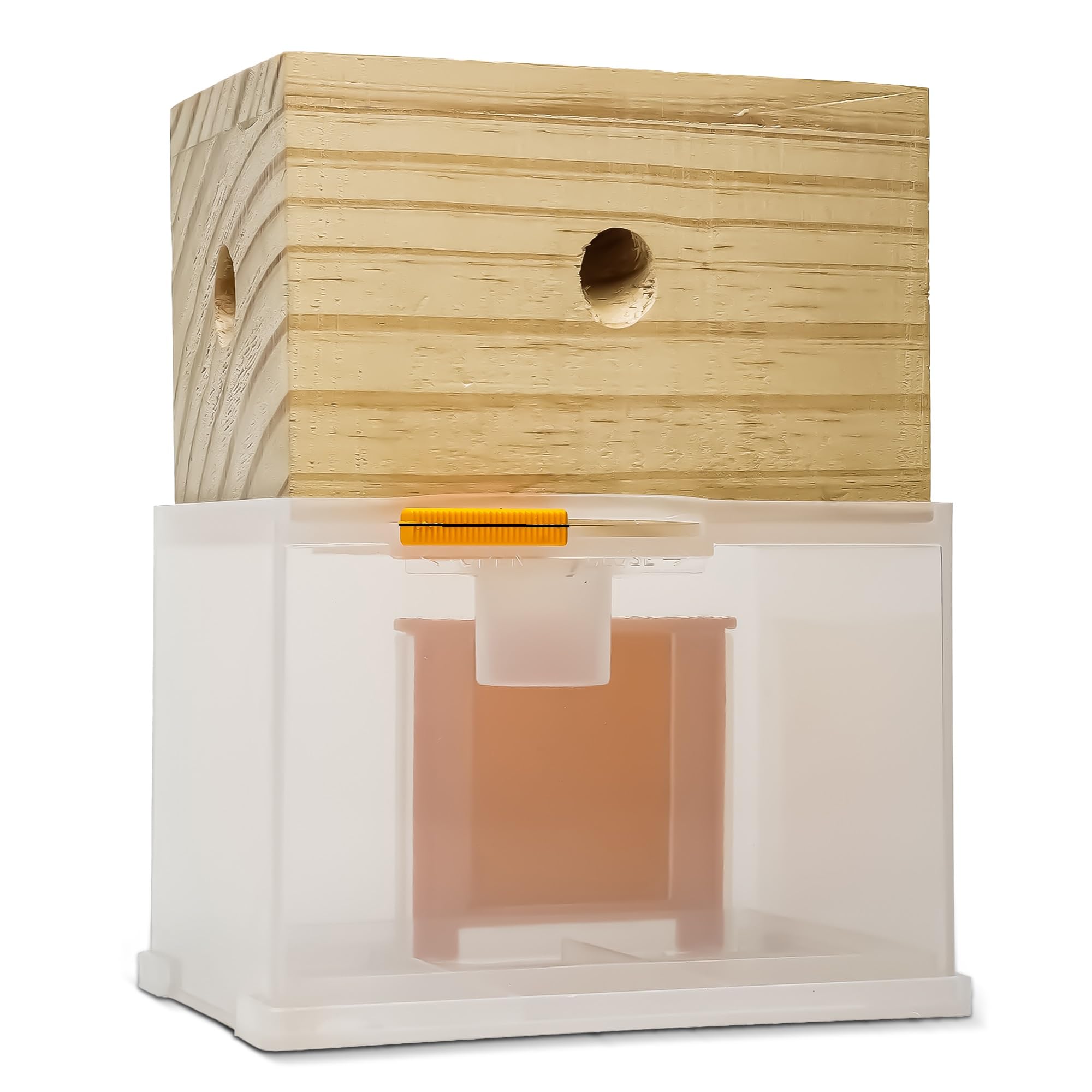
The Bee Warehouse trap uses a clever multi-chamber design with pre-drilled entry holes that exploit the carpenter bee’s instinct to investigate dark, cylindrical spaces. Its effective range of 5 to 15 feet makes it suitable for covering a typical deck or porch overhang without needing multiple units. The patented latch mechanism allows catch-and-release, which is rare in this category and appeals to those who prefer relocation over extermination.
Users consistently report trapping bees within hours of installation, with some capturing five to ten bees in the first two weeks. The extra-large catch chamber reduces the frequency of emptying to roughly once per season, which is a meaningful convenience when the trap is mounted on a high fascia board. The included hole plugs also let you seal off existing nests after the resident bee is caught, preventing reoccupation.
The wooden and plastic construction feels substantial and weather-resistant, and the rectangular base prevents tipping in windy conditions. The primary trade-off is that the trap relies on the bee’s own curiosity rather than an added pheromone lure, so positioning near active drilling sites is essential for maximum effectiveness.
Why it’s great
- Catches multiple bees daily without chemical attractants
- Large chamber needs emptying only once per year
- Catch-and-release feature adds humane flexibility
Good to know
- Quality control on hardware varies between units
- Requires strategic placement near active wood for best results
2. Best Bee Brothers Bee-Licious Bee Bait
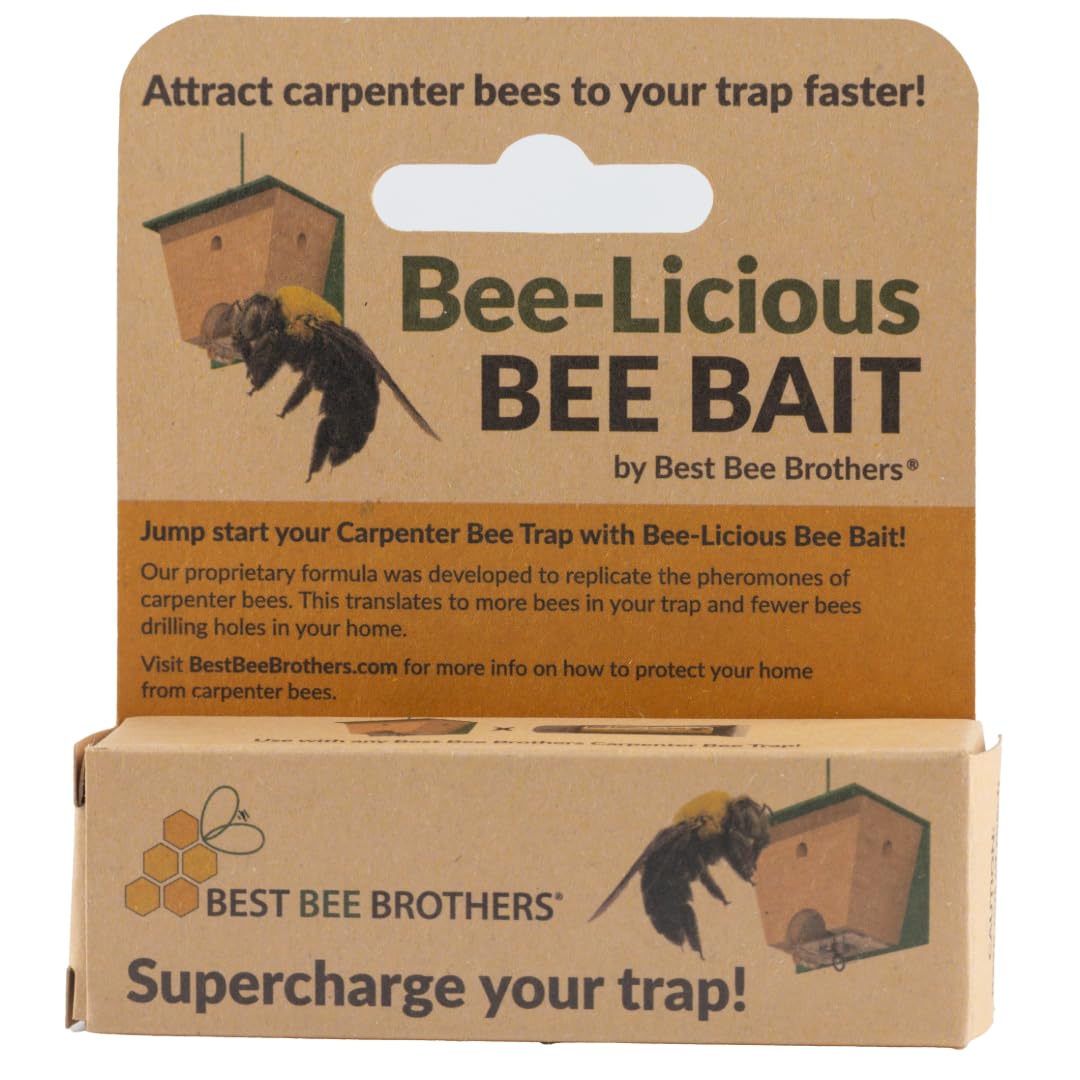
This concentrated pheromone lure is engineered to mimic the biosignature of nesting female carpenter bees, triggering a territorial response that draws them directly into a trap. The 10 ml squeeze tube delivers a dime-sized dose that remains effective for weeks, making it one of the most economical options for baiting multiple trap stations over a season. Users who combined this bait with a physical trap reported catching bees within days, often without needing a trapped “sacrificial” bee to jumpstart the attractant cycle.
The product is marketed as safe around children and pets because it relies on chemical signal mimicry rather than toxic insecticides. This makes it a strong choice for homeowners with vegetable gardens, bird feeders, or free-roaming pets who would be at risk from spray-based treatments. The unscented formula means it doesn’t draw unwanted scavengers or create a sticky mess on wood surfaces.
Not every installation produces instant results — some users reported zero catches even when bees were actively drilling nearby wood. This variability likely depends on the size of the local bee population, the specific pheromone profile of the resident bees, and whether the bait is placed in a trap that mimics the visual cues of a nesting cavity.
Why it’s great
- Pheromone mimicry attracts carpenter bees specifically
- One dime-sized dab lasts for multiple trapping sessions
- Non-toxic formulation safe around kids and pets
Good to know
- Results vary depending on bee population and trap positioning
- Some users found empty traps despite active drilling nearby
3. GRTRE Brain’s Bee Butter

Brain’s Bee Butter is a non-toxic, non-staining paste applied directly into active carpenter bee holes. Users who had struggled with sprays and foams reported that this butter eliminated over 30 bees from a single cedar pergola within two to three days.
The squeeze tube design allows precise application into irregular drilling patterns, and the non-scented formula leaves no visible stain or odor on the wood. Once applied, the paste remains active through rain and temperature swings, making it suitable for exterior wood surfaces that are fully exposed to the elements. The manufacturer claims effectiveness against wasps, yellow jackets, and wood ants as well, broadening its utility beyond carpenter bees alone.
The main consideration is that this is a reactive treatment — it requires existing holes to be present before you can apply it. For properties without active infestations, a preventative trap-and-lure setup like the Best Bee Brothers or Bee Warehouse trap is a better first line of defense. The per-tube cost is higher than bait-only products, but the longevity often makes it the cheaper option over multiple seasons.
Why it’s great
- Eliminates bees on contact and prevents return for over a year
- Non-staining, odorless formulation suits visible exterior wood
- Effective against multiple wood-destroying insects
Good to know
- Requires existing holes for application — not a preventative tool
- Higher upfront cost per tube compared to liquid lures
4. Stingmon 4 Pack Disposable Wasp Traps
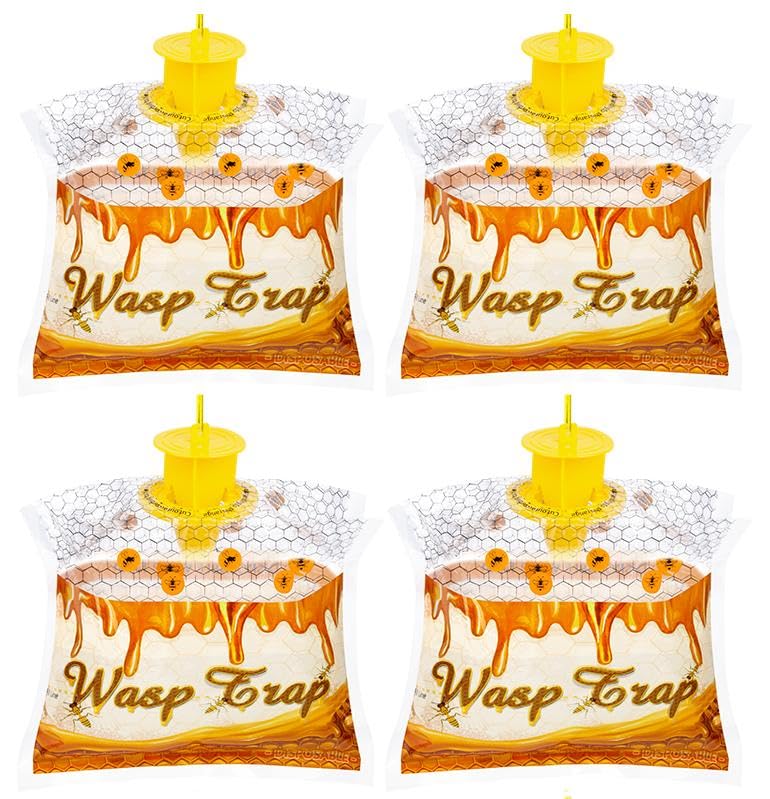
These disposable yellow traps rely on the user adding their own bait — typically beer, fruit juice, or meat — rather than a proprietary pheromone formula. The yellow color and funnel entrance are designed to attract a broad range of flying insects including wasps, hornets, yellow jackets, and carpenter bees. Users who added sparkling grape juice reported capturing many wasps within a week, though carpenter bee catches were less consistent.
The four-pack covers a medium to large property, and the lightweight plastic bags are easy to hang from branches or fence posts with the included ties. The disposable design eliminates the need for cleaning or handling dead insects — you simply discard the entire bag when it’s full. The trap dimensions of 7.8 by 9.5 inches provide enough surface area to be visible from a distance, which is important because visual cues play a role in carpenter bee attraction.
The main limitation is that carpenter bees are less motivated by sugary baits than wasps are. Without a pheromone component, these traps may catch far more yellow jackets and flies than carpenter bees, potentially giving a false sense of protection. For properties specifically infested with carpenter bees, a species-specific lure or trap is significantly more reliable.
Why it’s great
- Four traps in one pack for broad property coverage
- Disposable bags eliminate messy cleanup
- Yellow color provides strong visual attraction
Good to know
- No included bait — requires adding beer, juice, or meat
- More effective against wasps and yellow jackets than carpenter bees
5. POLLIBEE Mason Bee House

The POLLIBEE Mason Bee House is designed to attract peaceful, non-destructive mason bees to your garden, not to control carpenter bees. It features wax-coated natural wood construction with kraft paper tubes measuring 5/16 inches in diameter and 6 inches in length — dimensions that appeal to solitary pollinators but are too small for carpenter bees. The wax coating enhances waterproofing and extends the house’s lifespan through multiple seasons of outdoor exposure.
Mason bees are docile, sting rarely, and are voracious early-spring pollinators that significantly improve fruit set in orchards and gardens. By providing a dedicated nesting structure away from your wooden deck, you can encourage these beneficial insects to establish elsewhere, reducing competition for nesting sites and potentially lowering carpenter bee pressure indirectly. Users reported mason bees moving in within 24 hours, and the removable kraft paper tubes make end-of-season cleaning straightforward.
This is not a bait or trap product — it is a habitat enhancement strategy. If your primary goal is eliminating existing carpenter bee damage, this product will not help. However, for gardeners who want to support pollinators while managing carpenter bees through habitat displacement, it is a thoughtful complementary tool.
Why it’s great
- Attracts peaceful mason bees that pollinate without damaging wood
- Wax coating provides excellent weather resistance
- Removable kraft tubes simplify annual maintenance
Good to know
- Does not attract or trap carpenter bees
- Works best as a supplementary pollinator support, not a stand-alone control
FAQ
Will a mason bee house attract carpenter bees to my deck?
Can I use beer or syrup as a carpenter bee lure instead of buying a commercial product?
Final Thoughts: The Verdict
For most users, the best bait for carpenter bees winner is the Bee Warehouse Carpenter Bee Trap because it catches bees consistently without requiring any chemical attractant, and its large chamber and catch-and-release design offer unmatched convenience. If you prefer a concentrated pheromone lure to boost existing trap performance, grab the Best Bee Brothers Bee-Licious Bait. And for directly eliminating an active nest with protection lasting over a year, nothing beats the GRTRE Brain’s Bee Butter.

Mo Maruf
I created WellFizz to bridge the gap between vague wellness advice and actionable solutions. My mission is simple: to decode the research and give you practical tools you can actually use.
Beyond the data, I am a passionate traveler. I believe that stepping away from the screen to explore new environments is essential for mental clarity and physical vitality.