Our readers keep the lights on and my smoothie glass nicely filled. As an Amazon Associate, I earn from qualifying purchases.
A bag of soil isn’t just dirt—it’s the foundation of your entire harvest. The wrong mix leads to compacted roots, poor drainage, and disappointing yields, while the right bag gives your tomatoes, peppers, and greens a head start that no fertilizer can fix later. Picking the wrong blend is the single fastest way to sabotage a season’s worth of work.
I’m Mohammad Maruf — the founder and writer behind WellFizz. I’ve spent years analyzing bagged soil formulas, comparing organic certifications, and cross-referencing lab-tested nutrient profiles to match specific vegetable varieties with their ideal growing media.
Whether you’re planting in raised beds, containers, or amending native soil, this guide cuts through the marketing to find the best bagged soil for vegetable garden that delivers real organic matter and sustained fertility from the first seed to the final harvest.
How To Choose The Best Bagged Soil For Vegetable Garden
Not all bags marked “garden soil” are suitable for vegetables. Many generic products are designed for ornamentals or flower beds and lack the drainage, organic matter, and nutrient profile that heavy-feeding vegetables like tomatoes, peppers, and squash require. Understanding the ingredients list and the intended use case is the first step to a successful season.
Organic Matter Content and Microbial Life
Vegetables thrive in soil rich in decomposed organic matter—compost, worm castings, or aged bark. This organic material improves water retention in sandy soils and loosens heavy clay, creating the crumbly texture roots love. Products containing worm castings or labeled as vermicompost provide a living colony of beneficial microbes that break down nutrients into plant-available forms, reducing the need for synthetic fertilizer.
Drainage and Aeration
Roots need oxygen. Bagged soils that feel dense or contain high proportions of fine peat moss can become waterlogged, leading to root rot and fungal diseases. Look for blends that include perlite, pumice, or coarse sand. For raised beds and in-ground vegetable patches, a mix that balances moisture retention with free drainage is essential; for containers, a lighter potting mix designed for pots works better than heavy garden soil.
Pre-Mixed Fertilizer vs. Slow-Release Nutrition
Some bagged soils include a synthetic fertilizer that feeds plants for a set period, typically three to six months. While convenient, these can overload young seedlings and may not match the specific nutrient demands of fruiting vegetables. Organic options rely on slow-release nutrients from compost and worm castings, which are gentler on roots and support a healthier soil food web. If you prefer precise control over feeding, opt for a soil without added synthetic fertilizer and manage nutrition separately.
Quick Comparison
On smaller screens, swipe sideways to see the full table.
| Model | Category | Best For | Key Spec | Amazon |
|---|---|---|---|---|
| Back to the Roots Worm Castings | Soil Amendment | Microbial enrichment | 5 lb bag / 100% vermicompost | Amazon |
| Earth Science Earthworm Castings | Soil Amendment | Reducing soil compaction | 3 lb bag / 100% vermicompost | Amazon |
| Miracle-Gro Moisture Control Potting Mix | Potting Mix | Container vegetables | 8 qt bag / Feeds 6 months | Amazon |
| Worm Bliss Worm Castings | Soil Amendment | Small potted veggies | 1 qt bag / OMRI-listed | Amazon |
| Miracle-Gro Shake ‘N Feed Fertilizer | Fertilizer | Supplemental feeding | 4.5 lb / Calcium formula | Amazon |
In‑Depth Reviews
1. Back to the Roots Organic Worm Castings

This 5-pound bag of pure worm castings is the most versatile soil amendment in this lineup. As 100% vermicompost, it delivers a concentrated dose of beneficial microbes, humic acids, and slow-release nutrients without any synthetic fillers. I use it heavily in my own garden—mixed into chunky soil blends for tomatoes and peppers, and sprinkled around established squash plants in early spring. The texture is rich and consistently moist without being soggy, which integrates seamlessly into any existing soil structure.
What sets Back to the Roots apart is the cleanliness of the product. The castings are screened to remove debris, so there’s no risk of introducing weed seeds or pathogens into your vegetable beds. The resealable bag is a practical touch for portioning out smaller applications, especially if you’re managing multiple raised beds. Because it’s purely organic soil biology rather than a synthetic fertilizer, there’s zero risk of burning sensitive seedlings—a critical factor when amending soil for direct-sown carrots or lettuce.
In terms of coverage, a 5-pound bag goes much further than the smaller quarts offered by competing organic amendments. I found it sufficient to amend roughly 15 square feet of raised bed soil at a 1-inch incorporation depth. For gardeners committed to building long-term soil health rather than chasing quick synthetic gains, this is the premium choice that pays dividends across multiple seasons.
Why it’s great
- Clean, screened texture blends easily into existing garden soil without clumping.
- Large 5-pound bag provides better value than smaller quart-sized packages.
- Zero odor and safe for beneficial insects like monarch caterpillars on milkweed.
Good to know
- Holds moisture well, so adjust watering frequency when used as a heavy amendment.
- Purely a soil conditioner—does not provide the quick nutrient boost of a liquid feed.
2. Earth Science Earthworm Castings
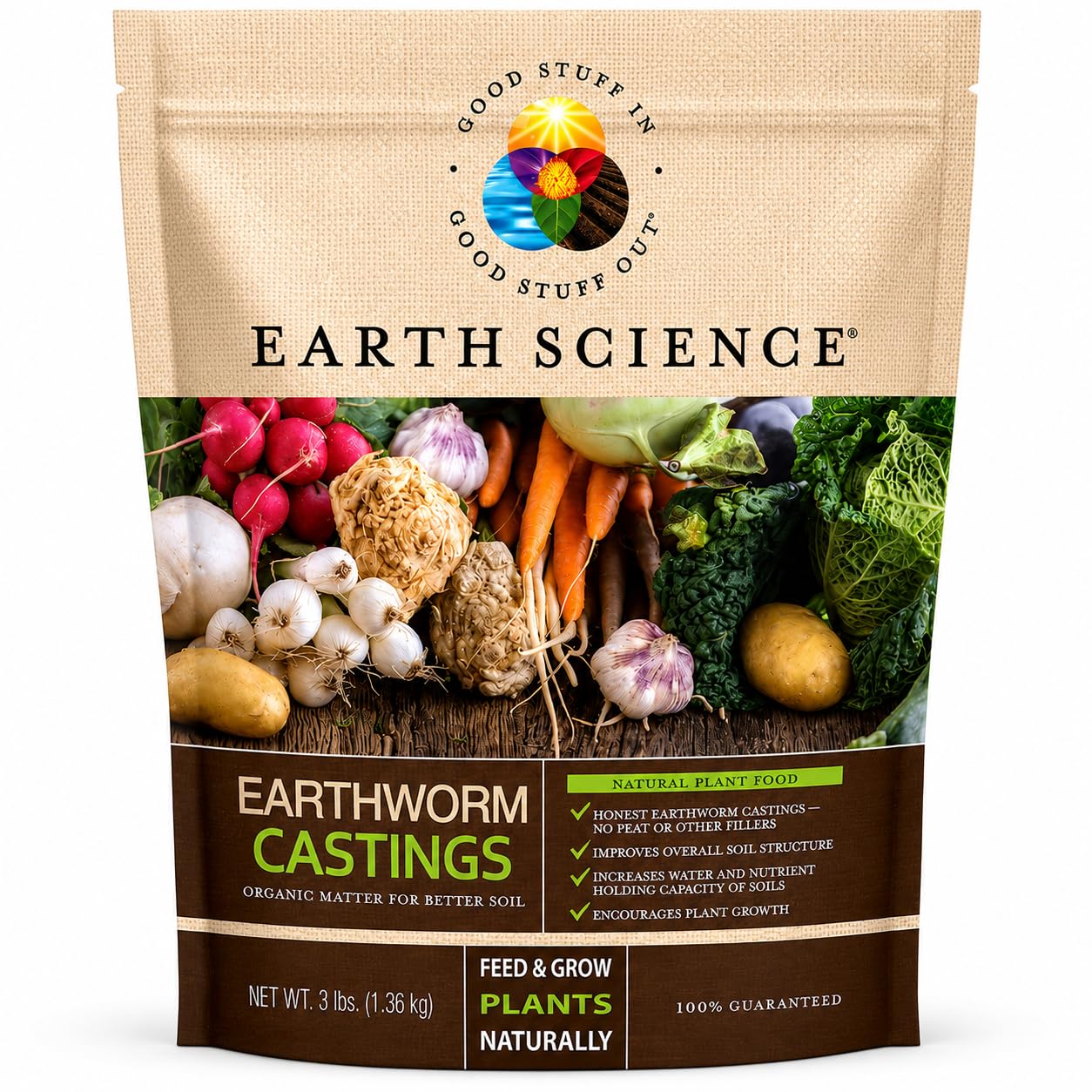
Earth Science delivers a solid 3-pound bag of pure vermicompost that performs admirably as a soil conditioner for vegetable gardens. The fine, granular texture is designed to form soil aggregates, which directly addresses the common issue of compaction in heavy beds. When I mixed this into a clay-heavy area where I planned to grow bush beans, the improved drainage was noticeable within a week—standing water disappeared faster, and the seedlings emerged with stronger stems.
The 3-pound package size hits a sweet spot for home gardeners with modest raised beds or a few large containers. It’s not so massive that it overwhelms storage space, but it provides enough material to amend a 4×4-foot bed at a moderate incorporation rate. I found it particularly effective when mixed at a 1:4 ratio with coco coir for seed starting—the castings added beneficial microbes and moisture retention while the coir kept the mix light and airy for tender seedlings.
One standout feature is Earth Science’s claim of natural pest deterrence. While I wouldn’t rely on castings alone to repel serious infestations, I did notice fewer pill bugs and sow bugs in the amended area compared to unamended sections of the same bed. For gardeners looking for a pure, filler-free organic amendment that improves soil structure and gently feeds vegetables, this is the pragmatic mid-range choice that won’t disappoint.
Why it’s great
- Fine texture mixes easily and helps break up compacted clay soil effectively.
- Works exceptionally well as a seed-starting amendment when blended with coco coir.
- Natural organic formula supports healthier, greener plants without chemical inputs.
Good to know
- The 3-pound bag may be smaller than expected for large in-ground applications.
- Similar products are sometimes available at lower prices in bulk from big-box garden centers.
3. Worm Bliss Organic Worm Castings

Worm Bliss offers a premium organic worm casting that stands out for its ethical sourcing—the worms are raised in a climate-controlled facility on a strictly vegan diet, producing a manure-free product that’s OMRI-listed for organic gardening. The 1-quart bag is compact, and the castings themselves have a rich, earthy texture that looks and smells like high-quality compost. I used it as a top dressing for container-grown cherry tomatoes, and the plants responded with darker green foliage within two weeks.
Where this product really shines is as a soil amendment for small-scale container gardens and indoor vegetable setups. Because the castings are meticulously screened to remove sand, dirt, and rocks, they integrate perfectly into chunky aroid mixes or fine potting blends without altering drainage. The humus content improves water retention, which is a benefit for thirsty vegetables like peppers and eggplants in hot weather, but it also means you need to monitor moisture levels to avoid oversaturation in containers that lack drainage holes.
The main consideration here is the package size. At 1 quart, it’s slightly bigger than a standard bag of potato chips—several customer reviews flagged this as a surprise. For a single large raised bed or multiple containers, you’d need to buy several bags. However, for the gardener who prioritizes certified organic, vegan-sourced soil biology and precision application in small spaces, the quality of Worm Bliss justifies the premium per-pound cost.
Why it’s great
- OMRI-listed organic certification ensures compliance with strict organic standards.
- No odor and can be steeped in water to make nutrient-rich worm tea for watering.
- Excellent for fine-tuning the soil mix of aroid and tropical plants in containers.
Good to know
- The 1-quart bag is small—carefully assess your coverage needs before buying.
- Premium pricing per unit volume compared to larger bulk worm casting bags.
4. Miracle-Gro Moisture Control Potting Mix

This two-pack of 8-quart bags is the go-to choice for gardeners growing vegetables exclusively in containers. The Moisture Control formula is built around a blend of sphagnum peat moss, coir, and a wetting agent that absorbs up to 33% more water than basic potting soil. In three seasons of container gardening with this mix, I’ve found it significantly reduces the frequency of watering during hot spells—a game-changer for vegetables like bell peppers and cucumbers that stress quickly under inconsistent moisture.
The built-in fertilizer feeds container plants for up to six months, which covers the entire growing season for most warm-weather vegetables. I’ve used it for patio tomatoes, bush zucchini, and potted herbs, and in each case the plants showed robust early growth without needing supplemental feeding until the fruiting stage. The texture is light and fluffy straight out of the bag, making it easy to fill pots without compacting the root zone before planting.
The moisture control technology does take some getting used to—the soil can feel dry to the touch even when adequately hydrated, because the coir absorbs water internally rather than leaving a wet film on the surface. However, once you calibrate your watering routine, the consistency is superior to standard potting mixes. For vegetable growers who primarily use containers, this is the most forgiving, low-maintenance option available in the mid-range segment.
Why it’s great
- Dual moisture control system protects against both overwatering and underwatering in pots.
- Built-in slow-release feed eliminates the need for fertilizer during the first six months.
- Lightweight texture prevents soil compaction in tall or narrow containers.
Good to know
- The moisture control feel can trick you into overwatering if you go by touch alone.
- Formulated for containers—not ideal for direct in-ground or raised bed use.
5. Miracle-Gro Shake ‘N Feed Tomato, Fruit and Vegetable Plant Food

While technically a granular fertilizer rather than a bagged soil, the Shake ‘N Feed is included here because it solves a specific problem for vegetable gardeners: feeding plants that have outgrown the initial nutrients in their soil. The 10-5-15 NPK ratio is specifically calibrated for fruiting vegetables, and the added calcium targets blossom end rot—a common frustration for tomato and pepper growers. One 4.5-pound container covers up to 128 square feet, making it suitable for everything from a few raised beds to a substantial in-ground vegetable patch.
Application is straightforward: sprinkle the granules onto the soil, work them into the top 1-3 inches, and water. The granular form means no mixing, no measuring cups, and no hose attachments. I’ve used it as a mid-season booster for tomatoes that started in a nutrient-rich soil but began showing yellowing lower leaves after heavy rain leached out the original fertilizer. Within two weeks, the new growth was noticeably greener and the first fruits set more uniformly.
The primary risk is over-application, which can lead to excessive foliage at the expense of fruit production. The instructions are clear, but gardeners who are heavy-handed with the shaker may end up with lush tomato vines and few tomatoes. When used as directed—reapplying every three months—it provides a reliable nutritional backbone for continuous harvests. For growers who prefer organic fertilization, this isn’t the right fit, but for those seeking a no-fuss, consistent synthetic feed, it delivers measurable results.
Why it’s great
- Calcium formula directly prevents blossom end rot in tomatoes, peppers, and squash.
- Long-lasting three-month feed reduces the number of applications per season.
- Convenient shake-on granular application requires no mixing or special equipment.
Good to know
- Over-application can cause lush foliage growth at the expense of fruit yield.
- Not suitable for gardeners committed to fully organic soil management practices.
FAQ
Can I use bagged potting mix directly in my raised vegetable bed?
How often should I add worm castings to my vegetable garden soil?
Is bagged soil with built-in fertilizer safe for all vegetable seedlings?
How do I know if my bagged soil has gone bad or is contaminated?
Final Thoughts: The Verdict
For most gardeners seeking the best bagged soil for vegetable garden, the winner is the Back to the Roots Organic Worm Castings because it provides a versatile, clean, biologically rich amendment that improves any soil type without synthetic inputs. If you prefer a complete, ready-to-use mix for container vegetables, grab the Miracle-Gro Moisture Control Potting Mix. And for gardeners dealing with heavy clay compaction or looking for a budget-friendly soil conditioner, nothing beats the practical value of the Earth Science Earthworm Castings.

Mo Maruf
I created WellFizz to bridge the gap between vague wellness advice and actionable solutions. My mission is simple: to decode the research and give you practical tools you can actually use.
Beyond the data, I am a passionate traveler. I believe that stepping away from the screen to explore new environments is essential for mental clarity and physical vitality.