Our readers keep the lights on and my smoothie glass nicely filled. As an Amazon Associate, I earn from qualifying purchases.
Your raised bed vegetables need a foundation that drains sharply, holds moisture just enough, and delivers slow-release nutrition without the risk of compaction. Generic topsoil or bagged garden mix intended for in-ground rows often turns into a waterlogged brick inside the contained walls of a raised bed, choking roots and stunting growth. The right bagged soil for raised beds is a precisely engineered blend of lightweight organic matter, aeration agents like perlite, and composted nutrients formulated for the confined, elevated volume of a garden box.
I’m Mohammad Maruf — the founder and writer behind WellFizz. My evaluation method for bagged soil focuses on particle size distribution, organic matter percentage, drainage dynamics, and the measurable nutrient density signaled by the ingredient list, ensuring each recommendation supports vigorous root development without the need for heavy amendments.
This guide reviews the best-tested blends that offer the correct structure, water management, and fertility profile for raised bed gardening, helping you skip the guesswork and fill your boxes with the best bagged soil for raised beds.
How To Choose The Best Bagged Soil For Raised Beds
Raised bed gardening imposes unique physical constraints: a finite volume of soil that must support the entire root system, manage water without a natural drainage field, and host a dense concentration of plants. You cannot simply grab any bag of soil and expect good results. The blend must be loose enough for root expansion, rich enough to feed a hungry vegetable crop, and stable enough to avoid compaction after repeated watering.
Organic Matter and Nutrient Sources
The most effective raised bed soils combine multiple organic components: sphagnum peat moss for moisture retention, composted manure for nitrogen, and specialty amendments like lobster shell meal or earthworm castings for trace minerals and microbial life. These sources provide a slow-release nutrient profile that sustains plants for a full growing season without synthetic fertilizers.
Aeration and Drainage Agents
Perlite, sand, or composted bark creates pore space that allows water to drain freely and oxygen to reach the root zone. A high-quality raised bed mix will feel lightweight and fluffy in the bag. Dense, heavy blends signal excessive clay content or insufficient aeration agents, leading to waterlogged roots and fungal issues in the enclosed environment of a raised bed.
Quick Comparison
On smaller screens, swipe sideways to see the full table.
| Model | Category | Best For | Key Spec | Amazon |
|---|---|---|---|---|
| Espoma Organic Raised Bed Mix | Premium | Direct raised bed filling | 1.5 cubic feet, mycorrhizae included | Amazon |
| Coast of Maine Lobster Compost | Premium | Nutrient-dense soil amendment | 1 cu ft, chitin-rich lobster shell meal | Amazon |
| Michigan Peat Baccto Premium | Mid-Range | All-purpose potting with perlite | 25 lbs, reed sedge peat + perlite | Amazon |
| Espoma Organic Vegetable & Flower | Mid-Range | In-ground amending & transplants | 1 cu ft, blended with earthworm castings | Amazon |
| Coast of Maine Tomato & Veggie | Budget | Small container & raised bed topping | 20 quarts, lightweight compost mix | Amazon |
In‑Depth Reviews
1. Espoma Organic Raised Bed Mix

Espoma formulated this mix specifically for the unique demands of raised bed gardening, and the ingredient list shows it. The base combines sphagnum peat moss with composted organic matter, then enriches the blend with earthworm castings, alfalfa meal, kelp meal, and feather meal — creating a nutrient profile dense enough to feed heavy-feeding vegetables like tomatoes and squash through the season without supplemental fertilizer. At 1.5 cubic feet per bag, you’ll cover roughly 12 square feet of bed depth at a six-inch fill, making it an efficient choice for a standard 4×8 raised bed.
The inclusion of endo and ecto mycorrhizae is the standout feature here. These beneficial fungi colonize the root system and extend the plant’s ability to pull water and phosphorus from the soil, which is especially valuable in the contained, finite volume of a raised bed where roots cannot spread outward beyond the box. Gardeners using this mix reported strong transplant survival even during wet, chilly conditions typical of early-season planting.
Bag-to-bag consistency earns this soil high marks — reviewers noted perfectly sealed bags with no dry spots or mold, and the compost was evenly blended throughout. The only real trade-off is the cost per cubic foot, which runs above average for the category. But given the full nutrient package and ready-to-use nature, skipping the separate components justifies the expense.
Why it’s great
- Mycorrhizae promote deeper root colonization in confined bed volume
- Multi-source organic nutrition (alfalfa, kelp, feather meal) supports long-season crops
- Consistently fresh, well-blended texture bag after bag
Good to know
- Premium pricing per cubic foot relative to standard garden soil
- Best used as a complete fill rather than an amendment
2. Coast of Maine Quoddy Blend Lobster & Crab Compost
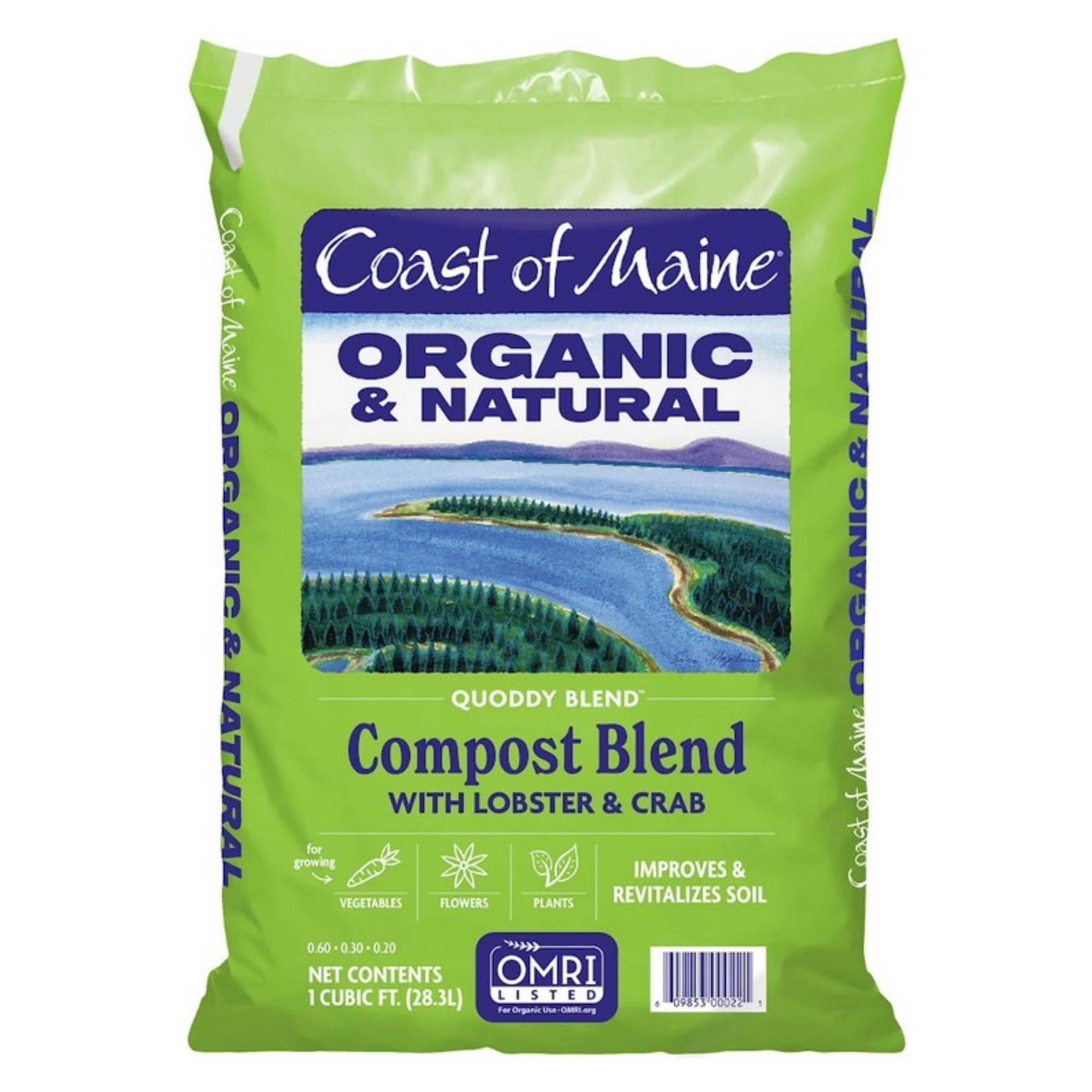
Coast of Maine’s Quoddy Blend stands out for its unique marine-based compost. The primary ingredient is ground lobster and crab shells, which deliver two specific benefits that most standard composts lack: a high concentration of chitin, a natural polymer that supports beneficial soil bacteria and can suppress certain soil-borne pests, and a significant calcium content to prevent blossom-end rot in tomatoes and peppers. The compost is bulked with composted cow manure, sphagnum peat moss, and composted bark to balance the density and provide aeration.
The texture of this blend is noticeably light and fluffy right out of the bag, which is a good sign for raised bed applications where compaction is the enemy. Because the shell meal particles are coarse, they integrate well into native soil blends without creating a paste-like consistency. Many users found it ideal for making aerated compost teas, and the OMRI organic listing assures no synthetic additives or sewage sludge were used in production.
One practical consideration: the 1-cubic-foot bag size means you’ll need several bags for a full bed. The blend performs best when mixed 50/50 with a base soil or peat mix rather than used alone as a complete fill. Cost per cubic foot is moderate to high, but the concentrated calcium and chitin profile reduces the need for separate soil amendments later in the season.
Why it’s great
- Natural chitin from lobster shells supports beneficial microbial activity
- High calcium content reduces blossom-end rot in fruiting vegetables
- Light, friable texture resists compaction in raised beds
Good to know
- Best used as an amendment mixed with base soil
- Bags are lightweight but volume is modest for large beds
3. Michigan Peat Baccto Premium Potting Soil
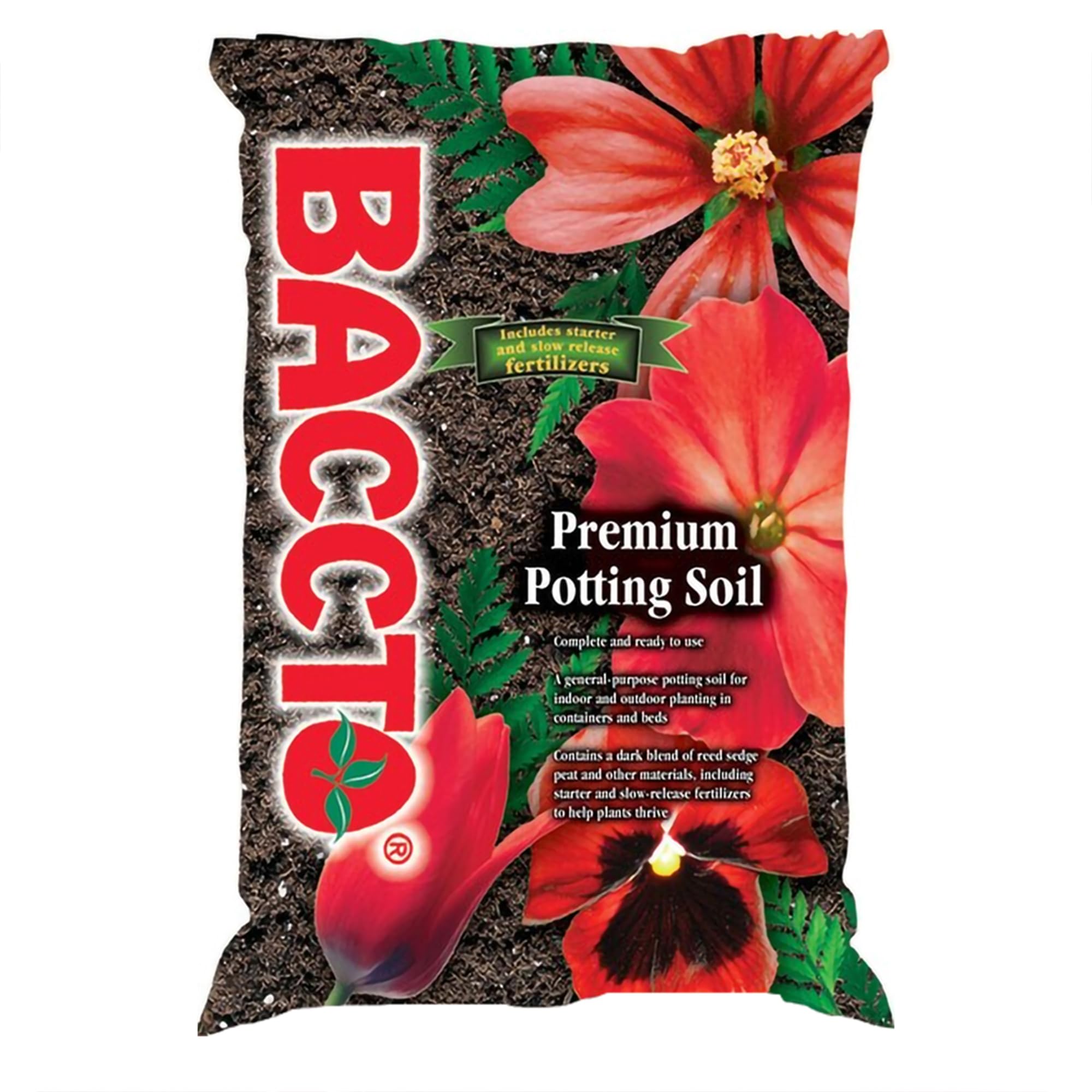
Michigan Peat’s Baccto formula uses reed sedge peat harvested from northern bogs as the primary base, then adds perlite and sand to create a well-aerated, fast-draining structure that container and raised bed gardeners appreciate. The inclusion of both starter and slow-release fertilizers means your plants get an immediate nutrient boost at transplanting and a steady feed in the weeks that follow. In side-by-side germination tests, this blend produced consistently faster seed sprouting than several competitors.
The 25-pound bag delivers substantial volume for the price — roughly 12 to 14 dry quarts, depending on compression — making it a practical option for topping off existing raised beds or filling multiple smaller containers. The perlite content is generous enough to prevent the peat from matting down after heavy watering, keeping the root zone aerated through the growing season. Some bags contain visible wood chips and bark fragments, which is actually a sign of genuine compost content rather than an impurity.
The biggest variable with this product is batch consistency. While many bags arrive with the advertised light, crumbly texture, a portion of reviews note bags with a disproportionate amount of uncomposted sticks, which reduces usable volume. If you are filling a large bed and need predictable material, order an extra bag to account for potential debris. The overall germination results and nutrient load are strong enough that patient gardeners report excellent outcomes despite occasional physical debris.
Why it’s great
- Perlite and sand provide excellent drainage and aeration for contained beds
- Dual-release fertilizer supports both immediate and sustained plant nutrition
- High germination rates in seed starting trials
Good to know
- Batch consistency varies — some bags contain excess wood debris
- Pricing can be higher locally for the same volume
4. Espoma Organic Vegetable & Flower Garden Soil

Espoma’s in-ground formula is designed for mixing with native soil when planting and transplanting, but it works well as a raised bed component when blended 1:1 with a peat-based or compost base. The star ingredient is earthworm castings, which introduce beneficial microbes and provide a gentle, slow-release nitrogen source that won’t burn tender roots. The addition of Myco-Tone — Espoma’s proprietary mycorrhizae blend — mirrors the root-colonizing advantage found in their dedicated raised bed mix, though the overall fertility load is slightly lower here.
This mix is notably clean and bug-free when used outdoors, an important factor for gardeners who have battled fungus gnat infestations from less carefully processed soils. The texture is rich and crumbly without being overly dense, and the 1-cubic-foot bag gives you enough material to amend roughly 16 square feet of in-ground garden area at a reasonable amendment depth. Tomato and marigold plants grown in this soil outperformed plants in a budget organic alternative in direct comparison tests.
The caveat for raised bed use is that this is not a complete fill mix. Using it alone in a deep bed shortchanges the aeration and bulk volume you need. However, as a nutrient additive when refreshing an established raised bed or transplanting new seedlings into a mature bed, the castings and mycorrhizae deliver measurable gains in plant vigor without needing to add separate soil amendments.
Why it’s great
- Earthworm castings supply gentle, microbe-rich nutrition for sensitive plants
- Myco-Tone mycorrhizae improve root efficiency in transplanting
- Consistently clean bags with no pest contamination
Good to know
- Needs to be blended with aeration-rich base for complete raised bed fill
- Lower bulk density than dedicated raised bed mixes
5. Coast of Maine Organic Tomato & Vegetable Planting Soil

Coast of Maine’s 20-quart bag is a lightweight compost-based mix that targets tomato and vegetable growers specifically. The formula balances moisture retention with drainage by using composted manure and sphagnum peat moss in proportions that work well in both containers and raised beds. The 20-quart size is compact enough to handle easily but still covers a small raised bed or a few large containers. Many gardeners described it as an ideal soil for heirloom tomato varieties that need consistent drainage without drying out completely.
The organic ingredient list is OMRI-listed and includes aromatic wood material, which users noted helped deter crawling insects around the root zone. When used as a top-off layer in an existing raised bed or as a standalone fill for a modest 4×2-foot box, the soil supports rapid visible growth — reviewers reported visible plant development within a week of transplanting. The lightweight texture makes it easy to mix with native soil or other bagged amendments to customize the fertility profile.
A few users reported fungus gnat emergence after opening the bag, which suggests the compost might retain some moisture during storage. Treating the soil with neem oil spray or allowing it to dry out before planting resolves the issue in most cases. The 20-quart bag is smaller than the cubic-foot competitors, so for larger beds you will need multiple bags, which affects the overall cost efficiency. For small-scale or topping applications, this mix delivers strong early-season results.
Why it’s great
- Excellent drainage profile for heirloom tomatoes and peppers
- Lightweight compost texture reduces lifting strain for the gardener
- Wood material provides natural insect-deterrent quality
Good to know
- Smaller bag size requires multiple units for full beds
- Occasional fungus gnat emergence if stored damp
FAQ
Can I use standard garden soil in a raised bed?
How deep should I fill my raised bed with bagged soil?
Final Thoughts: The Verdict
For most users, the best bagged soil for raised beds winner is the Espoma Organic Raised Bed Mix because it cuts out the guesswork with a formula designed specifically for elevated bed dimensions, complete with mycorrhizae, worm castings, and a perfectly balanced organic nutrient package. If you want the extra calcium and chitin boost from marine compost to prevent blossom-end rot, grab the Coast of Maine Quoddy Blend Lobster & Crab Compost. And for budget-friendly topping off or small raised bed projects, nothing beats the value and lightweight handling of the Coast of Maine Tomato & Vegetable Planting Soil.

Mo Maruf
I created WellFizz to bridge the gap between vague wellness advice and actionable solutions. My mission is simple: to decode the research and give you practical tools you can actually use.
Beyond the data, I am a passionate traveler. I believe that stepping away from the screen to explore new environments is essential for mental clarity and physical vitality.