Our readers keep the lights on and my smoothie glass nicely filled. As an Amazon Associate, I earn from qualifying purchases.
Choosing bagged mulch for flower beds often feels like a shot in the dark — bags look similar on the shelf, but the difference in moisture retention, salt content, and decomposition rate separates thriving blooms from a muddy mess. The wrong bag can introduce pests, lock out oxygen, or simply wash away after a single rain.
I’m Mohammad Maruf — the founder and writer behind WellFizz. I analyze soil conditioners, composts, and growing media by digging into lab-level specs like salt ppm, expansion ratios, and particle grading so you don’t have to guess what’s inside the bag.
After sifting through dozens of options based on real customer experiences and technical data, I’ve narrowed the field to five standout products that actually deliver on their promises. This is your complete guide to finding the right bagged mulch for flower beds without wasting money on filler material.
How To Choose The Best Bagged Mulch For Flower Beds
Not all bagged mulch performs equally when spread around delicate flower roots. The wrong choice can lock moisture out, introduce weed seeds, or break down too fast, leaving beds bare by midsummer. Focus on these three factors before you open the bag.
Moisture Retention vs. Aeration Balance
Flower bed roots need both consistent moisture and oxygen. Vermiculite holds water like a sponge while creating air pockets — ideal for arid climates or sandy soil. Coco coir retains water but also expands to prevent compaction, making it a strong middle ground. Compost adds nutrients but can become waterlogged in heavy clay beds if overapplied.
Salt Content and Purity
Many bagged organic mulches contain residual salts that burn tender flower roots. Check for “washed” or “low EC” labels, especially with coco coir bricks. A salt ppm under 200 after hydration signals a safe product for annuals and perennials. Unwashed coir or cheap compost can introduce enough salt to stunt bloom production.
Expansion Volume and Bag Weight
Dry bricks and compressed blocks often state their expanded volume — 10 pounds of coco coir can yield 18 to 20 gallons after hydration. Vermiculite and compost come pre-expanded, so you pay for water weight. Match the bag’s expanded volume to your bed’s square footage: one 8-quart bag covers roughly one square foot at two inches deep.
Quick Comparison
On smaller screens, swipe sideways to see the full table.
| Model | Category | Best For | Key Spec | Amazon |
|---|---|---|---|---|
| MODELLOR Coco Coir Brick | Premium Coir | Large beds, seed starting | Expands to 18-20 gal per 10 lb brick | Amazon |
| MagJo Naturals Coco Peat | Mid-Range Coir | Soil amendment, moisture control | 11 lb block fills a 5-gal container | Amazon |
| R&M Organics Premium Compost | Nutrient-Rich Compost | Feeding weak flowers, top dressing | 10 lb moisture-retentive manure compost | Amazon |
| Gerta Horticultural Vermiculite | Mid-Range Vermiculite | Arid beds, rooting cuttings | 10 quart coarse-grade 2-4mm | Amazon |
| Rio Hamza Trading Houseplant Mulch | Budget Bark | Small indoor pots, aesthetics | 8 quarts small bark wood chips | Amazon |
In‑Depth Reviews
1. MODELLOR Premium Super Washed Coco Coir Brick
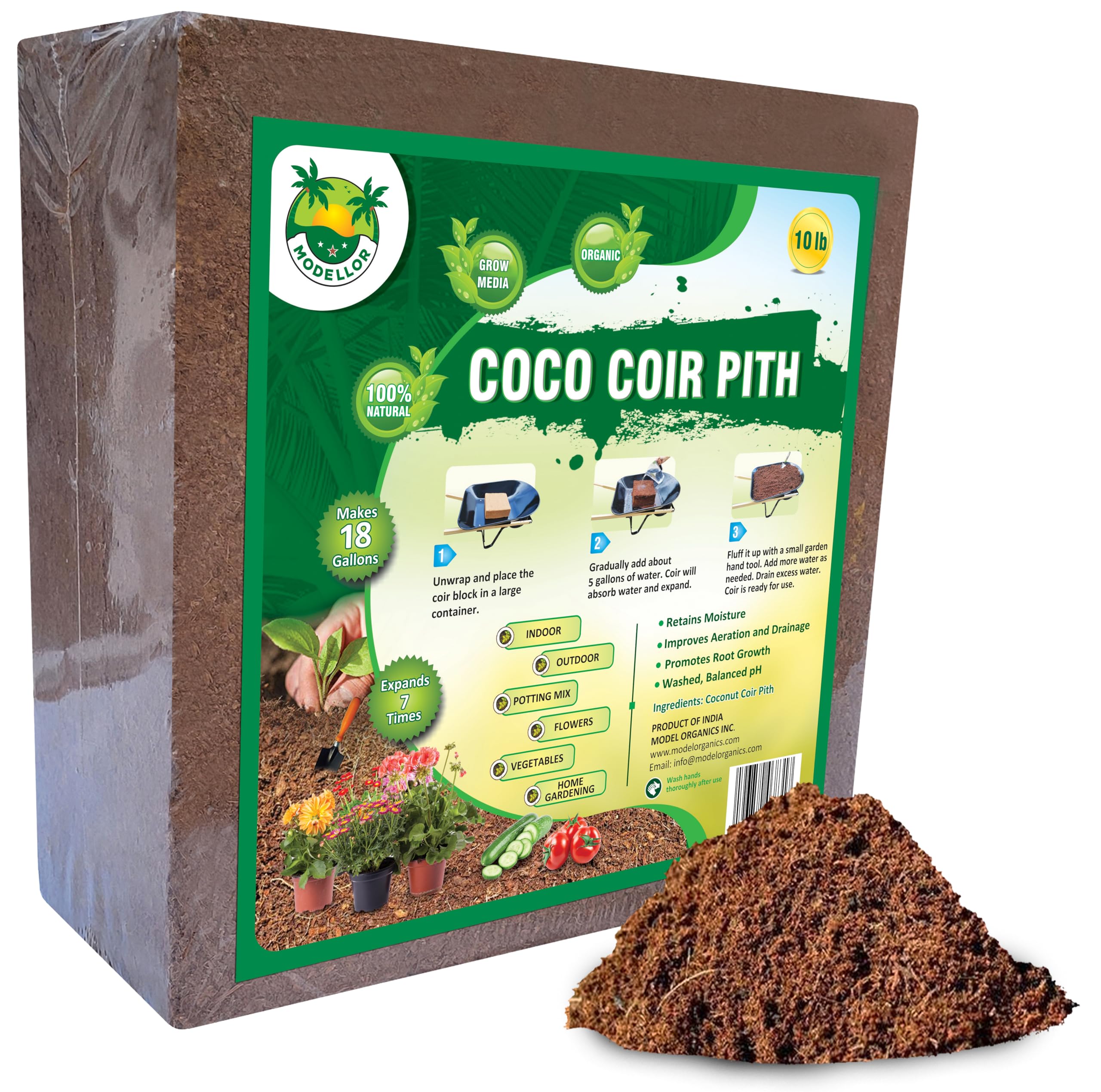
This 10-pound brick is the most efficient bagged mulch for large flower beds because of its extreme expansion — one brick yields 18 to 20 gallons of fluffy, low-salt coir after a simple soak. The triple-wash process brings salt ppm down to levels safe for sensitive annuals and perennials, something many cheaper coir blocks fail to guarantee.
Gardeners consistently report clean hydration with no residue, fast germination in seed-starting mixes, and roots that push deeper than in standard potting soil. The brick form saves shelf space and reduces plastic waste compared to pre-expanded bags, making it both a performance and storage win.
For flower beds that need consistent moisture during dry spells, this coir acts as a natural reservoir while maintaining air pockets. It also blends effortlessly with perlite or vermiculite for custom soil blends when starting seeds indoors.
Why it’s great
- Extremely high expansion ratio for the bag weight
- Triple-washed to protect delicate flower root systems
- Versatile as mulch, seed starter, or soil amendment
Good to know
- Requires a large bucket or bin for hydration — 20 gallons of space needed
- No added nutrients; you must supplement with fertilizer or compost
2. MagJo Naturals 100% Pure Coco Coir Block

MagJo’s 11-pound coco peat block is a solid mid-range option that tilts toward value without sacrificing organic integrity. OMRI listing confirms it meets organic gardening standards, and the low EC after hydration means you won’t shock your flowers with hidden salts. Users note the block expands to fill a 5-gallon bucket completely, offering reliable moisture retention for raised beds.
The fine texture works well for mixing into heavy clay soils to create air pockets, and repeated reviews mention it prevents dry soil pockets that plague dense potting mixes. The brick shape is compact, but some buyers found it difficult to break apart before soaking — the recommendation is to submerge the whole block rather than chipping pieces off.
One minor note: a few users detected a faint tea tree oil-like smell after hydration, but this dissipated within hours and did not affect plant health. For flower bed applications where you need a large volume of clean coir at a reasonable per-gallon cost, this is a strong contender.
Why it’s great
- OMRI organic certification provides trusted purity
- Expands reliably to fill 5+ gallons from one block
- Improves soil aeration in heavy or compacted beds
Good to know
- Hydrates best when soaked whole — attempting to break it apart is frustrating
- Some batches may have a temporary earthy smell after hydration
3. R&M Organics Premium Organic Compost
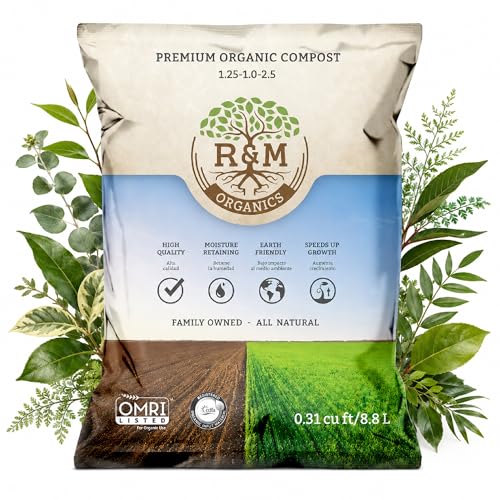
R&M Organics takes a different approach — instead of a mulch that only retains moisture, this compost enriches the soil with dairy manure nutrients while also improving water retention. A quarter-inch top dressing around flower beds delivers nitrogen and organic matter directly to the root zone, with one reviewer noting yellow tomato leaves turned green within a week of application.
The fully composted process keeps odor low, making this usable both indoors and in outdoor ornamental beds without attracting pests. The 10-pound bag is compact but nutrient-dense, so a little goes farther than you might expect. For flower beds where plants look pale or struggle to bloom, this compost fills the nutritional gap that plain coir or bark mulch cannot address.
Some buyers felt the price-per-pound runs high compared to bulk compost, but the quality control and consistent texture justify the premium for small to medium beds. The low-odor formula also makes it a practical choice for container flowers on patios or balconies where smell matters.
Why it’s great
- Immediate nutrient boost for struggling or pale flowers
- Low odor formula suitable for indoor and patio use
- Improves soil structure and moisture retention simultaneously
Good to know
- Price per pound is higher than bulk compost alternatives
- Not ideal as standalone mulch — best used as a thin top dressing or soil mix-in
4. Gerta Horticultural Vermiculite (10 Quart)

Gerta’s horticultural vermiculite is the specialist in this roundup — ideal for flower beds in arid climates where moisture evaporates fast. The coarse 2-4mm particles act like tiny sponges, absorbing water and releasing it slowly to the root zone. Users in dry regions report that indoor herbs no longer wilt between waterings, and seedlings root faster in vermiculite than in plain water.
The 10-quart resealable bag keeps the material dust-free between uses, and multiple reviewers noted minimal dust when poured gently — a common complaint with lower-grade vermiculite. Mix it into flower bed soil to lighten heavy clay or use it as a top layer to slow surface evaporation without forming a crust.
The main caveat is volume: 10 quarts covers only a small bed or a few large containers. For larger applications, you would need multiple bags. Also, vermiculite provides no nutrients, so flowers in pure vermiculite still require regular feeding.
Why it’s great
- Exceptional moisture retention for dry or sandy flower beds
- Coarse grade prevents compaction and maintains aeration
- Lightweight particles do not impede seedling emergence
Good to know
- Small bag volume — not cost-effective for large garden beds
- No nutrient content requires supplemental fertilizer
5. Rio Hamza Trading Houseplant Mulch (8 Quarts)

Rio Hamza Trading’s houseplant mulch targets the decorative side of flower bed care — small bark wood chips that create a neat, uniform top dressing for indoor pots and patio containers. The chips are longer lasting than coir or shavings and provide consistent visual coverage without breaking down quickly. Users report no pest introduction, which is a real concern with unsterilized outdoor bark.
Moisture retention is moderate compared to vermiculite or coir, but the mulch helps prevent rapid surface evaporation in small pots. The 8-quart bag covers roughly two to three medium pots, making it a good match for anyone with a modest collection of houseplants or a small balcony flower arrangement.
The most frequent feedback is about value — at this price point, the volume only goes so far. One reviewer noted it mulched only 2.5 medium pots, so large beds would require multiple bags. For purely aesthetic, pest-free coverage on potted flowers, this works well, but it is not a bulk solution for in-ground flower beds.
Why it’s great
- Clean, attractive bark chips with no visible pests
- Longer lasting than coconut coir or wood shavings
- Simple pour-and-spread application
Good to know
- Limited volume — not cost-effective for large in-ground beds
- Lower moisture retention compared to coir or compost options
FAQ
Can I use vermiculite alone as a top mulch for flower beds?
How do I hydrate a compressed coco coir brick without making a mess?
Is manure-based compost safe for flower beds during the growing season?
How often should I replace bagged bark or wood chip mulch in flower beds?
Final Thoughts: The Verdict
For most users, the bagged mulch for flower beds winner is the MODELLOR Premium Super Washed Coco Coir Brick because it combines massive expansion volume, ultra-low salt content, and versatile usability as both mulch and soil amendment. If you want a nutrient infusion for struggling flowers, grab the R&M Organics Premium Organic Compost. And for dry-climate beds where moisture retention is the top priority, nothing beats the Gerta Horticultural Vermiculite.

Mo Maruf
I created WellFizz to bridge the gap between vague wellness advice and actionable solutions. My mission is simple: to decode the research and give you practical tools you can actually use.
Beyond the data, I am a passionate traveler. I believe that stepping away from the screen to explore new environments is essential for mental clarity and physical vitality.