Our readers keep the lights on and my smoothie glass nicely filled. As an Amazon Associate, I earn from qualifying purchases.
The hum of a single mosquito within earshot can ruin a quiet evening on the patio. You spray, you light citronella candles, yet that high-pitched whine finds you. The real solution isn’t a topical repellent or a smoke bomb; it’s a strategic, stationary device that breaks the breeding cycle by eliminating the biters before they reach you.
I’m Mohammad Maruf — the founder and writer behind WellFizz. I’ve spent years analyzing insect control hardware, from UV wavelength output to CO2 diffusion rates, to understand what actually reduces a backyard mosquito population versus what just makes you feel better for an hour.
After cross-referencing grid voltage, lure systems, coverage zones, and real-world durability across dozens of models, this guide pinpoints the specific technology — be it UV-zap, fan-trap, or CO2 mimicry — that defines the single most effective best backyard mosquito trap for your property size and lifestyle.
How To Choose The Best Backyard Mosquito Trap
Selecting a mosquito trap for your yard isn’t about picking the most expensive box on the shelf. You need to match the trap’s attraction method (UV light, heat, CO2, or scent) to your specific mosquito species, your yard’s size, and whether you have a power outlet nearby.
Attraction Method: UV Light vs. Heat vs. CO2
Most household traps use a UV bulb (365nm to 395nm wavelength) that draws flying insects toward a high-voltage grid or a fan. This works well for gnats, moths, and flies, but many mosquito species are more strongly attracted to body heat (97–100°F) and carbon dioxide (CO2). Traps that combine UV with a bionic heat element or an Octenol lure cartridge will pull in more actual mosquitoes than bare UV units alone.
Coverage Area and Placement
Manufacturers rate traps by acreage or square footage, but these numbers assume open, unobstructed placement. A trap rated for 1/2 acre works best when positioned 20–40 feet away from your sitting area, preferably near shrub lines or damp zones where mosquitoes hide during the day. Avoid placing the trap directly in the center of your patio — you want to intercept mosquitoes before they reach you, not lure them closer.
Power Source and Battery Runtime
Solar-powered traps free you from extension cords, but their real-world runtime depends on both solar panel wattage and battery capacity. Look for units with at least a 5000mAh battery and a panel rated at 6W or higher to survive cloudy days. Plug-in traps offer consistent voltage (critical for maintaining a 4200V–5600V strike grid) and are better for high-mosquito zones where a solar unit might run flat by midnight.
Quick Comparison
On smaller screens, swipe sideways to see the full table.
| Model | Category | Best For | Key Spec | Amazon |
|---|---|---|---|---|
| Biogents Mosquitaire | CO2 Upgradeable | Targeted mosquito control | CO2 + Sweetscent lure | Amazon |
| Flowtron BK-40D | High-Voltage Grid | Large 1-acre coverage | 5600V grid + Octenol | Amazon |
| Coospider-repta 18W | Solar Premium | Large solar coverage | 18W panel / 6000mAh | Amazon |
| Flowtron Fan Trap | Quiet Fan | Noise-sensitive areas | UV + suction fan | Amazon |
| Tolf 2-Pack Solar | Solar Dual | Multi-zone yards | Bionic heat + 4200V | Amazon |
| GOOTOP Zap T6 | Plug-in Grid | Budget 1/2 acre | 4200V grid / 15W bulb | Amazon |
| Zwiran Solar SE566 | Solar Budget | Entry-level solar | 4500V / 1/2 acre | Amazon |
In‑Depth Reviews
1. Biogents Mosquitaire Outdoor Mosquito Trap
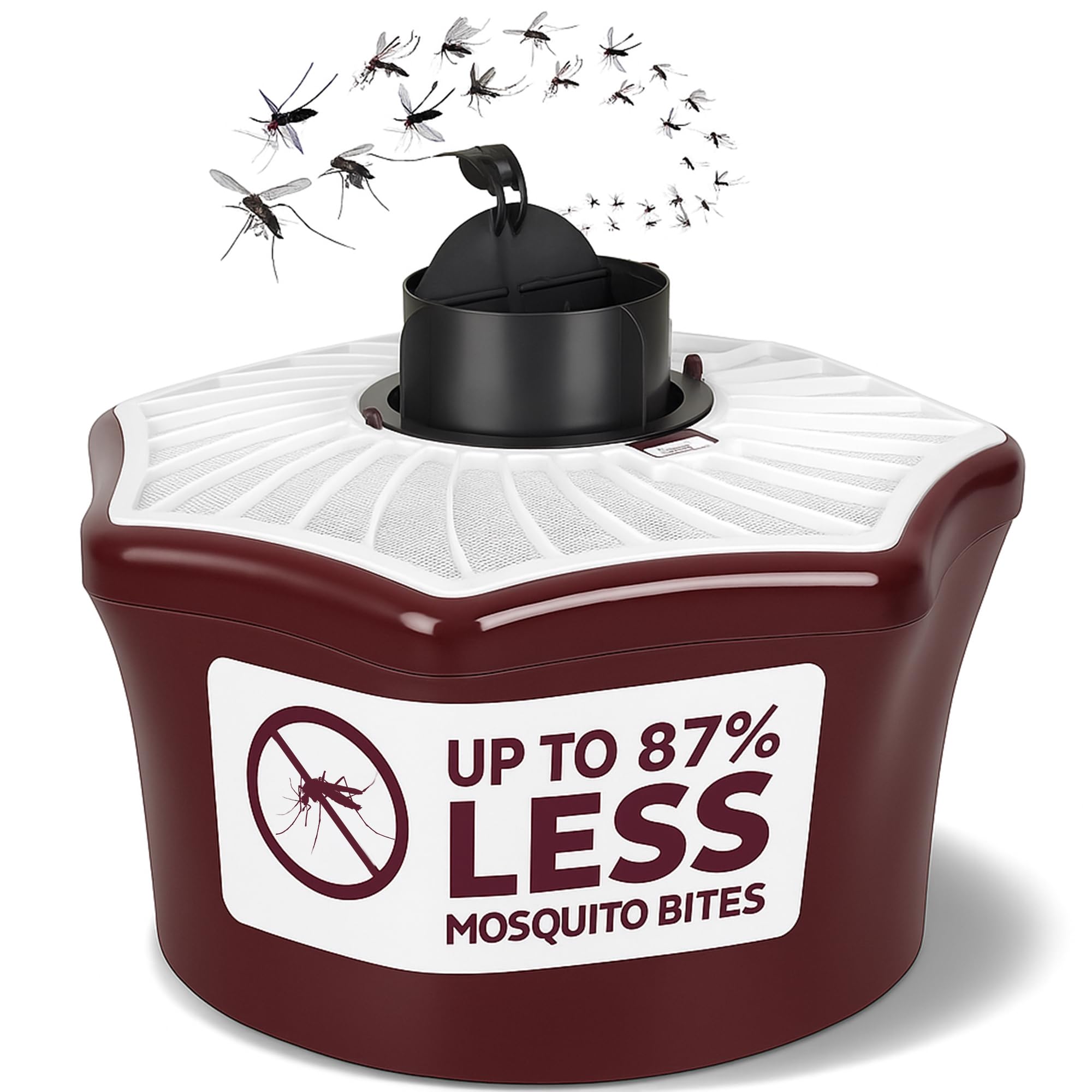
The Biogents Mosquitaire is a different animal from the UV-grid traps. It’s a fan-based suction trap that uses a proprietary Sweetscent lure combined with an optional CO2 emitter to specifically target Aedes (Asian tiger) and yellow fever mosquitoes. Without CO2 it still catches mosquitoes, but the real population knockdown happens when you pair it with a 20lb tank — users report eliminating bites across a 4,000 sq.ft yard.
The design prioritizes mosquito selectivity over broad-spectrum bug zapping. You won’t hear loud zaps, and you won’t kill harmless moths or beetles by the thousands. The collection bag can be emptied by freezing it, which keeps the capture tidy. The unit includes a 10-meter extension cord, so placement near shady, humid zones is possible even without a nearby outlet.
Downsides are real: the entry cost is high, and the CO2 tank and regulator add significant upfront and recurring expense. Without CO2, catch rates drop noticeably. Some users saw disappointing numbers during the first month, likely because the trap was placed in full sun or too close to seating areas. This is a long-term population management tool, not a weekend fix.
Why it’s great
- Clinically proven attractant system for Aedes mosquitoes
- CO2 upgrade makes it 10x more effective for general mosquito control
- Does not indiscriminately kill beneficial insects
Good to know
- High buy-in cost plus ongoing CO2 refills
- Placement in shade with humidity is critical for results
- Without CO2, catch rate is modest for larger yards
2. Flowtron BK-40D Bug Zapper

The Flowtron BK-40D is the archetype of the serious backyard zapper. Its 40-watt UV bulb and 5,600-volt killing grid (significantly higher than the 4,200-volt standard) cover a full acre. The non-clogging grid design lets dead insects fall straight to the ground instead of building up on the electrified bars, which keeps the kill rate consistent all night.
The included Octenol attractant cartridge mimics the breath of ruminant animals, specifically drawing in female mosquitoes looking for a blood meal. When warmed by the UV lamp, the vaporized lure creates a plume that pulls mosquitoes from across the yard. Users in country settings report dramatic reductions in lake flies, moths, and mosquitoes after just one night.
The main compromises are a power cord under one foot long (plan for a heavy-duty extension cord) and a grid spacing that can let larger wasps or beetles escape partially zapped. The Octenol cartridges also need monthly replacement, and some users note that once the lure runs out, the trap relies solely on the UV bulb, cutting its mosquito-specific appeal.
Why it’s great
- High 5600V grid ensures instant kill on contact
- 1-acre coverage suitable for large rural properties
- Octenol lure specifically targets blood-seeking mosquitoes
Good to know
- Very short power cord requires an extension cable
- Grid spacing may not fully stop large insects like wasps
- Ongoing cost of Octenol refill cartridges
3. Coospider-repta Large Solar Bug Zapper (18W)
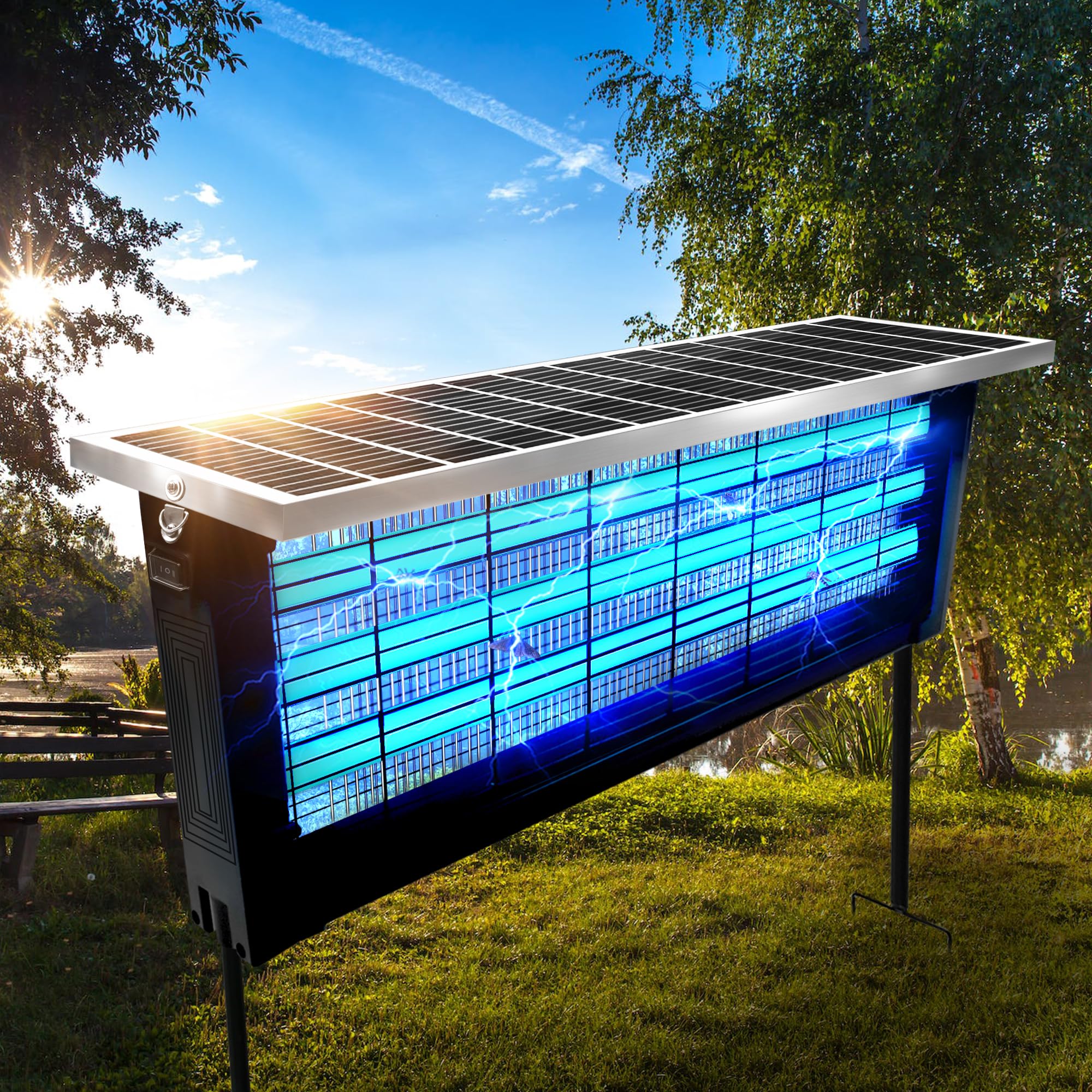
Most solar traps struggle to last through a full summer night, but the Coospider-repta tackles that problem with an 18-watt glass solar panel paired to a 6000mAh battery. That’s roughly three times the panel power of typical solar zappers. The three internal LED tubes provide 360-degree UV attraction, and the claimed coverage of 4,000 sq.ft is realistic for open yards.
The build is meant for full-time outdoor exposure. Users report it surviving 40-mph winds in South Texas, and the hose-cleanable design makes maintenance simple — just spray the grid and collection area every few days. The 13-foot extension cord gives flexibility for positioning near trees or garden beds where mosquitoes congregate.
The biggest weak point reported across multiple long-term reviews is bulb lifespan. Several users noted that one or two of the LED tubes burned out within a month, and a smaller number reported the unit failing completely after six to eight weeks. The manufacturer replaced units under warranty, but the recurrence suggests a component reliability issue. If you buy this, test it hard during the return window.
Why it’s great
- Large 18W panel for reliable solar charging
- 6000mAh battery provides runtime through dawn
- Easy hose-clean maintenance, no disassembly needed
Good to know
- LED bulb longevity is inconsistent across units
- Bright blue light may be distracting near windows
- Full failure rate within 2 months noted in some reviews
4. Flowtron Outdoor Bug Trap (Fan Model)
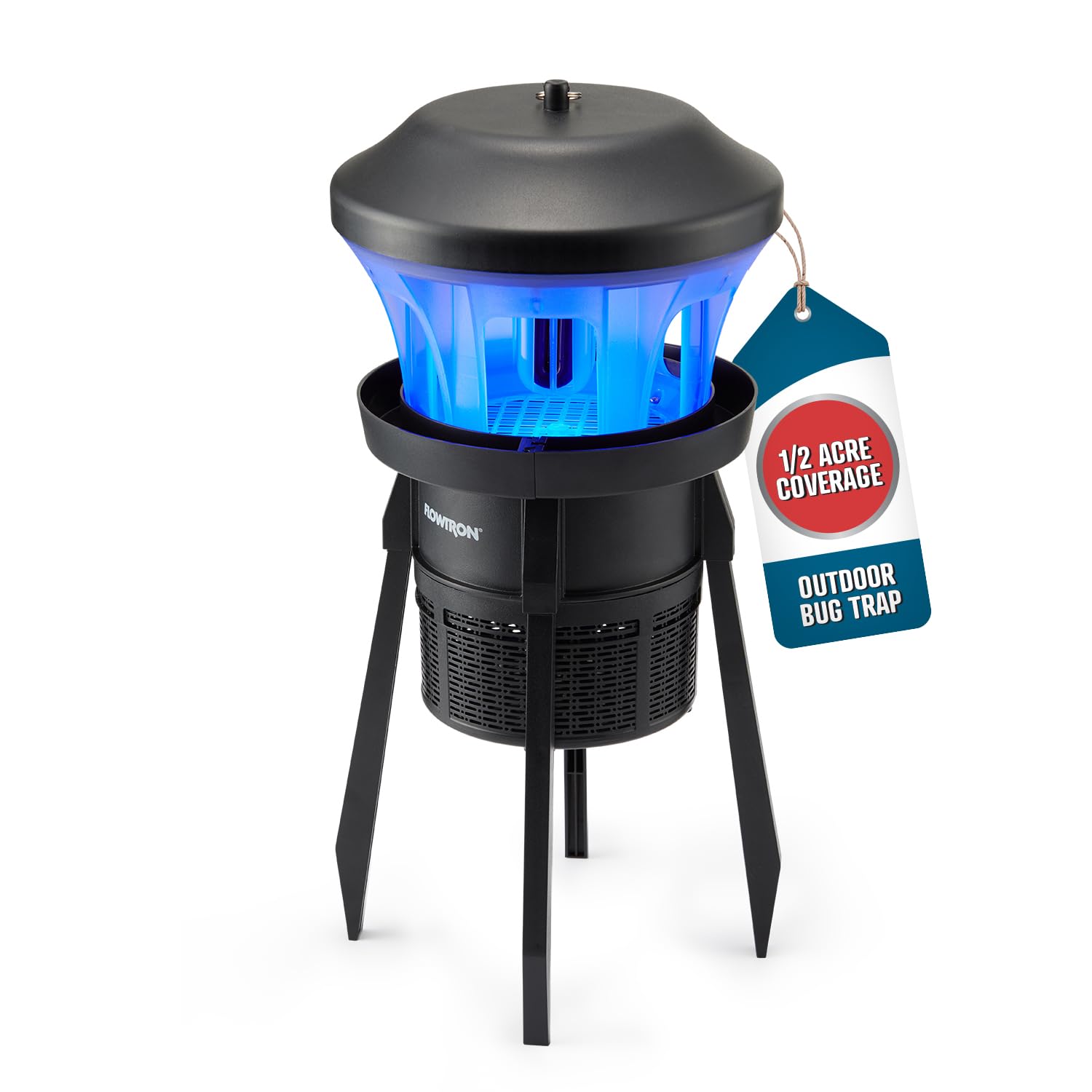
If the crackle of a high-voltage zapper drives you crazy, the Flowtron fan trap offers silent insect control. A UV bulb attracts flying insects, and a quiet fan pulls them into a collection chamber where they dehydrate and die. No zap, no smell, no pesticide. The unit covers up to 1/2 acre and is weather-resistant for year-round outdoor placement.
The trap accepts Flowtron’s Octenol attractant cartridges (sold separately) to boost its mosquito catch rate significantly. The removable collection chamber makes emptying straightforward — just unsnap the basket and tap out the contents. Users who paired it with the Octenol lure reported catching mosquitoes, gnats, and moths overnight without disturbing patio conversation.
Quality control is a concern: several reviews reported units arriving with non-working fans or failing to power on at all. The fan does not kill insects instantly, so if you’re squeamish about releasing live bugs, this method may not suit you. Also, the trap works best placed 20-40 feet away from people, which means it’s more of a perimeter defense than a close-quarters device.
Why it’s great
- Silent fan operation — no loud zapping
- Chemical-free method safe around kids and pets
- Octenol-compatible for improved mosquito targeting
Good to know
- Some units arrive with dead fans or no power
- Does not kill insects immediately, only traps them
- Requires 20-40 ft placement away from sitting areas
5. Tolf 2-Pack Solar Bug Zapper
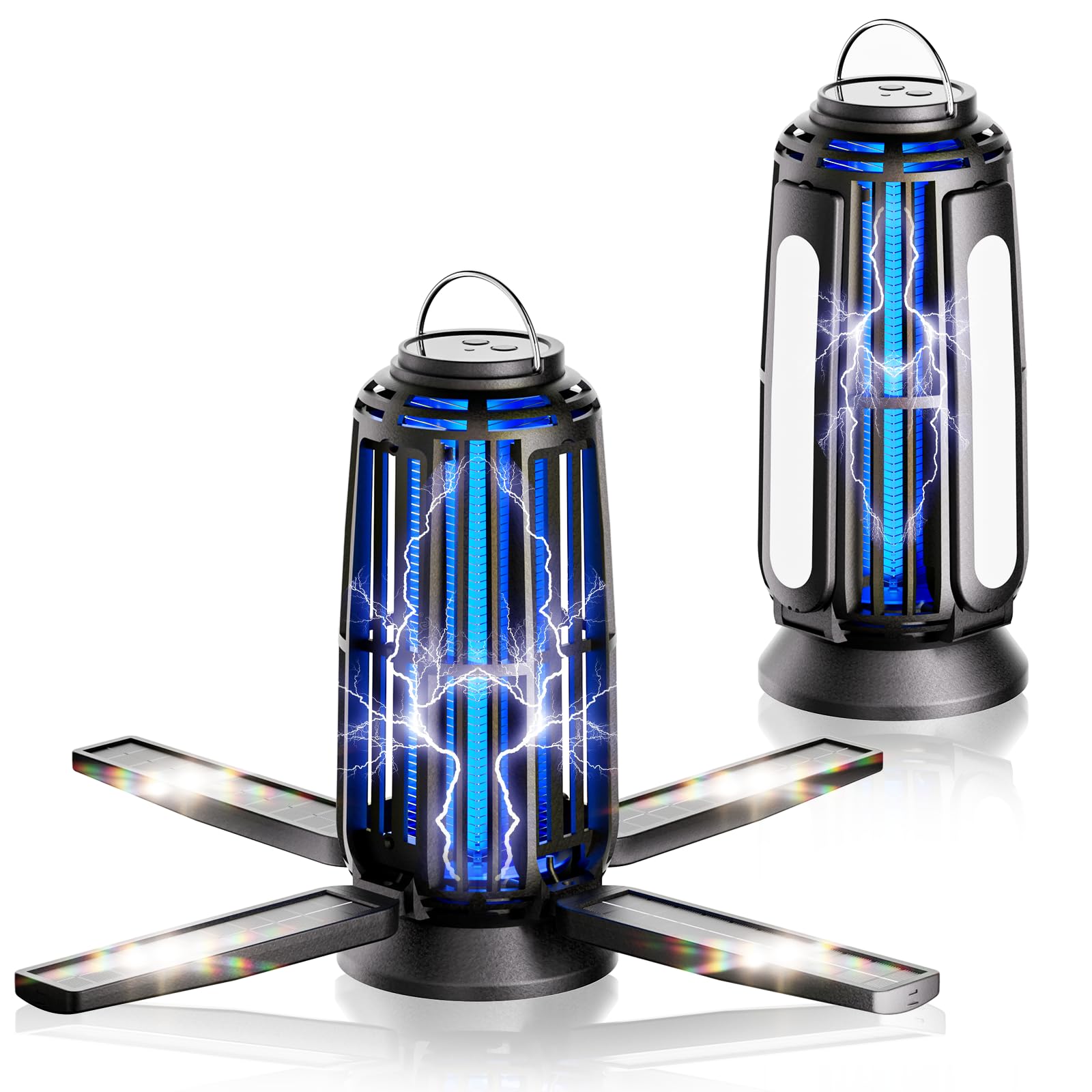
The Tolf 2-pack stands out because it combines dual-wavelength UV (365nm + 395nm) with a bionic heat element that warms to 97–100°F, mimicking human body temperature. That combination makes it more attractive to biting mosquitoes than standard UV-only traps. Each unit has four foldable solar panels for multi-angle charging and a 5000mAh battery with USB-C backup.
The 4200V grid, IPX5 waterproofing, and 0.23-inch safety mesh make this suitable for patios, gardens, and even indoor use. The included LED night light is a bonus for evening ambiance. Users consistently praise the battery life and quiet operation, noting that the units eliminated mosquitoes noticeably from medium-sized yards.
The reliability pattern is troubling: multiple reviews from verified purchasers report that all units stopped charging after one to two weeks of use. When working, the performance is excellent — but the failure rate appears higher than average. If you buy this, test immediately and consider the warranty return process carefully.
Why it’s great
- Bionic heat lure plus dual UV for superior mosquito attraction
- Two units cover multiple zones of your yard
- USB-C charging offers flexibility when solar is insufficient
Good to know
- Multiple reports of units failing to charge after 1-2 weeks
- Best for medium spaces, not large acreage
- Solar charging alone may not sustain long cloudy periods
6. GOOTOP Bug Zapper Outdoor (Zap T6 Pro)

The GOOTOP Zap T6 Pro is a no-frills, plug-in bug zapper that covers up to 1/2 acre with a 15-watt UV bulb and a 4200-volt electric grid. It’s lightweight enough to hang from a hook or set on a flat surface, and the removable tray with cleaning brush makes maintenance simple. The EPA-registered unit uses no chemicals or insecticides.
Florida users report it dramatically reduces mosquitoes and flies on patios and around pools. The satisfying zap sound provides audible feedback that the trap is working. The replaceable 15W bulb extends the unit’s service life beyond a single season, which is a practical advantage over sealed LED units.
The primary limitation is coverage versus larger competitors: 1/2 acre is adequate for a standard suburban yard, but rural properties with heavy mosquito pressure will want a higher-voltage unit with Octenol compatibility. Some users note the grid can become clogged if dead insects aren’t brushed out every few days, and the UV bulb competes with ambient light — it works best in complete darkness.
Why it’s great
- Affordable entry point with solid 4200V kill performance
- Replaceable 15W bulb extends usable life
- Compact, lightweight, easy to hang or stand
Good to know
- No Octenol or CO2 lure — less effective on mosquitoes alone
- Grid needs regular cleaning to maintain kill rate
- Best performance only in dark, shaded locations
7. Zwiran Solar Bug Zapper SE566

The Zwiran SE566 offers a 4500-volt grid and 1/2-acre coverage in a solar-powered, cordless package that can be placed on the ground, hung from a chain, or mounted with grounding brackets. The auto light-sensor mode switches the unit off during daylight to charge and on at dusk for hands-free mosquito control.
Users in high-humidity zones like Georgia report that the trap significantly reduces mosquito populations without harming bees — the UV wavelength and voltage are tuned to target smaller flying pests. The IPX5 waterproof rating allows outdoor placement without a cover, and the included 10-foot extension cord adds positioning flexibility.
The solar charging performance is the weakest link. Multiple reviews note that the battery lasts only 7 hours on a full charge, and it can drop to under 2 hours when the solar panel doesn’t get direct sun all day. There’s no charge-level indicator, so you won’t know the unit is dying until the bugs return. For reliable all-night coverage in shaded yards, you’ll need to supplement with the USB charging cable daily.
Why it’s great
- Solar-powered with zero electricity cost to run
- Auto light-sensor mode simplifies daily operation
- Does not kill beneficial pollinators like bees
Good to know
- Battery runtime drops significantly without full sun
- No battery level indicator to warn of low charge
- Grid fills with debris quickly, needs leaf-blower cleaning
FAQ
Should I place the mosquito trap next to my patio seating?
Do solar-powered mosquito traps work in shaded backyards?
How often do I need to replace the Octenol attractant cartridge?
Final Thoughts: The Verdict
For most users, the best backyard mosquito trap winner is the Flowtron BK-40D because it combines the highest grid voltage (5600V) with a 1-acre coverage area and an Octenol lure slot that gives you mosquito-specific bait without the complexity and ongoing cost of a CO2 setup. If you want silent, pesticide-free operation and don’t mind replacing a fan chamber, grab the Flowtron Fan Trap. And for targeted population reduction of Aedes mosquitoes with scientific precision, nothing beats the Biogents Mosquitaire paired with a CO2 tank.

Mo Maruf
I created WellFizz to bridge the gap between vague wellness advice and actionable solutions. My mission is simple: to decode the research and give you practical tools you can actually use.
Beyond the data, I am a passionate traveler. I believe that stepping away from the screen to explore new environments is essential for mental clarity and physical vitality.