Our readers keep the lights on and my smoothie glass nicely filled. As an Amazon Associate, I earn from qualifying purchases.
The difference between a pile that stinks and one that feeds your garden comes down to one thing: airflow. A backyard compost bin that chokes off oxygen breeds anaerobic bacteria, the kind that makes neighbors complain. A proper unit channels air through every layer, keeps moisture in check, and breaks down kitchen scraps and yard waste into dark, crumbly soil in weeks — not seasons.
I’m Mohammad Maruf — the founder and writer behind WellFizz. I have spent hundreds of hours studying the engineering behind compost bins, from the wall thickness of polypropylene tumblers to the spacing of cedar slats, analyzing customer feedback on real-world durability and the aeration designs that actually accelerate decomposition so you don’t have to guess which bin will hold up through a wet winter and still turn easily.
The goal of this guide is to cut through the confusion and help you identify the best backyard compost bin for your specific space, volume, and patience level — no fluff, just the concrete specs and real owner experiences that separate the workhorses from the frustrations.
How To Choose The Best Backyard Compost Bin
Choosing a compost bin is a balance of expected volume, desired speed, and how much physical effort you want to invest. The wrong choice leads to too little compost or a bin you avoid using. Here are the three factors that matter most.
Single vs. Dual Chamber: Batch and Continuous Composting
Single-chamber bins — both static and tumbler types — force you to stop adding fresh material once the chamber is full so the existing batch can finish. Dual-chamber tumblers solve this by letting you fill one side while the other side matures. If you have a steady stream of kitchen scraps and want a constant supply of finished compost, a dual chamber is worth the added cost. For seasonal gardeners who fill and forget, a single large static bin or a mono tumbler is simpler and cheaper.
Static, Tumbler, or Wooden: Aeration and Turning
Static bins with open bottoms rely on worms and ground contact to break down material — very low effort but slower. Tumblers let you mix the pile with a few turns every few days, dramatically speeding up the process by keeping oxygen levels high. Cedar slat bins offer drainage and expandability but require manual turning with a pitchfork. Your preference for convenience — walking over to crank a handle versus sticking a garden fork in — will dictate your long-term satisfaction.
Capacity and Material Durability
A household of two can get by with 20 to 40 gallons. A family of four with a garden benefits from 80 gallons or more. Larger bins retain heat better, which speeds decomposition. The material matters for longevity: cheap polypropylene can become brittle in UV after a few years, while UV-inhibited polyethylene or thick cedar can last a decade. Look for wall thickness of at least 3/16 inch in plastic bins and any thickness above 3/4 inch in cedar boards to avoid warping.
Quick Comparison
On smaller screens, swipe sideways to see the full table.
| Model | Category | Best For | Key Spec | Amazon |
|---|---|---|---|---|
| FCMP Outdoor HOTFROG | Dual Tumbler | Fast batch composting | UV-inhibited, BPA-free polyethylene | Amazon |
| Greenes Fence Cedar | Static Wood | Large volume, expandable setup | 173.9 gal, 3/4″ thick cedar | Amazon |
| SQUEEZE master Tumbler | Dual Tumbler | Temperature monitoring | 352 lb load capacity steel frame | Amazon |
| Marcytop 45 Gal Tumbler | Dual Tumbler | Easy assembly for seniors | 30.2 lb, reinforced polypropylene | Amazon |
| EAST OAK Dual Chamber | Dual Tumbler | Beginner with locking system | 37 gal, BPA-free with aeration fins | Amazon |
| Good Ideas Compost Wizard | Wheeled Tumbler | Zero-assembly, rolling tumbler | 7 cu ft, BPA-free polyethylene | Amazon |
| EJWOX 80 Gal Static | Static Bin | Budget high volume | 80 gal, 6-component snap assembly | Amazon |
In‑Depth Reviews
1. FCMP Outdoor HOTFROG 37-Gallon Dual-Chamber Tumbling Composter
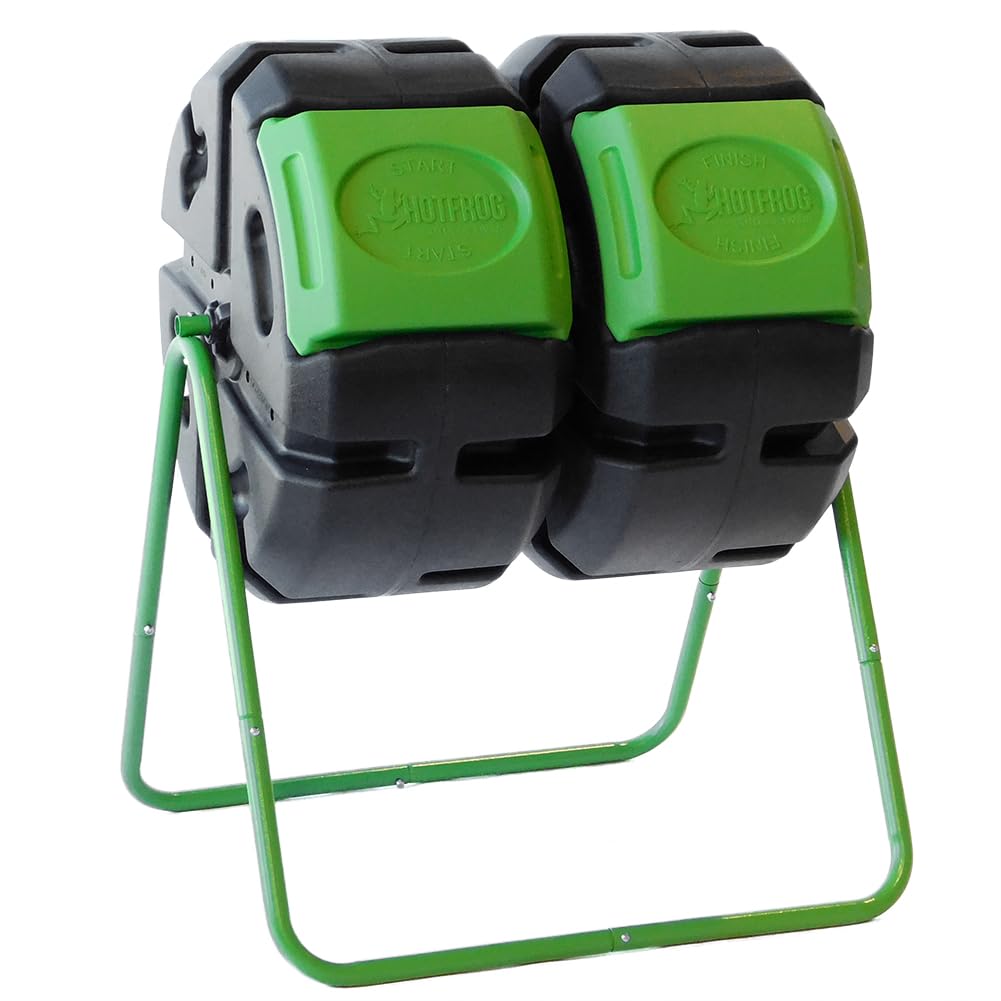
The FCMP HOTFROG uses rotomolded, UV-inhibited polyethylene — the same class of plastic found in kayaks — which resists cracking under sun exposure far better than the thin polypropylene panels found on budget tumblers. The dual-chamber design lets you fill one 18.5-gallon side while the other side finishes, and the cylindrical shape creates a natural tumbling motion that mixes the material without requiring heavy leverage.
Assembly takes about 15 minutes with two people, and the large sliding doors give you full access to the interior — a huge advantage over small twist-off lids that force you to scrape compost out by hand. Owners consistently report finished compost in two to three weeks during hot weather when the green-to-brown ratio is balanced. The aeration vents run the full length of each chamber, ensuring oxygen reaches the center of the pile.
The 37-gallon capacity works best for households of one to three people. The sliding doors can drip leachate if the bin is overfilled, but this is normal for any tumbler. The frame uses a corrosion-resistant powder-coated steel that holds up well, though the included bolts are better replaced with stainless hardware if you live near salt air.
Why it’s great
- Rotomolded polyethylene walls resist UV damage and impact
- Large sliding doors make loading and unloading straightforward
- Fast composting results in as little as two weeks with proper ratios
Good to know
- Hardware could be stronger; consider upgrading to stainless steel bolts
- Sliding doors can drip leachate if chamber is overloaded with wet greens
2. Greenes Fence Premium Cedar Wood Composter

This is a static open-bottom bin made from 3/4-inch-thick North American cedar — a naturally rot-resistant wood that breathes better than any plastic. The slats have 1/4-inch gaps between them thanks to included spacers, which provides passive aeration without the risk of overheating. At 173.9 gallons, this is the largest-capacity bin in this guide, capable of handling the entire fall leaf drop from a suburban yard.
Assembly requires no tools: you tap the posts into the board slots using a rubber mallet. The modular design can be expanded into a two- or three-bin system using Greenes add-on kits, which is a genuine advantage if your composting needs grow. Because the bottom sits directly on the ground, worms and microbes from the soil can enter the pile, accelerating breakdown without any turning effort from you.
The trade-off is speed. Without tumbling, a static pile requires manual turning with a pitchfork every few weeks to stay aerobic. The wooden construction also means the bin will eventually weather and may need replacement after five to eight years depending on your climate. That said, the natural aesthetic and the massive capacity make it the best choice for serious gardeners who generate yard waste by the truckload.
Why it’s great
- Massive 173.9-gallon capacity handles high-volume yard waste
- Tool-free assembly in under 30 minutes with a rubber mallet
- Expandable to a multi-bin system with add-on kits
Good to know
- Requires manual turning with a pitchfork for aerobic composting
- Cedar will weather over time and eventually need replacement
3. SQUEEZE master Large Compost Tumbler Bin

The SQUEEZE master stands out for its built-in thermometer that lets you monitor the internal temperature of the compost pile without opening the lid. For serious composters, maintaining a core temperature between 130°F and 160°F is essential for killing weed seeds and pathogens, and this bin makes that data visible at a glance. The twin chambers each hold about 21.5 gallons, allowing you to batch compost on a continuous basis.
The upgraded steel frame has a rated load capacity of 352 pounds, which is overkill for a 43-gallon tumbler but ensures the bin remains stable even when one chamber is fully loaded and the other is empty. The octagonal drum shape creates deep fins that help break up clumps as you rotate. Owners note that the assembly instructions are poor, but the process is intuitive enough — start with the door panel, align the arrows, and work your way around.
A recurring complaint is that the tumbler spins so freely that it lacks a locking mechanism to keep it in place while you add scraps. The sliding doors also leak brown liquid from the seams under heavy moisture loads, which can create a messy patch underneath. If you value temperature data and a sturdy frame, this bin delivers, but you may need to locate it on gravel or a well-draining spot.
Why it’s great
- Built-in thermometer gives real-time compost temperature readings
- Heavy-duty steel frame supports up to 352 pounds
- Twin 21.5-gallon chambers for batch composting
Good to know
- No locking mechanism causes the drum to roll freely when adding scraps
- Doors can leak leachate through the seams when material is very wet
4. Marcytop 45 Gallon Dual Chamber Compost Tumbler

The Marcytop tumbler is the largest dual-chamber option in this guide by total volume, offering two separate 22.5-gallon compartments. The hexagonal drum shape incorporates deep fins and multiple aeration holes that improve oxygen circulation and help break up clumps during rotation. The frame is built from extra-thick polypropylene panels mounted on a powder-coated steel base aimed at remaining stable during heavy use.
Assembly is where this model shines. A 71-year-old reviewer reported assembling it alone without difficulty, and multiple owners confirm the parts fit together cleanly without the excessive force needed by some other brands. A rubber mallet and screw gun make the job go faster, but a manual screwdriver works. The sliding doors are large enough to add kitchen scraps easily, and the black color absorbs sunlight to retain heat.
The biggest challenge with this bin is the turning effort at full load. The 45-gallon capacity is generous, but a fully packed drum requires significant strength to rotate, especially if the material is damp and compacted. Several owners recommend filling both chambers evenly to balance the load. If you have the space and can keep the weight distributed, the Marcytop offers excellent value for the volume.
Why it’s great
- Generous 45-gallon total capacity across two 22.5-gallon chambers
- Easy assembly with well-fitting parts, even for one person
- Black drum absorbs heat to speed decomposition
Good to know
- Hard to rotate when both chambers are full of wet material
- Uneven loading can make the drum wobble on the frame
5. EAST OAK Dual Chamber Outdoor Compost Tumbler

The EAST OAK provides a locking mechanism that holds the tumbler at a fixed angle while you open the doors, solving a major annoyance of many free-spinning tumblers. The bin is built from BPA-free PP panels with deep aeration fins on eight internal ribs that break up clods and mix the pile thoroughly. Each chamber holds 18.5 gallons for a total of 37 gallons, making it a good match for a two- to three-person household.
Assembly is manageable with a power screwdriver, though owners report that the nuts on the long bolts securing the drum to the stand can be difficult to tighten fully without pliers. The powder-coated steel frame feels solid, and the black color helps retain solar heat, which the manufacturer says can yield finished compost in four to six weeks with proper moisture and material ratios.
The doors have been reported to be stiff to slide, even after applying lubricant, and the plastic tabs that secure the door tracks can break if forced. A few owners mention that the drum can warp if too much wet material is loaded on one side, which suggests this bin performs best with light, balanced loads. For beginners who plan to start small, the locking system and straightforward assembly make it a reasonable entry point.
Why it’s great
- Locking mechanism holds the drum steady for safe loading and unloading
- Deep internal fins break up clumps effectively during rotation
- BPA-free construction safe for growing vegetables
Good to know
- Sliding doors can be stiff and may require lubrication
- Drum may warp if heavily overloaded on one side
6. Good Ideas Compost Wizard Jr 7 Cubic Foot Tumbler
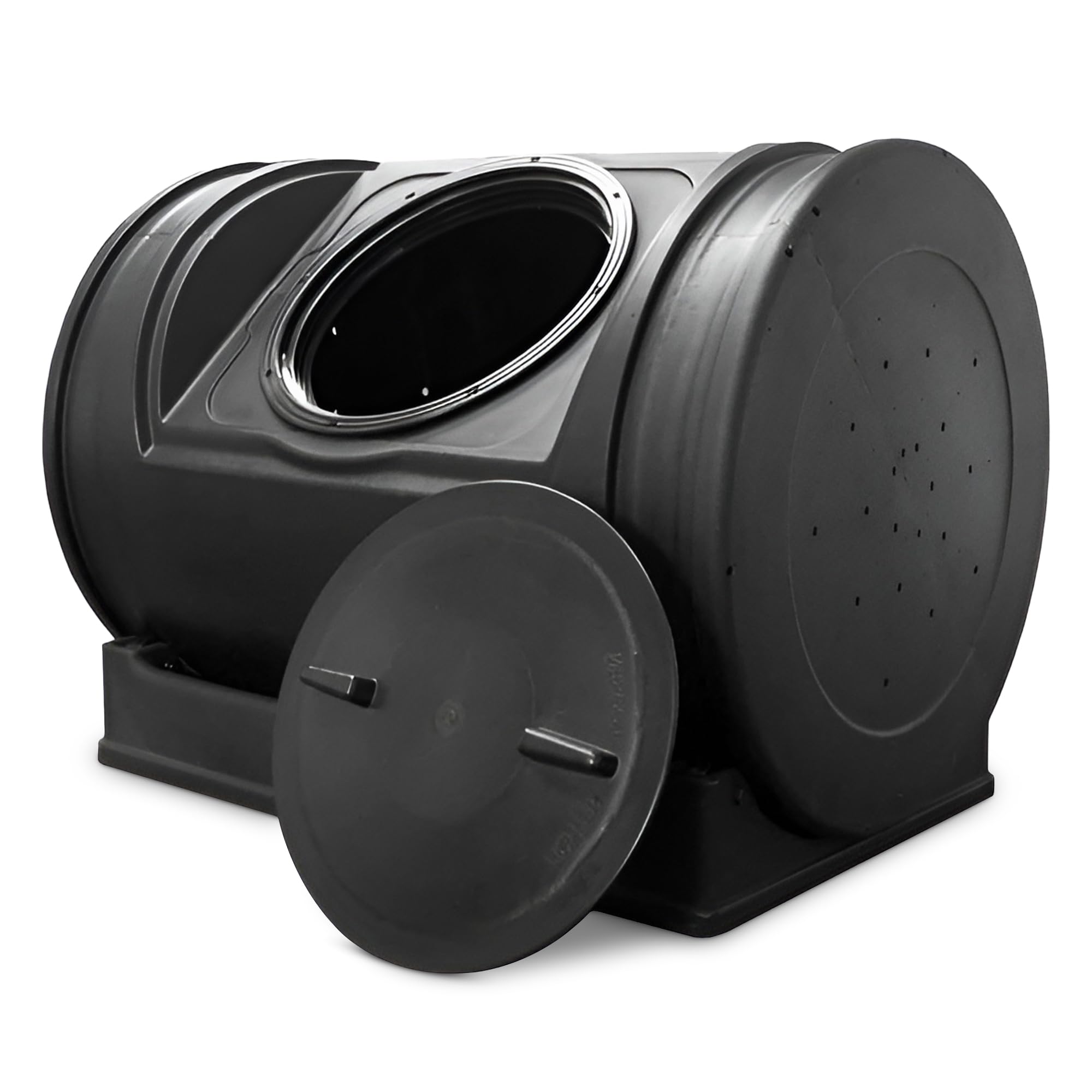
The Compost Wizard Jr arrives fully assembled — you remove it from the box, set it on level ground, and start filling. This is the only no-assembly-required bin in the guide, and for anyone who wants to skip the frustration of snapping together polypropylene panels, that alone is worth considering. It uses a wheeled design that allows you to roll the drum to turn the contents instead of cranking a handle, a clever approach that reduces physical strain.
The 7-cubic-foot capacity translates to about 52 gallons, placing it between a 40- and 60-gallon bin. The BPA-free polyethylene construction is UV-resistant, and the 12-inch twist-off lid locks securely to keep out raccoons and possums.
The major drawback is that rain collects on the top of the drum, adding significant weight and making it harder to roll. The small opening also makes it difficult to remove finished compost — you must tilt the heavy drum or scoop through the top. Several users note that the output can be muddy and slow to finish if you don’t carefully manage the moisture level. It is a durable, low-effort starter bin, but serious composters may outgrow it within a season.
Why it’s great
- Zero assembly required — ready to use out of the box
- Wheeled base makes turning easy compared to crank-style tumblers
- Proven long-term durability with many units lasting over 10 years
Good to know
- Small opening makes removing finished compost difficult
- Rain collects on top, making the bin heavy and harder to roll
7. EJWOX 80 Gallon (300L) Large Capacity Static Compost Bin

For sheer volume per dollar, the EJWOX 80-gallon static bin is hard to beat. The six-component snap-together design needs no tools and assembles in under five minutes — no screws, no bolts, no frustration. The rectangular shape features circular aeration vents on all four sides to maintain oxygen flow, and the open-bottom design allows direct contact with the soil so worms and microbes can enter the pile naturally.
The forest green color blends into garden settings unobtrusively, and the UV-stabilized polypropylene is rated to withstand both sun and freezing temperatures without cracking. Owners note that the lid snaps securely and the bin feels stable once loaded. Several users have repurposed this bin for composting dog waste with sawdust, which speaks to the versatility of the large volume and good airflow.
The obvious limitation is that the plastic is thin — measured at roughly 1/8 inch — and the lid tabs will eventually snap off under repeated stress. One owner reported the material was too flimsy to hold a brick used as a weight. This bin is best for someone who wants to set up a large composting system on a lean budget and is willing to handle slow decomposition times and potential material fatigue within a couple of years.
Why it’s great
- Massive 80-gallon capacity at a budget-friendly price point
- Tool-free, snap-together assembly in under five minutes
- Open-bottom design allows soil organisms to enter the pile
Good to know
- Thin polypropylene panels are prone to cracking over time
- Lid tabs are fragile and can break under repeated stress
FAQ
How many gallons do I need for a family of four?
Can I compost dog waste in a backyard compost bin?
What is the best bin for beginners who want fast results?
Final Thoughts: The Verdict
For most users, the best backyard compost bin winner is the FCMP Outdoor HOTFROG because it balances durable rotomolded polyethylene construction with a dual-chamber design that produces usable compost in weeks without excessive effort. If you want the largest possible volume and prefer a natural look, grab the Greenes Fence Cedar Composter. And for a no-hassle, no-assembly setup that will still be running a decade from now, the Good Ideas Compost Wizard Jr is your pick.

Mo Maruf
I created WellFizz to bridge the gap between vague wellness advice and actionable solutions. My mission is simple: to decode the research and give you practical tools you can actually use.
Beyond the data, I am a passionate traveler. I believe that stepping away from the screen to explore new environments is essential for mental clarity and physical vitality.