Our readers keep the lights on and my smoothie glass nicely filled. As an Amazon Associate, I earn from qualifying purchases.
When the grid goes dark, the difference between a stressful outage and a manageable one comes down to the backup generator sitting in your driveway or connected to your gas line. Choosing the wrong unit can mean blown appliances, dangerous exhaust fumes, or a unit that simply cannot start your well pump and furnace at the same time.
I’m Mohammad Maruf — the founder and writer behind WellFizz. I’ve spent years studying the electrical demands of modern homes, analyzing inverter vs. open-frame noise specs, fuel consumption rates, and transfer switch compatibility to separate the units that deliver clean, reliable power from those that fall short under real storm conditions.
Whether you need a portable tri-fuel machine for occasional outages or a fully automatic standby system that runs your entire house, this guide will help you find the right best backup generator for house for your specific needs and budget.
How To Choose The Right Backup Generator For House
Selecting a home backup generator involves more than picking the biggest wattage number. You need to balance fuel availability, noise tolerance, installation ease, and how often you actually lose power. Here are the four factors that matter most for a house-sized investment.
Wattage and Starting Surge
Your generator must handle both running wattage (steady load) and starting wattage (surge). A refrigerator may draw 800W running but needs up to 2,200W to start its compressor. Sum up the running watts of every appliance you want to power simultaneously, then add the single largest starting surge. For whole-house coverage, most homes need at least 10,000-15,000 starting watts. Undersizing leads to tripped breakers and stalled motors.
Fuel Type and Runtime
Gasoline provides high power density but degrades in storage and limits runtime to tank capacity. Propane stores indefinitely but reduces max wattage by about 10%. Natural gas is the most convenient for standby units because it connects to your home’s permanent supply, though it limits portability and can be disrupted during catastrophic grid failures. Dual-fuel and tri-fuel models give you the flexibility to switch based on availability.
Installation and Transfer Switch
Portable generators can run extension cords or plug into an interlock kit or manual transfer switch installed on your breaker panel. Standby generators require a professional transfer switch installation and a permanent gas or propane line — this adds significant upfront cost but delivers automatic, whole-house power. Inverter generators are quieter and produce cleaner power for electronics, but typically cap out at lower wattages than open-frame units.
Noise and Safety Features
Open-frame generators often exceed 75 dBA — loud enough to disturb neighbors and require ear protection. Inverter models can operate below 60 dBA, similar to a normal conversation. CO sensors that automatically shut down the unit when carbon monoxide builds up are now essential safety features, especially if the generator operates near the house or in partially enclosed spaces.
Quick Comparison
On smaller screens, swipe sideways to see the full table.
| Model | Category | Best For | Key Spec | Amazon |
|---|---|---|---|---|
| Westinghouse iGen12000TFc | Inverter | Quiet home backup | 9000W running/12000W peak, ≤3% THD | Amazon |
| Jackery HomePower 3600 Plus | Power Station | Clean silent power | 3600W output, 3584Wh, expandable to 21kWh | Amazon |
| EcoFlow DELTA Pro Ultra | Power Station | Whole-house battery backup | 7200W output, 6144Wh, expandable to 90kWh | Amazon |
| DuroMax XP13000HXT | Tri-Fuel | Tri-fuel flexibility | 13000W peak, 500cc OHV engine | Amazon |
| DuroMax XP15000HXT | Tri-Fuel | Heavy tri-fuel loads | 15000W peak, 670cc engine | Amazon |
| Champion 15kW Tri-Fuel | Tri-Fuel | V-twin reliability | 15000W peak, 717cc V-Twin engine | Amazon |
| Westinghouse 12500W Dual Fuel | Dual-Fuel | Value dual-fuel power | 12500W peak, 457cc engine | Amazon |
| AIVOLT 11250W Inverter | Inverter | Ultra-quiet dual fuel | 11250W peak, 57dB at 23ft | Amazon |
| Growatt HELIOS 3600 | Power Station | All-in-one solar kit | 3600W output, 3600Wh, 400W solar incl. | Amazon |
| Anker SOLIX C2000 Gen 2 | Power Station | Compact lightning-fast recharge | 2400W rated, 2048Wh, 58-min full charge | Amazon |
| Honda EU7000iS | Inverter | Premium quiet inverter | 7000W peak, 52-58 dBA | Amazon |
| Generac Guardian 22kW | Standby | Automatic whole-house | 22000W, NG/LP, 200A transfer switch | Amazon |
| Generac Guardian 24kW | Standby | Max automatic backup | 24000W, NG/LP, 200A transfer switch | Amazon |
In‑Depth Reviews
1. Westinghouse iGen12000TFc
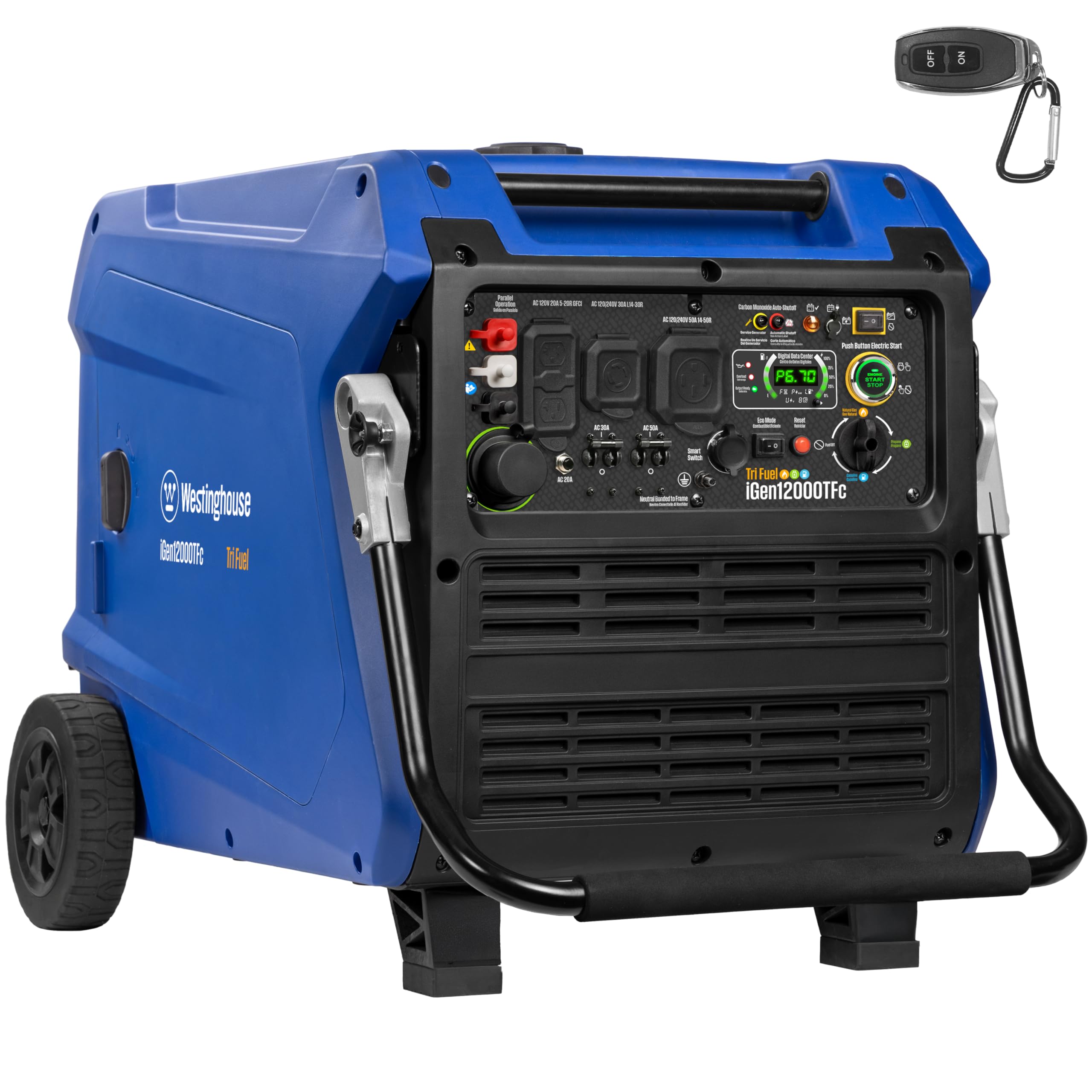
The Westinghouse iGen12000TFc redefines what a portable inverter generator can do — it delivers up to 12,000 peak watts on gasoline with a total harmonic distortion of just 3%, making it safe for laptops, smart appliances, and any sensitive electronics in your home. Running at a quiet 64 dBA in Eco Mode, this unit is neighborhood-friendly while still powerful enough to run your well pump, refrigerator, and a window AC simultaneously through its 50-amp outlet.
Its 457cc engine runs up to 19 hours at 25% load on a 7.9-gallon tank, and inverter technology reduces fuel consumption by as much as 50% compared to traditional open-frame models when demand is light. The remote start key fob, LED data center showing fuel level and remaining runtime, and tri-fuel capability (gasoline, propane, natural gas) make this the most versatile home backup inverter on the market today.
At 191 pounds, it is not light, but the wheel kit and folding handles make it manageable for a single person to roll into position. The only trade-off is that the natural gas output drops to 7,200 running watts — enough for essentials but not the full 50-amp capacity. For households that want clean, quiet power with fuel flexibility, this is the benchmark.
Why it’s great
- Exceptionally quiet at 64 dBA for its power class
- Tri-fuel with ≤3% THD clean sine wave for electronics
- Remote start and real-time digital display
Good to know
- Natural gas running watts drop to 7,200W
- Heavy at 191 pounds despite wheel kit
2. Jackery HomePower 3600 Plus

The Jackery HomePower 3600 Plus is the lightest 3.6kWh LFP power station on the market at 77 pounds, with a built-in telescopic handle and wheels that let you roll it from the garage to the living room without breaking your back. Its 3,600W AC output handles a refrigerator, sump pump, furnace fan, and several lights simultaneously, and the ceramic membrane battery cells are tested to withstand 302°F without thermal runaway.
Expandable to a massive 21kWh per unit, it can power a typical three-person household for over two weeks. The plug-and-play design pairs with a manual transfer switch for easy home integration — just plug in, press power, and go. Recharging is equally flexible: 0-100% in 2.5 hours from AC, 4 hours from solar, or 2 hours hybrid AC+DC. The 6,000-cycle battery life means this unit will outlast a decade of weekly blackouts.
Owners report successfully running oxygen concentrators, power wheelchairs, and even washing machines without flicker or overload. The only real downside is weight — 77 pounds is still heavy when lifting over a curb or into a vehicle, and the wheel design is best for smooth floors. For quiet, emission-free power with zero maintenance, this is a top-tier choice.
Why it’s great
- Ultra-light with built-in wheels and telescoping handle
- 6,000-cycle LFP battery with 10-year lifespan
- Zero emissions, silent operation, indoor safe
Good to know
- Still heavy at 77 pounds for some users
- Expansion batteries are a significant additional cost
3. EF ECOFLOW DELTA Pro Ultra

The ECOFLOW DELTA Pro Ultra is a whole-house battery system disguised as a portable power station — one unit delivers 7,200W of continuous output at both 120V and 240V, enough to start and run a 3-ton central AC.
Its 0-millisecond UPS transfer time means sensitive medical equipment and network servers see zero interruption during grid flickers. The EcoFlow app lets you prioritize specific circuits and shift your usage to off-peak rates, turning the unit into a money-saving tool even when the grid is up. Recharging hits 100% from a wall outlet in just 2 hours, or from an EV charging station for even faster top-ups.
The modular design is impressive — one inverter can power the house, and tripling the inverters pushes total AC output to 21.6kW. Owners note that installation with a 10-circuit transfer switch is straightforward for a qualified electrician. The main barrier is the upfront investment: this is a premium system that replaces a traditional standby generator without fuel or noise.
Why it’s great
- 7,200W 120/240V output runs central AC and well pump
- 0ms UPS transfer for uninterrupted sensitive electronics
- Expandable to 90kWh for prolonged outages
Good to know
- High upfront investment for full expansion
- Requires electrician for optimal whole-house integration
4. DuroMax XP13000HXT
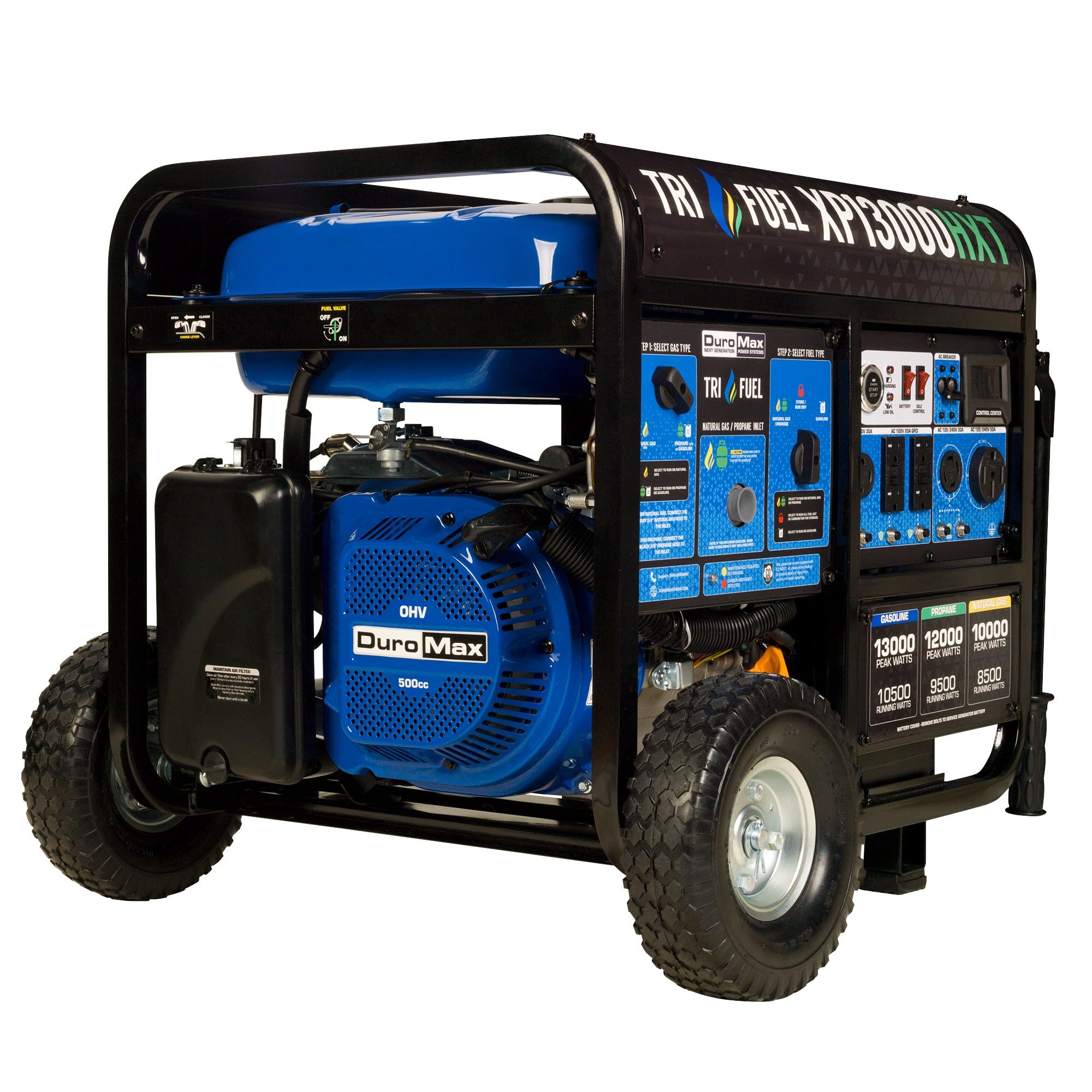
The DuroMax XP13000HXT brings tri-fuel flexibility (gasoline, propane, natural gas) to the 13,000-watt peak class with a robust 500cc OHV engine and push-button plus remote start. Its front-facing interface lets you swap fuel types in seconds, and the 50-amp outlet is ready for transfer switch connection. The CO Alert system automatically shuts down the generator if carbon monoxide builds up, adding critical safety for home use.
Owners report powering entire houses during winter storms, running four refrigerators, a furnace, security cameras, and lights simultaneously at just 30% load on natural gas. The package includes a natural gas hose, propane regulator, remote control, and wheel kit — everything needed to get started except oil. Runtime on gasoline is impressive at roughly 6 hours on 2.2 gallons at moderate loads, and natural gas provides near-endless fuel for those with permanent gas lines.
At 240 pounds, this is not a light machine, and the fuel selector knob can be stiff when cold. Some owners recommend a monthly 15-minute run and a trickle charger for the battery to ensure reliability. For homeowners who want the flexibility of three fuels without moving up to the 15,000-watt tier, this is the sweet spot.
Why it’s great
- Tri-fuel with quick-switch front panel
- CO Alert automatic safety shutdown
- Excellent fuel efficiency on natural gas
Good to know
- Heavy at 240 pounds
- Stiff fuel selector knob when cold
5. DuroMax XP15000HXT
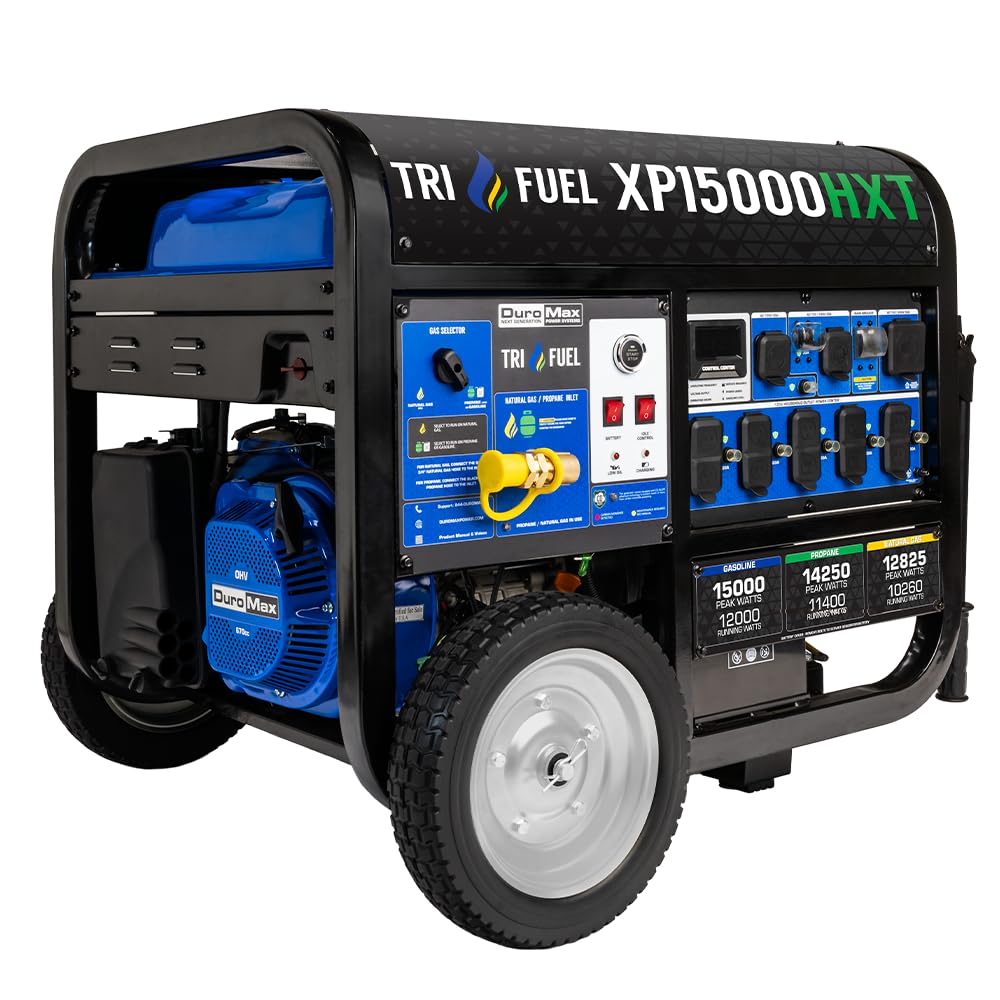
The DuroMax XP15000HXT steps up with 15,000 peak watts and a powerful 670cc OHV engine, making it one of the most capable tri-fuel portables for whole-house backup. The fully loaded power panel features four 120V GFCI outlets, a 120/240V 50-amp heavy-duty outlet, and both 30-amp twist locks. The large LED display shows fuel level, load gauge, voltage, and runtime at a glance, while the CO Alert system provides automatic shutdown protection.
Owners praise the comprehensive inclusion — the kit comes with a natural gas hose, propane regulator, remote control, tool set, and wheel kit, and many report successful full-load operation on natural gas powering HVAC systems, well pumps, and all critical circuits. The 100% copper windings dissipate heat more effectively than aluminum, extending the generator’s service life under sustained heavy loads.
The biggest caveat is physical size: at 36 inches long and 400 pounds with fluids, this generator needs a permanent outdoor location or a heavy-duty dolly. Some buyers note that the new model changed the control board layout and oil access compared to previous generations, so verify fitment if replacing an older mount. For homes that truly need 15,000 watts on any fuel source, this is a proven workhorse.
Why it’s great
- True 15,000-watt peak with tri-fuel capability
- Full power panel with 50A heavy-duty outlet
- CO Alert and 100% copper windings
Good to know
- Extremely heavy — requires permanent placement
- Design changes may affect existing mounts
6. Champion Power Equipment 15kW Tri-Fuel

The Champion 15kW Tri-Fuel generator stands out with a 717cc Milwaukee Series V-Twin engine that delivers exceptionally smooth power delivery compared to single-cylinder units. It generates 15,000 starting watts and 12,000 running watts on gasoline, with natural gas and propane hoses included in the box so you can run it on any fuel immediately. The battery-included electric start with a heavy-duty toggle switch is more reliable than key fob systems in wet conditions.
The Intelligauge monitors voltage, hertz, and runtime hours, making it easy to track break-in maintenance and fuel quality. CO Shield technology provides auto-shutdown protection against carbon monoxide buildup. Owners who used this generator during Hurricane Beryl report running entire homes — including 3.5-ton AC units with soft starts, gas dryers, electric washers, and well pumps — for 90+ hours on natural gas without issues.
The downsides are weight (331 pounds) and size, requiring a dedicated space or high-capacity wheel kit. Some users report that the CO sensor can be overly sensitive, shutting down the unit after 1.5-2 hours of outdoor operation, which requires cycling the power switch to reset. For those who want the reliability of a V-twin engine and comprehensive warranty support, this is a robust choice.
Why it’s great
- Smooth V-twin 717cc engine for reduced vibration
- Includes both NG and propane hoses
- 3-year warranty with free lifetime tech support
Good to know
- Very heavy at 331 pounds
- CO sensor may trigger prematurely in some units
7. Westinghouse 12500W Dual Fuel

The Westinghouse 12,500-watt dual fuel generator offers 9,500 running watts on gasoline (8,500 on propane) from its proven 457cc OHV engine with a cast iron sleeve for long-term durability. It includes both electric start and a remote key fob, plus a recoil backup — so if the battery dies, you can still pull-start the unit. The 6.6-gallon fuel tank delivers up to 12 hours of runtime at moderate loads, and the fuel gauge lets you monitor consumption without opening the cap.
The outlet panel is well-equipped: two GFCI 120V household receptacles, a 30-amp twist lock for transfer switch use, and a 50-amp RV outlet. The CO sensor and automatic low-oil shutdown add essential safety layers. Owners consistently report easy assembly in under five minutes, smooth electric start, and reliable power that runs well pumps and water heaters simultaneously without hesitation.
At 212 pounds, it is heavy but rolls easily with the included wheel kit. The main trade-off is noise — this is an open-frame generator, so it registers around 75 dBA at full load, which is typical for this class but requires ear protection for nearby use. For homeowners who want a no-frills, reliable dual-fuel generator without paying for inverter clean power, this is an excellent value proposition.
Why it’s great
- Dual-fuel flexibility with remote and electric start
- 12-hour runtime on 6.6-gallon tank
- Cast iron sleeve engine for extended life
Good to know
- Open-frame design produces typical noise levels
- Heavy at 212 pounds
8. AIVOLT 11250W Dual Fuel Inverter
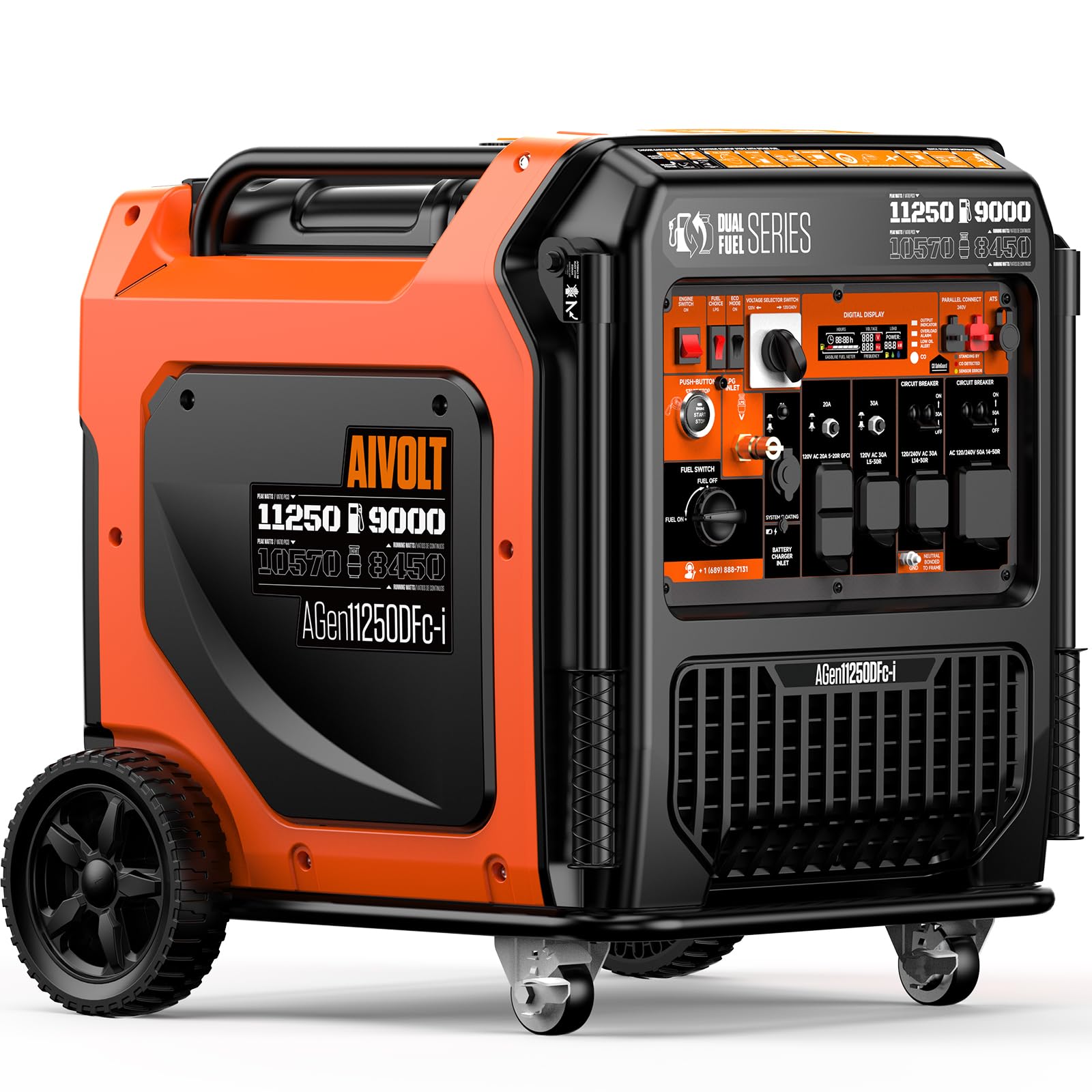
The AIVOLT 11,250W dual fuel inverter generator targets the quiet-power niche with a claimed 57 dBA at 23 feet — quiet enough for residential neighborhoods and RV parks. It delivers 11,250 peak watts on gasoline (9,000 running) and 10,570 peak on propane, with the ability to switch fuel types while the engine is running. The 50-amp RV outlet and transfer switch-ready 30-amp outlet make home integration simple.
Owners appreciate the premium build quality and the fact that it is both EPA and CARB compliant, making it available for purchase even in California. Eco Mode extends runtime beyond 19 hours at light loads by adjusting engine speed to match demand. The remote start, electric start, and recoil backup provide three ways to fire it up, and the digital display shows fuel level, voltage, and runtime in real time.
Some owners measured actual noise at 72-73 dBA at 5 feet — louder than the marketing spec but still quieter than many open-frame units. There is a known issue where the generator enters a safety cooldown mode if restarted while hot, requiring up to an hour before it will fire again. For buyers who prioritize low noise and clean power over raw silence, this remains a compelling mid-range inverter.
Why it’s great
- Very quiet operation for an 11kW inverter
- EPA and CARB compliant (sold in all 50 states)
- Remote start with hot-swap fuel capability
Good to know
- Safety cooldown mode prevents quick restarts
- Real-world noise may exceed marketing spec
9. GROWATT HELIOS 3600 with Solar Panels
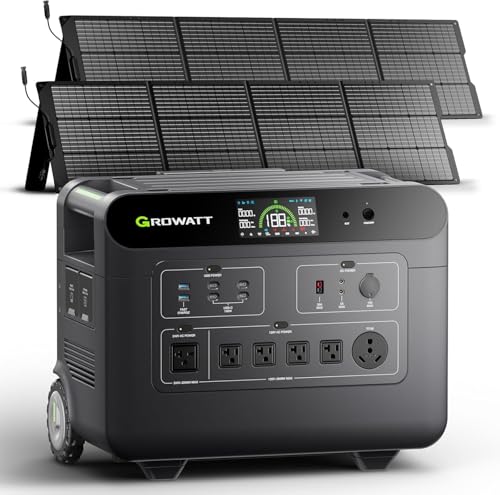
The GROWATT HELIOS 3600 arrives as a complete solar emergency power kit with the 3,600Wh power station and two 200W solar panels, so you can start generating power immediately after unboxing. It delivers 3,600W continuous AC output, and two units can be paralleled for 7,200W at 240V with the ability to expand total capacity to 36kWh — enough to run a whole house through extended outages.
The 15ms EPS switching time keeps critical equipment online during grid failures, and the cold-start technology operates reliably at temperatures as low as -22°F, making it suitable for northern climates where battery-based systems often struggle. The Smart APP allows time-of-use scheduling to prioritize solar charging and reduce electricity bills when the grid is active. The EV-grade LFP cells retain 80% capacity after 4,000 cycles.
Owners report running 8,000 BTU AC units for about 5 hours and powering a full home kit (fridge, router, Starlink, TV) for 24-30 hours on a 2-hour charge. Some users experienced Bluetooth connectivity issues with the app, and the unit is heavy at 149 pounds despite its compact dimensions. For those who want a turnkey solar backup solution without piecing together components, this bundle delivers exceptional value.
Why it’s great
- Complete kit with 400W of solar panels included
- Parallel support for 240V whole-house output
- Cold-start down to -22°F
Good to know
- App connectivity can be inconsistent
- Heavy at 149 pounds despite wheel kit
10. Anker SOLIX C2000 Gen 2

The Anker SOLIX C2000 Gen 2 is the most compact and fast-charging power station in this guide at just 41.7 pounds — 25% lighter than comparable 2kWh units. It charges from 0-100% in just 58 minutes via AC or solar, making it the quickest recharge in its class. With 2,400W rated output and 4,000W peak, it can start most window AC units and RV air conditioners, and its standby power consumption is a mere 9W — meaning the unit barely discharges when idle.
The 2,048Wh LFP battery is expandable to 4kWh with an additional battery, providing up to 64 hours of runtime for a dual-door fridge. The 800W UltraFast alternator charging lets you top off the battery from your vehicle in about 3 hours — 8x faster than a standard 12V socket. Real-world owners have used it as a primary power source for 30-quart fridges on 7-week camping trips, and as home backup for fridges, modems, TVs, and lighting.
Five owners report stacking multiple units for whole-house backup, with all units retaining 100% charge after 4 months of storage. The main limitation is size — at 2.4kWh, it cannot run large appliances like central AC or well pumps for extended periods. For those who want a lightweight, ultra-fast-charging battery backup for essentials, this is the most portable solution available.
Why it’s great
- Full recharge in just 58 minutes
- Ultra-light at 41.7 pounds
- Expandable to 4kWh for extended runtime
Good to know
- Base 2kWh capacity is modest for whole-house use
- Expansion battery adds cost
11. Honda EU7000iS
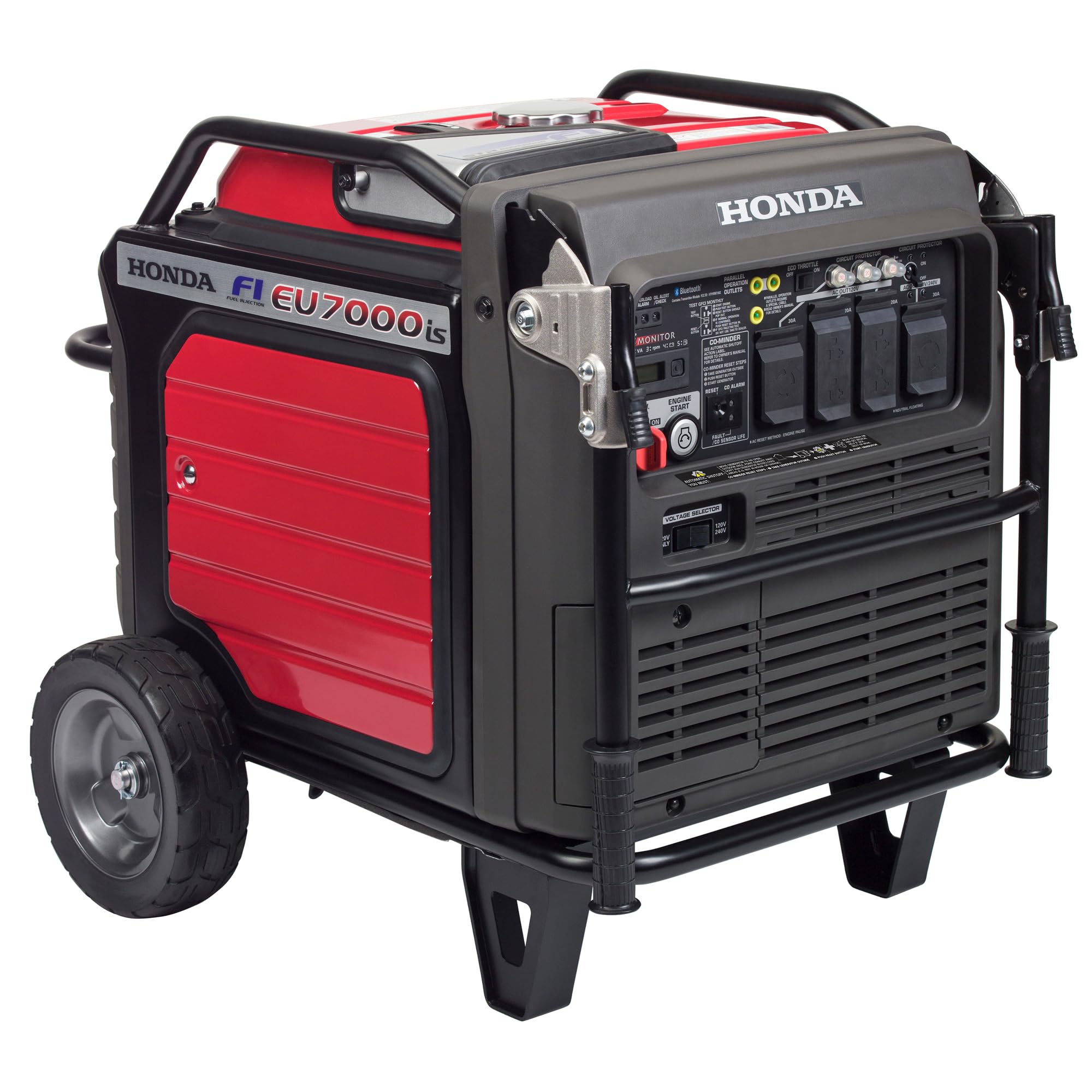
The Honda EU7000iS is the gold standard for quiet inverter generators — it operates at just 52-58 dBA, which is quieter than a normal conversation and dramatically less intrusive than any open-frame unit. Despite the low noise, it delivers 7,000 peak watts and 5,500 running watts with Honda’s legendary reliability and ultra-clean sine wave output. The Eco Throttle system adjusts engine speed to match the load, delivering up to 16 hours of runtime on a 5.1-gallon tank.
The Bluetooth My Generator app provides remote start, monitoring, and service reminders from your phone. The CO-MINDER carbon monoxide detection system automatically shuts down the generator before CO levels become dangerous. Owners consistently praise the push-button start — one user noted that after years of fighting with a pull-start generator during storms, the Honda starts in seconds even in bad weather and runs an entire home (including a 3-ton AC with breaker management) without breaking a sweat.
The catch is the price: the EU7000iS commands a significant premium over equivalent-wattage competitors, and at 263 pounds it is still heavy for a portable inverter. The 5.1-gallon tank is smaller than many competitors, though the extended runtime compensates. For homeowners who prioritize whisper-quiet operation, Honda’s decades-long reliability, and clean power above all else, this is the ultimate portable inverter generator.
Why it’s great
- Whisper-quiet 52-58 dBA operation
- Honda reliability with Bluetooth app control
- Clean inverter power safe for all electronics
Good to know
- Premium price well above competitors
- 5.1-gallon tank is smaller than some rivals
12. Generac Guardian 22kW
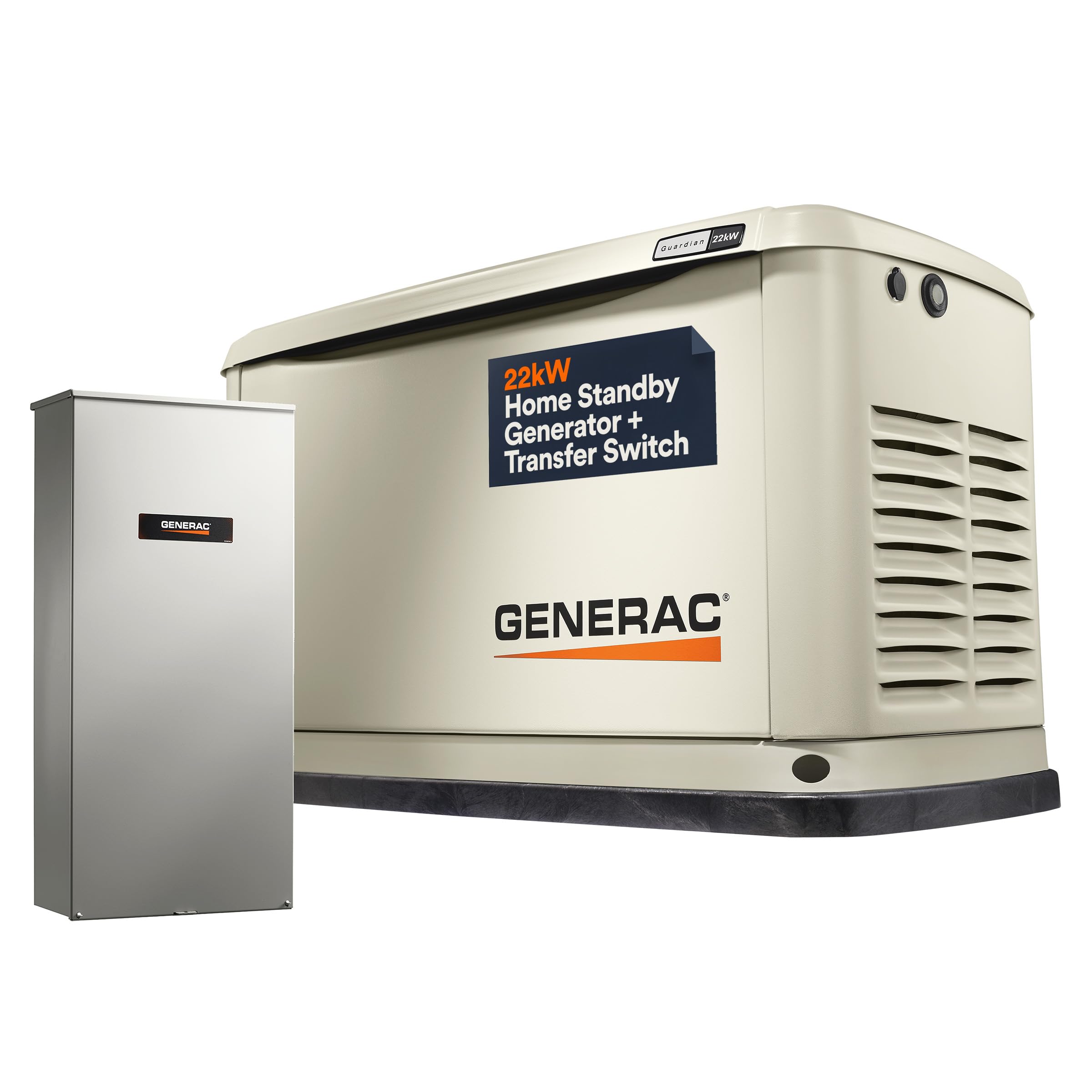
The Generac Guardian 22kW is the benchmark for automatic whole-house standby power — when the grid fails, this unit starts itself within seconds and transfers your home to generator power with zero action required from you. Its 999cc G-Force engine delivers 22,000 watts on natural gas or liquid propane with True Power Technology that keeps harmonic distortion under 5%. The included 200-amp NEMA 3R Smart Switch with aluminum enclosure is built for outdoor installation.
Mobile Link Wi-Fi connectivity lets you monitor generator status, exercise schedules, and maintenance alerts from anywhere via smartphone app. The 5-year limited warranty provides long-term peace of mind. Buyers consistently report paying significantly less than dealer-installed pricing by purchasing the unit on Amazon and hiring a licensed electrician separately for installation. One owner reported saving thousands compared to local quotes.
Installation is not DIY-friendly — you will need a certified electrician to wire the transfer switch and a plumber to connect the natural gas or propane line. Some units suffered shipping damage, so inspecting the packaging upon delivery is critical. The annual maintenance includes oil changes, spark plug replacement, and battery checks. For homeowners who want true set-and-forget backup power that works automatically during storms, this is the definitive solution.
Why it’s great
- Fully automatic start and transfer during outages
- 22kW runs entire home including large AC units
- Wi-Fi monitoring and 5-year warranty
Good to know
- Professional installation required (gas and electric)
- Annual maintenance is mandatory for warranty
13. Generac Guardian 24kW
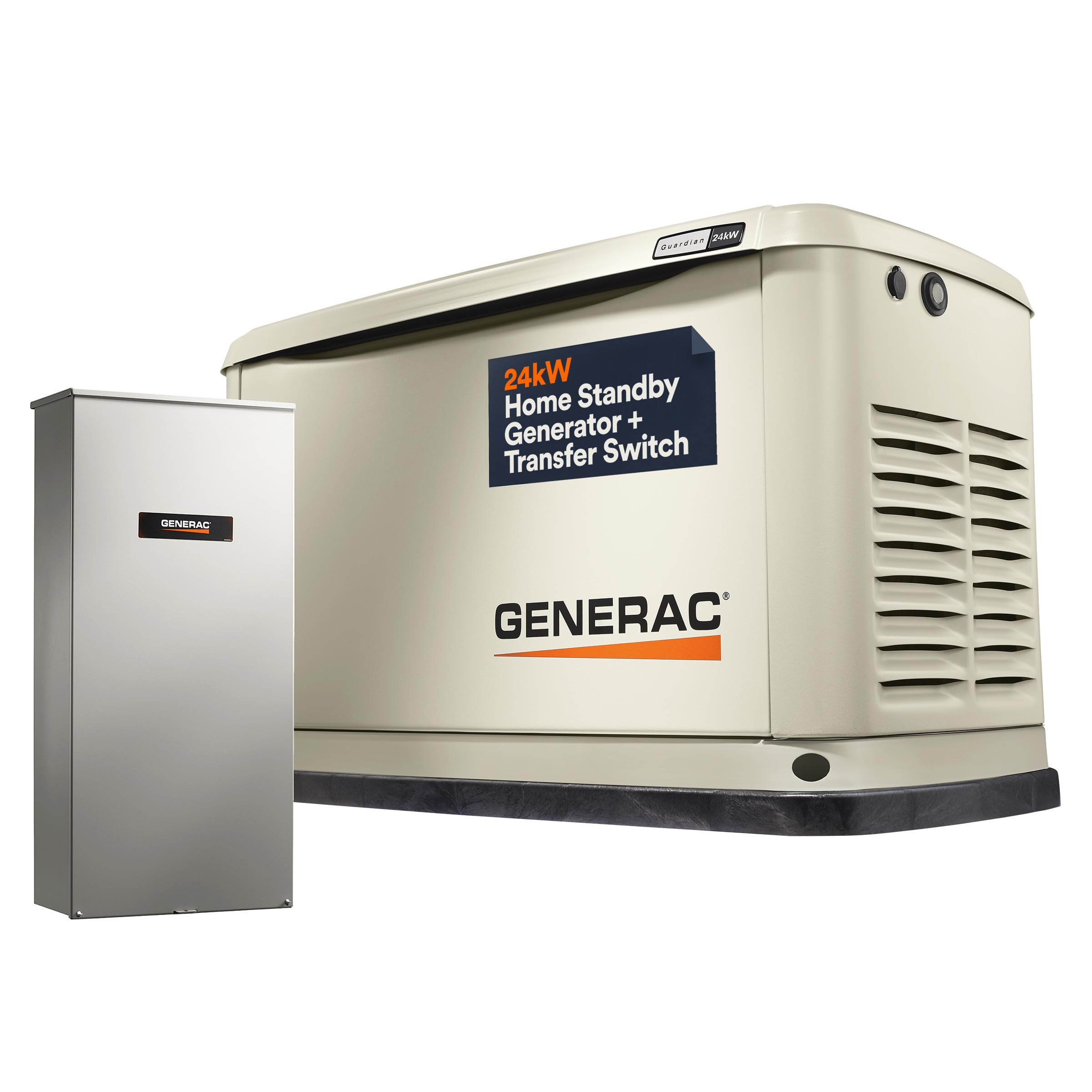
The Generac Guardian 24kW is the most powerful automatic standby generator on this list, delivering 24,000 watts of clean power through its 999cc G-Force engine with True Power Technology and under 5% harmonic distortion. It comes with a 200-amp SER transfer switch in an outdoor-rated aluminum enclosure, providing whole-house protection for even the largest homes with central AC, well pumps, electric water heaters, and pool equipment all running simultaneously.
Like its 22kW sibling, this unit features Mobile Link Wi-Fi for remote monitoring and automatic weekly self-exercise. Owners report that the generator is surprisingly quiet on LP gas — one user noted their wife could not hear it running from an adjacent room. The 5-year limited warranty covers both the generator and transfer switch. Many buyers recommend purchasing the unit separately and hiring a local contractor for installation, saving thousands compared to full-service dealer quotes.
At 466 pounds and requiring both electrical and gas connections, installation is a serious undertaking that requires professional coordination. Some owners noted that the unit needs a separate cold-weather kit for winter operation. While the price is the highest on this list, the 24kW capacity ensures that even homes with heavy electric loads will not outgrow this system. For those who simply want the biggest and most capable automatic standby generator available, this is it.
Why it’s great
- Highest residential standby output at 24kW
- Runs all appliances including large central AC
- Wi-Fi monitoring and comprehensive 5-year warranty
Good to know
- Very heavy and requires professional installation
- Cold-weather kit may be required separately
FAQ
What size generator do I need to run a 3-ton central air conditioner?
Can I run a backup generator on natural gas permanently?
What is the difference between a transfer switch and an interlock kit?
Final Thoughts: The Verdict
For most users, the best backup generator for house winner is the Westinghouse iGen12000TFc because it combines tri-fuel flexibility, inverter-clean power, whisper-quiet 64 dBA operation, and enough wattage to run your entire home on a transfer switch. If you want emission-free silent power that requires zero maintenance, grab the EF ECOFLOW DELTA Pro Ultra. And for true set-and-forget automatic backup that starts itself during a storm, nothing beats the Generac Guardian 22kW with its 200-amp transfer switch and 5-year warranty.

Mo Maruf
I created WellFizz to bridge the gap between vague wellness advice and actionable solutions. My mission is simple: to decode the research and give you practical tools you can actually use.
Beyond the data, I am a passionate traveler. I believe that stepping away from the screen to explore new environments is essential for mental clarity and physical vitality.