Our readers keep the lights on and my smoothie glass nicely filled. As an Amazon Associate, I earn from qualifying purchases.
A trekking backpack isn’t just a bag—it’s the frame that carries three days of food, a tent, and a sleep system across uneven granite and muddy switchbacks. The wrong choice transfers every pound directly to your shoulders, creating hotspots and throwing your center of gravity off with each step. Finding a pack that mates the internal frame to your torso length and distributes 35 pounds cleanly through the hip belt is the difference between a trip you finish and a trip you survive.
I’m Mohammad Maruf — the founder and writer behind WellFizz. I’ve spent years dissecting suspension designs, fabric deniers, and load-transfer geometry to rank packs by real trail metrics, not marketing claims.
After reviewing seven internal-frame models ranging from 44 to 70 liters, the list below delivers the clearest path to the backpacks for trekking that will actually keep your spine aligned and your stride efficient across multi-day terrain.
How To Choose The Best Backpacks For Trekking
Selecting a trekking pack requires balancing three interlocking variables: the suspension system’s ability to transfer weight to your hips, the volume needed for your gear without encouraging overpacking, and the fabric’s resistance to abrasion against rock and branches. Ignoring any one of these will lead to a miserable trip.
Frame Type and Suspension Adjustment
A perimeter frame with an aluminum stay offers the best load transfer for loads exceeding 35 pounds, keeping the pack’s center of gravity close to your back. Look for a torso adjustment system that lets you dial in fit across a range of 4–6 inches—fixed-length packs cause shoulder pain if your torso sits outside the narrow window. The hip belt should wrap around your iliac crest with at least an inch of padded overlap on each side.
Volume vs. Trip Length
For overnight trips, 40–50 liters is sufficient if you own compact gear. Three- to five-day trips demand 55–70 liters. Avoid the temptation to buy a 75-liter pack for weekend hikes; the empty space encourages shifting loads and inefficient packing. A top-loading design with a separate bottom compartment for a sleeping bag helps organize weight without digging through the entire pack.
Fabric and Hardware Durability
600-denier polyester or 210-denier nylon ripstop handles moderate trail abuse without adding significant weight. YKK zippers with large-gauge pulls are the standard for reliability—cheaper zippers jam when sand or grit works into the teeth. Check that the rain cover is included and stows in a dedicated pocket; a cover you leave behind because it’s packed at the bottom is useless on a sudden alpine afternoon.
Quick Comparison
On smaller screens, swipe sideways to see the full table.
| Model | Category | Best For | Key Spec | Amazon |
|---|---|---|---|---|
| Kelty Asher 65L | Premium | Multi-Day Comfort & Ventilation | 3lb5oz / 30-50lb carry / Fit Pro | Amazon |
| Osprey Kestrel 48L | Premium | Technical Trails & Rugged Use | 4.62lb / AirScape panel / fixed belt | Amazon |
| Osprey Stratos 44L | Premium | Ventilated Day & Overnight Hikes | 3.64lb / AirSpeed mesh / rain cover | Amazon |
| Deuter Futura Air Trek 60+10 | Premium | Maximum Back Ventilation | 60+10L / VariSlide fit / spring steel | Amazon |
| Mardingtop 60L Military | Mid-Range | Expanding Loads & Budget Durability | 4.49lb / expandable to 75L / YKK | Amazon |
| Ubon 60L | Value | Entry-Level 5-Day Trips | 2.65lb / mesh back / rain fly incl. | Amazon |
| Mardingtop 50L Tactical | Value | MOLLE Attachment & Rucking | 3.9lb / 600D polyester / YKK zips | Amazon |
In‑Depth Reviews
1. Kelty Asher 65L Backpack
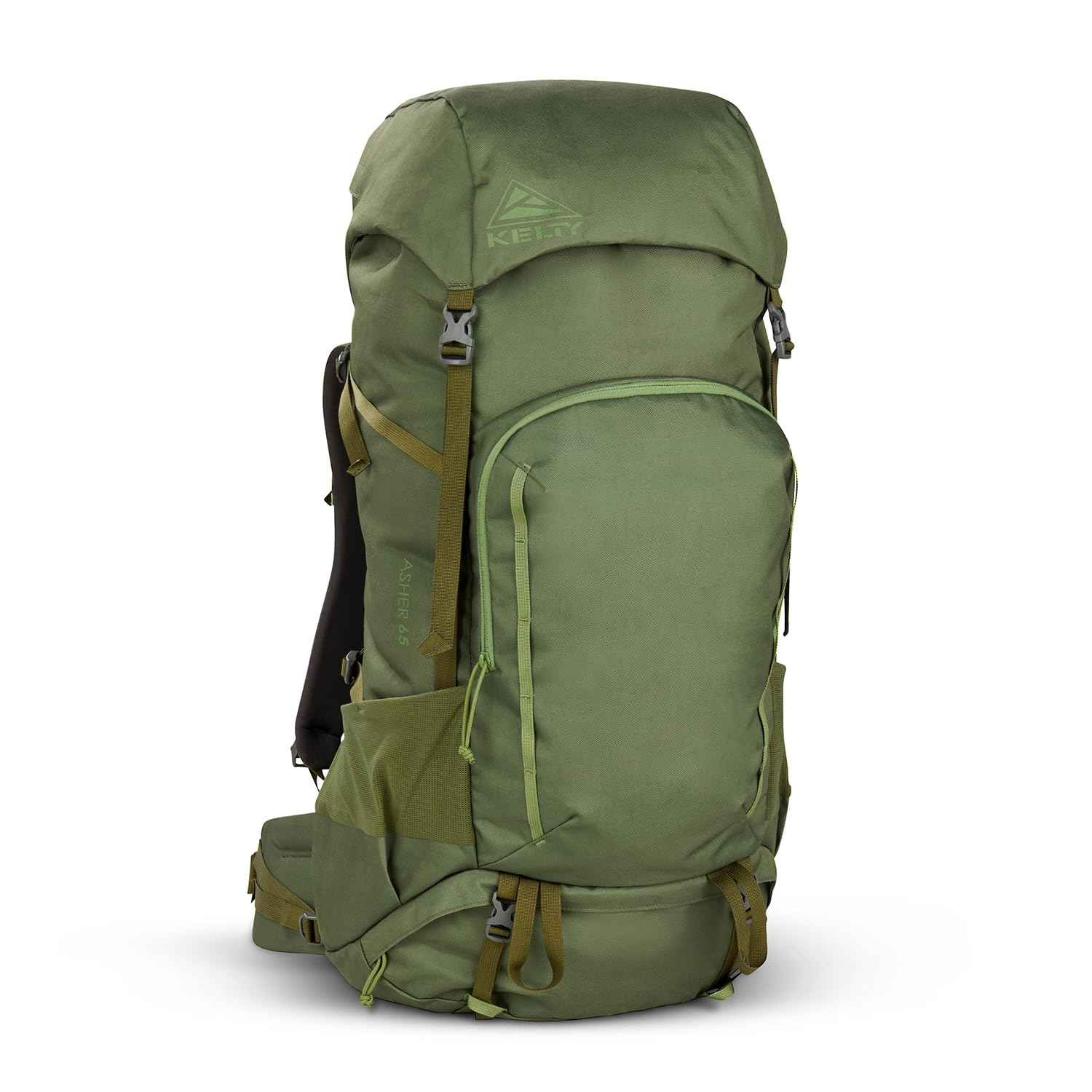
The Kelty Asher 65L is the rare pack that bridges entry-level pricing with enthusiast-grade suspension geometry. Its Fit Pro system adjusts torso length from 15.5 to 21 inches on the fly, accommodating torso shapes that fixed-frame packs ignore. The Amp Flow ventilated back panel uses a tensioned mesh suspended over an aluminum perimeter frame, creating a 2-inch air channel that dries sweat far faster than solid foam panels.
At 3 pounds 5 ounces, it’s lighter than most 65-liter contenders while maintaining a 30-to-50-pound optimal carry window. The sleeping bag compartment with a removable divider and dual side compression straps let you cinch down a half-full load, keeping the center of gravity tight. Load-lifter straps and a sternum strap with a whistle buckle round out a feature set that typically requires spending significantly more.
The bottom fabric lacks a reinforced wear patch, so setting the pack down on sharp granite repeatedly will eventually abrade the 210-denier nylon. The lid strap anchors originate inside the side pockets, which can interfere with stuffing a water bottle in quickly. For hikers who want a single pack for weekend to week-long trips without sacrificing back airflow, this is the cleanest choice on the list.
Why it’s great
- Fit Pro torso adjustment covers an unusually wide 5.5-inch range
- Amp Flow mesh keeps sweat from pooling during high-output climbs
- Aluminum perimeter frame transfers 40-pound loads cleanly to the hips
Good to know
- Bottom fabric lacks a dedicated abrasion-resistant panel
- Lid strap anchors intrude into side pocket space
2. Osprey Kestrel 48L Backpack
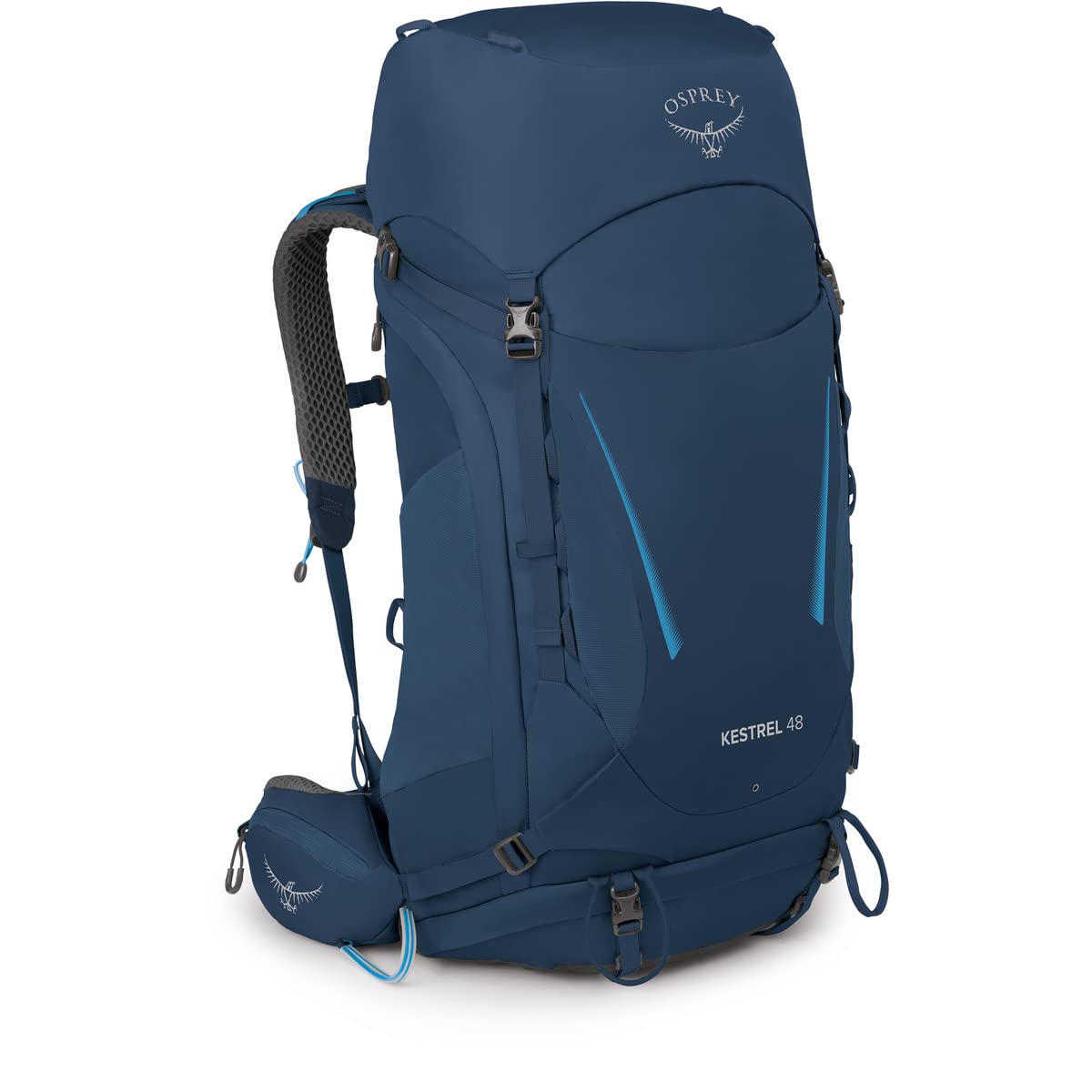
The Kestrel 48L prioritizes rugged utility over weight savings, using a thicker outer fabric than the Talon series and adding a fixed hip belt that wraps securely around the iliac crest without slipping. Its AirScape backpanel uses an injection-molded foam frame with a ridged channel that maintains breathability while keeping the load close to the body—a trade-off that sacrifices some ventilation for stability on technical terrain where lateral sway can throw you off balance.
The 48-liter capacity feels larger on the trail because the side compression straps and daisy chain attachments let you lash a foam sleeping pad or tent poles externally without straining the main compartment. The integrated rain cover deploys from a bottom pocket and is a bright green color for visibility in low-light conditions. The trekking pole attachment loops are stowable when not in use, keeping the webbing from snagging on brush.
At 4.62 pounds, it’s the heaviest pack reviewed relative to its volume. The fixed hip belt cannot be swapped or adjusted for waist circumference outside of its sizing range, so an in-store fit test is strongly recommended. The top lid pocket is large enough for a map and sunglasses, but the zipper pull is small for gloved hands.
Why it’s great
- Thicker fabric and reinforced stitching withstand repeated bushwhacking
- Fixed hip belt transfers weight with zero slip once adjusted
- Integrated rain cover deploys quickly and offers high visibility
Good to know
- Heavy for the volume at nearly 4.6 pounds
- Fixed hip belt requires precise sizing before purchase
3. Osprey Stratos 44L Backpack
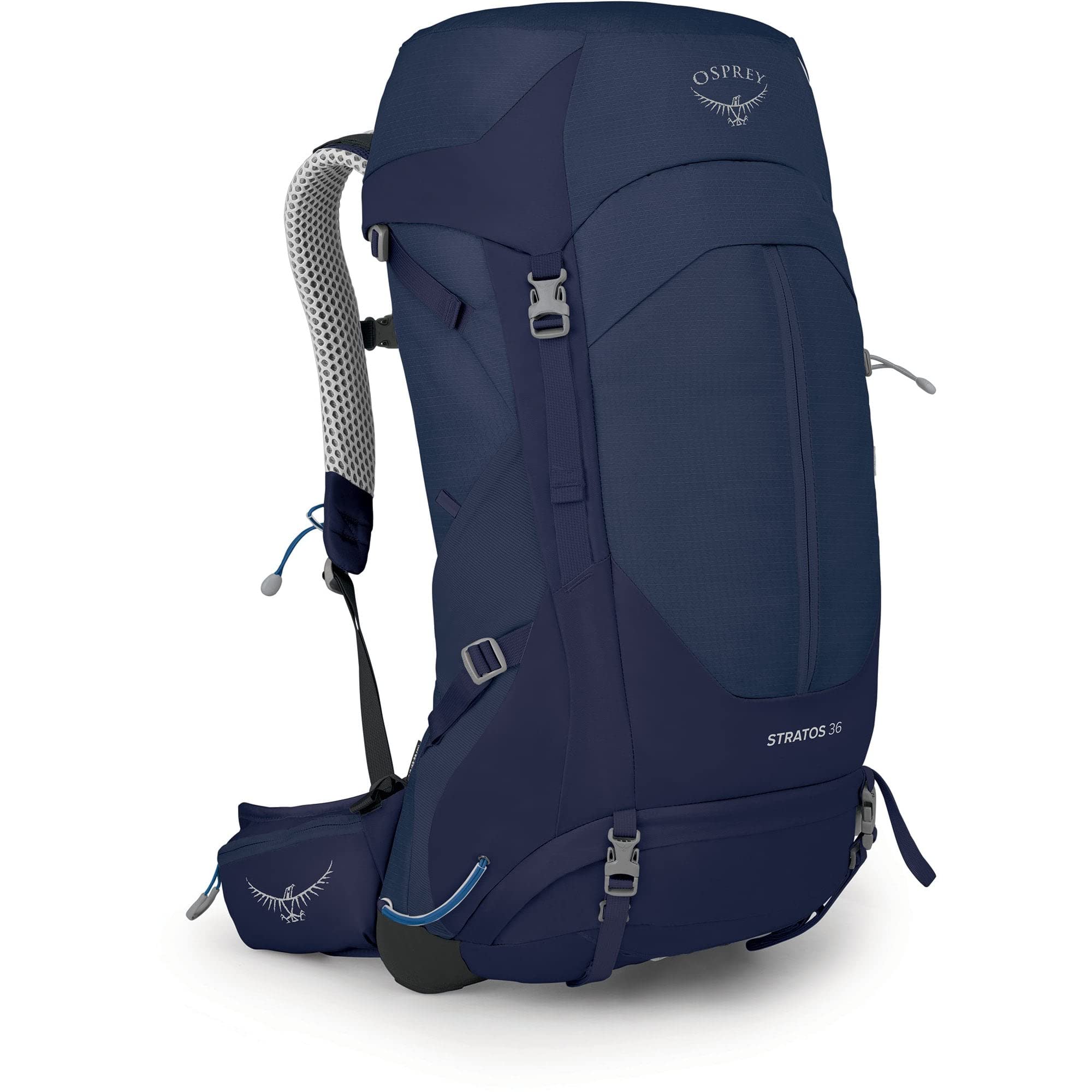
The Stratos 44L employs Osprey’s AirSpeed suspension, which uses a tensioned mesh stretched over a tubular aluminum frame to create a full 4-inch gap between the pack and your back. This design is unmatched for hot-weather hikes where a soaked back leads to chafing and heat rash. The molded ladder torso adjustment extends the fit range beyond typical fixed-height packs, accommodating torso lengths from 16 to 21 inches.
At 3.64 pounds and dimensions that fit most airline carry-on sizers, it pulls double duty as a travel pack for fly-in treks. The top-loading design with a drawcord closure and a floating lid gives you the option to overstuff slightly without stressing the zippers. An included rain cover stows in a dedicated bottom pocket, and the hydration sleeve accepts up to a 3-liter bladder with a hose port routed through the backpanel.
The mesh tension can sag over time if the pack is consistently overloaded beyond 30 pounds, reducing ventilation as the mesh contacts the frame. The hard frame also prevents the pack from compressing flat enough for overhead bins on smaller regional aircraft. For day hikes and overnight trips where 30 pounds is your ceiling and back sweat is your nemesis, this pack is the definitive answer.
Why it’s great
- AirSpeed mesh creates a 4-inch air gap unmatched for hot-weather treks
- Carry-on compliant dimensions for fly-in hiking itineraries
- Included rain cover and hydration sleeve add trail-ready value
Good to know
- Mesh tension degrades if loaded consistently over 30 pounds
- Hard frame prevents full compression for small overhead bins
4. Deuter Futura Air Trek 60+10 Backpack

Deuter’s Aircomfort system stretches a 3D mesh across a permanent spring steel frame, creating a tensioned trampoline that keeps the pack off your entire back. The VariSlide system lets you adjust the back length by sliding the hip belt up or down a rail, accommodating torso length changes you might experience when switching between summer and winter layers. The 60+10 expandable design adds a 10-liter extension collar for times when gear volume exceeds normal capacity.
The 600-denier polyester bottom panel resists abrasion from repeated ground contact, and the separate bottom compartment with a zippered divider isolates a sleeping bag or dirty clothes from the main cavity. Ice axe loops and trekking pole attachments are standard, and the side pockets use a combination of stretch mesh and bellows-style fabric that accommodates both a 1-liter Nalgene and a fuel canister. The hip belt pockets are large enough for a phone and energy bars without compressing the padding.
The spring steel frame adds lateral stiffness but prevents the pack from being stuffed into small trunk spaces or overhead bins. The extendable collar uses a drawcord that can be finicky to cinch one-handed while wearing the pack. For thru-hikers and weekend trekkers who prioritize a dry, cool back over absolute minimalism, this pack delivers the best ventilation-to-load-transfer ratio in its class.
Why it’s great
- Aircomfort mesh keeps the pack body off the back by over 3 inches
- VariSlide lets you adjust torso length on the fly between seasons
- 600-denier bottom panel shrugs off abrasion from granite and dirt
Good to know
- Permanent spring steel frame resists compression for travel
- Extension collar drawcord is awkward to tighten with one hand
5. Mardingtop 60L Military Internal Frame Backpack
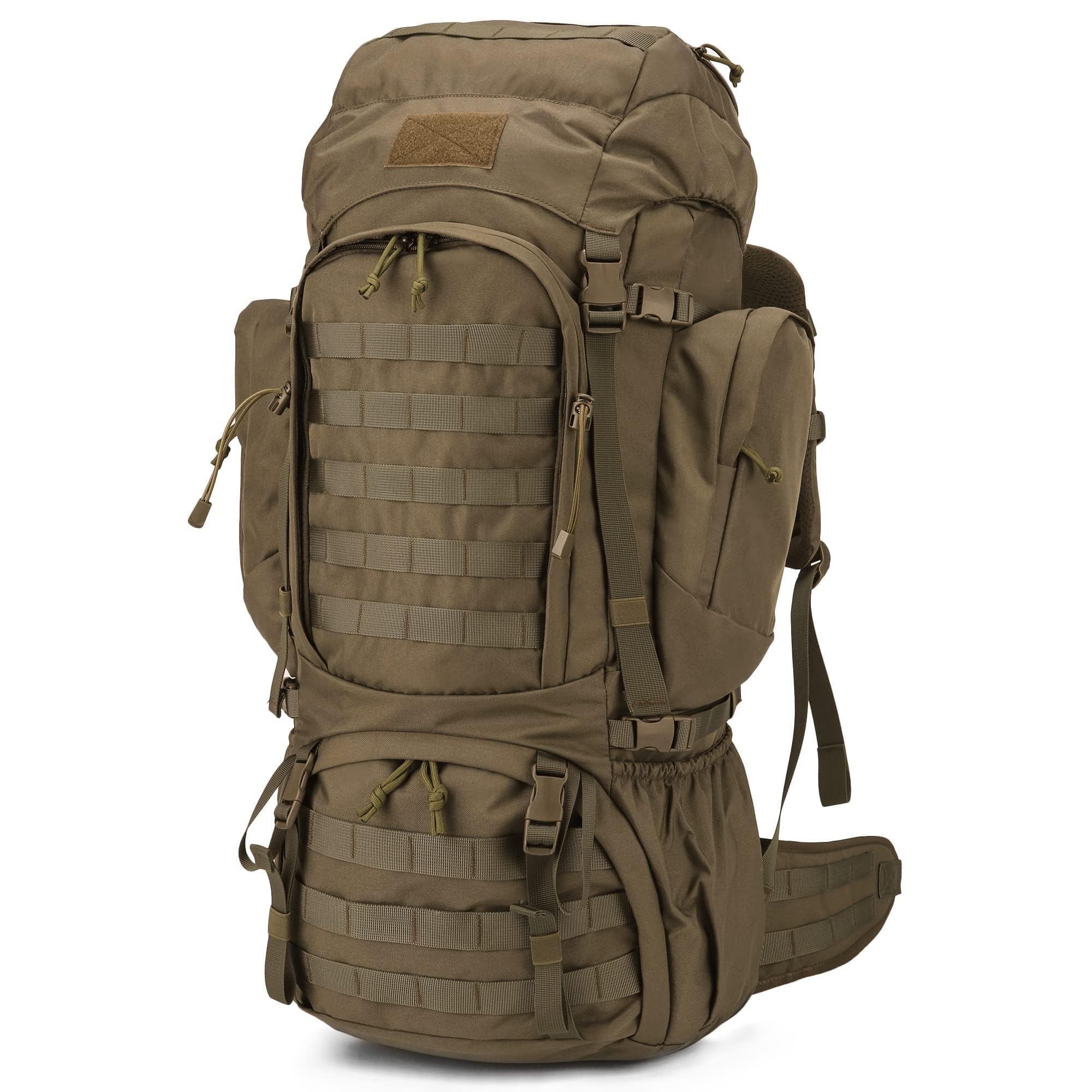
The Mardingtop 60L Military pack uses a modular design with MOLLE webbing on the front and sides, letting you attach pouches for specific gear without ever opening the main compartment. The pack expands to 75 liters by unzipping a gusset panel, giving you flexibility for winter trips where a puffy jacket and extra food push volume limits. YKK zippers and reinforced stress points suggest a build quality that outlasts its price tier.
The internal frame uses a removable foam back panel rather than a full aluminum stay, so the pack can flex slightly with your spine during scrambling. The included rain cover is thin and the elastic edge is prone to snapping after a season of use, but the four external tie-down loops let you lash a separate dry bag as a backup. The hip belt pockets are positioned to the rear, making them awkward to reach without twisting your arm behind your body.
At 4.49 pounds, it’s not a lightweight option for competitive hikers, but the shoulder straps and waist belt offer enough foam to carry 50 pounds for 10 to 15 miles without digging into the collarbone. The main compartment is a single large space—no sleeping bag divider or internal organization pockets—so plan on using stuff sacks. For hunters, military ruckers, or budget-conscious backpackers who need expandable capacity, this pack delivers surprising durability for mid-range money.
Why it’s great
- Expandable from 60L to 75L via gusset zip for bulky gear
- MOLLE webbing enables modular organization without opening the bag
- YKK zippers and reinforced stitching exceed expectations at this level
Good to know
- Removable foam frame lacks the load transfer of a metal stay
- Hip belt pockets sit too far back for easy reach
6. Ubon 60L Internal Frame Hiking Backpack

Weighing just 2.65 pounds for a 60-liter frame, the Ubon 60L is a standout option for hikers transitioning from day hikes to overnight trips without wanting to invest in an expensive frameless pack. The internal frame uses a lightweight wire perimeter that provides enough structure to carry 25 to 28 pounds comfortably, as confirmed by multiple 5’11” to 6’1″ users who completed 5-day section hikes with 5 nights of gear stowed in the main compartment.
The mesh back panel offers airflow comparable to more expensive ventilated packs, and the adjustable sternum strap and padded hip belt help distribute weight away from the shoulders. A separate sleeping bag compartment at the bottom, tent attachment straps, and a rain fly are all included without adding bulk. For a 13-mile day hike, users reported no shoulder pain, attributing the comfort to the pack’s ability to cinch tight to the body.
The hip belt foam is thinner than premium alternatives, so carrying 30 pounds for multiple days may create pressure points above the iliac crest. The zippers lack the reassuring heft of YKK hardware, and the waist strap adjustment can slip under heavy load. For the weight-conscious hiker keeping their base weight under 20 pounds, this pack offers an impressive feature-to-weight ratio at an entry-level investment.
Why it’s great
- Extremely light at 2.65 lb for a framed 60-liter pack
- Mesh back panel provides meaningful airflow for the weight class
- Includes rain fly, sleeping bag compartment, and tent straps
Good to know
- Hip belt foam is thin for sustained loads over 28 pounds
- Zippers and buckles feel less durable than premium hardware
7. Mardingtop 50L MOLLE Hiking Backpack
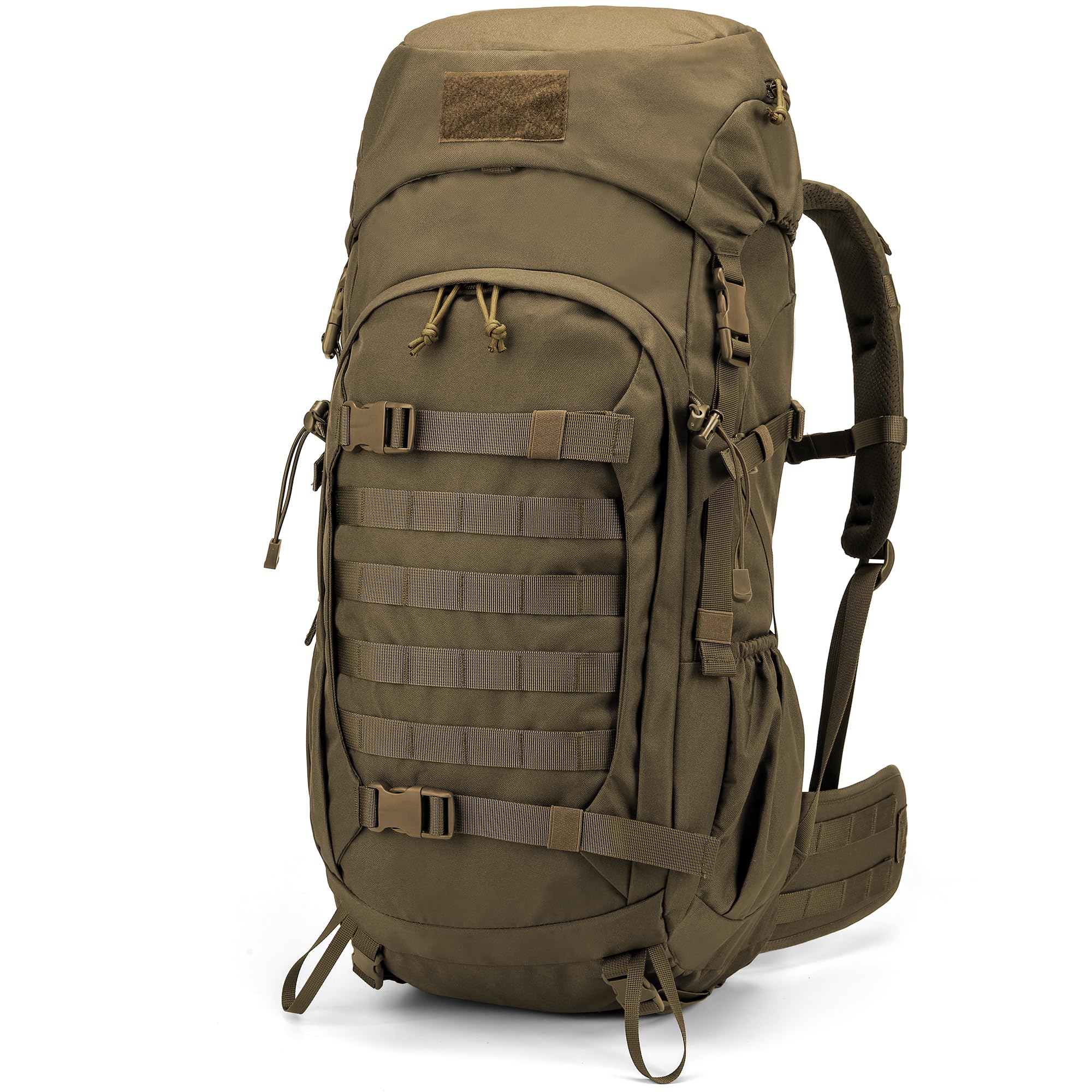
The Mardingtop 50L is a 600-denier polyester pack designed for users who need a robust haul bag that can double as a rucksack, bug-out kit, or general camping pack. The MOLLE webbing across the front and sides lets you attach pouches for a first-aid kit or radio, and the full front-zipper opening allows the pack to lie flat like a suitcase—ideal for organizing gear in a tent without crawling inside to dig. The hydration sleeve accommodates a 5-liter bladder or a 15.6-inch laptop for dual-purpose use.
The frame is a padded internal foam sheet rather than a rigid stay, so the pack feels comfortable for 6-mile rucks but lacks the load transfer needed for heavy carries beyond 40 pounds. The YKK zippers and included rain cover add real durability, though the buckles are a known weak point—several users reported replacing the main buckle after it slipped during heavy loading. The adjustable sternum strap and breathable mesh back panel help with comfort, but the back warms up faster than mesh-suspended designs.
At 3.9 pounds for 50 liters, it’s a practical weight for weekend trips where you’re carrying a tent, stove, and three days of food. The lack of internal organization pockets means small items will shift to the bottom unless you use pouches. For the hiker who camps with synthetic layers and needs a pack that can transition to tactical or travel duty, this is the most adaptable mid-range option available.
Why it’s great
- Full front zip access lets you pack and unpack like a duffel
- MOLLE webbing supports modular pouches for mission-specific gear
- 600D polyester and YKK zippers offer above-average trail durability
Good to know
- Buckles can slip under heavy load and may need replacement
- Foam frame lacks metal stay for serious load transfer above 40 lb
FAQ
How do I measure my torso length for a backpack?
Should I prioritize a ventilated back panel or load transfer for multi-day treks?
What does the +10 in Deuter’s 60+10 capacity mean in practice?
Final Thoughts: The Verdict
For most users, the backpacks for trekking winner is the Kelty Asher 65L because it delivers a ventilated suspension, adjustable Fit Pro torso, and a 30–50 pound carry window at a weight that undercuts most competitors. If you want unmatched back airflow for hot-weather hikes, grab the Osprey Stratos 44L. And for rugged technical terrain where stability outweighs ventilation, nothing beats the Osprey Kestrel 48L.

Mo Maruf
I created WellFizz to bridge the gap between vague wellness advice and actionable solutions. My mission is simple: to decode the research and give you practical tools you can actually use.
Beyond the data, I am a passionate traveler. I believe that stepping away from the screen to explore new environments is essential for mental clarity and physical vitality.