Our readers keep the lights on and my smoothie glass nicely filled. As an Amazon Associate, I earn from qualifying purchases.
A camping backpack is the single most biomechanically demanding piece of gear you’ll own — it must transfer 30-plus pounds of tent, food, and water through your hips while your spine stays dry and your shoulders avoid nerve compression. Choosing the wrong suspension geometry or ignoring torso fit turns a weekend adventure into a chiropractic event.
I’m Mohammad Maruf — the founder and writer behind WellFizz. I’ve spent the last few years dissecting load-transfer mechanics, frame materials, and closure hardware across dozens of trail-tested packs to separate the genuinely supportive designs from the marketing shells.
Whether you’re section-hiking the AT or loading a base camp for a family of four, finding the right backpacks for camping requires matching the frame type, capacity, and adjustability to your body length and load weight, not just the brand patch.
How To Choose The Best Backpacks For Camping
Selecting a pack is a biomechanics-first decision: the right fit prevents shoulder and hip pain on mile ten, while the right capacity avoids the common trap of packing empty space that shifts your center of gravity. Below are the three specs that make or break a camping backpack.
Internal Frame vs. Frameless: Load Transfer Mechanics
An internal frame uses a torsion-resistant stay — usually aluminum or composite — that channels the pack’s weight down into the hip belt and off your shoulders. This is mandatory for any load above 20 pounds because a frameless pack lets the load sag backward, forcing your trapezius muscles to compensate. For multi-day trips with a base weight over 15 pounds, always choose a framed design.
Torso Length and Hip Belt Adjustability
Most brands treat torso length as one-size-fits-all, but a pack that sits too low on the hips disengages the load-transfer mechanism and strains the lumbar spine. Look for a pack with at least two inches of ladder-style torso adjustment and a hip belt that wraps around the iliac crest without gaping. A static belt that rides above your hip bones is a deal-breaker for any carry over 25 pounds.
Material Denier and Closure Hardware
Denier (D) measures thread thickness — 210D is lightweight but prone to tearing against granite, while 420D and 600D nylon resists abrasion on rock slabs and bushwhack routes. Equally critical are the zippers: YKK #8 or #10 coils handle repeated load cycles without jamming, and side-compression straps should be ladder-lock rather than friction-buckle to prevent creeping under vibration.
Quick Comparison
On smaller screens, swipe sideways to see the full table.
| Model | Category | Best For | Key Spec | Amazon |
|---|---|---|---|---|
| Naturehike 65L | Ultralight Framed | Weight-conscience multi-day | 2.56 lbs / 420D nylon | Amazon |
| Osprey Stratos 34L | Premium Daypack | Breathable day hiking | 3.15 lbs / AirSpeed vent | Amazon |
| Osprey Rook 65L | Full-feature Multi-day | Week-long backpacking | 3.7 lbs / AirSpeed adj | Amazon |
| MOUNTAINTOP 70L | Heavy-duty Value | Large volume/gear haul | 4.4 lbs / Aluminum frame | Amazon |
| Mardingtop 60L | Tactical/Modular | Heavy organizing/rucking | 4.49 lbs / MOLLE webbing | Amazon |
| Mardingtop 50L | Tactical/Modular | 3-day camp/rucking | 3.9 lbs / YKK zippers | Amazon |
| Ubon 60L | Entry-level Value | Budget launches/weekenders | 2.65 lbs / Mesh back vent | Amazon |
In-Depth Reviews
1. Naturehike 65L Internal Frame Hiking Backpack
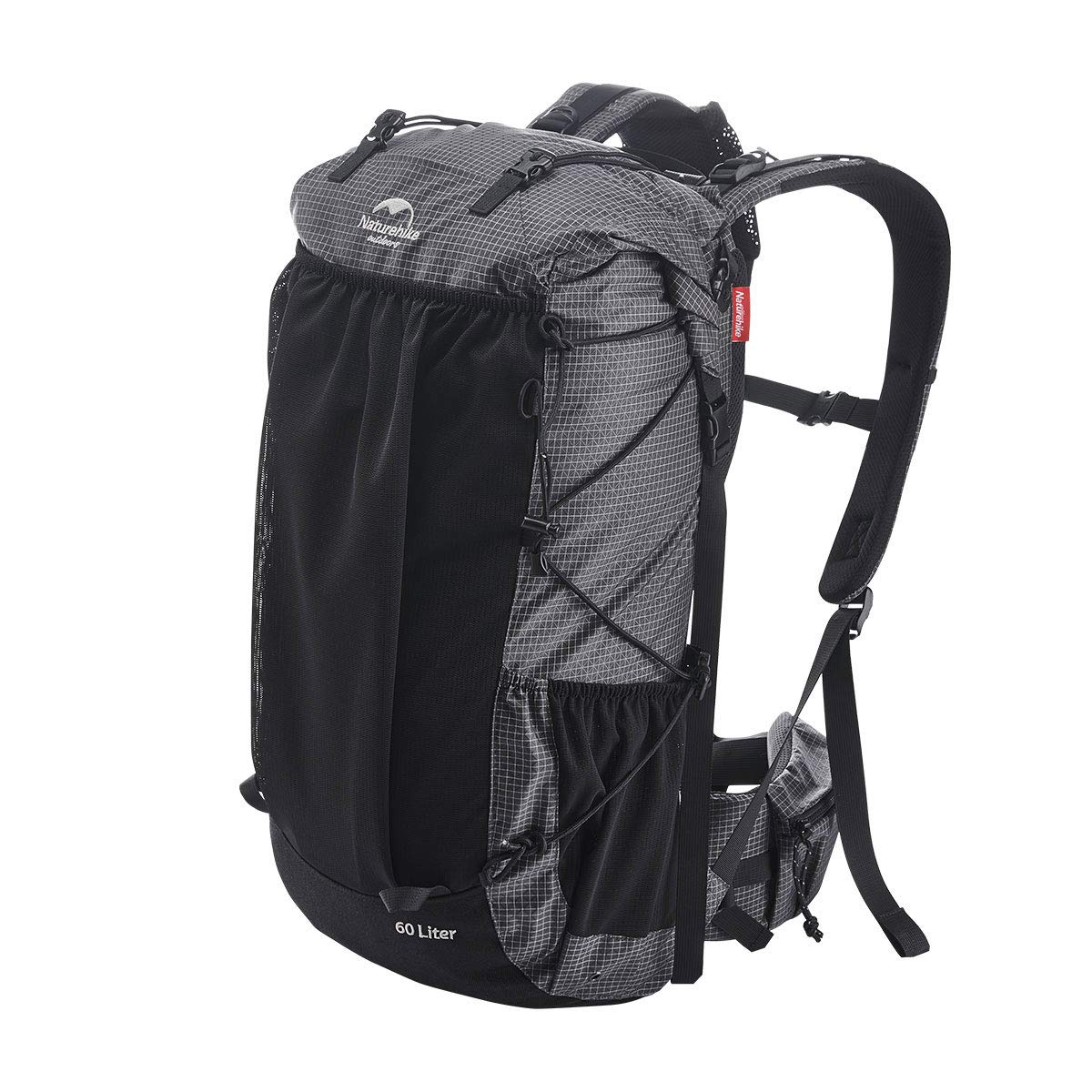
Weighing just 2.56 pounds for a framed 65-liter pack, this Naturehike design hits the sweet spot for multi-day backpackers who want to cut base weight without sacrificing load transfer. The 420D nylon body resists abrasion on rock slabs, and the roll-top closure keeps the center of gravity manageable while adding weather resistance against light rain.
Multiple reviewers reported comfortable carries up to 30 pounds over 100-plus-mile sections, and the mesh back panel — a feature usually reserved for packs twice the price — provides airflow that reduces sweat accumulation on humid climbs. The aluminum stay channels weight directly into the hip belt, offloading the shoulders effectively even for taller users at six-foot-four.
The primary trade-off is the lack of a traditional brain lid: the roll-top design gives flexible expansion but removes the quick-access top pocket that some hikers rely on for maps and snacks. The included rain cover is functional, and the side water-bottle pocket on the shoulder strap is a clever addition for on-the-trail hydration without stopping.
Why it’s great
- Ultralight for a 65L framed pack, shaving pounds vs. competitors
- Mesh back panel provides real breathability on long climbs
- Durable 420D nylon resists snags and punctures on trail
Good to know
- Roll-top closure lacks a quick-access brain lid for small items
- Hip belt padding is minimal; may need extra layers for heavy loads
2. Osprey Stratos 34L Men’s Hiking Backpack

The Osprey Stratos is the gold standard for ventilated day hikes and lightweight overnighters, thanks to its AirSpeed suspension system that holds the mesh back panel away from your spine. This tensioned design allows constant airflow across the entire lumbar area, virtually eliminating sweat patches even when you’re pushing hard on warm afternoons.
At 34 liters, the Stratos is best suited for summit pushes, long day hikes, or ultralight overnights where you pack compactly. The panel-loading zipper — a burly #10 YKK coil — opens wide for easy access to the main compartment, and the included rain cover stows neatly in its own pocket so you never forget it on a wet summit ridge.
The adjustable torso ladder extends the fit range significantly, accommodating both shorter and taller torsos without pressure points. Hip belt pockets are large enough for a smartphone, and the internal hydration sleeve keeps the water weight centered. The trade-off for all this ventilation is a 3.15-pound weight that feels slightly heavier than ultralight offerings, but the carry comfort easily justifies the mass.
Why it’s great
- AirSpeed mesh keeps your back dry on sweaty climbs
- Panel-loading #10 zipper provides bombproof access to main compartment
- Adjustable torso ladder fits a wide range of body lengths
Good to know
- 34L capacity limits use for multi-day trips with bulky gear
- Hard frame requires overhead bin storage; not personal-item friendly
3. Mardingtop 60L Military Internal Frame Backpack
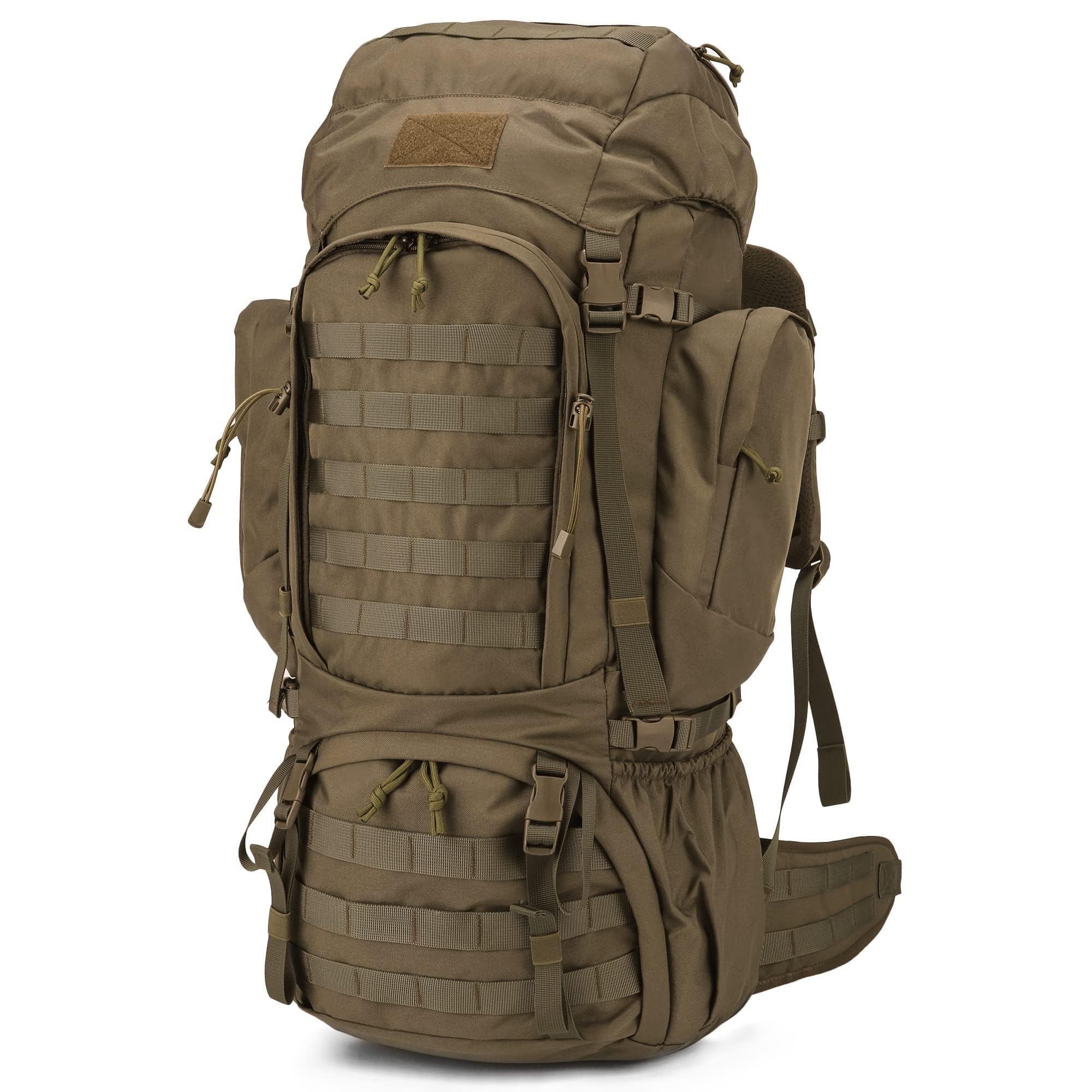
Built on a military-inspired platform with MOLLE webbing on the front and sides, this 60-liter pack offers modular attachment points for pouches, carabiners, and tool rolls — making it the top choice for hunters, survivalists, and ruckers who need to tailor their loadout. The main compartment is spacious enough for a week of gear, and the clamshell-style front access lets you dig into the bottom without unpacking everything on top.
Users report the pack handles loads up to 50 pounds for short-to-moderate distances, though the hip belt padding is thinner than premium competitors, so chafing can set in on 10-plus-mile carries. The YKK zippers are a strong point — they run smoothly even after repeated exposure to dust and rain — and the included rain cover uses four tie-downs to stay secure in gusty conditions.
The frame is a lightweight aluminum stay that keeps the pack stable, but the shoulder straps are on the narrower side, which may cause pressure on the collarbones for broad-shouldered hikers. For the price, this pack delivers exceptional hardware quality and modular flexibility, especially if you’re building a multi-day camp with heavy organizational needs.
Why it’s great
- MOLLE webbing allows full customization with tactical pouches
- YKK zippers resist dirt and jams on long trips
- Expandable to 75L with unzipped extension collar
Good to know
- Narrow shoulder straps may dig into broader frames
- Hip belt padding is thin for sustained heavy loads over 50 lbs
4. MOUNTAINTOP 70L Internal Frame Backpack

With a full 70-liter capacity and a lightweight aluminum alloy frame plate, this pack from MOUNTAINTOP is built for extended expeditions where you’re carrying a tent, sleeping bag, stove, and several days of food. The frame provides stable load transfer even when the pack is fully stuffed, and the multi-position torso adjustment helps dial in fit for hikers between five-foot-eight and six-foot-two.
A notable design win is the side zippered entry into the main compartment — you can access the middle of your pack without unfolding the entire top, saving time when you need a rain jacket or filter without unpacking everything. The bottom sleeping bag compartment is separate, with a floating divider that lets you isolate wet or dirty gear from your clothing.
Some users report the hydration port is undersized for standard hose fittings, requiring a small modification to run the tube cleanly. At 4.4 pounds empty, it’s not an ultralight option, but the robust build and comfortable mesh shoulder pads make it a strong choice for beginners and budget-conscious backpackers who need a reliable frame for moderate loads.
Why it’s great
- Side-zip access lets you retrieve mid-pack items without unloading
- Aluminum frame provides stable load transfer to the hips
- Separate sleeping bag compartment with floating divider
Good to know
- Hydration port hole is smaller than standard hose fittings
- Empty weight of 4.4 lbs is heavy for ultralight aspirations
5. Mardingtop 50L Hiking Backpack
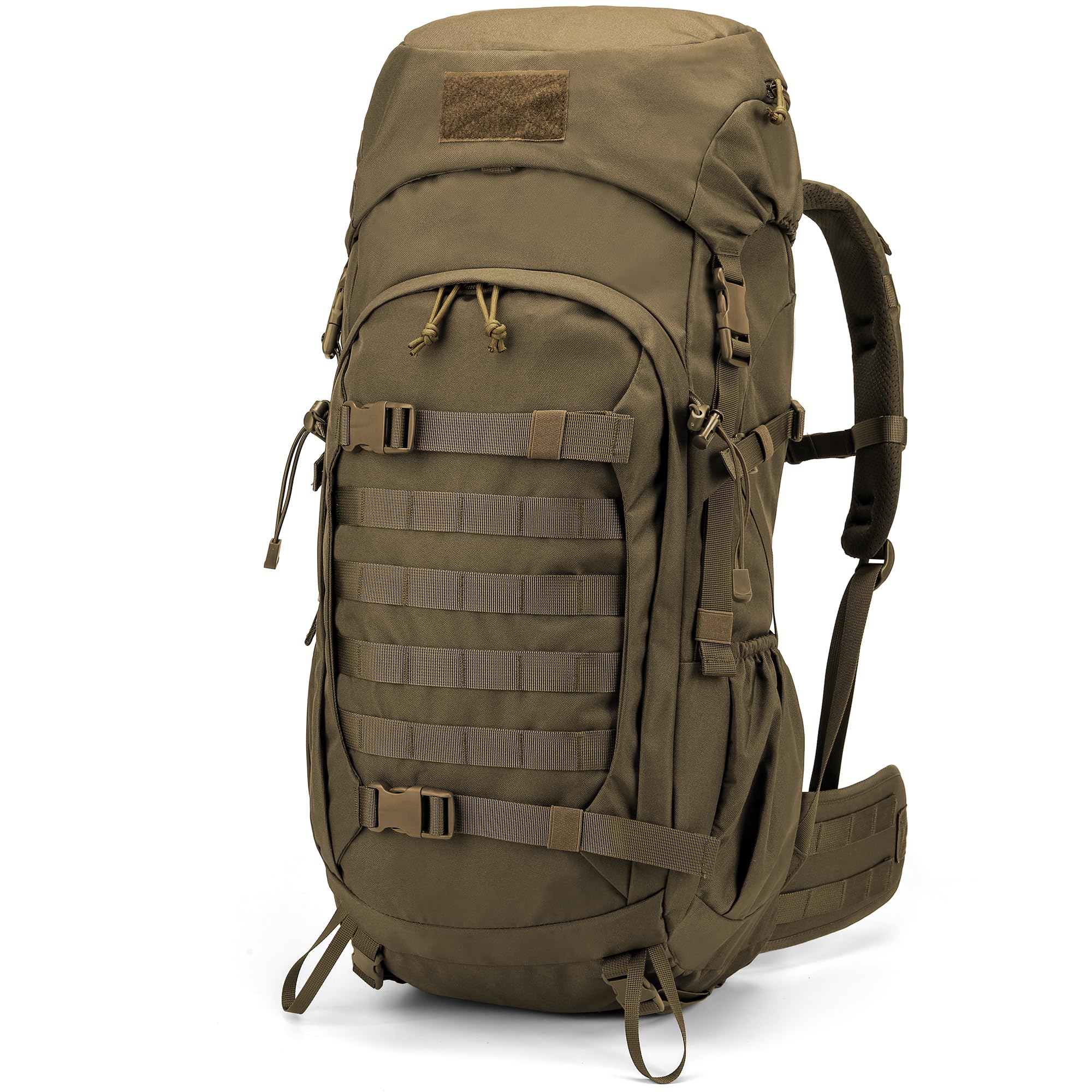
This 50-liter pack from Mardingtop trades some capacity for a more streamlined, tactical-oriented layout that works well for three-day assaults, overnight bushcraft, or as a bug-out bag. The 600D polyester shell is noticeably tough — it stands up to dragging through brush and scraping against rock — and the YKK zippers continue to operate smoothly even after exposure to dust and moisture.
The internal frame uses a metal stay that keeps the pack from sagging, while the MOLLE webbing on the front allows you to lash on a sleeping pad, dry bag, or folding saw without opening the main compartment. Reviewers note the pack holds a 15.6-inch laptop in the hydration sleeve for hybrid travel use, though the primary design is clearly outdoor-oriented with a sternum strap and load-lifter adjusters.
The main complaint centers on the hip belt buckles — they can slip under heavy lateral movement, a common issue in this price bracket that is easily solved by swapping in aftermarket hardware. For the price, the fabric quality and zipper grade are well above expectations, making this a solid entry point for campers who need a rugged, moderately sized pack without spending premium dollars.
Why it’s great
- 600D polyester resists abrasion on rough terrain
- MOLLE webbing allows external attachment of pouches and gear
- Laptop sleeve in hydration pocket adds travel versatility
Good to know
- Hip belt buckles may slip under heavy or dynamic loads
- Heavier than similarly sized ultralight packs at 3.9 lbs
6. Osprey Rook 65L Men’s Backpacking Backpack

The Osprey Rook delivers the brand’s proven AirSpeed suspension in a 65-liter format, making it a top contender for week-long backpacking trips where ventilation and load stability are equally critical. The tensioned mesh back panel keeps the pack off your spine, reducing sweat accumulation on extended carries, while the LightWire frame transfers weight efficiently into the padded hip belt for shoulder relief.
An integrated rain cover pulls out from its own pocket at the base — you never have to dig through your main compartment when the sky opens. The floating top lid provides quick-access storage for rain gear and snacks, and the sleeping bag compartment with a removable divider helps organize gear separation without losing capacity.
At 3.7 pounds, the Rook balances durability with reasonable weight, though ultralight purists may prefer the Naturehike for longer carries. The hip belt runs slightly narrow for some users — a common note in reviews — but overall the fit adjustability is excellent, and the angled water bottle pockets allow one-handed retrieval without taking the pack off. This is a trail-tested workhorse for weekend-to-week trips.
Why it’s great
- AirSpeed mesh back panel provides top-tier ventilation on long days
- Integrated raincover deploys instantly without unpacking
- LightWire frame delivers comfortable load transfer to the hips
Good to know
- Hip belt runs narrow; may not fit every body type comfortably
- No external mesh pocket for quick-access wet gear
7. Ubon 60L Internal Frame Hiking Backpack

The Ubon 60L is a budget-friendly entry point for campers who are building their first full kit and need a functional internal frame pack without a premium price tag. The mesh back panel provides noticeable airflow — a feature that the pricier Osprey Stratos made famous — helping reduce back sweat during moderate climbs, and the aluminum frame stay keeps the load stable even on off-camber trails.
Users consistently highlight the pack’s durable exterior after repeated exposure to rain and rock slides, with the included rain cover providing full protection during downpours. The sleeping bag compartment is separated by a zippered divider, and the hip belt pockets — though positioned slightly far back for some torsos — are large enough for a phone and snacks.
The main trade-offs are the zipper quality, which feels less robust than YKK units, and the foam density in the shoulder straps, which compresses faster under heavy loads. For weekend trips with loads under 30 pounds, this pack performs admirably and has held up on sections of the AT for multiple seasons’ worth of novice-to-intermediate use. It’s the smart starting point before committing to a premium label.
Why it’s great
- Mesh back panel delivers real ventilation at a fraction of the price
- Durable exterior holds up to rain, slide, and repeated use
- Separate sleeping bag compartment with zippered divider
Good to know
- Zippers lack the smooth feel and long-term reliability of YKK coils
- Shoulder strap foam compresses quicker under heavy loads
FAQ
How do I measure my torso length for a camping backpack?
Should I get a 50L, 60L, or 70L pack for a multi-day trip?
Final Thoughts: The Verdict
For most users, the backpacks for camping winner is the Naturehike 65L because it combines an ultralight 2.56-pound frame with durable 420D nylon and real mesh ventilation at a mid-range cost. If you prioritize back airflow on long day hikes, grab the Osprey Stratos 34L. And for a fully featured multi-week pack with integrated rain protection, nothing beats the Osprey Rook 65L.

Mo Maruf
I created WellFizz to bridge the gap between vague wellness advice and actionable solutions. My mission is simple: to decode the research and give you practical tools you can actually use.
Beyond the data, I am a passionate traveler. I believe that stepping away from the screen to explore new environments is essential for mental clarity and physical vitality.