Our readers keep the lights on and my smoothie glass nicely filled. As an Amazon Associate, I earn from qualifying purchases.
The difference between a punishing trail day and a great one often comes down to a single piece of gear: the vessel you trust to keep your water clean, cold, and accessible. Backpacking water bottles face a unique set of demands that standard gym bottles simply cannot handle — they must survive drops on granite, fit into narrow side pockets, resist freezing overnight, and weigh as little as possible. Choosing a bottle without considering these specifics leads to leaks inside your pack, disappointing temperature retention, or added ounces that compound over miles.
I’m Mohammad Maruf — the founder and writer behind WellFizz. I’ve spent hundreds of hours cross-referencing material specs, weight profiles, lid mechanisms, and real-world customer feedback on hydration gear to separate durable backcountry performers from weekend-warrior gimmicks.
After weeks of analysis, I’ve narrowed down the most reliable options for the trail. This guide focuses on the concrete specs that define a great backpacking water bottle. From boil-safe stainless steel for emergency purification to ultra-light Tritan plastic for fast-moving trips, we’ll break down exactly what each model delivers and where it belongs in your pack.
How To Choose The Best Backpacking Water Bottle
Selecting a bottle for the backcountry requires balancing three forces: weight, durability, and insulation. The wrong choice adds unnecessary ounces or fails to keep water safe when conditions turn. Here are the key factors to evaluate before you buy.
Material and Build Quality
Stainless steel offers unmatched durability and the ability to boil water directly over a fire, but adds significant weight compared to Tritan plastic. Single-wall steel is lighter than double-wall vacuum-insulated steel and is boil-safe. High-density Tritan plastic is nearly indestructible, BPA-free, and shatterproof, making it the lightest option for fast-and-light trips. The trade-off is that plastic cannot be used for direct boiling or long-term hot liquid storage.
Capacity and Pack Fit
Most backpackers prefer 32 to 40 ounces for a full day of hydration without a filter stop. A bottle with a 2.5-inch or wider mouth accepts ice cubes and cleaning brushes and is compatible with most backpacking water filter adapters. Base diameter under 3.5 inches ensures the bottle slides into standard backpack side pockets without snagging. Tall, narrow profiles — around 9 to 10 inches in height — distribute weight better inside a pack than squat designs.
Lid Design and Leak Resistance
Wide-mouth bottles with a simple screw top have fewer failure points than straw or trigger lids, but you must confirm the cap has a gasket that seals reliably at different pressures. For bottles you plan to boil in, a metal cap with a silicone O-ring is essential. If you need one-handed drinking on a steep climb, a push-button lid with a lock function prevents accidental opening inside your pack. Always test the lid’s seal before a multi-day trip.
Quick Comparison
On smaller screens, swipe sideways to see the full table.
| Model | Category | Best For | Key Spec | Amazon |
|---|---|---|---|---|
| Tactiko Survival 34 oz | Single-Wall Steel | Boil-Safe Emergency Use | 34 oz / 0.77 lb | Amazon |
| Owala FreeSip 24 oz | Insulated Steel | Cold Drinks on Moderate Hikes | 24 oz / 0.84 lb | Amazon |
| Stanley Quick Flip GO 24 oz | Insulated Steel | One-Handed Push-Button Drinking | 24 oz / 0.95 lb | Amazon |
| ThermoFlask 40 oz | Insulated Steel | Maximum Cold Retention | 40 oz / 1.5 lb | Amazon |
| Nalgene Sustain 32 oz 2-Pack | Tritan Plastic | Ultra-Light Day Hikes | 32 oz / 0.82 lb | Amazon |
In‑Depth Reviews
1. Tactiko Survival 34 oz Single Wall Water Bottle
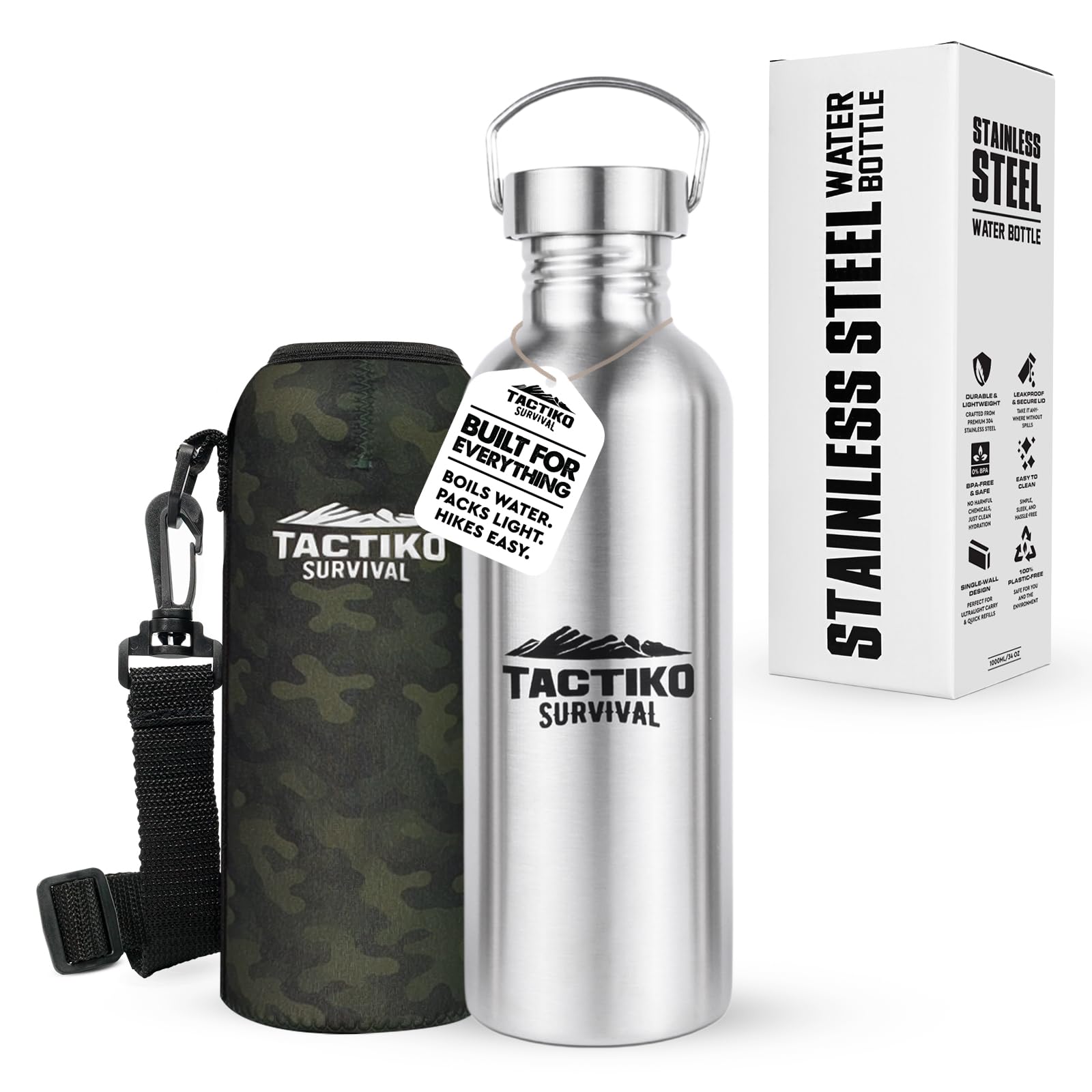
This bottle is built for scenarios where your water source is questionable and you need to boil without a separate pot. The single-wall 18/8 304 stainless steel withstands direct flame, and the metal screw cap with a silicone O-ring creates a reliable seal that won’t melt or leach. At just 34 ounces capacity and a trim 2.75-inch diameter, it slides into backpack side pockets easily and adds only 0.77 pounds to your load.
The included neoprene sleeve provides a sweat-proof grip and a strap for hands-free carry, though some users report a petroleum-like odor from the sleeve that requires airing out before the first trip. The wide 2-inch opening fits standard backpacking water filters, and the absence of vacuum insulation means no peeling or cracking under high heat — a critical feature for bushcraft and survivalists.
Customer reviews consistently praise its durability, with many noting it replaced heavier insulated bottles on weekend trips because of the weight savings and pure taste. The slim profile even fits most car cup holders when the sleeve is removed. For any trip where fire-purification capability is a requirement, this is the bottle to bring.
Why it’s great
- Boil-safe over campfire without damage to the bottle
- Lightweight single-wall design reduces pack weight
- Slim shape fits standard backpack side pockets
Good to know
- Neoprene sleeve may have a strong initial odor
- No vacuum insulation means drinks won’t stay cold all day
2. Owala FreeSip Insulated 24 oz Water Bottle
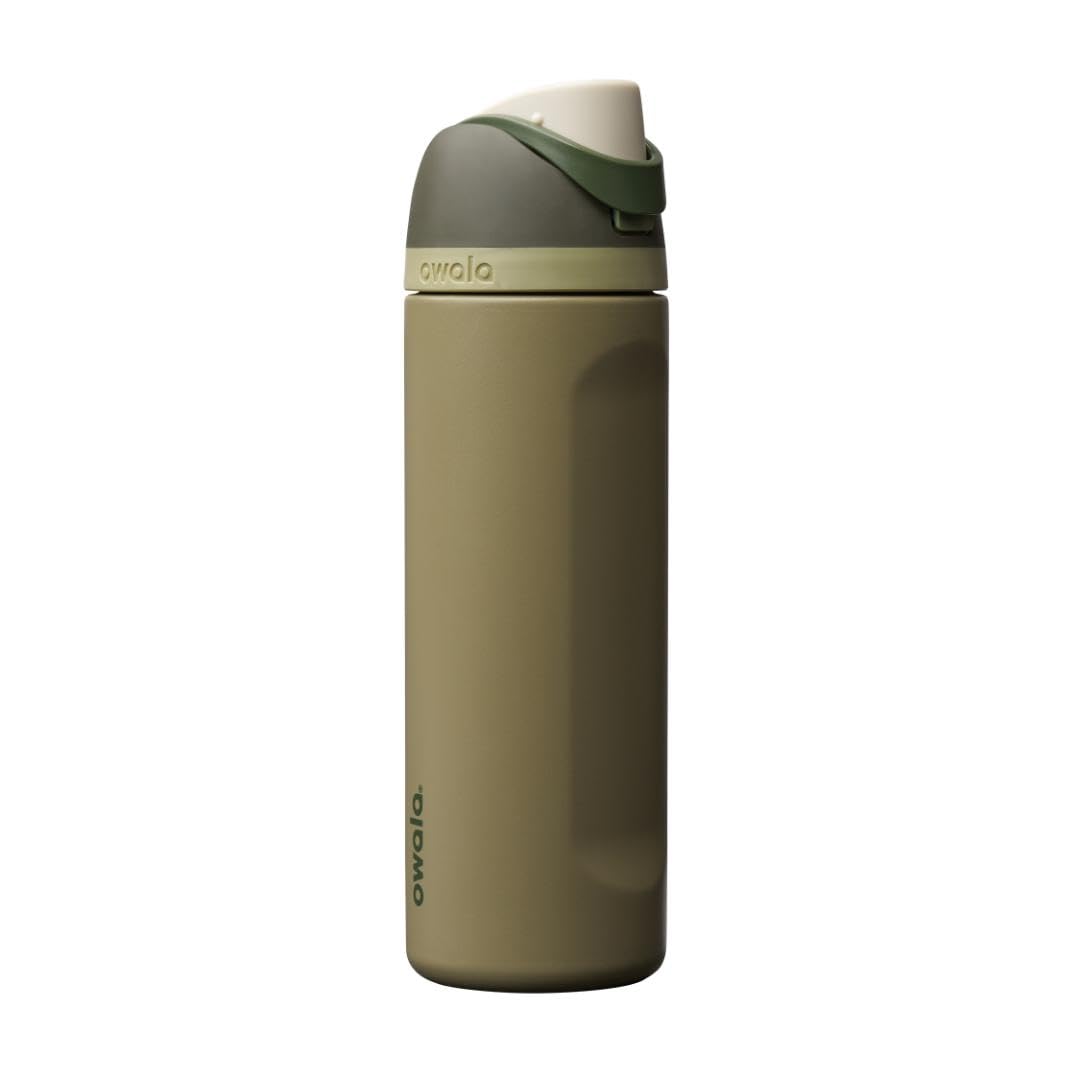
The FreeSip lid is the standout feature here — it lets you either sip through a built-in straw or tilt your head back and chug directly from the spout opening without switching caps. That dual-mode functionality is useful on a hike when you want a slow sip to avoid gulping, then a fast drink at a rest stop. The push-button lid includes a lock mechanism to prevent accidental openings inside your pack, a detail that matters when gear gets tossed around in a backpack.
Double-wall vacuum insulation keeps water cold for up to 24 hours, and the 24-ounce capacity is cup-holder friendly with a 3.24-inch base diameter. The wide mouth accepts ice cubes easily, and narrow-mouthed cleaning brushes fit without struggle. At 0.84 pounds, it is heavier than a plastic bottle but lighter than many 32-ounce insulated steel competitors, making it a solid middle-ground for moderate day hikes.
Owner reviews highlight its leak-proof seal even when the bottle is knocked on its side in a car, and the range of vibrant color options gets frequent compliments. The handle on the lid doubles as a lock, and the mouthpiece stays clean under the protective cover. This bottle is not designed for hot liquids, but for cold water on a warm trail, it is nearly ideal.
Why it’s great
- Patented FreeSip spout offers straw and chug in one lid
- Lockable push-button prevents pack leaks
- Keeps drinks cold for a full day
Good to know
- Not suitable for use with hot liquids
- 24-ounce capacity may be too small for all-day hydration without a filter
3. Stanley Quick Flip GO 24 oz Water Bottle

Stanley brings its legendary build quality to a compact format with the Quick Flip GO. The trigger-action push-button lid opens a mouthpiece that lets you drink without tilting the bottle too high, and the lock mechanism secures the lid against pack-gear collisions. Double-wall insulation keeps cold drinks cold for up to 12 hours and hot liquids hot for up to 8 hours, though the 24-ounce capacity requires at least one refill on a full-day hike.
The 18/8 stainless steel construction feels solid without being excessively heavy, tipping the scales at 0.95 pounds. The 2.99-inch base diameter fits most cupholders, and the powder-coated finish resists condensation even when filled with ice water on a humid trail. The included lifetime warranty adds peace of mind that the bottle will survive years of abuse, consistent with Stanley’s reputation for long-term durability.
Customer reviews note that the mouthpiece requires you to line up your mouth straight on to avoid minor drips, but once adjusted, the flow rate is satisfying for fast gulps. The wide mouth makes adding ice a breeze, and the lid components are dishwasher-safe for easy cleaning after a muddy trip. For hikers who want one-hand operational convenience in a compact package, this is a reliable choice.
Why it’s great
- One-handed push-button lid with lock is intuitive
- Lifetime warranty protects long-term investment
- No condensation on exterior with cold drinks
Good to know
- 24-ounce capacity is lower than most day-hike bottles
- Must drink straight-on to avoid spill from mouthpiece
4. ThermoFlask 40 oz Double Wall Vacuum Bottle

The ThermoFlask 40 oz delivers the highest capacity in this lineup, making it the choice for long stretches between water sources. The double-wall vacuum insulation keeps ice intact for a full 24 hours, so your first sip on the second day of a trip is still cold. It comes with both a chug lid and a straw lid, giving you the option to switch between fast gulps and gentle sips without carrying a separate lid.
At 40 ounces, the weight is about 1.5 pounds, which is a trade-off you must accept for the volume. The 4.6-inch base width means it will not fit in most backpack side pockets — it is better suited for a pack’s main compartment or a large hydration sleeve. Premium 18/8 stainless steel resists dents well, with reports of surviving tumbles down stairs without catastrophic damage. All parts are dishwasher-safe, which is a welcome convenience after a muddy day.
Customer reviews overwhelmingly praise the value — the bottle performs identically to pricier insulated brands while costing significantly less. Some users note that the straw lid can trap a few drops, causing minor wetness on the cap surface when closed, but the main seal remains leak-proof. For basecamp use, long car shuttles, or overnight trips where weight is secondary to water capacity, this bottle is the volume champion.
Why it’s great
- Massive 40 oz capacity reduces refill stops
- Two included lids offer drinking flexibility
- Durable build resists dents and scratches
Good to know
- Wide base prevents use in most backpack side pockets
- Straw lid can trap residual water drops
5. Nalgene Sustain Tritan 32 oz Wide Mouth 2-Pack

This two-pack of Nalgene’s classic 32-ounce wide-mouth bottles is the baseline for lightweight backpacking. Each bottle weighs just 0.41 pounds and is made from BPA-free Tritan plastic that is virtually shatterproof. The attached cap with a tethered loop prevents loss, and the 2.5-inch diameter mouth fits most backpacking water filters directly, allowing you to screw on a filter without an adapter.
The wide mouth also makes adding ice, cleaning, and drying effortless. Graduated markings on the side help you track water intake, which is useful for rationing on long stretches. The 3.5-inch base diameter fits most standard side pockets, and the 8.2-inch height sits low in a pack without wasting vertical space. These bottles can handle temperatures from -40°F to 212°F, meaning they can take near-boiling water from a stove (though not direct flame).
Customer feedback repeatedly highlights the durability — bottles survive being dropped on rocks and tossed in duffels without cracking. The two-pack with different colored lids is helpful for marking “clean” and “dirty” water on filter trips. This is not an insulated option, so water will warm up in the sun, but for weight-sensitive ultralight trips or as a spare bottle, nothing beats this value.
Why it’s great
- Extremely lightweight for ultralight backpacking
- Wide mouth fits most backpacking water filters directly
- Two-pack design allows clean/dirty water separation
Good to know
- No insulation — water heats up in direct sun
- Plastic can retain odors over time if not cleaned regularly
FAQ
Can I boil water in a vacuum-insulated bottle?
Will a 40 ounce bottle fit in my backpack’s side pocket?
Are Tritan plastic bottles safe for sunlight exposure?
Final Thoughts: The Verdict
For most backpackers, the backpacking water bottle winner is the Tactiko Survival 34 oz because it delivers boil-safe capability, a lightweight single-wall design, and a slim profile that fits standard pack pockets. If you prioritize cold water retention on moderate hikes, grab the Owala FreeSip 24 oz for its versatile two-mode lid. And for ultralight trips where every ounce counts, nothing beats the Nalgene Sustain 32 oz 2-Pack.

Mo Maruf
I created WellFizz to bridge the gap between vague wellness advice and actionable solutions. My mission is simple: to decode the research and give you practical tools you can actually use.
Beyond the data, I am a passionate traveler. I believe that stepping away from the screen to explore new environments is essential for mental clarity and physical vitality.