Our readers keep the lights on and my smoothie glass nicely filled. As an Amazon Associate, I earn from qualifying purchases.
The wrong pair of trekking poles can turn a sunlit ridge into a shoulder-burning grind, rattling your wrists with every plant and refusing to hold height on a steep descent. Backpacking poles are your third and fourth contact points with the trail, so a lock that slips or a grip that soaks through will compromise your balance for miles on end.
I’m Mohammad Maruf — the founder and writer behind WellFizz. I’ve spent hundreds of hours cross-referencing weight charts, lock-system patents, and carbon-versus-aluminum fatigue data to find the poles that actually perform where the pavement ends.
Whether you are section-hiking the PCT or scrambling up a talus field on a weekend trip, finding the right tool is critical. This guide breaks down seven contenders to help you choose the best backpacking trekking poles for your load, your gait, and your budget.
How To Choose The Best Backpacking Trekking Poles
Backpacking poles are a long-term gear investment that you carry every step of the trail. The right pair reduces joint impact by up to 25 percent across your knees and hips and improves your rhythm on ascents. The wrong pair adds noise, wobble, and weight that you will resent by mile ten. Here is what matters most.
Shaft Material: Carbon Fiber vs. Aluminum
Carbon fiber dampens trail vibration better than any metal, making it the preferred choice for hikers with wrist or elbow sensitivity. A quality carbon layup also shaves three to five ounces per pair compared to standard aluminum. Aluminum, however, bends before it breaks; a bent section can sometimes be straightened on the trail, whereas a cracked carbon shaft is a failure that requires a replacement pole. For alpine environments where rock jamming is common, 7001-series aluminum offers a toughness-to-weight ratio that many ultralight backpackers still trust.
Locking Mechanism: Quick Lock vs. FlickLock vs. Twist Lock
External cam locks — often called FlickLocks or flip locks — are the most field-serviceable design. A single screw allows you to re-tension the clamp with a multi-tool if it loosens over miles of use. Quick locks with an internal cam lever are faster to adjust but can strip the threaded barrel if overtightened. Twist locks are the lightest and most streamlined but depend on a rubber expansion bushing that wears out after roughly 500 miles. For a backpacking pole that you will adjust multiple times per day, choose a lock system with a replaceable tensioning mechanism.
Grip Material and Handle Geometry
Cork grips mold to your hand over time, wick sweat in humid conditions, and stay comfortable in cold rain. EVA foam grips are cheaper and softer but degrade faster under UV exposure and can feel slick when wet. Dual-density grips combine a firm inner core with a soft outer layer, providing lateral stability without hot spots. An extended foam choke-up section below the main grip is essential for steep traverses where you need to choke down without losing control of the pole.
Collapsed Length and Packability
Foldable three-section poles collapse to roughly 14 to 15 inches, fitting inside a daypack or a carry-on suitcase. Telescoping two-section poles collapse to around 24 to 26 inches, which is too long for most internal-frame packs unless strapped externally. If you plan to fly with your poles or stash them inside a backpack while scrambling, prioritize a foldable design with a secure button- or cord-locking system.
Quick Comparison
On smaller screens, swipe sideways to see the full table.
| Model | Category | Best For | Key Spec | Amazon |
|---|---|---|---|---|
| Montem Ultra Light Carbon | Carbon Fiber | Best Overall | 7.6 oz per pole | Amazon |
| Black Diamond Trail | Aluminum | All-Season Stability | 17.1 oz per pair | Amazon |
| Cascade Mountain Tech Carbon | Carbon Fiber | Best Value Carbon | 8.0 oz per pole | Amazon |
| Fizan Compact 3 | Aluminum | Ultralight Classic | 5.6 oz per pole | Amazon |
| LEKI Khumbu | Aluminum | Premium Adjustable | 9.7 oz per pole | Amazon |
| MSR DynaLock Ascent | Carbon Fiber | Alpine & Snow Use | 14.25″ collapsed | Amazon |
| LEKI Ultratrail FX.One | Carbon Fiber | Trail Running Speed | 5.9 oz per pole | Amazon |
In‑Depth Reviews
1. Montem Ultra Light 100% Carbon Fiber Trekking Poles
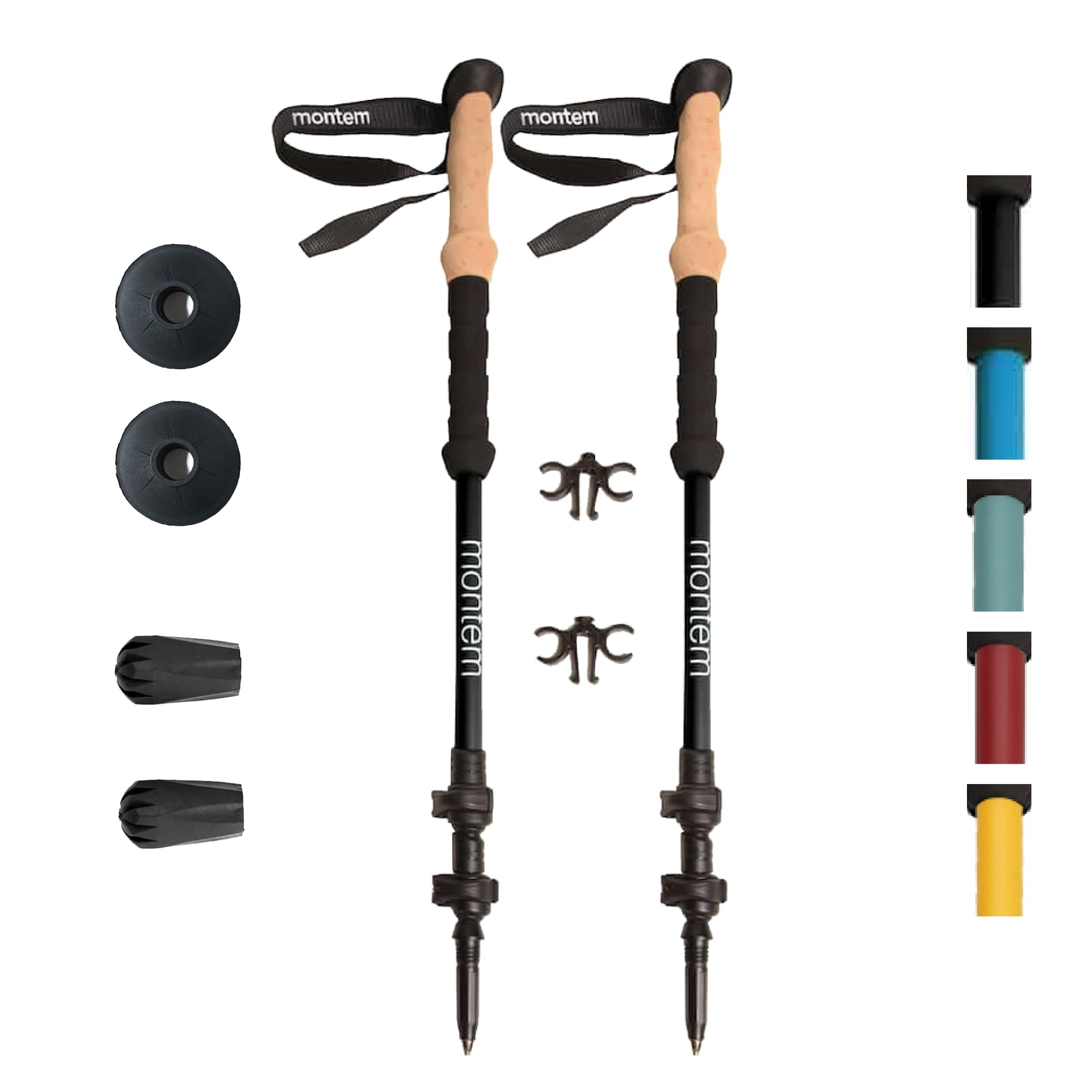
Montem’s Ultra Light poles balance weight, stiffness, and price in a way that few competitors match. Each pole weighs 7.6 ounces, built from a 100-percent carbon fiber shaft that soaks up trail chatter without feeling flimsy under load. The quick-lock clamps require an initial tension tweak with a screwdriver, but once dialed they hold firm across the full 24-to-53-inch adjustment range.
The EVA foam grip is molded with a comfortable texture that remains secure even when your palms get sweaty on a hot climb. A padded strap and a rubber tip protector round out the package, and the poles collapse quickly to stow inside a carry-on or a daypack. Backpacker Magazine specifically called these out as the best affordable carbon option, a reputation that holds up over thousands of trail miles.
Customer reports note that the flip-lock cams can loosen during the first few hikes if not pre-tightened, but after that initial adjustment they remain rock-solid. One user who snapped a tip after two years of hard use received a replacement pair without hassle, pointing to Montem’s customer service as a genuine differentiator in this price bracket.
Why it’s great
- Very light carbon build with effective vibration damping
- Adjustable quick locks stay secure after initial setup
- Lifetime replacement promise and responsive customer service
Good to know
- Flip-locks need a screwdriver for initial tension adjustment
- Extension mechanism can feel stiff when new
2. Black Diamond Trail Trekking Poles
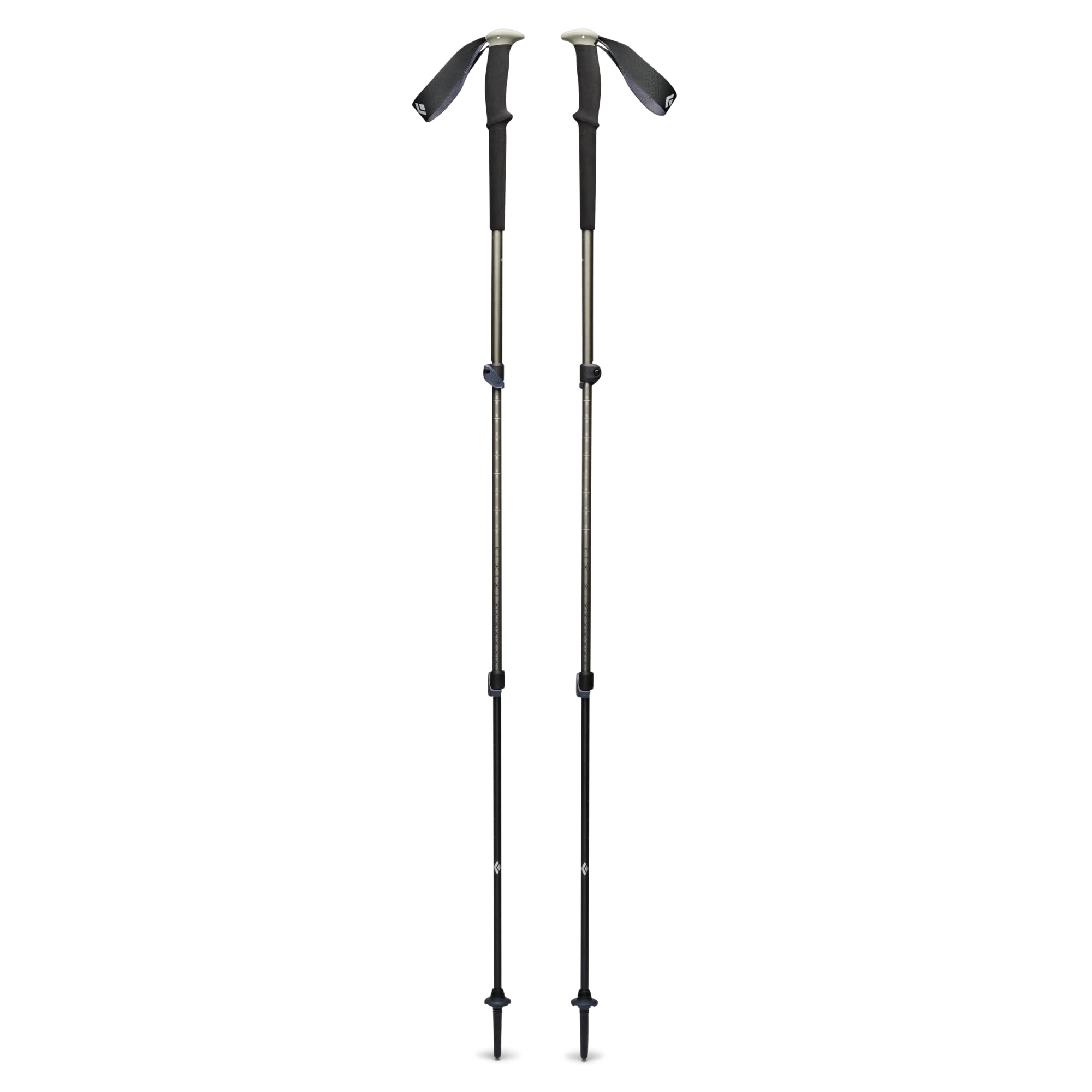
The Black Diamond Trail poles are built around a straightforward idea: a durable aluminum shaft mated to the company’s proven FlickLock adjustment system. At roughly 17 ounces for the pair, they are not the lightest on this list, but the high-strength 7000-series alloy instills confidence when you are hopping between wet boulders or post-holing through crusty spring snow. The FlickLock clamp can be adjusted with one hand while gripping the pole, which matters a lot when you need to shorten your stance mid-descent.
Dual-density foam grips extend about six inches down the shaft, giving you a choke-up grip for traversing side slopes without losing control. The carbide Tech Tips bite into rock and ice effectively, and the included trekking baskets handle mud and powder without clogging. Users report that the poles have survived everything from Adirondack slab to Florida swamp without any lock slippage, even under loads exceeding 225 pounds.
The trade-off is weight: these poles feel heavier than carbon alternatives on a 20-mile day, especially if you are used to swinging sub-10-ounce sticks. A few reviewers also note that the foam grip can wear smooth after several hundred miles, though the replaceable nature of the parts means you are not stuck with a degraded handle.
Why it’s great
- FlickLock system is fast, secure, and field-serviceable
- Aluminum shaft bends rather than breaks under extreme loads
- Extended foam grip section aids steep terrain maneuvering
Good to know
- Heavier than carbon competitors at 17 oz per pair
- Foam grip can show wear after extended use
3. Cascade Mountain Tech Carbon Fiber Trekking Poles

Cascade Mountain Tech delivers a carbon fiber pole at a price point that undercuts nearly every other name brand. Each pole weighs just over 8 ounces, making it competitive with options that cost twice as much. The quick-lock adjustment mechanism spans 26 to 54 inches, and the cork grip — a rarity at this tier — pulls moisture away from the palm and develops a custom contour over time.
The included accessory kit is generous: snow baskets, mud baskets, rubber boot tips, a pole clip, and a carry bag all come in the box. That level of completeness means you can transition from dry singletrack to alpine snow without buying additional hardware. The tungsten carbide tip holds up well on granite slabs and loose scree, and the cork handle’s vibration damping is noticeably better than standard foam on long descents.
Some users find the cork grip a bit small for medium-to-large hands, and the locking knobs can feel fiddly with gloves on. A few reports mention that the mud baskets do not stay attached as securely as the snow baskets, so you may want to cinch them with a zip tie for reliability. Overall, these poles represent the most cost-effective entry into lightweight carbon without sacrificing structural integrity.
Why it’s great
- Cork grip wicks sweat and dampens vibration effectively
- Complete accessory kit with snow and mud baskets
- Carbon fiber shaft at a very accessible price point
Good to know
- Cork grip is slightly narrow for larger hands
- Mud baskets may require extra securing
4. Fizan Compact 3 Trekking Poles
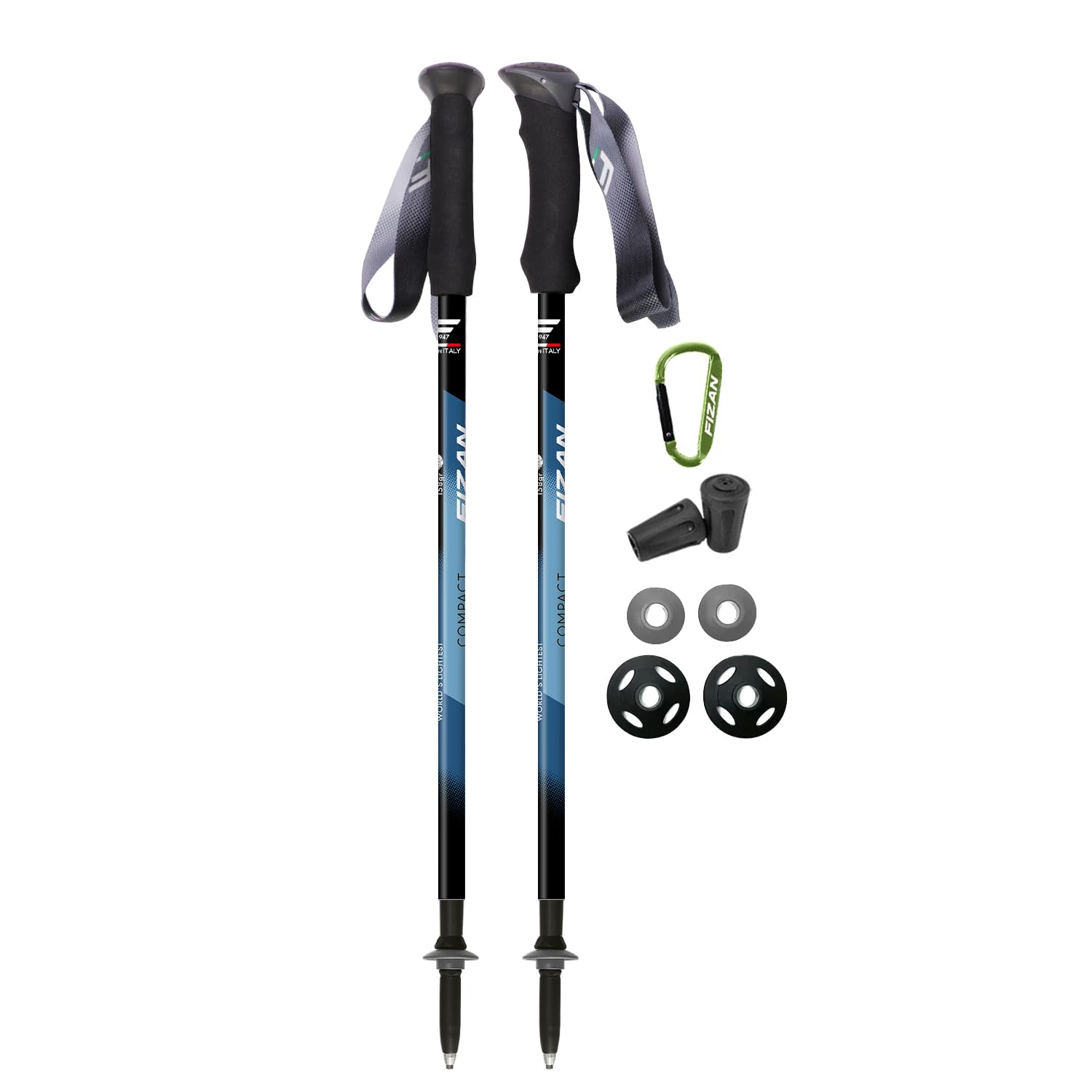
At 5.6 ounces per pole, the Fizan Compact 3 is the lightest aluminum pole in this roundup and one of the lightest production trekking poles available anywhere. The secret is an Italian-made 7001 aluminum shaft paired with a proprietary twist-lock system that eliminates the weight of external cams. When fully collapsed, the poles measure 22.8 inches — short enough to strap to the outside of a pack without creating an awkward overhang.
The EVA foam grip features a rounded plastic top that relieves pressure on the heel of the palm, a detail that becomes noticeable on hour six of a sustained climb. Fizan includes two sets of hiking baskets (35mm and 50mm) plus a pair of metal-reinforced rubber tip covers for rocky trails. The replaceable carbide tips dig into hardpack and loose gravel with authority, and the overall build quality reflects the brand’s seven decades of alpine pole manufacturing.
The twist-lock mechanism requires precise tightening — too loose and the pole slips, too tight and the internal collet can bind. A handful of user reports mention that the straps loosen every mile or so and need constant re-tensioning. One verified PCT hiker reported a lock failure after 34 miles, though many others report thousands of trouble-free miles, suggesting some unit-to-unit variability in the locking assembly.
Why it’s great
- Extremely light at 5.6 oz per pole
- 7001 aluminum alloy is durable and field-repairable
- Ergonomic handle reduces palm fatigue on long days
Good to know
- Twist-lock requires precise tension to avoid slipping
- Straps may loosen frequently during extended use
5. LEKI Khumbu Trekking Poles
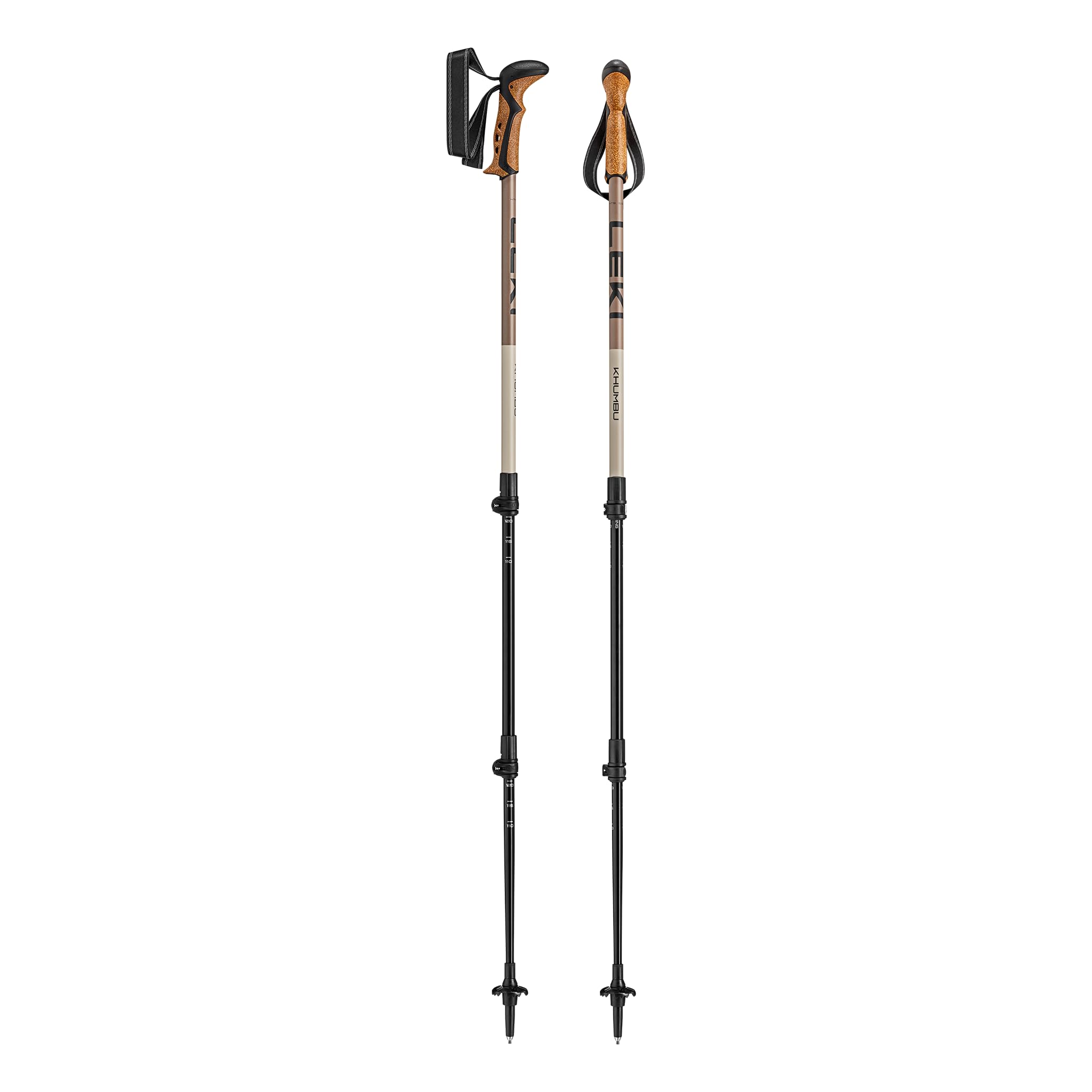
The LEKI Khumbu brings German engineering to a traditional telescoping aluminum design. Each pole weighs 9.7 ounces, which is heavier than the ultralight competition, but the HTS 6.5 aluminum alloy provides a rigidity that inspires confidence on exposed ridgelines. The Speed Lock Plus system uses two external flip switches per pole, offering 35 centimeters of continuous adjustment without the stepped holes found on some locking mechanisms.
The Aergon cork grip is LEKI’s premium handle design, shaped to match the natural contour of a relaxed hand. The cork material breathes well in heat and provides insulation in cold conditions, making the Khumbu a genuine three-season pole. An extended foam section below the grip gives you the option to choke down for side-hilling, and the Flex Tip Short carbide point provides reliable purchase on everything from frozen dirt to slickrock.
The flip switches are robust, but a few early users noted that the adjustment lever can snag on brush if not oriented correctly. At 28 inches collapsed, the Khumbu is too long for internal pack storage unless you strap it externally, which is something to consider if you prioritize compact packing over adjustability.
Why it’s great
- Aergon cork grip offers excellent comfort and sweat management
- HTS 6.5 aluminum delivers high rigidity without excessive weight
- Smooth continuous adjustment with Speed Lock Plus system
Good to know
- Collapsed length of 28 inches limits internal pack storage
- Adjustment lever can catch on trailside brush
6. MSR DynaLock Ascent Foldable Carbon Trekking Poles

The MSR DynaLock Ascent is the most specialized pole in this lineup, engineered explicitly for backcountry skiing, splitboarding, and alpine hiking. The Kevlar-reinforced carbon fiber shaft is stiffer than standard carbon, allowing you to drive the pole into hard snow without excessive flex. The three-section foldable design collapses to just 14.25 inches, which is short enough to fit inside a summit pack or a carry-on bag, with room to spare.
DynaLock mechanisms on each section provide tool-free tension adjustment and 20 centimeters of length range, so you can go from skinning mode to descending mode in seconds. The EVA foam grips are lightweight and feature an extended lower section for multiple hand placements — critical when you are alternating between pole plants and ice-axe self-arrest positions. Large snow baskets are included, and they stay put in deep powder better than any universal basket I have tested.
The folding button requires deliberate force to collapse, and MSR warns against using bare fingers to press it. A few users bruised their thumbs before learning to use a tool or the edge of a pack to trigger the lock. The poles also lack rubber tip covers in the box, so you will need to buy them separately if you plan to use these on bare rock or indoor fitness walking.
Why it’s great
- Kevlar-reinforced carbon is extremely stiff for snow use
- Collapses to 14.25 inches for easy carry-on travel
- Large snow baskets perform excellently in deep powder
Good to know
- Folding button requires firm force to release
- Rubber tip covers are not included with purchase
7. LEKI Ultratrail FX.One Trekking Poles
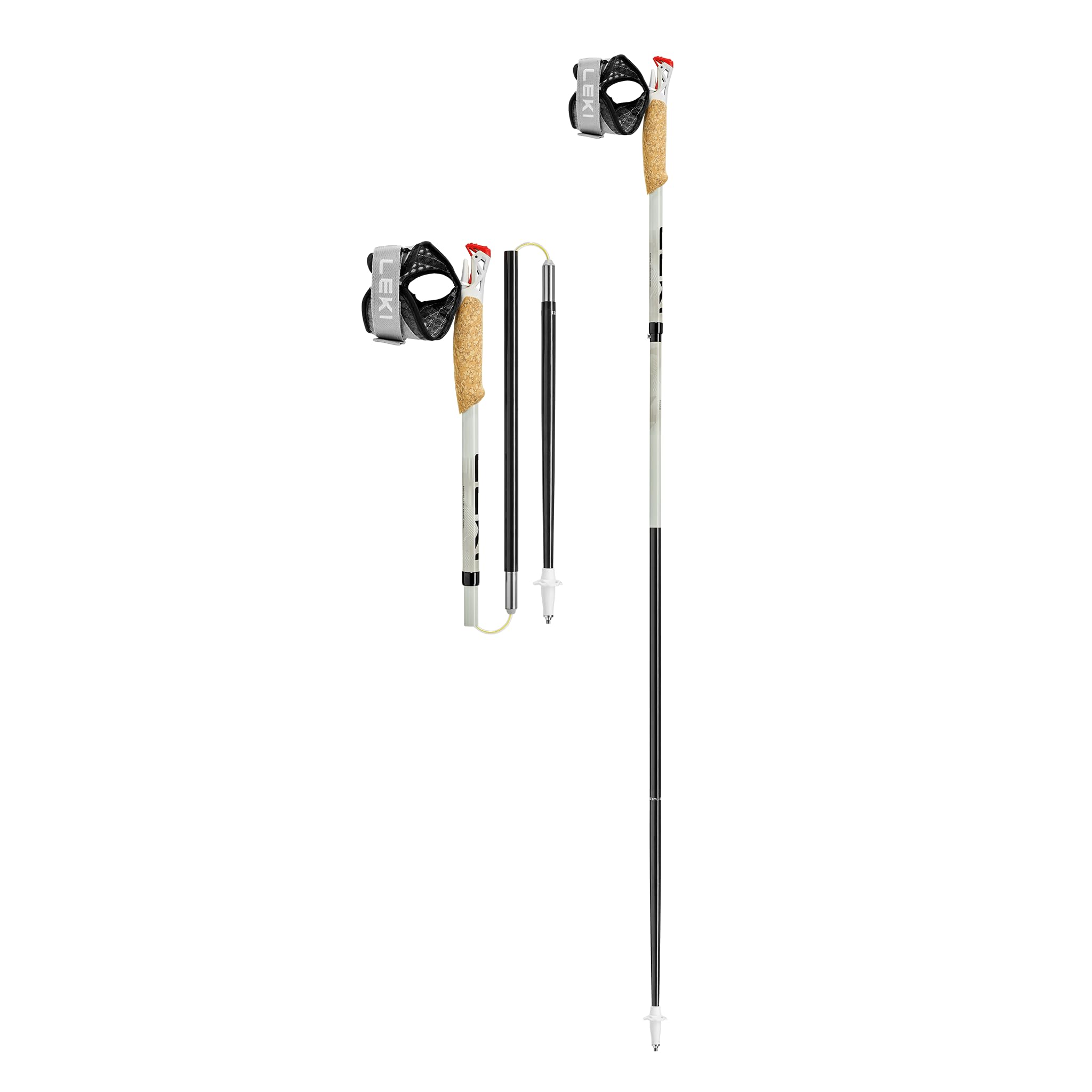
The LEKI Ultratrail FX.One is built for speed. Each pole weighs just 5.9 ounces, making it one of the lightest production poles available, and the carbon shaft employs LEKI’s HRC max layup to retain rigidity at that minuscule weight. The push-button folding system splits the pole into three 14.5-inch sections that can be deployed or stowed in seconds — critical for trail runners who alternate between running with poles and stowing them for technical sections.
The Trail Trigger Shark grip is a foam handle with an adjustable, detachable mesh strap that eliminates the traditional wrist loop flapping against your glove. The foam itself conforms to your hand shape over time, and the absence of a bulky strap mechanism keeps the weight down and the profile sleek. The poles come with a trail running basket that is smaller and lighter than standard trekking baskets, reducing wind drag at speed.
Assembly requires learning the button-release sequence — a spring-loaded button on the telescoping base section must pop into a hole to lock the shaft. LEKI’s printed instructions omit this step, so first-time users will need to watch a setup video. The poles also lack rubber walking tips, and the small running basket is not ideal for soft snow or mud without buying additional accessories.
Why it’s great
- Ultralight at 5.9 oz per pole with rigid carbon construction
- Folds to 14.5 inches for effortless pack storage
- Detachable strap system reduces weight and snag risk
Good to know
- Assembly sequence is not explained in the included manual
- Small running baskets are unsuitable for deep snow or mud
FAQ
Should I choose carbon fiber or aluminum for backpacking poles?
How much should my trekking poles weigh per pole?
What length should I set my trekking poles for backpacking?
Can I use running-style folding poles for standard backpacking?
Final Thoughts: The Verdict
For most users, the backpacking trekking poles winner is the Montem Ultra Light Carbon because it delivers a stiff 100-percent carbon shaft, reliable quick locks, and a comfortable EVA grip at a price that undercuts premium carbon options by a wide margin. If you want a heavier but nearly indestructible aluminum pole with field-serviceable FlickLocks, grab the Black Diamond Trail. And for alpine travel or snow use where packability and snow-specific engineering are critical, nothing beats the MSR DynaLock Ascent and its 14.25-inch collapsed length.

Mo Maruf
I created WellFizz to bridge the gap between vague wellness advice and actionable solutions. My mission is simple: to decode the research and give you practical tools you can actually use.
Beyond the data, I am a passionate traveler. I believe that stepping away from the screen to explore new environments is essential for mental clarity and physical vitality.