Our readers keep the lights on and my smoothie glass nicely filled. As an Amazon Associate, I earn from qualifying purchases.
Finding a backpacking tent that keeps you dry in a storm without draining your wallet feels like chasing a mirage. Most budget shelters under leak, collapse in wind, or weigh too much for a real hike. But a new wave of engineering in aluminum-pole designs and PU-coated flysheets has quietly changed what you can expect for the money — if you know which specs actually matter.
I’m Mohammad Maruf — the founder and writer behind WellFizz. I’ve spent years analyzing gear specs, decoding trail reviews, and cross-referencing real-world waterproof ratings, pole materials, and packed weights so you don’t have to guess which budget tent will survive your next trip.
Whether you are a weekend warrior or a thru-hiker on a shoestring budget, this guide breaks down the top contenders to help you find the best backpacking tent under 100 that balances weight, durability, and weather protection.
How To Choose The Best Backpacking Tent Under 100
At this price point, every ounce and millimeter of waterproof coating counts. You don’t have room for fluff — only the specs that directly dictate whether you sleep dry and pack light.
Pole Material: 7001 Aluminum vs Fiberglass
Fiberglass poles are cheaper and heavier; they crack under stress and in cold temps. 7001-series aluminum poles cost slightly more but shave significant weight and flex without snapping. Every tent on this list uses aluminum for exactly that reason — it’s the single upgrade that separates a season-long shelter from a one-trip disappointment.
Waterproof Rating (PU) and Bathtub Floor
Look for a minimum PU3000mm on the fly and PU5000mm on the floor. A bathtub floor — where the waterproof material extends up the sides — prevents ground moisture from wicking in. Combined, these two specs determine whether you wake up dry after a night of rain.
Packed Weight and Capacity Honesty
“2-person” often means one person plus gear. Check the packed weight — a true backpacking tent should be under 6 lbs total. If the floor width is under 50 inches, consider it a generous solo shelter. Better to size up for comfort than to squeeze in and resent your purchase.
Quick Comparison
On smaller screens, swipe sideways to see the full table.
| Model | Category | Best For | Key Spec | Amazon |
|---|---|---|---|---|
| KAZOO Ultralight 1-Person | Solo | Ultralight solo thru-hiking | 3.3 lbs packed weight | Amazon |
| Naturehike Mongar 2-Person | 3-Season | Spacious shelter for two | 5.29 lbs with footprint | Amazon |
| Hyke & Byke Zion 1-Person | Solo | Wind resistance & included footprint | 37 x 88 x 42 in interior | Amazon |
| Naturehike Cloud River 2-Person | 3-Season | Ventilation & UV protection | 210T silver coating, UPF50+ | Amazon |
| Forceatt 2-Person | 3-Season | Spacious interior & quick setup | PU3000 fly, PU5000 floor | Amazon |
| Underwood Aggregator 2-Person | 4-Season | Winter camping & snow use | PU5000mm floor coating | Amazon |
| MC Tomount 1-2 Person | All-Round | Versatile 4-season ready design | 34.5 sq ft floor area | Amazon |
In‑Depth Reviews
1. KAZOO Waterproof Backpacking Tent Ultralight 1-Person

The KAZOO sets the benchmark for weight in this price tier — a true 3.3 lbs packed weight that competes with shelters costing triple. It uses a single 7001 aluminum pole with clip attachments, so setup is genuinely fast even in fading light. The double-layer construction pairs a B3 mesh inner with a 210T ripstop fly rated above PU3000mm, and reviews confirm it survived thunderstorm, frozen rain, and snow without a single leak.
At 83 inches long by 36 inches wide, it is a dedicated solo shelter. You can store a pack at your side, but a broad-shouldered sleeper will find the width snug. The full-coverage fly includes vents, and the GRS-certified recycled fabric is a bonus for eco-conscious hikers. The vestibule is small — enough for boots and a stove, not a large pack.
For anyone counting grams on a thru-hike or long weekend, the KAZOO delivers premium weight savings at a mid-range price. The polyester fly resists sag when wet better than nylon, and the reflective guy lines add safety. If you can live with tight quarters, this is the lightest option available.
Why it’s great
- Exceptional 3.3 lb packed weight
- 7001 aluminum pole with clip setup
- Double-layer construction survived snow and rain
- GRS-certified recycled fabrics
Good to know
- 36-inch width is tight for broad shoulders
- Vestibule is too small for a large backpack
- Headroom limited when sitting up
2. Naturehike Mongar 2-Person 3-Season Backpacking Tent

The Mongar refines the classic Y-frame dome into a well-executed 2-person package. At 5.29 lbs including the included footprint, it sits at the heavier end of backpacking but rewards you with genuinely comfortable space — 30 square feet with a peak height of 3.28 feet. The 210T ripstop polyester fly and B3 mesh inner provide excellent ventilation, and side vents on the fly minimize condensation buildup.
User reports confirm it survived tropical-storm-force winds (50-72 mph gusts) during Hurricane Nicole, with only vestibule stakes popping loose — the structure itself held firm. The symmetrical design means setup takes under 4 minutes after a few practice runs. The dual doors and dual vestibules let both occupants enter and store gear without climbing over each other.
For a duo or a solo user wanting palatial space for gear, the Mongar offers the best interior room in this bracket. The 7001 aluminum poles flex under load instead of snapping, and the bathtub floor keeps moisture at bay. If weight isn’t your primary constraint, this is the most livable shelter under .
Why it’s great
- Spacious 30 sq ft floor for two people
- Survived tropical-storm-force winds
- Dual doors and vestibules for gear storage
- Includes footprint and easy Y-frame setup
Good to know
- 5.29 lbs is heavy for ultralight solo use
- Takedown requires careful folding to avoid snags
- Mesh inner feels airy but traps less warmth
3. Hyke & Byke Zion Hiking & Backpacking Tent – 1 Person

The Zion from Hyke & Byke leans into storm-readiness. The minimum trail weight (fly, poles, footprint) is just over 3 lbs, and the PU5000 fly rating exceeds most tents at this price. The single-pole dome design is simple — one aluminum pole crosses the center — and provides surprising headroom at 42 inches tall. Included accessories like a footprint, gear loft, aluminum stakes, and a stake press add real value.
Real-world reviews describe it handling 35-40 mph sustained winds and 70 mph gusts without structural damage. The fly vents, however, don’t stay open well in wind or rain, and some users report micro-drops penetrating the fly in heavy downpours — a limitation of the coating at this price point. The interior measures 37 by 88 inches, fitting a 6’2” sleeper with room to spare.
This is the best choice for exposed ridge-line camping or shoulder-season trips where wind is the main enemy. The included footprint and gear loft eliminate extra purchases. Just be conscious of the fly’s limits in sustained heavy rain and consider seam-sealing for maximum confidence.
Why it’s great
- PU5000 fly and bathtub floor for high wind/rain resistance
- Includes footprint, gear loft, and stake press
- Excellent headroom for a solo tent
- Simple single-pole setup
Good to know
- Fly vents don’t stay open in wind/rain
- Stakes bend easily in rocky ground
- Stuff sack is undersized; may tear during packing
4. Naturehike Cloud River 2-Person 3-Season Backpacking Tent
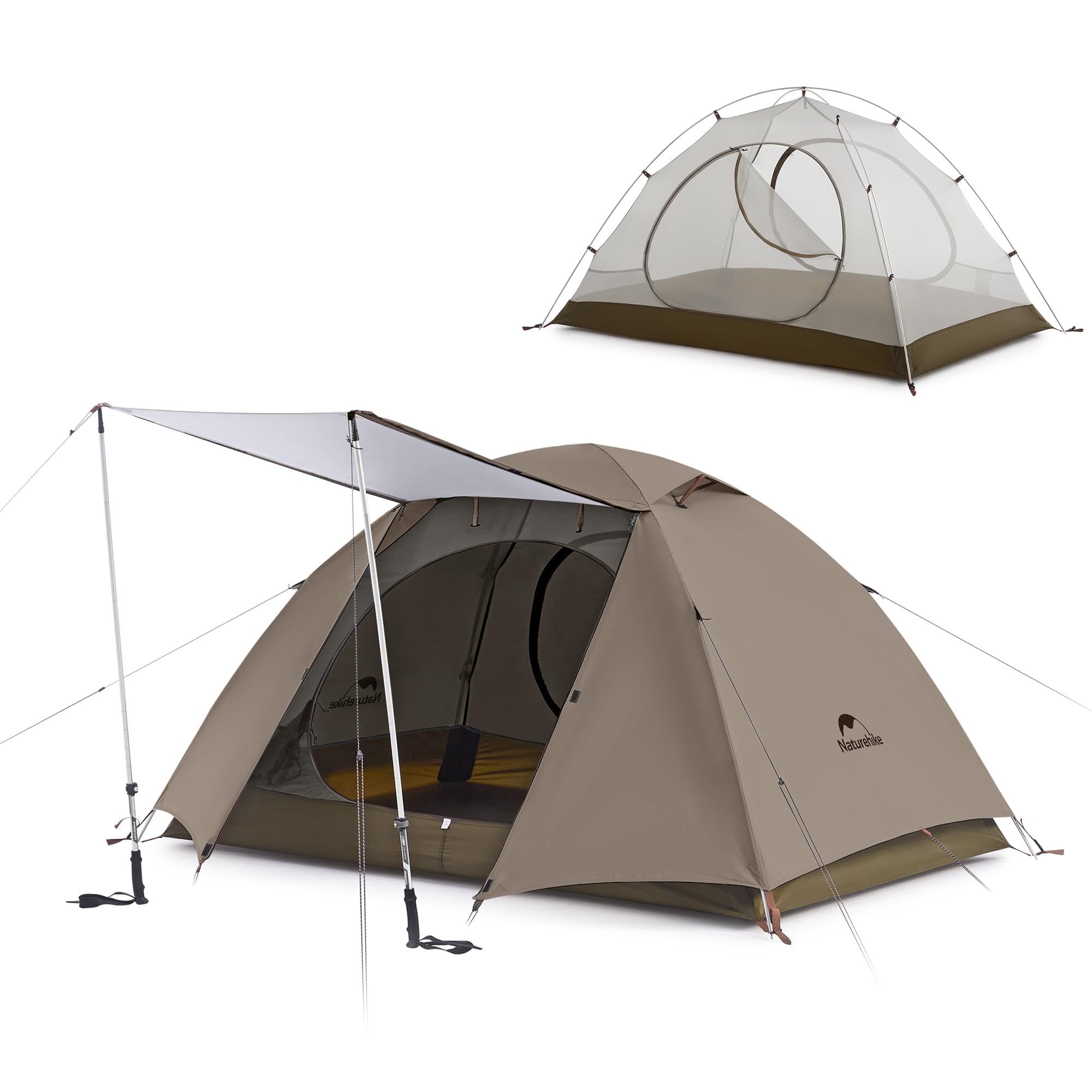
The Cloud River differentiates itself with an all-mesh inner tent under a full-coverage 210T ripstop fly with silver coating providing UPF50+ sun protection. This mesh-dominant design makes it the best option for humid summer nights — airflow is exceptional, and condensation buildup is minimal even when fully closed up. The X-cross 7001 aluminum pole structure makes setup straightforward in about 5 minutes.
Interior dimensions are 82.7 by 55.1 inches with a 45.3-inch peak height, giving better headroom than many tents at this price. The floor area of 31.63 square feet accommodates two regular-width sleeping pads with some space between. The fly includes two vents, and the dual doors provide easy entry without climbing over a partner.
Some users note the floor feels thin — a groundsheet or footprint is advisable for rocky sites. The PU2000mm fly rating is lower than some competitors, but real-world tests confirm it kept occupants dry through heavy rain. For warm-weather backpackers who prioritize breathability over extreme storm protection, the Cloud River is a balanced, comfortable choice.
Why it’s great
- All-mesh inner for superior ventilation
- UPF50+ silver-coated fly reduces heat buildup
- Good headroom at 45.3 inches
- Lightweight 7001 aluminum poles
Good to know
- PU2000mm fly is lower than some alternatives
- Floor feels thin; a footprint is recommended
- Not suitable for snow or heavy winter conditions
5. Forceatt Camping Tent 2 Person Backpacking Tent

The Forceatt stands out for interior volume — 90.5 by 49 inches with a 43-inch peak height gives it one of the largest floor plans in this group. The PU3000mm fly and PU5000mm oxford cloth floor use thickened corners for added water resistance. Reviews confirm it held up in a thunderstorm without extra sealant, and the stitching quality is praised as comparable to tents costing much more.
Setup is straightforward with guy lines and 12 stakes, and the included SBS zippers operate smoothly. The tent weighs 5.5 lbs, which is acceptable for shorter backpacking trips but not ultralight. The vestibules are functional but not oversized — enough for boots and a small pack. The neutral dark green color blends into natural settings.
For two average-sized adults or a parent-child duo, the Forceatt offers the most abundant floor space without breaking the budget. The high floor waterproof rating gives confidence for wet campsites. The main trade-off is the packed weight — better suited for hikes under 5 miles or base-camp setups than multi-day thru-hikes.
Why it’s great
- Spacious 90.5 x 49 inch floor
- PU5000 floor with thickened corner seams
- Survived thunderstorm without extra sealant
- 7001 aluminum poles for durability
Good to know
- 5.5 lbs is heavy for ultralight backpacking
- Vestibules are small for gear storage
- Setup is non-intuitive for first-time users
6. Underwood Aggregator 1/2 Person 4-Season Backpacking Tent
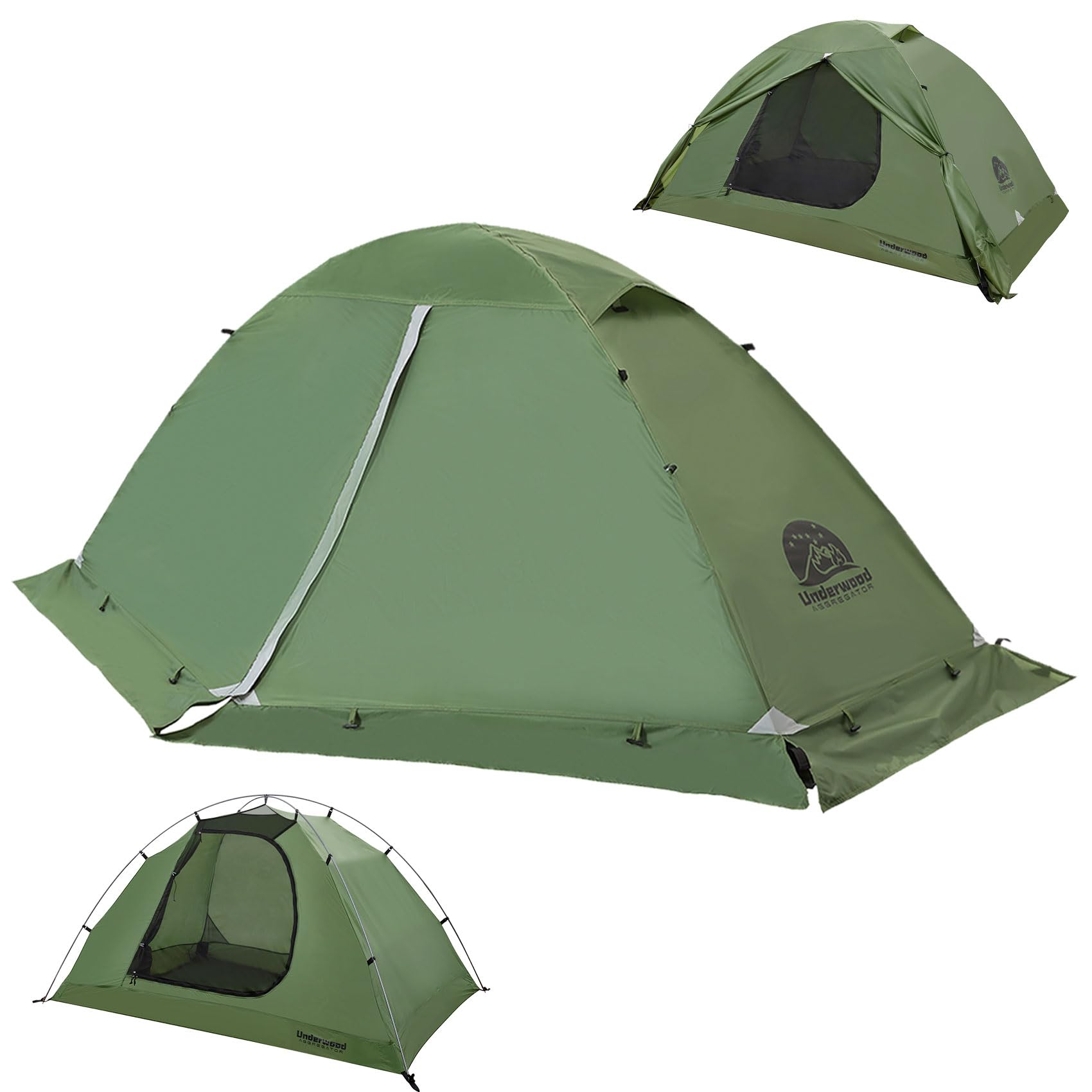
The Underwood Aggregator enters the sub- arena with a genuine 4-season claim — a snow skirt, full-coverage rain fly, and PU5000mm floor coating. The dome shape uses two aircraft-grade aluminum poles and duraflex fasteners. Reviews from a user who completed the Patagonia O-Circuit confirm it survived rain, snow, and brutal winds without structural failure, an impressive real-world endorsement.
Interior dimensions measure 86.6 by 59.1 inches with a 45.3-inch peak, fitting two sleepers or one plus a full-size cot for motorcycle camping. The packed weight of 5.73 lbs places it firmly in the mid-range category. Some users note the rain cover fit could be better around the corners, and condensation can build if the vents are closed during wet snow.
If you plan to camp in cold weather, shoulder seasons, or above treeline, this is the rare budget tent with actual winter features. The snow skirt rolls up when not needed, and the double-layer door provides bug protection in summer. For hikers who want one tent that does it all, the Underwood Aggregator offers the widest seasonal range.
Why it’s great
- True 4-season design with snow skirt
- PU5000mm floor for wet snow and puddles
- Survived Patagonia O-Circuit conditions
- Fits a cot for motorcycle camping
Good to know
- Rain fly fit could be tighter at corners
- Condensation can build in wet snow conditions
- 5.73 lbs is heavy for summer-only use
7. MC Tomount Backpacking Tent 1-2 Person 4-Season
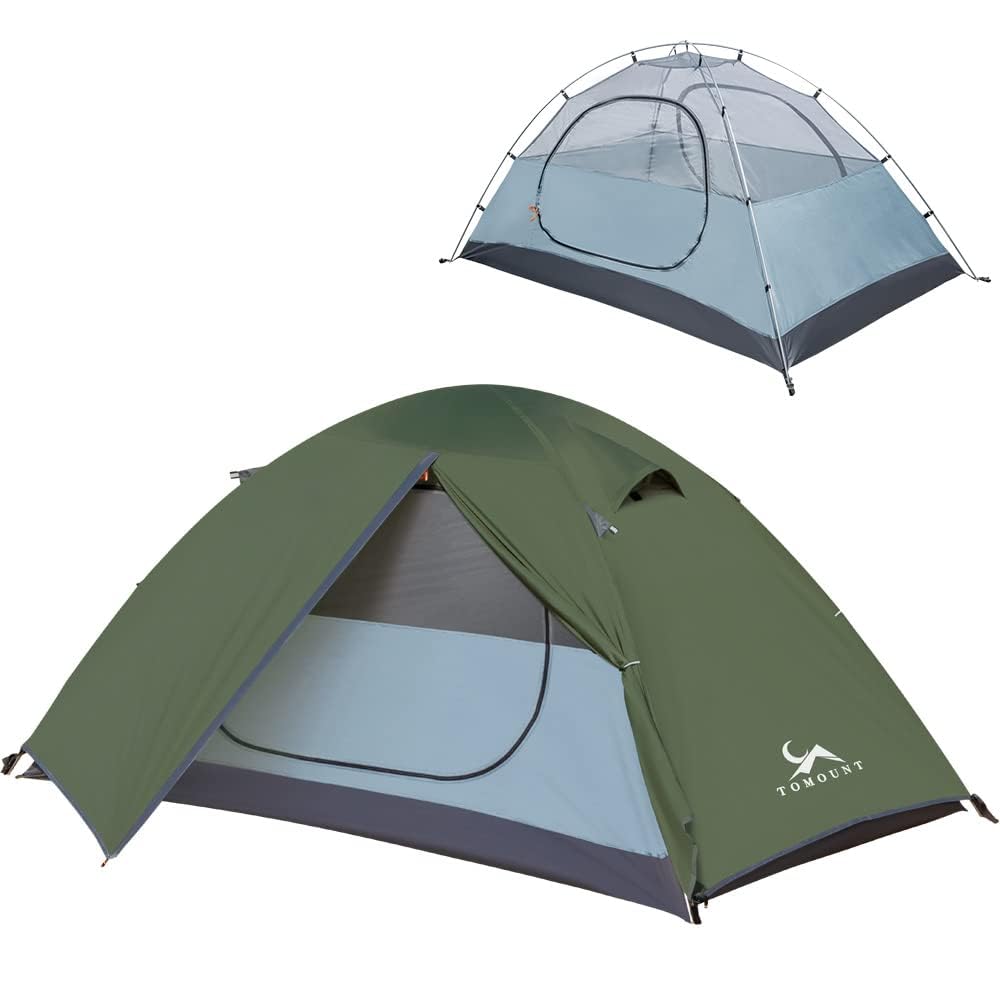
The MC Tomount delivers a square 90 by 90-inch floor plan, giving 34.5 square feet of sleeping area — the largest in this lineup. The double-layer design uses 190T breathable polyester inner, 210D oxford floor, and 210T ripstop fly with PU3000mm coating. The 7001 aluminum poles and 360-degree front fly screen are unique features that set it apart.
Setup takes about 10-15 minutes for a first-timer, though experienced users can cut that down. A 6’2” reviewer confirmed plenty of room inside, and the tent has held up through three years of Pacific Northwest rain and snow. However, some users report the packed weight at closer to 8.5 lbs, making it more of a car-camping or short-haul option than a true backpacking shelter.
For hikers who want maximum interior volume and don’t mind extra weight, the MC Tomount offers a massive floor for two people plus gear. The lack of side pockets is a minor annoyance, and the zippers are functional but not premium. It’s best suited for campsites within a mile of the trailhead or for base camping where space matters most.
Why it’s great
- Giant 90 x 90 inch floor area
- Double-layer design with PU3000 fly
- Unique 360-degree front fly screen
- One-year warranty against defects
Good to know
- Reported weight up to 8.5 lbs in some reviews
- No interior side pockets for small items
- Zippers are functional but not YKK quality
FAQ
Is a PU3000mm fly enough for heavy rain?
Can a budget 4-season tent handle real winter snow loads?
Why do some tents list a 2-person capacity but feel tight for two?
Final Thoughts: The Verdict
For most users, the backpacking tent under 100 winner is the KAZOO Ultralight 1-Person because it hits the sweet spot of 3.3 lbs packed weight, reliable 7001 aluminum poles, and proven weather resistance. If you want spacious two-person living with dual doors, grab the Naturehike Mongar. And for exposed ridge-line camps where wind is the main enemy, nothing beats the Hyke & Byke Zion with its included footprint and PU5000 fly.

Mo Maruf
I created WellFizz to bridge the gap between vague wellness advice and actionable solutions. My mission is simple: to decode the research and give you practical tools you can actually use.
Beyond the data, I am a passionate traveler. I believe that stepping away from the screen to explore new environments is essential for mental clarity and physical vitality.