Our readers keep the lights on and my smoothie glass nicely filled. As an Amazon Associate, I earn from qualifying purchases.
Building a backpacking kit means balancing weight, durability, and function across every item you carry. A flawed cook set adds ounces you feel on mile ten, a cold-weather blanket that fails to insulate ruins a night under the stars, and poles that slip on wet rock turn a ridge walk into a hazard. Your supply chain starts with gear that earns its place in the pack.
I’m Mohammad Maruf — the founder and writer behind WellFizz. Over years of analyzing outdoor gear specs and collating field data from hundreds of verified hiker reviews, I’ve learned the exact material standards and design features that separate reliable backcountry tools from disposable gadgets.
This guide breaks down five core items covering cookware, insulation, stability, packability, and ground comfort so you can buy with confidence. Building a kit that works starts with the right backpacking supplies, and each recommendation here has proven itself on trail.
How To Choose The Best Backpacking Supplies
Every ounce counts on a multi-day trip, so selecting gear based on weight, packed volume, and material quality keeps your base weight manageable without sacrificing safety or comfort. Focus on these three areas before you buy.
Cookware Material and Nesting Design
Hard-anodized aluminum offers the best balance of heat conductivity, weight, and durability for backpacking cook sets. It heats faster than stainless steel and resists corrosion better than bare aluminum. A nesting design where the pot, pan, kettle, cups, and utensils stack inside each other saves critical pack space and eliminates rattling during transit. Check that handles are silicone-wrapped or removable so they stay cool over a stove flame.
Insulation Type and Packed Volume
Synthetic insulation like 3M Thinsulate retains warmth when wet, dries faster than down, and is far easier to care for on trail. An ultralight blanket with around 80 g/m² fill weight works as a camp quilt or emergency layer, but if you need ground insulation for sleeping, closed-cell foam pads like the NEMO Switchback provide an R-value of 2.0 — sufficient for three-season use without the puncture risk of inflatable pads. Compare packed size: a Thinsulate blanket should compress to around the size of a travel pillow, while a closed-cell foam pad straps externally to your pack.
Pole Lock Mechanism and Shaft Material
Lever-lock (flip-lock) adjustment systems let you change pole height with one hand, which is critical when you need to switch between flat terrain and a steep climb without stopping. 7075 aluminum offers higher strength-to-weight than 6061 and is more affordable than carbon fiber, making it the sweet spot for most backpackers. Cork handles mold to your hand over time and wick moisture better than foam, especially on humid summer hikes. Always confirm the collapsed length fits inside or on the outside of your pack — 24 inches is standard for carry-on compatibility.
Quick Comparison
On smaller screens, swipe sideways to see the full table.
| Model | Category | Best For | Key Spec | Amazon |
|---|---|---|---|---|
| THTYBROS 17pcs Cookware Kit | Cook Set | All-in-one cooking system | 2.75 lb, 1.7L pot + 7″ pan | Amazon |
| iClimb 3M Thinsulate Blanket | Insulation | Lightweight camp warmth | 16 oz, packs to 10.2″ x 7.5″ | Amazon |
| TrailBuddy Trekking Poles | Poles | Stability on uneven terrain | 7075 Al, 9.7 oz each | Amazon |
| Osprey Ultralight Stuff Pack | Daypack | Packable day-use bag | 0.33 lb, 18L capacity | Amazon |
| NEMO Switchback Pad | Sleep Pad | Reliable ground insulation | R-Value 2.0, closed-cell foam | Amazon |
In‑Depth Reviews
1. THTYBROS 17pcs Camping Cookware Kit

This 17-piece set covers every cooking need for two people: a 1.7L pot, a 1.15L kettle, a 7-inch frying pan, two stainless steel cups, two plates, full cutlery for two, a bamboo spoon, a cleaning cloth, and a mesh carry bag. Hard-anodized aluminum conducts heat faster and more evenly than titanium, meaning you boil water in less time and use less fuel per meal. The entire stack nests into a compact 7.5 x 7.5 x 5-inch package that weighs only 2.75 pounds.
The silicone-wrapped handles stay cool to the touch during cooking and provide a secure grip even with wet hands. The kettle pours cleanly without dripping, and the frying pan has enough surface area to sear two servings of meat or sauté vegetables. Multiple verified users report the set surviving multiple seasons without corrosion or warping, and the included carabiner-style bag clip keeps everything organized inside a larger pack.
Dual stainless steel plates hold up to hot food without leaching flavors, and the cutlery has a solid feel rather than the flimsy bend common in budget mess kits. The bamboo spoon is a thoughtful addition for scraping pots without scratching the non-stick surface. If you want one cook system that works for both backcountry and car camping without adding weight, this earns its place as the kit that does everything well.
Why it’s great
- Hard-anodized aluminum heats fast and evenly, reducing fuel use
- Full two-person kit nests into a compact, lightweight package
- Silicone handles stay cool and provide secure grip when wet
Good to know
- Aluminum requires gentle cleaning to avoid scratching the anodized surface
- Not compatible with induction cooktops; designed for camp stoves and open flames
2. iClimb 3M Thinsulate Insulation Warm Camping Blanket

The iClimb blanket uses 3M Thinsulate M80 insulation — 80 grams per square meter of synthetic fibers that trap body heat while allowing moisture vapor to escape. This means you stay warm even if the blanket gets damp from condensation inside a tent or from light rain while you are wearing it as a poncho. The 20-denier nylon outer shell is soft against skin, wind-resistant, and packs into its own attached carry sack that measures just 10.2 x 7.5 x 3.1 inches.
Unfolded dimensions of 6-foot-1 by 4-foot-7 are generous enough for most adults to wrap around shoulders or use as a quilt. Snap buttons along the edges let you transform the blanket into a poncho with arm slits, and elastic straps allow you to secure it around a sleeping pad for a makeshift sleeping bag. Users report that layering this blanket inside a sleeping bag adds significant warmth for cold nights without the bulk of an extra bag.
The attached stuff sack prevents loss, and the entire blanket weighs only 16 ounces — light enough to carry as a dedicated camp layer without noticing it in your pack. Machine washing on a delicate cycle and air drying keeps the Thinsulate loft intact. For hikers who want a multipurpose insulation piece that handles damp conditions better than down, this blanket delivers reliable performance at a minimal weight penalty.
Why it’s great
- Thinsulate M80 insulation retains warmth even when damp
- Snap-and-elastic system converts to poncho or sleeping bag overlay
- Attached stuff sack packs to pillow size at only 16 ounces
Good to know
- Not intended as a standalone sleeping bag for sub-freezing temperatures
- Taller users may find the 4-foot-7 width snug in sleeping bag mode
3. TrailBuddy Trekking Poles
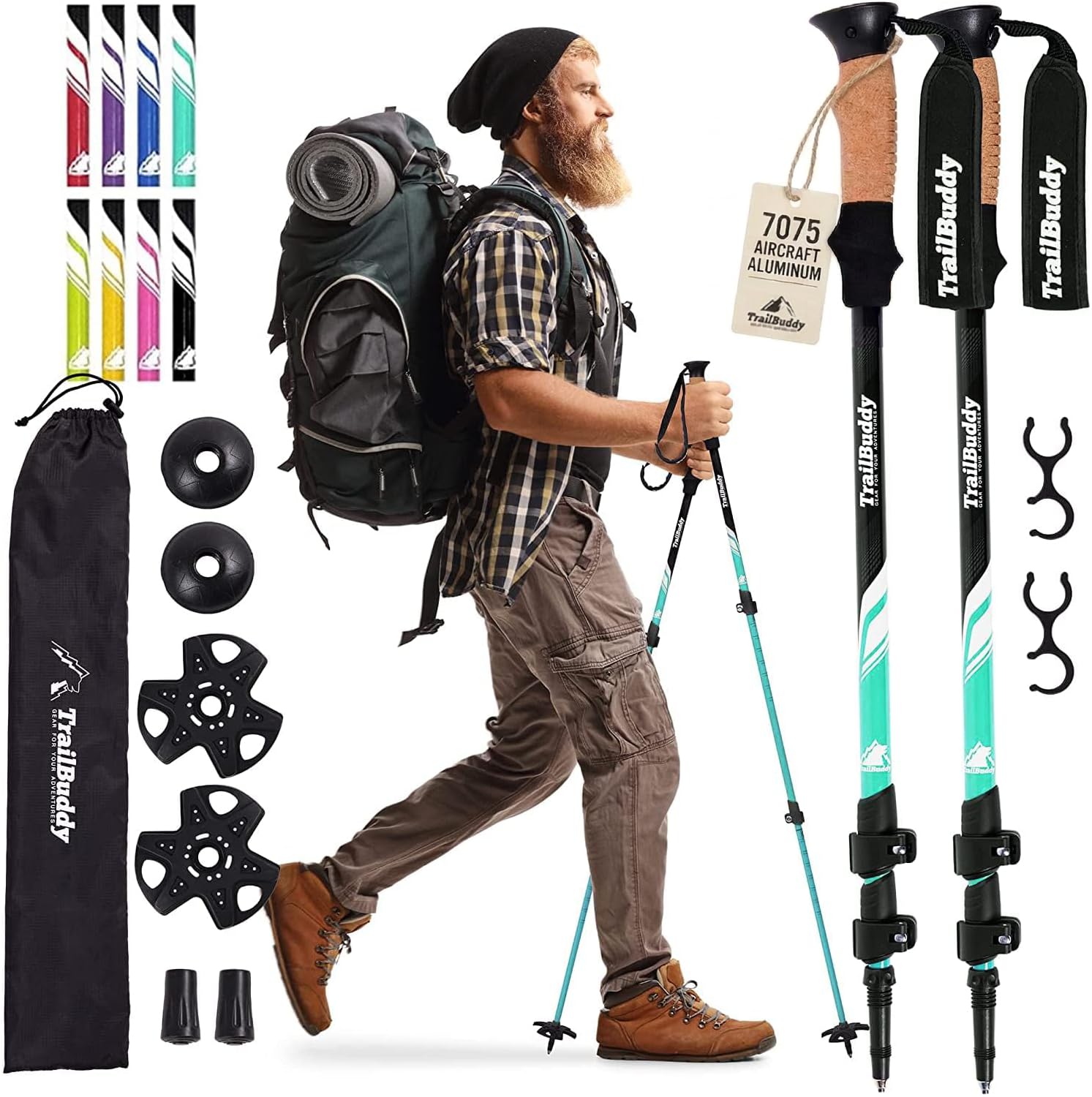
These poles are built from aircraft-grade 7075 aluminum, which offers a higher strength-to-weight ratio than the 6061 alloy used in many budget poles. Each pole weighs 9.7 ounces, and the lever-lock mechanism allows one-handed height adjustment from 24.5 inches collapsed up to 54 inches extended. The cork handles are contoured and moisture-wicking, so they become more comfortable as your hand sweats on a long climb, and the padded wrist straps reduce fatigue on descents.
The set includes tungsten carbide tips that bite into rock and hard-packed dirt, plus four spare rubber tips for pavement, two mud baskets, and two snow baskets. Users report the lever locks staying tight over multiple seasons without slipping, even during steep side-hilling or when supporting over 200 pounds of body weight plus pack. The poles collapse to 24.5 inches, making them compact enough to strap to a daypack or fit inside a duffel for airline travel.
Threaded tips keep the baskets and rubber feet securely attached in mud or snow, and the included carry bag keeps everything organized when the poles are not in use. While the initial assembly screws can be tight out of the box, once adjusted, the poles hold firm without rattling. For hikers who want professional-grade materials and adjustability without paying carbon-fiber prices, these poles deliver reliable stability for every trail condition.
Why it’s great
- 7075 aluminum provides top-tier strength at a lightweight 9.7 oz per pole
- Lever-lock mechanism adjusts with one hand and holds firm
- Cork handles mold to your hand and wick moisture during long hikes
Good to know
- Assembly screws can be very tight and may require a tool to loosen initially
- Not as ultralight as premium carbon fiber poles for gram-counting thru-hikers
4. Osprey Ultralight Collapsible Stuff Pack

Weighing just 0.33 pounds (about 5.3 ounces), the Osprey Ultralight Stuff Pack stuffs into its own integrated pocket that compresses to roughly the size of an orange. When deployed, it expands to 18 liters — enough volume for a day hike jacket, water bottle, snacks, and camera gear. The main body is made from bluesign-approved 40-denier high-tenacity recycled nylon, so you get a bag that is both environmentally conscious and durable enough for repeated folding and unfolding.
Breathable, padded mesh shoulder straps improve comfort over long walking days compared to the thin straps found on most packable daypacks. The adjustable sternum strap includes an integrated emergency whistle, a practical safety feature if you take a fall or need to signal. Dual stretch mesh side pockets fit a standard Nalgene or 1-liter Smartwater bottle securely, and an internal key clip keeps small essentials from floating to the bottom.
Easy-pull zippers with reinforced pulls operate smoothly even when the bag is fully packed. The 7.5 x 8.7 x 16.5-inch dimensions meet most airline carry-on restrictions when packed flat inside a larger suitcase. Travelers consistently report that this bag handles heavy day loads without seam failure or strap detachment, and the ability to fold it into its own pocket makes it a perfect secondary pack for summit bags, market runs, or souvenir overflow on the return flight.
Why it’s great
- Stuffs into its own pocket at only 5.3 ounces for near-zero pack weight
- Padded mesh shoulder straps with sternum strap and emergency whistle
- Made from recycled, bluesign-approved 40D nylon for durability and sustainability
Good to know
- No hip belt or frame sheet — not designed for heavy multi-day loads
- Single main compartment with limited organization pockets
5. NEMO Equipment Switchback Foam Sleeping Pad
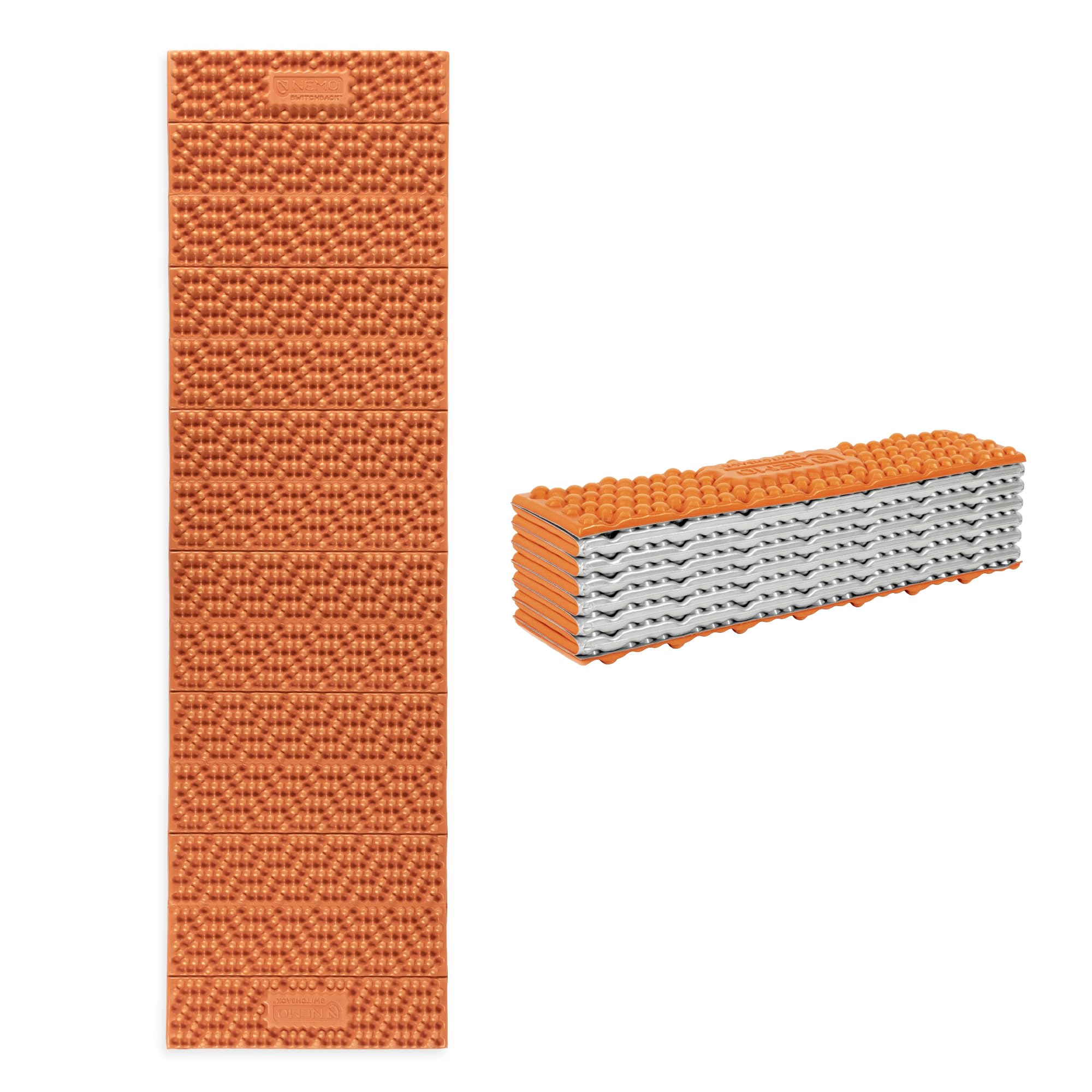
The NEMO Switchback uses a hexagonal nesting pattern that allocates more space for taller, wider foam nodes compared to traditional egg-crate designs. This geometry provides significantly more plushness per square inch while allowing the pad to fold into a compact 20 x 5 x 5.5-inch bundle when not in use. The dual-density Axiotomic foam layers a supple top surface for comfort over a resilient bottom layer for structural support, so you do not bottom out on uneven tent floors.
A metallized thermal reflective film laminated to the bottom surface reflects body heat back toward you, raising the effective R-value to 2.0 — warm enough for three-season use down to freezing temperatures without needing an inflatable pad underneath. The closed-cell construction means zero inflation time, zero puncture risk, and zero noise when you shift positions at night. Users commonly pair the Switchback under an inflatable pad in winter for an R-value boost and a puncture barrier.
At just under 15 ounces, it is light enough to strap externally to a pack, and the pad doubles as a sit pad during lunch breaks or a kneeling pad for tent setup. The foam holds up well against abrasion from tent floor debris and even light contact with sharp rocks, though it can develop cosmetic scuffs from backpack straps. For backpackers who prioritize reliability over maximum cushiness, the Switchback eliminates the single point of failure that inflatable pads represent.
Why it’s great
- Hexagonal nesting nodes provide more cushion than standard closed-cell pads
- R-Value 2.0 with reflective film works well for three-season backpacking
- Zero puncture risk, no inflation needed, and doubles as a sit pad
Good to know
- Less cushioned than premium inflatable pads for side sleepers
- Packed size is larger than an ultralight inflatable pad
FAQ
Can I use hard-anodized aluminum cookware on an open campfire?
How does the NEMO Switchback compare to an inflatable sleeping pad for warmth?
What is the real difference between the iClimb Thinsulate blanket and a down blanket?
Final Thoughts: The Verdict
For most users, the backpacking supplies winner is the THTYBROS 17pcs Cookware Kit because it provides a complete two-person cooking system that nests compactly and heats efficiently with hard-anodized aluminum. If you want a reliable ground insulation piece, grab the NEMO Switchback Pad. And for trail stability without the carbon-fiber price, nothing beats the TrailBuddy Trekking Poles.

Mo Maruf
I created WellFizz to bridge the gap between vague wellness advice and actionable solutions. My mission is simple: to decode the research and give you practical tools you can actually use.
Beyond the data, I am a passionate traveler. I believe that stepping away from the screen to explore new environments is essential for mental clarity and physical vitality.