Our readers keep the lights on and my smoothie glass nicely filled. As an Amazon Associate, I earn from qualifying purchases.
Choosing the wrong backpacking stove turns a peaceful night under the stars into a frustrating battle with the elements, leaving you with a cold meal and a heavy pack. The right one, however, feels like magic—a reliable, hot flame at your fingertips that makes the wilderness feel like home.
I’m Mohammad Maruf — the founder and writer behind WellFizz. My research involves dissecting thousands of user experiences and technical specifications to map the landscape of outdoor gear, separating genuine innovation from clever marketing.
This guide cuts through the noise with a direct analysis of the top models available, so you can find a stove that matches your specific trekking style, whether you’re counting every gram or planning a gourmet backcountry feast. After comparing specs and real-world performance data, best backpacking stove for most adventurers balances reliability, weight, and real-world resilience.
How To Choose The Best Backpacking Stove
Selecting a stove isn’t just about finding the hottest flame. It’s about matching a tool to your trip’s demands. A weekend warrior on the Appalachian Trail has different needs than a winter mountaineer or a car camper. Focus on these three pillars to narrow your search effectively.
Fuel Type Defines Your Trip
Your fuel choice dictates your stove’s versatility, pack weight, and availability. Canister stoves (isobutane/propane mixes) are the most popular for their convenience and clean operation. They’re light and easy to use but can lose efficiency in freezing temperatures and require you to carry finite, sometimes hard-to-find canisters. Wood-burning stoves are the ultimate in fuel independence, running on twigs and pine cones you forage. They add no fuel weight to your pack but require more time and skill to manage, produce soot, and aren’t suitable for fire bans. Liquid fuel stoves (white gas, kerosene) excel in extreme cold and high altitude due to reliable pressurization, but they are more complex, require priming, and are generally heavier.
Balance Weight Against Performance
The ultralight mantra is compelling, but shedding grams often means sacrificing stability, wind resistance, and simmer control. A sub-1-ounce titanium stove is a dream for solo thru-hikers who only boil water, but its small burner head and flimsy pot supports can be risky. Mid-weight options add crucial features like built-in piezo igniters, better wind screens, and wider, more stable bases that make cooking actual meals possible. Decide if you’re a “boil-water-only” hiker or a backcountry chef; that choice dictates how much performance weight is worth carrying.
Evaluate Real-World Stability and Wind Resistance
A stove’s performance on your kitchen counter is meaningless if it sputters out in a breeze. Look for designs with low burner heads, integrated wind screens, or concave burner bowls that protect the flame. Pot support arm length and design are critical—longer, serrated arms provide stability for larger pots and uneven surfaces. Many premium stoves offer removable pot supports, allowing you to switch between a wide platform for group cooking and a compact one for solo pots, maximizing versatility without duplicating gear.
Quick Comparison
On smaller screens, swipe sideways to see the full table.
| Model | Type | Best For | Key Feature | Amazon |
|---|---|---|---|---|
| SOTO WindMaster | Canister | All-Weather Performance | Built-in regulator & wind defense | Amazon |
| MSR PocketRocket 2 | Canister | Proven Reliability | Legendary balance of size & power | Amazon |
| Überleben Stöker | Wood | Fuel-Free Purists | Ultralight titanium flat-pack | Amazon |
| Solo Stove Titan | Wood | Group Camping | Efficient double-wall gasification | Amazon |
| Gen Camping System | Integrated | Fast, All-in-One Kit | Heat exchanger pot system | Amazon |
| Kuvik Titanium Wood Stove | Wood | Ultralight Bushcraft | Collapsible titanium panels | Amazon |
| Gas One GS-3400P | Dual Fuel | Car Camping & Emergencies | Runs on butane or propane | Amazon |
| Solo Stove Lite | Wood | Solo Backpacking | Compact, low-smoke design | Amazon |
| Fire-Maple Torch | Canister | Budget-Conscious Starters | Great value with piezo ignition | Amazon |
| BRS 3000T | Canister | Gram-Counting Minimalists | Extremely lightweight at 25g | Amazon |
| AOTU Portable | Canister | Ultra-Budget Backup | Compact with stable support | Amazon |
In‑Depth Reviews
1. SOTO WindMaster Canister Stove
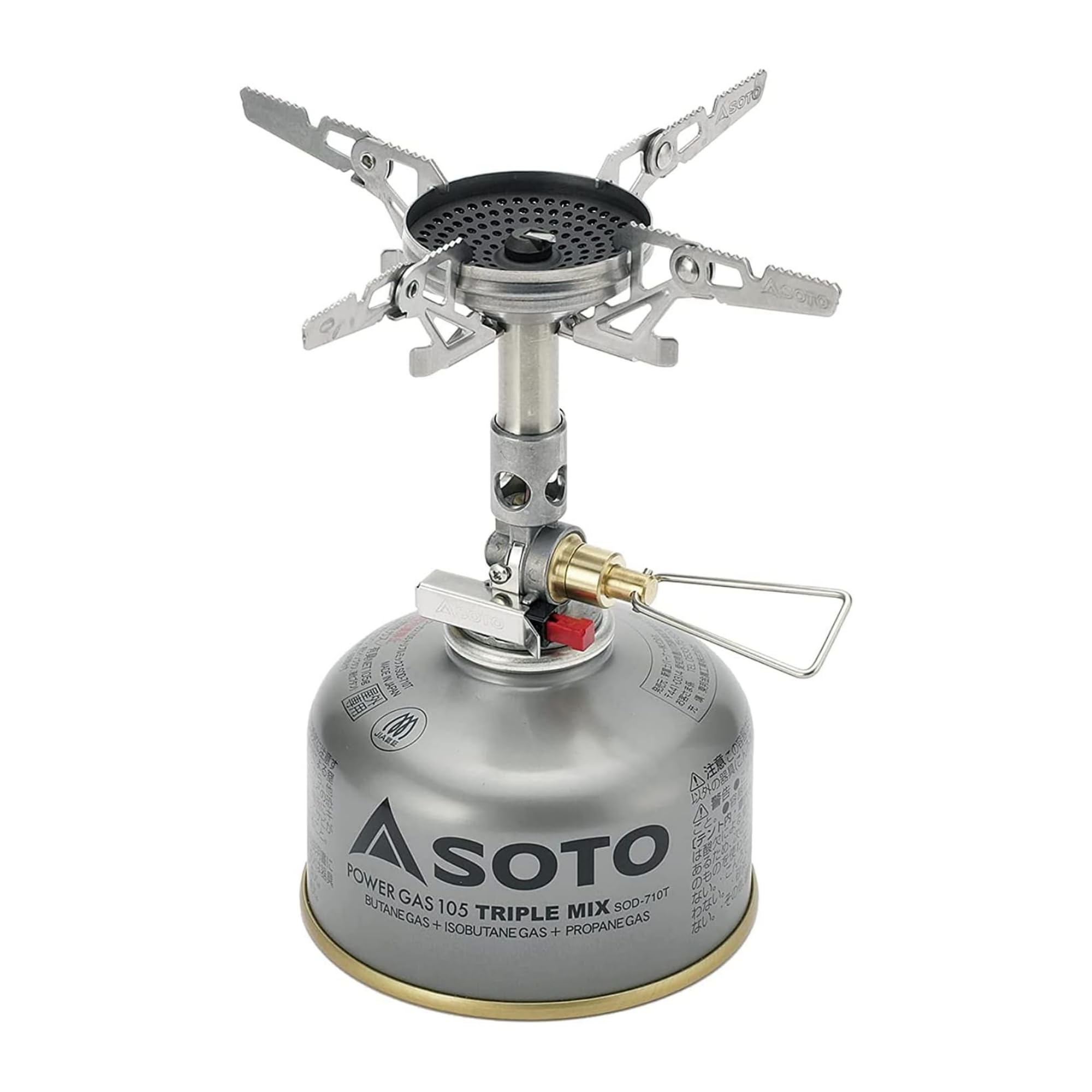
The SOTO WindMaster stands out as a premium canister stove engineered for conditions that make others fail. Its key advantage is a built-in pressure regulator, which maintains a consistent flame output as the fuel canister empties or the temperature drops, a common pain point with basic stoves. This, combined with its uniquely concave burner head that acts as a built-in windscreen, delivers reliable performance when you need it most.
Beyond the regulator, the design is thoughtfully versatile. It includes the 4Flex pot support system, which provides exceptional stability for larger pots, making it suitable for small group meals. For solo hikers, the optional TriFlex support (sold separately) creates a more compact footprint that pairs perfectly with heat-exchanger pots. The integrated piezo igniter is notably robust and recessed to prevent damage, lighting reliably with a satisfying click.
User reports consistently highlight its surprising quietness and excellent simmer control, allowing for more nuanced cooking than just blasting water to a boil. While it carries a premium price tag, the investment buys peace of mind and fuel efficiency, especially for those who venture into windy, cold, or high-altitude environments where stove performance is non-negotiable.
Why it’s great
- Pressure regulator ensures consistent performance in cold and as fuel depletes.
- Exceptional wind resistance due to the concave burner design.
- Quiet operation and precise flame control for real cooking.
- Versatile support system accommodates both large and small cookware.
Good to know
- Premium price point positions it at the high end of the market.
- The 4Flex supports are large; for small pots, the TriFlex is an extra purchase.
- Longer burner stem may not fit sideways in some very small pots.
2. MSR PocketRocket 2

The MSR PocketRocket 2 is a benchmark in the backpacking world, representing a gold standard of reliability in a minimalist package. It’s the stove you recommend to a friend without hesitation, known for its simple, no-nonsense design that just works trip after trip. Folding down to the size of a deck of cards and weighing next to nothing, it epitomizes the efficient, carry-everywhere backpacking stove.
Performance is straightforward and powerful, boasting a fast boil time that lives up to its name. The serrated pot supports offer a secure grip on a wide range of pot sizes, from small titanium cups to mid-sized pots for two people. It comes with a hard-sided plastic case that provides excellent protection in your pack, a small but valuable detail often missing from competitors.
While it lacks a built-in igniter and the advanced wind-fighting design of some newer models, its sheer reliability and proven track record are its superpowers. For hikers who want a set-it-and-forget-it tool from a brand with decades of field experience, the PocketRocket 2 remains a top-tier choice that balances performance, weight, and durability perfectly.
Why it’s great
- Time-tested reliability and build quality from a leading outdoor brand.
- Incredibly compact and lightweight, with a included protective case.
- Fast boil times and a good spread of heat for its size.
- Simple operation with no fussy parts or assembly required.
Good to know
- No built-in piezo igniter; you’ll need a lighter or matches.
- Pot supports are less stable in wind compared to models with wind screens.
- Flame adjustment is good but not as finely tunable as some premium regulators.
3. Überleben Stöker Titanium Camping Stove

The Überleben Stöker is a masterclass in ultralight, packable design for the fuel-independent adventurer. Constructed entirely from grade 1 titanium, it achieves an impressive balance of minimal weight and remarkable durability. Its genius lies in the five-panel interlocking system that assembles into a remarkably rigid structure without screws or loose parts, then collapses into a slim 0.5-inch thick package.
This isn’t just a twig stove; it’s a capable cooking platform. The included titanium grill grate transforms it into a functional grill for skewers or fish, adding culinary versatility. The design promotes excellent airflow, creating a hot, efficient burn that minimizes smoke when fed properly with dry, small-diameter fuel. The accompanying waxed canvas sleeve is both a protective case and a handy foraging pouch for tinder.
It demands more engagement than a canister stove—you’ll be actively feeding it fuel and managing the fire. However, for those who prioritize eliminating carried fuel and love the self-reliance of a wood fire, the Stöker offers a premium, ultra-packable solution that feels like a permanent piece of kit rather than a disposable gadget.
Why it’s great
- Unbeatable packability, folding completely flat for optimal space saving.
- Ultralight titanium construction is both strong and corrosion-resistant.
- Includes a versatile grill grate for open-flame cooking.
- Provides true fuel independence, perfect for long treks or fire-friendly areas.
Good to know
- Premium price tag reflects the high-end materials and craftsmanship.
- Requires time and dry fuel to manage; not a “quick boil” option.
- Assembly has a learning curve and panels can be sharp out of the box.
- Produces soot, making your pot and the stove itself dirty.
4. Solo Stove Titan

The Solo Stove Titan leverages the brand’s patented double-wall gasification technology to create a remarkably efficient and clean-burning wood stove suitable for small groups. The design pulls air in through the bottom, preheats it between the walls, and jets it out at the top of the burn chamber, creating a secondary combustion that results in a hotter fire with significantly less visible smoke.
This efficiency translates to practical benefits: faster boil times than most wood stoves and less fuel consumed to achieve a rolling boil. Its larger size compared to the Solo Stove Lite means it can accommodate bigger pots and more fuel, making it ideal for cooking meals for two to four people. The sturdy stainless steel construction feels bombproof, and it nests neatly inside its companion pot for transport.
While it’s heavier and bulkier than canister options, it eliminates the need to carry fuel, which can be a major weight savings on longer trips. For group backpacking in areas where wood is plentiful and fires are permitted, the Titan turns foraging into a viable cooking strategy, offering a communal and satisfying cooking experience.
Why it’s great
- Gasification design burns incredibly clean and hot with minimal smoke.
- Large capacity is perfect for group cooking and bigger pots.
- Exceptionally sturdy and durable stainless steel build.
- No fuel to carry, offering great weight savings on multi-day trips.
Good to know
- Weight and packed size are substantial for a backpacking stove.
- Requires a steady supply of dry, small-diameter wood.
- Needs time to cool down before it can be safely packed away.
- Not usable during fire bans or in sensitive, treeless environments.
5. Gen Camping Stove Cooking System

The Gen Camping System is a compelling all-in-one package that delivers Jetboil-like performance at a mid-range price point. This integrated system includes a burner with a piezo igniter, a heat exchanger pot, and a cozy, all designed to nest together into a highly space-efficient unit. The heat exchanger fins on the bottom of the pot dramatically increase surface area, capturing more heat from the flame and translating to faster boil times and better fuel efficiency.
For backpackers who want the convenience of a dedicated boiling system without the premium brand price, this model hits a sweet spot. The pot insulator allows you to handle it safely while eating or drinking, and the entire system packs down neatly with room inside for a fuel canister. It simplifies meal prep to a single efficient tool, which is a major advantage when you’re tired at the end of a long hiking day.
It sacrifices some of the versatility of a standalone burner—it’s primarily designed for boiling water in its dedicated pot. However, for the vast majority of backpackers who primarily rehydrate meals and make coffee, this focused design offers outstanding performance and value in one ready-to-go kit.
Why it’s great
- Excellent value as a complete cooking system, pot included.
- Heat exchanger technology provides very fast boil times.
- Compact, all-in-one nesting design saves pack space.
- Includes piezo ignition and a pot cozy for convenient use.
Good to know
- Less versatile than a standalone stove; best with its included pot.
- The integrated design is heavier than a minimalist stove-and-cup combo.
- Can be less stable with wider or heavier pots not designed for it.
6. Kuvik Titanium Wood Stove
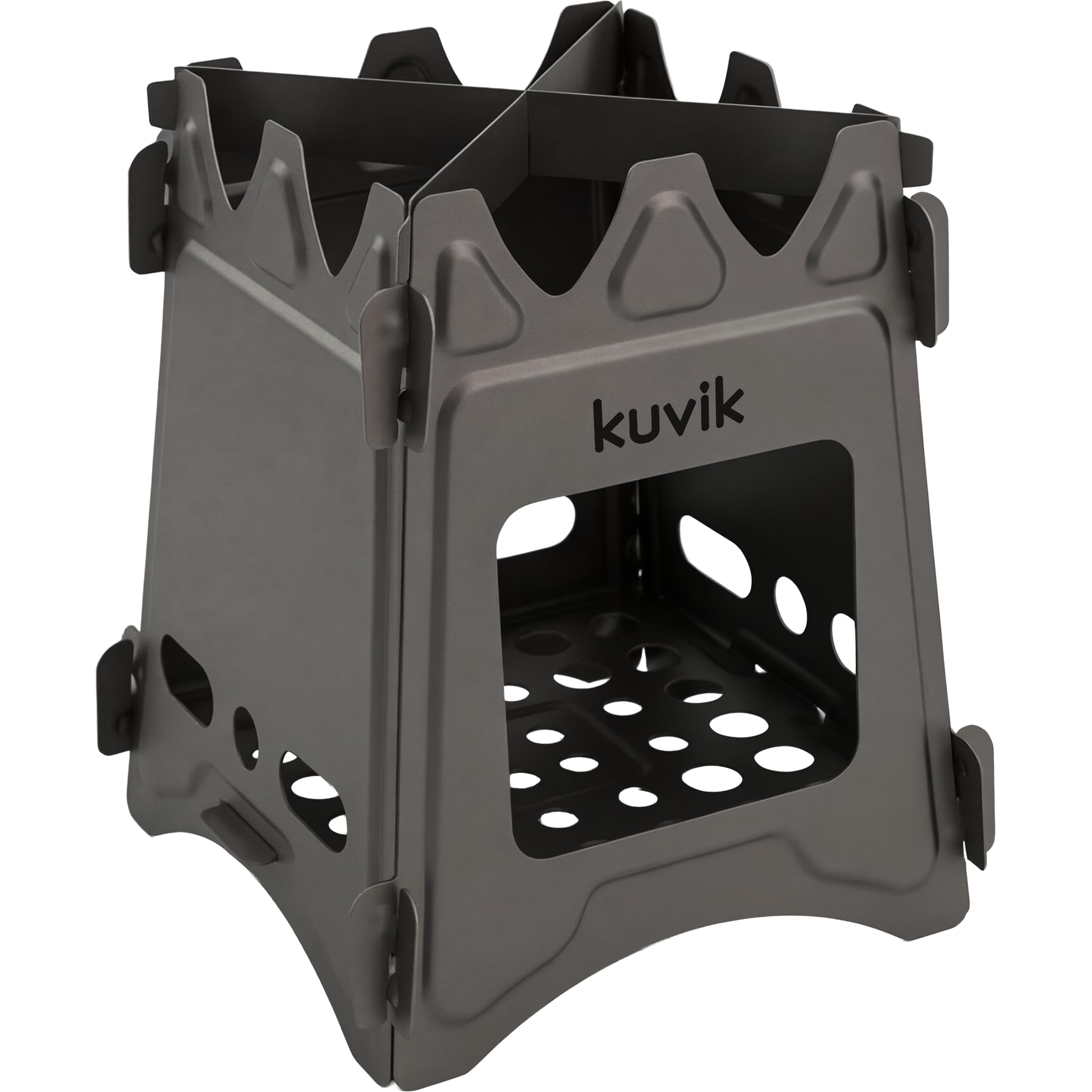
The Kuvik stove exemplifies the ultralight, collapsible wood stove category with a focus on smart engineering. Made from thin, durable titanium panels, it uses a simple tab-and-slot assembly to create a free-standing stove that feels surprisingly solid once constructed. Its major advantage is its packed profile: it collapses to a wafer-thin stack that can slide into the back panel of a backpack or a large pocket, taking up virtually no space.
Performance is typical for a well-ventilated twig stove—it gets hot quickly with good fuel and directs heat upward efficiently. The large opening makes it easy to feed longer sticks in as they burn, reducing the need to constantly process wood into tiny pieces. The included canvas carry case is essential, as it contains the soot and keeps the rest of your gear clean.
It’s a fantastic choice for the gram-conscious backpacker who values fuel independence but isn’t willing to carry the weight or bulk of a stainless steel cylinder like the Solo Stove. It requires the same fire-tending skills and leaves the same soot on your cookware, but it achieves its goal of being the most packable wood-burning option available.
Why it’s great
- Unbeatable packed size, collapsing to a near-flat panel.
- Very lightweight titanium construction.
- Easy to assemble and disassemble with the tab/slot system.
- Large feed opening allows for longer fuel pieces.
Good to know
- Panels can feel delicate compared to welded stainless steel.
- Like all wood stoves, it gets pots very sooty.
- Less inherent wind protection than a cylindrical design.
- Requires a flat, non-flammable surface for safe use.
7. Gas One GS-3400P Dual Fuel Stove
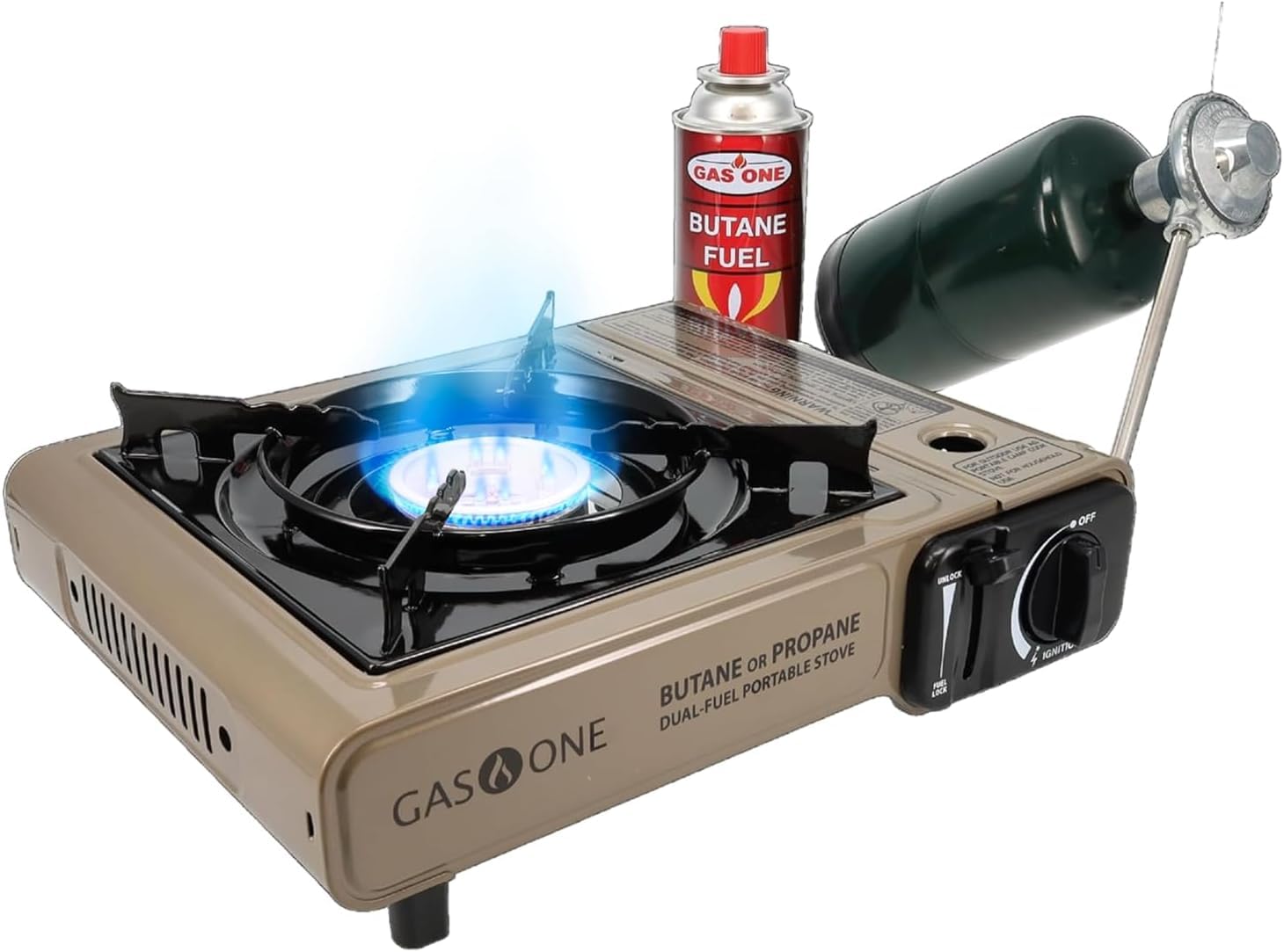
The Gas One GS-3400P bridges the gap between backpacking portability and car camping utility. This single-burner stove is significantly larger and more powerful than typical backpacking models, designed to run on either disposable butane canisters or standard propane cylinders (with the included adapter). This dual-fuel capability provides excellent flexibility, allowing you to use cheap, readily available propane for base camp or keep a compact butane canister for shorter trips.
It features a sturdy stamped steel body, a wide pot support area, and a reliable piezo igniter. The built-in safety mechanisms, like the pressure-sensor cartridge ejection system for butane, add a layer of security. It packs into its own hard plastic carrying case, making it easy to store in a car trunk or garage for emergencies, tailgates, or picnic outings.
While far too heavy for backpacking, it’s an outstanding and affordable choice for car camping, overlanding, or as a backup cooking source during power outages. It offers the cooking experience of a home stove burner in a highly portable, self-contained package.
Why it’s great
- Runs on both butane and propane, maximizing fuel options.
- Powerful burner suitable for real cooking, not just boiling water.
- Includes a handy carry case for storage and transport.
- Excellent value for a capable, portable tabletop stove.
Good to know
- Too heavy and bulky for anything but car-based outings.
- Butane performance drops significantly in cold weather.
- Requires a stable, level surface due to its higher center of gravity.
8. Solo Stove Lite

The original Solo Stove Lite is the product that popularized efficient wood gasification for backpackers. Its double-wall stainless steel design creates a clean, hot burn that is mesmerizing to watch and remarkably effective at boiling water. It’s sized perfectly for a solo adventurer, nesting inside a 900ml pot and boiling a personal portion of water in under ten minutes with good fuel.
The design is elegantly simple, with no moving parts to break. It’s incredibly durable and, because it burns fuel so completely, leaves behind only a fine ash that’s easy to clean out. For those who enjoy the ritual of making a fire and value absolute fuel independence on their solo journeys, the Lite offers a reliable and satisfying experience.
It requires practice to light and maintain efficiently, and it’s not the fastest option. However, its combination of compact size, proven technology, and the pure enjoyment of a miniaturized, high-tech campfire continues to earn it a dedicated following among solo backpackers and bushcraft enthusiasts.
Why it’s great
- Original gasification design burns very cleanly and efficiently.
- Perfect, compact size for a solo hiker and nests in a small pot.
- Extremely durable with a lifetime warranty.
- Provides a truly fuel-free cooking solution.
Good to know
- Boil times are slower than canister stoves and require active tending.
- Small size limits it to solo use or very small group meals.
- Like all wood stoves, it’s useless during fire bans.
- Can be tricky to light in damp conditions without excellent tinder.
9. Fire-Maple Torch Gas Stove
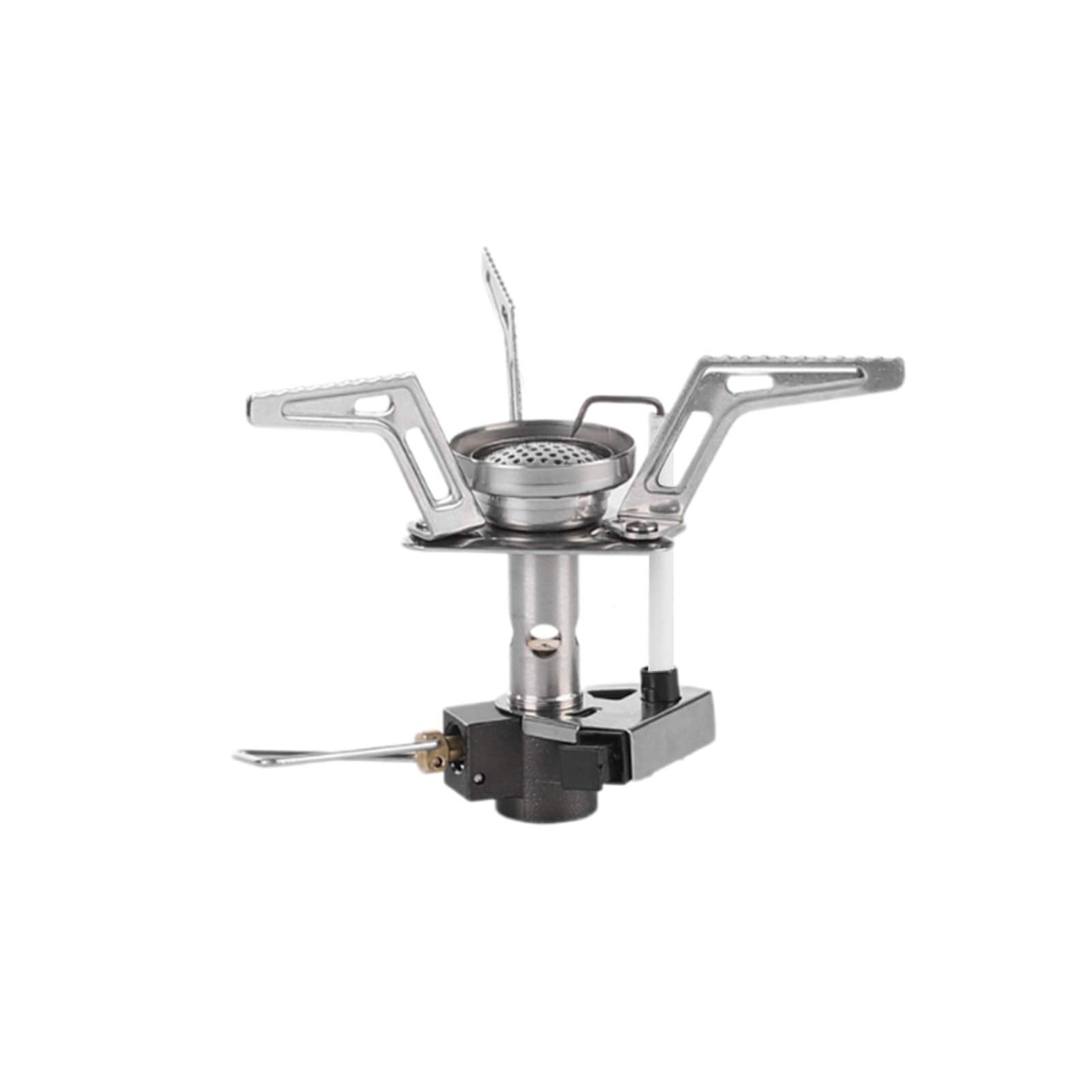
The Fire-Maple Torch is a standout in the entry-level category, offering features and build quality that belie its accessible price point. It’s constructed from stainless steel, giving it a more substantial and durable feel than many budget aluminum stoves. The integrated piezo igniter works reliably, and the slight wind barrier around the burner provides a bit of extra defense in breezy conditions.
It performs admirably, boilingwater quickly and has a good flame adjustment range. For someone new to backpacking stoves or looking for a reliable secondary stove, the Torch delivers excellent value and performance that punches above its class, making it a very smart first purchase.
Why it’s great
- Excellent build quality (stainless steel) for an entry-level stove.
- Reliable built-in piezo igniter adds convenience.
- Good wind resistance and stable flame for its simple design.
- Exceptional value, offering premium features at a budget-friendly price.
Good to know
- Lacks a pressure regulator for performance in very cold temperatures.
- Pot supports are basic and may not grip smooth-bottomed pots as securely.
- Not the absolute lightest option, but a great weight-to-durability balance.
10. BRS 3000T Ultralight Stove

The BRS 3000T is the definitive choice for the ultralight purist where every gram is sacred. Weighing a mere 25 grams, it is astonishingly light and packs down incredibly small. Its titanium and stainless steel construction provides adequate durability for its intended use: boiling water for one person on well-planned trips where weight is the paramount concern.
Don’t let the size fool you—it outputs a powerful, focused flame that boils water remarkably fast. The trade-off for this minimalism is stability and wind resistance. The pot supports are small and the burner head is exposed, making it less ideal for larger pots or gusty conditions. It also lacks a piezo igniter, so a lightweight backup lighter is a mandatory addition to your kit.
This stove is a specialized tool. It’s perfect for the experienced gram-counter who understands its limitations and uses it with a small, stable pot in relatively sheltered conditions. For those users, its weight savings are unmatched, and its performance is more than sufficient.
Why it’s great
- Unbeatable weight—the lightest widely available canister stove.
- Extremely compact, fitting into the smallest of pots.
- Surprisingly powerful heat output for boiling water quickly.
- Budget-friendly entry point into the ultralight category.
Good to know
- Not stable for larger pots; best with small, light cookware.
- Very susceptible to wind due to the open, high burner design.
- No built-in igniter; you must carry a separate fire source.
- Construction feels delicate and requires careful handling.
11. AOTU Portable Camping Stove
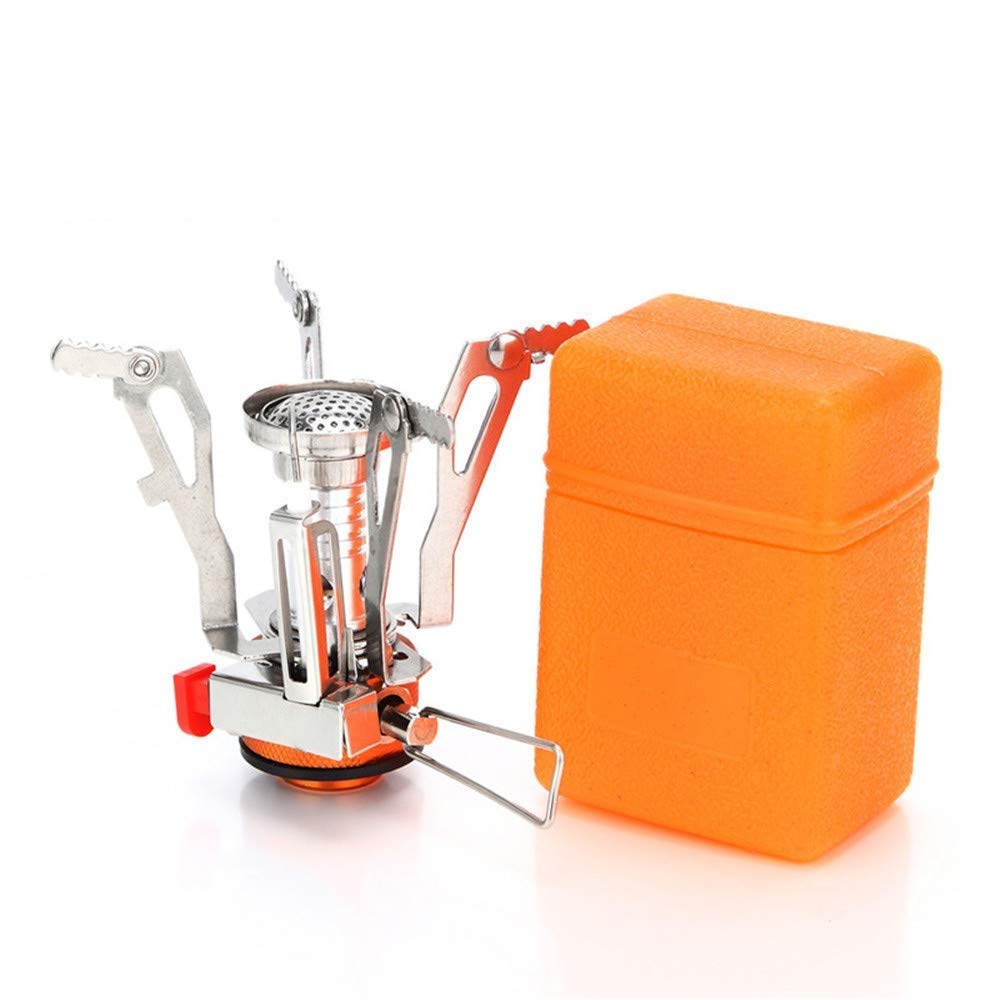
The AOTU stove is the archetypal budget workhorse, proving that you don’t need to spend much to get a functional, reliable canister stove. It comes with all the basics: a piezo igniter, a stable four-legged support system with flip-out gripper teeth, and a compact plastic storage case. For its ultra-low price, it delivers consistent performance for boiling water and simple cooking.
It’s remarkably small and light, making it easy to stash in a backpack as a backup stove or for occasional use. The aluminum construction keeps weight down, and the honeycomb windproof net does a decent job of protecting the flame in mild breezes. Many users are shocked at how well it performs given the cost, often comparing it favorably to stoves costing several times more.
The compromises are in refinement and durability. The pot supports don’t lock positively in place, and the plastic case is flimsy. However, as an entry point into backpacking or a reliable spare to leave in the car or boat, the AOTU offers staggering value and undeniable utility.
Why it’s great
- Extremely affordable, making backpacking accessible to everyone.
- Includes piezo ignition and a storage case.
- Surprisingly stable and effective for basic boiling tasks.
- Tiny packed size disappears into any pack.
Good to know
- Build quality and materials are basic, as expected for the price.
- Pot support arms can be wobbly and don’t lock securely.
- Not designed for long-term heavy use or extreme conditions.
- Plastic storage case offers minimal protection.
Understanding the Specs
Output (Watts/BTU)
This measures the stove’s maximum heat power. A higher wattage (e.g., 3000W) or BTU (e.g., 10,000 BTU) generally means faster boil times. However, efficiency matters more than raw power. A well-designed burner that directs heat into the pot (like a heat exchanger system) will boil water faster than a higher-output but less efficient burner. For most solo/duo use, 2500-3000W is ample.
Fuel Type & Regulation
Canister stoves use pre-mixed isobutane/propane fuel. A stove with a pressure regulator (like the SOTO WindMaster) maintains a consistent flame as the canister pressure drops from use or cold, offering better performance. Non-regulated stoves are simpler but can flare up initially and weaken as the canister empties. Wood stoves have no regulated output—their power depends entirely on fuel quality and your fire-tending skill.
FAQ
What is the most reliable type of backpacking stove?
Can I use a wood burning stove anywhere?
How do I make my canister stove work in cold weather?
Is an integrated system like a Jetboil clone worth it?
Final Thoughts: The Verdict
For most people, the best backpacking stove winner is the SOTO WindMaster because its pressure regulator and superior wind resistance deliver reliable performance in the variable conditions where you actually need a stove. If you want proven, no-fuss reliability in a tiny package, grab the MSR PocketRocket 2. And for ultimate fuel independence and a pack-flat design, nothing beats the Überleben Stöker.

Mo Maruf
I created WellFizz to bridge the gap between vague wellness advice and actionable solutions. My mission is simple: to decode the research and give you practical tools you can actually use.
Beyond the data, I am a passionate traveler. I believe that stepping away from the screen to explore new environments is essential for mental clarity and physical vitality.