Our readers keep the lights on and my smoothie glass nicely filled. As an Amazon Associate, I earn from qualifying purchases.
A cold night on the trail doesn’t just ruin sleep—it drains the energy you need for the next day’s miles. Choosing a backpacking sleeping pad means betting your rest on a slab of foam or a few ounces of air, and getting that decision wrong leads to shivering, sore hips, and a pack that’s heavier than it needs to be.
I’m Mohammad Maruf — the founder and writer behind WellFizz. After combing through hundreds of hours of buyer feedback and detailed product specs across the to range, I’ve zeroed in on the thermal performance, packed size, and durability metrics that actually matter for backcountry sleep.
This guide breaks down seven leading contenders—from closed-cell foam workhorses to ultralight inflatables with proven R-values—so you can confidently pick the best backpacking sleeping pad for your unique balance of weight, warmth, and comfort.
How To Choose The Best Backpacking Sleeping Pad
The perfect backpacking pad balances three competing priorities: weight, insulation, and comfort. A pad that excels in two areas but fails in the third will leave you exhausted or cold. Understanding the core specs means you can pick a pad purpose-built for the specific conditions you’ll face on the trail.
R-Value: Your Defense Against Ground Chill
R-value measures how well the pad resists heat loss to the ground. A value of 2.0 is fine for summer car camping, but anything below 4.0 will leave you cold when temperatures drop near freezing. Three-season backpackers should target R-values between 4.0 and 5.0, while winter campers need 5.0 or higher. Buyer misstep: assuming thickness equals warmth—uninsulated air pads lose heat even at 3 inches thick.
Packed Size and Weight: The Ounce-Counting Reality
A 2-pound pad that feels luxurious in camp becomes a burden after ten miles. Ultralight inflatables now hover around 13 to 20 ounces, while foam pads are lighter but bulkier. The key spec to check is the packed volume (often given in liters or inches). A pad that compresses to the size of a 1-liter water bottle earns its place in a frameless pack, while a foam pad strapped to the outside adds zero interior space but limits your lashing options.
Comfort Profile: Side Sleepers vs. Back Sleepers
Side sleepers need at least 3.5 inches of thickness to keep hips from “bottoming out” against the ground. Look for vertical baffle designs or foam pads with enough plushness to conform to body contours. Back sleepers can get away with thinner pads (2.5 to 3 inches) and often prefer the stability of a closed-cell foam surface. The width also matters—pads narrower than 20 inches can feel restrictive for broad-shouldered adults.
Quick Comparison
On smaller screens, swipe sideways to see the full table.
| Model | Category | Best For | Key Spec | Amazon |
|---|---|---|---|---|
| Big Agnes Rapide SL | Insulated Inflatable | Three-season backpackers wanting premium comfort | R-Value 4.8 / 3.5″ Thick | Amazon |
| Therm-a-Rest NeoAir Xlite NXT | Ultralight Inflatable | Gram-counters and thru-hikers | R-Value 4.5 / 11.5 oz | Amazon |
| Exped Ultra 1R | Ultralight Inflatable | Summer and fast-and-light missions | 3″ Thick / 20D Fabric | Amazon |
| TREKOLOGY UL R7 | Insulated Inflatable | Cold-weather campers on a mid-range budget | R-Value 7.2 / 4″ Thick | Amazon |
| Naturehike Ultralight | Insulated Inflatable | Value hunters seeking 3-season warmth | R-Value 4.6 / 27 oz | Amazon |
| Sea to Summit Camp Self-Inflating | Self-Inflating Foam | Car campers and scouts wanting durability | R-Value 4.2 / 1.5″ Thick | Amazon |
| NEMO Switchback Foam | Closed-Cell Foam | Minimalists and emergency-ready packers | R-Value 2.0 / 14.8 oz | Amazon |
In‑Depth Reviews
1. Big Agnes Rapide SL – Insulated Sleeping Pad

The Big Agnes Rapide SL hits a sweet spot few pads can claim: a 4.8 R-value, 3.5 inches of thickness, and a sub-2-pound carry weight. The quilted top and offset I-Beam construction create a cushioned, pillowy surface that side sleepers rave about—the 4.25-inch outer chambers cradle your body and prevent that “rolling off the edge” sensation that haunts narrower pads.
The high-volume valve with micro-adjustment lets you fine-tune firmness without losing air, and the included Pumphouse sack inflates the pad in about 90 seconds without introducing moisture. The double ripstop nylon with aviation-grade TPU lamination holds up well against rocky tent sites, and the repair kit gives you field insurance against punctures.
Several long-term users report using the Rapide SL for weeks on end—including Grand Canyon trips—without any air loss or durability issues. The pad packs slightly larger than a 1-liter bottle, but the comfort-to-weight ratio is among the best you’ll find for true three-season use. If you prioritize deep, restorative sleep after long miles, this is the pad to beat.
Why it’s great
- Quilted top minimizes noise and maximizes comfort for side sleepers
- High 4.8 R-value handles shoulder-season lows without extra foam layers
- Pumphouse sack enables moisture-free inflation in under 2 minutes
Good to know
- Packs a bit larger than ultralight competitors like the Therm-a-Rest NeoAir
- Not the warmest option for deep winter camping below 15°F
2. Therm-a-Rest NeoAir Xlite NXT

The NeoAir Xlite NXT remains the benchmark for ultralight backpacking pads for good reason. At just 11.5 ounces in the Regular size and packing down to roughly the volume of a 1-liter bottle, it shaves critical weight without sacrificing warmth. The 4.5 R-value, thanks to reflective ThermaCapture technology and Triangular Core Matrix construction, keeps you comfortable well into freezing conditions.
The WingLock valve is a highlight—twist to open for easy inflation, twist again for rapid deflation. The 3-inch thickness provides enough clearance for most side sleepers, though at 20 inches wide, broader-shouldered users may find the regular size a bit snug. The 30D ripstop nylon exterior is lightweight but demands careful site selection to avoid punctures.
Owners consistently note that earlier crinkle noise complaints have been largely resolved in the NXT generation. The pad inflates reliably with the included pump sack, and it’s durable enough for typical tent floors. If your primary goal is minimizing pack weight and volume for long-distance travel, the NeoAir Xlite NXT is still the gold standard.
Why it’s great
- Class-leading weight-to-warmth ratio at 11.5 oz with 4.5 R-value
- WingLock valve allows fast, controlled inflation and zero-effort deflation
- Packs down remarkably small for a fully insulated 3-inch pad
Good to know
- Regular width (20″) may feel narrow for broad-shouldered side sleepers
- Thin 30D fabric requires mindful groundsheet use on rocky terrain
3. Exped Ultra 1R – Ultralight Inflatable Pad
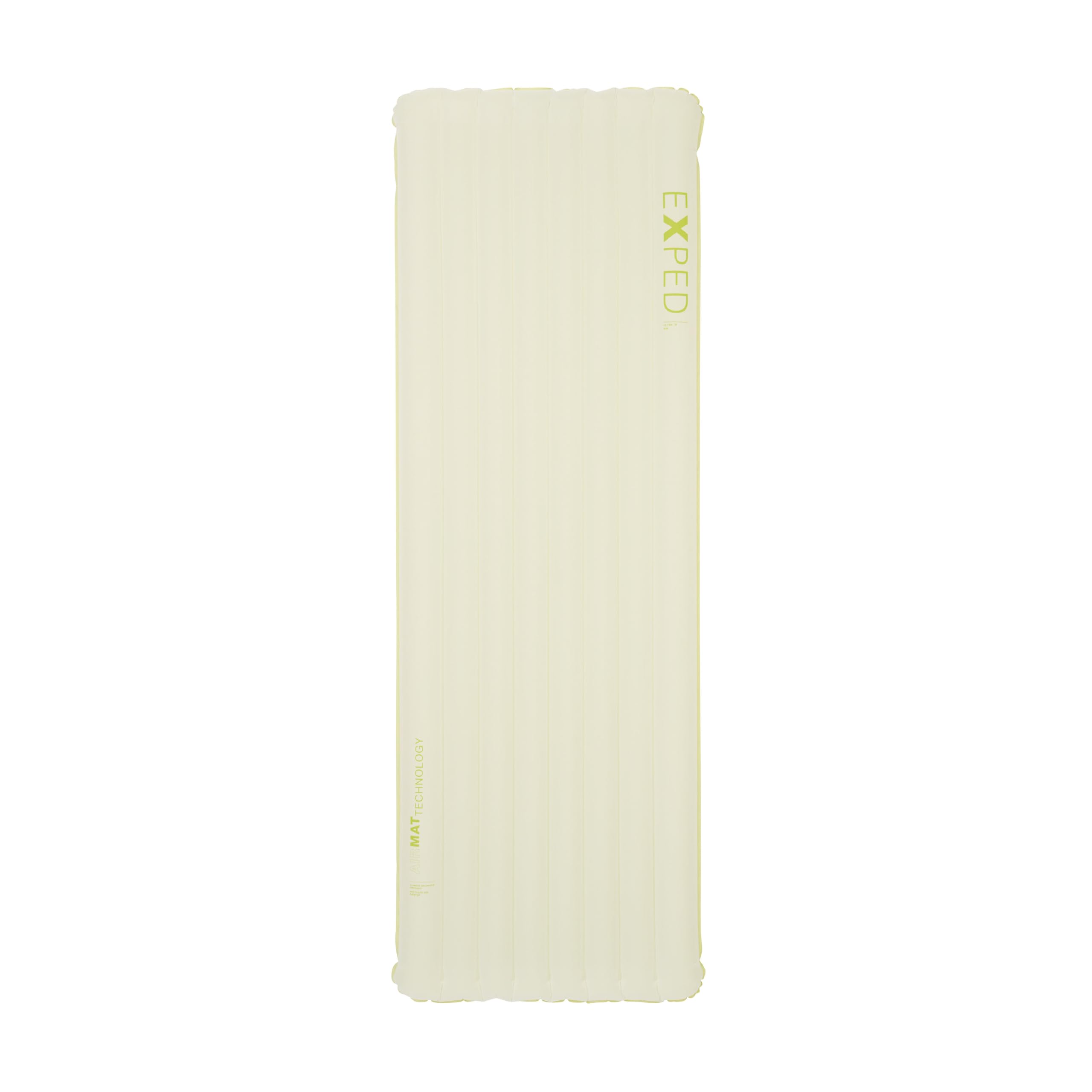
Exped’s Ultra 1R is purpose-built for fast-and-light summer missions where every ounce counts. The single layer of air-insulated chambers provides 3 inches of comfort, and the Comfort Cradle side rails keep you centered without adding bulk. At just over 1 pound, it’s an easy choice for thru-hikers and bikepackers who chase minimal pack volume above all else.
The 20D recycled ripstop face fabric is impressively soft to the touch and uses less water and energy during production than conventional materials. The Schnozzel Pumpbag is one of the best inflation sacks on the market—four quick fills and the pad is ready, with zero moisture introduced into the baffles. The dual-valve system also makes deflation and pack-up remarkably fast.
Users consistently praise the Exped for its ease of inflation and stable sleep surface—hips never touched ground during tests, even for side sleepers. However, the 1R offers minimal insulation (no R-value listed for top-tier cold), so it’s best reserved for temperatures above 40°F. If your adventures skew warm-weather and light, this is a superb, environmentally-conscious choice.
Why it’s great
- Incredibly easy inflation via Schnozzel Pumpbag—four fills is all it takes
- Comfort Cradle side rails effectively prevent roll-off on uneven ground
- Recycled 20D fabric reduces environmental footprint without sacrificing durability
Good to know
- Lacks sufficient R-value for three-season use below 40°F
- 3-inch thickness is adequate for most, but side sleepers may prefer taller options
4. TREKOLOGY UL R7 – Insulated Sleeping Pad
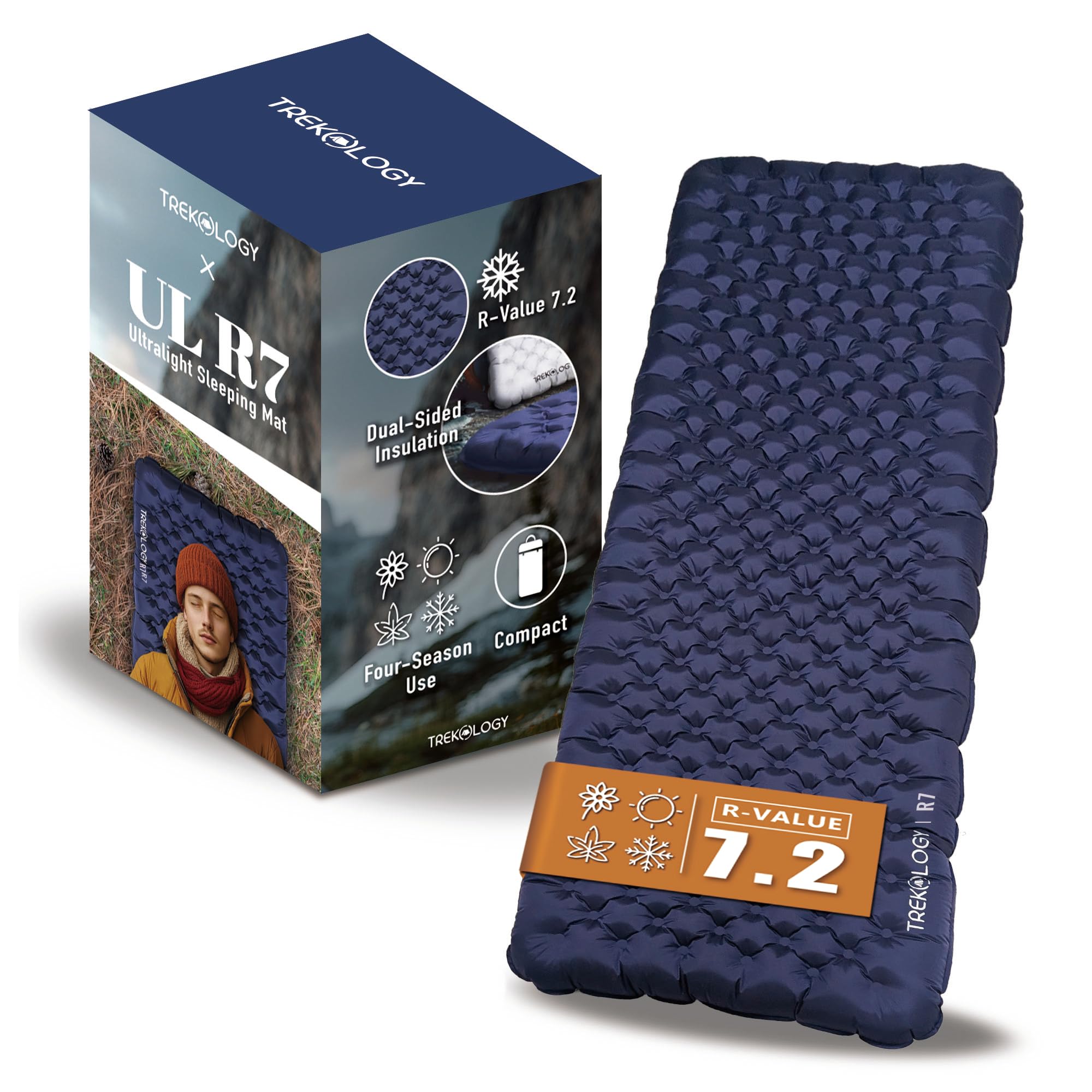
The TREKOLOGY UL R7 is an outlier in the mid-range category: an SGS-certified 7.2 R-value at a weight well under 2 pounds. The 4-inch thickness is generous enough to prevent bottoming out for side sleepers, and the 40D ripstop nylon with TPU coating gives it a rugged feel that inspires confidence in rocky campsites.
The patented anti-leak valve works reliably, and the pad supports up to 330 pounds without sag. Users have reported sleeping warmly in bridge hammocks without underquilts during low-30°F nights—a testament to the aggressive insulation design. The packed size is comparable to a water bottle, making it packable for all but the most minimalist frameless packs.
The main caveat is that the R-value claim has drawn skepticism from a few experienced campers who felt cool spots under their hips near freezing. Still, for the price, the insulation-to-weight ratio is exceptional. If you regularly camp into freezing temperatures on a budget, the TREKOLOGY UL R7 delivers four-season warmth without the premium price tag.
Why it’s great
- Exceptional 7.2 R-value at a price far below premium winter pads
- 4-inch thickness provides generous ground clearance for side and stomach sleepers
- 40D fabric with TPU coating resists punctures better than ultralight alternatives
Good to know
- Some users question the R-value accuracy below 25°F
- Not the lightest option for ultralight backpacking at just under 2 lbs
5. Naturehike Ultralight Sleeping Pad
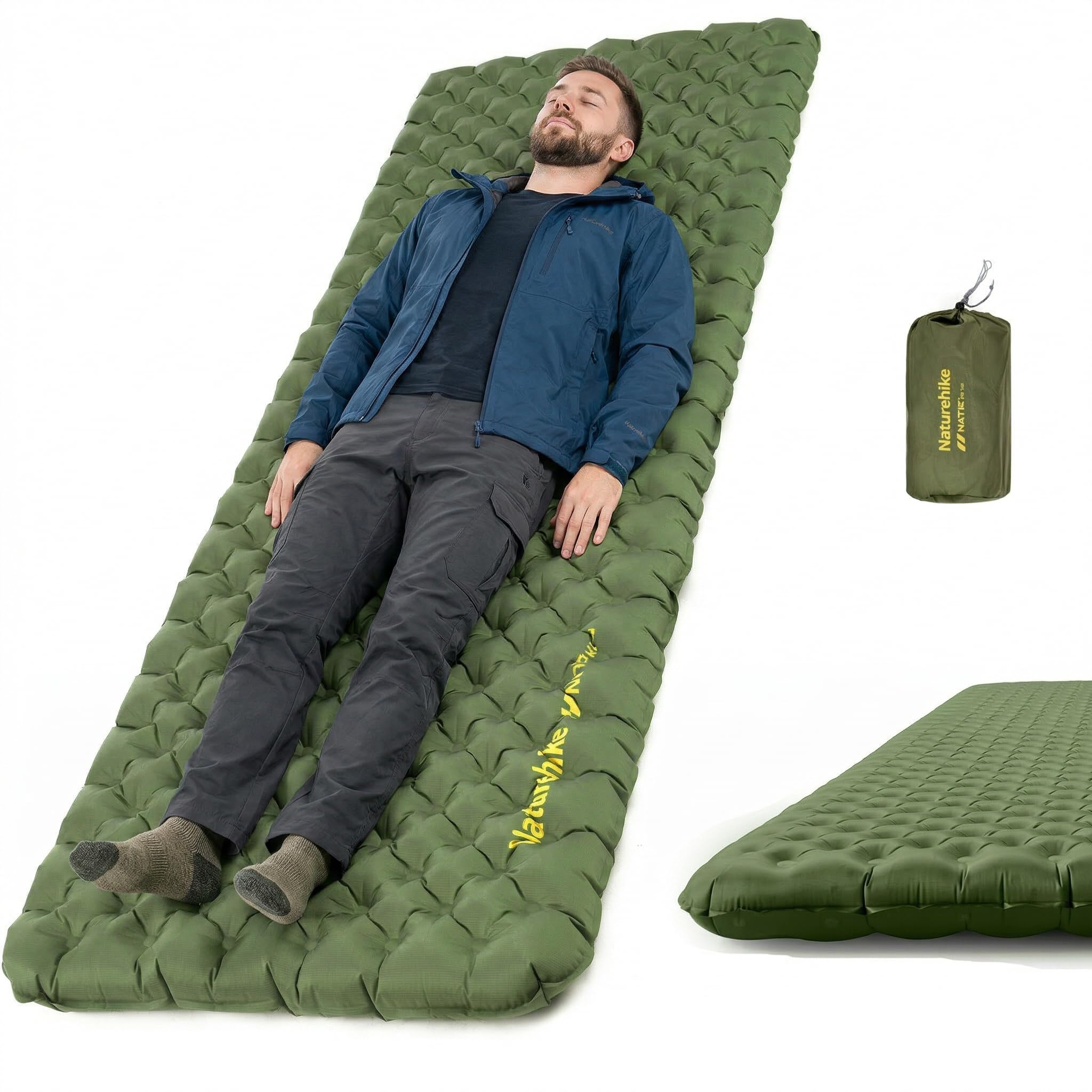
Naturehike has carved a reputation for value-oriented gear that punches above its price class, and this ultralight pad is a prime example. The eight-layer aluminum molded insulation structure delivers a 4.6 R-value—enough for temperatures down to -4°F according to the manufacturer—while keeping the weight at 27 ounces and the packed size small enough for most backpacks.
The 20D nylon with TPU lamination provides decent puncture resistance, and the patented dual-vent valve allows directional inflation and rapid deflation without leakage. The 3.2-inch thickness (8 cm) with a punching-point structure distributes weight evenly, creating a supportive surface that several users have rated superior to much more expensive Sea to Summit models in terms of warmth and stability.
The included inflation bag doubles as a dry bag, and the pad comes with a repair kit for field fixes. Some users noted a slight noise from the aluminum layers during movement, but the warmth-to-weight ratio is exceptional at this price tier. For budget-conscious backpackers seeking three-season insulation without major compromises, the Naturehike is a smart call.
Why it’s great
- Excellent 4.6 R-value for the weight and price—warmer than many competitors at double the cost
- Punching-point baffle design provides stable, even support without pressure points
- Inflation bag doubles as a useful dry bag for gear organization
Good to know
- Aluminum insulation layers can produce a slight crinkling sound during movement
- At 27 oz, it’s not the lightest option for gram-obsessed thru-hikers
6. Sea to Summit Camp Self-Inflating Foam Mat

The Sea to Summit Camp Self-Inflating mat is a straightforward, bombproof option that prioritizes durability and ease of use over ultralight specs. The 1.5-inch-thick foam core with insulated coring provides a 4.2 R-value, and the 75D polyester face fabric is tough enough to withstand years of scout outings and car-camping abuse without punctures.
The multi-function reversible valve allows one-way deflation for rapid pack-up and fine-tuning of air pressure. The tapered Regular size (72 x 20 inches) weighs 1.7 pounds and packs to 6 x 10.5 inches—a volume that’s manageable for backpacking, though heavier than inflatable alternatives. The PillowLock patches are a nice touch for keeping a Sea to Summit pillow in place overnight.
Owners consistently praise this pad for its longevity and noise-free operation. It’s not the warmest or the lightest, but it never lets you down. For campers who want a reliable, easy-to-use pad that doesn’t require careful site selection to avoid punctures, and who don’t mind a slight weight penalty, this self-inflating design is a proven workhorse.
Why it’s great
- 75D polyester fabric is exceptionally resistant to punctures and abrasion
- Self-inflating foam design eliminates the need for a pump sack in the field
- Multi-function valve prevents re-inflation as you pack up, saving time breaking camp
Good to know
- At 1.7 lbs, it’s noticeably heavier than air-only pads of similar R-value
- 1.5-inch thickness may not provide enough ground clearance for side sleepers
7. NEMO Equipment Switchback Foam Sleeping Pad
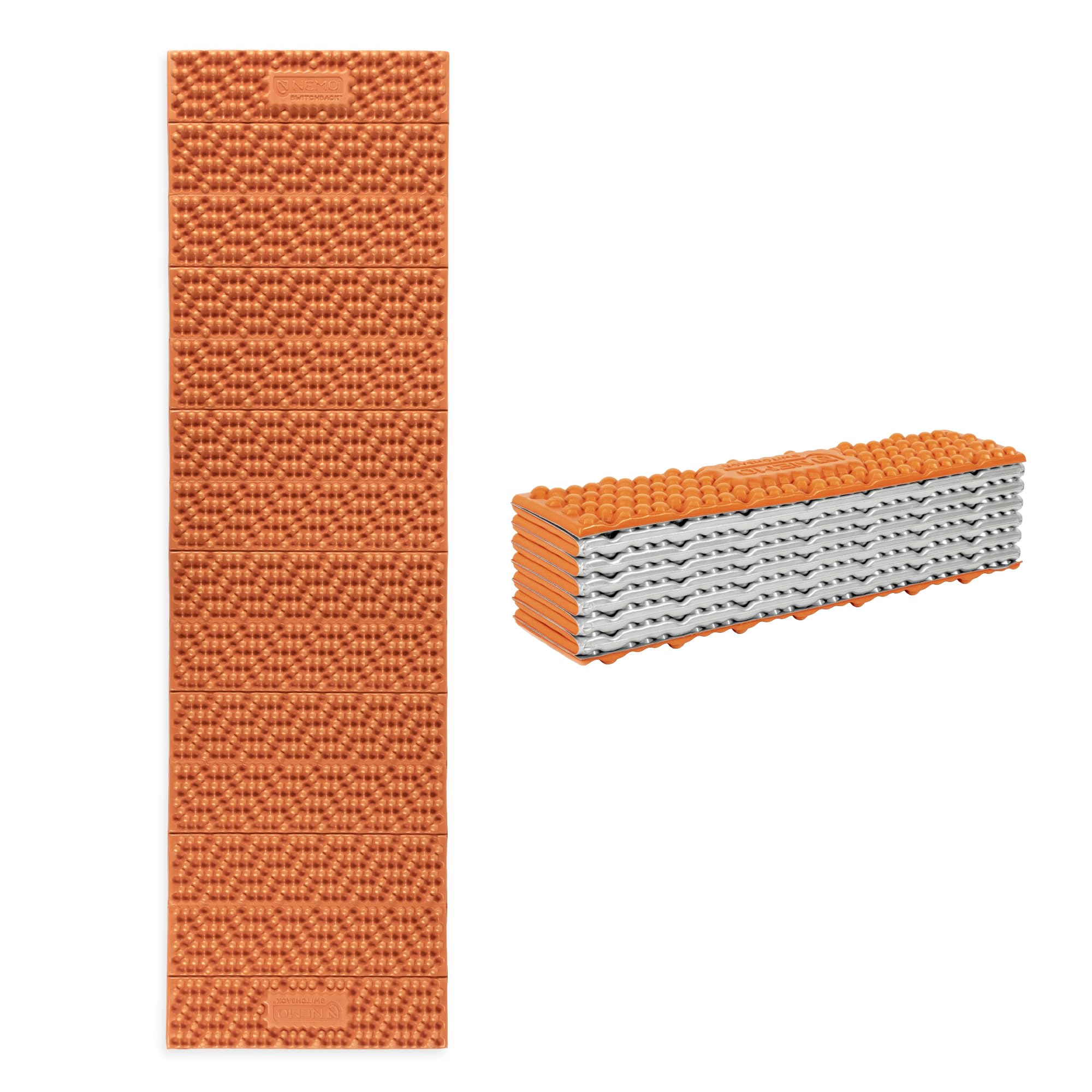
The NEMO Switchback is the modern evolution of the classic closed-cell foam pad. The hexagonal nesting pattern uses taller, wider nodes to provide significantly more plushness than traditional egg-crate foam, and the dual-density Axiotomic foam layers a supple surface on top of a resilient base for improved comfort. Weighing just 14.8 ounces, it’s one of the lightest full-length sleeping pads you can carry.
The metallized thermal reflective film on the bottom bounces body heat back at you, giving an R-value of 2.0—sufficient for summer use and adequate for three-season camping when paired with an insulated inflatable pad underneath. Many owners cut the full-size pad to torso length and use the offcuts as sit pads or pet beds, maximizing utility for minimal weight.
As a closed-cell foam pad, the Switchback is virtually indestructible. It can be strapped to the outside of a pack, used as a gear seat at camp, and deployed in seconds without any inflation. The trade-off is bulk—it takes up significant space when rolled—and it will never be as comfortable as a 4-inch inflatable. For ultralight purists, emergency kits, and anyone who values absolute reliability over luxury, it’s a masterclass in minimalist design.
Why it’s great
- Weighs only 14.8 oz and can be strapped outside the pack for easy access
- Hexagonal nodes with reflective film provide real warmth for an uninsulated foam pad
- Indestructible—no risk of punctures, no inflation needed, lasts for years
Good to know
- Bulkier than rolled inflatable pads, making interior pack space tight
- 2.0 R-value limits use to summer and mild conditions without additional insulation
FAQ
Can I use a closed-cell foam pad for winter camping?
How do I properly inflate an insulated sleeping pad without moisture damage?
Why does my inflatable sleeping pad lose air overnight? Is it a leak?
Is a 3-inch thick pad enough for a side sleeper?
Can I repair a puncture in my TPU-coated sleeping pad in the field?
Final Thoughts: The Verdict
For most users, the best backpacking sleeping pad winner is the Big Agnes Rapide SL because it combines a high 4.8 R-value, 3.5 inches of plush thickness, and a weight under 2 pounds into a single package that side sleepers and back sleepers both love. If you want the absolute lightest pack weight and smallest volume for thru-hiking, grab the Therm-a-Rest NeoAir Xlite NXT. And for winter campers on a budget who refuse to compromise on insulation, nothing beats the TREKOLOGY UL R7 with its 7.2 R-value and rugged 40D construction.

Mo Maruf
I created WellFizz to bridge the gap between vague wellness advice and actionable solutions. My mission is simple: to decode the research and give you practical tools you can actually use.
Beyond the data, I am a passionate traveler. I believe that stepping away from the screen to explore new environments is essential for mental clarity and physical vitality.