Our readers keep the lights on and my smoothie glass nicely filled. As an Amazon Associate, I earn from qualifying purchases.
A stiff, narrow toe box is the fastest way to ruin a multi-day trek. When you’re carrying a pack over uneven terrain, your feet swell, and a shoe that pinches on day one will leave you hobbling by mile ten. The difference between a great backpacking shoe and a mediocre one is measured in millimeters of toe room, grams of weight, and the specific lug pattern that keeps you upright on wet granite.
I’m Mohammad Maruf — the founder and writer behind WellFizz. I analyze consumer reviews, technical specs, and long-term durability reports to identify which models actually hold up under real trail conditions for women.
After combing through thousands of verified reviews and comparing traction compounds, cushioning stacks, and waterproof membranes, I’ve built a clear picture of the best backpacking shoes for women that balance weight, support, and dependability across rocky, wet, and dusty trails.
How To Choose The Best Backpacking Shoes For Women
Women’s feet differ from men’s in heel width, arch length, and instep volume, which means unisex or men’s shoes often fit poorly under a load. A women-specific last and a proper toe box shape are non-negotiable for preventing blisters and black toenails on multi-day trips.
Toe Box Volume and Shape
A rounded or foot-shaped toe box allows your toes to splay naturally when descending steep grades. Shoes with pointed or tapered toe boxes increase friction, especially on downhill sections where your foot slides forward. Models like the ALTRA Lone Peak are built around a wide, foot-shaped last, while others like the Merrell Moab offer a more traditional rounded fit.
Outsole Traction and Lug Depth
Lug depth measured in millimeters directly correlates with grip on loose soil and scree. Deeper lugs (4mm or more) bite into soft ground but can feel slippery on wet rock. Vibram Megagrip and similar compounds use a sticky rubber formula that holds on slick surfaces even with moderate lug depth. For backpacking that mixes trail and talus, a balanced lug with chevron patterning offers the best compromise.
Waterproofing vs. Breathability
Waterproof membranes like Gore-Tex, OutDry, and B-Dry keep stream crossings from soaking your socks, but they also trap heat and moisture. On summer trips above 70°F, your feet sweat more inside a waterproof shoe than they would in a mesh trail runner. For wet climates or spring/fall trips, waterproof is a clear win. For hot, arid trails, a quick-draining mesh shoe dries faster and keeps your feet cooler.
Cushioning and Stability
A higher stack height (midsole thickness) provides plush comfort under a full pack but reduces ground feel and stability on uneven terrain. Lower stack shoes (20-25mm) offer better proprioception for technical moves but can feel harsh after eight miles. Mid-range stack heights (28-32mm) with a rock plate strike the best balance for overnight backpacking.
Quick Comparison
On smaller screens, swipe sideways to see the full table.
| Model | Category | Best For | Key Spec | Amazon |
|---|---|---|---|---|
| Merrell Antora 3 | Low-Top Hiker | Day hikes & light overnight trips | 1.5 lbs per pair, rocker sole | Amazon |
| Brooks Caldera 8 | Trail Runner | Ultra-light backpacking on trails | 32mm stack, DNA Loft v3 cushion | Amazon |
| Oboz Sawtooth II | Low Hiker | Sturdy support for uneven terrain | 15.7 oz each, B-Dry waterproof | Amazon |
| Columbia Peakfreak II Outdry | Low Hiker | Wet trail conditions | OutDry waterproof, wide toe box | Amazon |
| ALTRA Lone Peak 8 | Trail Runner | Wide feet & long rocky miles | 25mm stack, FootShape toe box | Amazon |
| Columbia Konos TRS Outdry | Mid Hiker | All-day comfort with ankle support | Outdry waterproof, Techlite+ midsole | Amazon |
| Merrell Moab 3 Waterproof | Low Hiker | Reliable all-round backpacking shoe | 2.09 lbs per pair, Vibram TC5+ | Amazon |
| KEEN Targhee 4 Mid | Mid Boot | Ankle protection on rough terrain | KEEN.Dry waterproof, 4mm multi-directional lugs | Amazon |
| Danner Mountain 600 | Mid Boot | Long-distance mountain backpacking | Vibram Megagrip, 4.5mm lugs | Amazon |
In‑Depth Reviews
1. ALTRA Women’s Lone Peak 8 Trail Running Shoe
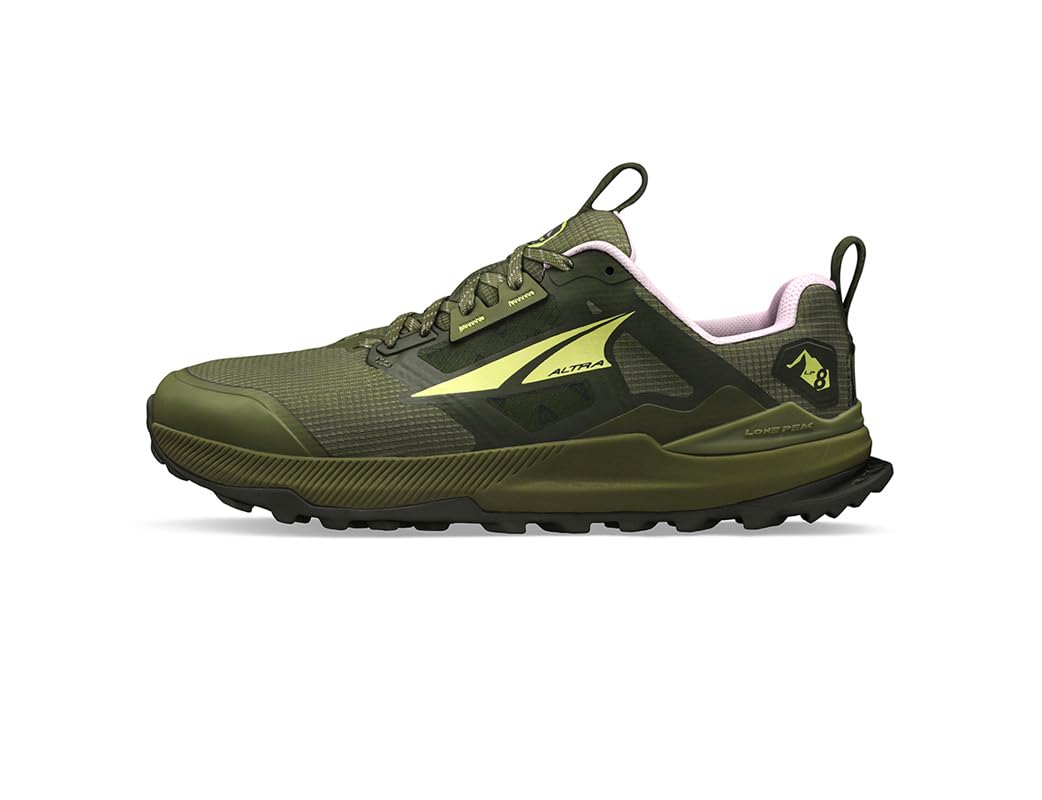
The ALTRA Lone Peak 8 is the gold standard for women who need a foot-shaped toe box that lets toes spread naturally. Verified reviewers consistently report that this design eliminates black toenails and hiker’s toe on steep, rocky trails exceeding five miles. The 25mm stack height with a balanced cushion feel provides enough protection for a loaded pack without sacrificing ground feel on technical sections.
MaxTrac rubber outsole with chevron lugs delivers confident grip on loose dirt, scree, and dry rock. The TrailClaw canted lugs under the forefoot provide extra biting traction on uphill grades. Multiple reviewers mention wearing multiple pairs over years, a strong indicator of consistent sizing and long-term satisfaction. The shoe also features a gaiter trap with hook-and-loop compatibility for dusty or snowy conditions.
The trade-off for the wide toe box is a loose midfoot for narrow-footed hikers. Those with very low-volume feet may need to cinch the laces tighter or add a thicker insole. The breathable mesh upper collects trail dust easily, but a quick rinse restores the color. For women who prioritize natural toe splay and blister prevention on long miles, the Lone Peak 8 is the clear winner.
Why it’s great
- Foot-shaped toe box eliminates hiker’s toe and pinching on descents
- Consistent sizing across multiple generations of the same model
- Gaiter-compatible design adds versatility for snow and scree
Good to know
- Midfoot runs wide for narrow feet; may require lace adjustments
- Light-colored mesh uppers show dirt easily
2. Danner Mountain 600 Hiking Boots
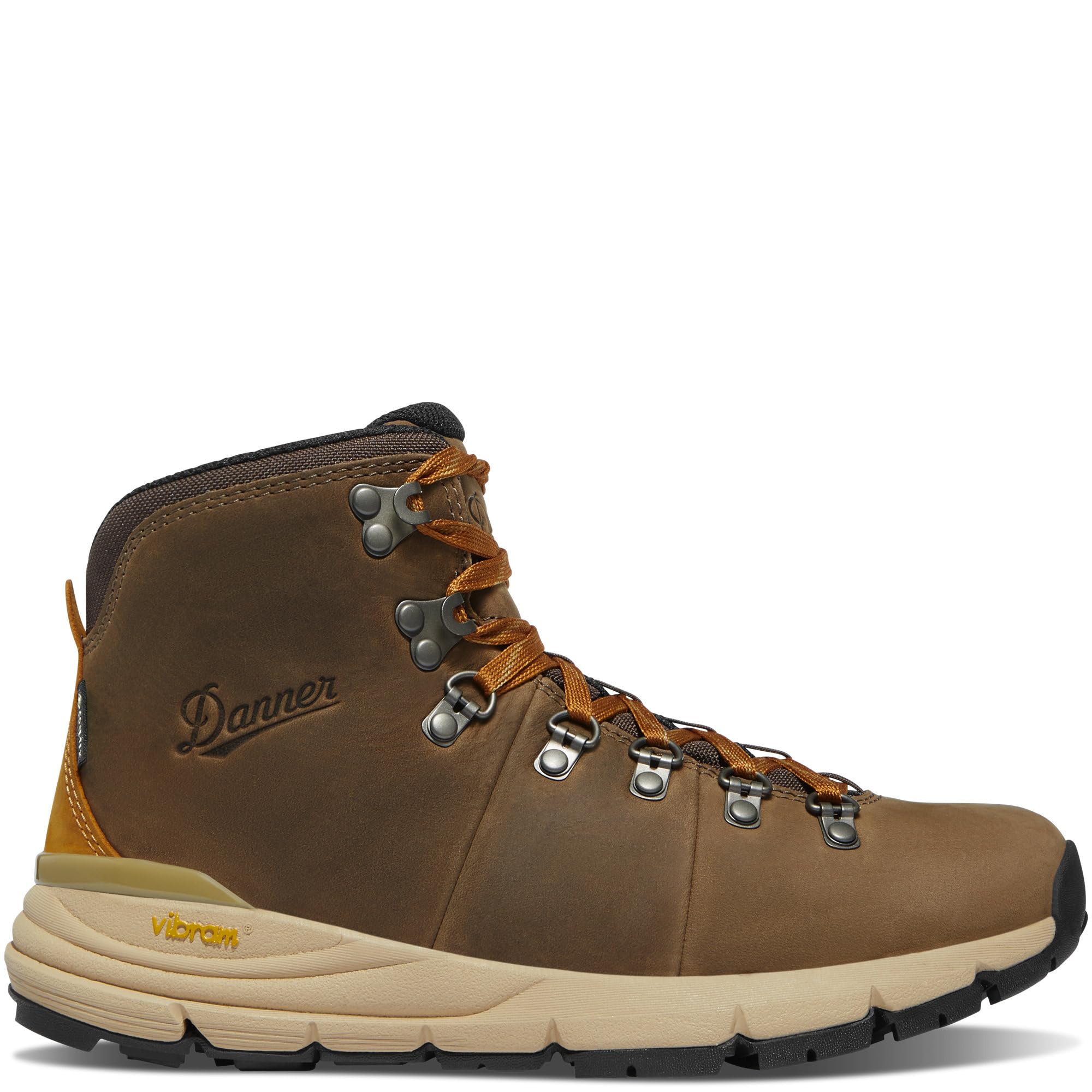
The Danner Mountain 600 pairs a classic suede leather upper with a modern Vibram Megagrip outsole, creating a boot that handles wet granite and loose talus with authority. Verified reviewers report completing 20-mile days with over 5,000 feet of elevation gain without a single traction concern. The triple-density footbed provides arch support that suits medium to high arches right out of the box, with no break-in period required.
The waterproof Danner Dry liner keeps moisture out while allowing some breathability, though reviewers note the suede upper runs warm in summer conditions. The Vibram outsole features 4.5mm lugs that bite into soft duff and mud while the Megagrip compound sticks to slick rock. The mid-height cut offers substantial ankle support without feeling restrictive, a balance that mountain backpackers appreciate.
Durability concerns appear in a small number of reviews, with one user noting the leather split at an eyelet after nine months of heavy use. The boot runs true to size for most, but women with narrow heels may experience slight heel slip. For backpackers tackling technical mountain routes where every step on wet rock matters, the Danner Mountain 600 delivers grip and support that justify its position at the top of the premium tier.
Why it’s great
- Vibram Megagrip provides exceptional hold on wet rock and granite
- No break-in needed; comfortable immediately for long days
- Triple-density footbed offers strong arch support for high-arched feet
Good to know
- Leather upper runs warm in hot summer conditions
- Occasional durability issues at eyelet points after heavy use
3. Merrell Women’s Moab 3 Waterproof Hiking Shoe

The Merrell Moab 3 Waterproof is the most recognized name in budget-friendly backpacking footwear for good reason. The Vibram TC5+ outsole with 4mm lugs provides reliable traction on mixed terrain, and the M Select DRY membrane keeps feet dry in stream crossings and rain. Reviewers consistently note the shoe fits true to size and requires no break-in, a rare combination at this price point.
The molded nylon arch shank offers underfoot protection from sharp rocks without adding excessive stiffness. The EVA foam midsole is firm but supportive, which some reviewers find less plush than premium models. The padded tongue and collar provide comfort around the ankle without restricting movement. Several long-term reviewers report the shoe holding up well past eight months of regular use, though the outsole shows wear faster on abrasive granite.
A subset of reviewers mention the sole feels hard underfoot, particularly for those accustomed to high-cushion shoes. The insoles are removable and can be swapped for custom orthotics, which partially addresses this concern. For backpackers who want a proven, reliable shoe without spending for premium features, the Moab 3 delivers consistent performance across a wide range of conditions.
Why it’s great
- Proven outsole and waterproofing at a reasonable price
- No break-in period required; comfortable from the first mile
- Removable insole accommodates custom orthotics
Good to know
- Firm midsole may feel harsh for those preferring plush cushioning
- Outsole wears faster on granite compared to premium rubber compounds
4. Brooks Women’s Caldera 8 Ultra Trail Running Shoe
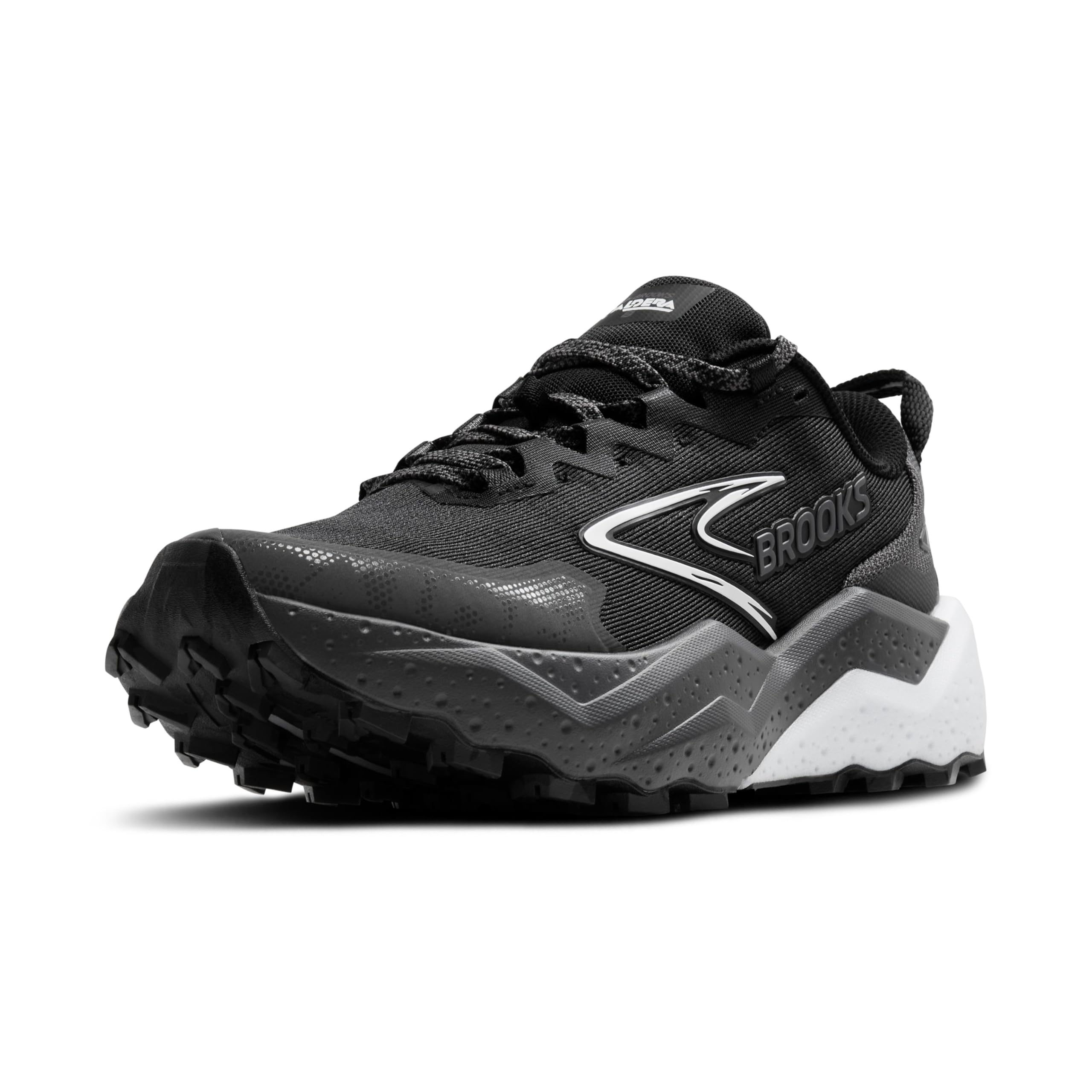
The Brooks Caldera 8 is a max-cushion trail runner that crosses into backpacking territory for women who prioritize plush comfort on well-graded trails. The DNA Loft v3 midsole provides 32mm of soft cushioning under the heel, which verified reviewers say significantly reduces knee and leg pain on long days. The splash-resistant upper deflects light rain and morning dew but is not fully waterproof, keeping weight low at under 11 ounces per shoe.
The outsole uses a TrailTack rubber compound with 3.5mm lugs that grip well on packed dirt and gravel but struggle in deep mud or loose scree. Reviewers with wide feet note the toe box runs slightly tight, though the shoe is available in wide widths. The gusseted tongue keeps trail debris out, and the padded heel collar locks the foot in place without causing blisters.
The high stack height sacrifices ground feel on technical terrain, making this a better choice for fast-and-light trips on maintained trails rather than off-camber talus fields. For women who cover 4-6 mile days with a light pack and want maximum impact absorption, the Caldera 8 delivers exceptional comfort. The white and pale green color options show dirt quickly, a minor aesthetic trade-off for the performance.
Why it’s great
- Max-cushion DNA Loft v3 midsole greatly reduces knee and leg fatigue
- Lightweight construction suits fast-and-light backpacking trips
- Gusseted tongue keeps gravel and debris out of the shoe
Good to know
- Toe box runs narrow for wide-footed hikers
- High stack reduces stability on uneven, technical terrain
5. Oboz Women’s Sawtooth II Low B-Dry Hiking Shoe
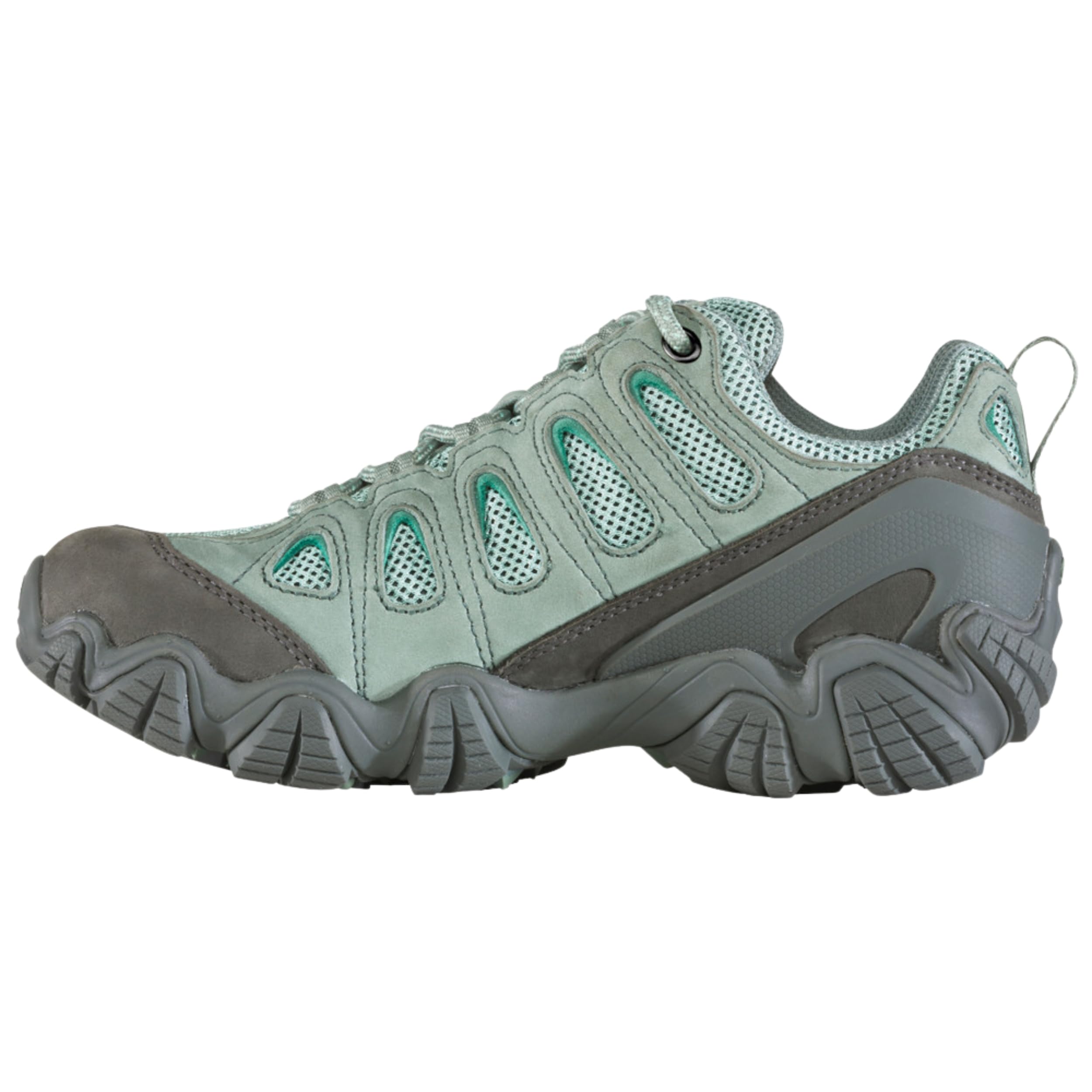
The Oboz Sawtooth II Low is built for women who want a structured, supportive shoe that feels like a lightweight boot. The B-Dry waterproof membrane keeps feet dry in wet grass and shallow stream crossings, and the molded EVA footbed with a metatarsal bridge provides arch support that reviewers with flat feet find especially comfortable. The outsole features 4mm lugs with a self-cleaning design that sheds mud on sticky trails.
Reviewers consistently note the shoe runs narrow, with several women ordering wide widths even though they typically wear standard width. The heel cup is well-padded and prevents slippage on steep descents. The shoe is heavier than most low-top hikers at 15.7 ounces each, but the added weight translates to a rugged feel that inspires confidence on uneven ground. Several users report zero break-in time, wearing the shoes comfortably on day one.
The narrow fit is the main limitation for this model. Women with wide feet or high-volume insteps should order wide widths or look at ALTRA or KEEN for more room. The Sawtooth II is best suited for backpackers who value a locked-in, supportive fit and don’t mind a slightly heavier shoe in exchange for durability and structure on rocky trails.
Why it’s great
- Excellent arch support with metatarsal bridge reduces foot fatigue
- Self-cleaning outsole lugs perform well in muddy conditions
- No break-in period; comfortable from the first wear
Good to know
- Runs narrow; most women with average-width feet need wide size
- Heavier than typical low-top hikers at over 15 ounces per shoe
6. Columbia Womens Peakfreak Ii Outdry
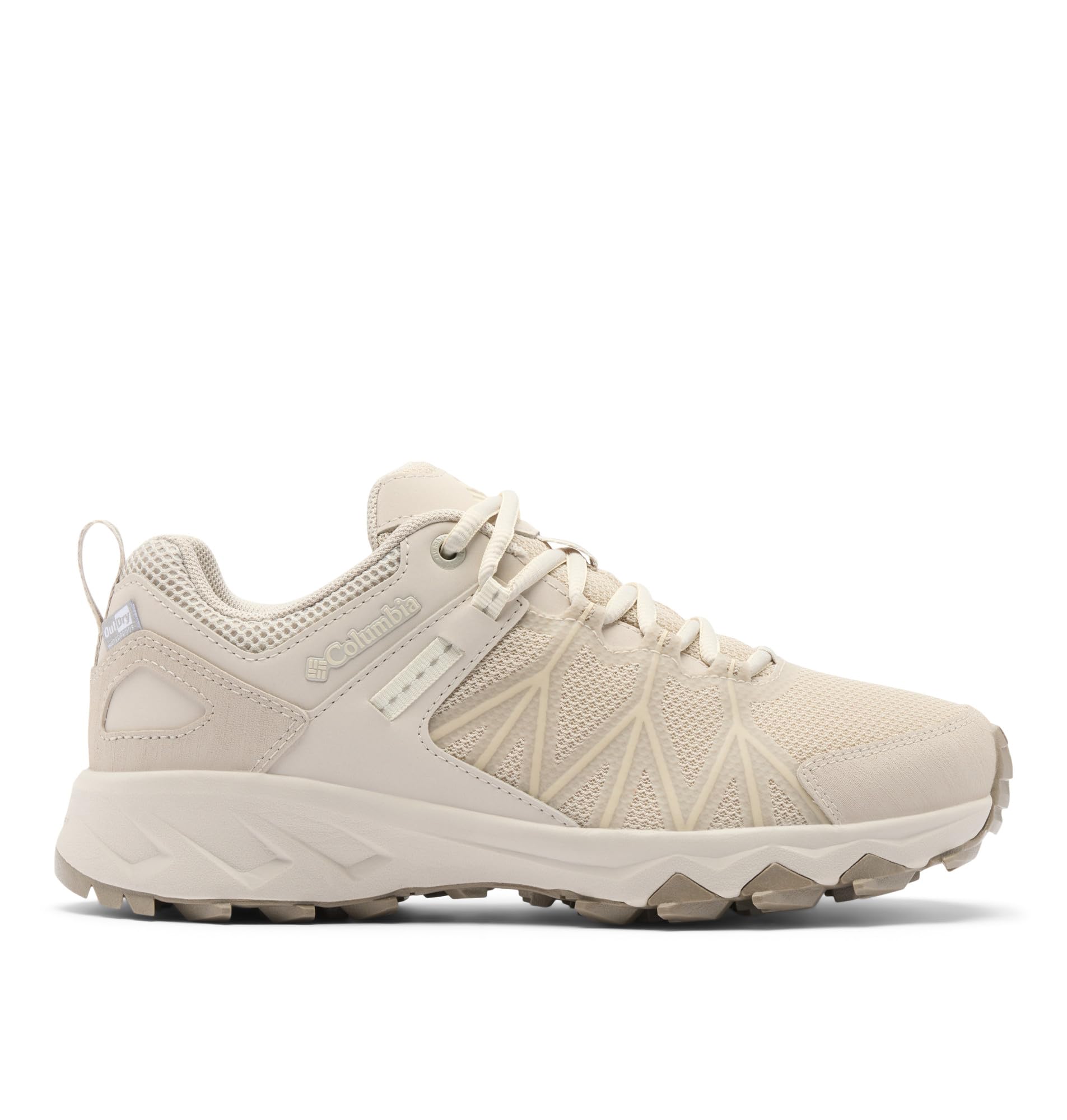
The Columbia Peakfreak II Outdry uses Columbia’s proprietary OutDry membrane, which bonds directly to the upper to prevent water ingress without a separate liner. Verified reviewers confirm the shoe keeps feet dry even after standing in deep icy water, a clear test of its waterproof integrity. The Techlite+ midsole provides responsive cushioning that balances comfort with stability under a pack.
The Omni-Grip outsole features a multi-terrain traction system with 3.5mm lugs that grip well on wet rock and packed trail. The wide toe box is a standout feature for women with flat feet or bunions, with multiple reviewers noting relief from foot pain after switching to this model. The shoe is notably lightweight for a waterproof hiker, making it a strong contender for trips where stream crossings are unavoidable.
The OutDry membrane does reduce breathability compared to non-waterproof shoes, and some reviewers report warm feet in summer conditions. The lacing system is functional but lacks the secure lock-down of higher-end models. For backpackers who prioritize dry feet above all else, especially in the Pacific Northwest or similar wet climates, the Peakfreak II Outdry delivers exceptional waterproofing at a mid-range price.
Why it’s great
- OutDry membrane provides exceptional waterproofing with no separate liner
- Wide toe box accommodates flat feet, bunions, and high-volume insteps
- Lightweight construction for a fully waterproof low-top hiker
Good to know
- Runs warm in hot summer conditions due to bonded waterproof layer
- Lacing system could provide a more secure heel lock
7. Columbia Konos TRS Outdry
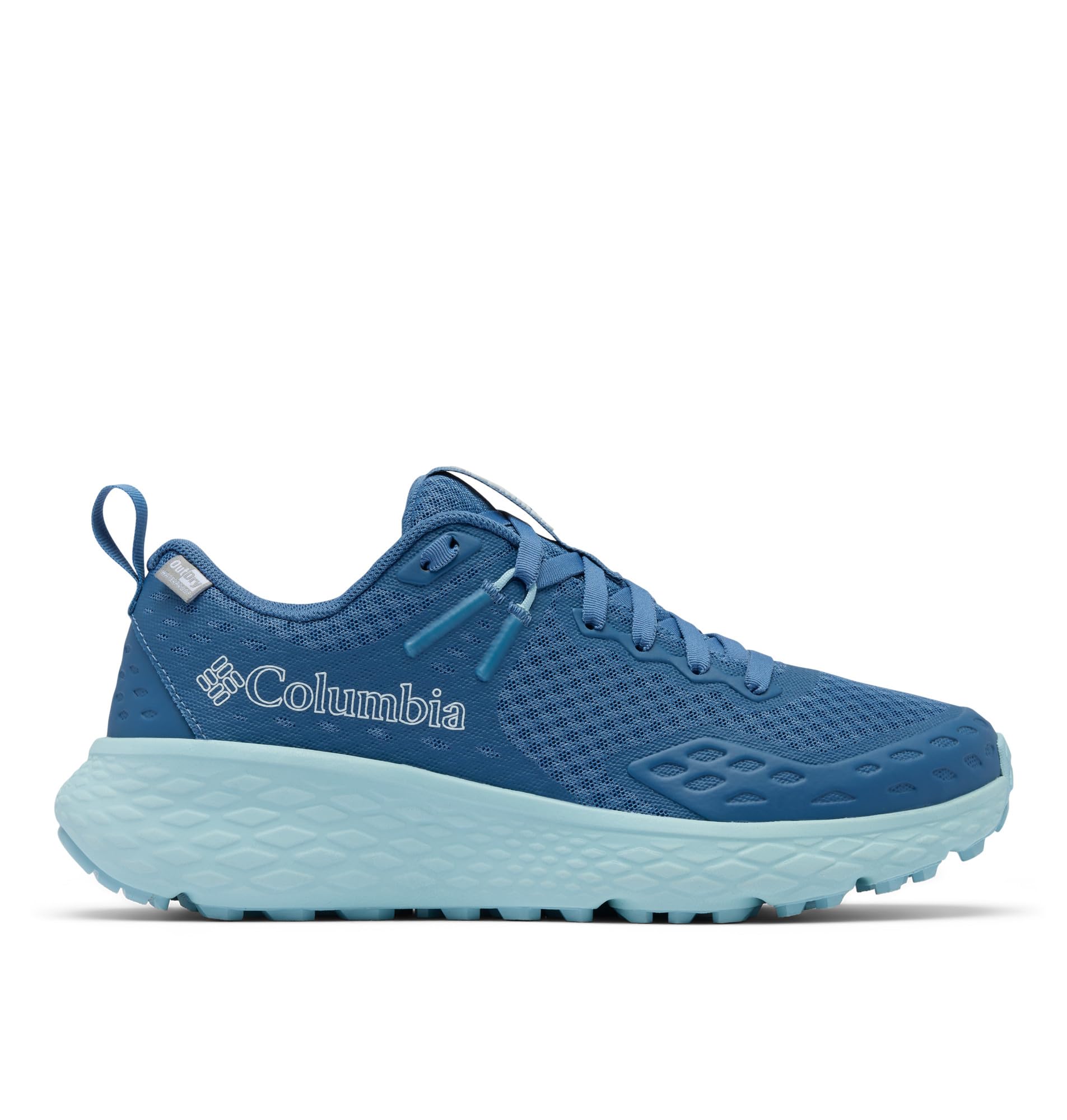
The Columbia Konos TRS Outdry occupies the sweet spot between a low-top hiker and a mid boot, offering a higher cut that supports the ankle without the weight of a traditional boot. The Outdry membrane is fully waterproof, and verified reviewers confirm dry feet after wading through puddles and standing in rain. The Techlite+ midsole delivers plush cushioning that feels forgiving on hard-packed trails and rocky sections alike.
The Omni-Grip outsole provides reliable traction on inclines and wet surfaces, with reviewers noting confident footing on moderate slopes. The roomy toe box accommodates foot swelling on long days, and several users with bunions report a comfortable fit. The gusseted tongue seals out debris, and the padded collar adds comfort around the ankle. One reviewer noted a squeaking noise on smooth floors, a minor annoyance that does not affect trail performance.
The Konos TRS runs warm, as is typical of fully waterproof shoes. Pairing with wicking socks mitigates the issue for most users. The shoe fits true to size for most reviewers. For backpackers who want the ankle support of a mid boot with the comfort and weight of a low-top hiker, the Konos TRS Outdry is a versatile choice that performs well across a wide range of conditions.
Why it’s great
- Mid-height cut provides ankle support without boot-level weight
- Outdry membrane keeps feet dry in wet conditions
- Roomy toe box fits bunions and accommodates foot swelling
Good to know
- Waterproof membrane causes feet to run warm in summer heat
- May produce squeaking noise on smooth indoor surfaces
8. KEEN Women’s Targhee 4 Mid Height Waterproof Hiking Boots
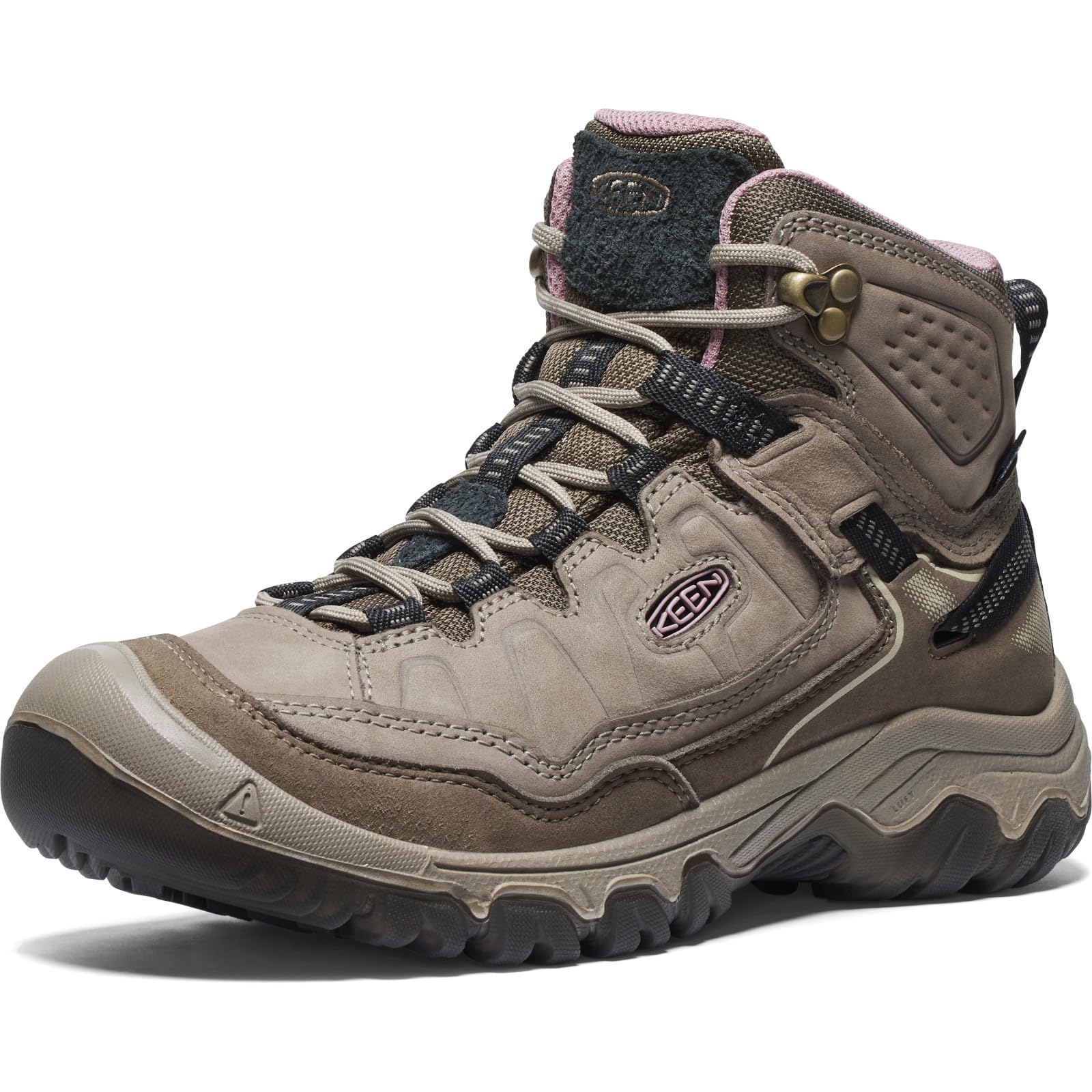
The KEEN Targhee 4 Mid is a purpose-built mid boot for women who need ankle stability on uneven, technical terrain. The KEEN.Dry waterproof membrane and the bellows tongue create a fully sealed barrier against water and debris. The multi-directional 4mm lugs provide grip in multiple directions, making this boot capable on both uphill scrambles and downhill descents. Available in wide widths, the Targhee accommodates women with broader feet who struggle to find supportive boots.
Reviewers praise the boot’s immediate comfort, with zero break-in time reported even for full-day hikes. The removable metatomical footbed offers good arch support for medium arches. The rubber toe cap adds protection against stubs and rock impacts, a useful feature on talus fields. The boot runs slightly large, and several reviewers recommend going half a size down unless wearing thick wool socks.
One reviewer experienced a fall caused by poor tread grip on dry dirt and leaves over a moderate decline, a warning that the outsole’s performance on loose duff may not match its grip on wet rock. The boot is lightweight for its height, but the mid cut does add weight compared to low-top options. For backpackers carrying heavy loads over rocky terrain where ankle protection is a priority, the Targhee 4 Mid is a strong, proven choice.
Why it’s great
- Mid-height cut provides excellent ankle stability on rough terrain
- Available in wide widths for women with broader feet
- No break-in needed; comfortable for full-day hikes immediately
Good to know
- Tread grip is less reliable on loose dry dirt and leaves
- Runs slightly large; sizing down may be necessary for thin socks
9. Merrell Women’s Antora 3 Hiking Shoes
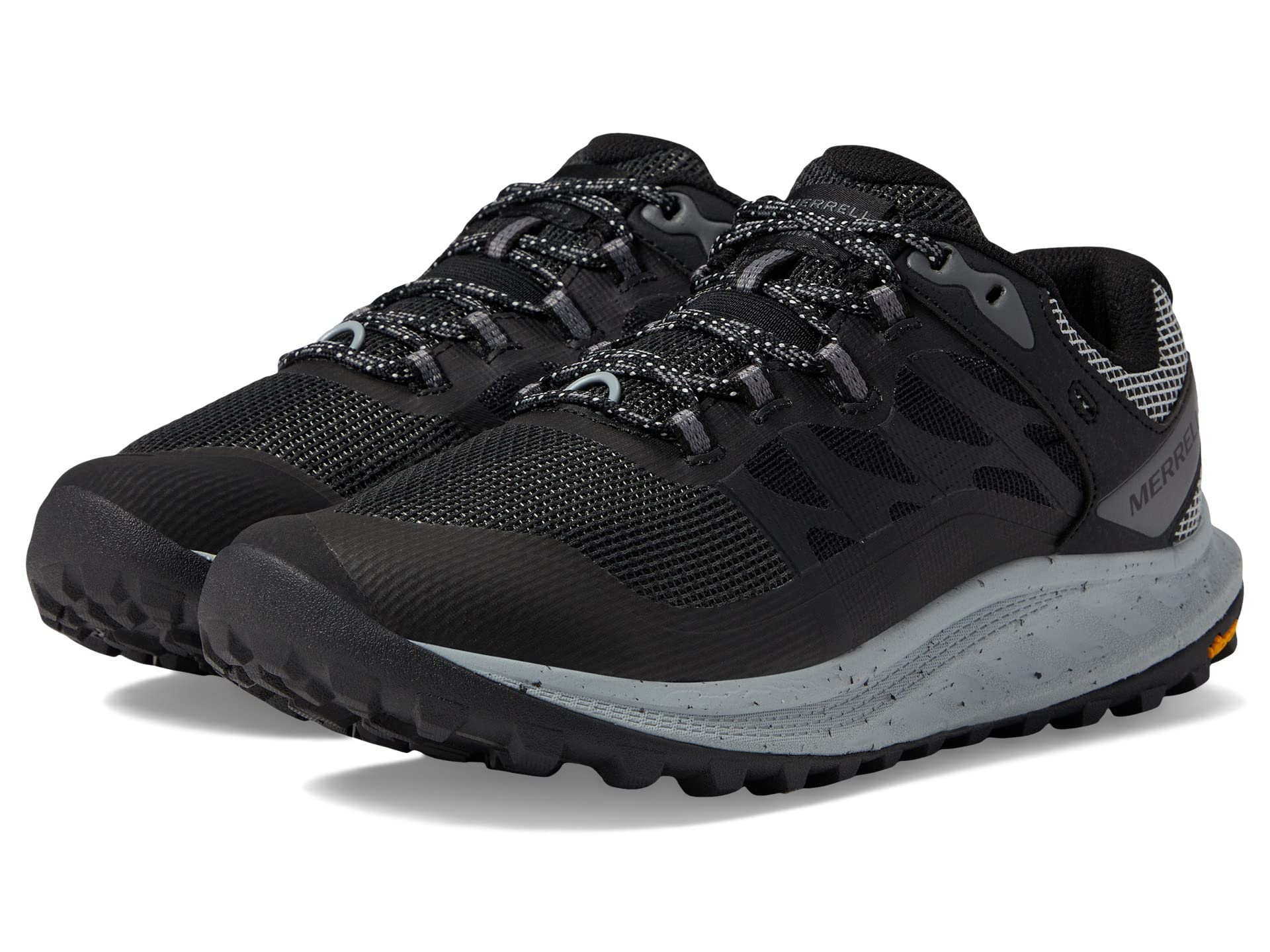
The Merrell Antora 3 is an entry-level hiking shoe that appeals to women looking for a lightweight, comfortable option for day hikes and light overnight trips. The rocker sole design promotes a smooth heel-to-toe transition, which reviewers find reduces fatigue on paved approaches and graded trails. The shoe weighs only 1.5 pounds per pair, making it one of the lightest options in the low-top category.
Reviewers report the shoe holds up well after a year of regular use, with the outsole showing minimal wear on mixed terrain. The breathable mesh upper keeps feet cool in warm weather, but it picks up mud and dirt quickly with no waterproofing layer. The arch support is adequate for moderate pronation, though some reviewers with high arches find it insufficient for longer days without adding an insole.
The Antora 3 runs slightly large, with several reviewers recommending sizing down a half size for a snug fit. The traction performs well on gravel and hardpack but struggles in loose scree and wet conditions due to the shallower lug pattern. For beginners or budget-conscious backpackers who stick to maintained trails, the Antora 3 offers solid value without sacrificing comfort, but the lack of waterproofing and limited grip on technical terrain make it a lighter-duty choice.
Why it’s great
- Lightweight rocker sole design reduces fatigue on graded trails
- Holds up well with consistent use over a year
- Breathable upper keeps feet cool in warm weather
Good to know
- No waterproofing; picks up mud and dirt quickly
- Shallow lugs struggle on loose scree and wet surfaces
FAQ
Should I size up for backpacking shoes?
Is a waterproof shoe necessary for summer backpacking?
How does a trail runner differ from a hiking shoe for backpacking?
Final Thoughts: The Verdict
For most women backpacking on mixed terrain, the top backpacking shoes for women winner is the ALTRA Lone Peak 8 because the foot-shaped toe box prevents the most common source of trail pain — cramped toes on descents — while the balanced cushion and reliable outsole handle everything from dirt paths to rocky climbs. If you need maximum grip on wet granite and don’t mind a mid boot, grab the Danner Mountain 600. And for budget-conscious backpackers who want proven reliability without compromise, nothing beats the Merrell Moab 3 Waterproof.

Mo Maruf
I created WellFizz to bridge the gap between vague wellness advice and actionable solutions. My mission is simple: to decode the research and give you practical tools you can actually use.
Beyond the data, I am a passionate traveler. I believe that stepping away from the screen to explore new environments is essential for mental clarity and physical vitality.