Our readers keep the lights on and my smoothie glass nicely filled. As an Amazon Associate, I earn from qualifying purchases.
Choosing a backpacking pack is a deeply personal decision, hinging on the exact geometry of your torso, the volume of gear you carry, and the specific terrain you plan to cover. A poorly fitted pack turns a scenic ridge hike into a painful ordeal, while the right suspension system makes a multi-day load feel almost weightless.
I’m Mohammad Maruf — the founder and writer behind WellFizz. I’ve analyzed hundreds of consumer reviews, technical spec sheets, and real-world load tests to separate the packs that deliver on their promises from those that just look good on a shelf.
This guide cuts through the marketing noise to deliver a clear, data-backed comparison of the best backpacking packs across every capacity, fit style, and price tier you’re likely to encounter.
How To Choose The Best Backpacking Packs
Selecting the right pack requires matching your body’s dimensions and your trip’s volume needs against the frame design and feature set. The most expensive pack is rarely the best choice if the torso length or hip belt shape doesn’t align with your frame.
Torso Length and Hip Belt Fit
Backpacking packs transfer load from your shoulders to your hips. Measure your torso length (from C7 vertebra to iliac crest) and compare it to the pack’s adjustable range. A hip belt should wrap around your iliac crest, not sit above it — this is where a women-specific pack differs from a unisex model, as women’s hip belts are typically more curved.
Volume and Trip Duration
Match pack volume to your trip length and gear style. Overnight trips generally need 40-50 liters, while multi-day excursions require 50-70 liters. Ultralight setups can get away with smaller packs, but traditional gear loads demand more cubic inches for sleeping bags, tents, and food.
Suspension and Ventilation
Internal frame packs use a combination of lightweight metal stays and foam back panels. The suspension system determines how weight is distributed across your body. Tensioned mesh back panels (like Osprey’s AirSpeed or Kelty’s Amp Flow) create a gap between your back and the pack, reducing sweat build-up on warm climbs. Traditional foam panels sit closer to the body and offer a lower center of gravity but less airflow.
Quick Comparison
On smaller screens, swipe sideways to see the full table.
| Model | Category | Best For | Key Spec | Amazon |
|---|---|---|---|---|
| Osprey Stratos 44L | Premium | Day hikes to weekend trips | 44L capacity / 3.64 lbs | Amazon |
| Deuter Aircontact Lite 50+10 | Premium | Long-distance hiking | 50+10L capacity / 3.6 lbs | Amazon |
| Osprey Renn 65L Women’s | Premium | Women’s multi-day trips | 65L capacity / 3.6 lbs | Amazon |
| Osprey Rook 50L | Premium | Weekend trips | 50L capacity / 3.6 lbs | Amazon |
| The North Face Terra 55 Women’s | Mid-Range | Women’s multi-day hiking | 55L capacity / 4 lbs | Amazon |
| Kelty Asher 65L | Mid-Range | Entry-level multi-day trips | 65L capacity / 3.3 lbs | Amazon |
| Naturehike 65L Rock Upgraded | Budget | Ultralight on a budget | 65L capacity / 2.89 lbs | Amazon |
| Teton 65L Explorer | Budget | Entry-level camping | 65L capacity / 5 lbs | Amazon |
| MountainTop 75L | Budget | Large capacity entry-level | 75L capacity / 4.8 lbs | Amazon |
In-Depth Reviews
1. Osprey Stratos 44L Men’s Hiking Backpack
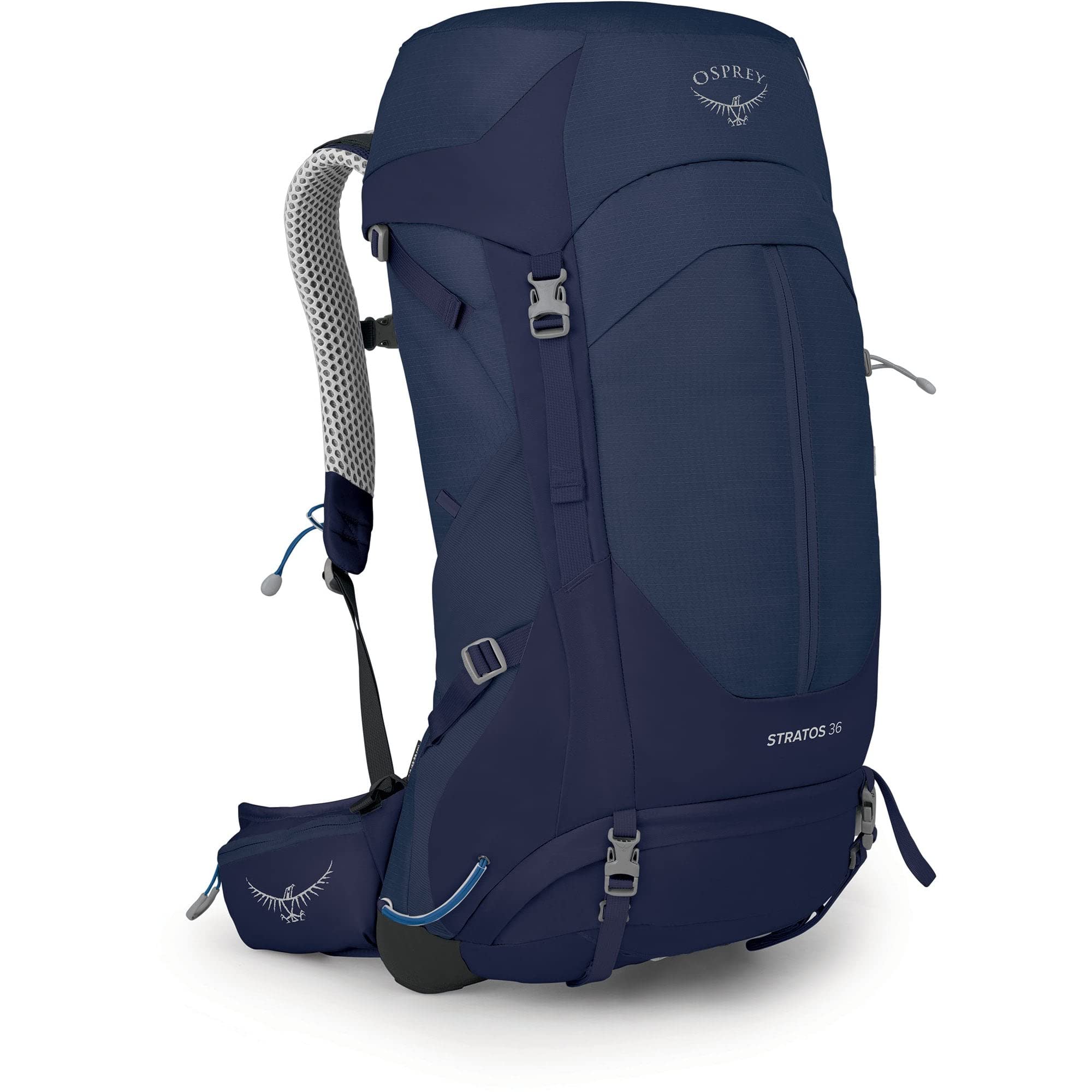
The Osprey Stratos 44L is a masterclass in ventilation and fit. Its AirSpeed suspension uses an injection-molded frame with 3D-tensioned mesh that keeps the pack body a full few inches off your back, drastically reducing sweat accumulation on hot climbs. The adjustable torso system extends the fit range for taller hikers, and the included raincover stows in its own pocket for quick deployment.
At 3.64 pounds, this pack is built for day hikes and lightweight weekend trips. The top-loading design with drawcord closure is simple and reliable, and the internal hydration sleeve routes the hose through the backpanel for easy access. Users consistently note that the hip belt pockets are well-placed for quick-access snacks or a phone, and the side compression straps cinch down a partial load effectively.
While the 44-liter capacity is too small for extended multi-day adventures with bulky gear, it hits a sweet spot for fast-and-light trips and doubles as a capable travel pack that fits as a carry-on. The hard frame requires overhead bin storage on flights, but the comfort payoff on the trail makes that trade-off worthwhile.
Why it’s great
- Outstanding ventilation keeps your back dry during strenuous hikes
- Adjustable torso system accommodates a wide range of body sizes
- Included raincover is integrated and stows neatly
Good to know
- 44L capacity limits use to day hikes and lightweight weekends
- Hard frame may not fit in standard carry-on luggage compartments easily
2. Deuter Aircontact Lite 50 + 10 L

The Deuter Aircontact Lite 50+10 is engineered for ambitious long-distance hikers who refuse to compromise between weight and load transfer. The Aircontact back system uses hollow chamber foam that pumps air with each step, reducing perspiration while keeping heavy loads close to your center of gravity. The Vari Quick adjustable back length allows you to fine-tune the torso fit in seconds, a critical feature when switching between layers or sharing gear.
Weighing just 3.6 pounds, this pack offers a 50-liter main body with a height-adjustable lid that expands volume by an additional 10 liters, accommodating extra food or gear for extended stretches between resupply points. The lightweight X-frame provides impressive load transfer, handling up to 40 pounds without sagging. Users particularly appreciate the detachable lid, internal valuables pocket, and the zippered hip fin pockets that keep trail essentials within reach.
The main trade-off is the lack of an included raincover at this price point — a surprising omission given the pack’s premium positioning. The 600D recycled polyester fabric is durable but not as supple as some ultralight competitors. For backpackers who prioritize ventilation and precise fit over extreme weight savings, this is a capable, proven workhorse.
Why it’s great
- Advanced Aircontact foam ventilation reduces back sweat effectively
- Expandable 50+10L capacity adapts to variable trip lengths
- Vari Quick adjustment allows rapid torso fine-tuning on the trail
Good to know
- No built-in raincover is included
- Fabric feels durable but slightly stiffer than ultralight alternatives
3. Osprey Renn 65L Women’s Backpacking Backpack

The Osprey Renn 65L is a purpose-built women’s backpack that addresses the anatomical differences most unisex packs ignore. It features the same AirSpeed tensioned mesh backpanel as Osprey’s flagship models, combined with a women-specific hip belt that curves around the iliac crest rather than riding high. The torso adjustment range of 15-18 inches accommodates shorter to average female frames, though petites may still need a dedicated XS/S pack like the Osprey Aura.
Weighing 3.6 pounds, the Renn offers a generous 65-liter capacity with a zippered sleeping bag compartment and a floating divider that keeps your sleeping setup isolated from the rest of your gear. The integrated raincover is stowed in a dedicated pocket for immediate access when the weather turns. Users consistently praise the comfortable padding and how well the weight is distributed across the hips, even at full capacity.
Some taller or broader-shouldered women may find the strap spacing a bit narrow, and the top compartment can be slightly tricky to access when the pack is fully packed out. However, for the vast majority of female backpackers tackling multi-day trips, the Renn delivers a comfortable, stable ride that rivals packs costing significantly more.
Why it’s great
- Women-specific hip belt geometry fits the iliac crest properly
- AirSpeed mesh backpanel provides excellent ventilation
- Integrated raincover and sleeping bag compartment add convenience
Good to know
- Petite frames may require a dedicated XS/S pack for best fit
- Top compartment access is limited when the main body is full
4. Osprey Rook 50L Men’s Backpacking Backpack

The Osprey Rook 50L is a streamlined, lightweight option for backpackers who want Osprey quality without the full load of extra features found on the Aether or Atmos lines. The LightWire frame transfers weight directly to the hip belt, taking pressure off the shoulders for a comfortable carry on 2-3 day trips. The AirSpeed backpanel is adjustable for torso length, though the adjustment range is more limited than on pricier siblings.
At 3.6 pounds, the Rook strikes a strong balance between weight and carrying capacity. It includes an integrated raincover and a zippered sleeping bag compartment with a floating divider, both rare at this price point in Osprey’s lineup. The side compression straps and multiple tent strapping options make it easy to lash gear externally when you need extra space. Users report comfortable carries up to 35 pounds, which is the sweet spot for weekend gear loads.
The lack of an external mesh pocket is the biggest functional miss — wet or quick-dry items have no dedicated spot. The pack also lacks a back-access zipper, so you must dig through the top to reach gear at the bottom. For clean, reliable performance on short trips, the Rook is a solid, straightforward choice.
Why it’s great
- LightWire frame provides excellent load transfer to the hips
- Integrated raincover and sleeping bag compartment add value
- Comfortable carry up to 35 pounds
Good to know
- No external mesh pocket for wet gear storage
- Lacks back-access zipper for bottom-of-pack items
5. The North Face Women’s Terra 55 Backpack
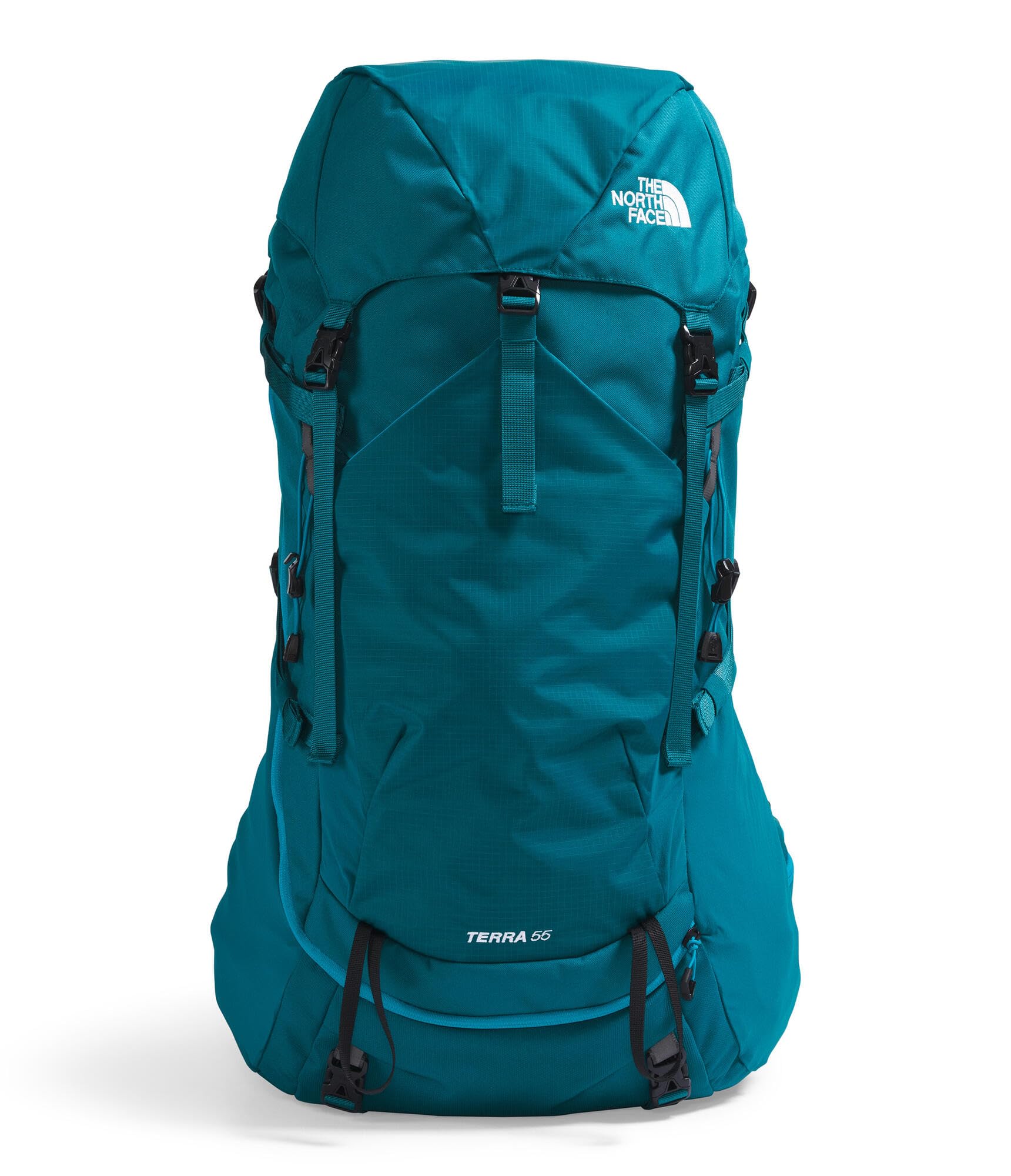
The North Face Women’s Terra 55 is a mid-range workhorse that nails the basics for female backpackers stepping into multi-day adventures. The women-specific padded back panel and shoulder straps are shaped to fit narrower shoulders and a more pronounced hip curve, providing a snug, stable ride. The full-length two-way U-zip gives you access to the entire main compartment from the sides, making it easy to retrieve gear packed at the bottom without unpacking everything.
Weighing 4 pounds, the Terra is slightly heavier than some competitors in its volume class, but the trade-off comes in thoughtful organization. The removable lid includes an internal zip pocket and key hook, the external stuff-it pocket tightens with an S/R buckle, and the hipbelt pockets are large enough for a phone or map. The internal hydration sleeve and stretch bottle pockets keep water accessible without adding bulk.
The main limitation is the limited torso adjustment range — taller women with longer torsos may find the fit inadequate. The pack also lacks a dedicated raincover, which is a notable omission for a pack at this price. For women who fit the torso range, the Terra 55 offers a comfortable, well-organized platform for weekend to week-long trips.
Why it’s great
- Full-length U-zip provides excellent access to the main compartment
- Women-specific shaping fits narrower shoulders and curved hips
- Large hipbelt pockets are practical for on-trail essentials
Good to know
- No raincover is included
- Limited torso adjustment range may not suit taller women
6. Kelty Asher 65L Backpack
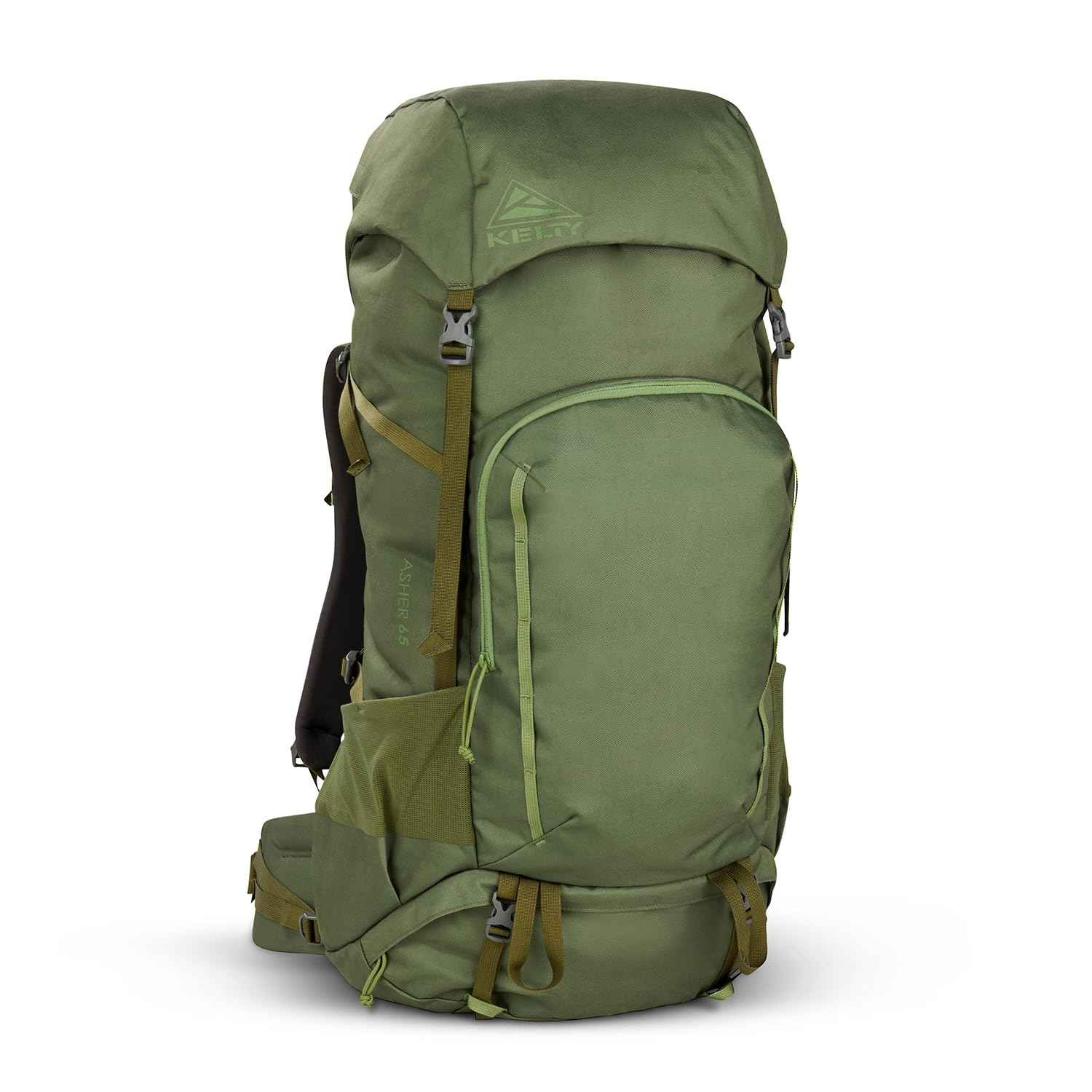
The Kelty Asher 65L delivers a feature set typically found on packs costing twice as much. The Fit Pro technology allows rapid torso adjustment on the fly — a rare convenience at this price point — and the Amp Flow ventilated back panel uses an aluminum stay to keep your load balanced while minimizing back sweat. The optimal carry weight range of 30-50 pounds covers everything from a light weekend load to a fully provisioned week-long trip.
Weighing just 3.3 pounds, the Asher is lighter than many similarly sized packs, thanks to its C0 and PFC-free DWR polyester shell that sheds water without added weight. The sleeping bag compartment, load lifter straps, and hydration compatibility are all standard. Users who have put years of heavy use into their Asher report no wear or tear, which speaks to the build quality at this price tier.
The main trade-off is the hip belt padding, which some users find mediocre compared to premium packs. The materials, while durable, feel slightly lighter-duty than the thickest 600D nylon found on heavier competitors. For the price-conscious backpacker who wants a comfortable, well-ventilated pack for multi-day trips, the Asher is a compelling, proven choice.
Why it’s great
- Fit Pro torso adjustment can be changed on the trail easily
- Amp Flow ventilation keeps your back cool under heavy loads
- Lightweight 3.3 lb design without sacrificing durability
Good to know
- Hip belt padding may feel less plush than premium alternatives
- Materials are durable but feel lighter than heavy-duty 600D packs
7. Naturehike 65L Rock Upgraded Ultralight Backpack

The Naturehike 65L Rock Upgraded is a lightweight contender that punches well above its price class for weight-conscious backpackers. It uses a polymer fabric containing high-molecular-weight polyethylene fibers that are 10 times stronger than steel under tension, resulting in a pack that weighs only 2.89 pounds but handles loads up to 30 pounds. The ergonomic mesh back panel and shoulder padding reduce shoulder bite and keep your back ventilated during long days on the trail.
The roll-top closure and removable foam frame sheet create a flexible, compressible structure that’s common on ultralight packs costing three times as much. The separate back pocket fits a foam sleeping pad vertically, and the side compression straps cinch down the load for stability. Users who have completed multi-day section hikes with a 22-pound base weight report the pack is most comfortable at a total load of 30 pounds, with the adjustable straps providing a secure fit for a variety of torso lengths.
The hip belt lacks the thick padding of premium packs, and some users find it digs into the stomach slightly if you carry extra weight around the midsection. The pull loop on the top cinch strap is a known weak point, though it’s easily replaced. For backpackers transitioning from heavy traditional gear to a lighter setup, this pack offers a dramatic weight reduction at a fraction of the ultralight premium.
Why it’s great
- Extremely lightweight at 2.89 lbs for a 65L pack
- Polymer fabric is exceptionally strong for its weight
- Roll-top closure offers excellent water resistance
Good to know
- Hip belt padding is thinner than traditional packs
- Top cinch strap pull loop can fail under heavy tension
8. Teton 65L Explorer Internal Frame Backpack
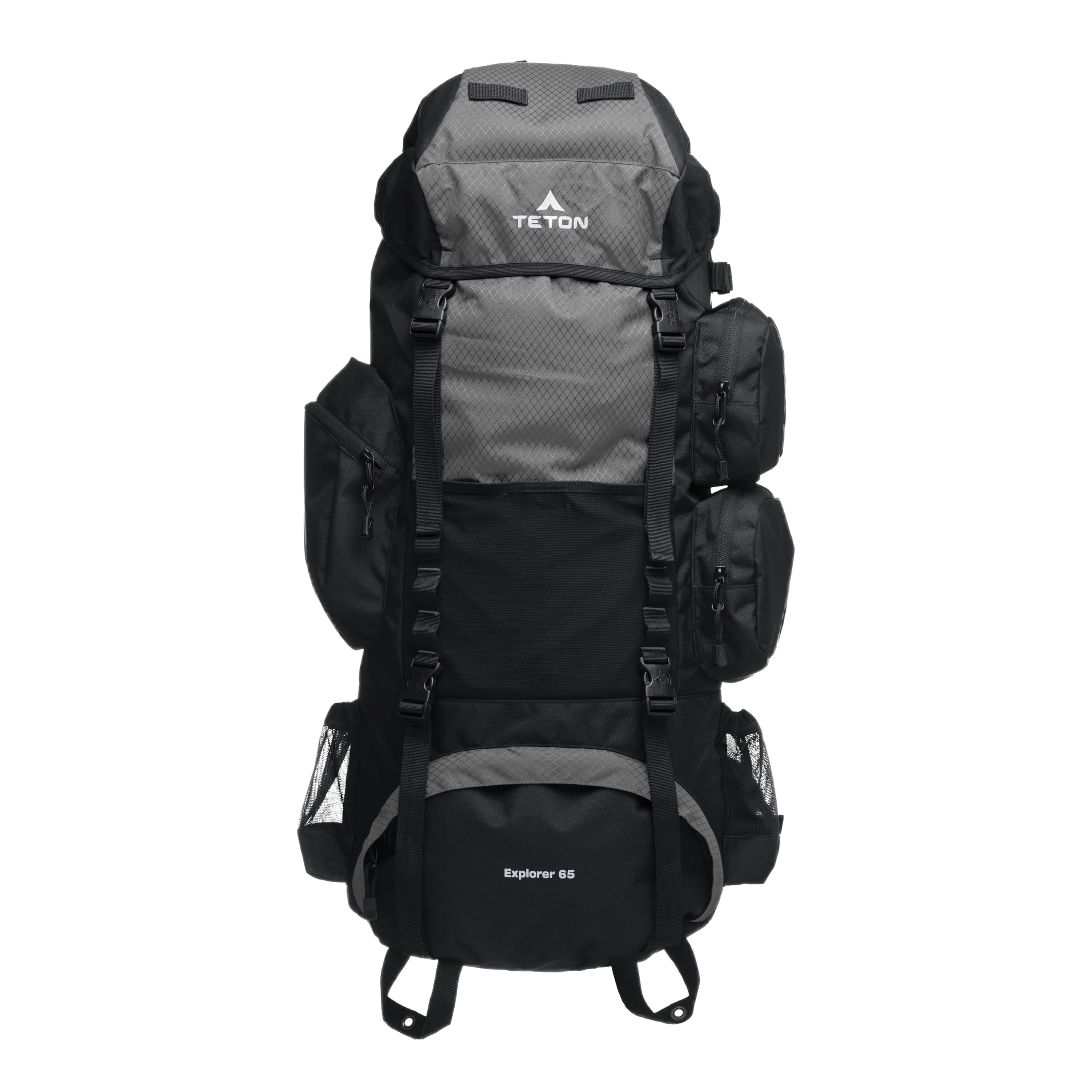
The Teton 65L Explorer is a no-nonsense internal frame pack built for beginners and budget-conscious adventurers who need a reliable, comfortable carry without a steep learning curve. The multi-position torso adjustment accommodates medium to tall adventurers, and the open-cell foam lumbar pad with molded channels provides solid airflow and support. The 600D polyurethane-lined fabric is thick and durable, shrugging off brush and rough handling that would tear lighter materials.
At 5 pounds, the Explorer is on the heavier side for a 65L pack, but that weight comes from substantial materials that handle loads up to 50 pounds without complaint. The sleeping bag compartment is large enough for bulky gear, and the side compression straps keep everything cinched tight. The included rain cover is a welcome addition, and users report that it keeps contents completely dry even in heavy downpours.
The side mesh pockets are too small for bottles larger than 16 ounces, which is inconvenient for hydration on the trail. The lack of hip belt pockets means small essentials must be stored in the main body or worn in a separate belt pouch. For the price, the Explorer offers a durable, stable platform that will carry heavy loads without breaking the bank.
Why it’s great
- 600D fabric is extremely durable and resistant to abrasion
- Multi-position torso adjustment fits a wide range of body sizes
- Included raincover is effective in heavy rain
Good to know
- Side mesh pockets only fit bottles up to 16 oz
- No hip belt pockets for quick-access items
9. MountainTop 75L Internal Frame Backpack
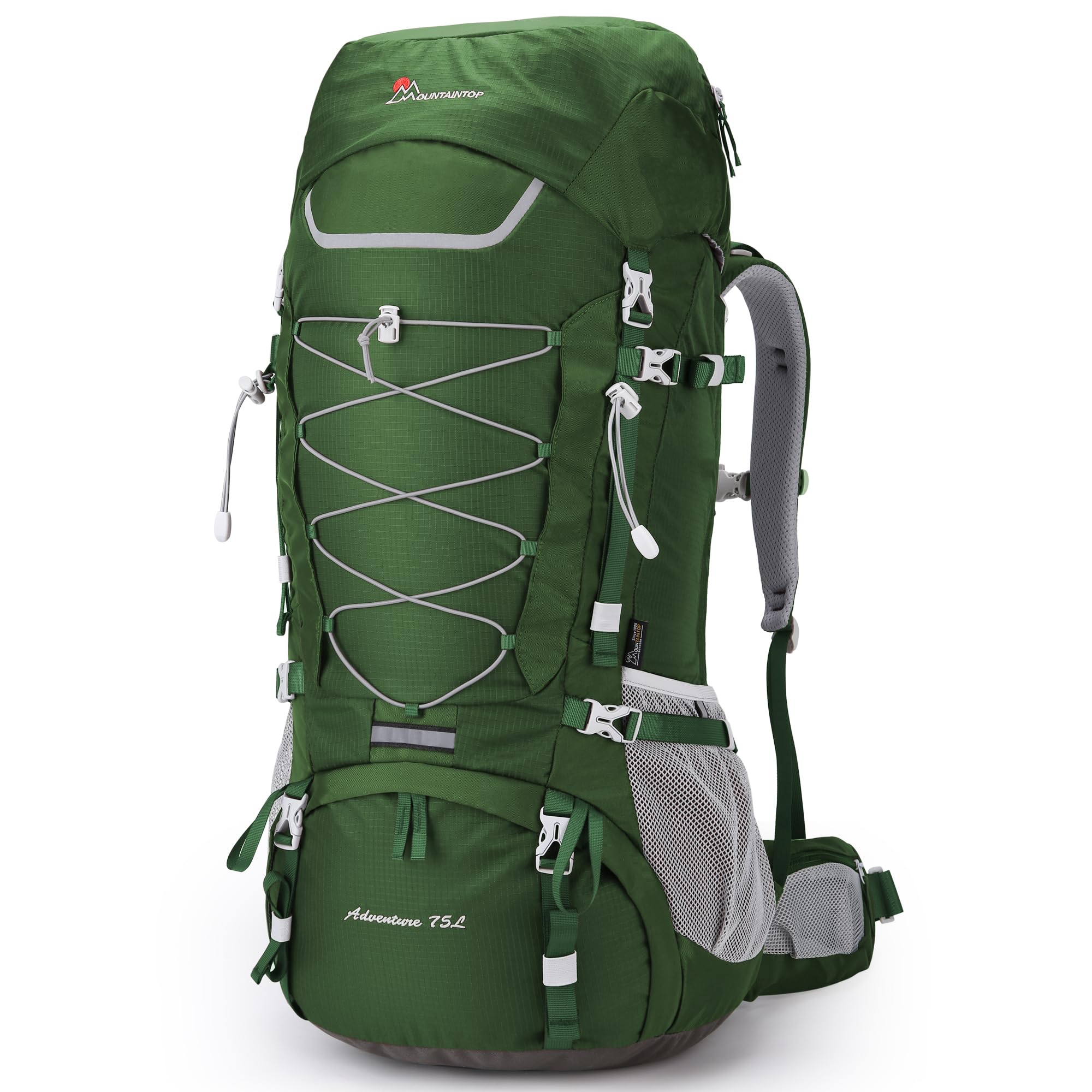
The MountainTop 75L is a budget-friendly giant that offers impressive capacity for backpackers who need to carry bulky gear without spending a fortune. The internal frame uses a height-adjustable suspension system that fits a wide range of torsos, from a 5’9” user at 350 pounds to a 14-year-old on a 61-mile trek. The YKK buckles and strong zippers hold up well under repeated use, though the buckles themselves feel less robust than those on premium packs.
The pack includes a rain cover, sleeping bag compartment with divider, multiple side pockets, and hip pockets for organization. The main compartment is cavernous enough to carry a cooler for beach trips or a full week’s worth of camping gear. The lid pockets provide quick access to maps and snacks, and the adjustable height system allows you to fine-tune the fit even with a full load.
The hip belt straps tend to loosen on narrower waists (32-inch waist users need to tie a knot to prevent slippage), and the 4.8-pound base weight is heavy for the capacity. The J-zipper on the 75L version is smaller than the U-zipper found on the 80L version, making access slightly more restricted. For backpackers on a tight budget who need maximum volume and don’t mind a few quirks, this pack delivers solid value.
Why it’s great
- Massive 75L capacity fits heavy, bulky gear loads
- Adjustable height suspension accommodates a wide range of torsos
- Included raincover and numerous pockets add organization
Good to know
- Hip belt straps may loosen on narrower waists (under 32”)
- Base weight of 4.8 lbs is heavy for the capacity
FAQ
Should I choose a framed or frameless backpacking pack?
How do I measure my torso length for a backpacking pack?
What is the difference between a women-specific and unisex pack?
How much weight should a backpacking pack carry comfortably?
Final Thoughts: The Verdict
For most users, the best backpacking packs winner is the Osprey Stratos 44L because it combines best-in-class ventilation, a highly adjustable suspension, and thoughtful features like an integrated raincover into a package that works for day hikes and lightweight weekends. If you want a larger capacity for multi-day trips with a focus on women-specific fit, grab the Osprey Renn 65L. And for budget-conscious backpackers who need durability and volume without compromise, nothing beats the MountainTop 75L.

Mo Maruf
I created WellFizz to bridge the gap between vague wellness advice and actionable solutions. My mission is simple: to decode the research and give you practical tools you can actually use.
Beyond the data, I am a passionate traveler. I believe that stepping away from the screen to explore new environments is essential for mental clarity and physical vitality.