Our readers keep the lights on and my smoothie glass nicely filled. As an Amazon Associate, I earn from qualifying purchases.
Carrying a can of spray that leaks all over your gear or a greasy lotion that attracts trail dust is a rookie mistake that ruins a backpacking trip. The right mosquito repellent for the backcountry is a piece of gear you don’t think about—you just stay bite-free from dawn until you crawl into your tent.
I’m Mohammad Maruf — the founder and writer behind WellFizz. I’ve spent hundreds of hours cross-referencing field chemistries, reading real-world reports from thru-hikers, and breaking down the differences between active ingredients so you don’t have to carry a chemistry degree on trail.
This guide breaks down the five best performers for the trail—lotions, sprays, and wipes that won’t melt your tent’s DWR coating, weigh down your pack, or fail you after three hours of sweat. Here is my research-backed best backpacking mosquito repellent guide.
How To Choose The Best Backpacking Mosquito Repellent
The ideal backpacking repellent balances bite protection duration, weight-to-application ratio, and compatibility with your gear’s waterproof coatings. Here is exactly how to filter the options.
Active Ingredient: Picaridin vs. DEET vs. Plant Oils
Picaridin at 20% concentration is the modern standard for backpacking because it provides up to 12 hours of protection against mosquitoes and ticks without damaging nylon, polyester, DWR finishes, or tent seam tape. DEET at 25-30% is still a powerhouse for extremely buggy environments, but it will dissolve certain plastics and weaken synthetic fabric coatings over repeated contact. Plant-based options like 30% geraniol or lemongrass oil can work for short, low-risk trips, but their protection window is typically 2-6 hours, which is impractical for a full day on trail.
Format: Lotion, Spray, or Wipes
A 4-ounce lotion bottle is the lightest and most volume-efficient option for multi-day trips—it applies like sunscreen, leaves zero residue on gear, and never triggers the TSA liquid limit for carry-on flights. Sprays offer quick coverage but the aerosol or pump mechanism adds weight and the fine mist wastes product in wind. Wipes are the most leak-proof format—each individually wrapped towelette weighs about 5 grams and you use only what you need, making them ideal for day hikes or short overnights where you do not want to carry a bottle.
Duration and Sweat Resistance
Most repellents list protection duration under “normal” conditions, but backpacking involves sustained physical exertion, sweat buildup, and occasional stream crossings. Look for formulas that explicitly state they resist perspiration or moisture. A 20% Picaridin lotion typically stays effective for the full day unless you swim or soak your clothing, while DEET sprays may require reapplication every 4-6 hours during heavy sweating. If your route involves water exposure, wipes let you spot-apply exactly where you need it without carrying a wet bottle.
Quick Comparison
On smaller screens, swipe sideways to see the full table.
| Model | Category | Best For | Key Spec | Amazon |
|---|---|---|---|---|
| Sawyer 20% Picaridin Lotion | Mid-Range | All-day gear-safe protection | 20% Picaridin, 12h mosquito/8h fly | Amazon |
| Ben’s 20% Picaridin Spray | Mid-Range | Spray coverage for tick-heavy regions | 20% Picaridin, 12h protection | Amazon |
| OFF! Deep Woods DEET Wipes | Premium | Ultra-portable leak-proof day hikes | 25% DEET, 8h mosquito coverage | Amazon |
| Ben’s 30% DEET Wipes | Premium | High-density bug zones | 30% DEET, 7h protection, water-based | Amazon |
| Grandpa Gus’s Plant Spray | Budget | DEET-free short trips | Geraniol/Lemongrass, 6h mosquito | Amazon |
In‑Depth Reviews
1. Sawyer 20% Picaridin Insect Repellent Lotion Twin Pack

The Sawyer 20% Picaridin lotion is the closest thing to a “no-thought” repellent for backpackers who want full-day protection without damaging their gear. Because it is a lotion, you apply it exactly like sunscreen—two pumps per arm, two per leg, and you are covered for up to 12 hours against mosquitoes and ticks. The formula is completely fragrance-free and dries into a smooth, non-sticky layer that does not attract trail dust or sand.
The biggest advantage for backpackers is the safety profile on synthetic materials. Unlike DEET, which will eventually soften the DWR coating on your rain jacket or warp the lenses of your sunglasses, this Picaridin lotion is chemically inert against nylon, polyester, silicone, and polycarbonate. You can apply it to exposed skin, then touch your tent fly or pack straps without leaving any residue. The 4-ounce tube also stays liquid TSA-compliant for any flight to a trailhead.
Real-world hikers report that one bottle lasts multiple multi-day trips when used sparingly. The only catch is that the lotion requires hand-washing after application if you need to handle food or phone screens. For the balance of duration, gear safety, and pack weight, this is the most versatile option on this list.
Why it’s great
- 12-hour mosquito/8-hour fly protection from a single application
- Zero damage to DWR coatings, tent seam tape, or watch straps
- Fragrance-free, non-greasy finish that does not attract dirt
Good to know
- Lotion format requires hand-washing after application before touching electronics
- Reapply after swimming or heavy sweat soaking
2. Ben’s Tick Repellent 20% Picaridin Spray
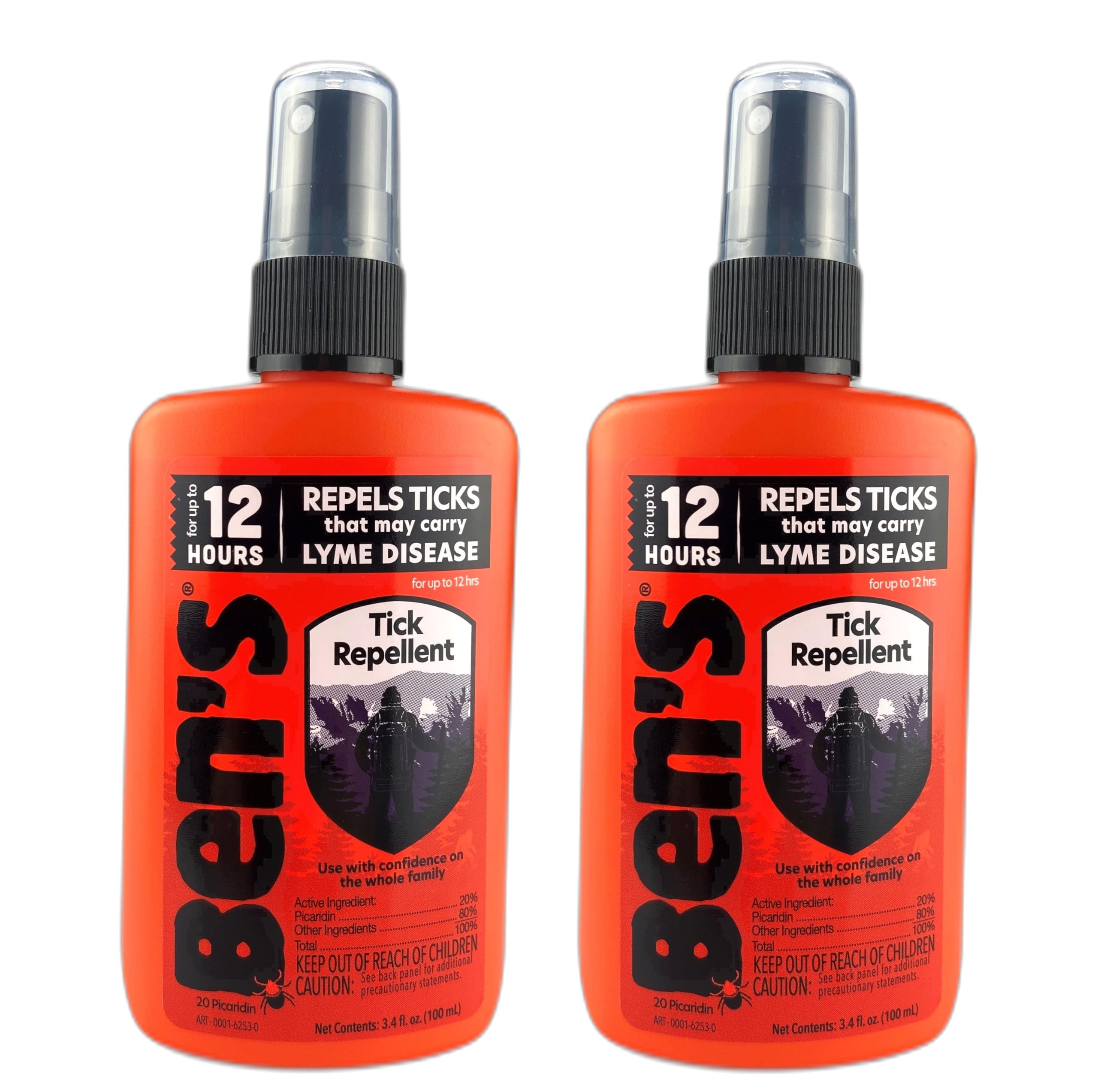
Ben’s 20% Picaridin spray brings the same active ingredient as the Sawyer lotion but in a pump-spray format that lets you cover larger surface areas quickly—particularly important if you are hiking through dense underbrush where ticks crawl onto clothing. The 3.4-ounce pump bottle meets TSA carry-on size limits, and the spray mechanism produces a fine, even mist that dries fast without leaving wet patches on your shirt.
This formula is specifically tested in New Hampshire’s White Mountains, a region notorious for tick-borne Lyme disease, which means the concentration is calibrated for heavy tick pressure rather than casual backyard use. Users report that this spray outperforms DEET-based products for tick deterrence specifically, including lone star ticks and black-legged deer ticks. The bottle fits into a hip belt pocket or side mesh water bottle sleeve without adding noticeable weight.
A common pain point with pump sprays is that you lose some product to wind on exposed ridgelines, but the 3.4 oz twin-pack gives you a spare bottle for the extra cost of a single premium can. If your route goes through known tick zones like the Appalachian Trail corridor or northern Minnesota’s Boundary Waters, this is the format to pack.
Why it’s great
- Specifically proven against ticks in high-pressure Lyme disease regions
- Pump spray is TSA-safe and fits in a hip belt pocket
- Fragrance and alcohol-free, no stinging on cuts or sunburns
Good to know
- Wind can blow spray away, reducing coverage efficiency
- Some users find the pump mechanism can drip if not stored upright
3. OFF! Deep Woods Insect Repellent Towelettes 25% DEET
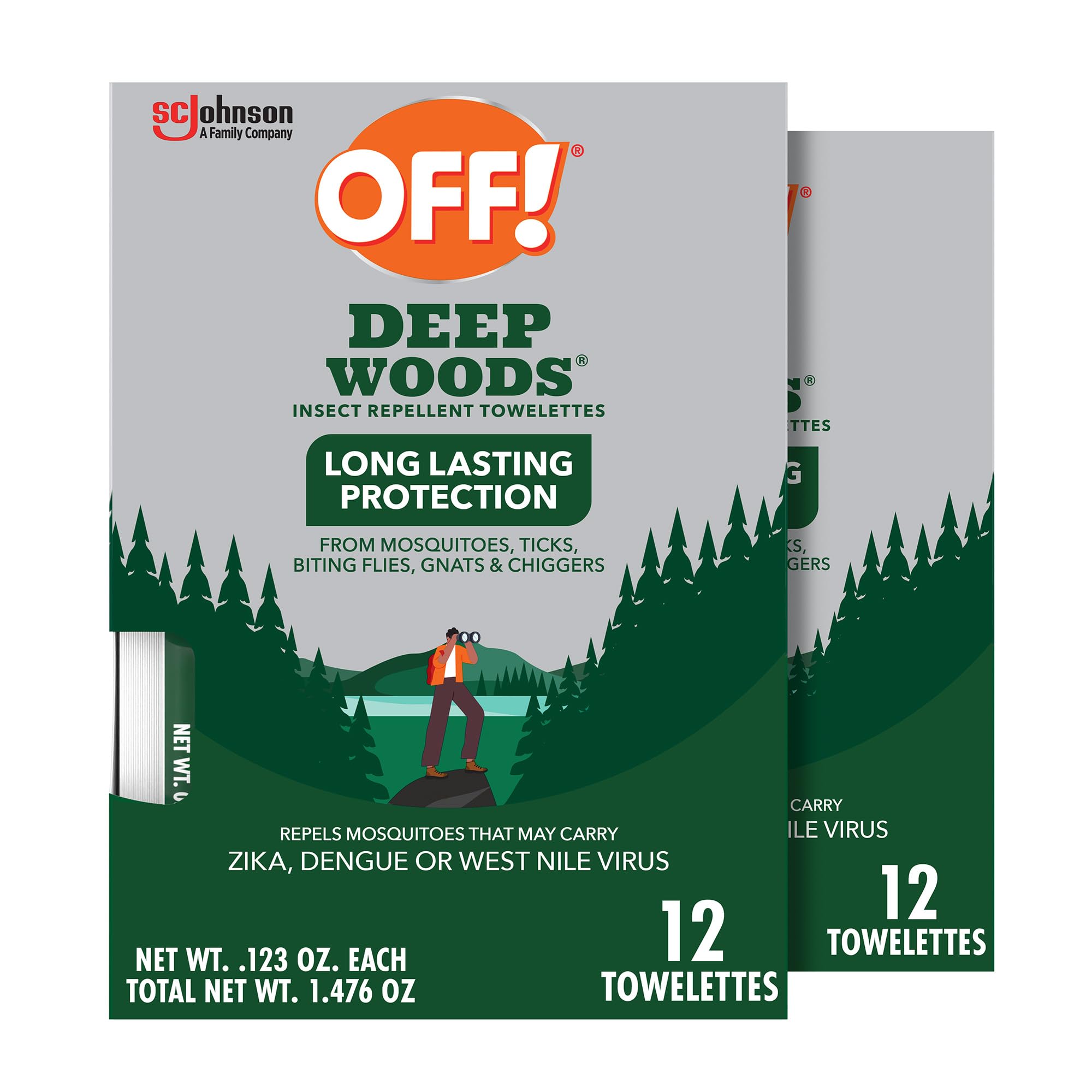
The OFF! Deep Woods wipes solve one of the most annoying problems of backpacking repellents: bottle leakage in your pack. Each individually wrapped towelette contains 25% DEET and covers an adult’s arms, legs, and neck in one pass. Because there is no liquid container, you never worry about a cracked cap soaking your sleeping bag or food bag. This format is also zero-waste in the sense that you use exactly one wipe per application—no guessing how much spray you actually got on your skin.
The 25% DEET concentration provides up to 8 hours of protection against mosquitoes, ticks, biting flies, gnats, chiggers, and fleas. That is enough for a full day hike or for the active hours between morning camp and evening sundown. The towelettes resist perspiration better than lighter DEET concentrations, which is critical when you are climbing elevation in humid conditions. Multiple thru-hikers report that one towelette covers two people for a single afternoon if you split the surfaces.
The trade-off is that DEET at this concentration requires care around synthetic gear. Let the towelette dry fully on your skin before touching your tent’s zippers, your smartphone, or your sunglasses. For a day hiker or an ultralight overnight where every gram counts, these wipes pack smaller and more reliably than any spray or lotion bottle.
Why it’s great
- Individually wrapped, zero chance of leaking in your pack
- One towelette covers a full adult body, sweat-resistant formula
- Compact and ultralight—stash one in each pocket and pocket kit
Good to know
- 25% DEET will damage nylon and synthetic coatings if applied while wet
- Wipes can dry out if the foil seal is not pressed tight after opening
4. Ben’s Tick & Insect Repellent Wipes 30% DEET

Ben’s 30% DEET wipes are the nuclear option for backpackers heading into regions with extreme mosquito and tick pressure—think Alaskan tundra in June, the Florida Trail in wet season, or the high-elevation mosquito swarms of the Sierra Nevada in July. The 30% concentration is the highest among the wipes on this list, and it delivers up to 7 hours of protection that resists heavy sweating and rain more effectively than any lower-concentration formula.
The water-based formula is alcohol-free and fragrance-free, which means it does not sting when applied to bug-bitten skin or sunburn, and it leaves no lingering smell that could attract bears or other wildlife. The wipes are TSA-approved for carry-on, and the four-pack provides 48 individual wipes—enough for a two-week trip if you use one per day. Experienced users report that one wipe covers an adult male’s arms and legs easily, with enough juice left over for the neck and face.
Because this uses DEET at the higher end of the concentration range, you must be careful with gear contact. Allow the wipe to dry completely on skin before handling any synthetic fabric, electronics, or tent gear. For trips where the bugs are genuinely thick enough to drive you out of camp before sunset, these wipes are the most compact way to carry max-strength protection without the weight or leak risk of a spray can.
Why it’s great
- 30% DEET—strongest concentration in wipe format for extreme bug pressure
- Water-based, alcohol-free formula does not sting on skin
- 48 wipes in one purchase covers multi-week expeditions
Good to know
- Must dry fully before touching gear to avoid DEET damage
- Protection window is 7 hours vs. 12 hours for 20% Picaridin
5. Grandpa Gus’s Natural Tick and Mosquito Repellent Spray
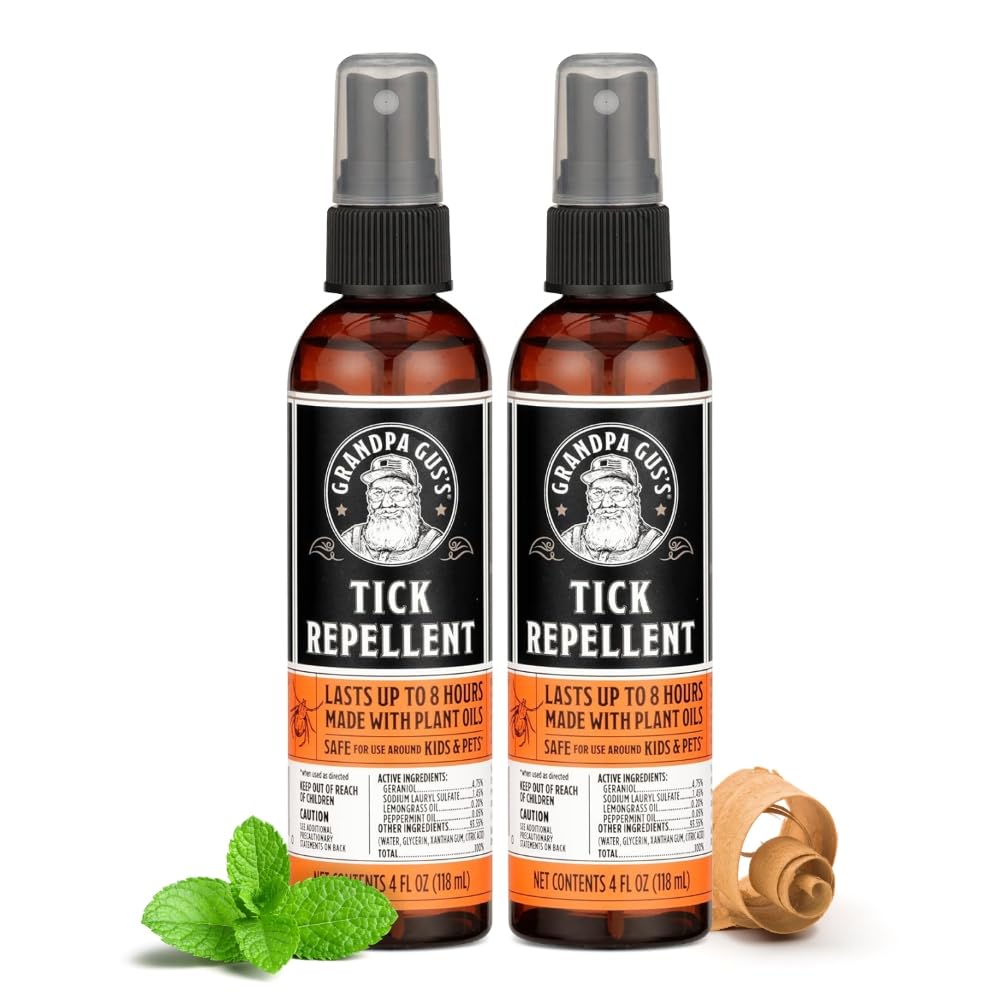
Grandpa Gus’s natural spray is for backpackers who specifically want to avoid DEET and Picaridin while still getting meaningful protection on shorter trips. The formula uses geraniol, lemongrass, and peppermint essential oils—the same active compounds found in many plant-based repellents—and claims up to 8 hours against ticks and 6 hours against mosquitoes. Multiple users confirm it works well for tick prevention in wooded areas, particularly when sprayed on pant legs and sleeves.
The two 4-ounce bottles are lightweight enough for weekend trips, and the spray nozzle produces a concentrated stream rather than a wide mist, which helps you target specific areas without wasting product. The scent is significantly more pleasant than DEET-based repellents—clean lemon and mint rather than chemical solvent—and the formula is non-greasy and non-staining on clothing. The dermatologist-tested claim reassures users with sensitive skin.
The hard performance limit is that 6 hours of mosquito protection is often not enough for a full day of backpacking, especially in humid climates where sweat speeds up evaporation of essential oils. A few users report that the mosquito repellency fades faster than advertised, requiring reapplication around the 3-4 hour mark during active hiking. This is a solid choice for day hikes or as a backup repellent, but for multi-day trips where reapplication is inconvenient, the Picaridin-based options offer more reliable duration.
Why it’s great
- DEET-free, plant-based formula with pleasant lemongrass-mint scent
- Non-greasy application that does not stain fabrics or gear
- Dermatologist-tested and safe for kids when applied by an adult
Good to know
- Mosquito protection fades to 3-4 hours during active hiking
- Essential oil smell may attract bees or wasps in some environments
FAQ
Why should I choose Picaridin over DEET for backpacking?
Do wipes work as well as spray or lotion in deep-woods conditions?
How do I reapply repellent on a multi-day trip without contaminating my food or shelter?
Final Thoughts: The Verdict
For most backpackers, the best backpacking mosquito repellent winner is the Sawyer 20% Picaridin Lotion Twin Pack because it delivers 12-hour protection with zero risk to your expensive gear. If you hike through tick-dense regions and want spray coverage that outperforms DEET, grab the Ben’s 20% Picaridin Spray. And for leak-proof ultralight convenience on day hikes, nothing beats the Ben’s 30% DEET Wipes.

Mo Maruf
I created WellFizz to bridge the gap between vague wellness advice and actionable solutions. My mission is simple: to decode the research and give you practical tools you can actually use.
Beyond the data, I am a passionate traveler. I believe that stepping away from the screen to explore new environments is essential for mental clarity and physical vitality.