Our readers keep the lights on and my smoothie glass nicely filled. As an Amazon Associate, I earn from qualifying purchases.
Backpacking meals have evolved beyond the days of bland, salty sludge in a bag. Today’s options range from gourmet comfort food in minutes to calorie-dense bars that require zero cook time, making the choice about more than just taste—it’s about how you want to spend your energy on the trail.
I’m Mohammad Maruf — the founder and writer behind WellFizz. I’ve spent years analyzing the nutrition-to-weight ratios, ingredient sourcing, and rehydration efficiency of trail food to help hikers pick meals that actually perform when miles rack up.
Whether you prioritize a hot dinner after a cold summit or a grab-and-go calorie bomb for high-output days, the right best backpacking meals should match your terrain, your gear, and your stomach’s endurance.
How To Choose The Best Backpacking Meals
Every ounce you put in your pack competes for space with your tent, filter, and patience. The best trail meal balances calories per ounce, preparation time, and how easily you can choke it down after six hours of uphill switchbacks.
Calorie Density vs. Pack Weight
Look for meals that deliver at least 100–120 calories per ounce. Traditional freeze-dried pouches often land around 110–130 cal/oz, while no-cook bars can push past 150 cal/oz. For multi-day trips where every gram counts, that gap adds up fast.
Rehydration Speed and Water Needs
A meal that takes 15 minutes to rehydrate might feel like forever when you’re hungry and cold. Premium brands have cut rehydration times to under 10 minutes, and some require less water—a real advantage when you’ve got limited water sources or want to carry less fuel.
Protein and Sodium for Trail Performance
Protein helps repair muscle after high-mileage days, but too much can sit heavy in your stomach. Sodium is critical for electrolyte balance during sweaty climbs, but some emergency-oriented meals pack sodium levels that are excessive for a single meal unless you’re sweating heavily.
Quick Comparison
On smaller screens, swipe sideways to see the full table.
| Model | Category | Best For | Key Spec | Amazon |
|---|---|---|---|---|
| Greenbelly Backpacking Meals | No-Cook Bars | Ultralight, stove-free trips | 650 calories per pouch | Amazon |
| Peak Refuel Creamy Peaches and Oats | Freeze-Dried Breakfast | High-protein trail breakfast | 30g protein per pouch | Amazon |
| Mountain House Chicken & Mashed Potato | Freeze-Dried Dinner | Quick, classic dinner comfort | Gluten-free certified | Amazon |
| Mountain House Biscuits & Gravy | Freeze-Dried Entrée | Large servings for hungry groups | 3 servings per pouch | Amazon |
| ReadyWise Favorites Box | Emergency Variety Kit | Long-term storage & camp variety | 25-year shelf life | Amazon |
In‑Depth Reviews
1. Greenbelly Backpacking Meals

The Greenbelly Meal is a paradigm shift for anyone tired of hauling a stove and waiting for water to boil. Each pouch contains two large meal bars delivering a combined 650 calories and over 5 ounces of food, with a macronutrient split that’s roughly 30/30/30 among protein, carbs, and fat. That’s genuine meal-level fuel, not a 200-calorie snack bar in disguise.
Formulated by a culinary chef and made with all-natural, gluten-free ingredients, the bars have a texture somewhere between a soft-baked oat bar and a dense granola slab. They’re designed to go down easy during exertion—no bloating, no jaw fatigue from a brick-like brick. The resealable pouch doubles as a trash bag, a small but appreciated detail for Leave No Trace discipline.
On a 40-mile desert trek with 10,000 feet of elevation gain, one tester reported sustained energy from breakfast through late lunch without any mid-afternoon crash. The only real friction is the packaging, which can require a knife to open, and the texture—while pleasant—is dense enough that some users find it tiring to chew after a full day. For pure calorie efficiency and zero prep, nothing in this review matches it.
Why it’s great
- Highest calorie-per-ounce ratio of any option here
- No cooking, no cleanup, no stove needed
- Gentle on the stomach during high-output hiking
Good to know
- Dense texture can cause jaw fatigue on multi-day use
- Pouch packaging is tough to open without a tool
2. Peak Refuel Creamy Peaches and Oats
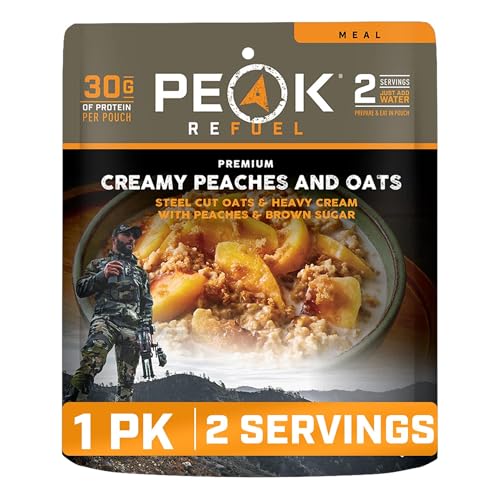
Peak Refuel’s Creamy Peaches and Oats is a standout breakfast entry from the Chad Mendes Signature lineup, packing 30 grams of protein and 1330 total calories into a two-serving pouch. That’s an impressive 1,330-calorie density in a lightweight package—rare for a sweet morning meal, which usually leans carb-heavy and light on protein.
The ingredient profile is clean, with freeze-dried fruit and oatmeal that rehydrates into a thick, creamy texture. Reviewers consistently note that it tastes like real oatmeal, not a synthetic meal replacement. The prep requires only boiling water and about ten minutes, less water than many competitors, which matters when you’re melting snow or carrying every liter in.
Some users found the serving size generous enough for one very hungry person—the listed “two servings” can be closer to a single hearty portion on the trail. At its price point, it’s more expensive per meal than some bulk options, but the ingredient quality and protein count make it a solid choice for recovery mornings after big mileage days.
Why it’s great
- 30g protein per pouch—highest among breakfast options
- Thick, creamy texture that rehydrates well
- Less water needed than many competitors
Good to know
- Two-serving pouch can feel like a single portion for big appetites
- Premium price per meal compared to bulk brands
3. Mountain House Chicken & Mashed Potato Dinner
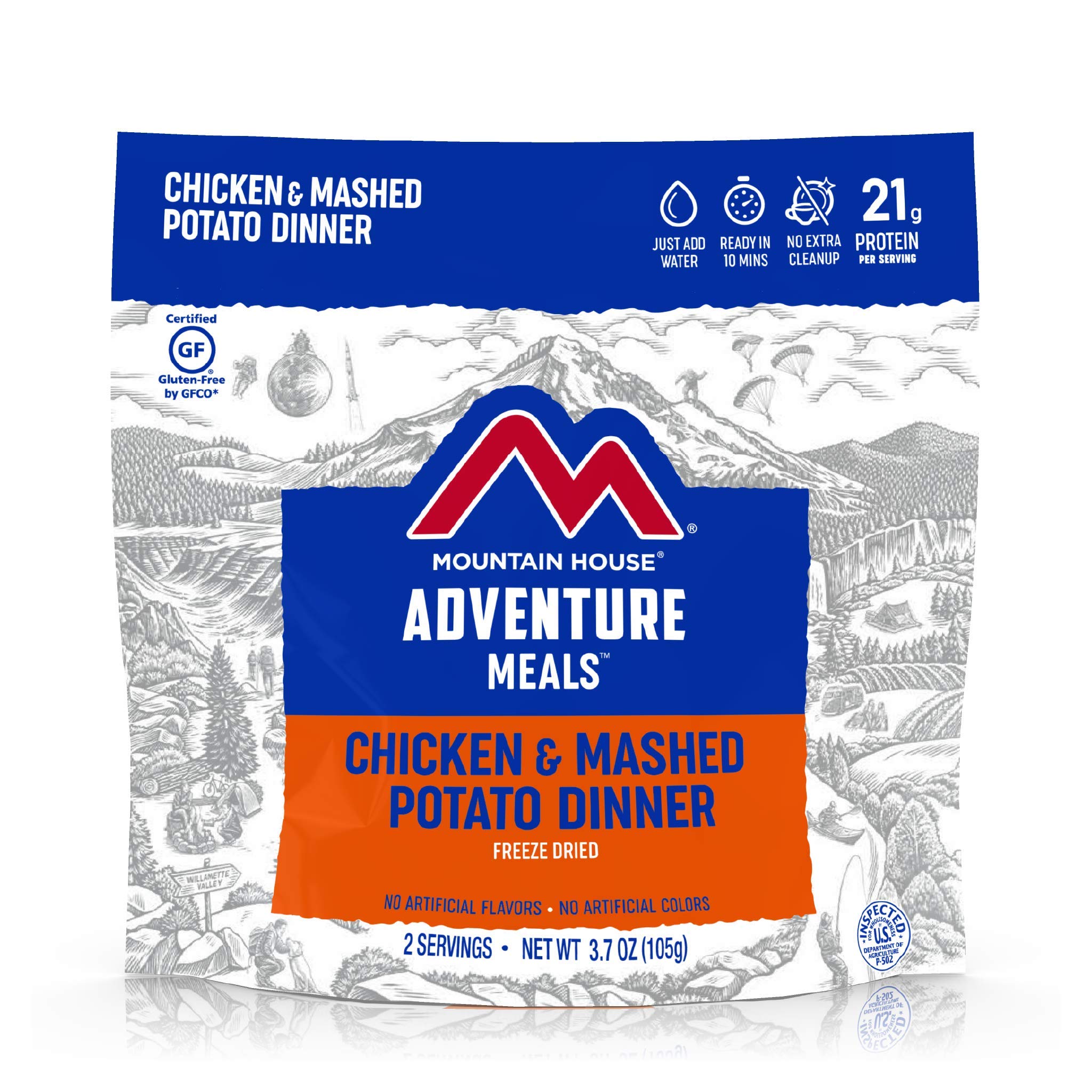
Mountain House has been freeze-drying comfort food since 1969, and their Chicken & Mashed Potato dinner shows why they’re still the benchmark. The meal consists of real chicken pieces and creamy mashed potatoes seasoned with herbs and chives, all certified gluten-free by GFCO. Rehydration takes under ten minutes, and the texture holds firm—no watery separation or gummy potato clumps.
The pouch is designed as two servings, but most backpackers report it works as a single generous dinner after a long day. The flavor is straightforward American comfort food—reminiscent of a rotisserie chicken dinner, minus the artificial aftertaste that plagues many emergency-food brands. It’s also backed by Mountain House’s 30-Year Taste Guarantee, which is less about restaurant quality and more about the shelf-life confidence: these pouches stay edible and palatable for decades.
Some users note the meal could use more seasoning, particularly black pepper or garlic powder, which is easy to add from a spice kit. The pouch also holds heat exceptionally long after rehydration, so you’ll want to transfer it to a bowl unless you have asbestos fingers. For a reliable, no-surprises hot dinner that requires minimal fuel, this is a top-tier choice.
Why it’s great
- Proven 30-year shelf life with taste guarantee
- Certified gluten-free with clean ingredients
- Quick rehydration—under 10 minutes every time
Good to know
- Can be bland; benefits from added seasoning
- Pouch stays very hot—transfer to bowl needed for safety
4. Mountain House Biscuits & Gravy

Mountain House’s Biscuits & Gravy is the closest thing to a backcountry country breakfast you can find in a pouch. It features buttermilk biscuit pieces and pork patty crumbles suspended in a peppered gravy, and it’s sized for three servings—making it one of the largest single pouches in this roundup. For a group of two hungry hikers, it’s a hearty meal; for one, it’s an absolute feast.
The flavor profile nails the classic diner experience—rich, savory, with a noticeable black pepper kick that cuts through the creaminess. The biscuit pieces retain a surprising amount of structure after rehydration, avoiding the soggy bread problem that plagues similar competitors. As with other Mountain House products, the pouch can be recycled through TerraCycle, adding a sustainability angle that matters for outdoor enthusiasts.
The elephant in the pouch is the sodium content: 2,940mg per serving. That’s well over the daily recommended intake for most adults, and it’s a serious consideration for anyone with blood pressure concerns or for use in non-sweaty conditions. On a high-exertion hike where you’re losing salt through sweat, it’s less of an issue, but for emergency storage or casual camping, you’ll want to pair it with low-sodium meals the rest of the day.
Why it’s great
- Three servings per pouch—excellent for groups
- Genuine diner taste with intact biscuit texture
- 30-year shelf life for long-term storage
Good to know
- Extremely high sodium at 2,940mg per serving
- Expensive per meal compared to bulk options
5. ReadyWise Favorites Box

The ReadyWise Favorites Box is an entry-level emergency food kit that packs 18 servings into a compact, stackable box. The included flavors—Creamy Pasta & Vegetables, Cheesy Lasagna, and Tomato Basil Soup with Pasta—are designed for variety, making it a decent starter kit for car camping, pantry storage, or short backpacking trips where weight isn’t the primary concern.
The meals use a mix of freeze-dried and dehydrated ingredients, which means some require actual cooking rather than just hot-water rehydration. The texture tends toward softer, mushier outcomes compared to premium freeze-dried competitors, and the seasoning is mild—several reviewers added their own spices to improve flavor. The 25-year shelf life is the standout feature, making this more of a preparedness investment than a daily trail meal solution.
Serving sizes are smaller than advertised—some users found the “two-serving” pouches barely fed one child. The high sodium content is standard for survival food, and the value lies almost entirely in its longevity and convenience for emergency kits. For backpackers who want a lightweight, gourmet dinner, this isn’t the target; for someone building a base-layer emergency supply, it’s a practical starting point.
Why it’s great
- 25-year shelf life for long-term storage
- 18 servings in one compact box—good for emergencies
- Variety of flavors prevents menu fatigue
Good to know
- Serving sizes are smaller than advertised
- Texture and flavor lag behind premium freeze-dried brands
FAQ
How many calories per day should a backpacking meal provide?
Can I rehydrate freeze-dried meals without a stove?
Final Thoughts: The Verdict
For most users, the best backpacking meals winner is the Greenbelly Backpacking Meals because it completely eliminates the need for a stove and fuel, saving over a pound of pack weight while delivering 650 calories of clean energy. If you want a hot, protein-packed breakfast to jumpstart cold mornings, grab the Peak Refuel Creamy Peaches and Oats. And for a hearty, no-surprise hot dinner that’s been perfected over five decades, nothing beats the Mountain House Chicken & Mashed Potato Dinner.

Mo Maruf
I created WellFizz to bridge the gap between vague wellness advice and actionable solutions. My mission is simple: to decode the research and give you practical tools you can actually use.
Beyond the data, I am a passionate traveler. I believe that stepping away from the screen to explore new environments is essential for mental clarity and physical vitality.