Our readers keep the lights on and my smoothie glass nicely filled. As an Amazon Associate, I earn from qualifying purchases.
After a full day of pounding trail miles in stiff boots, the last thing your feet need is more confinement. The best camp shoes are featherlight, pack flat, and let your feet breathe—providing just enough protection to walk to the creek or grab dinner without triggering hot spots on tired soles.
I’m Mohammad Maruf — the founder and writer behind WellFizz. I’ve spent hundreds of hours cross-referencing customer feedback and technical specs to find the camp shoes that actually hold up on wet rock, dry fast after a river crossing, and disappear into a stuff sack without adding noticeable weight to your pack.
After digging through real-world reviews and sorting by weight, dry time, and traction, these are the top options for anyone hunting down a reliable pair of backpacking camp shoes.
How To Choose The Best Backpacking Camp Shoes
Camp shoes live a paradoxical life: they need to be nearly weightless in your pack yet tough enough to handle sharp creek beds, hot sand, and wet boat decks. Prioritizing the wrong spec—like thick cushioning over dry speed—can turn a restful evening into a soggy ordeal. Here’s what actually matters.
Weight and Packed Volume
Every ounce counts when it’s riding inside your backpack. Look for shoes that fold flat or roll into a small stuff sack. Models under 8 ounces per shoe are ideal; anything heavier than a pound total defeats the purpose of having dedicated camp footwear.
Drying Speed and Drainage
After soaking your shoes in a stream crossing or rainy hike, you need them bone-dry by morning. Open-cell mesh uppers and minimal padding let water escape fast. Closed-toe designs with drainage ports work well, but barefoot sandals with open straps dry near-instantly.
Traction on Slick Surfaces
Camp shoes see wet rocks, muddy bank trails, and slippery boat ramps. A high-friction rubber compound—often called “sticky rubber”—with siped or chevron lugs provides the grip you need to stay upright when your legs are already tired.
Quick Comparison
On smaller screens, swipe sideways to see the full table.
| Model | Category | Best For | Key Spec | Amazon |
|---|---|---|---|---|
| Astral Loyak | Premium Sneaker | Wet rock & river crossings | Siped rubber sole for grip | Amazon |
| Xero Z-Trail EV | Barefoot Sandal | Beach & trail walking | 11mm stack height | Amazon |
| Columbia Landroamer Camper | Casual Sneaker | Camp & casual wear | Lightweight EVA midsole | Amazon |
| HUMTTO Amphibious | Closed Toe Sandal | Kayaking & rafting | Adjustable strap closure | Amazon |
| Xero Genesis Sandals | Minimalist Sandal | Ultralight & river use | Adjustable toe-post strap | Amazon |
| FITKICKS HydroSport | Slip-on Wet Shoe | Beach & yoga | Barefoot flexible sole | Amazon |
| ziitop Water Shoes | Budget Sneaker | Wet weather hiking | Quick-dry mesh upper | Amazon |
In‑Depth Reviews
1. Astral Loyak
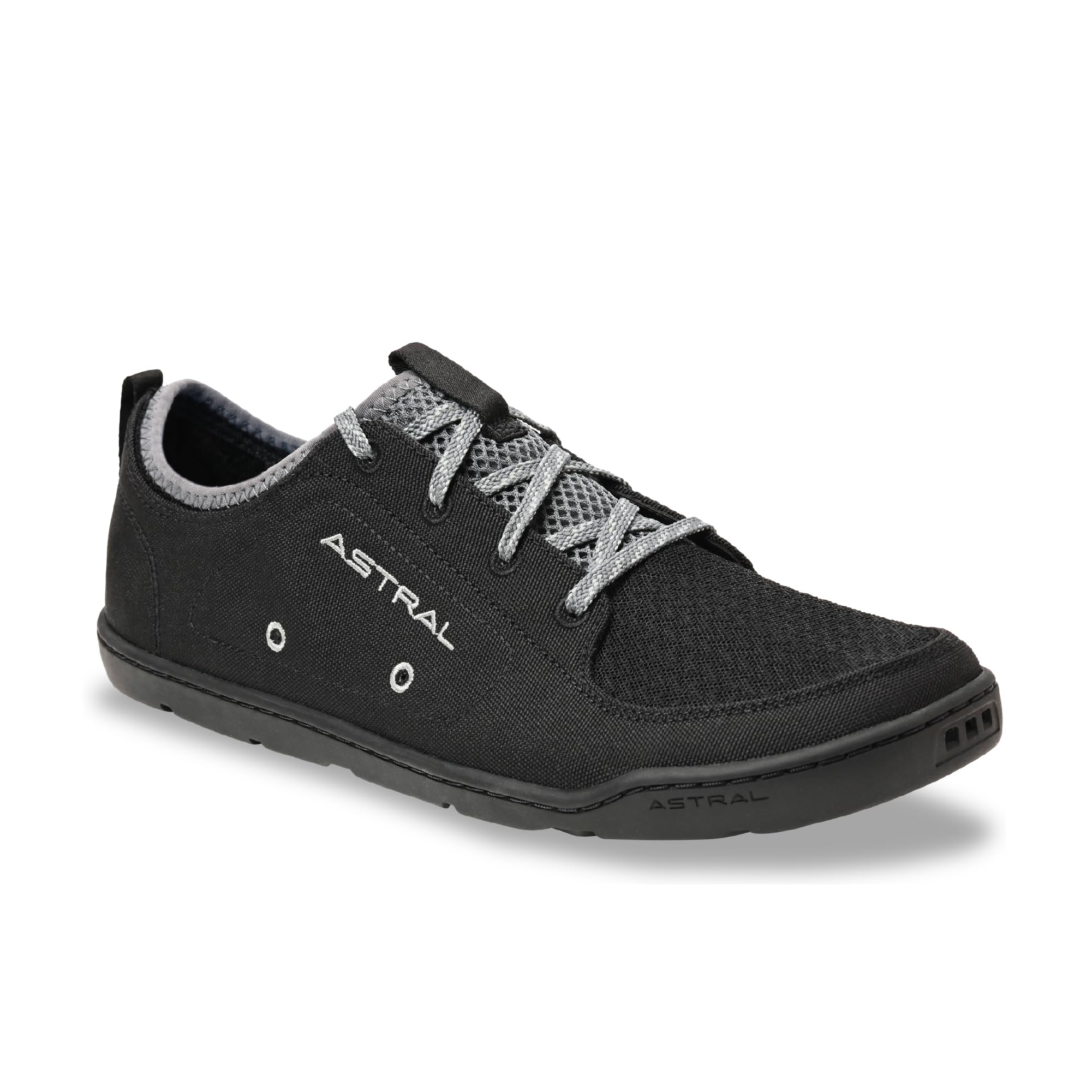
The Astral Loyak is engineered for river guides and paddlers who need unshakeable grip on wet, moss-covered rock. The siped rubber sole channels water away from the contact patch, letting you stand on near-vertical surfaces that would send standard outsoles sliding. At just over 10 ounces per shoe, it’s a touch heavier than true ultralight options, but the trade-off is category-leading traction that inspires confidence on sketchy shoreline terrain.
The mesh upper drains water rapidly and the removable insole lets you clear out debris like pebbles or sand that sneak in during river crossings. Testers reported that the shoe’s low-profile design—5mm drop—keeps your feet close to the ground, improving stability on uneven camp surfaces. Some users noted that the mesh traps fine seeds and sand after extended wet use, but a quick rinse clears most of it.
The Loyak runs long; many buyers recommend sizing down a half to full size for a snug fit that won’t cause heel slip during camp walks. The minimal padding means it’s not meant for long hikes—but for river-to-camp transitions, creek wading, and boat decks, it’s the most confidence-inspiring option on this list. The higher upfront cost pays off in durability that survives multiple seasons of hard use.
Why it’s great
- Exceptional grip on wet, mossy rocks
- Drains water quickly through mesh and ports
- Durable build survives river abuse
Good to know
- Takes a full day to dry if worn wet for hours
- Mesh can trap sand and seeds
2. Xero Z-Trail EV

The Xero Z-Trail EV delivers a true barefoot experience with just enough sole to handle rocky camp terrain. At 11mm of stack height, it’s thicker than classic huarache sandals but still flexible enough to let your feet sense the ground—helpful for balance after a long day in boots. The multi-adjustable straps (toe, midfoot, and heel) let you dial in a secure fit that won’t slide around on wet skin.
Drying speed is near-instantaneous: the open design means water sheds off immediately, and the thin EVA-foam core doesn’t hold moisture. Reviewers with neuropathy and balance issues reported improved stability after switching to these for camp walking. The 5.5mm rubber outsole features a chevron tread that grips well on packed dirt and beach sand, though the foam sole can show wear sooner than solid rubber alternatives.
The heel strap uses a Velcro closure that some users found difficult to adjust precisely, especially when wet. After extended use, the foam sole may compress or chip around the edges. Still, for backpackers who prioritize packability—these fold nearly flat—and want a shoe that lets their air out fully, the Z-Trail EV is a top contender in the mid-range sandal category.
Why it’s great
- Near-instant drying with open design
- Packs flat for easy storage
- Multi-adjustable straps for a custom fit
Good to know
- Foam sole can chip or compress over time
- Heel Velcro can be tricky to adjust
3. Columbia Landroamer Camper

The Columbia Landroamer Camper bridges the gap between a true camp shoe and a casual sneaker you can wear to dinner. It features a lightweight EVA midsole that provides moderate cushioning—enough to walk around camp comfortably but not so much that it feels bulky in a pack. The outsole uses Columbia’s trademarked Omni-Grip rubber, which delivers reliable traction on gravel paths, damp grass, and wooden boardwalks.
Several reviewers noted that the shoe fits a D-width well and accommodates wider feet without pinching. The upper is a combination of mesh and synthetic leather that breathes reasonably well, though it’s not designed for full submersion—drying time is slower than the open sandals or mesh-only shoes on this list. For campers who also want a shoe that works for short walks to the store or casual office days, this hybrid design fits the bill.
The Landroamer is heavier than minimalist options—around 11 ounces per shoe—so it’s not the best choice for ounce-counting backpackers. Users also reported that the shoe is not suitable for long hikes or strenuous trails; it’s best reserved for relaxed camp evenings and light day-use around the site. For basecamp-style trips where weight is less critical, this is a comfortable, good-looking alternative to strappy sandals.
Why it’s great
- Comfortable cushioning for all-day camp wear
- Omni-Grip outsole for mixed terrain
- Stylish enough for casual use beyond camp
Good to know
- Heavier than minimalist camp shoes
- Slower drying time after submersion
4. HUMTTO Amphibious Women’s Sandal
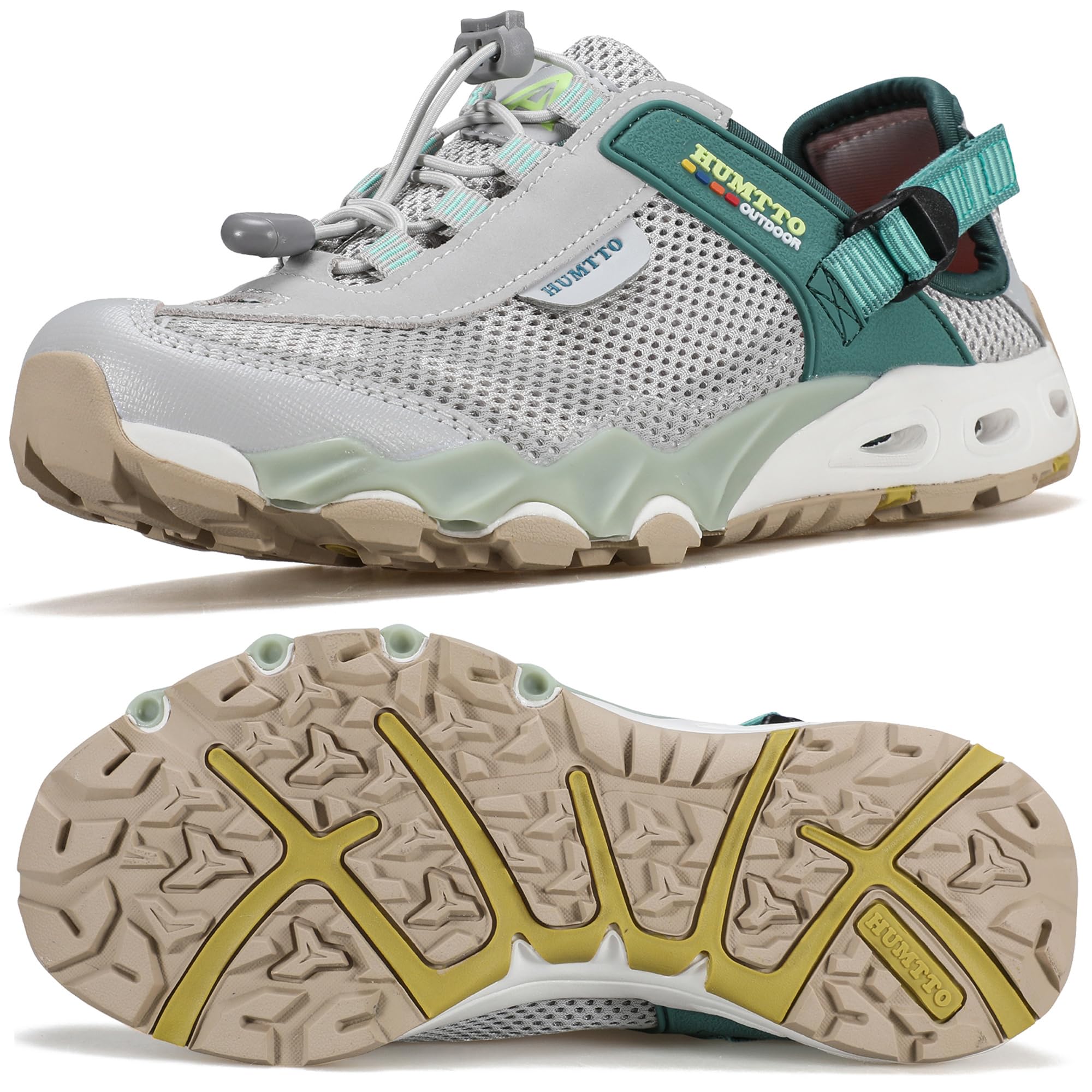
The HUMTTO Amphibious sandal combines the protection of a closed-toe shoe with the ventilation of an open sandal, making it a smart choice for kayakers and rafters who need toe protection on rocky shores. The adjustable strap system lets you tighten for secure fit or loosen for quick on/off—useful when transitioning between boat and land multiple times a day. The rubber outsole is non-slip and holds well on wet boat decks and slick rocks.
Reviewers who used these on Grand Canyon rafting trips and Tennessee lake vacations praised the comfortable, glove-like fit straight out of the box. The mesh upper dries quickly after submersion, and the shoe works with or without socks. However, the fit runs slightly wide, which is a bonus for medium-to-wide feet but may feel loose for narrow-footed users who prefer a snug camp shoe.
The sandal’s construction feels durable for its mid-range price point, with reinforced stitching around the straps and a sturdy toe cap. Some users noted that sandy water can get trapped inside, requiring a rinse to clear grit. For campers who prioritize foot protection over pure breathability, this closed-toe amphibious design offers a solid middle ground between a water shoe and a hiking sandal.
Why it’s great
- Closed-toe design protects against rocks
- Adjustable straps for a secure fit
- Quick-drying mesh upper
Good to know
- Runs wide; not ideal for narrow feet
- Sandy water can get trapped inside
5. Xero Genesis Barefoot Sandals

The Xero Genesis sandals are the ultralight minimalist’s dream: they weigh virtually nothing, pack to the size of a folded t-shirt, and provide a true barefoot feel that strengthens foot muscles over time. The adjustable toe-post and heel strap system takes about 20-30 minutes of trial to dial in perfectly, but once set, the sandal becomes an extension of your foot. The 6mm FeelTrue rubber outsole offers excellent ground feel while protecting against sharp objects.
Users who made the switch from traditional camp shoes reported reduced knee pain and engaged new stabilizing muscles in the lower leg. The open design means drying time is measured in minutes rather than hours. However, the sandal performs poorly on loose gravel—pebbles can get trapped between the sole and foot—and the heel strap attachment point (a rubber tab glued to the outsole) has a history of delaminating after roughly a year of regular use.
The toe post can cause initial discomfort if overtightened, and the plastic adjustment tabs may dig into the top of your foot if not tucked properly into the laces. Despite these quirks, fans appreciate the affordable price point and the foot-strengthening benefits. For backpackers who want the lightest possible option and are willing to accept a shorter lifespan, the Genesis sandals deliver unmatched packability.
Why it’s great
- Extremely lightweight and packable
- Strengthens foot and calf muscles
- Near-instant drying time
Good to know
- Heel strap attachment can delaminate over time
- Poor on loose gravel; pebbles get trapped
6. FITKICKS HydroSport

The FITKICKS HydroSport is a slip-on barefoot-style shoe designed for land-to-water transitions. The flexible rubber sole molds to your foot’s natural shape while the elastic lacing system lets you tighten without tying—great for quick dips in the lake or sandy beach walks. The shoe’s lightweight construction (around 5 ounces per shoe) makes it one of the most packable closed-toe options available, compressing easily into a side pocket of your pack.
Reviewers praised the surprisingly supportive design for a shoe that feels like a slipper. The roomy toe box accommodates natural splay, and the elastic laces can be adjusted to accommodate high arches without pressure points. After 3.5 months of near-daily use, one user reported no hip or lower back pain, suggesting the zero-drop platform helps maintain alignment. The shoe dries relatively quickly thanks to the mesh upper, but the padded heel area can stay damp longer than the rest of the shoe.
With regular use, the thin outsole may wear through faster than a traditional rubber camp shoe, especially on abrasive surfaces like concrete or sharp gravel. The slip-on design also means you lose some ankle security in fast-moving water compared to lace-up alternatives. For beach campers, yoga practitioners, and car-campers who prioritize convenience over ruggedness, the HydroSport offers a comfortable, packable solution.
Why it’s great
- Ultra-lightweight and packable
- Elastic laces for easy on/off
- Roomy toe box for natural foot splay
Good to know
- Thin sole may wear quickly on rough terrain
- Slip-on design offers less ankle security
7. ziitop Water Shoes
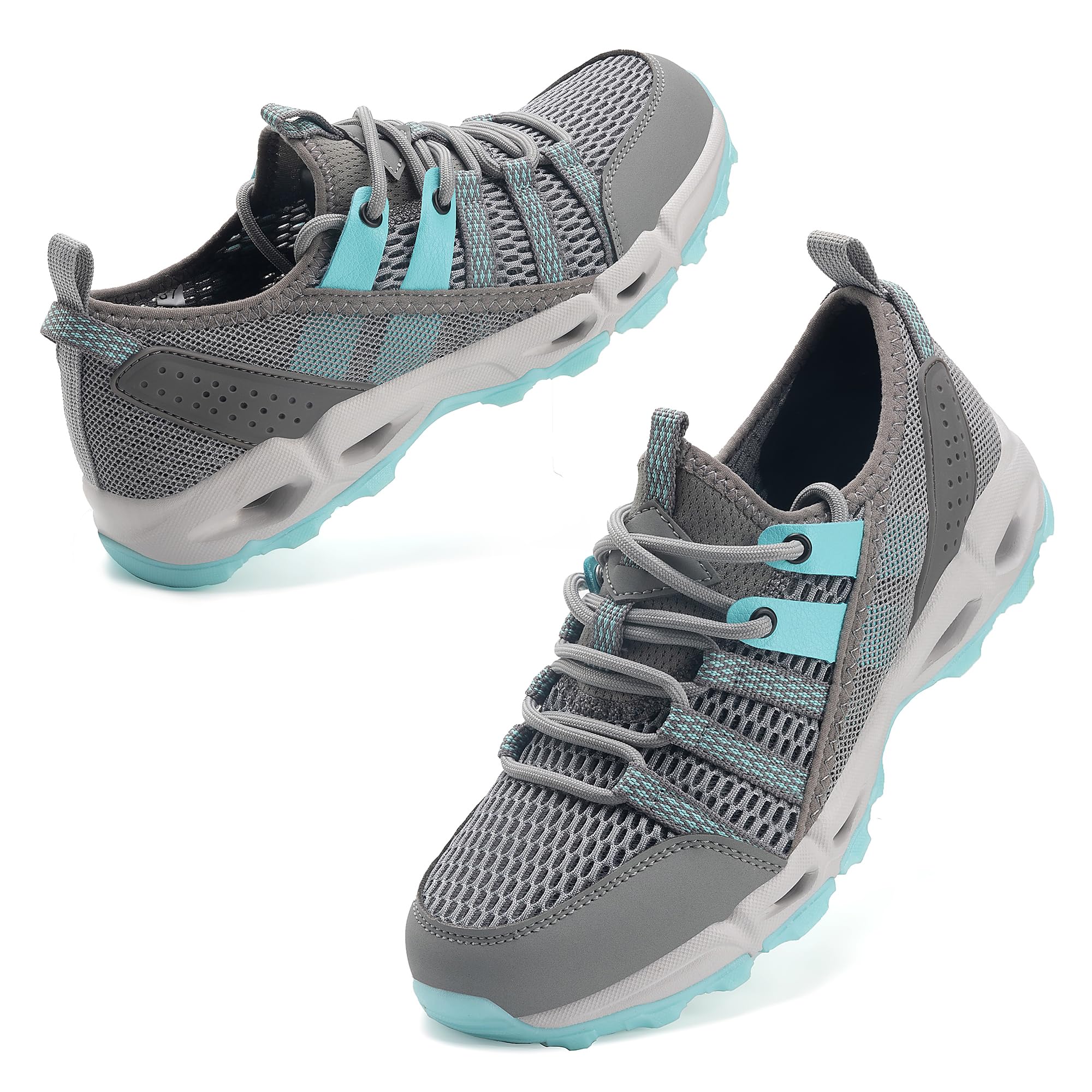
The ziitop Water Shoes are an entry-level closed-toe option that punches above its weight for the price. The quick-dry mesh upper sheds water efficiently, and the rubber outsole features a tread pattern that grips surprisingly well on wet rocks and muddy slopes—especially impressive given the low cost. At roughly 7 ounces per shoe, they’re light enough for backpacking and compress reasonably well into a stuff sack.
Backpackers who used these as a backup pair on creek hikes and wet-weather trips reported zero blisters after full days of use. The shoe fits true to size for most buyers, with enough structure to feel like a lightweight sneaker rather than a flimsy water sock. The Achilles notch and padded collar help prevent heel rub, a common issue in budget water shoes. Several reviewers noted the shoe looks like a tennis shoe but grips like a hiker, making it a versatile choice for camp and short trails.
The durability ceiling is lower than premium options: the mesh upper may show fraying after extended use on sharp terrain, and the outsole compound is less sticky than specialized rubber blends like those found on the Astral or Xero models. For budget-conscious backpackers who want a capable, no-frills camp shoe that handles wet conditions without complaint, the ziitop delivers excellent value for the money.
Why it’s great
- Impressive wet traction for the price
- Lightweight and compressible
- No blister reports from users
Good to know
- Mesh may fray on sharp terrain over time
- Outsole less grippy than premium rubber blends
FAQ
Can I use running shoes as camp shoes?
How do I prevent blisters with barefoot-style camp sandals?
What is the ideal weight for backpacking camp shoes?
Final Thoughts: The Verdict
For most users, the backpacking camp shoes winner is the Astral Loyak because it combines unmatched wet-rock traction with quick-drying mesh and a low-profile design that keeps you stable on uneven camp ground. If you want a packable barefoot feel that strengthens your feet, grab the Xero Z-Trail EV. And for a budget-friendly closed-toe option that handles wet weather without breaking the bank, the ziitop Water Shoes are a reliable pick.

Mo Maruf
I created WellFizz to bridge the gap between vague wellness advice and actionable solutions. My mission is simple: to decode the research and give you practical tools you can actually use.
Beyond the data, I am a passionate traveler. I believe that stepping away from the screen to explore new environments is essential for mental clarity and physical vitality.