Our readers keep the lights on and my smoothie glass nicely filled. As an Amazon Associate, I earn from qualifying purchases.
A backpacking backpack that fits like a suitcase destroys your shoulders by mile three. An ill-matched suspension system turns a ten-mile ridge traverse into a slow-motion wreck. The right frame, the correct torso length, and a hipbelt that actually grips your iliac crest are the difference between covering ground and covering misery. This category demands you match your body’s anatomy — not just your gear list — to a pack’s architecture.
I’m Mohammad Maruf — the founder and writer behind WellFizz. I’ve spent years analyzing pack load-transfer mechanisms, foam densities, fabric denier ratings, and suspension adjustability ranges across hundreds of models to understand which internal-frame designs actually deliver on the trail.
Whether you are planning a three-season thru-hike or weekend off-trail camps, finding the best backpacking backpacksmeans knowing how torso length, frame type, and volume interact with your specific load and terrain.
How To Choose The Best Backpacking Backpacks
Selecting a backpacking pack is a mechanical decision, not a cosmetic one. The frame transfers weight from your shoulders to your hips; the hipbelt stabilizes that load against your body’s natural pivot point. If either fails to match your torso length or pelvic shape, the entire carry system collapses. Start with fit, then evaluate volume, suspension type, and feature set in that order.
Match Torso Length Before Any Other Spec
Your torso length — measured from the C7 vertebra (the bony bump at the base of your neck) down to the iliac crest (the top of your hip bones) — determines where the hipbelt sits. A pack that is too long will ride low, forcing the hipbelt onto your soft abdomen. A pack that is too short will pull your shoulders back and create a gap between your lower back and the frame. Most brands offer size ranges like S/M/L or adjustable torso systems (Fit Pro, Vari Quick). Always check the adjustable range; a model that covers 16 to 21 inches fits the widest range of torsos.
Volume Dictates Trip Length and Gear Bulk
Volume is measured in liters and directly correlates with how many days you can carry food, shelter, and clothing. A 30-to-40-liter pack suits fast-and-light overnights and summer trips. A 45-to-55-liter pack handles three-to-five-day excursions, including a bear canister and extra insulation. A 60-to-70-liter pack supports extended multi-week expeditions or winter loads where bulky sleeping bags and extra layers consume space. Confirm that the pack’s optimal carry weight range (often listed by the manufacturer) aligns with your base weight plus consumables.
Suspension Type Affects Sweat and Stability
Trampoline mesh suspension — used by Osprey’s AirSpeed and Deuter’s Aircontact systems — keeps the pack body off your back, creating a ventilation channel that reduces sweat accumulation. This design trades a small amount of stability (the load sits farther from your center of gravity) for superior airflow. Foam-based backpanels (like Osprey’s AirScape or Kelty’s Amp Flow) sit closer to your body, improving load transfer and stability at the cost of less breathability. Choose trampoline mesh for hot humid conditions; choose foam for heavy loads and technical terrain where control matters more than airflow.
Quick Comparison
On smaller screens, swipe sideways to see the full table.
| Model | Category | Best For | Key Spec | Amazon |
|---|---|---|---|---|
| Osprey Exos 58 | Ultralight | Fast thru-hikes | 2.84 lb / 58 L | Amazon |
| Osprey Stratos 44 | Ventilated | Humid multi-day trips | AirSpeed trampoline | Amazon |
| Osprey Kestrel 48 | All-Rounder | Technical overnighters | 4.62 lb / 48 L | Amazon |
| Kelty Asher 65L | Budget Premium | Entry-level multi-day | 3 lb 5 oz / 65 L | Amazon |
| Deuter Aircontact Lite 45+10 SL | Women’s Fit | Long-distance women | 3.4 lb / 45+10 L | Amazon |
| Thule Landmark 60L | Travel Hybrid | Multi-month travel | Detachable 20L daypack | Amazon |
| Thule Chasm Duffel | Convertible Duffel | Car-camping moves | 130 L / 5.4 lb | Amazon |
| Deuter Aircontact Core 60+15 SL | Women’s Expedition | Heavy-load treks | Y-frame / VariSlide | Amazon |
| Osprey Aether 65L | Expedition Ready | Heavy technical loads | 4.96 lb / 65 L | Amazon |
In‑Depth Reviews
1. Osprey Exos 58 Men’s Ultralight Backpacking Backpack
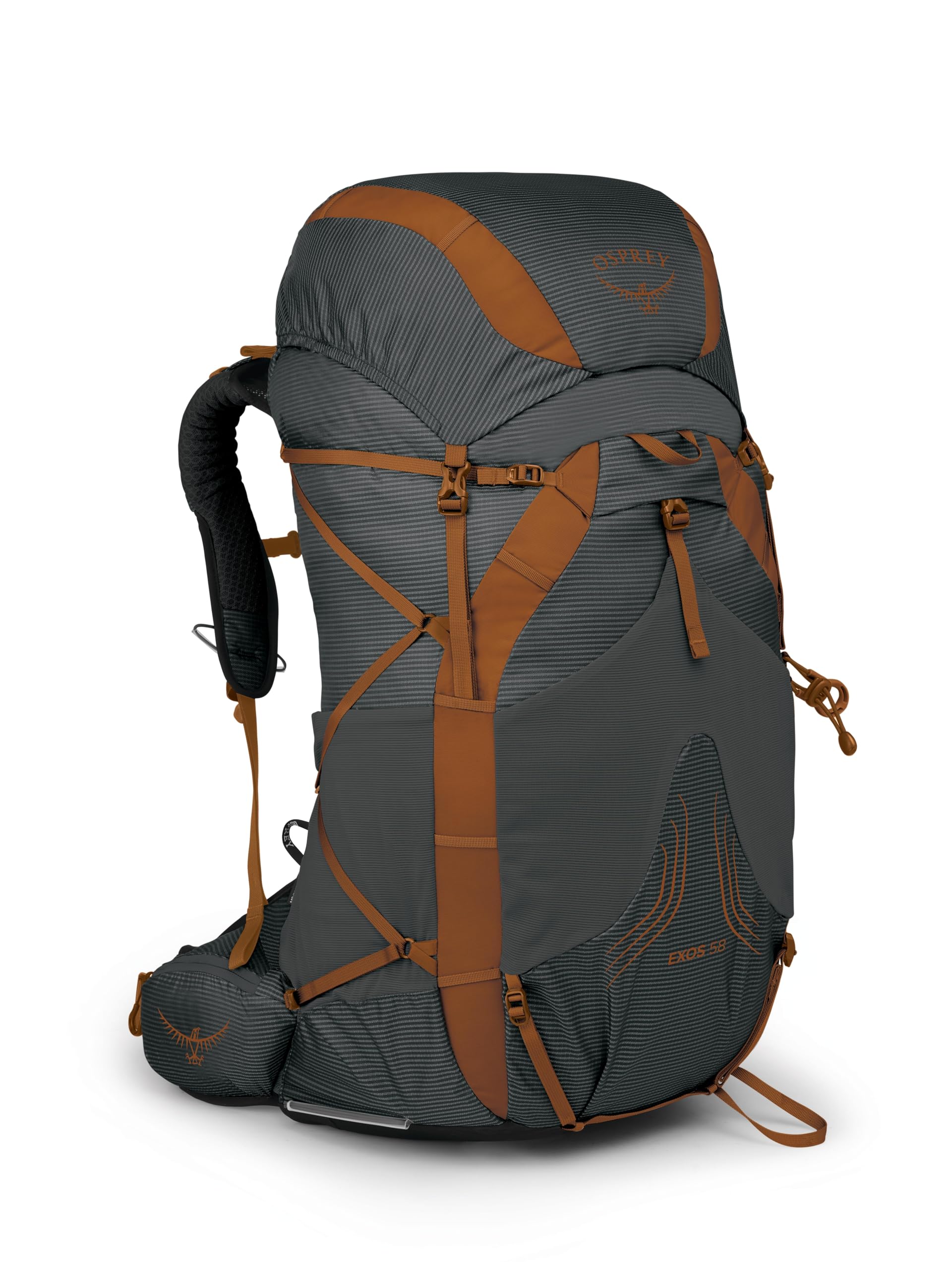
The Exos 58 occupies the sweet spot where ultralight construction and real load-bearing capability coexist. At just 2.84 pounds, it sheds nearly two pounds compared to a standard expedition pack, yet its injection-molded ladder adjustment and peripheral frame still carry up to 40 pounds with stable weight transfer. The AirSpeed trampoline backpanel provides exceptional ventilation — critical for hot-weather thru-hikes where every sweat drip adds misery.
Osprey spec’d this pack with 100% recycled 210-denier nylon ripstop treated with PFAS-free DWR, so the material choice aligns with both durability and environmental standards. The removable floating lid gives you the option to shave another few ounces when you don’t need the top pocket, and the two hipbelt pockets keep snacks and a phone within reach without stopping. The internal hydration sleeve routes the hose through a center back port, keeping the drinking tube centered and tangle-free.
Where the Exos compromises is in pad thickness. The hipbelt and shoulder straps use less foam than a dedicated expedition pack, so if you routinely carry more than 40 pounds, the thinner padding will transmit pressure points after several miles. But for weight-conscious hikers who keep their base weight under 25 pounds, the Exos 58 is the most capable lightweight platform in this lineup.
Why it’s great
- Extremely low base weight for a 58-liter framed pack
- Excellent trampoline ventilation reduces back sweat substantially
- 4 inches of torso adjustability fits a broad range of body types
Good to know
- Hipbelt and shoulder padding feel thin above 40 lb loads
- Removable lid adds future purchase cost if you later want one
2. Osprey Stratos 44L Men’s Hiking Backpack
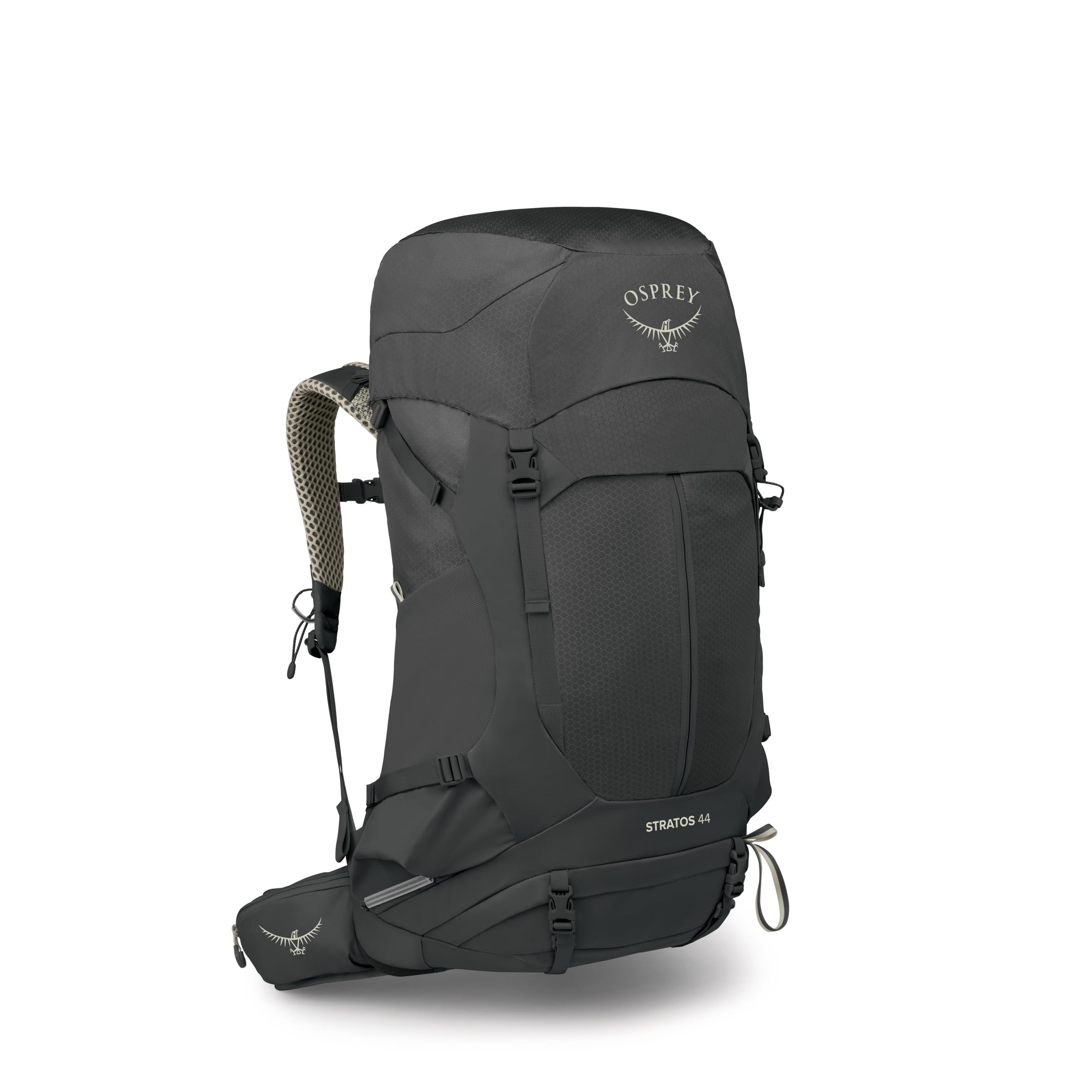
The Stratos 44 is the volume-sweet-spot pack for weekend warriors who prioritize back ventilation above all else. Its AirSpeed trampoline suspension uses a LightWire peripheral frame to hold the pack body away from your spine, creating a continuous air channel that moves sweat away from your lower back. For humid summer trips in the Southeast or Pacific Northwest, this design difference is the difference between arriving dry and arriving soaked.
The pack is built around a men’s-specific fit with adjustable torso length, a padded harness with a magnetic sternum strap, and an ErgoPull hipbelt that cinches evenly from both sides. The fixed top lid includes a zippered pocket, and the dual-access main compartment — a top loader with a separate bottom-zip sleeping bag compartment — lets you reach your quilt without unpacking the entire bag. A stowable raincover built from 100% recycled nylon ripstop lives in its own dedicated bottom compartment.
At 3.7 pounds, the Stratos is not a lightweight contender, but the weight is justified by the suspension hardware. The trade-off is that the rigid frame requires overhead bin storage on flights — it won’t fit as a personal item. For hikers who can tolerate the extra pound in exchange for a dry back on hot climbs, the Stratos 44 is a top-tier performer.
Why it’s great
- Mesh trampoline backpanel provides best-in-class ventilation
- Integrated raincover eliminates need for aftermarket purchase
- Adjustable torso length and Load Lifters for precise fit tuning
Good to know
- Heavier than comparable 44-liter ultralight packs
- Rigid frame limits carry-on compatibility on budget airlines
3. Osprey Kestrel 48L Men’s Backpacking Backpack
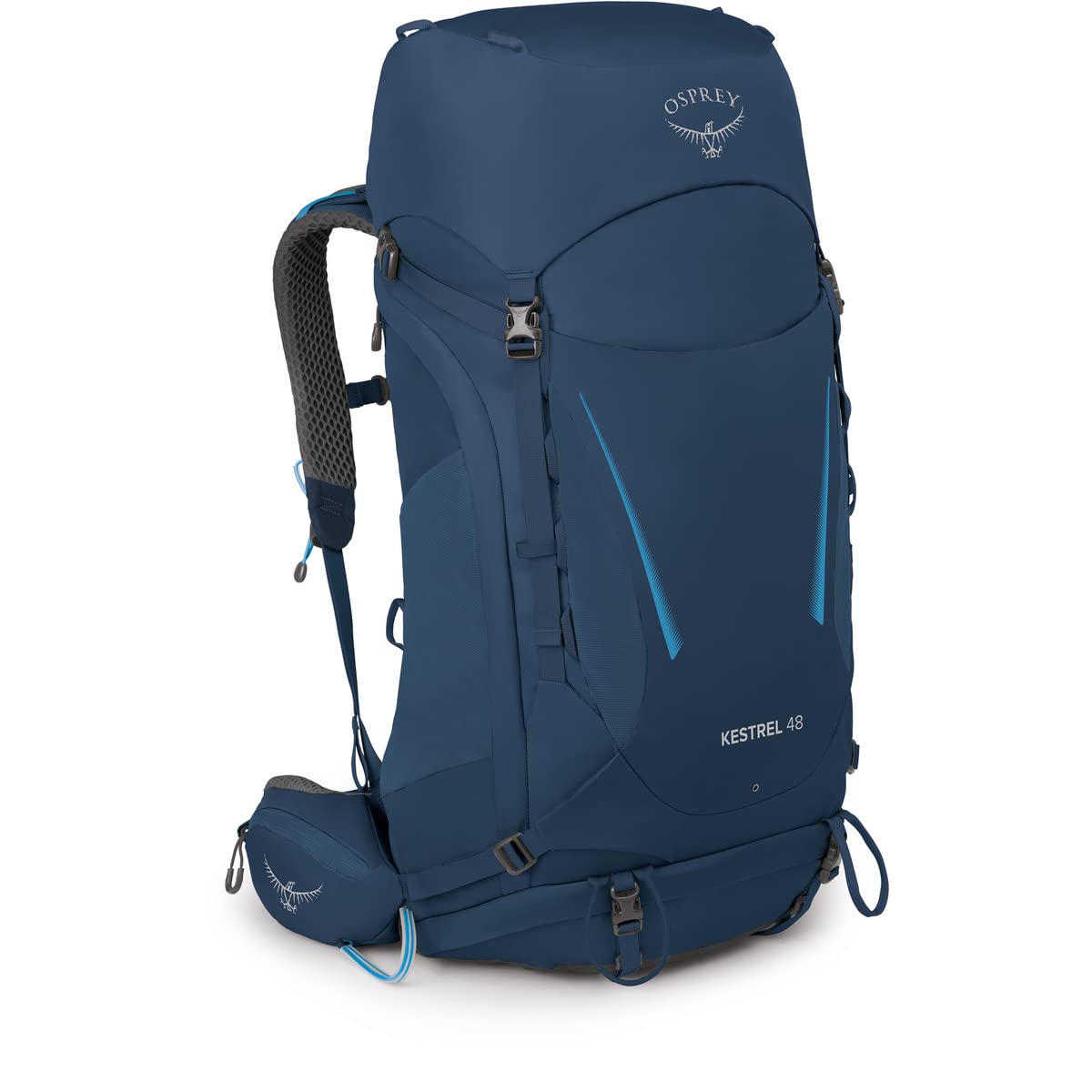
The Kestrel 48 is Osprey’s no-nonsense technical pack for hikers who need ruggedness over ounces. Its injection-molded AirScape backpanel provides a stable, close-to-body fit that keeps the load glued to your center of gravity — ideal for off-trail scrambling, talus hopping, or any terrain where a shifting pack can throw off your balance. The 4.62-pound weight is high for the volume class, but the 210-denier nylon body and reinforced bottom fabric resist abrasion far better than lighter-weight competitors.
Feature density is the Kestrel’s strength. It includes a built-in raincover stored in a zippered bottom pocket, trekking pole attachment loops, ice tool loops, a front shove-it pocket for wet layers, and dual-access side pockets that fit tall Nalgene bottles. The top lid offers a large zippered pocket with an under-lid mesh pocket and a key clip. Side compression straps let you cinch down a partial load, and the fixed hipbelt uses thick, sculpted foam that distributes weight evenly across the iliac crest.
One reported concern with this specific batch involves a formaldehyde-like odor upon first opening — some users note the company acknowledges the issue and advises washing. After a few trail days the smell dissipates. If you prioritize durability and on-trail organization over minimum weight, the Kestrel 48 delivers outstanding utility for its price tier.
Why it’s great
- Thick shoulder and waist padding for heavy load comfort
- Integrated raincover with dedicated storage compartment
- Tough outer fabric resists trail abrasion and brush
Good to know
- Some units arrive with a strong chemical odor that requires washing
- Heavier than other 48-liter options from Osprey’s own lineup
4. Kelty Asher Backpack 65L
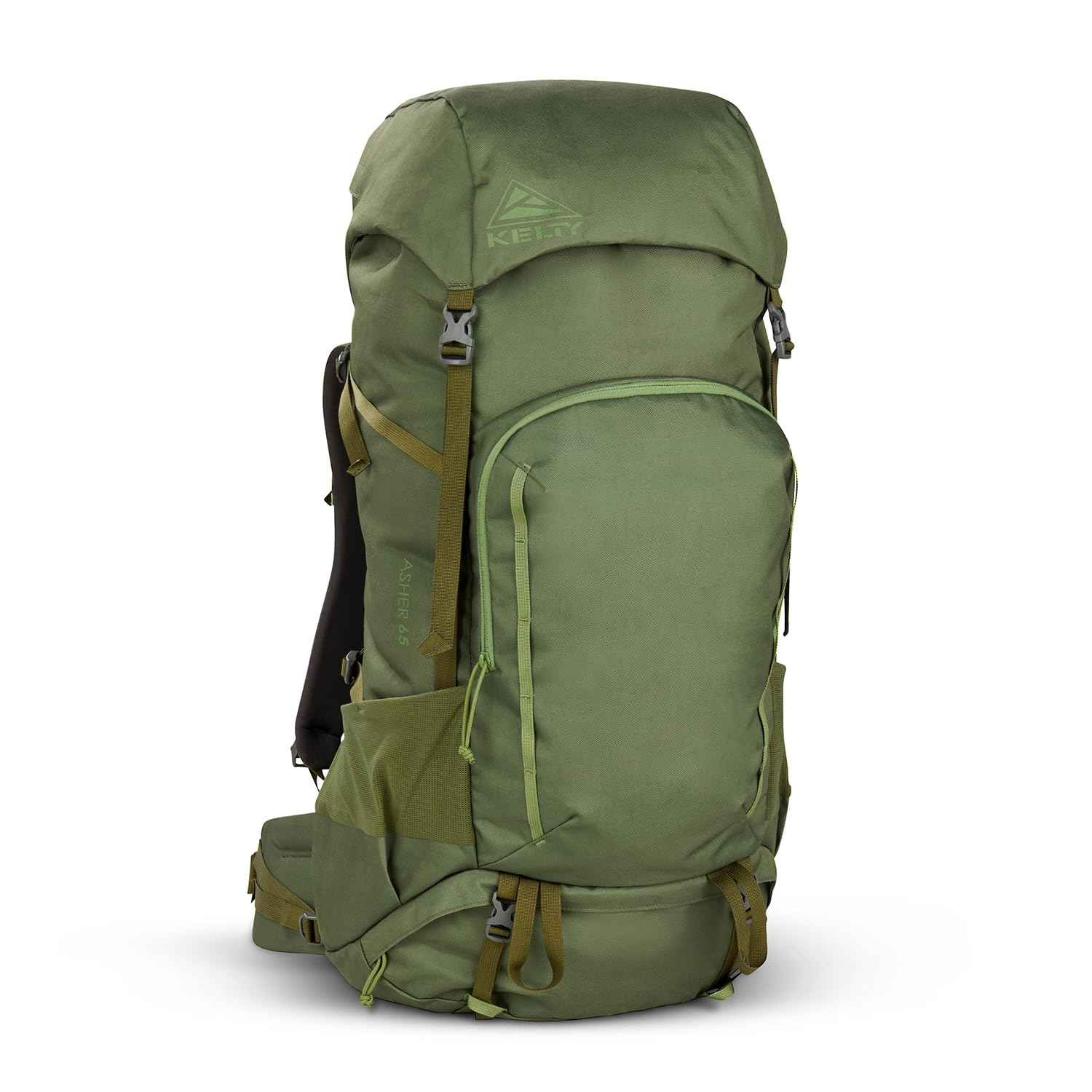
The Kelty Asher 65L delivers a feature set normally found on packs at double its price point. The Fit Pro torso adjustment system uses a sliding backpanel that lets you dial in fit on the fly — no tools, no fuss — covering a range of 15.5 to 21 inches. Combined with the Amp Flow ventilated backpanel (a raised foam channel design that creates airflow), the Asher keeps sweat accumulation lower than many budget packs with solid foam back panels.
At just 3 pounds 5 ounces, it is impressively light for a 65-liter framed pack. The perimeter frame surrounding an aluminum stay provides enough structure to carry 30 to 50 pounds comfortably, and the load-lifter straps at the top of the shoulder harness let you fine-tune weight transfer to the hipbelt. The sleeping bag compartment, hydration sleeve, and dual mesh side pockets cover the essential organizational needs without adding unnecessary complexity.
The fabric uses a C0 (PFC-free) DWR coating on polyester shell material, so water resistance is present but not expedition-grade. Some users note that the Velcro shoulder strap adjustment system can slip slightly under very heavy loads, and the bottom panel fabric feels less abrasion-resistant than the main body. But for the entry-level price, the Asher 65L is an unfair value — it packs legitimate suspension technology into a sub-four-pound package.
Why it’s great
- Exceptional value — premium suspension at a budget entry point
- Low 3 lb 5 oz weight for a 65-liter internal frame pack
- Tool-free torso adjustment fits a wide range of body sizes
Good to know
- Bottom fabric is less durable than the main body material
- Velcro strap adjusters may creep downward with very heavy loads
5. Deuter Women’s Aircontact Lite 45 + 10 SL
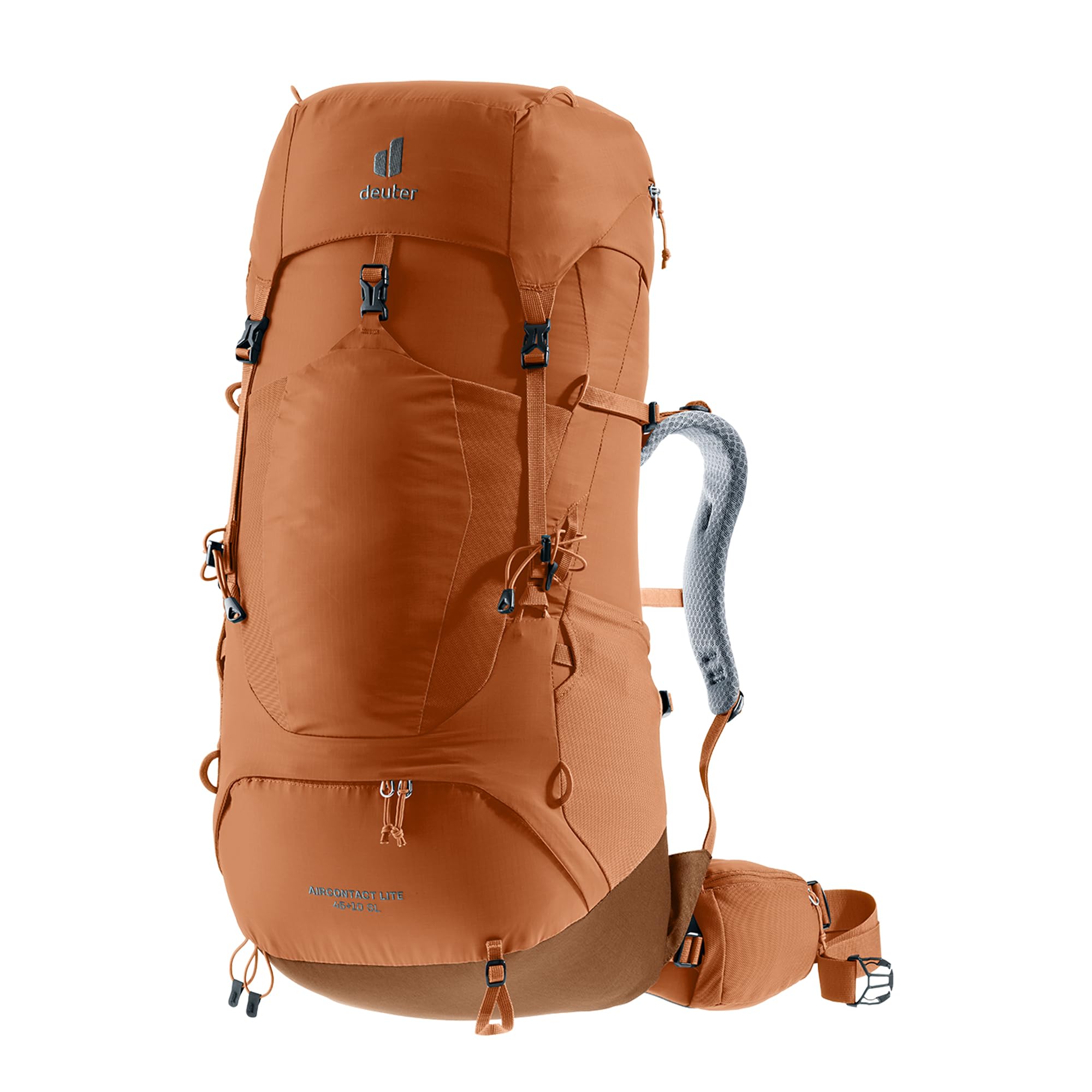
Deuter’s SL (Slim Line) designation means this pack is built specifically for women’s anatomy: shorter torso length, narrower shoulder straps with a pronounced S-curve that wraps around the neck without gaping, and conically shaped hip fins that taper to fit narrower pelvic contours. The Aircontact Lite 45 + 10 offers a base 45 liters that can expand by 10 liters via a height-adjustable lid, giving you flexibility for variable-length trips.
The Aircontact back system uses hollow chamber foam cushions that create a pump-effect ventilation channel with each step — not as aggressive as a full trampoline, but noticeably better than flat foam panels. The VariQuick adjustable back length lets you change torso fit without removing the pack, and the Y-frame provides direct load transfer to the VariFlex ECL hip fins. The hip fins themselves are movable and incorporate a leg cut-out that allows unrestricted movement on steep climbs.
At 3.4 pounds for a 45+10 liter pack, this is not the lightest women’s framed pack available, but the load-bearing design supports 30+ pounds without hip or shoulder strain — verified by multiple users on 10-mile-plus days into Havasupai. The included SOS label, ice axe loops, and trekking pole attachments make it ready for alpine use straight out of the box. Women with narrower frames who previously felt loose hipbelt movement in unisex packs will find the SL cut eliminates that rocking sensation.
Why it’s great
- True women’s-specific SL fit eliminates hipbelt gap on narrow frames
- Expandable volume from 45 to 55 liters adapts to trip length
- Hollow chamber foam backpanel provides active ventilation
Good to know
- Shoulder straps lack dense padding; some users added aftermarket covers
- Slightly heavier than ultralight unisex competitors in this volume range
6. Thule Landmark Backpack 60L
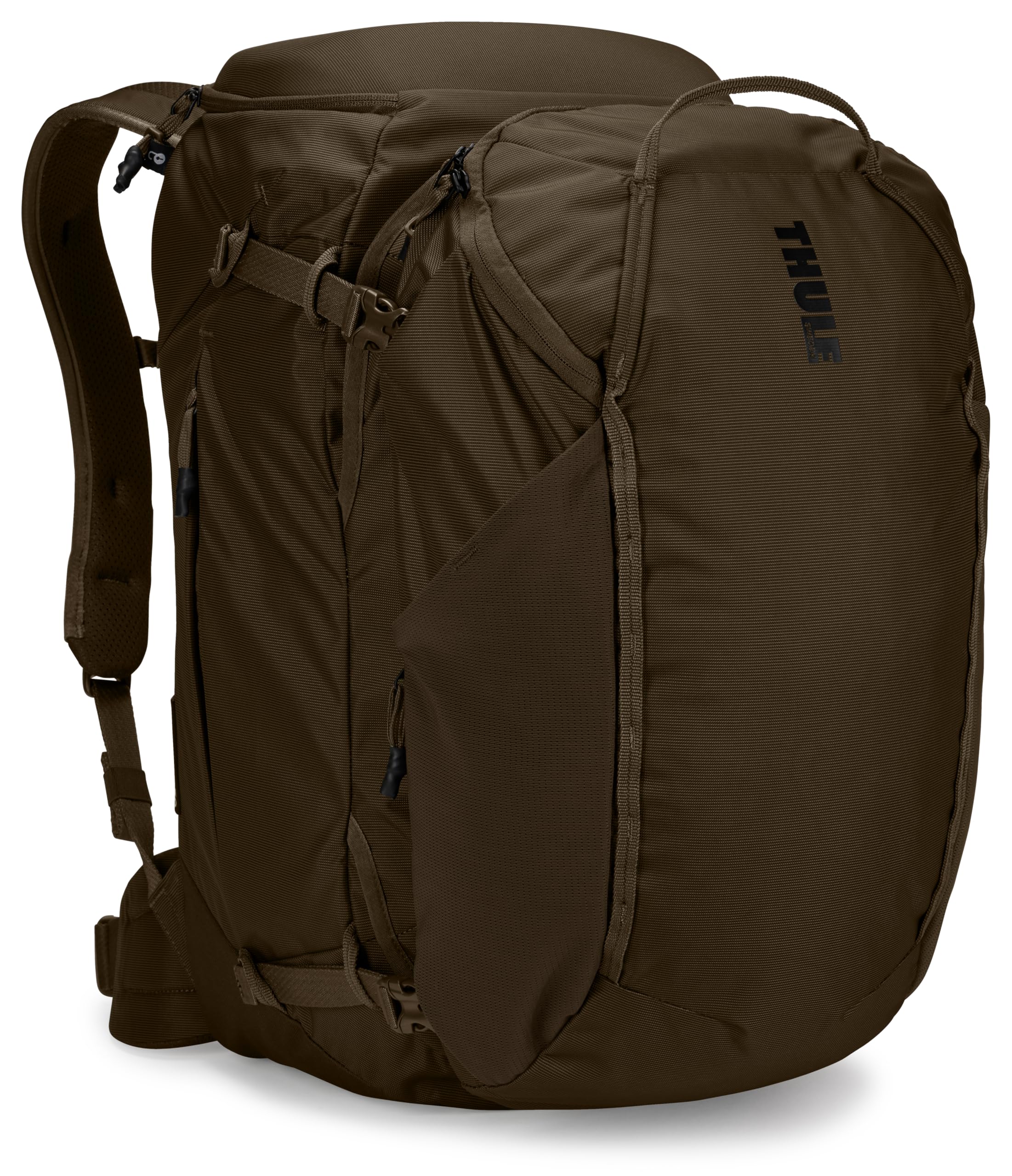
The Thule Landmark 60L is a travel backpacking hybrid engineered for multi-month international trips rather than wilderness multi-day hikes. Its defining feature is the detachable 20-liter daypack — you wear the main pack on your back and clip the daypack to your front, creating an airport-accessible carry system for passports, laptops, and layering pieces. The daypack includes a 15-inch MacBook sleeve and its own hidden CashStash pocket.
Security infrastructure is extensive: the main pack’s SafeZone compartment is concealed behind the backpanel, and LoopLocks let you secure zipper pulls to the bag’s hardware to deter pickpockets. The 420-denier dobby polyester fabric is bluesign approved, and the bag’s rectangular shape maximizes packing efficiency for cubes and organizers. The main compartment splits to allow a lower section for shoes or dirty gear, and the front panel opens clamshell-style for full access.
Where the Landmark shows its travel bias is in its suspension. The torso length is fixed at 19.5 inches, and some users with longer torsos report the hipbelt rides too low, settling on the belly rather than the hips. The pack also lacks a dedicated quick-access outer pocket for items like a rain jacket. For nomadic travel where security and organization matter more than trail performance, the Landmark is superb — but genuine backpackers should verify fit before committing.
Why it’s great
- Removable 20L daypack with laptop sleeve and theft-deterrent pocket
- Hidden SafeZone compartment protects passport and cash
- LoopLock system secures zippers against opportunistic theft
Good to know
- Fixed 19.5-inch torso is too short for tall users
- No front quick-access pocket for wet layers or snacks
7. Thule Chasm Duffel Bag (130L)

The Thule Chasm 130L was not designed as a backpacking backpack — it is a convertible duffel with padded backpack straps that suits car-camp base-camp scenarios where you haul gear from car to tent site. The 130-liter capacity is enormous: you can pack three weeks of gear for two people using compression cubes, plus cooking equipment and a camp chair. The wide-mouth main opening provides full-access loading similar to a duffel bag, making packing and unpacking faster than any top-loading backpack.
The fabric is a rugged 900-denier polyester with a waterproof tarpaulin bottom panel and heavy-duty zippers. The backpack straps are removable and stowable, and multiple grab handles make it easy to move the bag when fully loaded at 5.4 pounds empty. The internal mesh pockets organize small items like chargers and toiletries, and the padded bottom protects the bag from ground abrasion.
This is not a pack for trail hiking — the lack of a frame, load lifters, or a hipbelt with load-transfer structure means weight sits entirely on your shoulders. In heavy rain, the zippers can leak if the bag is submerged, though the tarpaulin fabric sheds rain well. Use the Chasm when your primary travel mode is vehicle-based and you need to move bulk gear a short distance on foot.
Why it’s great
- Massive 130-liter capacity fits extensive gear for car camping
- Waterproof tarpaulin bottom and 900D polyester body resist wear
- Full-access wide mouth opening simplifies packing and repacking
Good to know
- No internal frame or load-transfer hipbelt — not suitable for trail hiking
- Zippers are water-resistant, not waterproof; submersion causes leaks
8. Osprey Aether 65L Men’s Backpacking Backpack

The Osprey Aether 65L is the brand’s heavy-hauling expedition pack for climbers, mountaineers, and backpackers who regularly carry 40 to 60 pounds. Its Fit-on-the-Fly system lets you customize both the hipbelt and the shoulder straps — not just the torso length — using adjustable ladder hardware that can be reconfigured in the field without tools. This level of customization is rare and makes the Aether one of the few packs that can adapt to significant body shape changes over multi-week trips.
The AirScape suspension uses an injection-molded foam backpanel combined with a die-cut foam frame that keeps the load close to your spine for maximum stability. The result is a pack that feels planted during technical side-hilling and off-balance traverses where a loose suspension would shift weight unpredictably. The included raincover, zippered sleeping bag compartment with removable divider, and front panel daisy chain for gear attachment round out the expedition feature set.
At 4.96 pounds, the Aether is heavy — but every ounce goes into carrying capacity and durability. The 210-denier nylon body with reinforced bottom handles bushwhacking abuse, and the full-wrap compression system cinches loads tight against the frame. Some users find the drawstring closure toggle overcomplicated compared to a simple roll-top, and there are no bottom daisy loops for lashing a foam pad externally. For hikers who prioritize load stability and custom fit over minimum weight, the Aether 65L is the gold standard.
Why it’s great
- Fully adjustable Fit-on-the-Fly hipbelt and shoulder straps
- Exceptional load stability for technical terrain and heavy weights
- Included raincover and sleeping bag compartment with divider
Good to know
- Nearly 5 lb empty weight — overkill for ultralight hikers
- Drawstring closure system is more fiddly than standard roll-top designs
9. Deuter Aircontact Core 60+15 SL Women’s Trekking Backpack
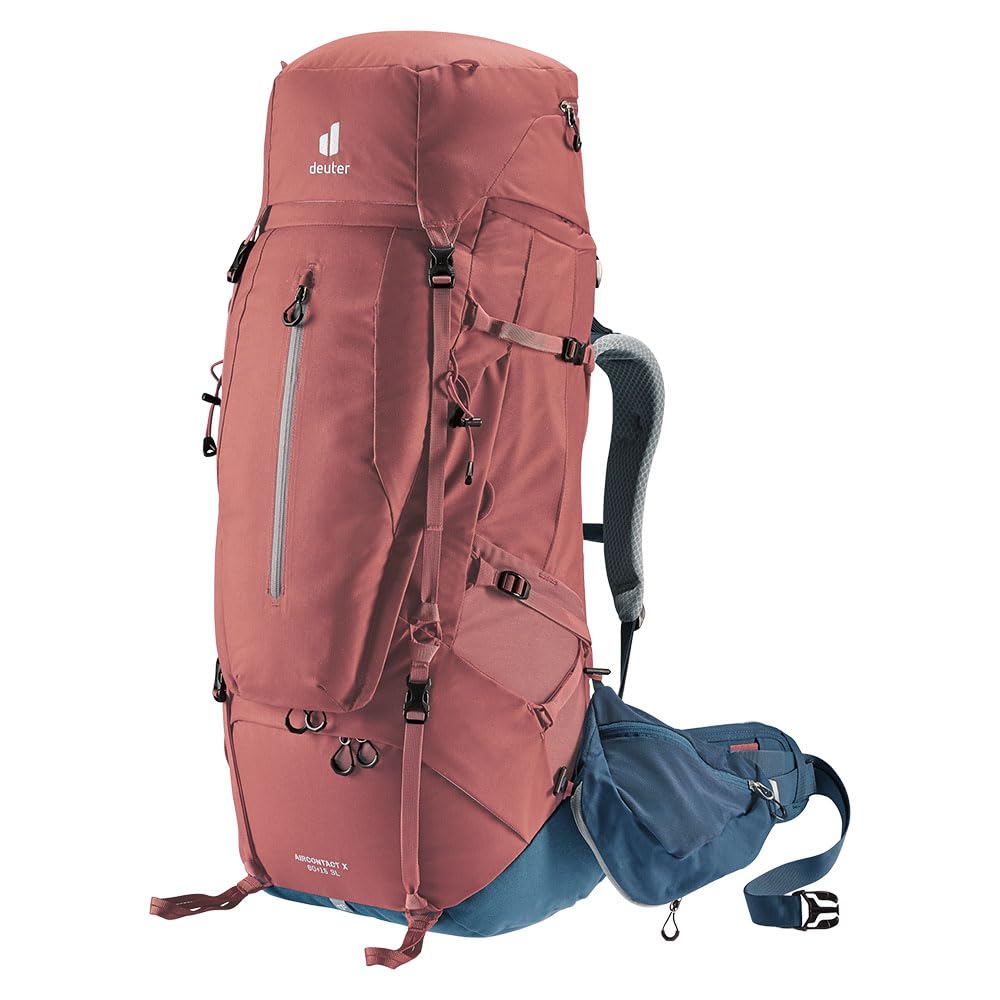
The Deuter Aircontact Core 60+15 SL is a women’s-specific expedition pack engineered for heavy loads on multi-week treks. The Y-frame provides rigid load transfer directly into the VariFlex ECL hip fins, which are movable and incorporate a leg cut-out for climbing freedom. The SL cut shortens the torso and narrows the shoulder straps for women’s anatomy, and the trapezoidal lumbar pad ensures form-fitting contact with the pelvis to prevent the pack from riding down during steep ascents.
Ventilation comes from the Air Spacer mesh contact surface rather than a full trampoline — this is a deliberate trade-off that prioritizes load stability over airflow. The VariSlide system allows instant back-length adjustment without tools, and the height-adjustable lid lets you expand the main volume from 60 to 75 liters. The main fabric incorporates over 50 percent recycled materials and is bluesign certified, addressing both durability and environmental impact.
One notable limitation is pocket sizing: the front strap pocket barely fits an iPhone 12 with a case, and the waist pockets are too small for modern phones. Some users feel the pack is overpriced relative to the feature density, especially given the small pockets. However, for women who need a pack that can carry 40-pound loads without hipbelt slippage, the Aircontact Core 60+15 SL delivers rock-solid stability that lighter unisex packs cannot match.
Why it’s great
- Rigid Y-frame transfers heavy loads efficiently to the hipbelt
- Women-specific SL cut eliminates gap and rocking on narrow frames
- VariSlide tool-free back length adjustment works on the trail
Good to know
- Waist and shoulder strap pockets are too small for modern phones
- Premium price does not include a hydration bladder
FAQ
How do I measure my torso length for a backpacking backpack?
Should I choose a trampoline mesh backpanel or a foam backpanel?
What volume do I need for a 5-day backpacking trip?
Final Thoughts: The Verdict
For most users, the best backpacking backpacks winner is the Osprey Exos 58 because it balances ultralight construction with real load-bearing capability and excellent ventilation for multi-day trips. If you prioritize a dry back above all else, grab the Osprey Stratos 44. And for heavy expedition loads where load stability and customizable fit are non-negotiable, nothing beats the Osprey Aether 65L.

Mo Maruf
I created WellFizz to bridge the gap between vague wellness advice and actionable solutions. My mission is simple: to decode the research and give you practical tools you can actually use.
Beyond the data, I am a passionate traveler. I believe that stepping away from the screen to explore new environments is essential for mental clarity and physical vitality.