Our readers keep the lights on and my smoothie glass nicely filled. As an Amazon Associate, I earn from qualifying purchases.
A backpack tent is the most personal piece of gear you’ll buy — it’s your shelter after a 15-mile day, your defense against a midnight squall, and the one item that can make or break a thru-hike. Every gram and every seam matters because you’re the one carrying it.
I’m Mohammad Maruf — the founder and writer behind WellFizz. My research focuses on long-term durability, weight-to-space ratios, and real-world waterproofing standards across hundreds of backpacking shelters.
After analyzing dozens of models across weight classes and price tiers, I’ve found that the right backpack tent balances a sub-4-pound trail weight with a 3-season build and a reliable waterproof floor — and that sweet spot is narrower than most hikers expect.
How To Choose The Best Backpack Tent
Choosing a backpack tent means trading weight against space, durability, and weather protection. The best shelter for a solo thru-hiker is different from what a couple needs for weekend trips. Here are the factors that separate a great tent from a miserable night.
Trail Weight vs. Packed Weight
Manufacturers often advertise a “minimum trail weight” that excludes the stuff sack, stakes, and sometimes the rainfly. Your actual pack weight is usually 8–16 ounces higher. For a backpack tent under 4 pounds, that delta matters — always check the packed weight before you buy.
Waterproof Rating and Condensation Management
A floor rated at PU 2000mm or higher will keep you dry on wet ground. Rainfly ratings should be at least PU 1500mm, but the real battle is condensation. Look for tents with a double-wall design and mesh panels that allow airflow while keeping rain out. A well-ventilated tent sleeps warmer and dryer than a sealed, high-HH single-wall tent.
Freestanding vs. Non-Freestanding
Freestanding tents use poles that create their own structure — you can move them and pitch them on sand, rock, or platforms. Non-freestanding tents save weight but require stakes and guylines to stand. For beginners and those camping on varied terrain, a freestanding design is worth the extra half-pound.
Seasonality and Fabric Durability
A 3-season backpack tent handles spring, summer, and fall. A 4-season tent adds snow load capacity but weighs more. Floor fabric denier (like 20D vs. 75D) tells you how puncture-resistant the floor is — lower denier saves weight but requires a ground sheet on rocky sites. Higher denier adds durability but feels like a heavier tarp.
Quick Comparison
On smaller screens, swipe sideways to see the full table.
| Model | Category | Best For | Key Spec | Amazon |
|---|---|---|---|---|
| Big Agnes Copper Spur HV UL2 | Ultralight 2P | Weight-conscious hikers wanting room | 3 lbs 2 oz trail weight, 29 sq ft floor | Amazon |
| NEMO Dagger OSMO 2P | Premium 2P | Spacious comfort for two, eco-conscious | 30.6 sq ft floor, 43 in peak height | Amazon |
| MSR Elixir 2 | Versatile 2P | Durable all-around shelter with footprint | 5 lbs 2 oz min trail weight, rectangular floor | Amazon |
| Snugpak Scorpion 3 | 4-Season 3P | Severe weather and winter camping | 7.4 lb packed weight, 5000mm fly coating | Amazon |
| Snugpak Ionosphere 1 | Ultra-Compact 1P | Solo ultralight backpacking | 5000mm PU coating, packs smaller than bag | Amazon |
| Naturehike Cloud Up 3 | Budget 3P | Budget 3-person trips, included footprint | ~4.3 lb, 20D nylon floor PU3000mm | Amazon |
| Kelty Grand Mesa 2P | Mid-Range 2P | Reliable entry-level backpacking | 4 lbs 7 oz packed weight, 30 sq ft floor | Amazon |
| OneTigris COSMITTO 2P | Value 2P | Roomy two-person, easy setup | 1500mm coating, 30.96 sq ft floor area | Amazon |
| ALPS Mountaineering Lynx 1 | Entry-Level 1P | Budget solo camping, motorcycle trips | 4 lbs 1 oz total weight, 75D 2000mm floor | Amazon |
In‑Depth Reviews
1. Big Agnes Copper Spur HV UL2

The Copper Spur HV UL2 has been a benchmark in the ultralight backpacking category for years. Its high-volume pole architecture creates steep, nearly vertical walls that maximize usable interior space without adding weight. At just over 3 pounds trail weight for the 2-person version, it packs down small enough to fit inside a 40-liter pack with room to spare.
The dual vestibule design offers large, side-entry doors with storm flaps on each zipper, giving each occupant private gear storage. The two-tone mesh on the body provides privacy while still allowing stargazing transparency — a thoughtful detail that balances ventilation with modesty. The freestanding structure pitches easily on tent pads, sand, or rocky ground.
In severe weather, the tent has survived 60-mph wind events and kept occupants dry during heavy rain. The main trade-off is that the fly-only awning mode is more trouble than it’s worth in gusty conditions, and you’ll need 12 stakes for full stability in a storm. It’s a premium ultralight shelter that delivers every gram of its performance promise.
Why it’s great
- Fully freestanding with steep walls for maximum interior volume
- Excellent dual vestibule space for gear separation
- Remarkable weight-to-space ratio for serious backpacking
Good to know
- High price point compared to mid-range tents
- Requires many stakes for full storm stability
- Awning feature is not wind-friendly
2. NEMO Dagger OSMO 2P
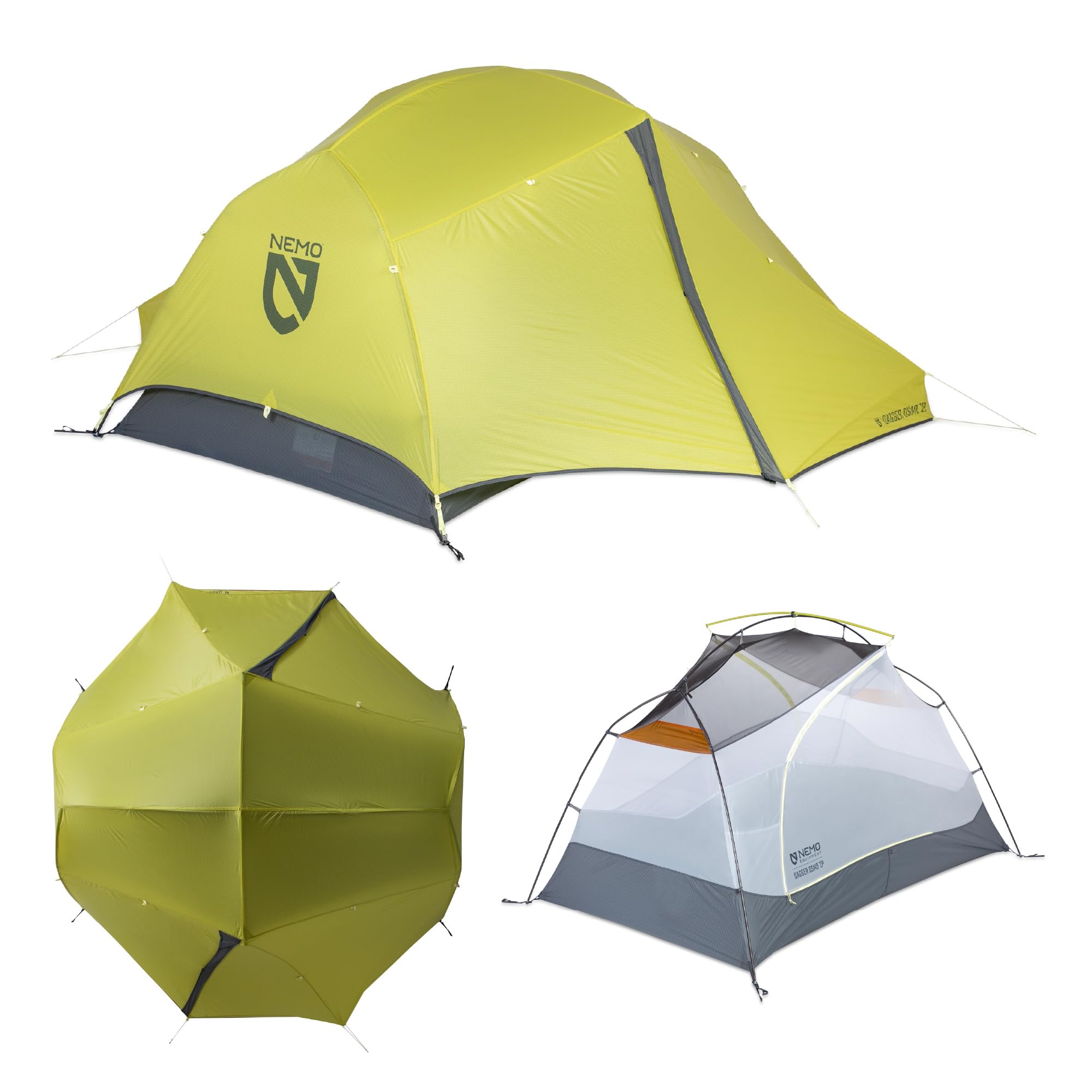
The NEMO Dagger OSMO is the category leader in livable interior space among lightweight backpacking tents. Its increased door and peak heights accommodate taller campers without the coffin-like feel of many 2-person shelters. The 43-inch peak height allows sitting up fully, and the bathtub floor easily fits two 25-inch sleeping pads with side room for gear.
The Volumizing Stash strut increases vestibule space by 22 percent compared to previous models, creating best-in-class storage for packs and boots. The OSMO fabric is a high-performance poly-nylon blend with 4x longer-lasting water repellency and 3x less stretch when wet compared to standard nylon. It’s made from 100 percent recycled yarns, PFAS-free, and is a bluesign product — meeting strict ecological standards.
Reviewers report the tent survived 50-mph winds at 10,000 feet and kept occupants dry during a 6-inch snow dump, though it is not a true 4-season shelter. The Jake’s foot corner anchors make one-handed setup possible, but the thin plastic hooks can feel fragile during repeated assembly. It’s a premium tent for backpackers who refuse to compromise on headroom and gear organization.
Why it’s great
- Exceptional headroom and usable floor space for a 2P tent
- Eco-friendly OSMO fabric with superior water repellency
- Vestibule storage is best-in-class for gear separation
Good to know
- Footprint is recommended but sold separately
- Setup has a learning curve with the plastic corner anchors
- Not a true ultralight tent at its packed weight
3. MSR Elixir 2
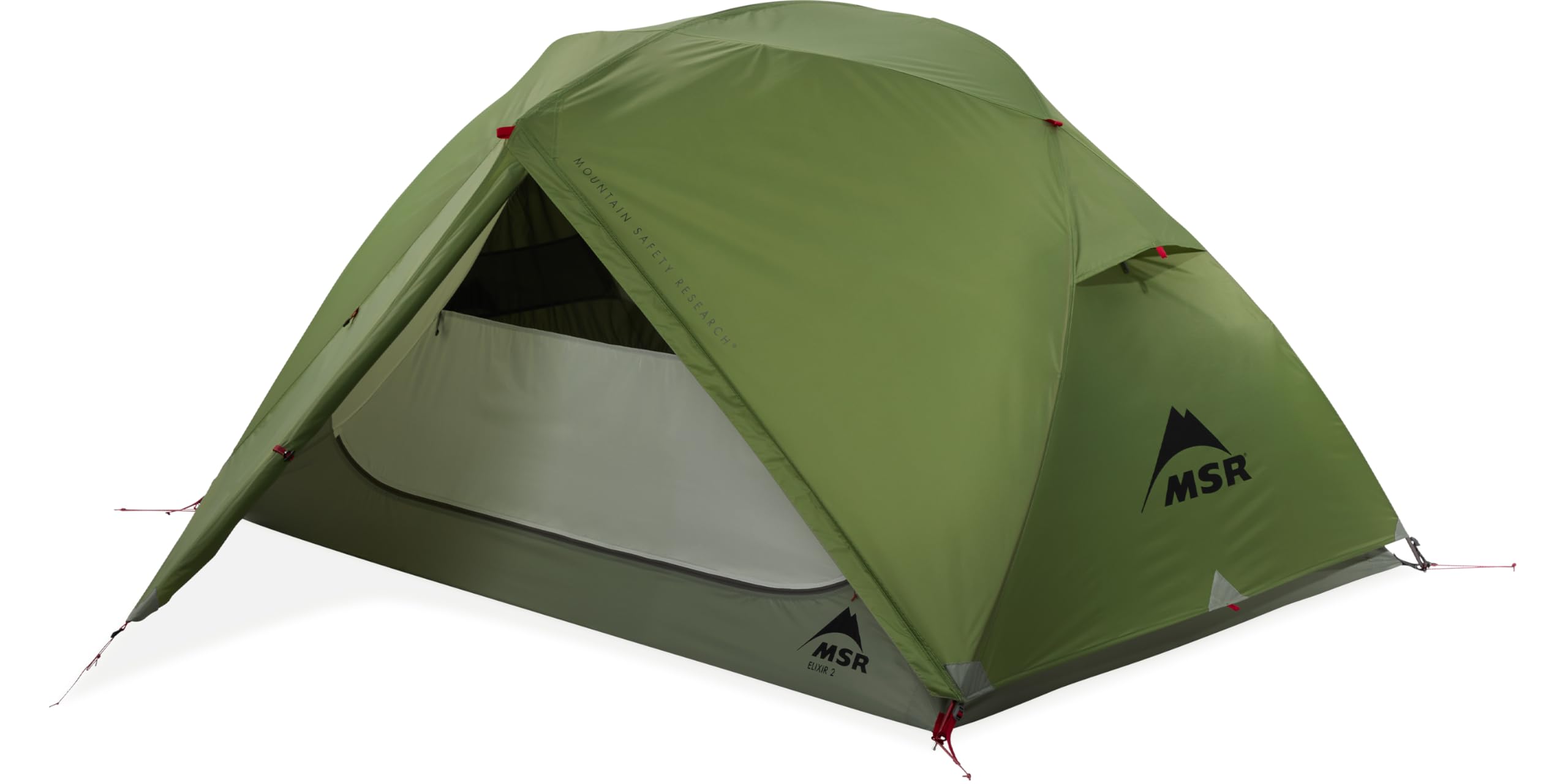
The MSR Elixir 2 is a super-versatile shelter designed for a wide range of adventures — from car camping to backpacking to bikepacking. Its true rectangular floorplan and nearly vertical walls easily accept wide, thick sleeping pads without the tapered foot squeeze common in many 2-person tents. The 52-inch width gives couples genuine space to sleep without feeling tangled.
MSR updated the Elixir with PFAS-free waterproofing treatments and all-metal corner hardware that improves durability over plastic alternatives. The straight-pull zippers make finding the pull easy in the dark and are more robust than curved zippers. A dedicated footprint is included, and the tent is compatible with the MSR Gear Shed for extra vestibule volume on basecamp trips.
At 5 pounds 2 ounces minimum trail weight, it’s heavier than ultralight options — but that weight buys you a bulletproof 75D polyester construction that reviewers say lasts 15 years with proper care. The tent body has strategically placed mesh panels that provide good airflow while retaining heat, and the gear loft with cable ports keeps devices organized. It’s the right choice for hikers who prioritize longevity over ounces.
Why it’s great
- True rectangular floor fits wide sleeping pads without taper
- All-metal corner hardware and straight-pull zippers for durability
- Includes footprint and compatible with Gear Shed for extra storage
Good to know
- Heavier than ultralight competitors at 5 lbs 2 oz
- Poles can pop out of corners during solo setup
- Round stakes included — replacements recommended for hard ground
4. Snugpak Scorpion 3

The Snugpak Scorpion 3 is built for the harshest conditions you’d willingly camp in. With a 5000mm waterproof PU coating on the fly and a 4-season freestanding design, it laughs at 55-mph gusts and sustained rain that would send lighter tents packing. The color-coded pole system enables a fly-first pitch that keeps your gear dry during setup in wet weather.
Despite the rugged credentials, the Scorpion packs down to 17 x 8 inches — surprisingly compact for a 3-person shelter. The black inner tent blocks daylight, creating a cave-like darkness that helps you sleep in past sunrise. Reviewers noted the tent survived 50-mph wind gusts with no condensation inside, thanks to the three adjustable vents that dump moisture without letting rain in.
At 7.4 pounds packed weight, this is not a tent for the ultralight crowd. The vestibule is smaller than some 2-person tents, limiting stove use inside. The included compression bag can fail after a year of regular use, though Snugpak’s customer service is known to replace it free. For winter mountaineering and alpine base camps, this tent is an absolute bargain compared to true 4-season brands.
Why it’s great
- Exceptional 5000mm waterproof coating handles extreme rain
- Color-coded fly-first pitch keeps gear dry in wet conditions
- Black inner tent blocks light for deeper sleep
Good to know
- Heavy at 7.4 lbs — not for weight-conscious backpackers
- Vestibule is small for a 3-person tent
- Compression bag durability is a weak point
5. Snugpak Ionosphere 1

The Snugpak Ionosphere is a serious contender for solo hikers who want the smallest possible pack size without sacrificing waterproofing. When compressed, it’s smaller than a standard sleeping bag — a feature that matters when you’re trying to fit everything into a 30-liter pack for multi-day treks. The 5000mm PU coating on the 210t RipStop polyester fly is overkill for most 3-season trips, but it guarantees you stay dry in a downpour.
The single-point front entry creates a small porch area for cooking or storing boots, and the mesh top panel lets you stargaze on clear nights. Setup is straightforward: the anodized aluminum poles with pressfit connectors create a hooped shelter that pitches freestanding. Reviewers have used this tent at 11,000 feet in temperatures down to 20°F and reported no condensation issues, thanks to the excellent airflow from the mesh end.
At 94 x 35 inches, the floor is tight — a 6-foot-1-inch user fits with a surplus sleeping system but must enter feet-first. The zippers can snag on the external tie-backs, and the interior lacks a light loop. For the price, it’s a compelling alternative to premium solo tents like the MSR Hubba, offering comparable waterproofing at a fraction of the cost and pack size.
Why it’s great
- Extremely compact pack size, smaller than a sleeping bag
- 5000mm waterproof coating is exceptional for a solo tent
- Excellent breathability with minimal condensation at altitude
Good to know
- Very tight interior — best for hikers under 5’10”
- Zippers snag on external tie-backs
- No interior light loop for hanging a lantern
6. Naturehike Cloud Up 3
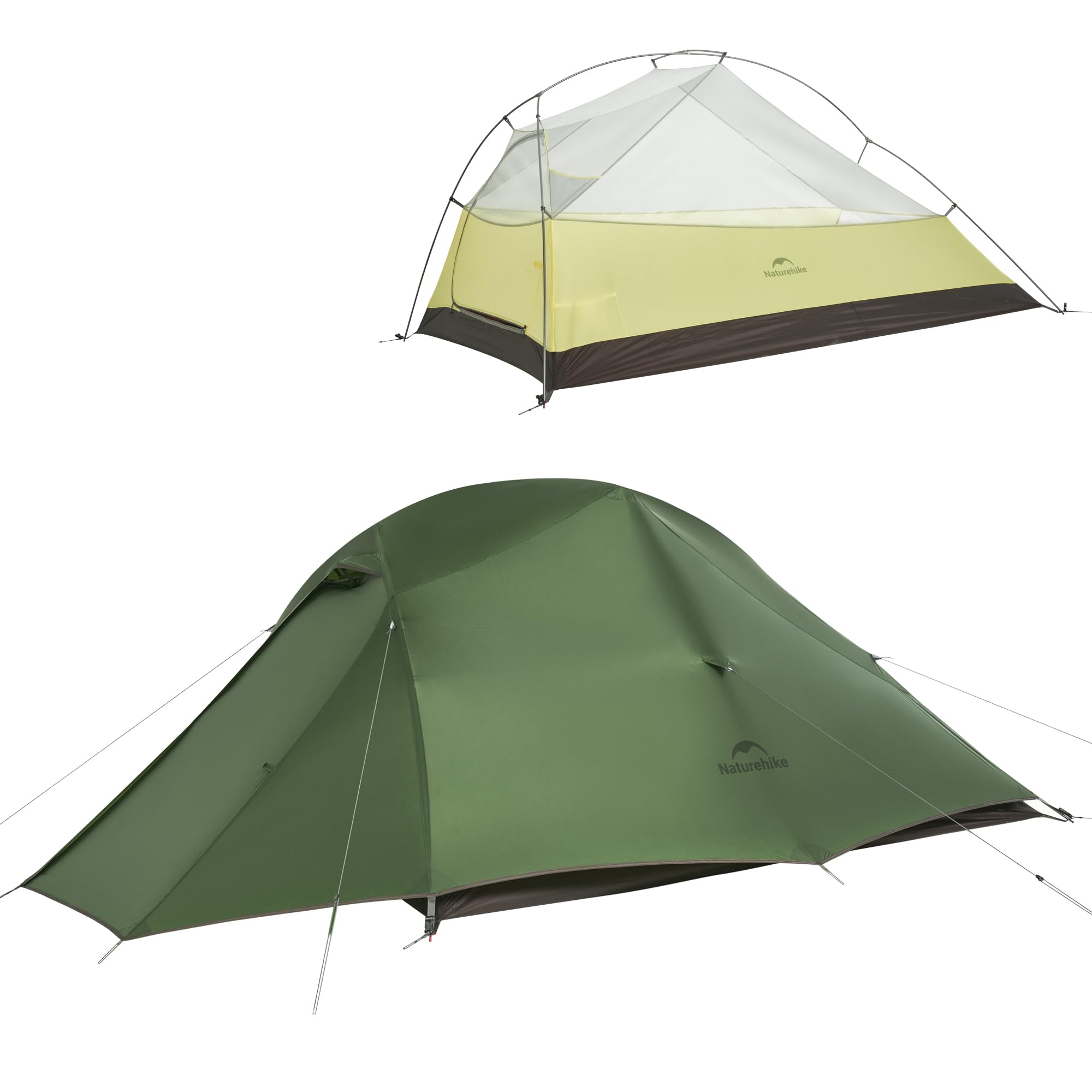
The Naturehike Cloud Up 3 is an impressive budget option that punches well above its price class. The upgraded Cloud Up Pro version delivers a spacious 116.1 x 82.7-inch floor with a 45.3-inch peak height — enough for three adult males when they alternate head-to-toe. The included footprint is a rarity at this price point, saving you –40 on a separate ground sheet.
The 20D nylon floor with PU3000mm coating handles moderate rain well, though the thin material requires care on rocky sites. The dual-Y pole structure allows for quick freestanding setup by one person, even without experience. The outer tent can be pitched separately as a sun shelter, adding versatility for beach or picnic use. Upgraded buckles replace straps for easier pitching and to prevent abrasion on the poles.
Condensation is well-managed thanks to the high-density B3 mesh inner and the wing design that increases the gap between inner and outer layers. Reviewers have used it in humid Washington wilderness at 40°F with no condensation issues. The main drawbacks are the single-door design (a pain for two people) and pole tips that occasionally disconnect during setup. For the price, this is the best 3-person value on the market.
Why it’s great
- Excellent value including a footprint at no extra cost
- Spacious true 3-person interior with good headroom
- Versatile double-layer design with separate fly-only mode
Good to know
- Single door makes it a nightmare for two-person egress at night
- Thin 20D floor is vulnerable to sharp rocks
- Pole tips can disconnect during setup — check alignment
7. Kelty Grand Mesa 2P

The Kelty Grand Mesa 2P is the definition of a no-nonsense backpacking tent. It gets the fundamentals right: a freestanding design with Kelty Quick Corners that hold poles in place during setup, color-coded clip and fly attachments for intuitive pitching, and fully taped seams that keep water out. At 4 pounds 7 ounces packed, it’s heavier than ultralight options but still reasonable for weekend trips and entry-level backpackers.
The 30-square-foot floor with a 44-inch peak height provides enough room for two occupants with packs, though most reviewers agree it’s best used as a roomy single-person shelter with lots of gear space. The 68D polyester fabric is more durable than lightweight 20D options, resisting punctures from branches and rocky ground. The EZ-Zip vestibule with fully taped seams creates a dry storage area for boots and packs during rain.
Setup times average under 5 minutes even for beginners, and an 11-year-old reviewer’s child was able to pitch it alone in under that time. The included stakes are metal and functional, though upgrading to MSR Groundhogs will improve holding power in soft soil. The Shark Mouth carry bag makes pack-up easier. For the price, this tent offers the best balance of ease, weather protection, and durability for casual backpackers.
Why it’s great
- Intuitive setup with color-coded clips and Quick Corner system
- Durable 68D polyester fabric resists punctures
- Fully taped seams and metal stakes included
Good to know
- Bulky packed size compared to ultralight competitors
- Best used as a roomy 1-person tent for serious space
- Ground cover not included — buy separately for floor protection
8. OneTigris COSMITTO 2P

The OneTigris COSMITTO 2P is a value-driven tent that doesn’t skimp on livable space. Its hexagon-shaped outer tent provides solid wind resistance, and the 20D plaid ripstop polyester with 1500mm coating handles drizzle and moderate rain without issue. The interior measures 7.2 feet long by 4.3 feet wide, giving two adults room to sleep without constant contact — a rarity at this price.
Dual zippered entrances with two vestibules allow each occupant to exit without climbing over their partner, a massive upgrade over single-door tents at double the price. The Line Loc 3 tensioners let you adjust the rainfly tension one-handed, and the four guy lines provide extra stability in windy conditions. The full mesh inner tent gives 360-degree views while keeping bugs out, and the interior pockets and light hook add practical organization.
Reviewers have used this tent in two weeks of rain and wind without any leaks, and setup takes under 5 minutes solo. The included stakes are aluminum and survive hammer strikes, though the zippers can snag on the rainfly if not carefully guided. For couples or solo campers who want a spacious 2-person shelter without paying the ultralight tax, the COSMITTO delivers outstanding value.
Why it’s great
- Two doors and two vestibules for easy entry and gear separation
- Full mesh inner tent provides excellent ventilation and views
- Fast 3-minute setup with Line Loc 3 tensioners
Good to know
- Zippers can snag on the rainfly if not careful
- Waterproof coating is 1500mm — adequate but not for heavy storms
- Grey color option differs significantly from product images
9. ALPS Mountaineering Lynx 1

The ALPS Mountaineering Lynx 1 is the budget king of solo backpacking tents, offering the cheapest entry point into a freestanding, seam-sealed shelter. The 75D 185T poly taffeta floor with a 2000mm coating is far more puncture-resistant than the 20D floors found on ultralight tents — you can pitch this on rocky ground without a footprint and not worry about tears. The 75D rainfly with 1500mm coating handles sustained rain without leaking.
Setup is genuinely idiot-proof: the two aluminum poles cross at the center, the tent body clips onto the poles, and the rainfly buckles on. Reviewers report 60-second setup times after the first pitch. The half-mesh walls reduce condensation compared to fully solid tents, and the vestibule provides enough space for a backpack and boots. The included gear loft and mesh storage pockets keep small items organized.
At 4 pounds 1 ounce total weight, it’s heavy for a solo tent — the main con cited by every reviewer. The included stakes are cheap and bend easily in hard ground, so plan to replace them with MSR Groundhogs. The 7-foot-6-inch length fits taller campers, but the 32-inch width is tight for broad-shouldered sleepers. For entry-level campers and motorcycle overlanders who prioritize ruggedness over weight, this tent is an unbeatable value.
Why it’s great
- Exceptionally durable 75D floor resists punctures on rocky sites
- Freestanding design with an idiot-proof 60-second setup
- Seam-sealed construction provides reliable waterproofing
Good to know
- Heavy at 4 lbs 1 oz — not suitable for weight-conscious hikers
- Factory stakes are garbage — budget for replacements
- 32-inch width is tight for broad-shouldered sleepers
FAQ
What trail weight should I target for a solo backpack tent?
Can I use a 3-season backpack tent in light snow?
Do I need to seam-seal a brand new backpack tent?
Final Thoughts: The Verdict
For most users, the backpack tent winner is the NEMO Dagger OSMO 2P because it offers the best balance of livable space, eco-conscious materials, and weather protection at a reasonable weight for two-person trips. If you want ultralight performance for solo alpine missions, grab the Big Agnes Copper Spur HV UL2. And for budget-conscious 3-person trips, nothing beats the Naturehike Cloud Up 3 with its included footprint and true 3-season waterproofing.

Mo Maruf
I created WellFizz to bridge the gap between vague wellness advice and actionable solutions. My mission is simple: to decode the research and give you practical tools you can actually use.
Beyond the data, I am a passionate traveler. I believe that stepping away from the screen to explore new environments is essential for mental clarity and physical vitality.