Our readers keep the lights on and my smoothie glass nicely filled. As an Amazon Associate, I earn from qualifying purchases.
A pack that feels great at the trailhead can turn into a torture device by mile fifteen. The difference between a day you finish strong and one you cut short often comes down to a single decision: the suspension system, the hip belt geometry, and how the frame transfers load. For long-distance hiking, a backpack isn’t a bag — it’s the foundation of your entire carry strategy.
I’m Mohammad Maruf — the founder and writer behind WellFizz. I’ve spent hundreds of hours cross-referencing suspension designs, aluminum stay configurations, fabric denier ratings, and real-world load test results from multi-day thru-hikers to build this guide around measurable performance, not marketing claims.
After sorting through dozens of internal-frame models across every price tier, I narrowed the field to nine packs that actually earn their place on a long trail. This guide covers the best backpack for long distance hiking based on suspension efficiency, torso adjustability, and real durability from the first mile to the last.
How To Choose The Best Backpack For Long Distance Hiking
Long-distance hiking demands a pack that distributes weight efficiently, breathes under heavy exertion, and fits your torso precisely. Start with the suspension system — an internal frame with a rigid aluminum stay or wire frame that wraps around the hips, not the shoulders. Next, prioritize torso adjustability; a fixed-length pack that doesn’t match your spine will cause hot spots and fatigue regardless of how much padding it has. Hip belt design matters more than shoulder strap comfort because proper load transfer moves 80 percent of the weight off your shoulders and onto your pelvis. Fabric denier and waterproofing matter for trail durability, but ventilation through a tensioned mesh backpanel can make or break a 20-mile day in warm weather. Finally, match capacity to trip duration — 50 to 65 liters covers multi-day trips with a shelter and sleep system, while 70 liters and above works for extended expeditions or when packing for cold climates.
Torso Length and Fit Adjustability
A pack that is too long for your torso will ride low and sag off the hips, forcing your shoulders to carry the load. Too short, and the hip belt sits above your iliac crest, making the entire pack unstable. Look for models with a sliding or ladder-style torso adjustment system (often labeled as Fit Pro, Vari Quick, or AirSpeed Adjustable) that offers at least four inches of range. Brands like Deuter and Osprey use tool-free adjustments that let you dial in the fit mid-trail when your layering changes. Always measure your torso length — from the C7 vertebrae to the iliac crest — before selecting a size.
Suspension Type and Frame Material
The frame transfers the pack’s weight from your back to the hip belt. Perimeter frames use a single contoured aluminum stay wrapped in a wire frame, offering a balance of lightweight and stability. LightWire frames (used by Osprey) use a smaller-diameter wire that saves ounces but may flex under loads above 45 pounds. Deuter’s X-frame uses a spring steel stay that maintains stiffness while allowing lateral movement. For long-distance hiking with consistent 30-to-50-pound loads, a fully rigid or semi-rigid aluminum stay provides the most reliable load transfer. Frame material also affects ventilation — tensioned mesh backpanels create an air gap that reduces sweat buildup during high-output days.
Hip Belt Design and Load Management
The hip belt is the single most important contact point on any long-distance pack. A properly fitted belt wraps around the iliac crest and transfers pack weight directly to the pelvis, bypassing the shoulders entirely. Look for a belt with at least three inches of padding and a curved, ergonomic shape that follows the natural contour of your hips. Adjustable belts with a pull-forward system (common on Deuter and premium Osprey models) allow you to tighten the belt without twisting. Zip-off hip belt pockets are useful for storing snacks, a phone, or a compass within reach. Avoid belts that use thin foam or lack load-lifter straps, as they will chafe and shift under sustained weight.
Capacity and Packing Strategy
Capacity is measured in liters, but raw volume matters less than how the pack distributes that volume across compartments. For multi-day hikes (3 to 5 days), 55 to 65 liters is the sweet spot — enough for a tent, sleeping bag, pad, stove, food, and water without forcing you to overpack. Longer expeditions (7+ days) may require 70 to 85 liters, but that extra volume adds weight and encourages overloading, which compromises suspension efficiency. Look for a pack with a floating top lid that allows vertical expansion, a separate bottom compartment for a sleeping bag, and external lash points for a foam pad or tent poles. Side compression straps let you cinch down a partially full load to keep the pack stable against your back.
Quick Comparison
On smaller screens, swipe sideways to see the full table.
| Model | Category | Best For | Key Spec | Amazon |
|---|---|---|---|---|
| Deuter Aircontact Lite 50+10 | Premium Lightweight | Long-distance thru-hikers who prioritize load transfer at low weight | 3.6 lbs / Aircontact suspension / Vari Quick adjustable | Amazon |
| Osprey Kestrel 68L | Premium All-Rounder | Technical hikers needing a stable close-to-body carry for heavy loads | 4.95 lbs / AirScape backpanel / Fit-on-the-Fly hipbelt | Amazon |
| Deuter Futura Air Trek 60+10 | Premium Ventilated | Hikers in warm climates who need maximum back ventilation | Spring steel frame / Aircomfort carry / VariSlide adjustable | Amazon |
| Osprey Rook 65L | Mid-Range Premium | Budget-conscious hikers who want Osprey quality and integrated rain cover | 3.7 lbs / AirSpeed suspension / LightWire frame | Amazon |
| Kelty Asher 55L | Mid-Range Lightweight | Entry-level multi-day hikers wanting expert-level adjustability | 3.12 lbs / Fit Pro torso / Amp Flow ventilated back | Amazon |
| TIDEWE Hunting 90L | Mid-Range Heavy Load | Hunters and hikers carrying 50-80 lbs over rough terrain | 5.4 kg / External frame / Next Camo G2 fabric | Amazon |
| TETON Sports Explorer 65L | Mid-Range Value | Budget-friendly weekend backpackers needing durable build | 5 lbs / Multi-position torso / 600D PolyUrethane lining | Amazon |
| MOUNTAINTOP 80L | Budget Large Capacity | Budget-conscious hikers needing maximum volume with aluminum frame | 2.2 lbs / Aluminum frame / Hydration compartment | Amazon |
| Mardingtop 60L Military | Budget Entry Level | Beginners and customizers wanting MOLLE modular add-ons | 4.49 lbs / MOLLE system / Expandable to 75L | Amazon |
In‑Depth Reviews
1. Deuter Aircontact Lite 50+10

The Deuter Aircontact Lite 50+10 hits the sweet spot for long-distance hikers who prioritize load transfer efficiency without carrying a heavy pack. Its Aircontact suspension system uses hollow chamber foam that creates a pump effect with each step, channeling air through the back panel to reduce sweat buildup while keeping the load close to your center of gravity. The Vari Quick adjustable back length lets you tweak the torso fit in seconds without tools, which is essential when shedding layers mid-hike changes your effective torso length. At 3.6 pounds, it’s one of the lightest fully framed packs in this lineup, yet the X-frame spring steel stay handles 30-to-40-pound loads with no sag.
The 50+10 design gives you a detachable lid that adds 10 liters of expandable volume when you cinch it up, making this pack adaptable for both weekend trips and week-long expeditions. Deuter uses a blend of 140D PA RIPSTOP HT FD and 600D PES REC BS fabrics, with over 50 percent recycled content, so the pack resists abrasion from granite slabs and brush without adding unnecessary weight. The hip fins are ergonomically padded with a pull-forward adjustment system that lets you fine-tune the fit even after the pack is fully loaded, which prevents pressure points on longer carries.
Real-world testing from thru-hikers confirms the Aircontact Lite holds up under sustained use — reviewers have taken it on multi-day trips exceeding 50 total miles and reported zero frame fatigue or fabric failure. The two zippered hip fin pockets are large enough for a smartphone or a bar, and the internal valuables pocket keeps your phone and wallet secure. If you consistently carry loads between 25 and 40 pounds on multi-day terrain, this pack delivers the most balanced combination of weight, durability, and suspension performance in the premium tier.
Why it’s great
- Vari Quick adjustment allows on-the-trail torso length changes in under 10 seconds
- Lightweight spring steel X-frame transfers load efficiently without adding heft
- Two padded hip belt pockets keep essentials accessible without stopping
Good to know
- Rain cover is not included — you will need to purchase one separately
- Maximum recommended carry is 40 pounds; heavier loads may overwhelm the lightweight frame
2. Osprey Kestrel 68L

The Osprey Kestrel 68L is engineered for hikers who want a stable, close-to-body carry even when the trail gets technical. Its injection-molded AirScape backpanel features a tensioned mesh that conforms to your spine while allowing air to circulate, and the adjustable torso length gives you four inches of range to dial in the fit. The Fit-on-the-Fly hipbelt uses a semi-rigid foam that wraps around the iliac crest and can be adjusted while the pack is on your back, which is invaluable when you shift weight between climbs and descents. At 4.95 pounds, it’s heavier than the Deuter Aircontact Lite, but that weight translates to a stiffer frame that handles loads up to 50 pounds without flexing.
Organization is a strong suit for the Kestrel — the top lid has a large zippered pocket with a key clip, and the under-lid mesh pocket stores a map or sunblock. The main compartment features a zippered sleeping bag divider that doubles as a shelf for separating dirty gear from clean layers. The integrated rain cover stows in its own pocket at the base of the pack, so you never have to dig for it when the weather turns. Side compression straps double as trekking pole attachment points, and the front panel has lash points for a foam pad or camp chair.
Reviewers who have put hundreds of miles on the Kestrel report that the AirScape backpanel maintains consistent ventilation even on 90-degree days, and the Fit-on-the-Fly hipbelt eliminates the lateral shifting that causes hip bruising on uneven terrain. The fabric is a heavyweight blend that resists punctures from branches and scree, and the YKK zippers have held up through repeated exposure to trail dust and moisture. For hikers who routinely pack 35 to 50 pounds and want a pack that stays locked in place on steep side slopes, the Kestrel is the most stable option in this comparison.
Why it’s great
- Fit-on-the-Fly hipbelt adjusts dynamically without removing the pack
- Integrated rain cover is always ready and never gets lost in the pack
- Heavyweight fabric construction handles repeated abuse from brush and rock
Good to know
- No external pocket large enough for a spiral notebook or folded map
- Lacks a dedicated sleeping bag compression strap on the exterior
3. Deuter Futura Air Trek 60+10

The Deuter Futura Air Trek 60+10 prioritizes back ventilation above all else, making it the go-to pack for long-distance hikers who sweat profusely in warm weather. Its Aircomfort carry system uses a tensioned mesh back panel stretched over a permanently elastic spring steel frame, creating a pronounced airgap between your back and the pack body. This design allows air to flow freely across the entire lumbar region, significantly reducing perspiration compared to foam-backed packs. The VariSlide system provides continuous torso adjustment from 15.5 to 21 inches, accommodating both shorter and taller hikers within a single frame size.
Storage is well-distributed across multiple compartments: a spacious lid compartment for quick-access items, two stretch mesh side pockets that hold 1-liter water bottles securely when side compression straps are cinched, and a large front stash pocket for a rain jacket or map. The dedicated bottom compartment separates your sleeping bag from the rest of your gear, and the height-adjustable lid adds 10 liters of expandable volume when you need to carry extra food or cold-weather layers. The spring steel frame is permanently elastic, meaning it flexes with your body’s natural movement during dynamic hiking rather than resisting it, which reduces torsional stress on your lower back over long miles.
Long-term durability reports from reviewers who have used the Futura Air Trek for three years of regular multi-day trips indicate that the mesh back panel retains its tension without sagging, and the 600D polyester bottom shows only minimal abrasion. The pull-forward hip belt adjustment system works smoothly even when the belt is cinched tight under load, and the side compression straps can be routed below the side pockets to keep them from pinching water bottles. For hikers who run hot and carry 25 to 40 pounds on trails where back sweat is a genuine comfort issue, this pack offers the most effective ventilation in the lineup.
Why it’s great
- Aircomfort mesh back panel leaves huge airgap for maximum ventilation
- Spring steel frame flexes with your natural gait, reducing lower back strain
- Height-adjustable lid with 10L expansion handles variable food and gear loads
Good to know
- Rain cover not included — must be purchased separately for wet conditions
- Mesh side pockets can loosen over time; side compression straps help retain bottle security
4. Osprey Rook 65L

The Osprey Rook 65L delivers the hallmark quality of Osprey’s suspension design at a price point that undercuts many premium rivals. Its Adjustable AirSpeed suspension uses a tensioned mesh backpanel stretched over a LightWire alloy frame, creating a ventilated airgap that reduces back sweat while maintaining load stability. The torso length is adjustable over a range of roughly four inches via a simple ladder system, and the hip belt is padded with Osprey’s standard BioStretch foam that molds to your pelvis without creating pressure points. At 3.7 pounds, it’s competitively light for a 65-liter pack with an integrated rain cover.
The Rook’s organization is straightforward but functional: a zippered sleeping bag compartment with a floating divider lets you separate your camp gear from your on-trail essentials, and the top lid has both a zippered pocket and lash points for overflow items. Side compression straps work with the angled water bottle pockets to keep bottles from bouncing during high-cadence hiking. The integrated rain cover stows in a dedicated pocket at the base of the pack, so you never have to fumble for it in a downpour. The pack also includes a Daylite-compatible attachment system, letting you clip a smaller daypack to the front for summit scrambles.
Field reports from hikers who have used the Rook for multi-day trips ranging from 20 to 60 total miles indicate that the AirSpeed suspension handles loads up to 35 pounds with excellent comfort, but the LightWire frame begins to feel flexy above 40 pounds. The angled water bottle pockets are easy to reach without taking the pack off, and the side access zippers let you grab items from the middle of the main compartment without unpacking everything. For hikers who want Osprey’s proven fit and a built-in rain cover without paying the premium of the Kestrel or Aether series, the Rook is the smartest value in the mid-premium tier.
Why it’s great
- AirSpeed tensioned mesh backpanel provides excellent ventilation at a lower price point
- Integrated rain cover stows neatly in its own zippered pocket
- Daylite-compatible attachment system adds versatility for summit hikes
Good to know
- LightWire frame can feel too flexible when carrying loads above 40 pounds
- No large external mesh pocket for quick-access items like a wet tarp
5. Kelty Asher 55L
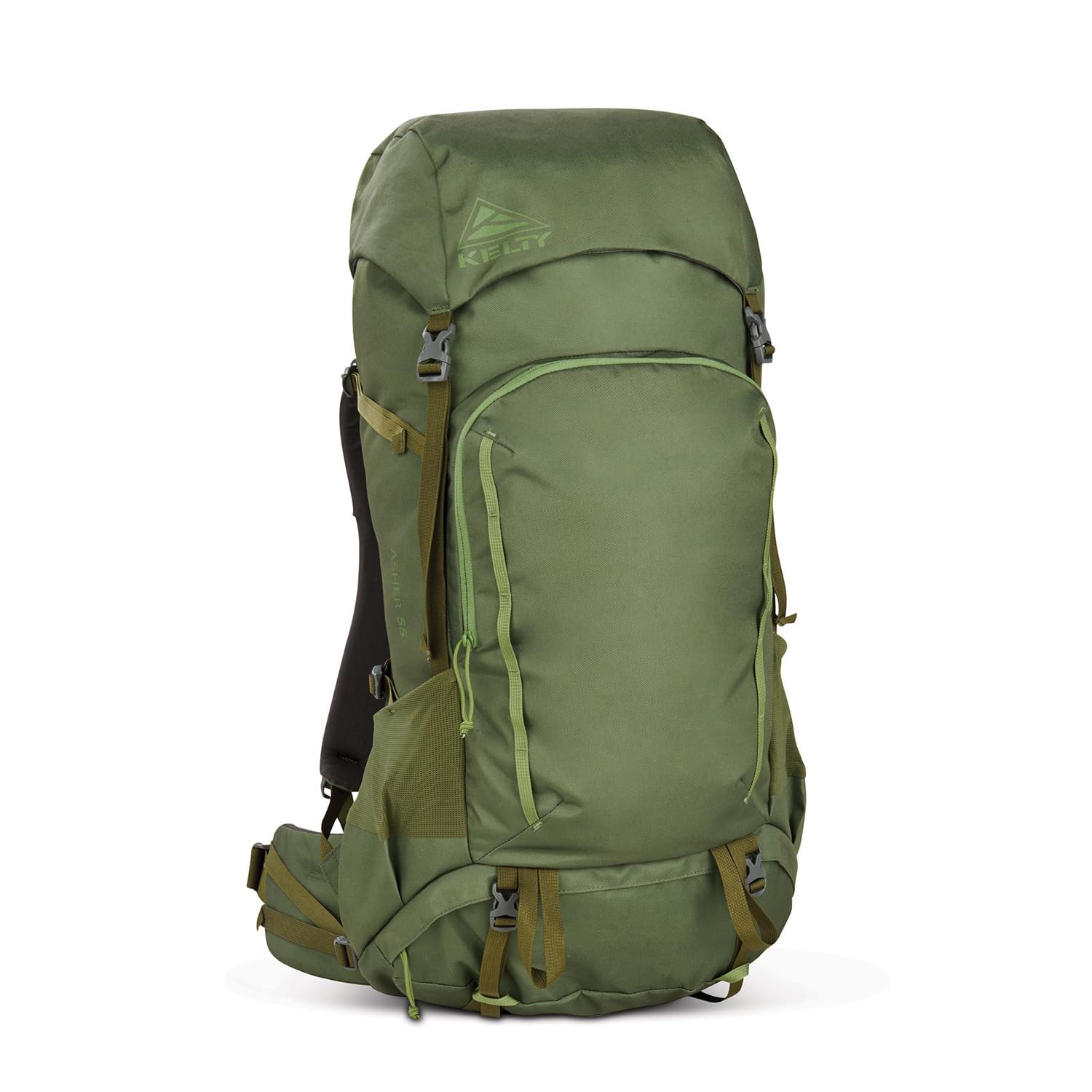
The Kelty Asher 55L is designed as an entry-level pack that punches above its weight class in adjustability and ventilation. Its Fit Pro torso adjustment system uses a sliding plastic ladder that lets you change torso length in two-inch increments, accommodating heights from 5’2″ to 6’4″ within a single pack size. The Amp Flow ventilated back panel creates a channeled airgap that pulls heat away from your spine, keeping your back notably cooler than solid-foam back panels do on long climbs. At 3 pounds 2 ounces, the Asher is the lightest pack in this comparison that still includes an aluminum perimeter frame stay for load transfer.
The 55-liter main compartment is paired with a separate sleeping bag compartment at the bottom, accessible through a zippered divider. Side stretch mesh pockets hold 1-liter bottles securely, and the front shove-it pocket provides easy access for a rain jacket or map. The hip belt is padded with open-cell foam and includes two zippered pockets for snacks and a phone. Load-lifter straps and a sternum strap with an integrated emergency whistle round out the essentials. The fabric is a C0 and PFC-free DWR polyester shell that resists light moisture, though a rain cover is not included.
Over two years of field use, reviewers report that the Asher’s perimeter frame maintains its shape without bending, and the Fit Pro system stays locked in place even when the pack is loaded to its 40-pound recommended limit. The amp flow backpanel does compress slightly under heavy loads, reducing ventilation somewhat, but it still outperforms traditional foam panels in airflow. The hip belt, while adequately padded for loads under 35 pounds, can feel thin for heavier carries. For hikers buying their first multi-day pack who want proven adjustability and lightweight construction at a reasonable price, the Asher is the best entry-level choice in this guide.
Why it’s great
- Fit Pro torso system adjusts easily without tools across a wide height range
- At 3.12 lbs, it’s the lightest pack here with a full aluminum perimeter frame
- Amp Flow backpanel keeps your spine significantly cooler than solid-foam alternatives
Good to know
- Hip belt padding is adequate for 35 lbs but lacks support for loads over 40 lbs
- Rain cover not included and fabric does not provide full waterproofing
6. TIDEWE Hunting 90L

The TIDEWE Hunting 90L is an external frame pack built for extreme loads, making it a specialized option for hikers who need to carry 50 to 80 pounds of gear, game, or expedition supplies. Its external aluminum frame lifts the load off your back and transfers weight directly to the hip belt through rigid stays, providing stability that internal frame packs cannot match when packing heavy, irregularly shaped loads. The 5,500-cubic-inch main compartment is cavernous enough for a week’s worth of gear plus a bow or rifle, and the freighter shelf at the base lets you strap on bulky items like a quartered deer or a foam pad. The Next Camo G2 fabric is engineered to minimize noise, and reinforced Hypalon at frame connection points reduces metallic creaking during movement.
Organization is tailored for hunting expeditions: the main compartment opens via a zippered front panel for quick access to gear in the middle of the pack, and multiple small compartments on the interior help separate camp essentials from hunting-specific items like calls or rangefinders. The hip belt is generously padded and paired with load-lifter straps that cinch the pack tight to your back. The rain cover is included and stores in a dedicated pocket. The hydration sleeve fits up to 3 liters, and the hose routing port exits through the top of the pack near the handle for easy access.
Real-world testing from hunters carrying 60 to 75 pounds over rugged terrain indicates that the TIDEWE frame remains stable without excessive wobble, though users above 6’3″ may need a hip belt extender for proper fit. The plastic buckles and thin shoulder straps were noted as the weakest points by reviewers who pushed the pack to its 80-pound limit. For the price, it offers frame capacity that would cost significantly more from dedicated hunting brands. If your long-distance hiking involves hauling heavy, non-uniform loads and you need an external frame that won’t fold under the weight, the TIDEWE delivers raw carrying capacity at a mid-range price.
Why it’s great
- External aluminum frame handles 60-80 lb loads that would overwhelm internal frame packs
- Freighter shelf and MOLLE-style webbing allow strapping irregular gear to the exterior
- Front zippered access panel lets you retrieve mid-pack items without unloading
Good to know
- Plastic buckles and thin shoulder straps may need upgrading for consistent heavy carries
- At 5.4 kg, the pack itself is heavy before you add any gear
7. TETON Sports Explorer 65L
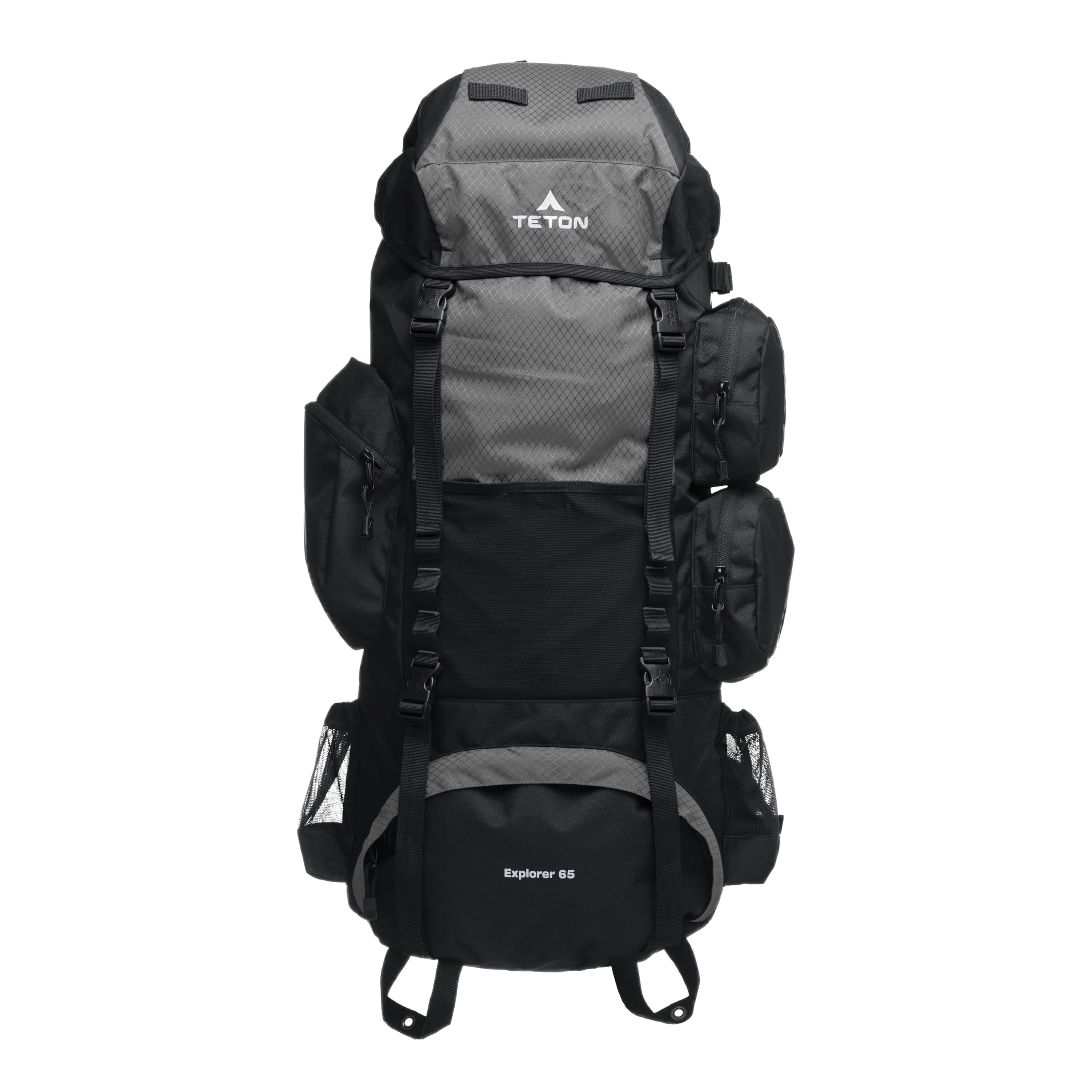
The TETON Sports Explorer 65L is a mid-range workhorse that delivers reliable performance for weekend and multi-day trips without the premium price tag. Its internal frame uses a multi-position torso adjustment system that fits medium to tall hikers comfortably, and the open-cell foam lumbar pad with molded channels provides airflow while keeping the load stable against your lower back. The 600D PolyUrethane-lined main compartment resists moisture and abrasion, and the included rain cover adds an extra layer of protection in sustained downpours. At 5 pounds, it’s heavier than many premium packs of the same capacity, but that weight comes from durable materials that hold up to repeated loading and unloading.
Storage is well-thought-out for organized packing: a separate sleeping bag compartment at the bottom with a floating divider keeps your camp gear isolated from your daytime layers, and multi-directional compression straps let you cinch the load tight to reduce bounce on technical terrain. The front panel has multiple lash points for attaching extra gear like a foam pad or tent poles, and the side mesh pockets are sized for 16-ounce bottles (though 1-liter bottles may struggle to fit). The top lid has a zippered pocket for quick-access items like a headlamp or sunscreen, and the hydration sleeve holds up to 3 liters.
Field reports from hikers who have used the Explorer on sections of the Appalachian Trail report that the torso adjustment system stays locked in place even under 45-pound loads, and the lumbar pad effectively prevents the pack from sagging downward during long descents. The shoulder straps are adequately padded for loads up to 35 pounds, but reviewers noted that the hip belt lacks the sculpting found on premium packs, which can cause slight lateral wobble at higher weights. The zippers can feel stiff when new but loosen up after a few trips. For any hiker seeking a durable, feature-rich 65-liter pack at a fair price, the TETON Explorer is the most balanced value in the mid-range category.
Why it’s great
- Multi-position torso adjustment fits a wide range of heights securely
- 600D PolyUrethane lining and included rain cover provide reliable weather protection
- Separate sleeping bag compartment with floating divider keeps gear organized
Good to know
- Side mesh pockets are too small to hold 1-liter water bottles securely
- Hip belt lacks the sculpted contouring of premium packs, reducing stability during heavy loads
8. MOUNTAINTOP 80L

The MOUNTAINTOP 80L provides maximum volume at a minimum cost, making it an attractive option for hikers who need 80 liters of capacity on a strict budget. Its internal frame uses lightweight aluminum panels that run vertically down the back, offering enough structure to transfer loads up to 40 pounds without bending. The hip belt is padded with open-cell foam and includes adjustable load-lifter straps that help redistribute weight. At just 2.2 pounds, it’s deceptively light for an 80-liter pack — that low weight comes from simple construction, not premium materials, but it means you can pack more gear without exceeding your own comfortable carry limit.
The main compartment opens through the top like a traditional rucksack, but side access zippers let you reach into the middle section without unpacking everything. A dedicated bottom compartment is designed for shoes or a sleeping bag, and the hydration sleeve fits a 3-liter bladder with a tube port near the top handle. The included rain cover stores in a pocket at the base of the pack. The fabric is nylon with a waterproof lining, though the outer shell is not fully seam-sealed, so extended rain may require the cover. YKK zippers provide reliable performance that matches packs costing twice as much.
Reviewers who have used the MOUNTAINTOP on 10-to-20-mile trips with loads around 30 pounds report that the aluminum frame panels hold up well under moderate strain, but the hip belt padding is thinner than premium alternatives, leading to some chafing after sustained miles. The shoulder straps are adequate for the price but lack the contouring that reduces pressure on the collarbones. For hikers who prioritize low upfront cost and need a pack large enough for extended expeditions or family gear hauling, the MOUNTAINTOP 80L offers the most cubic inches per dollar in this lineup, with the understanding that comfort and suspension refinement come second to sheer capacity.
Why it’s great
- At 2.2 lbs, it’s remarkably light for an 80-liter pack with an aluminum frame
- Side access zippers let you grab mid-pack items without unloading the top
- Includes rain cover and hydration sleeve that fit 3-liter bladders
Good to know
- Hip belt padding is thin and can cause chafing during longer carries
- Shoulder straps lack ergonomic contouring, leading to potential collarbone pressure
9. Mardingtop 60L Military
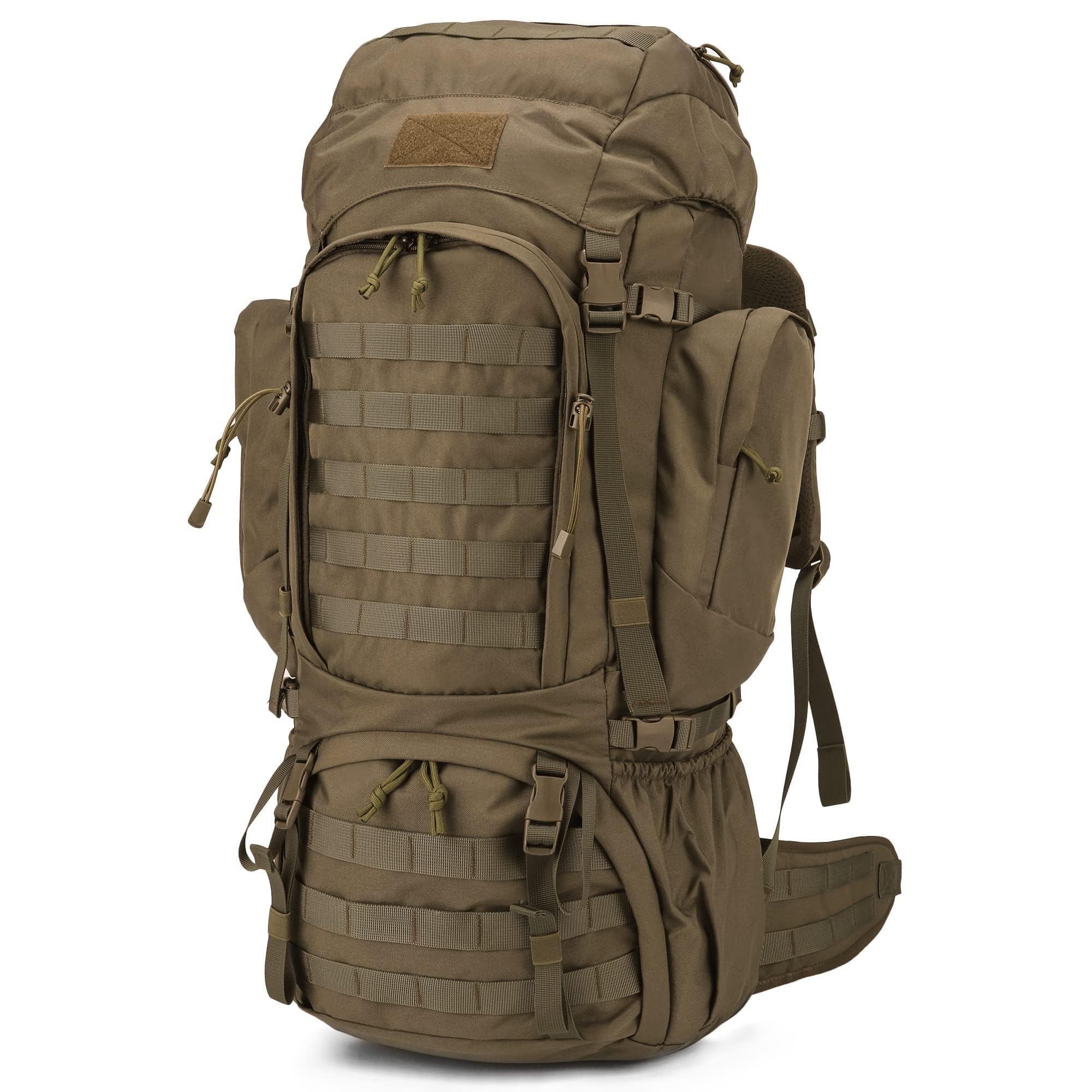
The Mardingtop 60L Military pack offers a unique modular approach at a budget price, built around a MOLLE webbing system that lets you attach external pouches for custom organization. Its internal frame uses a lightweight aluminum stay that provides enough structure for moderate loads under 40 pounds, and the waist belt includes padded support that wraps around the hips for basic load transfer. The pack is expandable to 75 liters by unzipping the top extension, giving you flexibility for trips where your gear volume varies. YKK zippers and solid stitching hold up well for the price point, and the included rain cover protects against sudden downpours.
Storage is configurable rather than fixed: the main compartment is a single large space with a hydration sleeve, while the MOLLE webbing on the front and sides accepts standard military-grade pouches for water bottles, a first aid kit, or a hatchet. Multiple external straps let you lash a sleeping pad or tent poles to the exterior. The waist belt can be adjusted for a snug fit, though the padding is not as sculpted as dedicated hiking packs. The pack comes with tie-down loops that can be used with carabiners for extra external gear attachment.
Field reports from hikers and ruckers indicate that the Mardingtop handles loads up to 50 pounds reasonably well for shorter distances, but the hip belt padding is thinner than ideal for sustained 20-mile days, and the waist belt cinches can loosen under heavy load. The shoulder straps are adequate for light loads but narrow for heavier carries. For budget-conscious hikers who want the ability to customize their pack layout with additional pouches, or for those who need a versatile bag that transitions between hiking and tactical use, the Mardingtop 60L delivers modularity at a price that leaves room in the budget for other gear.
Why it’s great
- Full MOLLE webbing system accepts standard pouches for fully customizable storage
- Expandable from 60L to 75L via top extension, adapting to trip length
- YKK zippers and robust stitching provide durability well above the price tier
Good to know
- Hip belt padding is thin and may cause chafing on carries over 10 miles
- Waist belt cinches can loosen under loads above 50 lbs, requiring periodic retightening
FAQ
How do I know if a 65L pack is the right size for multi-day hikes?
Is an external frame pack better than an internal frame for long-distance hiking?
What is the most important spec to check for preventing back pain?
Does a heavier pack always mean better durability?
Final Thoughts: The Verdict
For most users, the best backpack for long distance hiking winner is the Deuter Aircontact Lite 50+10 because it combines a lightweight spring steel X-frame with the most intuitive torso adjustment system in its class, handling 30-to-40-pound loads with balanced stability and reliable ventilation. If you want a pack that can carry 50 pounds without flexing and includes an integrated rain cover, grab the Osprey Kestrel 68L. And for maximum back ventilation in hot climates at a reasonable price, nothing beats the Deuter Futura Air Trek 60+10 — its spring steel frame with Aircomfort mesh keeps your spine dry even during high-exertion days on sun-exposed trails.

Mo Maruf
I created WellFizz to bridge the gap between vague wellness advice and actionable solutions. My mission is simple: to decode the research and give you practical tools you can actually use.
Beyond the data, I am a passionate traveler. I believe that stepping away from the screen to explore new environments is essential for mental clarity and physical vitality.