Our readers keep the lights on and my smoothie glass nicely filled. As an Amazon Associate, I earn from qualifying purchases.
The difference between a great trip and a painful one often sits right on your shoulders. A backpack that balances on the trail feels clumsy in an airport terminal, and a travel-focused bag usually lacks the frame and suspension needed for a rocky climb. Finding one pack that genuinely excels at both is the real challenge.
I’m Mohammad Maruf — the founder and writer behind WellFizz. I’ve spent countless hours analyzing load-bearing frame designs, hip belt geometry, fabric denier ratings, and compartment layouts to find the packs that actually deliver the promised versatility for mixed-use adventures.
This guide distills that research into clear, actionable picks, so you can confidently choose the best backpack for hiking and travel that matches your actual load, terrain, and travel style.
How To Choose The Best Backpack For Hiking And Travel
Selecting a dual-purpose pack requires looking past the color and pocket count. You need to evaluate the frame type, suspension system, volume, and access style — all factors that shift in priority depending on whether you are navigating a boulder field or a narrow airplane aisle. Below are the key specs that separate a genuinely versatile pack from a compromised one.
Frame and Suspension: The Load-Bearing Foundation
For hiking, an internal frame with a peripheral wire or a molded framesheet is non-negotiable. This structure transfers the load from your shoulders down to your hips via a padded, structured hip belt. Travel packs often skimp on this, using thin foam belts that can’t support more than a few pounds. Look for a frame that offers torso adjustability — this ensures the hip belt sits on your iliac crest, the bony part of your hips, not on your soft belly. A pack that feels great unloaded will become a torture device at 25 pounds if the frame doesn’t fit.
Volume and Carry-On Compliance
Volume is measured in liters and dictates what you can carry. For day hikes and short business trips, 25-35 liters is the sweet spot. For weekend backpacking trips or longer travel without checked luggage, aim for 40-48 liters. The key constraint: many airlines enforce a maximum carry-on dimension of roughly 22 x 14 x 9 inches. A 45-liter pack is often the upper limit for fitting in an overhead bin, while anything over 50 liters will almost certainly need to be gate-checked. Measure your pack’s height before you buy — a tall frame that extends past 22 inches won’t fit in most regional jets.
Access Style: Top-Loader vs. Clamshell
Traditional hiking packs are top-loading with a drawstring closure and a floating lid. This design is lightweight and keeps the structural integrity of the frame intact, but it is a nightmare for airport security or digging out a dirty shirt at midnight. Travel-oriented packs use a clamshell (suitcase-style) opening that zips completely around the main compartment. The best hiking-and-travel hybrids use a panel-loading design or a dual-access compartment — a clamshell main body with a separate bottom zipper for sleeping bags or dirty clothes. Decide your primary use: if you fly every week, prioritize clamshell access; if you are primarily on trails, a top-loader with a drawstring is lighter and more water-resistant.
Quick Comparison
On smaller screens, swipe sideways to see the full table.
| Model | Category | Best For | Key Spec | Amazon |
|---|---|---|---|---|
| Deuter Futura 32 | Hiking Pack | Ventilated all-day hikes + light overnight camping | Aircomfort Sensic back system, 32L | Amazon |
| Osprey Stratos 44 | Hiking Pack | Multi-day backpacking with maximum back ventilation | AirSpeed mesh trampoline suspension, 44L | Amazon |
| Osprey Kestrel 48 | Backpacking Pack | Technical trails and extended backcountry trips | AirScape molded backpanel, 48L L/XL | Amazon |
| Thule Landmark 40L | Travel Pack | International carry-on with anti-theft features | Hidden CashStash pocket, 40L | Amazon |
| Tolaccea Travel Backpack | Travel Pack | Budget-friendly carry-on with wet/dry separation | Expandable 40L to 50L, 180° clamshell opening | Amazon |
| Naturehike 45L | Hiking Pack | Ultralight backpacking on a budget | 420D nylon, internal frame, 45L | Amazon |
| Fjällräven Skule 28 | Daypack | Urban EDC and casual day hikes | Recycled polyester Oxford, padded 15″ sleeve | Amazon |
In‑Depth Reviews
1. Deuter Futura 32

The Futura 32 from Deuter is a masterclass in balanced design. Its Aircomfort Sensic back system uses a tensioned mesh on a flexible spring steel frame that pulls the pack body away from your spine, creating a channel for airflow. Independent testing indicates this reduces perspiration by up to 25 percent compared to standard foam back panels. The dual-density foam lumbar pads are contoured to match the natural curve of the hips, which keeps the load directly on your skeletal structure rather than soft tissue.
The 32-liter volume is ideal for big day hikes, peak bagging, or ultralight summer overnights. The pack includes a detachable waterproof rain cover, hiking pole loops, and compression straps that regulate volume when you are not fully loaded. The S-shaped ActiveFit shoulder harness pivots with your movement, preventing the strap from sliding off during dynamic scrambles.
The only compromise for the mixed-use crowd is the top-loading design — there is no clamshell opening, so packing for airport security requires more forethought. However, the bottom-zip access to the main compartment provides a useful alternative for retrieving gear without unloading the entire pack. The 32-liter capacity is also comfortably carry-on compliant for most airlines.
Why it’s great
- Superior ventilation keeps your back dry on sweaty ascents
- Lightweight spring steel frame transfers load effectively to hips
- Included rain cover and bottom-zip access add trail versatility
Good to know
- Top-loading only, no clamshell opening for airport packing
- 32 liters may be tight for a multi-night trip with bulky gear
2. Osprey Stratos 44
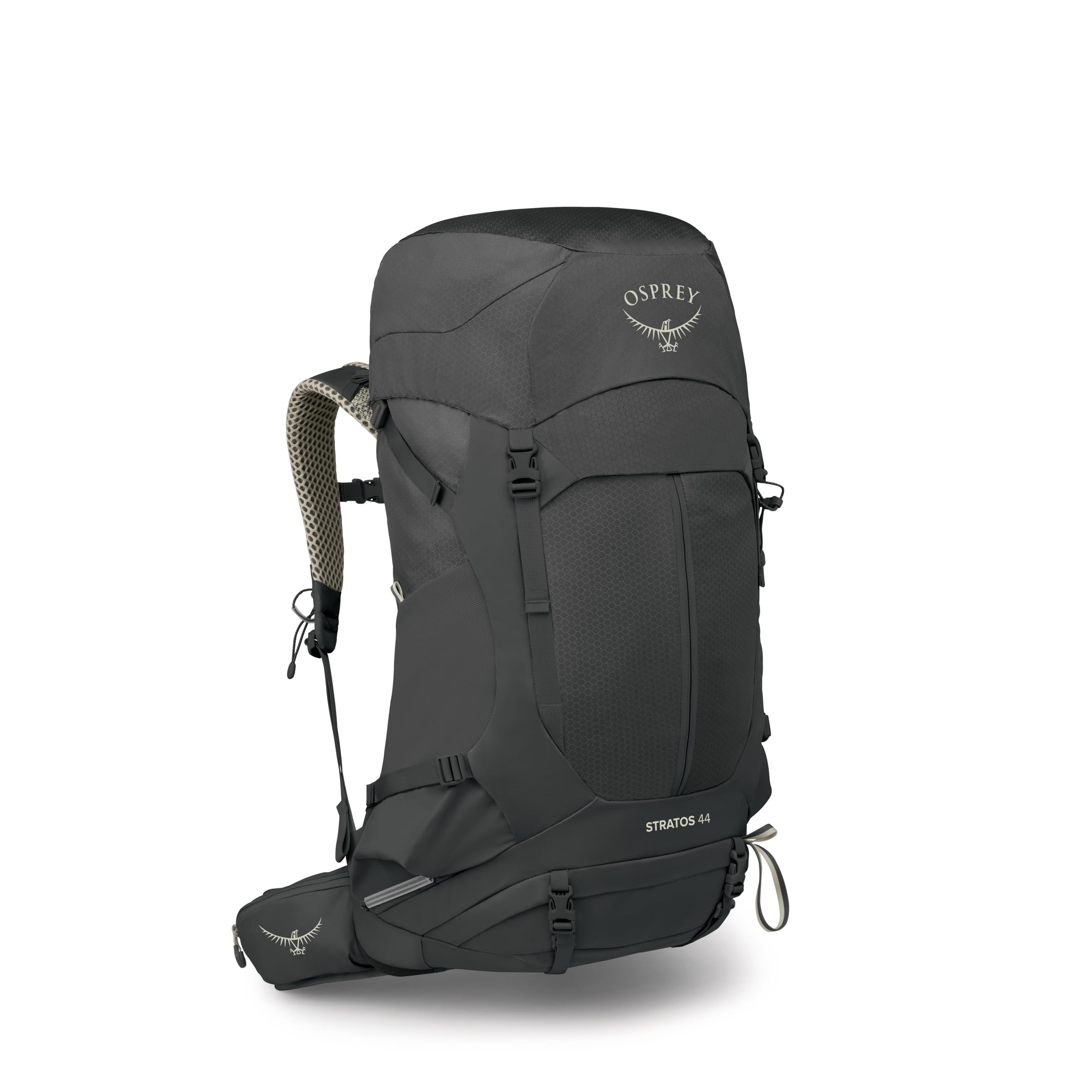
The Stratos 44 uses Osprey’s AirSpeed suspension, a trampoline-style mesh backpanel that is stretched across a LightWire peripheral frame. This creates a deep, uninterrupted channel of airflow between the pack and your back, making it one of the coolest-carrying packs in this segment. The frame is rigid enough to stabilize heavy loads — user reports confirm the pack handles 30 pounds comfortably over multi-day sections of the Appalachian Trail.
The 44-liter capacity hits the sweet spot for a weekend backpacking trip while still fitting in most overhead bins as a carry-on, though the fixed frame height requires checking the dimensions against your airline’s sizer. The pack features a dual-access main compartment (top-loader with a bottom zipper), a removable top lid, and the Stow-on-Go trekking pole attachment system. The included rain cover is made from 100 percent recycled nylon ripstop.
The padded ErgoPull hip belt uses a body-hugging contour that effectively transfers the load, but the men’s fit is designed for longer torsos and broader shoulders. The magnetic sternum strap is a thoughtful touch that snaps shut with one hand. The only real limitation is the lack of a dedicated laptop sleeve — this is a pure trail pack that can double as travel, not a commuter bag with suspension.
Why it’s great
- Deep mesh trampoline backpanel provides class-leading ventilation
- Adjustable torso length fits a wide range of body sizes
- Integrated rain cover and trekking pole attachments ready out of the box
Good to know
- Hard frame may require overhead bin, not suitable as a personal item
- No dedicated laptop pocket for business travel
3. Osprey Kestrel 48
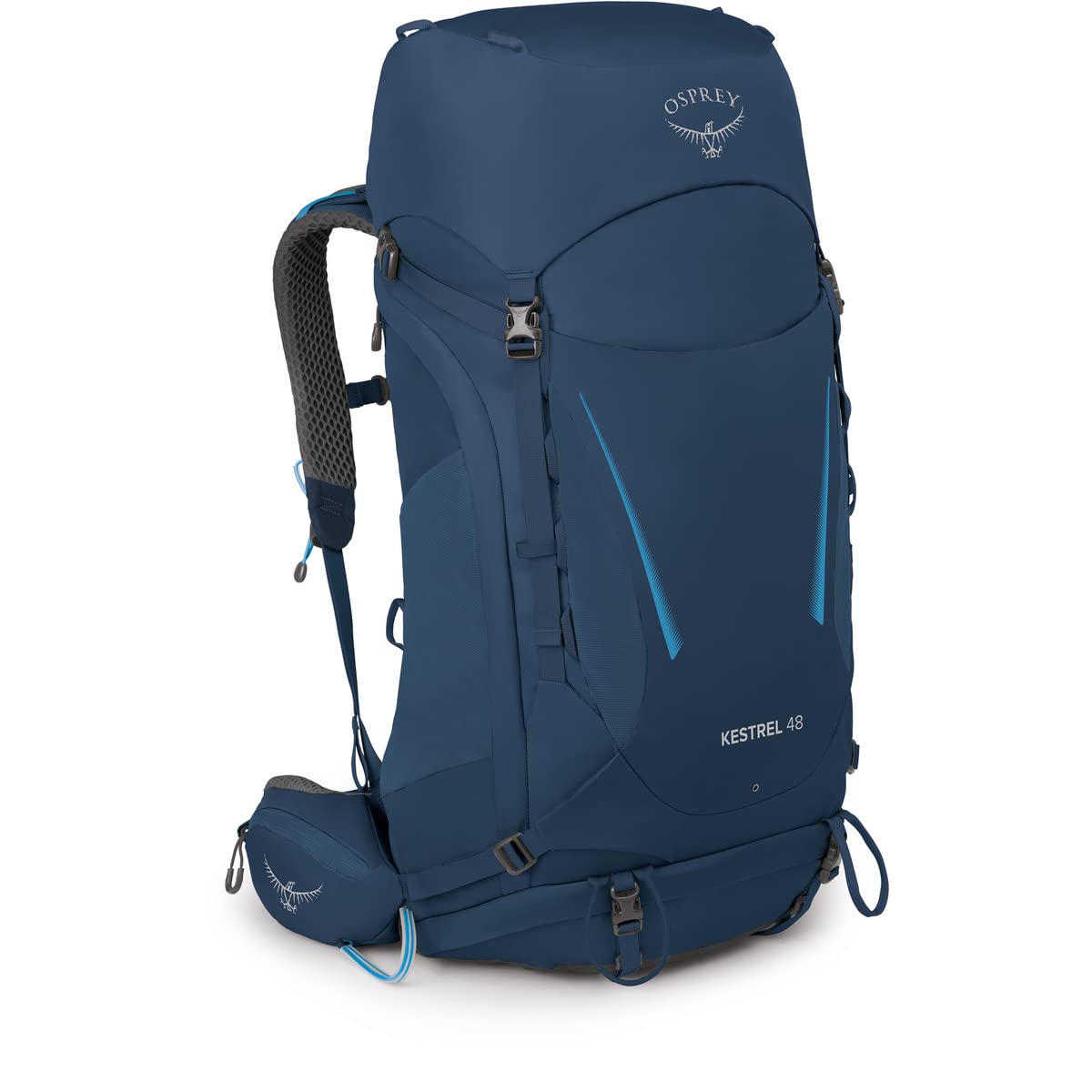
The Kestrel 48 is built for big, technical days. The injection-molded AirScape backpanel provides a stable, close-to-body carry that keeps the load balanced during scrambles and off-trail travel. Unlike the trampoline suspension on the Stratos, the AirScape panel places the pack closer to your back, which gives you better control on uneven terrain. The L/XL sizing option fits torsos longer than 20 inches, making it the best option for taller hikers who struggle to find a proper hip belt placement.
At 48 liters, this pack can handle a four-day backpacking trip with a bear canister, tent, and sleeping bag. The fixed hip belt and foam backpanel are less ventilated than the AirSpeed system, but Osprey includes a bright green integrated rain cover and multiple lash points for extra gear. Side compression straps can hold trekking poles or an ice axe, and the vertical daisy chains provide attachment points for carabiners or extra pouches.
The Kestrel uses tougher 210-denier nylon compared to the lighter fabrics found on some ultralight packs, but it weighs in at 4.62 pounds — a reasonable trade-off for the durability. For mixed travel, the 48-liter volume is at the upper boundary of carry-on acceptance; you will likely need to check it on regional jets. The lack of a clamshell opening also means unpacking in a hotel room requires a different strategy than a suitcase-style pack.
Why it’s great
- Stable, close-to-body carry for technical terrain and scrambling
- Tough 210-denier nylon with integrated rain cover
- Adjustable torso length and L/XL sizes for taller hikers
Good to know
- Less back ventilation than a trampoline-style suspension
- 48 liters often requires gate-checking on smaller aircraft
4. Thule Landmark 40L
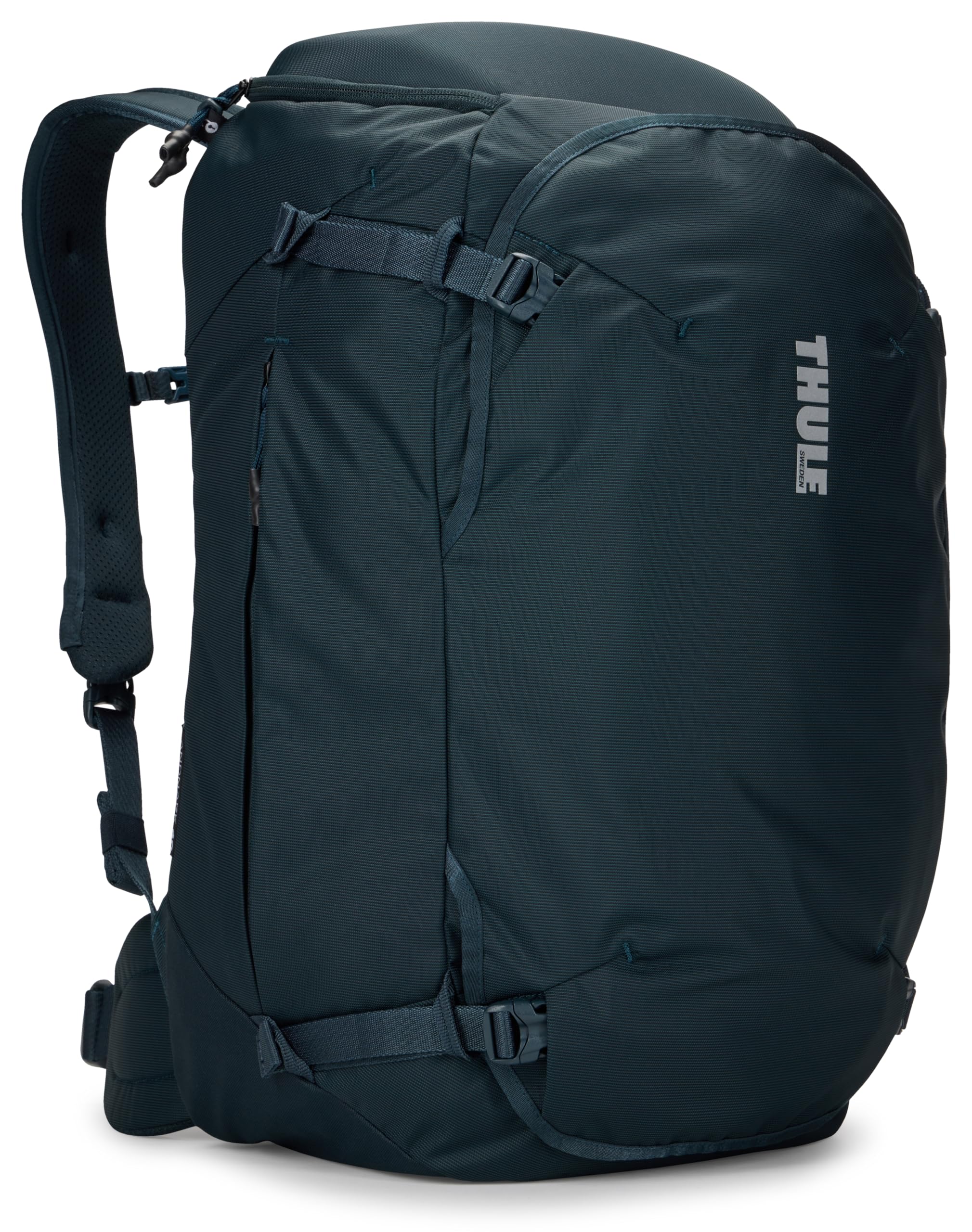
The Landmark 40L is the most travel-forward pack in this selection, built for globe-trotters who prioritize security and organization. The hidden CashStash pocket sits behind the SafeZone compartment, a covert slot designed to keep a passport and cash safe from pickpockets. The LoopLocks system allows you to secure the main zipper pulls to the bag itself, deterring opportunistic theft in crowded trains or hostels.
The 40-liter volume is optimized for carry-on compliance — the dimensions adhere to most international airlines’ limits. The main compartment opens clamshell-style, making airport security and hotel unpacking far easier than a top-loading pack. A padded sleeve accommodates a 15-inch laptop and a 12.9-inch tablet, with separate organization for documents and accessories. The pack also has a detachable daypack component, which gives you a smaller personal item for exploring the city after you drop the main bag at your accommodation.
On the trail side, the Landmark is less capable than the dedicated hiking packs on this list. The hip belt is more of a stabilizer than a load-transfer mechanism, and the backpanel lacks the rigid frame needed to support heavy loads over rocky terrain. The fabric is also not fully waterproof — users note that while it shrugs off light rain, a downpour will wet the contents. This pack excels as a travel-first pack that can handle a well-groomed trail, not a backcountry beast.
Why it’s great
- Hidden CashStash pocket and LoopLocks for anti-theft security
- Clamshell opening and dedicated laptop/tablet sleeves
- Included detachable daypack for local exploration
Good to know
- Minimal load-transferring hip belt limits trail performance
- Low water resistance in heavy rain
5. Tolaccea Travel Backpack
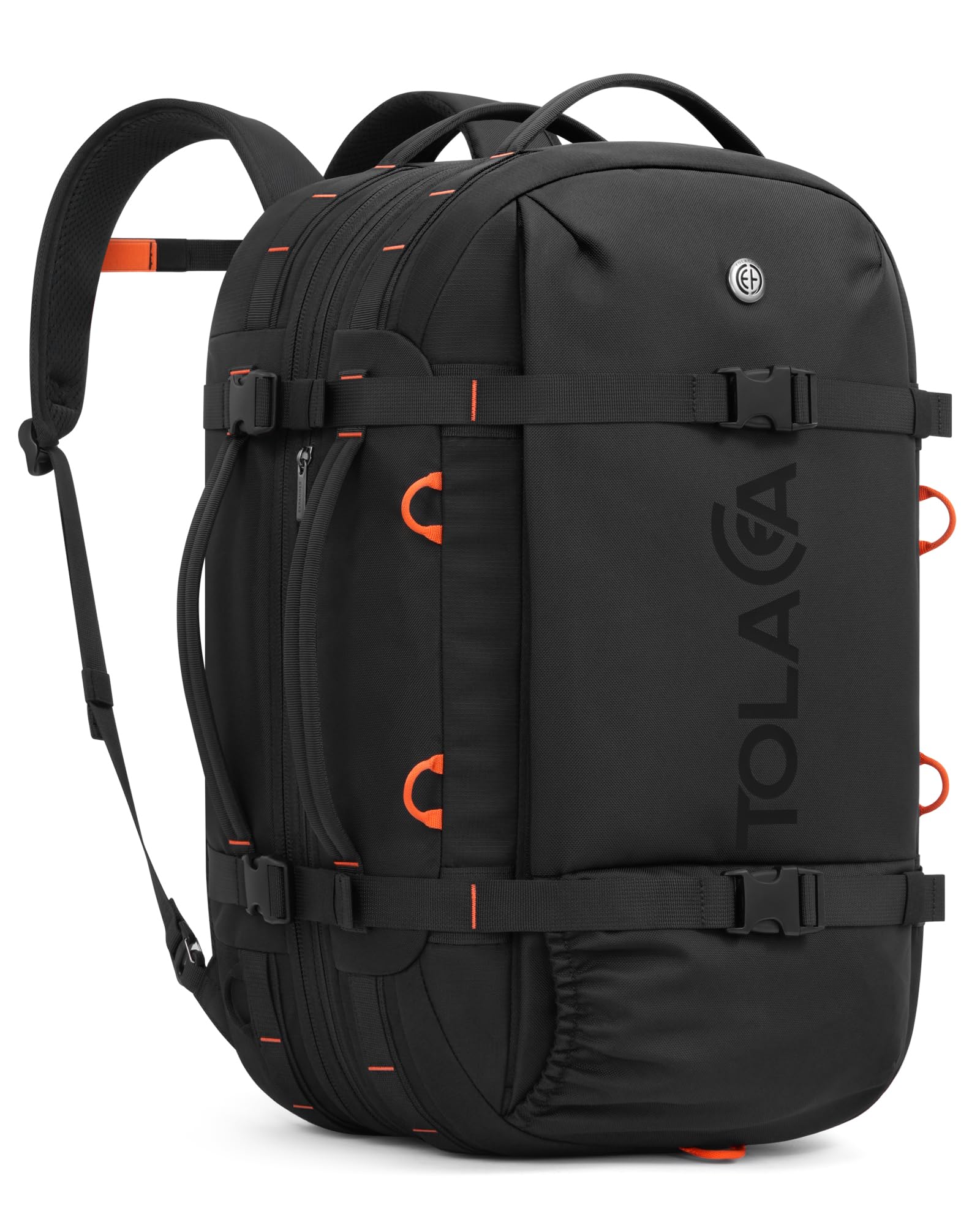
The Tolaccea Travel Backpack proves that a clamshell-opening, TSA-friendly pack does not have to command a premium price. It expands from 40 liters to 50 liters via a dual-compartment main storage system. The 180-degree opening design makes packing and security checks simple, and the side-access laptop compartment allows you to pull out a 15.6-inch device without opening the main bag. The suspended shockproof sleeve protects your laptop from drops on hard surfaces.
The pack includes a separate wet-dry compartment that is genuinely useful for separating gym clothes, toiletries, or wet swimwear from your dry gear. The bag is constructed from tear-resistant polyester with reinforced stitching and lockable SBS zippers. The luggage strap slides over a suitcase handle, which is a standard feature but executed cleanly here. Three carrying modes — backpack, briefcase side handle, and crossbody sling — add flexibility for navigating airports and city streets.
On the trail, the Tolaccea shows its travel-first DNA. The backpanel is foam-padded but lacks a rigid frame, so loads over 15 pounds will feel heavy on the shoulders during extended hikes. The hip belt is more of a simple strap than a padded load-transferring belt. For a weekend trip that involves a short walk from the train to the hotel or a gentle nature trail, this pack is more than adequate, but it is not built for sustained backcountry use.
Why it’s great
- 180-degree clamshell opening for easy packing and TSA screening
- Expandable 40-50L volume and dedicated wet-dry compartment
- Smart side-access suspended laptop sleeve for 15.6-inch devices
Good to know
- Soft backpanel and simple hip belt limit trail load capacity
- Many zippers and pockets require a learning curve to find items quickly
6. Naturehike 45L

The Naturehike 45L punches well above its weight class for trail performance. It features a genuine internal frame that supports loads up to 24.3 pounds (11 kg), which is a rarity at this price point. The pack is constructed from 420D nylon ripstop, providing good abrasion and tear resistance for bushwhacking and rocky terrain. An included rain cover adds a layer of weather protection, and the mesh-padded backpanel offers reasonable breathability for the category.
The 45-liter volume is suitable for weekend backpacking trips and can accommodate a tent, sleeping bag, stove, and clothing for three days. The dedicated shoe compartment on the back panel keeps dirty footwear separate from clean gear. Side compression straps can hold trekking poles or a closed-cell foam pad. The pack weighs just 2.5 pounds, making it a viable option for lightweight backpacking setups where every ounce matters.
The hip belt on the Naturehike is padded and adjustable but lacks the molded contouring of premium packs like the Deuter or Osprey. User reports from tall hikers (6-foot-4) confirm the belt fits well and can handle 30-35 pounds without digging in. On the travel side, the top-loading design and lack of a laptop sleeve make it less practical for airport use. The roll-top closure also requires a thoughtful packing strategy to access gear quickly.
Why it’s great
- Functional internal frame and hip belt for carrying heavy trail loads
- Weighs only 2.5 pounds, suitable for lightweight backpacking
- 420D nylon fabric with included rain cover for durability
Good to know
- Top-loading design is not suited for frequent airport access
- Hip belt pockets are small; no dedicated laptop compartment
7. Fjällräven Skule 28
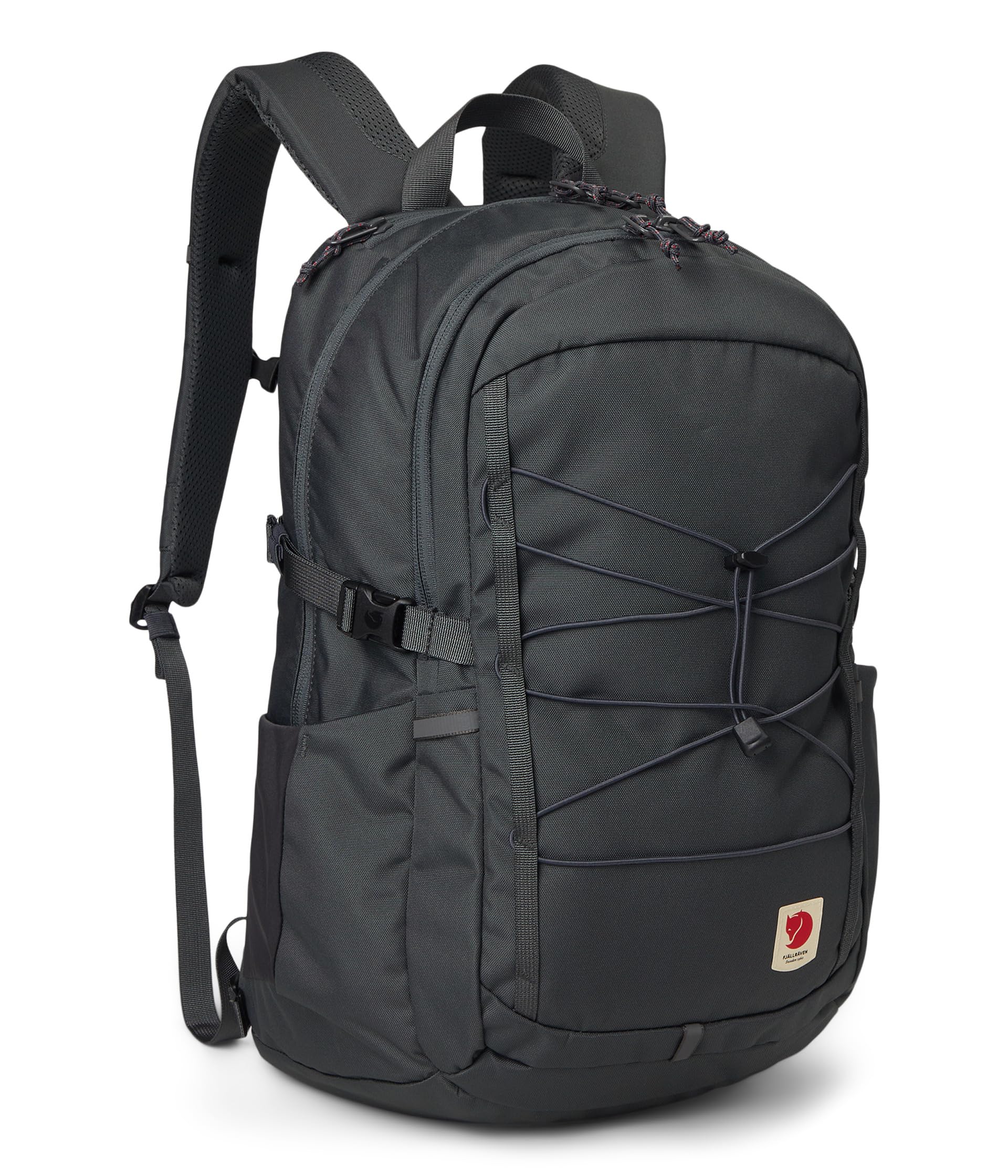
The Fjällräven Skule 28 is the smallest pack on this list, but it fills a specific niche: the everyday carry that transitions from a work commute to a short, well-groomed trail. The pack is made from hardwearing Oxford fabric in recycled polyester with a medium-weight, non-stretch weave that resists abrasion. The padded back panel and shoulder straps use air mesh for basic breathability, and the pack is hydration-system compatible with an opening for the drinking tube at the top.
The 28-liter volume works well for a day hike with a jacket, lunch, water, and a few layers. The main zippered compartment includes a padded sleeve for a 15-inch laptop, making it functional for the daily office routine. The front compartment has mesh organizing pockets for pens, chargers, and a passport. Large side water bottle pockets can hold a 32-ounce Nalgene, and the integrated chest strap helps stabilize the load when you start jogging on the trail.
For a mixed hiking-and-travel bag, the Skule has notable limitations. The waist strap is a thin, non-removable piece that is largely useless for load transfer — it is more of a stabilizer for quick movements. The top carrying loop is unpadded and uncomfortable when the bag is fully loaded. Users also report that the laptop sleeve is too short for a 15-inch MacBook Air, exposing the top quarter of the device. This is a solid daypack for light use, not a serious hiking or travel pack.
Why it’s great
- Stylish, durable recycled polyester fabric with a premium feel
- Padded 15-inch laptop sleeve and front organizer pockets
- Hydration compatible and comfortable for light day hikes
Good to know
- Useless non-removable waist strap offers no load transfer
- Laptop sleeve is short for 15-inch devices; no clamshell opening
FAQ
Can a 40-liter backpack really work as a carry-on for hiking and travel?
What is the difference between a top loader and a clamshell backpack?
Is a trampoline backpanel worth the extra weight for hiking?
Final Thoughts: The Verdict
For most users, the backpack for hiking and travel winner is the Deuter Futura 32 because it delivers genuine trail-level suspension and ventilation in a carry-on-friendly 32-liter package. If you want maximum back ventilation for multi-day backpacking, grab the Osprey Stratos 44. And for international travel with security features and clamshell access, nothing beats the Thule Landmark 40L.

Mo Maruf
I created WellFizz to bridge the gap between vague wellness advice and actionable solutions. My mission is simple: to decode the research and give you practical tools you can actually use.
Beyond the data, I am a passionate traveler. I believe that stepping away from the screen to explore new environments is essential for mental clarity and physical vitality.