Our readers keep the lights on and my smoothie glass nicely filled. As an Amazon Associate, I earn from qualifying purchases.
An engineer’s backpack is a mobile workbench and command center. It must protect delicate electronics, carry heavy calculators and tool bags, survive daily commutes and job sites, and still look professional at a client meeting. Finding one that hits all those marks without falling apart in a year requires scrutinizing build materials, compartment architecture, and suspension design — not just the number of pockets.
I’m Mohammad Maruf — the founder and writer behind WellFizz. I’ve analyzed thousands of product specs and customer durability reports to identify which backpacks actually withstand the torque of a fully loaded structural engineer’s carry and the precision demands of a field technician’s kit.
This guide distills those findings into a curated list of the best backpack for engineers across various use cases, from the consulting office to the chemical plant floor.
How To Choose The Best Backpack For Engineers
An engineer’s daily carry is unusually demanding: a 15-inch or larger laptop, multiple tablets, a notebook, a hard hat or safety glasses, a multimeter or calipers (for field engineers), lunch, a water bottle, and often a change of clothes. A standard consumer backpack can buckle under that load within weeks. You need to evaluate five critical areas before buying.
Weight Distribution and Suspension (Ergonomics Over Ego)
The biggest mistake engineers make is buying a pack with great pockets but poor weight transfer. Look for contoured “S” curve shoulder straps that follow your trapezius, not straight straps that dig into your neck. A padded mesh back panel with airflow channels reduces sweat. Removable waist belts help shift load to your hips when you’re carrying over 15 pounds. The North Face FlexVent system (certified by the American Chiropractic Association) is a prime example of suspension done right for daily carry weights.
Base Construction: The Molded Bottom Test
A flat base that collapses when set down is a dealbreaker for an engineer who sets the pack on wet concrete or muddy ground. Look for a molded, reinforced bottom — often called a “Duravax base” (Carhartt) or “curved molded bottom” (Klein Tools). This prevents the bag from tipping over and protects contents from moisture and abrasion. A stiff base also keeps the backpack standing upright for easy access, which is essential on a job site.
Denier Count and Zipper Armor
Denier (D) measures fabric thickness. 600D is standard for lightweight commuter packs, 1200D to 1680D is what you need for job site durability. Check for 1200D polyester (SwissGear, Carhartt) or 1680D ballistic nylon (Klein Tools). Equally important: YKK zippers. They resist jamming, tolerate grit, and live significantly longer than generic zippers. Two reviews in our data specifically praise YKK zippers on the North Face Borealis for their smooth, long-term operation.
Laptop Sleeve Isolation and Capacity
The laptop compartment should be a separate, padded sleeve that suspends the device at least an inch off the bottom of the bag. This protects against drops and bumps. Most packs now accommodate 15-17 inch laptops, but the critical spec is the internal dimensions of the sleeve. The Thule Aion, for example, has a dedicated 17-inch laptop compartment that is isolated from the main cargo area, so a multimeter jostling in the main pocket won’t dent your machine.
Specialist Pockets for Engineering Tools
If you carry hand tools, a multimeter, or a headlamp, you need more than a generic “tech organizer” pocket. The Klein Tools backpack includes 40 total pockets (27 internal, 13 external) with a hard molded front pocket for safety glasses. The Swissdigital pack features an RFID-protected pocket for ID badges and credit cards — a must for engineers who frequently badge into secure facilities. Think about your specific daily tools and choose a pocket layout that matches, not one that just looks busy.
Quick Comparison
On smaller screens, swipe sideways to see the full table.
| Model | Category | Best For | Key Spec | Amazon |
|---|---|---|---|---|
| Klein Tools 62800BP | Tool Pack | Jobsite/Field Engineers | 40 pockets, 1680D, molded bottom | Amazon |
| Thule Aion | Travel/EDC | Consulting & Multi-Day Travel | Expandable 28-32L, 17″ laptop sleeve | Amazon |
| Travelpro Platinum Elite | Business Travel | Frequent Flying Engineers | Limited lifetime warranty, YKK zippers | Amazon |
| The North Face Borealis | Commuter | Daily Office/Campus Carry | ACA-certified FlexVent suspension | Amazon |
| Carhartt 28L | Jobsite/Everyday | Durability Focus | 1200D polyester, Duravax base | Amazon |
| SwissGear 1900 ScanSmart | TSA-Friendly | Airport Security Efficiency | Lay-flat laptop compartment, RFID | Amazon |
| Swissdigital SD803-01 | Value Tech Pack | Budget-Friendly Tech Carry | 31L, USB port, RFID protection | Amazon |
In‑Depth Reviews
1. Klein Tools 62800BP Tradesman Pro

The Klein Tools 62800BP was purpose-built for the trades, but its feature set is so robust it works equally well for any engineer who carries hand tools, test equipment, or heavy reference materials. The 1680D water-resistant exterior is tougher than almost anything in the commuter category, and the curved molded bottom keeps the bag upright even when loaded with 40 pounds of gear. The 40-pocket architecture is divided between 27 internal and 13 external pockets, so you can organize everything from a multimeter and safety glasses to a headlamp and spare batteries without digging.
An integrated USB-C port with a 1.5-foot cord allows charging electronics from a battery bank inside the bag, which is a smart touch for engineers in the field who need to keep phones and tablets topped off. The headlamp bracket is a specialist feature — it lets you clip a Klein headlamp onto the shoulder strap for hands-free illumination in dark panel rooms or crawl spaces. Customers report the bag holds up to years of abuse, with one I&E technician calling it “very durable” after daily use in a chemical plant.
The main caveat is weight: at 7.5 pounds empty, this is not a lightweight commuter pack. If you’re a structural or software engineer who rarely leaves the office, a lighter option like the North Face Borealis is more practical. But for civil, mechanical, electrical, or field engineers, the Klein is the most purpose-built option here — the molded bottom alone is worth the trade-off in heft.
Why it’s great
- Curved molded bottom keeps bag upright and protects against wet ground
- 40 pockets including a hard molded front compartment for glasses/safety gear
- 1680D fabric with USB-C charging port and headlamp bracket
Good to know
- 7.5 lbs empty — heavy for office-only use
- No dedicated laptop sleeve suspension (laptop sits in main compartment)
2. Thule Aion Backpack

The Thule Aion is the premium choice for the consulting engineer who spends half the week traveling between client sites and the other half in an open-plan office. Built from 100% recycled bluesign-approved polyester with a PFC-free DWR coating, it is both environmentally conscious and genuinely water-resistant. The waxed canvas exterior has a broken-in texture from day one — it arrives looking like a well-loved bag, which suits the professional aesthetic some engineers prefer over tactical nylon.
Its standout feature is the expandable main compartment that grows from 28 liters to 32 liters, making it ideal for overnight business trips where you need to fit a change of clothes alongside your laptop and documents. The removable TPU roll-top wet bag is a brilliant addition for engineers who carry muddy boots or wet gear to a field site. The padded laptop compartment fits up to a 17-inch device and is isolated from the main cargo area. The clamshell opening lets you pack like a suitcase, which is far more practical for travel than a top-loading design.
The Aion is not cheap, and the front pocket is only half-depth, which limits quick-access storage. Some users note the black fabric can fade to grey over extended use, though the material itself remains robust. For engineers who prioritize sustainability, travel versatility, and a sleek silhouette, the Thule Aion is a compelling option that outperforms many dedicated travel backpacks twice its price.
Why it’s great
- Expandable from 28 to 32 liters for overnight travel
- Detachable TPU wet bag for muddy or wet gear
- Clamshell opening and isolated 17-inch laptop compartment
Good to know
- Front pocket is only half-depth — limited quick-access storage
- Premium priced with no included hip belt (sold separately)
3. Travelpro Platinum Elite
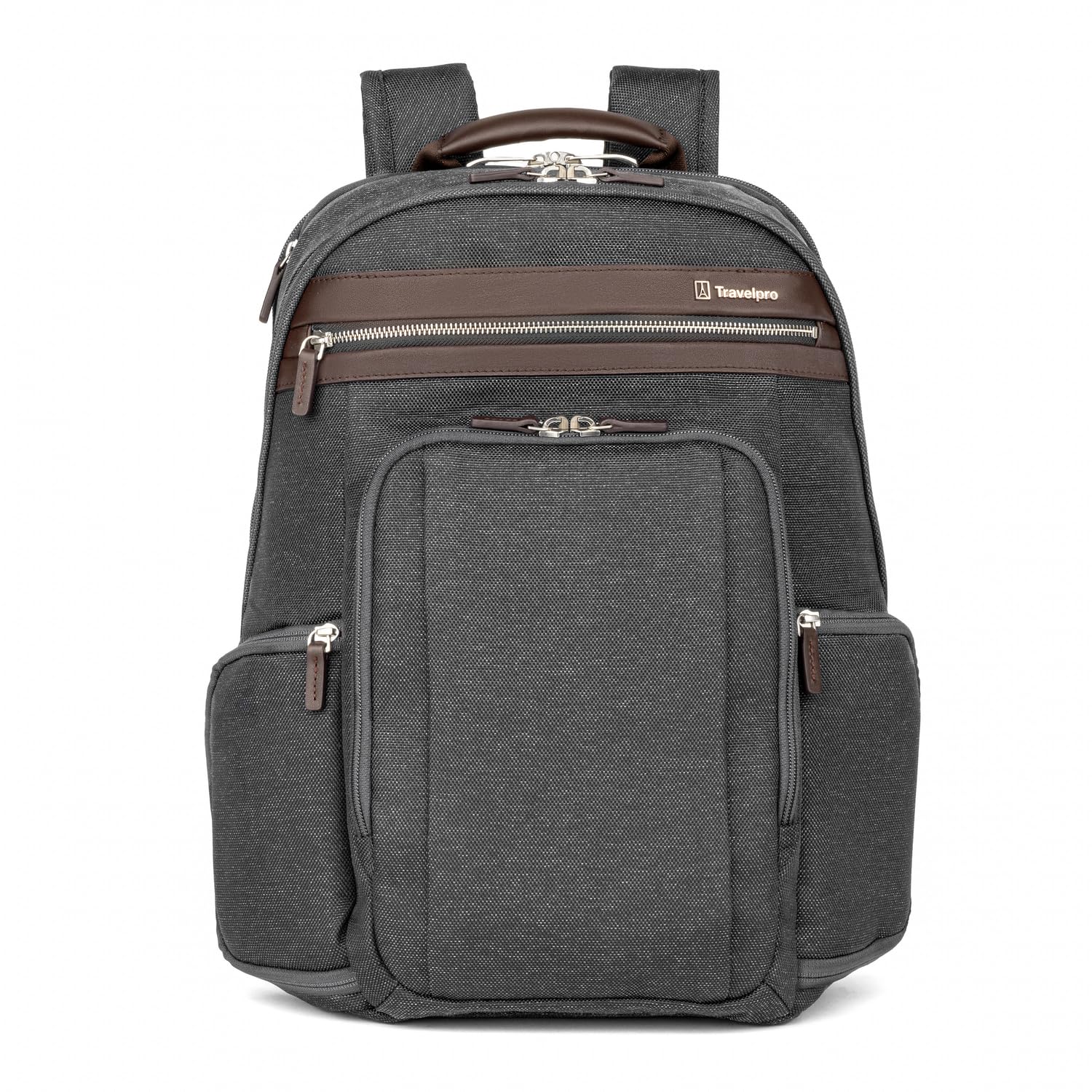
The Travelpro Platinum Elite is the backpack that says “I’m a professional” without a word. Aimed squarely at business travelers and consulting engineers, it uses high-density fabric with a DuraGuard coating that repels stains and abrasions far better than standard nylon. The full-grain leather top handle adds a touch of refinement that stands out in client-facing environments. It fits laptops up to 16 inches and tablets up to 12.9 inches, with padded sleeves that absorb shock during transit.
Security features include the ID TheftBlock RFID pocket for passports and credit cards — a critical feature for engineers who travel internationally. The rear fabric strap slots over any Rollaboard spinner handle, turning the backpack into a stable stack for hands-free mobility through airports. The QuickSlip front pocket uses a magnetic closure for fast access to a boarding pass or phone. Travelpro backs this with a limited lifetime warranty, plus a trusted companion promise covering damage from airlines for the first year.
The bag has received five-star reviews for its professional styling and endless pockets. A long-time Travelpro loyalist reported their previous backpack lasted nearly 20 years — though a more recent review noted a zipper failure within weeks, suggesting some quality inconsistency. For engineers who fly frequently, the Platinum Elite is worth serious consideration, but inspect the zippers on arrival and register the warranty immediately.
Why it’s great
- DuraGuard coating repels stains and abrasions effectively
- RFID TheftBlock pocket and magnetic QuickSlip front pocket
- Rollaboard pass-through and limited lifetime warranty
Good to know
- Some users report QC issues with zipper durability
- Heavier than similar-capacity bags at 5 lbs
4. The North Face Borealis
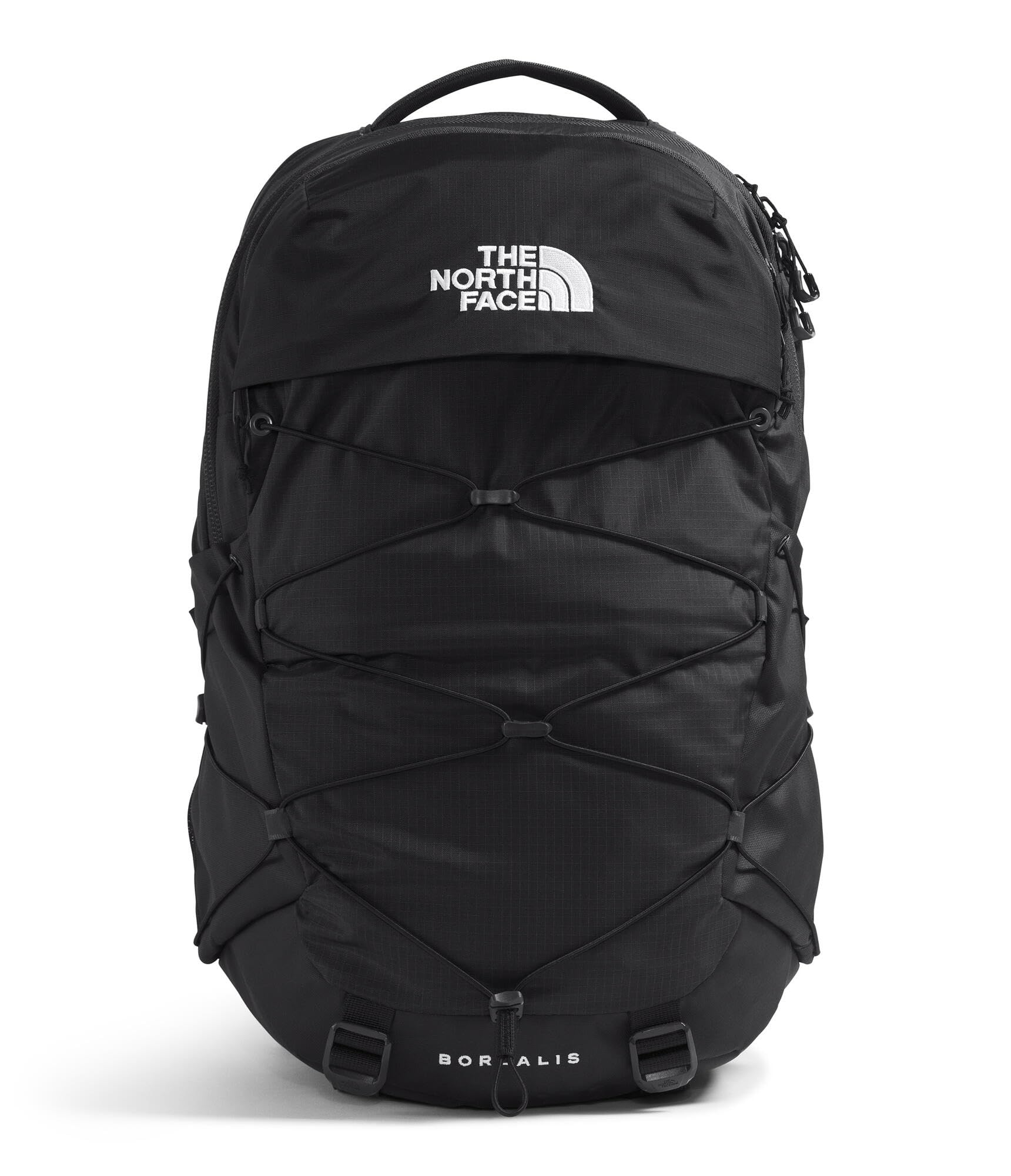
The North Face Borealis is the gold standard for the office-based or campus-based engineer who needs reliable back support and thoughtful organization without the bulk of a tool pack. Its FlexVent suspension system is certified by the American Chiropractic Association — a rare validation that the shoulder straps, back panel, and stitch lines are engineered to reduce strain during extended wear. The articulated straps move with your body, and the rounded back panel promotes airflow to reduce sweat during a walk to the train or across a large campus.
Organization is smart but not excessive. There is a dedicated padded laptop sleeve that fits up to a 16-inch device, a separate fleece-lined tablet sleeve in the front compartment, and an external fleece-lined pocket for sunglasses or a phone. The bungee cord system on the front provides external compression and storage for a jacket or hard hat. Two water bottle pockets are stretchy enough to hold a 32-ounce Nalgene. The sternum strap includes a whistle buckle, and 360-degree reflective details improve visibility for evening commutes.
The Borealis is not intended for heavy tool loads — the fabric is 600D-grade, not the 1200D or 1680D you want for job site abuse, and the base is not fully molded. However, users report the YKK zippers remain smooth after years of regular use, and the bag cleans up well with Scotchgard. For engineering students or project managers who spend most of their day indoors, this is the most comfortable option on the list.
Why it’s great
- ACA-certified FlexVent suspension reduces shoulder and back strain
- Fleece-lined pockets protect sunglasses and electronics
- YKK zippers and 360-degree reflective details
Good to know
- 600D fabric is lighter than tool-grade options — not for job site use
- No molded bottom — bag may tip over when set down
5. Carhartt 28L Dual-Compartment

Carhartt’s 28L backpack brings the brand’s legendary workwear durability into a laptop-friendly format. The 1200-denier polyester exterior is treated with Rain Defender DWR, so a sudden downpour won’t soak your engineering plans or laptop. The Duravax abrasion-resistant base is the defining feature here — it is a thick, hard-wearing panel at the bottom that shrugs off concrete scrapes, gravel, and mud. This single feature makes it a better choice for field engineers than any commuter bag without a reinforced base.
The dual-compartment design separates the padded 16-inch laptop sleeve from the main gear area. A side-zipper access to the laptop compartment is a thoughtful touch that allows you to slide out the computer without opening the whole bag — useful when you need to check emails quickly on a bus or in a lobby. The front zippered organizational compartment includes a small pocket with a port for charging cables, so you can run a wire from a power bank to your phone without leaving the bag unzipped.
Customer reviews consistently praise the Carhartt for its stout zippers and ability to withstand heavy weight without seam separation. One user reported carrying tools, a helmet, and a vest every day with zero structural wear. The main trade-off is capacity: 28 liters is smaller than the SwissGear 1900 (31L) or the Klein (40 pockets). If you carry a lot of gear beyond a laptop and lunch, the Carhartt may feel snug, but for focused daily carry, its build quality is exceptional.
Why it’s great
- Duravax abrasion-resistant base protects against concrete and mud
- 1200D polyester with Rain Defender DWR — genuinely water-resistant
- Side-zipper laptop access and cable port in front pocket
Good to know
- 28L capacity may be too small for multi-day travel
- Laptop sleeve is padded but not fully suspended off the bottom
6. SwissGear 1900 ScanSmart
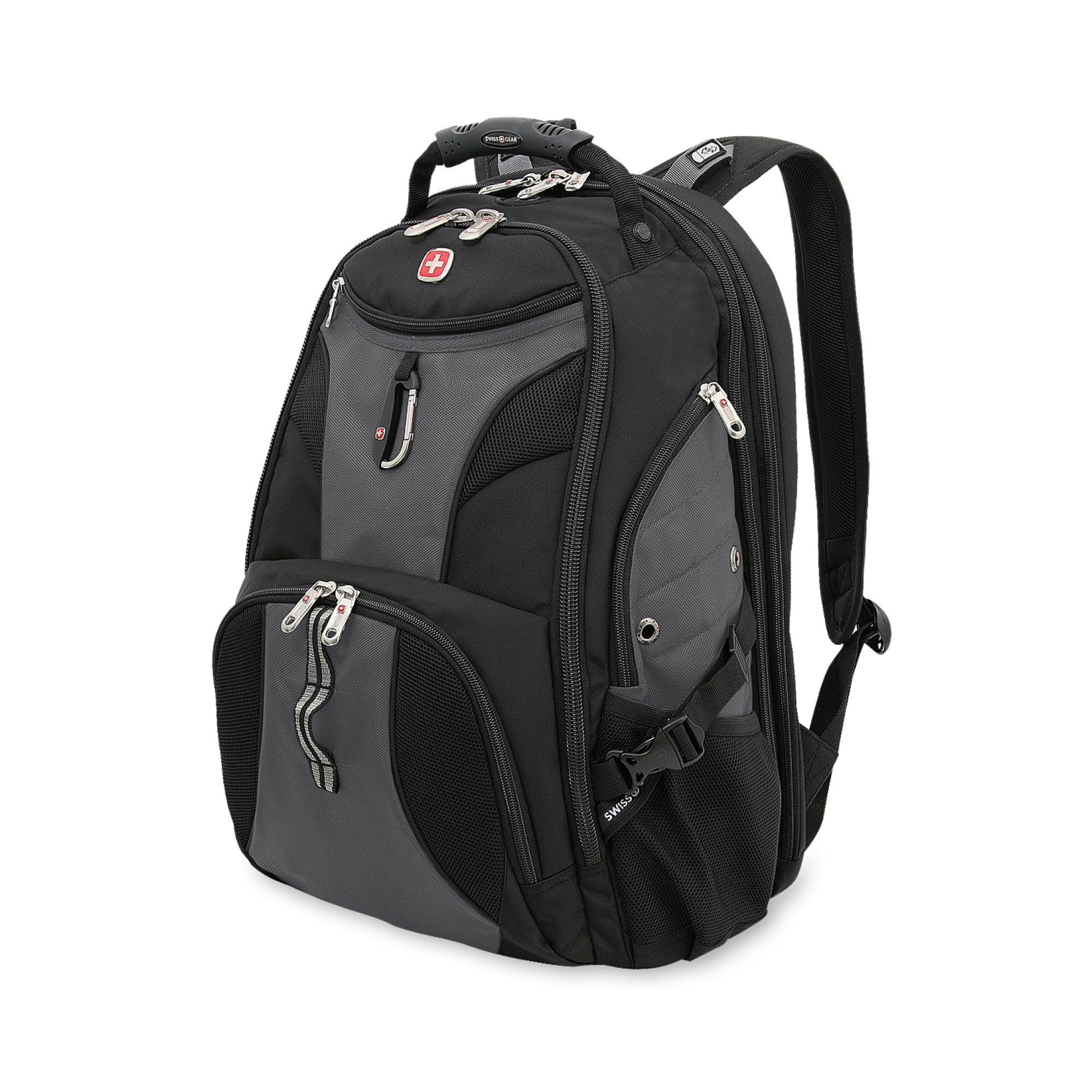
The SwissGear 1900 ScanSmart is built around one brilliant feature: a lay-flat laptop compartment that lets you keep your computer in the bag while it goes through airport security. For engineers who fly frequently, this shaves minutes off every TSA checkpoint and reduces the risk of dropping a laptop during the chaos of unpacking. The laptop compartment fits up to a 17-inch machine, and there is a dedicated TabletSafe pocket that holds a 10 x 7-inch tablet without it sliding around.
The main compartment includes a document divider for separating reports from personal items, and an RFID-protected front organizer keeps credit cards and passports safe from electronic pickpocketing. The trolley strap slides over suitcase handles easily, making this a seamless travel companion. The 1200D polyester construction has held up well for users who report carrying 25 pounds of groceries in addition to their regular load. The Airflow back panel and contoured shoulder straps provide adequate comfort for the weight, though the 3.2-pound empty weight is moderate.
The most consistent complaint is that the bag is not waterproof — water can seep in through the fabric and zippers during heavy rain. This makes it an excellent dry-weather travel companion but less suited for engineers who work outdoors in wet climates. For commuters and consultants who navigate airports and offices, the SwissGear 1900 is a reliable, well-organized option with unbeatable TSA convenience.
Why it’s great
- Lay-flat ScanSmart design speeds through TSA security checkpoints
- RFID-protected front organizer for passports and credit cards
- 1200D polyester with 31L capacity and trolley strap
Good to know
- Not waterproof — water can seep in during rain
- Front organizer pocket could be stiffer for one-handed use
7. Swissdigital SD803-01

The Swissdigital SD803-01 is the entry-level option that does not feel like a compromise. The three-compartment layout is straightforward: a padded 15.6-inch laptop sleeve in the back, a large main pocket for books or a change of clothes, and an organizer front pocket with the RFID panel.
The ergonomic “S” curve shoulder straps are 0.3 to 0.5 inches wider than standard backpack straps, which makes a noticeable difference in weight distribution when the bag is fully loaded. The 3D ventilation system on the back panel provides decent airflow. The Add-A-Bag luggage strap is a practical addition that keeps the bag anchored to a suitcase handle during travel, preventing it from sliding off. Customers who work in IT and travel with multiple devices (laptop, iPad, Fire tablet, cords) report that the Swissdigital is “sturdy and strong” with “zipper quality that’s spot on.”
Being a budget-tier pack, the fabric is not as thick as the 1200D or 1680D material used on higher-end options — it is nylon but not ballistic grade. This means it suits office engineers and IT professionals better than field engineers who drag their bag across concrete. If you are a structural or software engineer who wants a well-organized, feature-rich backpack without spending three figures, the Swissdigital offers remarkable value.
Why it’s great
- Integrated USB port and RFID protection for under budget-tier pricing
- Wider “S” curve shoulder straps improve weight distribution
- 31L capacity with Add-A-Bag luggage strap
Good to know
- Nylon fabric is thinner than 1200D ballistic options
- Laptop compartment fits up to 15.6 inches — not suitable for 17-inch machines
FAQ
What kind of backpack do most mechanical engineers use?
How big should my laptop sleeve be for engineering software?
Is RFID protection really necessary for an engineer’s backpack?
Should I get a bag with a charging port for field work?
Final Thoughts: The Verdict
For most engineers who balance office work with field visits, the best backpack for engineers overall is the Klein Tools 62800BP because its molded bottom, 40-pocket organization, and 1680D fabric deliver unmatched durability for the price. If you are a traveling consultant who needs a sleek, expandable bag for multi-day trips, the Thule Aion is a superior choice with its clamshell opening and waterproof wet bag. And for the budget-conscious engineering student or software engineer, the Swissdigital SD803-01 gives you USB charging and RFID protection at a very accessible price point.

Mo Maruf
I created WellFizz to bridge the gap between vague wellness advice and actionable solutions. My mission is simple: to decode the research and give you practical tools you can actually use.
Beyond the data, I am a passionate traveler. I believe that stepping away from the screen to explore new environments is essential for mental clarity and physical vitality.